



Push decisions down so your team stops waiting for orders

In 60 seconds
- A leader-follower culture left the USS Santa Fe with the Pacific fleet’s worst retention and readiness because sailors executed orders without evaluating them.
- Marquet replaced permission-seeking with “I intend to” so the person closest to the information owned the decision before speaking.
- Control moved down only as fast as technical competence was built through hard study, drills, and formal qualification.
- Shared clarity on purpose kept many independent choices coherent instead of fragmented.
- Deliberate action—state, point, then act—caught slips that distant supervision could not.
- The reported payoff was top fleet performance plus an unusual number of officers and sailors who later took command themselves.
The big idea
Marquet argues the traditional leader-follower model makes an organization only as smart as its top person and trains everyone else to stop thinking. His leader-leader alternative pushes control to whoever holds the information, but only when competence, clarity, and genuine care travel with it.
The book in brief
Marquet arrived on the USS Santa Fe prepared for a different submarine class and less technically sharp on this boat than his own crew. The ship sat at the bottom of Pacific fleet retention and readiness. Early on he ordered a speed increase the reactor mode made unsafe; the order still traveled down the chain until an engineer intervened. No one had questioned him. That near-miss showed the core flaw: a culture that rewards crisp orders from above and precise obedience below leaves the whole organization only as good as the person on top, and it actively discourages judgment everywhere else.
He rejected becoming a better order-giver. Instead he shifted Santa Fe from leader-follower to what he called leader-leader: every person expected to think, decide, and own their area while rank and final accountability stayed intact. The practical test was how often he still made a call a subordinate already had the information to make. Early on the answer was often, because permission-seeking ran deep.
The shift needed concrete mechanisms. Officers stopped asking “request permission” and began saying “I intend to,” forcing them to finish the reasoning before they spoke. Marquet’s role became reviewer, not decider. Control only advanced as competence advanced—rigorous study, qualification exams, personal quizzing on reactor systems. Clarity supplied the third leg: explicit purpose and standards so many local decisions still added up to one coherent ship. Deliberate action (state the move, point at the device, then act) built error-catching into each step once supervision could no longer sit at every decision point.
He reduced brittle layers of top-down review, ran short early continual conversations instead of polished infrequent briefings, and treated genuine care for sailors’ growth as the fuel that made people willing to own hard decisions. The measure he valued most was not one tour’s scores but the ladder of leaders Santa Fe produced afterward—officers and sailors who went on to their own commands. The book lands on a clear claim: leader-leader works when control, competence, and clarity move together, and it fails when any leg is missing.
Context
L. David Marquet published Turn the Ship Around! in 2012 as the captain who had taken command of the USS Santa Fe, then among the worst-performing nuclear submarines in the Pacific fleet, and set out to reverse its standing by changing how authority worked aboard.
The key ideas

1
The leader-follower trap
A model built entirely around one commander’s judgment produces obedient crews who stop thinking, leaving the organization only as good as whoever sits on top.
Leader-follower
One engine pulls; the rest are cargo. Thinking and risk sit only at the top.
Leader-leader
Every car has its own engine. The lead engine aligns direction and builds capacity.
Marquet inherited a boat whose sailors had been trained to execute, not evaluate. When he gave an impossible speed order, the navigation officer relayed it anyway; only an engineer’s quick stop prevented trouble. The crew’s silence was not stupidity. It was the logical product of a culture that scored officers on crisp orders and sailors on precise compliance.
Evaluations reinforced the pattern by measuring how well a crew carried out the captain’s intent rather than how well individuals could think. Santa Fe’s abysmal retention followed: work offered ownership of nothing, only obedience. Marquet saw he could not fix the scores by becoming a sharper order-giver.
The leader-follower model is efficient under simple, stable conditions. In complex, unpredictable work—the normal condition of a nuclear submarine and most modern jobs—it is dangerous and wasteful. It concentrates all thinking at one desk and turns everyone else into inert cargo.
In practice: The routine speed order that the reactor mode made unsafe still traveled down the chain until an engineer intervened, because no one felt licensed to question the captain.

2
Leader-leader as the alternative
An organization performs better when every person is treated as capable of leadership while rank and final accountability remain.
Marquet named the replacement leader-leader. Hierarchy does not vanish; the captain still holds ultimate authority. What moves is the location of routine decisions. On Santa Fe those decisions went to the officers and enlisted sailors actually running the equipment instead of routing upward for approval.
He compared the two models to engines. Leader-follower runs one engine and treats the rest as dead weight. Leader-leader puts an engine in every car; the lead engine’s job is to keep the others pointed the same way and strong enough to pull. The daily test he applied to himself was simple: how often am I deciding something a subordinate already has the information and standing to decide?
The old model survives, he argues, because it is comfortable. It shields those on top from ambiguity and those below from the risk of being wrong. Santa Fe’s turn began when Marquet decided that comfort was a bad trade for effectiveness, and that a memo alone would not change behavior—new mechanisms would.
In practice: Early in the tour Marquet still found himself making calls that subordinates already possessed the facts to make, revealing how deeply the permission culture ran.

3
The I-intend-to shift
Changing the exact words used to voice a decision changes whether the speaker actually owns that decision.
Old language
“Request permission to…” — thinking and responsibility stay with the captain.
New language
“I intend to…” — speaker arrives with a finished decision; captain only reviews.
Under the old script an officer said “Captain, request permission to submerge” and waited. That phrasing parked both the thinking and the responsibility on the captain. Marquet required a declarative form: “Captain, I intend to submerge the ship.”
The new sentence forced the officer to finish the reasoning, check conditions, and reach a conclusion before speaking. Marquet answered “very well” or asked questions; he no longer supplied the decision itself. Gaps appeared at once. Some officers discovered they had never truly thought the call through; they had counted on the captain to catch errors.
Officers sometimes stated intent for actions they were not yet qualified to take alone. That told Marquet control could not outrun competence. As reasoning grew tighter, the phrase became routine, decisions moved faster, and the person closest to the information became the person deciding.
In practice: Officers who switched from “request permission” to “I intend to” immediately exposed that they had been relying on the captain to finish their thinking.
4
Control needs competence first
Handing people decision authority before they have the technical mastery to use it is negligent, not empowering.
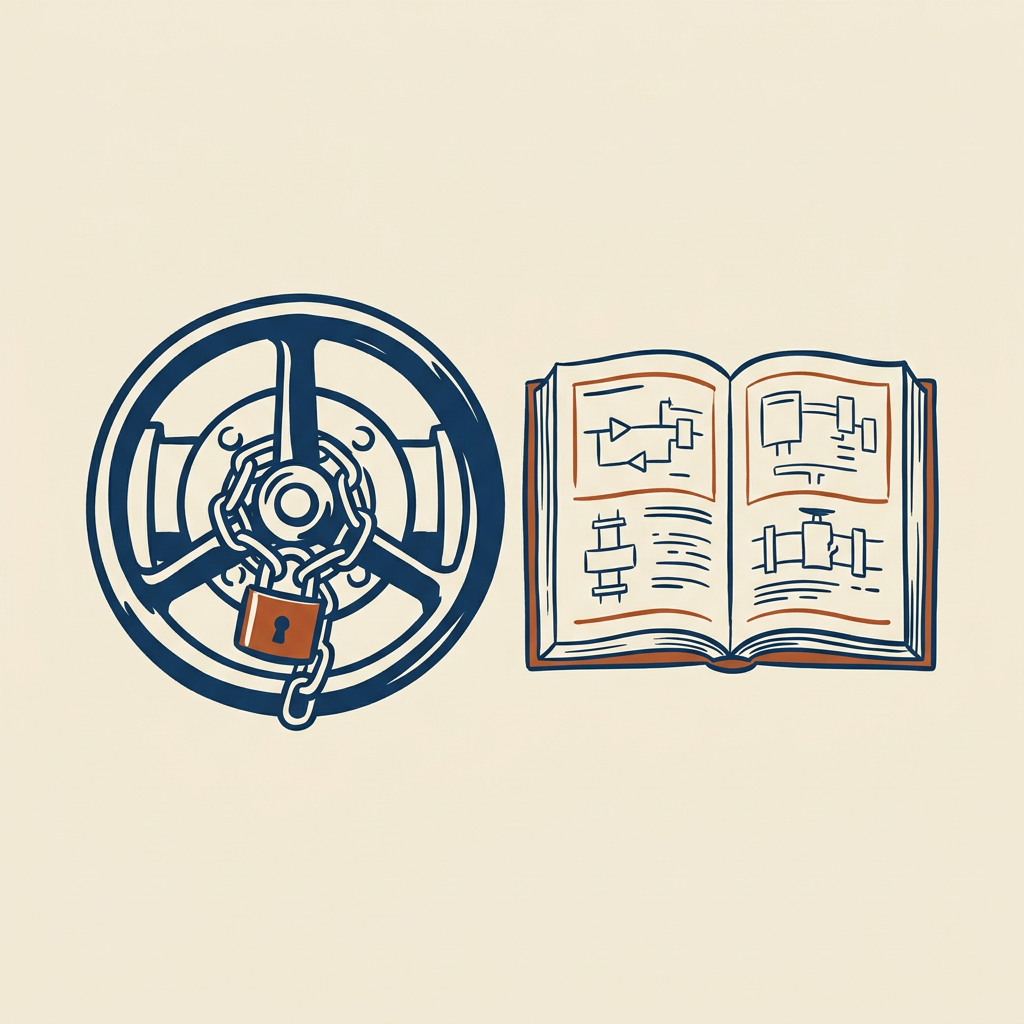
Marquet refused to treat leader-leader as permission to abdicate. Every increase in control was paired with a matching rise in technical competence. Sailors faced detailed qualification exams on the systems they ran; officers ran study sessions and drills harder than the Navy minimum.
He personally quizzed junior officers on reactor systems and would not let authority follow until understanding did. Giving power without knowledge simply moves the risk of error; it does not shrink it. Confidence was never accepted as a substitute for demonstrated mastery.
Competence also became a retention lever. Sailors investing serious effort in mastering their systems could see a future that rewarded intelligence, not only obedience. Organizations that decentralize decisions without first decentralizing expertise usually watch the shift fail or produce costly mistakes, then blame decentralization itself.
In practice: A chief who wanted more say over maintenance scheduling received it only after his team passed a formal review of the technical manuals, not after a verbal assurance.

5
Clarity keeps decisions coherent
Distributed decision-making produces coherent results only when everyone shares the same purpose and standards for what counts as good.
Once decisions leave the captain’s chair, the ship still needs a shared reference point. Marquet calls that clarity. With the crew he articulated guiding principles and repeatedly tied daily tasks back to the boat’s larger purpose so a sailor scheduling a repair or reading a gauge could ask what best served the mission instead of waiting for a rule that covered the exact case.
He shifted from specifying methods to specifying goals. Subordinates heard what outcome mattered and chose the method. Transparency about the reasoning behind command decisions let sailors apply similar reasoning later. Without that shared sense of purpose, local choices that each look sensible can still pull the organization apart.
Clarity forms the third leg of the tripod with control and competence. Remove any leg and the structure fails: authority without skill, skill aimed at the wrong end, or clear goals with no room to act.
In practice: One division reorganized its own maintenance schedule to cut a recurring equipment failure—an approach Marquet had not prescribed and would not have invented from the control room, yet it fit the ship’s goals better than any order he could have issued.
6
Deliberate action before the act
Saying and physically indicating an action before performing it catches autopilot errors that supervision from above cannot reliably catch.
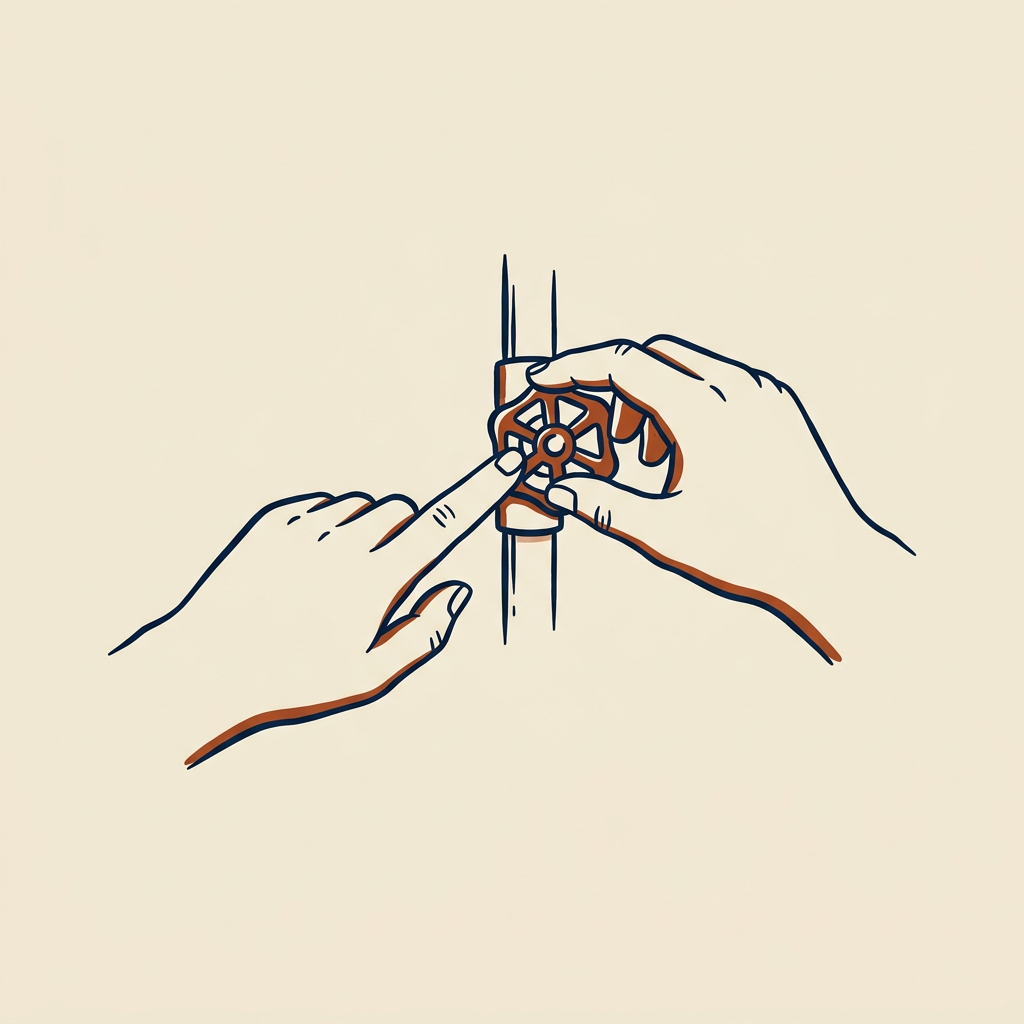
Deliberate action became standard on Santa Fe: before touching a control, a sailor states aloud what is about to happen, points at the actual device, and only then acts—often with a second person verifying the statement against the hardware. Most operational mistakes are not ignorance; they are slips made on autopilot.
The verbal and physical pause interrupts that mode and creates a moment for self-correction or peer correction before consequences. Once authority is spread across many decision points, a single senior officer can no longer sit at every one of them. Error-catching has to live inside each action.
Technical mastery lowers the chance of error; deliberate action lowers the damage of the errors that still occur. The practice needs no new technology. It simply changes behavior at the exact instant risk is highest instead of inspecting after the fact.
In practice: A sailor mid-procedure on a valve stated the intended action aloud; a nearby petty officer caught that it was the wrong valve before any harm occurred—the catch depended on the habit, not on rank.
7
Resilience over more oversight
An organization that depends on top-down monitoring to catch mistakes is fragile; one where every member can catch their own is resilient.
Brittle
More checklists, more sign-offs, more waiting for someone above to catch the error.
Resilient
Self-correction built into every level so the system works when supervision is thin.
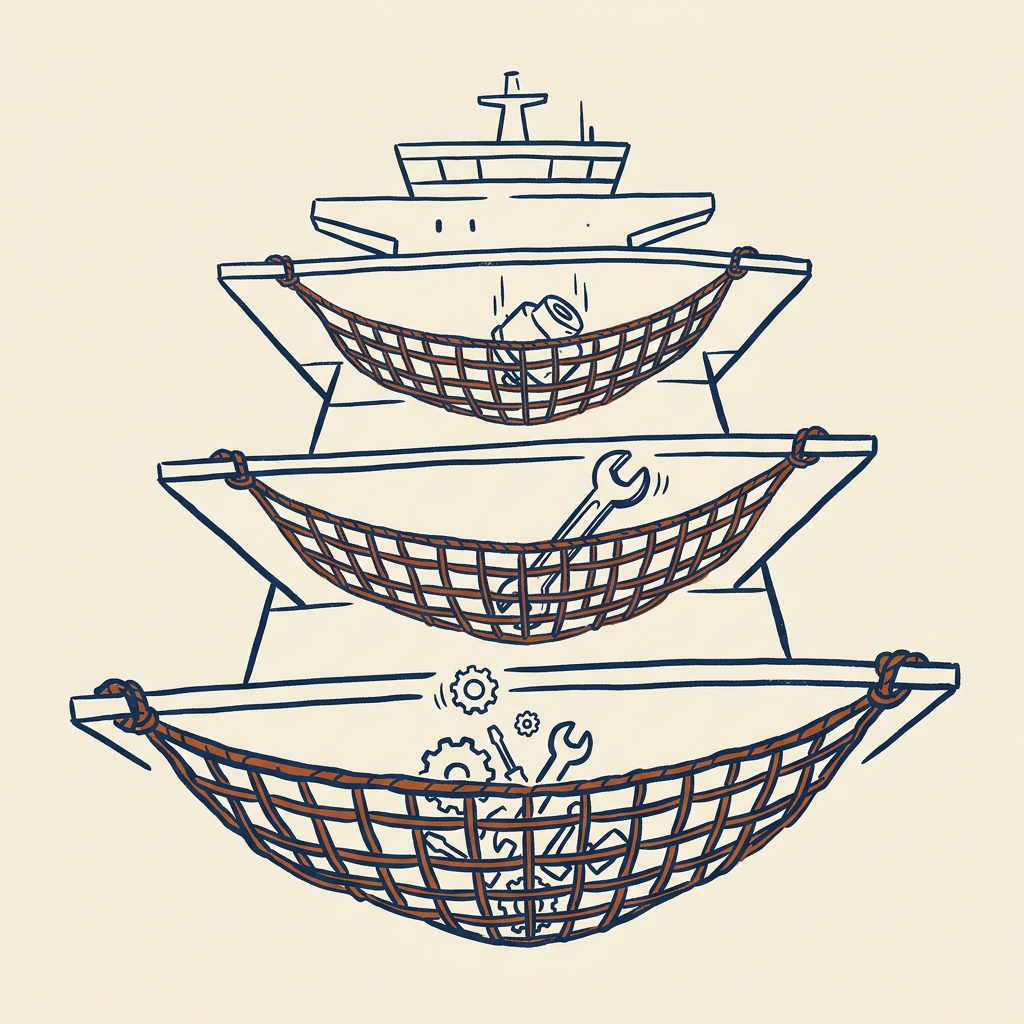
Traditional naval practice, like many bureaucracies, tried to prevent error by adding checklists, inspections, and supervisory sign-offs. Marquet calls that approach brittle. It assumes the checker knows more than the doer—an assumption that collapses once decisions sit with the people who hold the most direct information. It also trains people to wait for someone else to catch problems.
Resilience means building self-correction into every level so the system keeps working when supervision is thin, the normal state of a submarine underway. On Santa Fe certain formal review layers were reduced not by lowering standards but by shifting responsibility for meeting those standards onto the people doing the work, backed by the competence and deliberate-action habits already in place.
Treating every failure as a reason to add another approval step compounds the disease: it further removes thinking from those closest to the work and guarantees more failures of the same kind.
In practice: In engineering drills junior sailors diagnosed and responded to simulated casualties themselves; senior staff observed and intervened only if truly necessary. Performance rose once sailors knew they, not a hovering supervisor, owned the result.
8
Short early continual talks
Frequent brief check-ins catch and correct problems more effectively than periodic formal performance reviews.
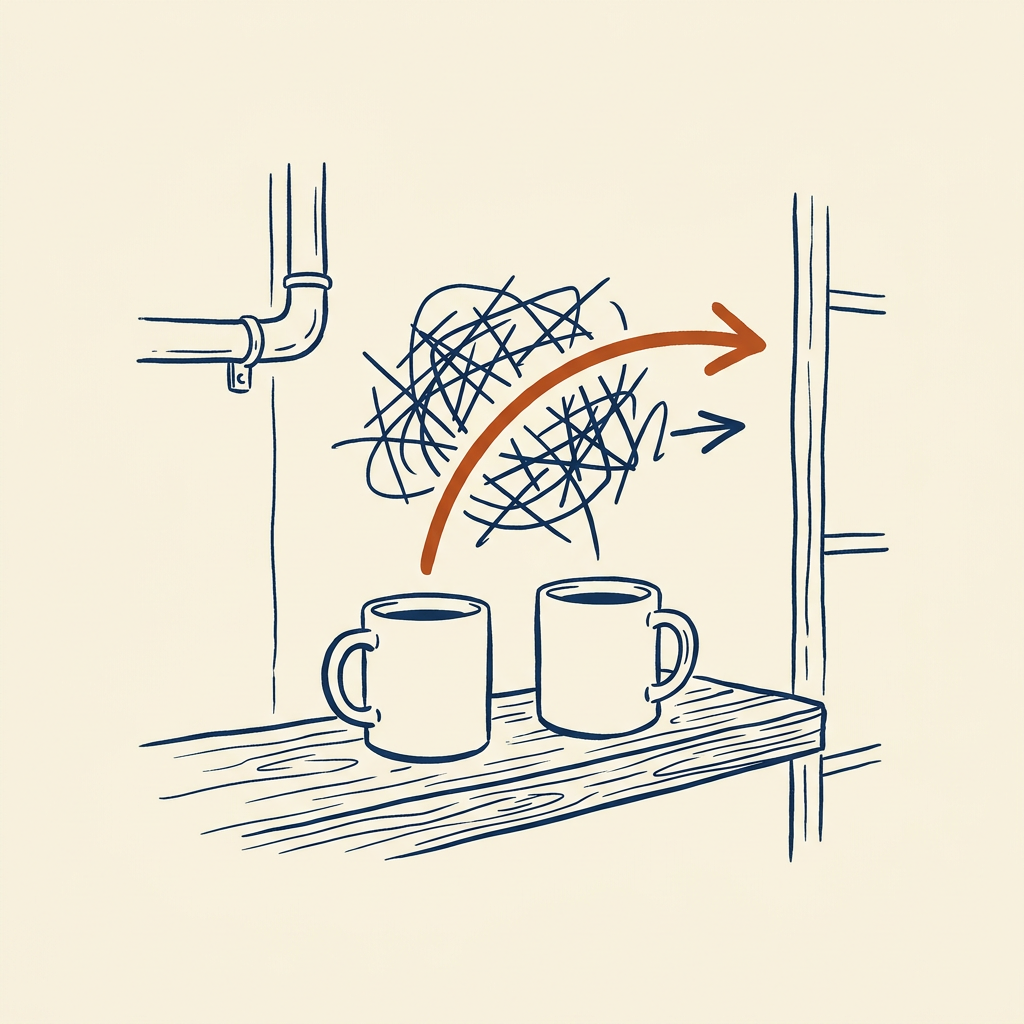
The Navy’s standard rhythm of infrequent, heavily prepared briefings meant problems were often already serious by the time authority heard them. Marquet moved to short, early, continual conversations—brief informal exchanges all day rather than saved for scheduled meetings.
Officers were expected to raise a concern the moment it appeared, even half-formed, instead of waiting for a polished report. That required Marquet to change first: a captain who punishes imperfect information trains people to hide trouble until it is unavoidable. He answered early rough reports with curiosity, not punishment.
Walking the ship and talking informally with sailors about ongoing work surfaced facts that never climbed the formal chain. Continual conversation lets an organization correct course in small increments instead of discovering a large drift at the next scheduled review. No single talk carries the whole burden, so people speak sooner.
In practice: Regular informal walk-throughs brought Marquet information about work in progress that formal officer status updates would never have carried.

9
Care as the real fuel
People will not take real ownership of decisions unless they believe leadership is genuinely invested in their growth, not just their output.
None of the operational mechanisms last without authentic concern for people as individuals. Marquet tracked personal circumstances, wrote to families, and noticed who seemed disengaged or was underperforming for reasons unrelated to ability.
Ownership demands psychological investment. People will not make that investment for an organization they believe is indifferent to them. That is why retention numbers mattered to him as much as readiness scores: sailors stayed and advanced once the work respected their judgment and invested in their future.
Without care the same mechanisms become empty procedure—new language followed, old ownership missing. Care is what makes someone willing to say “I intend to” and mean it, to surface a half-formed problem early, and to spend off-duty hours inside a technical manual.
In practice: Marquet mentored a sailor with a poor disciplinary and performance record toward officer candidacy instead of discharge; the sailor later succeeded as an officer, supporting the bet that the problem had been purpose, not capability.

10
Build a ladder of leaders
An organization serious about distributing leadership must deliberately grow more leaders at every level; the real test is how many it produces after the current leader leaves.
Marquet closes by insisting the ultimate measure of leader-leader is not how well the present captain performs but how many future leaders the organization creates. Santa Fe sent an unusually high number of officers and sailors on to their own submarine commands or greater responsibility elsewhere. He treated that record as more significant than any single readiness score because it showed the model outlasting his tenure.
At each level, seniors were expected to spot who was ready for more responsibility and to give them real decisions with real consequences, not abstract praise. That meant tolerating the discomfort of watching juniors choose differently—including choices that proved wrong. Reclaiming control at every divergence would have collapsed the structure.
Leaders are built by accumulated experience of actual decisions, supported by competence, clarity, and care, not by classroom programs disconnected from daily operations. The ladder is the payoff: a system that keeps producing capable decision-makers after any one captain has gone.
In practice: Santa Fe under Marquet produced an unusually high number of officers and sailors who later commanded their own submarines or advanced into larger Navy roles.
Key terms
- Leader-follower The traditional model that concentrates thinking and decisions at the top and trains everyone else to execute without evaluating.
- Leader-leader Marquet’s alternative: every person thinks, decides, and owns their area while rank and final accountability remain.
- I intend to The declarative phrase that replaces permission-seeking so the speaker arrives with a finished decision for the captain only to review.
- Competence Demonstrated technical mastery that must rise in step with any increase in decision authority.
- Clarity Shared purpose and standards that keep many independent decisions aimed at the same coherent end.
- Deliberate action State the move aloud, point at the device, then act—often with a second person verifying—to interrupt autopilot errors.
- Resilience The capacity for self-correction at every level so the system works even when supervision is thin.
- Short, early, continual conversations Brief informal check-ins that surface half-formed problems immediately instead of waiting for polished formal reviews.
What to do
- Pick one recurring decision your team brings you for approval and hand it fully to the person closest to the information only after confirming they have the competence; close any gap this week first.
- Replace one instance of “can I” language with a required “I intend to” statement and answer with questions rather than instant approval or veto.
- Schedule three short informal check-ins this week instead of one long status meeting.
- When someone brings a half-formed problem, thank them for raising it early rather than critiquing its incompleteness.
- Before the next physical or procedural action on your team, have the person state it aloud and point to the relevant object first.
Questions to think with
- Where are people on your team still asking permission for decisions they already have the information to make?
- Which control have you released faster than the competence required to use it well?
- What shared purpose would let two people reach the same good decision without checking with you?
- How often do problems reach you only after they are already serious, and what would short early conversations change?
- If you left tomorrow, how many people on the team could already lead their own area without you?
The other side
The book’s evidence is one closely observed case told by the commander whose reputation the story vindicates: no control group, no parallel conventionally run submarine, and little independent long-term data on Santa Fe after Marquet left. A nuclear submarine is also a closed, hierarchical, safety-obsessed setting with heavy existing training and a captain who kept full formal authority, so the mechanisms may travel more easily than any guarantee of the same results.
Who it's for
Managers who inherited a team that waits for instructions, plus military and safety-critical professionals who need frontline judgment more than compliance, will get the most from the full book and its concrete mechanisms.