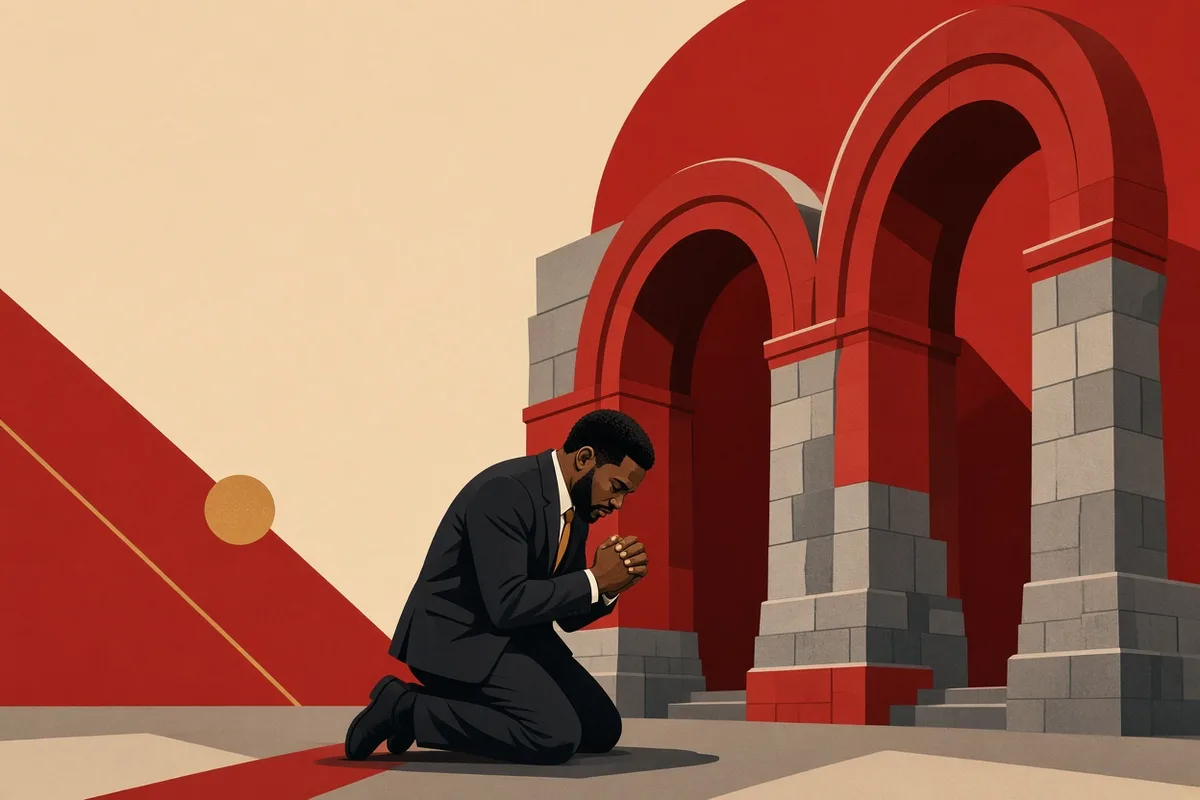



Queen Bertha Welcomes Augustine to England
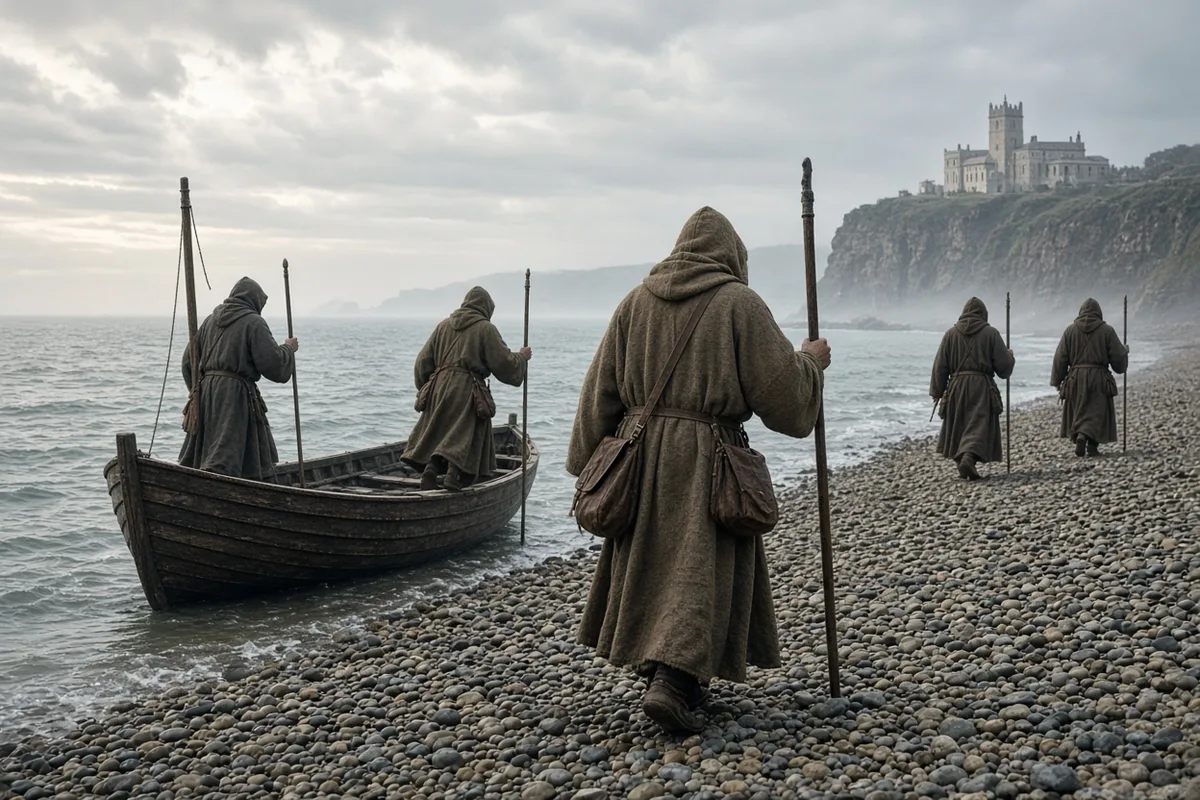
The oars bit into the Wantsum and the boat rocked under the weight of bread, ale, and salted fish. I gripped the gunwale and kept my eyes on the low hump of Thanet ahead. The king had ordered the strangers fed and left alone until he chose what came next. Three of us rowed. None of us spoke much.
Smoke rose from their camp. Forty men, the messengers said, though the count looked short when we beached. They stood in rough lines, hoods up against the wind. One of them held a tall staff topped with silver that caught the late sun. I set the baskets on the shingle and stepped back. A monk with a square beard thanked us in Frankish first, then tried our tongue. The words came out stiff but clear enough.
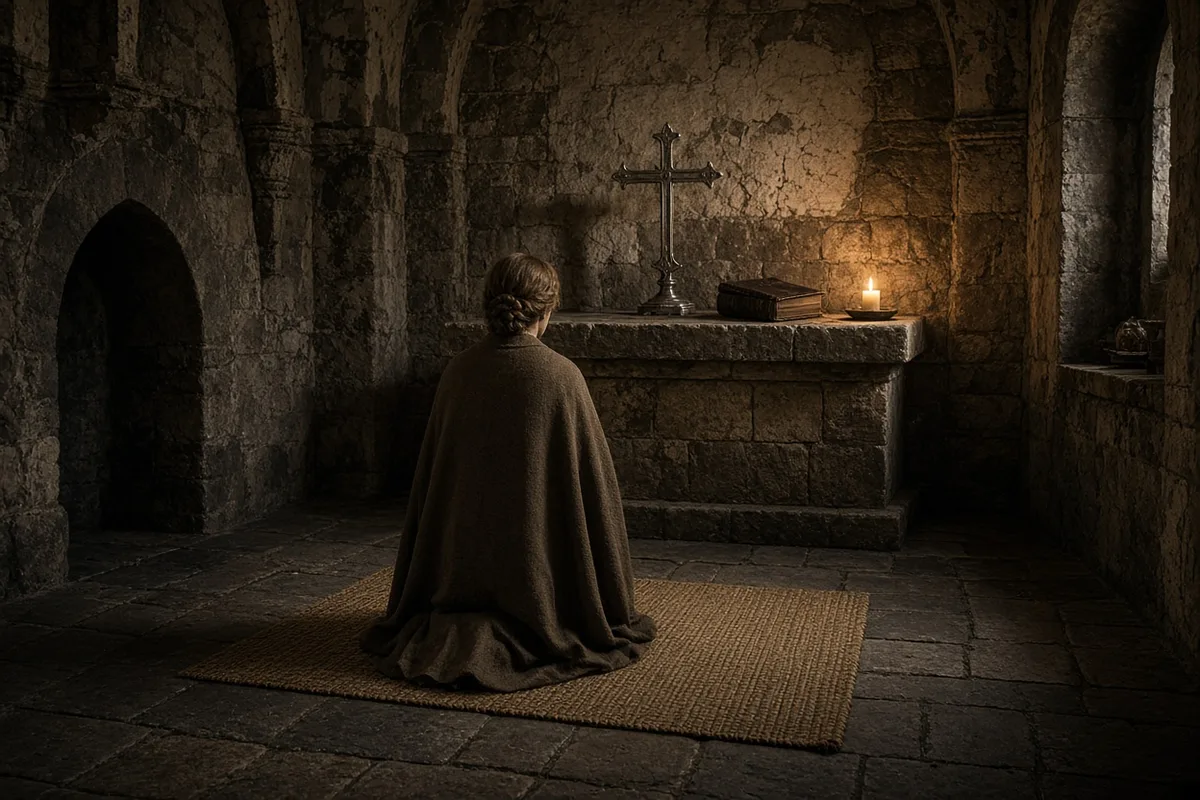
Queen Bertha had sent the food herself. She had given the order before the king finished speaking. Her own bishop, Liudhard, had already walked the old Roman road to the island twice that week, carrying messages no one repeated aloud. I had seen her at St Martin’s the evening before, kneeling on the stone floor while the last light slid through the narrow windows. She stayed there long after the lamps were lit.

The king came two days later. He arrived on horseback with only a handful of thegns and halted at the edge of the shingle where the tide had left a dark line. The strangers walked out to meet him carrying the silver cross and a painted board. They sang as they came, the same low chant they used at dawn and dusk. The sound carried over the water and died against the reeds.
Æthelberht would not let them enter any building. He had the benches set in the open grass instead. I stood with the other attendants twenty paces behind his chair. The wind pulled at the edges of the painted board until one of the monks braced it with his knee. Augustine spoke first. His voice carried without effort. He offered the king a kingdom that would not end. The words sounded heavy in the air.
Æthelberht listened without moving. When Augustine finished, the king answered slowly. The promises were fair, he said, but new. He would not abandon the gods his people had followed. Still, the strangers had come far. They would receive food and shelter. They could preach wherever they found listeners. No one would stop them.

A murmur ran through the thegns. One man shifted his weight on the bench but did not speak. The king raised his hand and the sound died. He gave the order for the monks to move into Canterbury at once. The old church near the queen’s house would be opened for them. They could use it as they pleased.
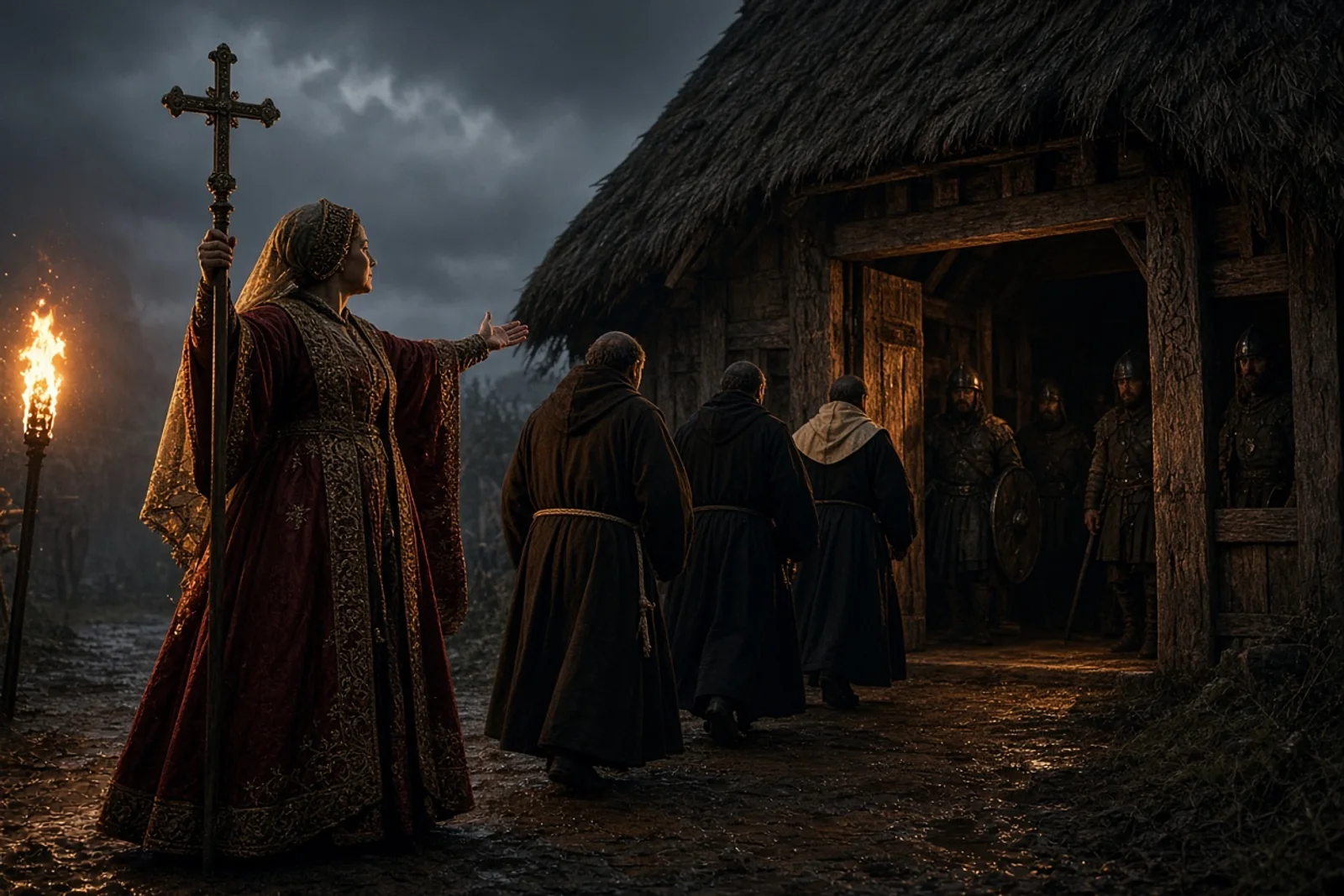
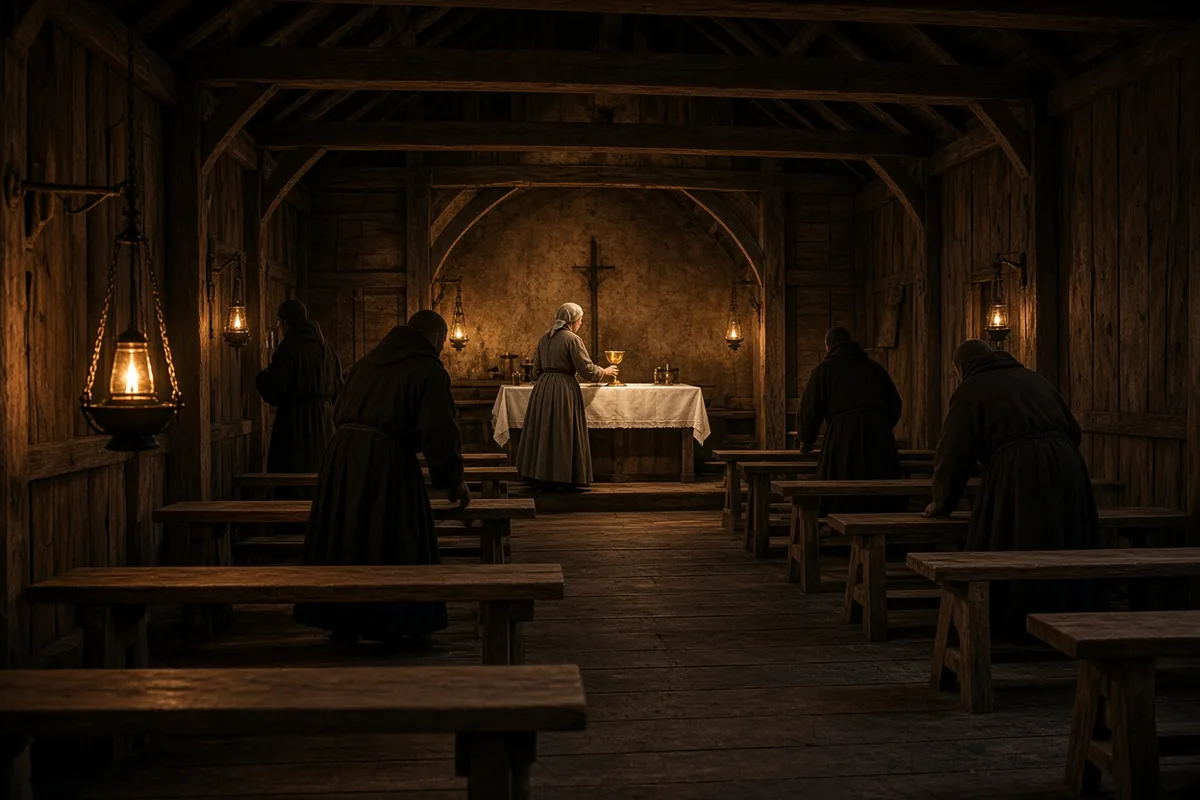
Bertha met them at the city gate two days after. She stood with Liudhard at her side and watched the line of hooded men pass beneath the arch. She did not speak to Augustine directly that first afternoon. She only nodded once when he bowed. Later I carried a message from her household to the new lodging. The monks had already begun clearing the weeds from the church floor. Augustine himself was sweeping dust from the threshold with a bundle of twigs.
The queen began sending bread and ale every third day without being asked. She also sent two of her Frankish women to teach the monks how to speak with the market women and the fishermen. The lessons happened in the yard behind St Martin’s. I heard the same words repeated until the accent softened. Augustine learned fastest. He practiced on anyone who would stand still long enough.
By the end of the month the city had grown used to the sight of them. They walked the streets in pairs, stopping to speak when anyone would listen. Most people kept their distance at first. A few children followed them out of curiosity and were chased home by their mothers. The king’s hall remained quiet on the matter. No order came to stop the preaching, and no invitation came to stop it either.
One evening I found myself alone in the yard with the queen. She was folding linen for the church. Her hands moved without hurry. She asked whether the strangers still slept on the floor or whether they had found pallets. I told her they still slept on straw. She nodded and added another cloth to the pile. Then she asked if Augustine had spoken of Rome. I said he had, once, when the wind carried the sound across the yard. She listened without lifting her eyes from the linen.
The first baptism happened on a morning when the river ran high. A young thegn from the king’s household stood in the water while Augustine poured it over his head. Bertha was not present, yet word reached her before the man had dried his hair. She sent a cloak for him and told the messenger to say nothing more. The man wore the cloak to the next assembly and kept wearing it afterward.
Æthelberht himself was baptised later, inside the old church, with no crowd and no announcement. I was not inside. I only saw the doors close and the guards posted. When the king came out again his face showed nothing new. He walked back to the hall as he always did. The monks stayed quiet that day and the next.
The queen continued her own observances at St Martin’s. She went there each morning before the city stirred. Sometimes Liudhard walked with her. Sometimes she went alone. The path between her house and the church grew smoother from the repeated steps. Grass did not grow back on it.
Augustine remained in Canterbury through the winter. He sent letters south and received answers. The monks built a second lodging outside the walls, beyond the old Roman ditch. They called it the monastery of Peter and Paul. The queen sent timber and nails when the first roof beams cracked under snow. She did not visit the new buildings herself.
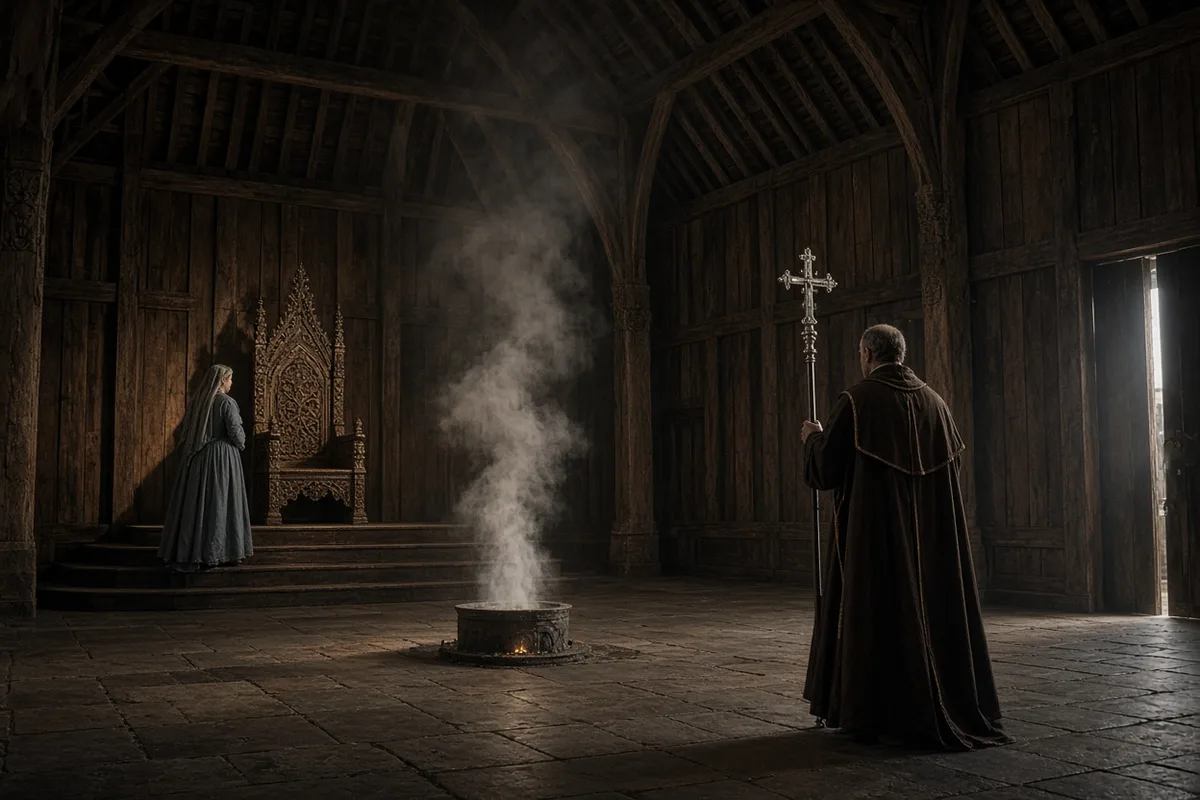
Years later the same men who had rowed the first baskets to Thanet still spoke of the silver cross and the painted board. The story stayed short. The strangers had landed, the king had listened, and the queen’s bread had kept arriving. No one claimed to know what the king thought in the moment he gave his answer. The fact that he had given it was enough.
The men who had rowed the baskets kept their places in the hall through the next three winters. One of them, Wulfhere by name, carried a second load of bread to the new timber hall the monks raised outside the Roman ditch in the spring of 598. Augustine had written to Pope Gregory asking for more men; the reply arrived with Mellitus, Justus, and Paulinus in 601, bearing letters that named Augustine metropolitan over the whole island and instructed him to consecrate twelve bishops. The letter to the king, carried in the same pouch, urged him to destroy the idols at the old shrines yet left the timing to Æthelberht’s judgment. Wulfhere heard the king read the lines aloud to Liudhard before any answer was sent back.
Bertha’s own gifts continued without change of day or measure. Every third morning two women from her household walked the path to the monastery of Saints Peter and Paul with loaves baked in the royal ovens and a cask of ale measured at twelve gallons. On the feast of the Nativity in 603 she sent an additional bolt of Frankish cloth for the altar cloths and a silver chalice that Liudhard had brought from Tours years earlier. The monks recorded the gifts in a small book kept on the lectern; the entries listed the date, the weight of the bread, and the name of the queen’s messenger. Augustine used the same book to note the number of catechumens presented each month.
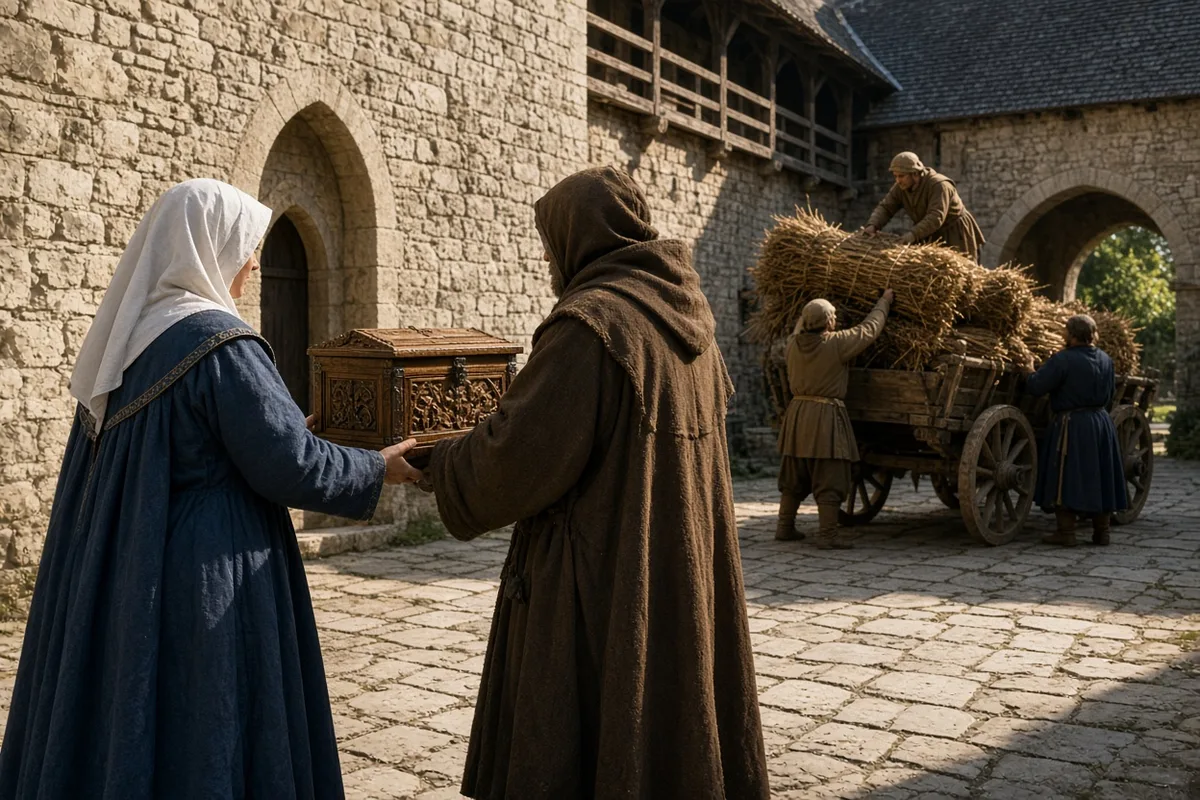
Æthelberht ordered a second church raised inside the walls in the year after his baptism. The work began on the site of the old Roman basilica and was finished before the winter of 602. The king gave the masons timber from the royal woods and paid them in silver pennies struck at his mint. When the roof was raised he sent word that the monks might move their daily office there if they chose. Augustine kept the old church at St Martin’s for the queen’s use and for the instruction of the women who still came to learn the Latin responses. The new building received the name Christ Church and stood on the same ground where the later stone cathedral was begun in 1070.
The first bishop sent out from Canterbury was Justus, who took the see at Rochester in 604. Augustine consecrated him on the same day he consecrated Mellitus for the East Saxons at London. The ceremony took place in the open yard before the monastery gate because the king would not allow a full gathering inside any building until the plague season had passed. Thirty men from the royal household stood as witnesses. Each received a cloak of undyed wool and a loaf marked with the sign of the cross before they returned to their own halls.
Augustine died on the twenty-sixth day of May in the year 604 and was buried in the porticus of the monastery church he had founded. The stone that marked the place carried only his name and the year. Laurence succeeded him without ceremony and continued the letters to Rome that asked for pallia and for rulings on the calculation of Easter. Bertha lived two years longer. She died in 606 and was placed in the same porticus beside the king’s later grave. The monks recorded both burials in the margin of the same book that listed her gifts of bread.
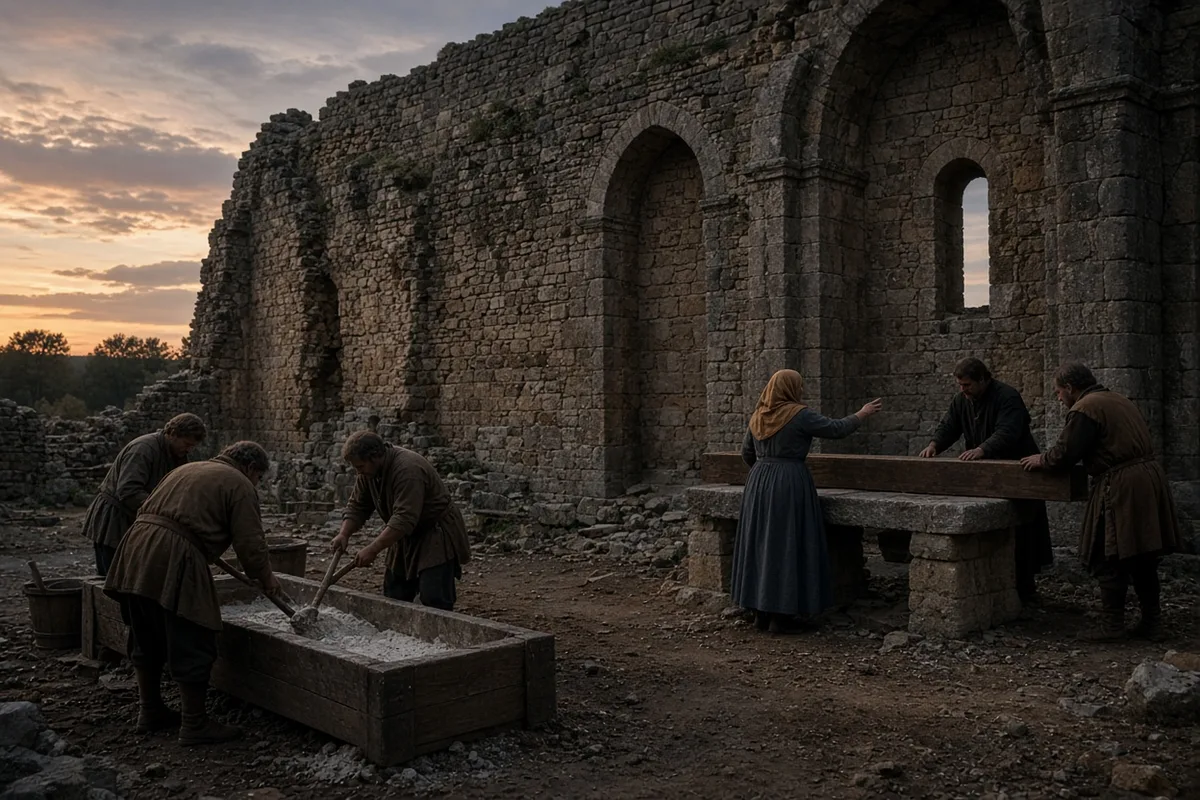
The monastery received its first royal charter in 605 when Æthelberht granted the land between the Roman ditch and the river with bounds marked by four stones. The grant was witnessed by the king’s son Eadbald and by ten thegns whose names were written in the same hand as the gift list. The charter remained in the church chest until the fire of 1067 destroyed the wooden buildings. Only the stone foundations of the porticus and the line of the ditch survived that fire.
In the years after the last of the first monks had died, the path between the queen’s house and St Martin’s remained visible as a sunken track worn through the turf. Pilgrims walking from the harbour at Richborough still used it when they came to visit the tomb of Augustine. The silver cross that had been carried from Thanet was kept on the high altar of Christ Church until the suppression of the monastery in 1538. At that time the cross was taken to London and melted; the painted board was cut into boards for a new press in the cathedral library.
The last man who had rowed the first baskets to Thanet died in the winter of 635. He was buried outside the Roman walls in the ground the monks had set aside for the king’s servants. His son placed a wooden cross at the head of the grave and carved the date and the single word “rower” in the timber. The cross stood until the next winter’s storms brought it down. No further mark was set on the place.
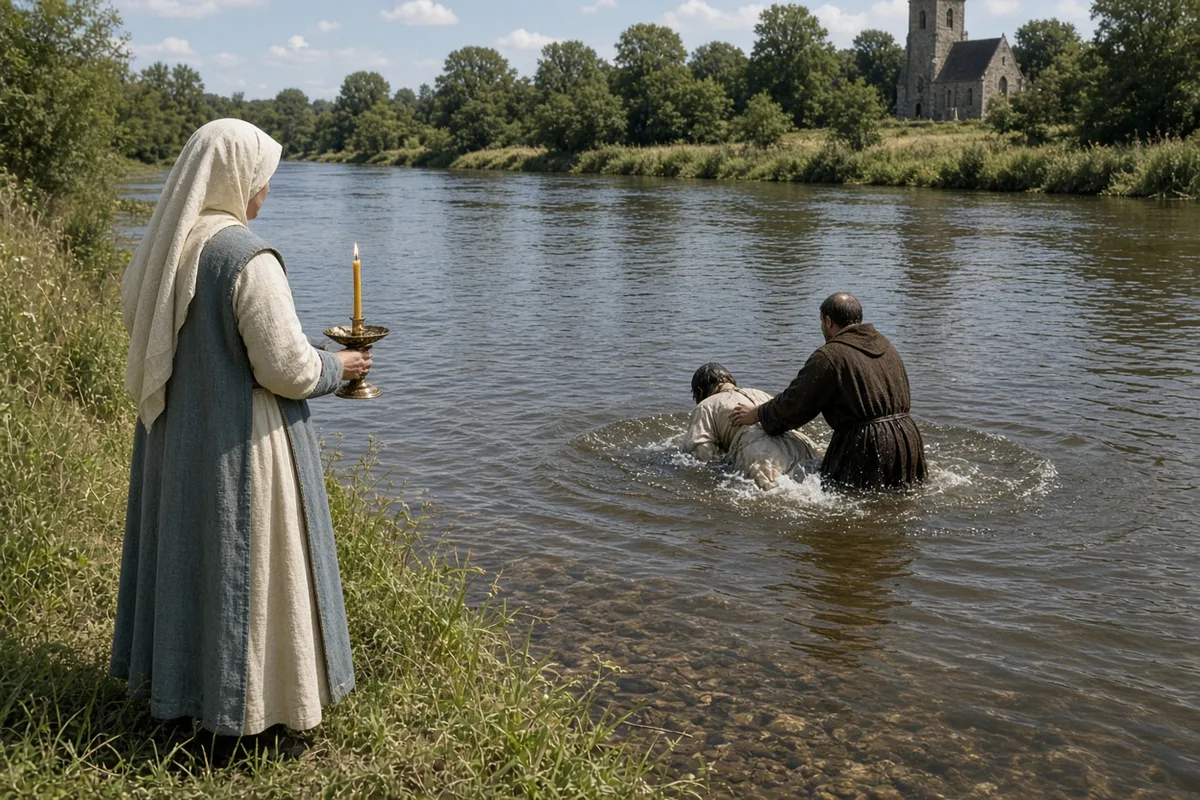
The monastery lands granted in 605 remained marked by the four stones until the survey of 1086 recorded them as part of the holdings of Christ Church, with the bounds described as running from the Roman ditch to the river and yielding an annual render of thirty shillings in silver. Eadbald, who succeeded his father in 616, confirmed the charter in a writ witnessed by the abbot of Saints Peter and Paul and by five thegns, adding a clause that the monks should receive one hundred acres of meadow at Fordwich each Easter. The writ itself was copied into the Christ Church register in the hand of a scribe named Eadwig in the year 1120.
St Martin’s Church kept its original walls of Roman brick and its narrow windows through the Danish raids of 851 and 1011. In 1091 the bishop of Rochester, Gundulf, ordered the chancel lengthened by twelve feet and the roof raised to carry a new timber bell frame. The queen’s path, worn to a depth of eighteen inches by repeated feet, was paved with flint in 1325 at the expense of the prior, Henry of Eastry, who entered the cost as four pounds and six shillings in the sacrist’s roll.
The silver cross carried from Thanet was last noted in an inventory of 1535 as standing on the high altar of Christ Church, its staff measuring seven feet and its cross piece set with four crystals. After the suppression commissioners arrived in 1538, the cross was weighed at the mint in the Tower and yielded forty-three ounces of silver. The painted board, cut into press boards, appears in a library catalogue of 1544 as “two oaken leaves, formerly an image of the apostles.”
Bede, writing at Jarrow in 731, recorded the king’s words at the first meeting on Thanet as “fair promises indeed, but new and uncertain,” quoting the sentence directly from an earlier Kentish annal that no longer survives. The same passage names the interpreter as the Frankish bishop Liudhard and gives the number of monks who landed as “nearly forty.” A marginal note in the Moore Bede manuscript adds that the interpreter was still living when the annal was first set down.
Archaeological excavation in 1947 uncovered the stone foundations of the porticus at Saints Peter and Paul, measuring twenty-two feet by fourteen, with three empty grave cuts aligned east-west. One cut contained a fragment of a lead coffin plate stamped with the letters “AUG,” removed to the cathedral treasury and weighed at eleven ounces. The ditch line outside the Roman walls, still visible as a shallow depression, was sectioned in 1983 and yielded a single sherd of Ipswich ware dated 625-650.
The last recorded use of the sunken track occurred in 1539 when a party of six former monks walked it to reach the harbour at Richborough before taking ship for the Low Countries. One of them, named Thomas Wotton in the pension list, carried a small book containing the old gift entries; the volume was sold in Antwerp in 1552 for two florins. No further human figure is recorded on the path after that date.