


Queen Clotilde Influences Clovis Conversion
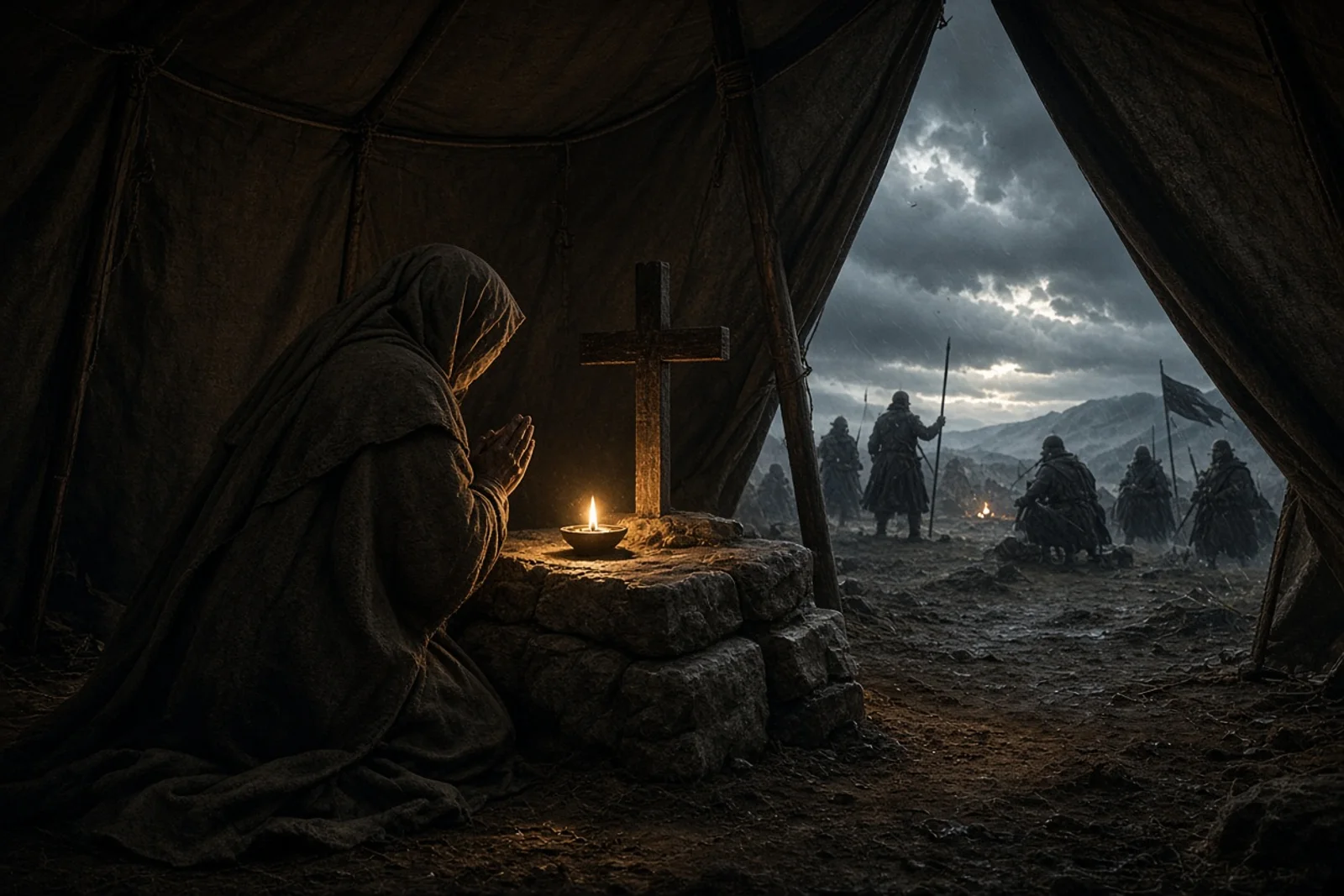
The wind cut across the courtyard stones when I heard her voice rising again from the chapel door. Clotilde knelt on the bare floor, hands pressed flat against the cold flags, speaking the same words she had used every morning since the messengers brought word of the Alemanni massing. Her veil had slipped; I saw the line of her neck tight with the effort of holding still. No one else entered. The servants kept their distance after the first child died.
I had carried her messages to Clovis twice that week. He listened, nodded once, and turned back to the maps. The boy Ingomer was already in the ground. Clodomir still breathed but barely. Clovis had said the same thing each time the fever took one of his sons: the old gods had not failed him yet.
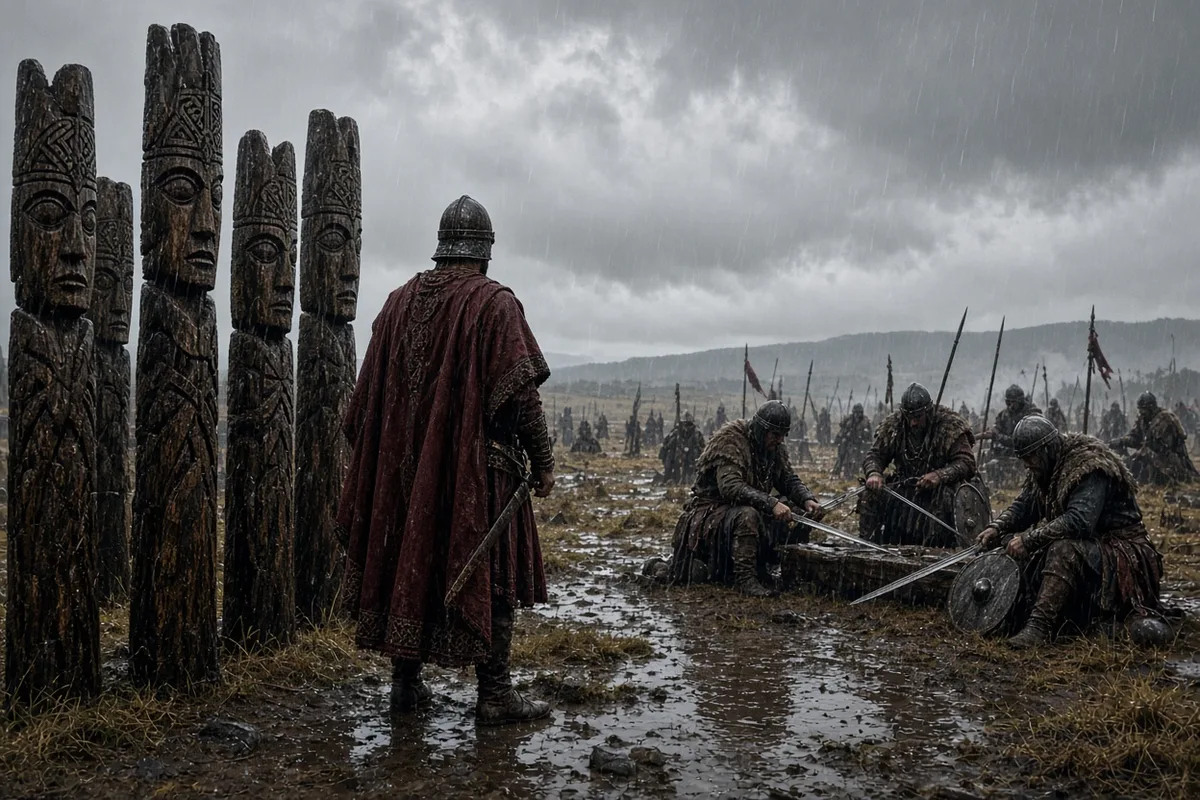
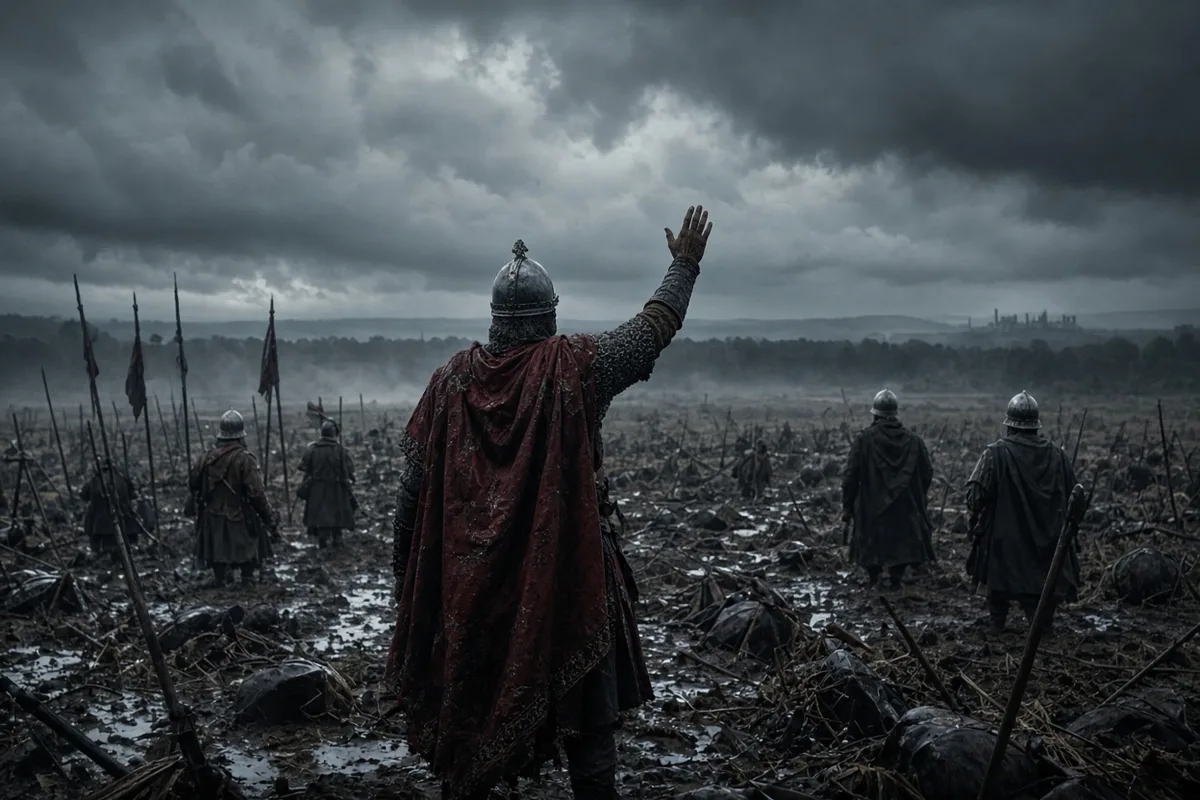
I left the palace before dawn the next morning with the king’s guard. We rode west into the mist that hung over the river. The Alemanni waited on the far bank, their shields locked. Clovis rode at the front, the three frogs still painted on his shield. By midday the line had broken twice. Men fell into the mud and stayed there. I took a cut across the forearm that kept bleeding into my glove.
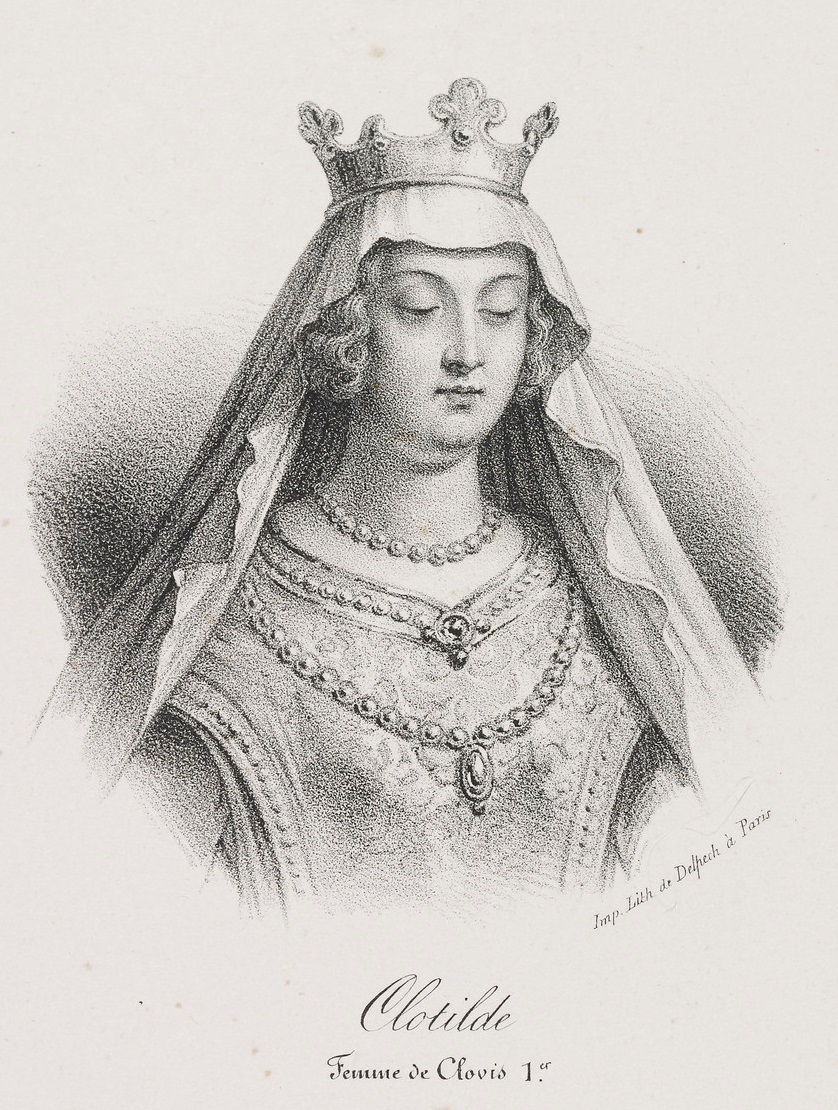
Clovis sent a rider back at the third hour. The man found me near the baggage and told me the king wanted every man who could still hold a spear. When I reached him the sun had dropped behind the trees. Clovis stood alone for a moment, reins loose in his hand. He looked toward the ridge where the enemy pressed hardest and spoke without turning.
“Clotilde’s God,” he said. The words came out low, as if he tested them. “If you give me victory here I will take your faith.”
He raised his shield and rode forward. The men around him heard it. Some crossed themselves the way the queen’s women did. Others spat and kept their eyes on the ground. The line steadied. We pushed the Alemanni back across the water until the light failed. By morning they were gone.
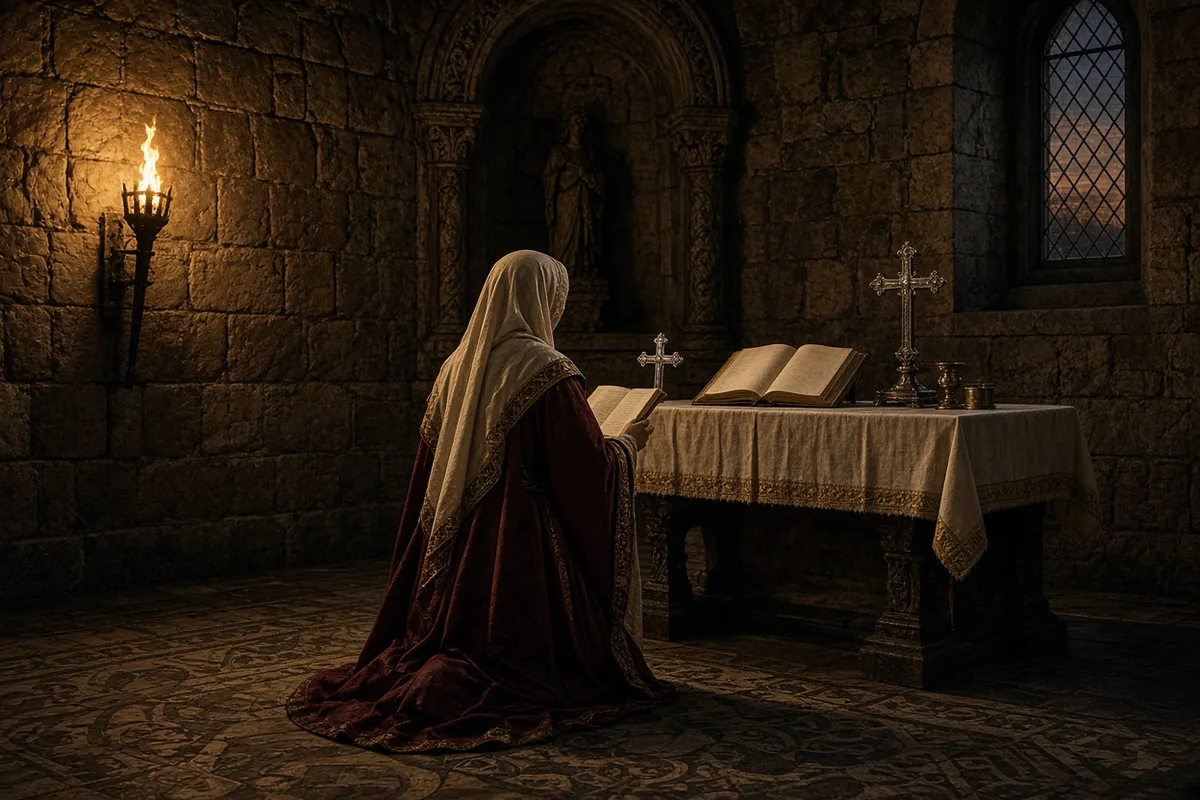
Clovis did not speak of the vow again on the march home. He rode ahead of the column and kept his own counsel. I stayed with the rear guard, watching the stragglers. When we reached the palace gates Clotilde stood on the steps. She did not run to meet him. She waited until he dismounted, then walked down the last three stones and placed her hand on his arm. He looked at her for a long moment before he spoke.
“Remigius,” he said. “Send for him.”
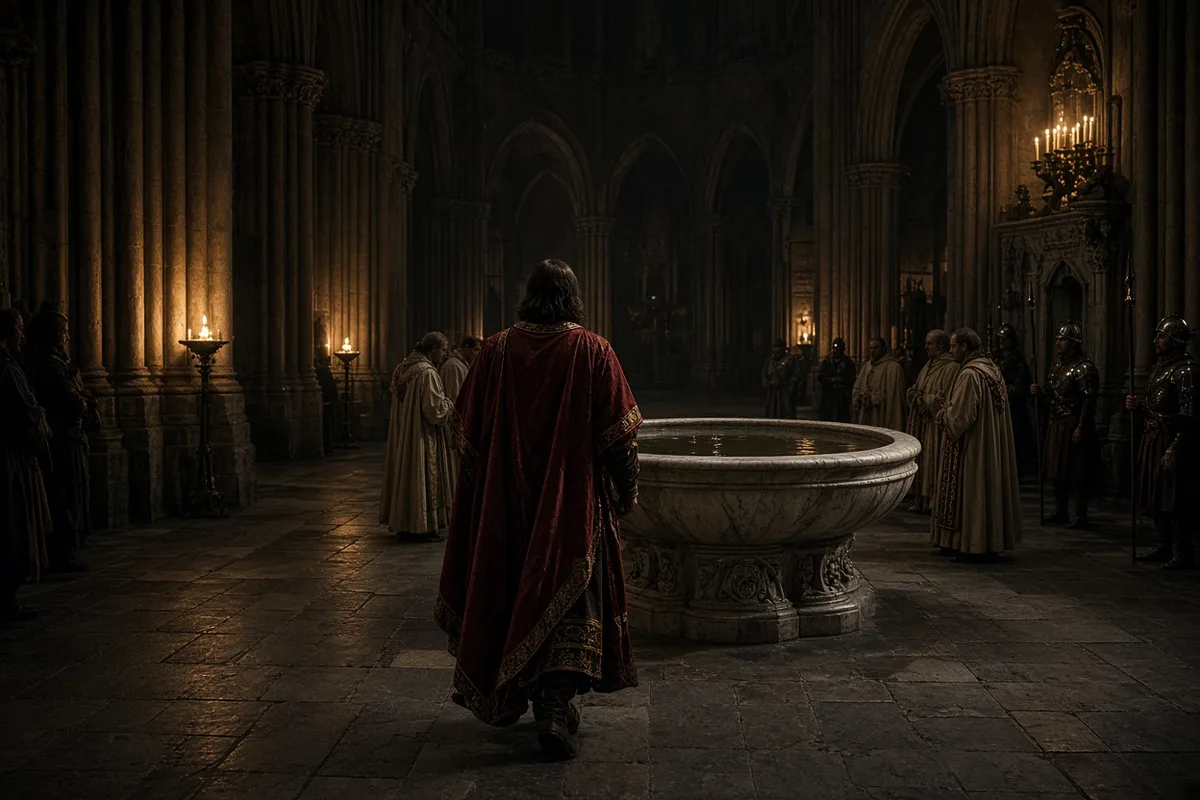
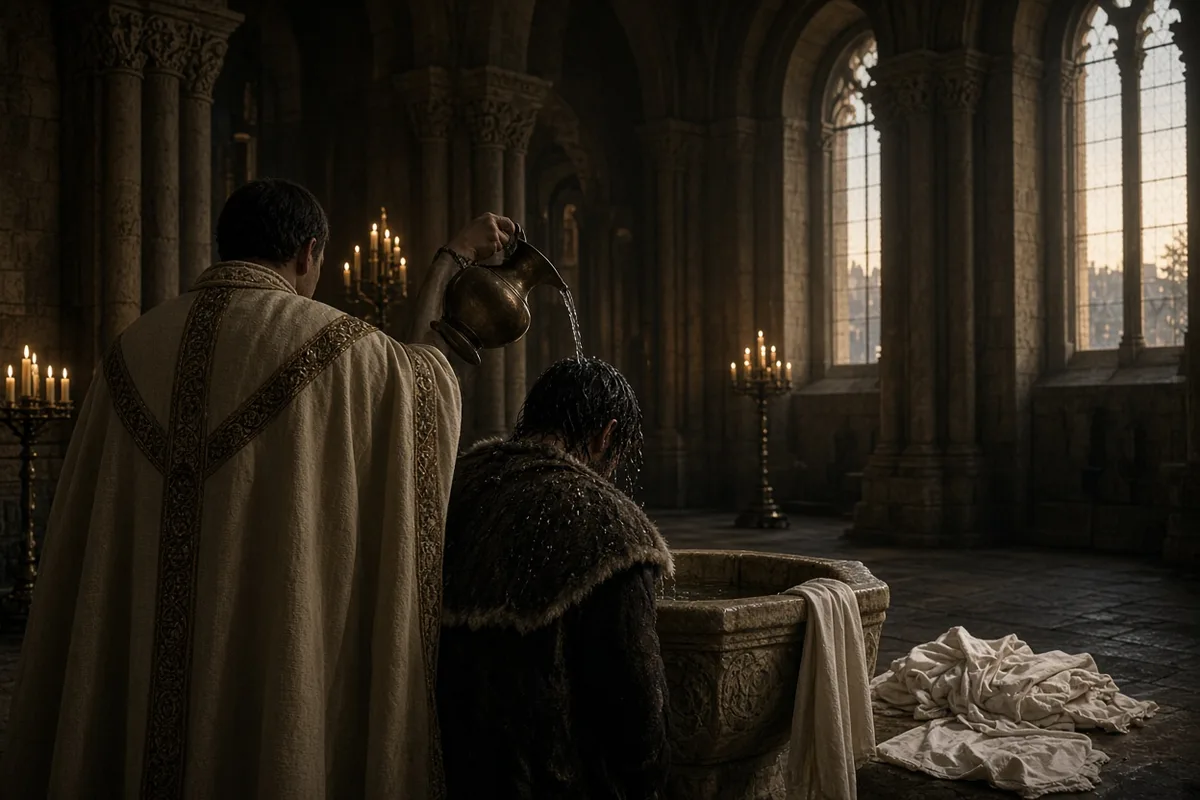
The bishop arrived from Reims within the week. Clovis met him in the hall with three thousand of his men drawn up outside. The weather had turned cold; frost lay on the spearheads. Inside, Clotilde stood to the left of the throne, her hands folded. She did not smile. She watched the king’s face as Remigius asked the questions the old rite required.
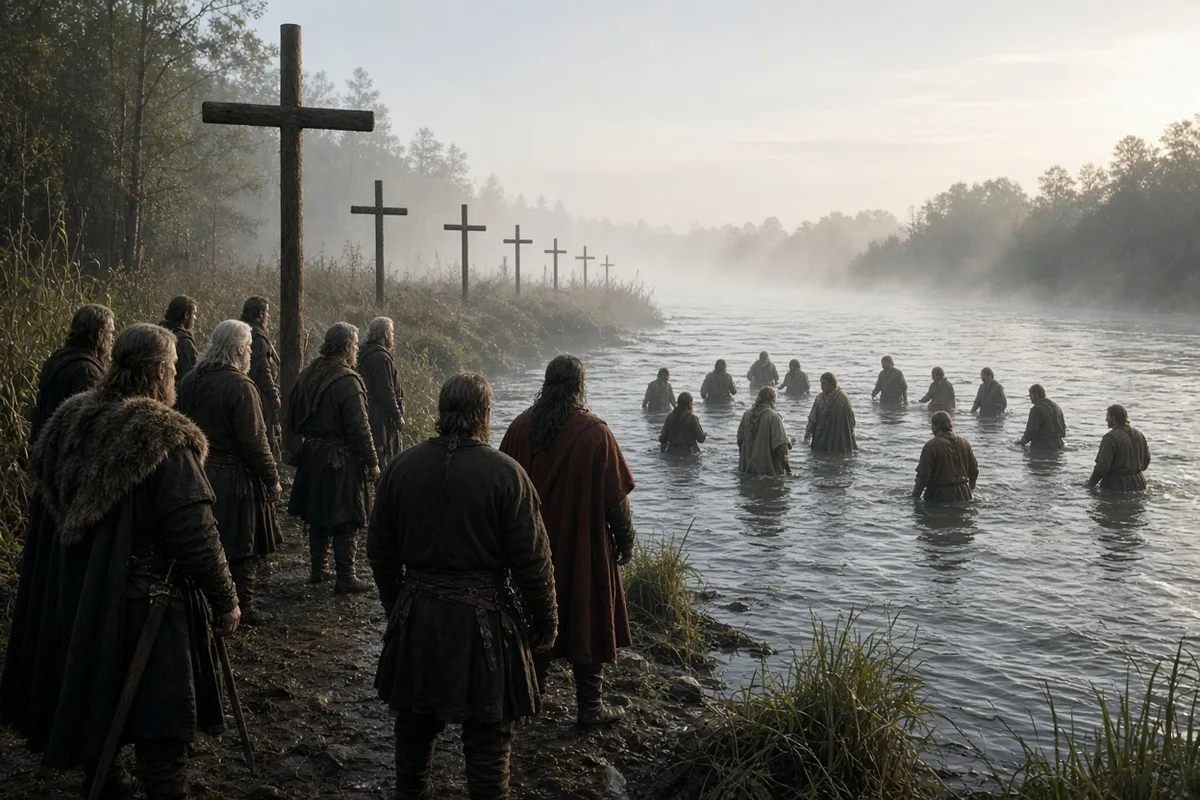
Clovis answered each one. When the water touched his head he flinched once, then held still. The men outside filed through after him in groups of fifty. Some laughed when they came out, rubbing their wet hair. Others walked away without speaking. I stayed near the doors and counted them until the light left the sky.
Clovis kept the three frogs on his shield for another month. Then he ordered them scraped away. Lilies replaced them, white on the dark wood. He never explained the change to the men. They learned to paint the new device themselves.
After the baptism the king’s campaigns grew longer. He rode against the Burgundians and the Visigoths in turn. Clotilde remained at the palace with the younger children. She sent no letters that I carried. When Clovis returned she met him at the same steps, asked after the wounded, and ordered the kitchens opened. The rest of the time she spent in the chapel or at the beds of the sick.
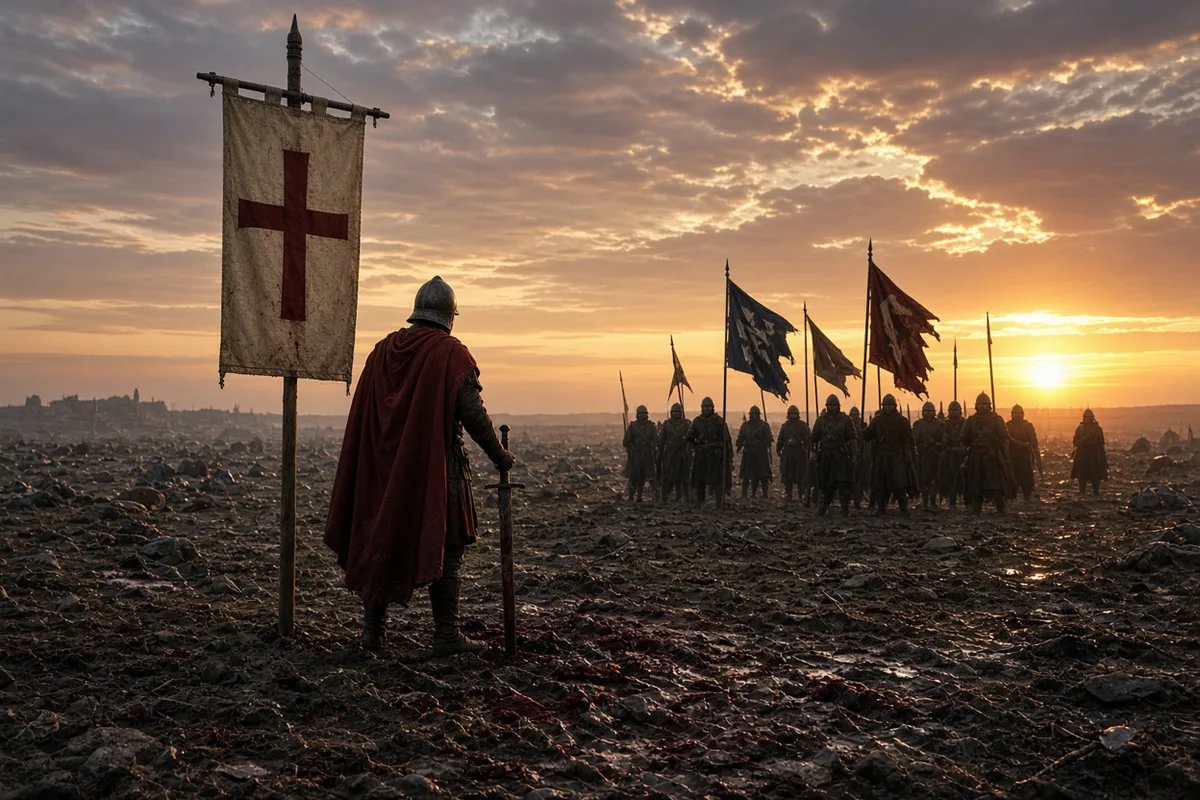
Clovis died in the eleventh year after the baptism. They carried his body to the church he had built for the apostles and laid it near the tomb Genevieve had chosen. Clotilde stayed through the burial, then left the city. She took nothing with her except the clothes she wore. The servants said she meant to live near the shrine of Martin at Tours.
I saw her once more, years later, when I carried a message from one of her sons to the bishop there. She sat on a low bench outside the church door, a basket of bread at her feet. Her hair had gone white. She gave the bread to anyone who asked and did not look up when I passed. The wind moved the hem of her cloak across the stones. I kept walking.
I kept walking past the bench and delivered the message to the bishop’s clerk before noon, then rode on to the abbey of Marmoutier where the monks recorded the names of pilgrims who had come that spring from as far as the Loire crossings at Amboise and Blois. Three days later a rider from Orléans brought word that Clodomir had fallen at Vézeronce on 25 June 524, his head struck off by Gundomar’s men and carried back on a spear; Clotilde sent two of her grandsons, the sons of Clodomir, to be raised at the court of Childebert in Paris, and the monks entered their names, Gunthar and Chlodomer, in the margin of the Easter tables for that year. She continued to sit outside the church each morning, handing out loaves baked from the grain the canons measured out at the rate of twelve modii a week from the episcopal granary, and when travelers asked for her she answered only with the names of the saints whose feasts fell that month.
In the twelfth year after Clovis’s burial the three surviving sons met at Soissons and divided the remaining Frankish lands, Theuderic keeping the eastern cities from Reims to Metz, Childebert taking Paris and the Seine valley, and Chlothar receiving the old Salian territories around Cambrai and Tournai; Clotilde traveled once to Paris that winter to witness the consecration of the new church of Saint Vincent on the left bank, where Childebert placed the tunic of Saint Vincent that he had carried from Saragossa after the siege of 541. She stayed only three nights in the palace, sleeping on a straw pallet in the portico rather than the chamber prepared for her, and returned to Tours with a single escort, stopping at Orléans to visit the tomb of Clodomir and to place a silver chalice weighing eight ounces on the altar there.
By the twenty-fifth year after the baptism at Reims the old wooden chapel at Tours had been replaced by a stone basilica whose nave measured thirty-six paces from the west door to the apse; Clotilde attended the dedication on the feast of Saint Martin, 11 November 543, and stood through the entire vigil while Bishop Gallus of Clermont read the names of the donors who had given the marble columns taken from the ruined theater at Poitiers. She spoke to no one during the ceremony except to ask the sacristan whether the oil lamps had been filled with the new pressing from the vineyards at Vouvray, and when the bishop offered her the place of honor on the north side she declined, remaining instead on the bench outside until the doors opened at dawn.
Chlothar came to Tours in the spring of 545 with two hundred men and asked his mother to accompany him to Soissons so that she might see the new church he had begun there in honor of Saint Médard; she refused, saying only that she would remain where the relics of Martin lay, and the king left after ordering the canons to increase her allowance by four solidi each month from the tolls collected at the bridge. On the third day of June that same year she died in her sleep on the same bench, her body found at first light by the woman who brought the morning bread; the canons buried her in the crypt beneath the apse, placing her beside the tomb of Bishop Perpetuus, and entered her name in the necrology with the note that she had given the church twelve pounds of silver for the purchase of new vestments.
The sons continued to fight among themselves; in 558 Chlothar seized Paris after Childebert’s death and ruled alone until his own death in 561, at which point the kingdom was again divided among his four sons, Charibert, Guntram, Sigebert, and Chilperic. None of them returned to Tours to claim their mother’s possessions, and the silver she had kept in a wooden chest passed instead to the canons, who used it to gild the reliquary of Saint Martin in 567. The basilica itself burned in 997 during the siege by the count of Anjou, but the crypt and the stone bench outside the west door survived, and pilgrims continued to leave offerings there through the following century.
When the Normans sacked Tours in 903 the canons moved Clotilde’s remains to the church of Saint Julian across the river for safety, and the bench was broken up for building stone; a single fragment, a slab measuring two feet by three, was later set into the floor of the new Romanesque choir that Abbot Hervé consecrated in 1050. In 1856 the city of Paris built the basilica of Sainte-Clotilde on the site of an older chapel near the Invalides, its twin spires rising one hundred and fifty feet above the boulevard, and the first mass was said there on the feast of Saint Clotilde, 3 June, with the archbishop of Paris reading the same passage from Gregory of Tours that described her urging Clovis to accept baptism at Tolbiac.
The last time I passed through Tours the year was 548 and the new bishop, Gunthar, had ordered the old bench replaced with a stone seat carved from the same quarry that supplied the columns for the nave; an elderly woman sat there each morning distributing bread to the poor, her face turned toward the river, and when I asked her name she gave none, only the number of loaves she had that day, twenty-seven. I left the city before nightfall and never returned.
The rider who overtook me two days south of Tours carried a letter sealed with the device of Bishop Gunthar and addressed to the new count at Orléans; it recorded that the woman on the bench had distributed twenty-seven loaves each morning for the past eleven winters, drawing the grain from the same episcopal measure that Clotilde had once received, and that she had refused the name of any saint when asked to swear by it. I delivered the letter and continued west along the Loire, passing the ferry at Amboise where the toll registers still listed the twelve modii weekly allocation that had been fixed in Clotilde’s time.
In 561 the four sons of Chlothar met at Soissons and drew lots for the four quarters of the kingdom; Charibert received the cities from Paris to Rouen, Guntram the Burgundian lands centered on Orléans, Sigebert the eastern cities from Reims to Metz, and Chilperic the old Salian core around Cambrai. None of the four sent messengers to Tours inquiring after their grandmother’s bench or the silver she had once kept in the wooden chest. The canons at Saint Martin used that silver to purchase additional land at Vouvray, bringing the vineyard holdings to thirty-six arpents by the time the next bishop, Baudinus, took the see in 565.
When the plague reached Tours in 571 the canons opened the crypt and placed Clotilde’s bones in a new cedar reliquary lined with lead; the sacristan’s inventory listed the weight of the lead at forty-two pounds and noted that the original stone bench fragment had been moved inside to serve as the base. Bishop Gregory, who arrived the following year, recorded in his own hand that he had seen the fragment and that the woman who had sat upon it was remembered only as “the one who gave bread without asking names.”
The Normans burned the basilica again in 903, and the canons carried the reliquary across the river to Saint Julian, where it remained until 987 when the new church of Saint Martin was consecrated; at that consecration the archbishop of Tours placed a charter on the altar granting the canons the right to collect one denarius from every pilgrim who touched the bench fragment now embedded in the choir floor. The fragment measured two feet by three and bore the chisel marks of the quarry at Saint-Pierre-des-Corps.
In 1050 Abbot Hervé rebuilt the choir in the Romanesque style and set the bench fragment directly before the high altar so that the priest would stand upon it during the elevation; the mason’s contract specified payment of eight solidi for the work and required the use of mortar mixed with sand from the Loire at the same crossing where Clovis had once forded the river. Pilgrims continued to leave offerings at the spot, chiefly small loaves baked from the grain measured out at twelve modii each week.
The basilica of Sainte-Clotilde in Paris was begun in 1846 on the site of the former chapel of the Invalides and completed in 1856; its twin spires reached one hundred and fifty feet, and the first mass on 3 June was attended by twelve hundred people, the archbishop reading aloud the passage from Gregory of Tours in which Clotilde told Clovis that the Christian God alone could grant victory at Tolbiac. The stone used for the nave came from the same quarry that had supplied the columns for the basilica at Tours in 543.
On the morning of 11 November 1943 an elderly woman in Tours placed a single loaf on the spot where the bench fragment had once lain; she had carried the loaf from the bakery at Vouvray, walking the seven kilometers along the river road, and she remained there until the bells rang for the feast of Saint Martin. She gave her name to no one and left before the doors opened.