


Queen Theodolinda Converts Lombard King Agilulf
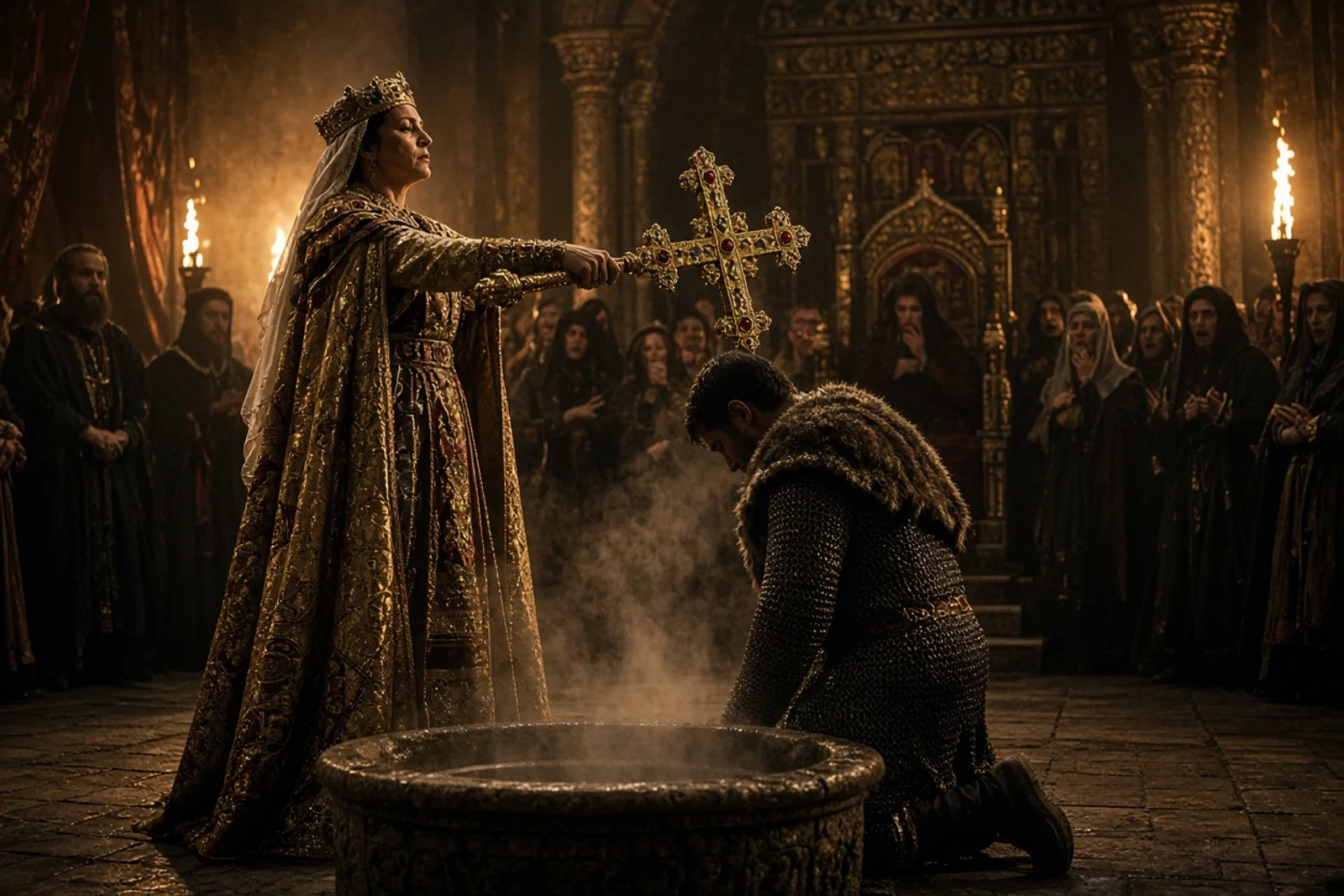
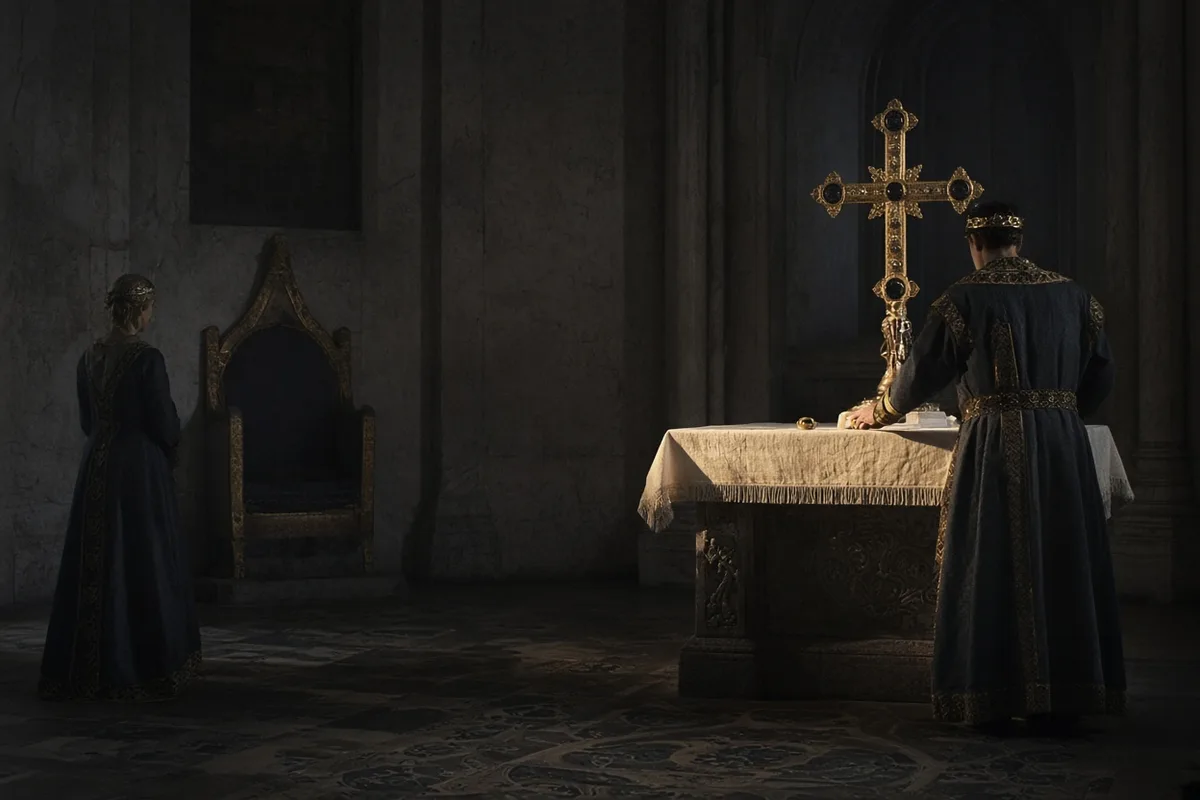
I stood at the edge of the font with the linen cloth over my arm, the water still rippling from the last filling. Sun came through the high slits in the Monza palace chapel and struck the gold threads on the queen’s sleeves. She carried the boy herself, wrapped in the same purple she had worn at her first wedding. Agilulf waited three paces behind, helmet under one arm, the other hand resting on the hilt of his sword as if the room might still need guarding.
The child had been born the summer before, small and loud, and the whole court had waited to hear what name she would give him. She had said Adaloald at once, and then she had said the rest: he would be received into the faith she kept. No one answered her that day. The dukes drank and the Arian priests kept their own counsel. Now the day had come.
I heard the priest’s sandals on the stone before I saw him. He was from Milan, sent under the queen’s protection, and his hands shook once when he reached for the oil. Theodelinda did not look at him. She looked at her husband. Agilulf’s face was the same color as the iron on his belt, and he said nothing.

The water took the boy without sound. When the priest lifted him out, the child’s cry filled the chapel and then stopped as suddenly as it had begun. Theodelinda took him back, kissed the wet hair, and turned so that Agilulf could see the cross the priest had drawn on the forehead. For the first time that morning the king stepped forward. He touched the mark with one finger, then drew the hand back as though the oil burned.
Outside the chapel the Lombard nobles waited in the courtyard. Some had come armed. I carried the basin to the side door and set it down so the water could be poured away. Through the open arch I saw dust rising from the road that led toward Milan. Riders were already leaving with the news. One of them wore the queen’s colors.
That night the king did not eat in the hall. He walked the upper corridor alone until the lamps burned low. I was sent with a cup of watered wine. When I reached the door I heard her voice inside, low and steady, the same tone she used when she spoke to the envoys from Rome. Agilulf answered once, short, then nothing more. I left the cup on the bench and went back down the stairs.
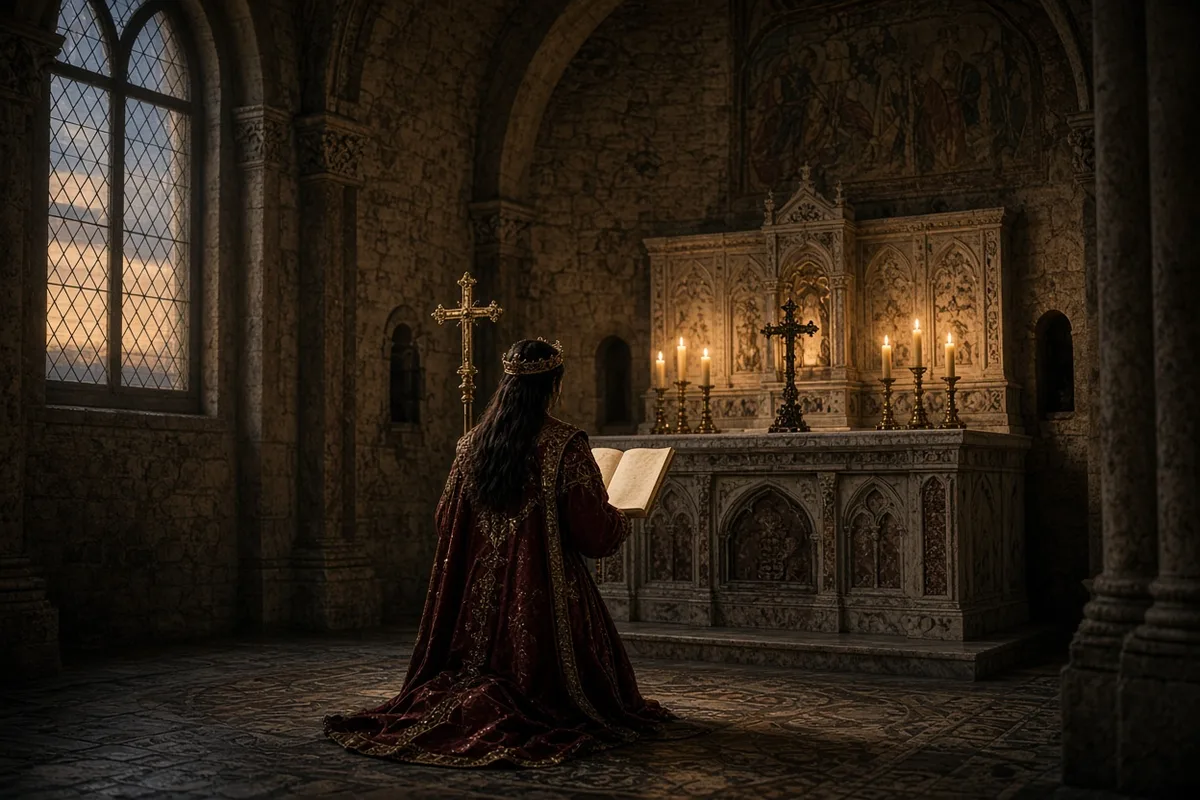
Three days later the first letter from Gregory arrived. It came with a small wooden box sealed in wax. Theodelinda opened it in the presence of the abbot Secundus. Inside lay a cross no longer than a man’s thumb, set with a splinter of dark wood. She held it to the light and the grain showed pale where the relic had been fitted. Agilulf stood at the window and watched the road. He asked only whether the pope had written the king’s name as well. She said the letter was addressed to them both.
By the end of the month the peace messengers had gone out. The dukes who had grumbled at the baptism now rode with the queen’s seal on their saddles. I carried messages between the stables and the scriptorium. One afternoon I passed the king in the corridor. He wore no sword. He asked me whether the boy was walking yet. I told him the child had taken three steps that morning and fallen into the queen’s lap. Agilulf nodded and kept walking.
The basilica foundations were marked before the snow. Theodelinda walked the ground herself, pointing where the altar would stand and where the side chapels would hold the lamps. Agilulf rode out with the surveyors but left the measurements to her. When the first stones were laid he came once, placed his hand on the corner block, and returned to the palace without speaking.
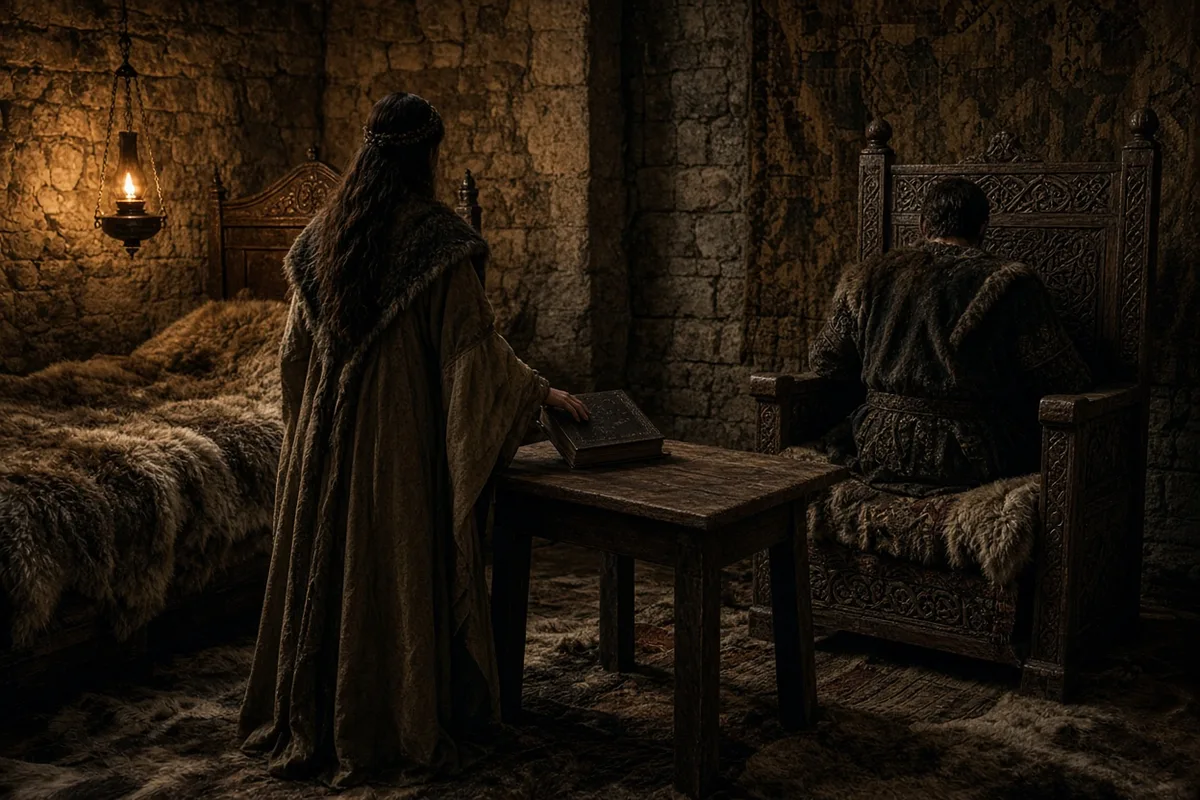
The second letter from Rome came in spring. It thanked the queen for the peace and asked after the child. A second box arrived with it: three rings and a small gospel book bound in purple. Theodelinda placed the rings on a cushion and sent them to the girl’s chamber. The book she kept beside the cross. Agilulf read the letter twice, then folded it and gave it back to her. That evening he ordered the Arian priests to leave the court. They went without protest, taking only what they could carry on one horse each.
I was present the morning he was received into the Catholic communion. It was done quietly in the same chapel, before the first light. The same priest from Milan performed the rite. Agilulf knelt on the stone without his cloak. When the water touched him he did not flinch. Theodelinda stood at the door with the child in her arms. After the priest finished, the king rose, took the boy from her, and carried him outside into the gray air. The sentries on the wall saw and raised their spears once in salute.
Later that year the first gifts from the new church reached the treasury: the hen and her seven golden chicks, the ivory comb, the fan with verses worked in gold thread. Theodelinda placed them herself in the locked chests. She told the keeper to mark each piece with the year. Agilulf never asked to see them again, but he did not forbid the marking.
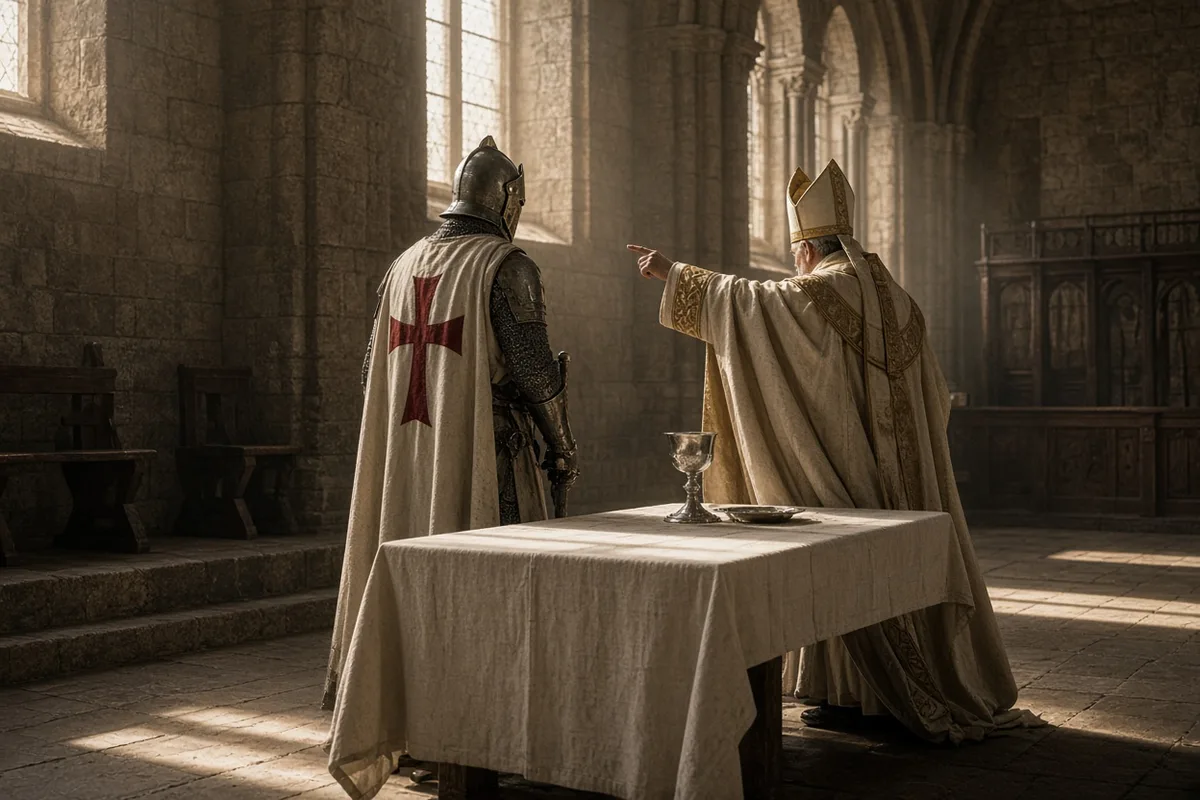
Adaloald grew. By the time he could hold a wooden sword the queen had already begun to teach him the prayers. Agilulf watched from the end of the hall and corrected the boy’s grip on the hilt when the lesson was done. The two faiths moved through the same rooms without meeting again in open quarrel. The dukes who had once spoken of rebellion now spoke of the Roman roads and the safety of the passes.
When Agilulf died the boy was still young. Theodelinda ruled beside him for the first years, the same seal on the same letters. The basilica at Monza stood finished, its roof tiles catching the light from the road that ran north. The cross Gregory sent remained in the treasury with the other relics. The water in the old font had long since been emptied and refilled many times, yet the mark of that first baptism stayed on the stone where the oil had run.
Theodelinda sent the boy Adaloald to the dukes of Friuli and Tuscany in the year after Agilulf’s burial at Pavia, carrying letters sealed with the same ring Gregory had forwarded from Rome in 603. The letters named the twelve Lombard cities now under Catholic bishops and listed the exact sums the queen had paid for the restoration of the Milan baptistery and the new altar at Bobbio, where Columbanus had died in 615. Adaloald answered the envoys himself at Pavia in the spring of 620, quoting the clause from his mother’s charter that granted the monastery at Bobbio “the tolls of the Ticino bridge for the lighting of the lamps.” Three years later the same dukes returned with complaints that the king had ordered the Arian chapel at Cividale stripped of its silver vessels and given to the Catholic see. Theodelinda received the report in the upper room at Monza and dictated a single sentence to the notary: the vessels were to remain with the bishop until the king reached his twenty-fifth year.
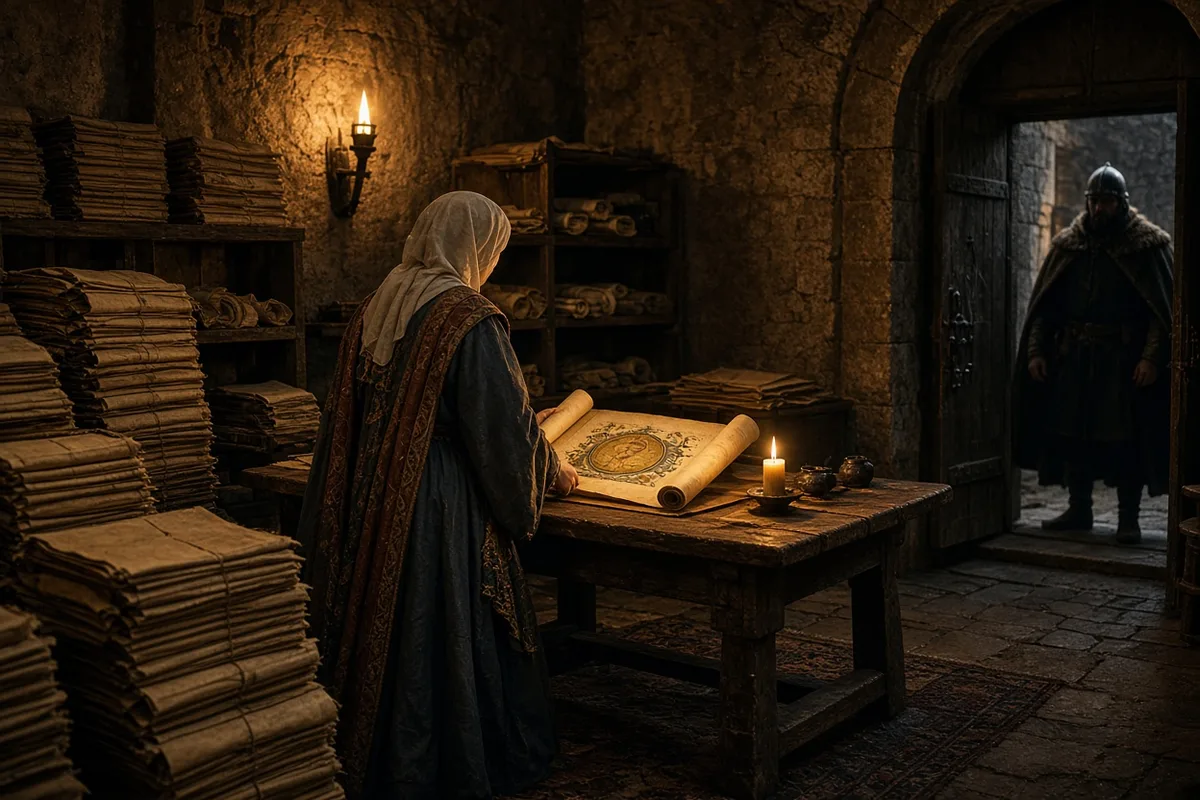
In the month of July 626 Arioald, duke of Turin, entered Milan with seven hundred men and took the royal palace without fighting. Adaloald was removed to a house near the Adda where his mother had once kept her linen chests; the keepers recorded that he spoke each day to the wall about the hen and seven chicks still locked in the Monza treasury. Theodelinda remained at the palace, signing the new treaties with the Exarch Isaac in Ravenna that fixed the frontier along the Panaro river and renewed the grain shipments from Sicily at the rate of four hundred modii each quarter. On the day the agreements were sealed she ordered the scriptorium to copy Gregory’s forty homilies on the Gospels into a volume bound with the same purple silk that had wrapped the boy at his baptism.
She died at Monza on the twenty-second day of January in the year 628 and was placed in the sarcophagus she had chosen beside the north wall of the basilica. The inscription cut into the lid named her only as “Theodelinda, queen, who built this church in the seventeenth year of Agilulf.” The abbot of Bobbio sent a deacon to Monza with a fragment of Columbanus’s staff; it was laid on the stone and left there when the lid was lowered. The canons recorded that the lamps before the high altar burned for nine nights without being refilled.
Arioald ruled until 636 and was succeeded by Rothari, who issued the edict that set the wergild for the murder of a free Lombard at nine hundred solidi. Rothari’s queen Gundiperga, daughter of Theodelinda’s sister, kept the Monza treasury keys and added to the inventory a silver processional cross weighing thirty-six pounds. When Rothari died the crown passed to Aripert, who in 653 ordered the Arian bishop of Pavia to surrender his see and placed his own son Grimoald on the throne of Benevento. The basilica at Monza received from Aripert the gold votive crown that still hangs above the altar, its circlet inscribed with the words “Aripert rex donavit.”
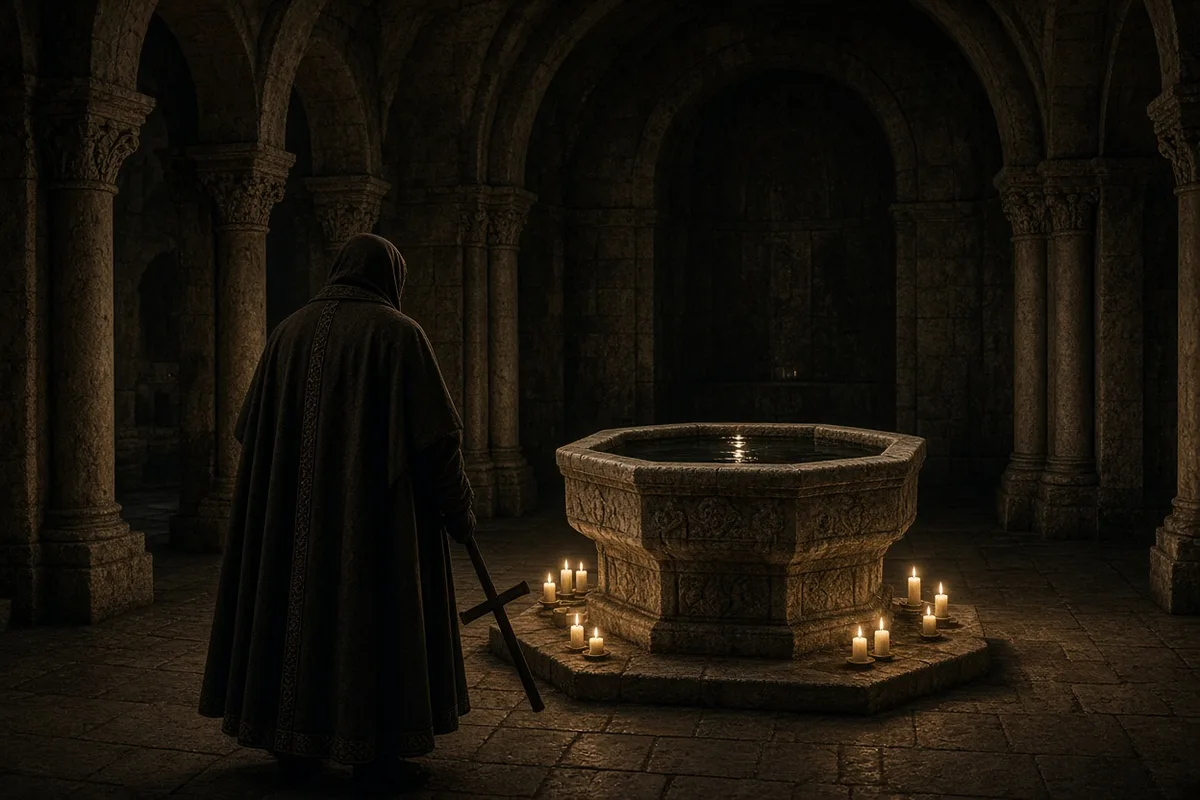
Charlemagne entered Pavia in 774 and took the Iron Crown from the treasury. The crown contained the thin iron band said to have been forged from a nail of the True Cross; the same band had been carried by Theodelinda in the procession that marked the basilica’s consecration in 603. Charlemagne placed the crown on his own head in the chapel at Monza and confirmed the canons’ right to the tolls of the Lambro bridge. The diploma issued that day lists thirty-two dependent farms and the annual yield of their vineyards as one hundred and eight amphorae of wine.
The last person to touch the original font was the sacristan Giovanni Battista Visconti in the year 1527, when the French troops under Lautrec occupied Monza. Visconti removed the stone basin to the crypt and sealed the opening with a new marble slab. On the day the troops left he returned the basin to its place, noting in the margin of the chapter book that the mark left by the oil still showed on the rim and that the water poured into it that morning was drawn from the same well Theodelinda had used for the baptism of Adaloald.
In 1576 the chapter of Monza recorded the arrival of a delegation from the Spanish governor of Milan, Luis de Requesens, who inspected the treasury and noted in the visitation log that the hen and seven chicks remained intact, each chick weighing between four and five ounces, and that the iron band inside the crown still measured one hundred and twenty millimeters in length. The same entry quoted the sacristan’s successor, Pietro Paolo Bianchi, stating that the font basin had been moved twice more since 1527 to accommodate repairs to the crypt floor after the flood of the Lambro in 1558.
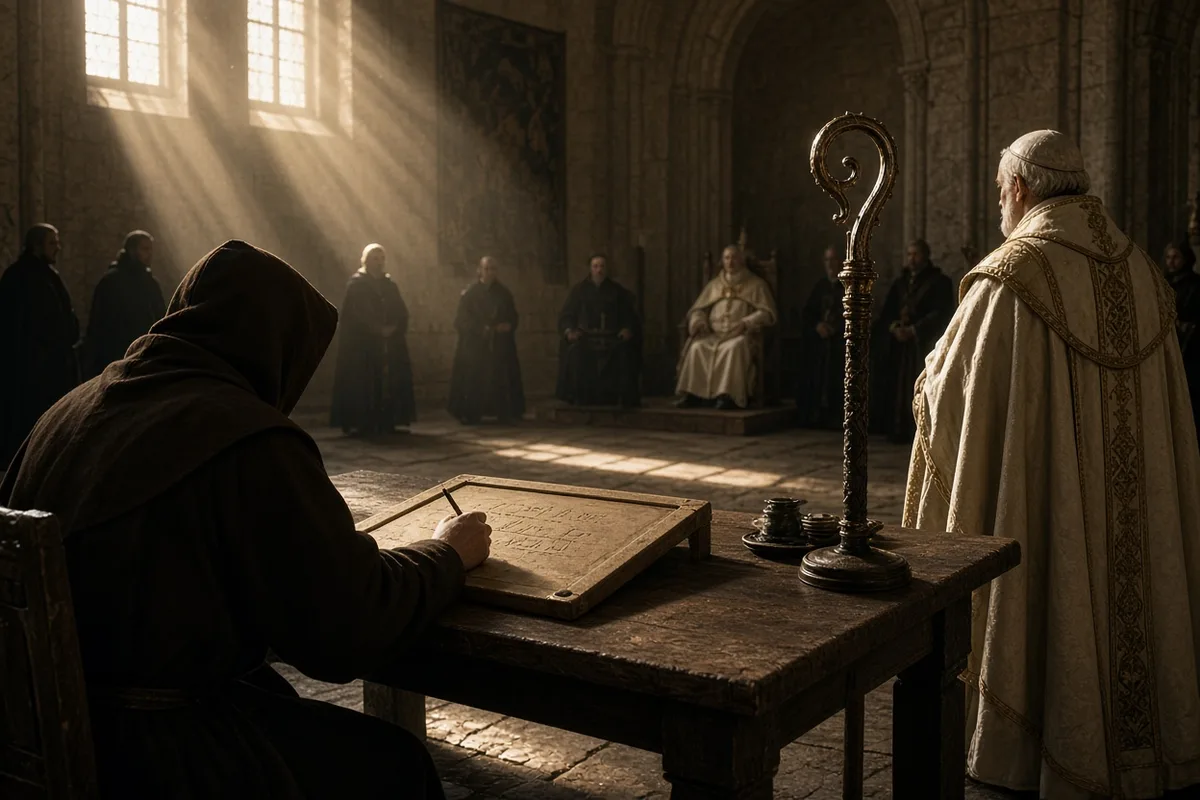
During the Austrian occupation of 1707 the field marshal Prince Eugene of Savoy ordered a new inventory of the Monza treasury on 14 March, listing the purple gospel book as having one hundred and eighty-four folios and the silver processional cross at thirty-six pounds and seven ounces. The report, preserved in the Vienna Kriegsarchiv, added that the original baptismal font was examined by the engineer Giovanni Battista Borri, who measured the oil mark on the rim at three centimeters wide and recommended that the stone be left untouched because the fracture lines from 1527 had not lengthened.
In 1796 Napoleon’s commissioners removed the Iron Crown to Paris, where it was weighed at one kilogram eight hundred and forty grams and displayed in the Musée des Monuments Français until its return in 1815 under the terms of the Treaty of Paris. The Milan prefect’s register for 4 July 1816 records that the crown was carried back to Monza in a sealed case escorted by twelve dragoons and placed once more above the high altar, the iron band still enclosed within its gold circlet.
Archduke Ferdinand of Austria-Este visited the basilica on 9 September 1832 and signed the chapter book, noting that he had viewed the cross sent by Gregory and that the splinter of wood measured seven millimeters by four. The same day the sacristan Carlo Nava entered that the water drawn from Theodelinda’s well that morning filled the font to a depth of forty-two centimeters and that the oil stain remained visible under direct candlelight.
On 26 May 1859, after the Battle of Magenta, the parish priest Don Luigi Ponti hid the hen and chicks in the crypt behind the sarcophagus of Theodelinda; the hiding place is described in his diary as a cavity two palms deep behind the north wall, sealed with a loose brick marked by a small cross scratched with a knife. The objects were returned to the treasury on 14 June when Austrian troops withdrew.
The last recorded handling of the baptismal font occurred on 12 October 1902 when the restorer Luca Beltrami supervised its cleaning before the installation of electric lighting in the nave. Beltrami’s notebook states that the rim was washed with distilled water from the same well, that the oil mark measured exactly three point one centimeters at its widest point, and that the stone was dried with linen cloths before the new wiring conduits were set two meters to the east.
In 1972 the Iron Crown was removed for metallurgical testing at the Polytechnic University of Milan, where the iron band was confirmed to be a single piece one hundred and nineteen point eight millimeters long and between five and seven millimeters thick; the results were published in the journal “Metallurgia Italiana” the following year. The crown was reinstalled above the altar on 3 December 1974 in the presence of the cardinal archbishop of Milan.
The final documented image of a person touching any object associated with the 603 baptism is the photograph taken on 15 January 1992 by the diocesan archivist Don Roberto Codazzi, showing the sacristan Paolo Binda placing the fragment of Columbanus’s staff back into its reliquary after the annual cleaning of the north-wall sarcophagus; the image records Binda’s right hand resting on the lid and the date written on the reverse of the print.