



Quieting the inner critic unlocks the skill you already have

In 60 seconds
- Poor play under pressure comes from Self 1’s judgment and control fighting Self 2’s natural skill, not from missing technique.
- Anxious trying—tighter grip, forced stare, mental checklists—adds tension that wrecks fluid strokes.
- Labeling shots good or bad feeds a loop of criticism, tension, and more errors; neutral description breaks it.
- Trust the body, teach it with images instead of verbal instructions, and park attention on one neutral present detail such as the ball’s seams.
- A match works better as a full test of ability against a worthy opponent than as a score that proves personal worth.
- The same self-interference pattern shows up in typing, speaking, and work under pressure.
The big idea
Gallwey argues that the biggest barrier to better tennis is not missing skill but a critical inner voice that judges, instructs, and tries too hard, drowning out the body’s competent intelligence. The fix is removing that interference through non-judgmental awareness, trust, mental images, and present-moment focus so the skill already there can surface.
The book in brief
Gallwey starts from a court-side puzzle: players stroke cleanly when their minds go quiet and fall apart the moment instructions and judgments flood in. He splits the person into Self 1, the verbal critic and commander, and Self 2, the body’s quiet competence, and shows how the first refuses to trust the second.
From there he attacks the cultural reflex to try harder. Anxious effort tightens muscles and wrecks timing. Judgment—the good/bad label on every shot—locks a loop of tension and fresh mistakes. The counter is non-judgmental awareness: factual noticing that gives the body clean feedback without the emotional verdict.
Trust follows. Once observation is clean, stop micromanaging the swing and let Self 2 execute, the way a hand catches a ball without a lecture. Teach Self 2 with images and feel rather than verbal joint angles. Occupy attention with one neutral present detail, such as the ball’s seams, so the critic has nowhere to stand.
Competition itself gets reframed. A match becomes a test that reveals ability against a worthy opponent, not a verdict on worth. Fear of the score is just future-facing judgment; dropping it lets the earlier habits hold under pressure.
He ends by pointing past the baseline. The same interference pattern shows up in typing, public speaking, and work. Tennis was the clearest window, not the only room where the inner game runs.
Context
Gallwey wrote from years teaching tennis. The 1974 book mattered because it carried performance psychology out of sports manuals into a wider conversation about attention, self-criticism, and learning that later shaped coaching, business training, and mindfulness practice.
The key ideas
1
Two selves at war
Poor performance under pressure comes from conflict between a controlling Self 1 and a competent Self 2, not from lack of skill.
Self 1
Verbal mind that judges, commands, and frets about outcomes
Self 2
Body intelligence that sees, swings, and adjusts without talk
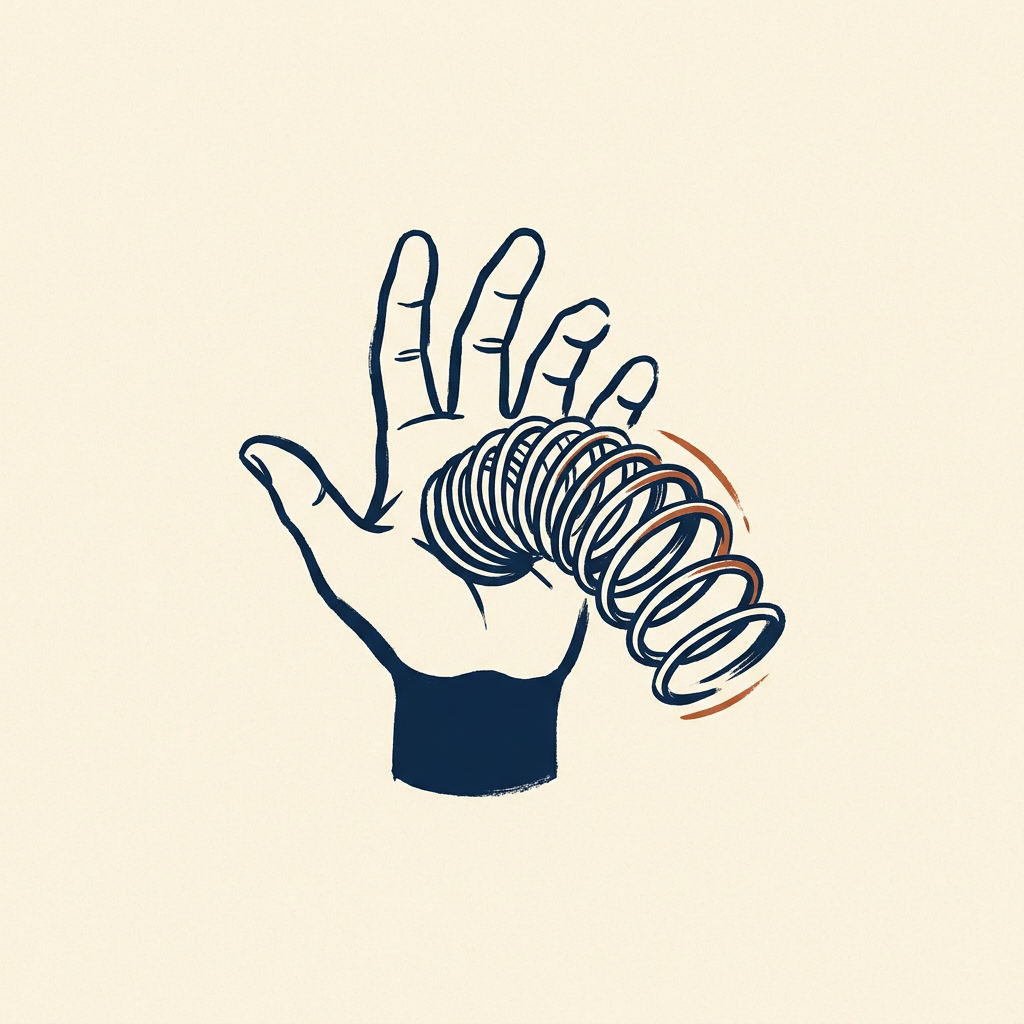
Gallwey opens from years on court watching players hit cleanly when they stop thinking, then fall apart the moment self-instructions start. He names the chatter Self 1: the verbal mind that commands, criticizes, and frets about outcomes. He names the part that actually sees the ball and swings Self 2: the same intelligence that learned walking and bike-riding long before anyone could explain the mechanics.
Self 1 does not trust Self 2. It assumes the body will fail without constant supervision, so it interrupts mid-motion with elbow cues and post-shot scolding. That supervision does not polish the stroke. It jams a process that already works when left alone.
Most coaching, he holds, feeds Self 1 by piling on technical detail to worry about. The real lever is not more information. It is clearing the static so the skill already present can surface.
In practice: A student misses an easy volley, berates herself, then tightens grip and shoulders for the next ball; one miss becomes many more through the self-criticism alone.
2
Effort versus trying
Forced concentration on mechanics reduces performance by adding muscular tension where fluid coordination is needed.
Anxious trying
Clenched grip, furrowed stare, mental checklist before contact
Committed ease
Full power with loose muscles and relaxed tracking
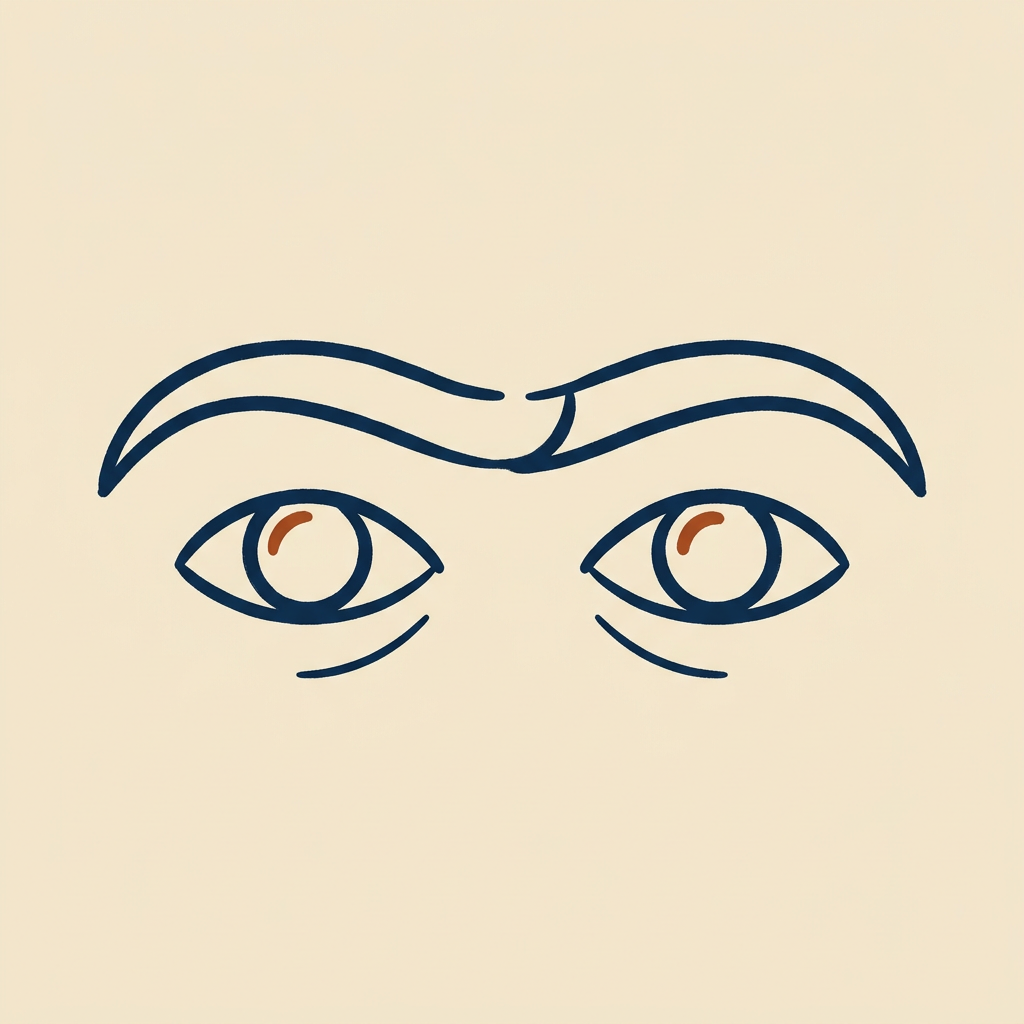
Gallwey draws a line between full physical commitment and anxious trying. A stroke can carry power with loose muscles, or it can arrive clenched by the urge to get every detail right. The second kind ruins the motion.
Culture teaches that trying harder always helps. On court that usually means tighter grip, furrowed stare at the ball, and a mental checklist right before contact. Each adds tension exactly when the body needs to stay responsive.
He found strained watching of the ball produced worse contact than a relaxed gaze that still tracked it. Past a point, conscious effort converts into interference rather than improvement. When play drops, the instinct to pile on more force and more cues often points the wrong way.
In practice: Players told to watch the ball often squint with unnecessary intensity; simply relaxing the eyes while still following the ball improved contact.
3
The judging habit
Labeling shots good or bad creates the anxiety that produces more bad shots, so the judging habit itself is the real problem.
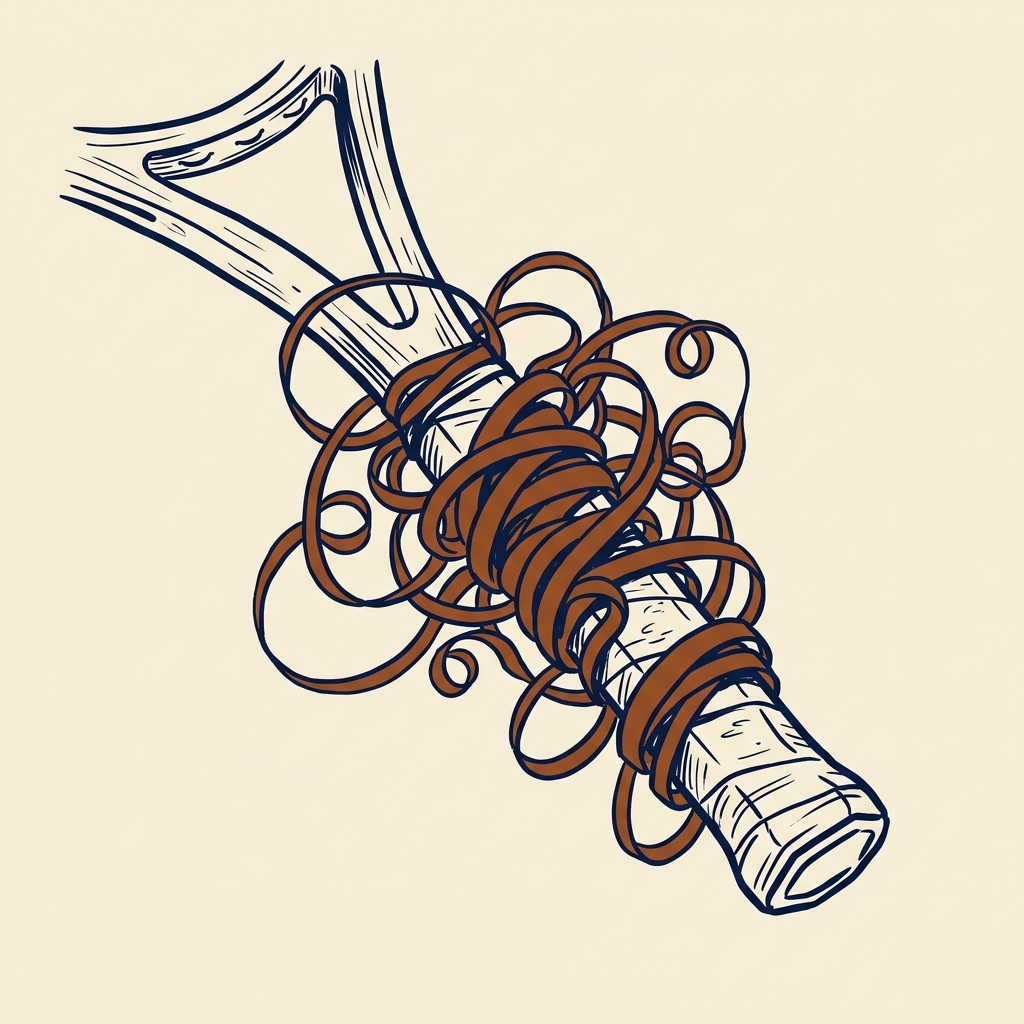
Gallwey isolates judgment as Self 1’s main driver. Every miss gets labeled stupid or terrible; every clean shot gets praised, which quietly raises the bar and the fear of falling short next time.
He ran a simple experiment with beginners: stop calling shots good or bad, only say what the ball did—long, into the net, on the line. He reports strokes smoothed and unforced errors dropped within minutes. No new technique arrived. The punishment stopped.
Judgment runs a loop. Bad shot, self-criticism, tension and split attention, another bad shot, more criticism. Breaking it does not need forced positivity. It needs dropping the verdict and treating the miss as information.
In practice: Beginners who only described ball flight, with no good or bad labels, produced smoother strokes and fewer errors within minutes of the change.
4
See without scoring
Neutral, accurate observation of what is happening restores the calm attention the body needs to correct itself.
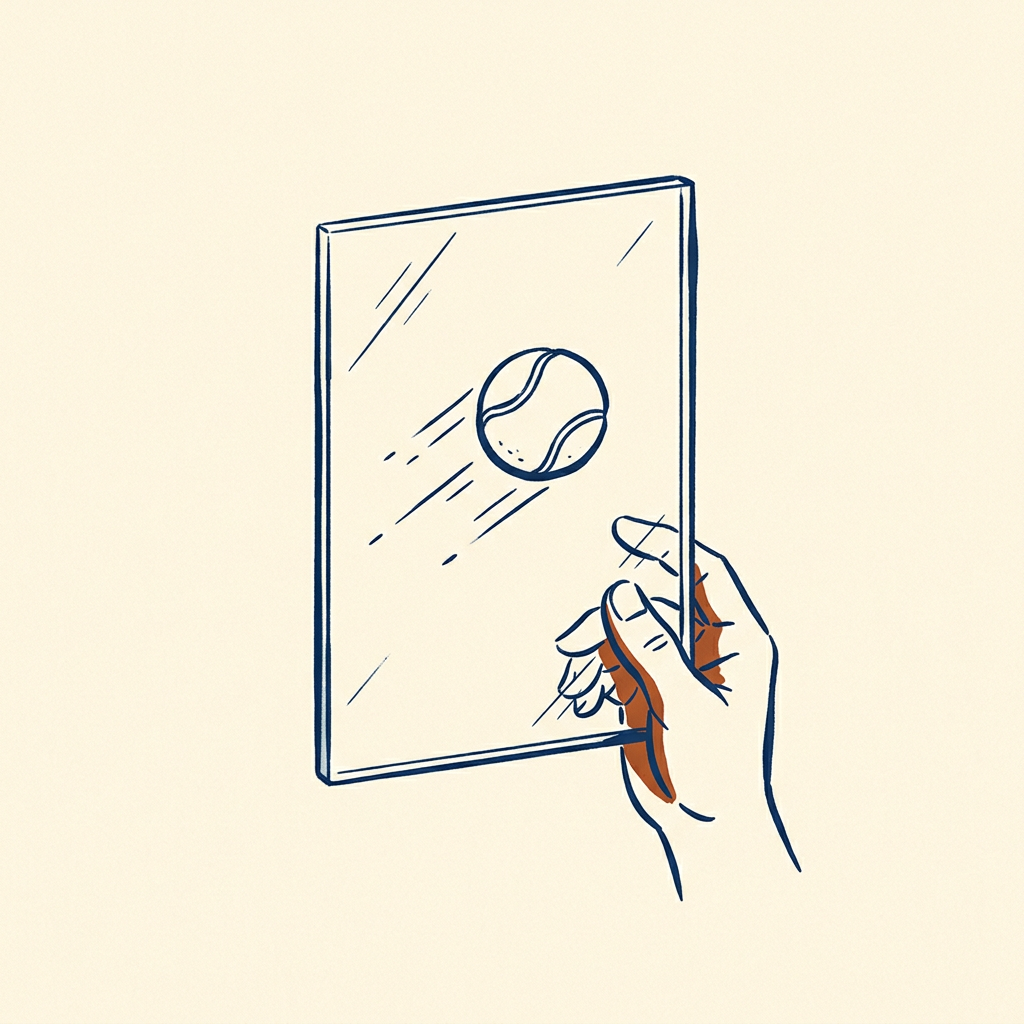
Having named judgment as the mechanism, Gallwey proposes the antidote: non-judgmental awareness. Watch what actually happened. The racket face opened at contact. The ball landed two feet wide. Leave the emotional stamp off.
The body already corrects small errors when it gets clean sensory feedback and room to work. Noticing a wide pattern without self-blame hands Self 2 the data it needs. Thinking only “I am terrible today” hands it anxiety and pulls attention onto self-image instead of the ball.
On court he has players say or think factual lines about flight and motion. Most find it hard at first; the judging habit slips in. The work is catching the label and swapping it for description. Error stops being a moral failure and becomes a mechanical pattern the body can adjust.
In practice: A player who notes, without blame, that shots keep landing wide gives Self 2 the exact cue to change the next swing; the player who only feels terrible learns nothing useful.
5
Let the body swing
Deliberately letting go of conscious mid-swing control and trusting the body produces more consistent results than directing each part of the motion.
Gallwey extends the argument into a direct instruction: let go. Once judgment is quiet and attention is on accurate observation, stop directing hand position, racket angle, and follow-through in the moment of the swing. Let Self 2 execute.
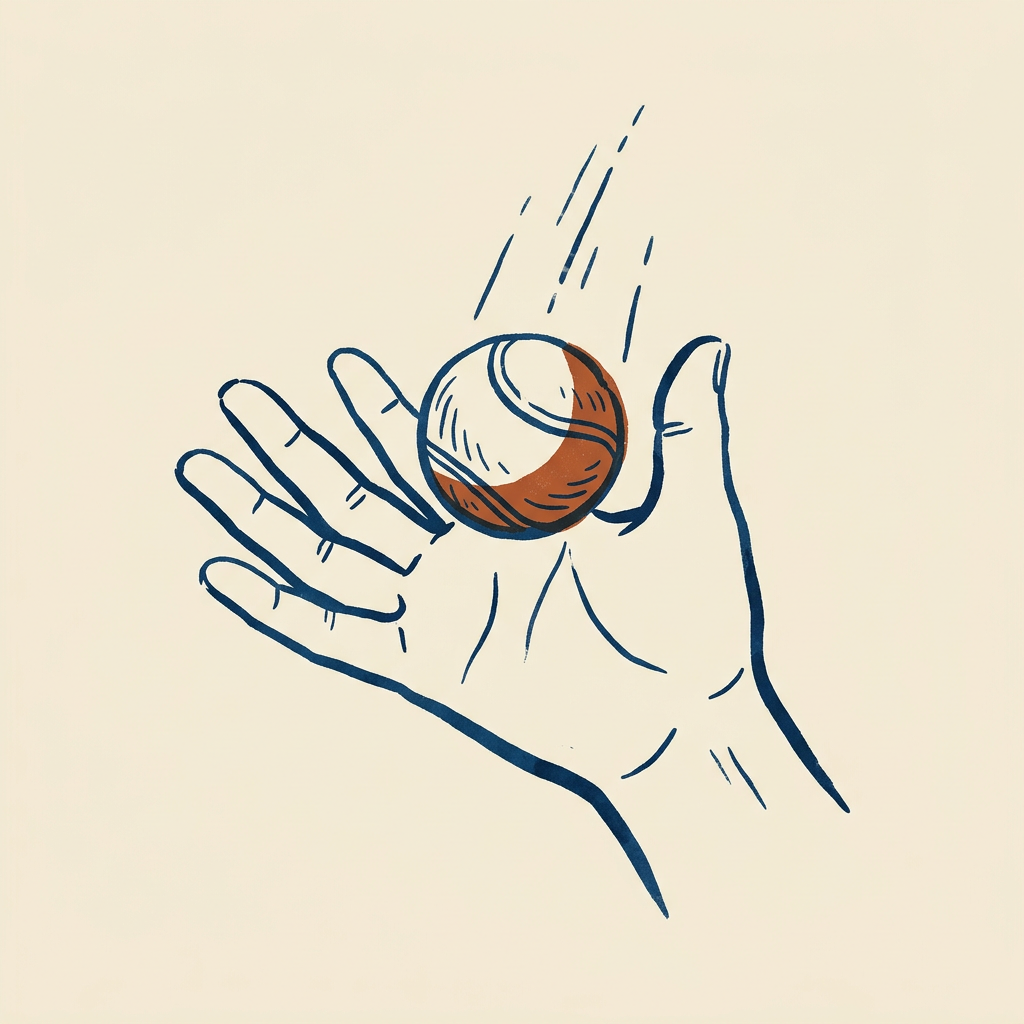
Catching a thrown ball works the same way. No one computes trajectory out loud and orders the hand around. The body is faster than verbal thought. Once basic tennis patterns exist, mid-swing coaching arrives too late and too crude, and mainly adds tension.
Trust builds from evidence, not from a single decision. He has players refuse all technical self-talk for a set of shots and simply watch what happens. Shots hit without micromanagement often land better than the carefully instructed ones. That observation, repeated, is what makes the let-go stick.
In practice: Nobody calculates the path of a tossed ball and issues commands to the hand; the body reacts cleanly until conscious instruction interferes.
6
Pictures beat lectures
Mental pictures of the desired motion train the body more effectively than verbal step-by-step instructions, because Self 2 learns through image and feel.
Verbal instructions
Bend the elbow, rotate the shoulder, fix the wrist on command
Image and feel
Hold the arc, sound, and brushing sensation, then swing
Gallwey introduces a teaching route that sidesteps Self 1’s overcontrol: visualization instead of verbal breakdown. Rather than ordering joint angles, he has the student watch a clean stroke or hold the arc and sound of the shot in mind, then swing inside that image.
Children learn walking by imitating the sight of walkers and letting the body find the feel. Adults, trained to expect verbal steps, distrust that route even when it fits physical skill better.
Self 2’s native language is image and sensation. Verbal technical correction often talks to Self 1, the part that overcontrols. Show the body what is wanted; spare it the mid-motion lecture.
In practice: A player stuck on a topspin forehand improved faster after slow-motion footage and the simple cue to feel a brushing-up sensation than after weeks of grip and wrist instructions.
7
Watch the seams
Sustained relaxed attention on one neutral focus, like the ball’s seams, quiets internal chatter more effectively than trying to silence the mind directly.
Gallwey addresses a practical snag: telling someone to stop judging rarely works, because the order becomes another obsession. His workaround is indirect. Give attention one absorbing, neutral job so commentary has no room left.
His main drill is watching the seams of the ball as it comes, bounces, and meets the strings. Nothing about seams asks for a score. Players who stick with it often notice the anxious voice quiet as a side effect of full absorption.
Concentration, in his framing, is not willpower holding distraction out. It is complete presence with the sensory fact of the task. Split attention—score, opponent remark, the miss three points back—explains more lost matches than any technical hole.
In practice: Players who commit to tracking the ball’s seams report the inner critic fading, not because they fought it but because attention was already occupied.

8
Competition as discovery
Treating a match as a full test of capability against a worthy opponent matters more for performance and satisfaction than treating it as a contest whose only value is the final score.
Score as worth
Every point proves or threatens personal value
Match as discovery
A worthy opponent reveals the edge of your ability
Gallwey turns to competition itself. Ordinary win-lose framing loads every point with fear of what the score says about you. That fear feeds the same Self 1 interference mapped earlier.
He reframes the match as a chance to discover the edge of your ability against someone trying just as hard. A strong opponent becomes a gift that demands deeper focus, not a threat. Players who take that stance often play freer and, he notes, win more, because fear of losing loosens its grip.
This is not indifference to points. You still want them. Winning becomes the natural result of relaxed full attention rather than proof of personal worth. Fear of the final number is just judgment aimed forward; removing it lets trust and present focus survive actual match pressure.
In practice: An opponent’s skill, under this framing, forces more complete concentration than a weak opponent ever would, turning resistance into a training gift.
9
The pattern travels
The same pattern of judgment and overcontrol shapes performance in work, learning, and daily behavior, so the inner-game frame applies well outside sport.
Gallwey closes by arguing the Self 1–Self 2 dynamic is not tennis-only. A critical verbal mind interferes with physical, creative, and interpersonal capacities that run better with less supervision.
The techniques travel. Non-judgmental observation helps any new work skill. Trusting a practiced capacity beats micromanaging it under pressure. Present focus on a concrete neutral detail steadies any performance nerves threaten to scatter.
He offers this as a hypothesis from coaching, not a finished general psychology, and keeps the extension brief. It plants the seed for his later books on golf, skiing, and workplace coaching. Inside this volume it is the closing claim: tennis was the laboratory for noticing self-interference anywhere.
In practice: A typist improves faster after stopping the habit of watching each finger and consciously correcting every error; a speaker stiffens the moment silent self-critique of the voice begins mid-sentence.
Key terms
- Self 1 The verbal, evaluative mind that judges, gives commands, criticizes mistakes, and frets about outcomes.
- Self 2 The body’s competent intelligence that sees, swings, adjusts, and has learned skills since infancy without verbal coaching.
- Interference Self 1’s supervision—criticism, instructions, anxious effort—that disrupts a process Self 2 already runs well when left alone.
- Judgment The habit of labeling results good or bad, which sparks anxiety, tension, and a loop of further errors.
- Non-judgmental awareness Neutral, accurate observation of what happened—ball flight, racket face—without an emotional verdict on top.
- Trying Anxious, forced effort that clenches muscles and overcontrols motion, as distinct from full physical commitment without strain.
- Trust The active choice to withhold mid-swing technical commands and let Self 2 execute once basic patterns exist.
- Inner game The contest inside against self-interference, as opposed to the outer contest against an opponent or score.
What to do
- Describe your next mistakes factually—where the shot landed, what the motion did—without good or bad labels.
- Pick one neutral focus for a practice session, such as a ball’s seams or a single physical sensation, and keep attention there.
- Before a well-practiced skill under pressure, withhold all technical self-instructions for several attempts and watch the result without judgment.
- When you catch silent self-critique mid-task, swap the verdict for one concrete observation of what actually happened.
- Treat one competitive or evaluated situation this week as a discovery test against a worthy obstacle rather than a score of your worth.
Questions to think with
- When during a skill does your inner commentary get loudest, and what is it usually saying?
- What would change if you replaced every good/bad label with a plain description for a full practice?
- Where are you still issuing mid-motion technical orders that arrive too late to help?
- What would it mean to treat your next high-stakes task as a test of capability rather than a verdict on you?
- Which of your skills already run better when you stop watching yourself do them?
The other side
Gallwey’s claims rest on coaching anecdote, not controlled comparison, so how much improvement comes from less anxiety versus novelty or expectancy stays unmeasured; Self 1 and Self 2 are a teaching metaphor, not a validated brain model, even though later sport psychology supported the broad idea that excess conscious control can disrupt well-learned motor skills. The advice fits partly learned physical skills better than true beginners or mainly cognitive work, and the book barely addresses anxiety disorders, trauma around competition, or settings where a coach is directing in real time.
Who it's for
Club-level athletes stuck on a plateau despite lessons, coaches and managers who want a learning model that does not rely on constant correction, and anyone whose self-criticism during a task seems to make the task harder will get the most from the full book and its court-born drills.