


Radegund Founds Holy Cross Abbey
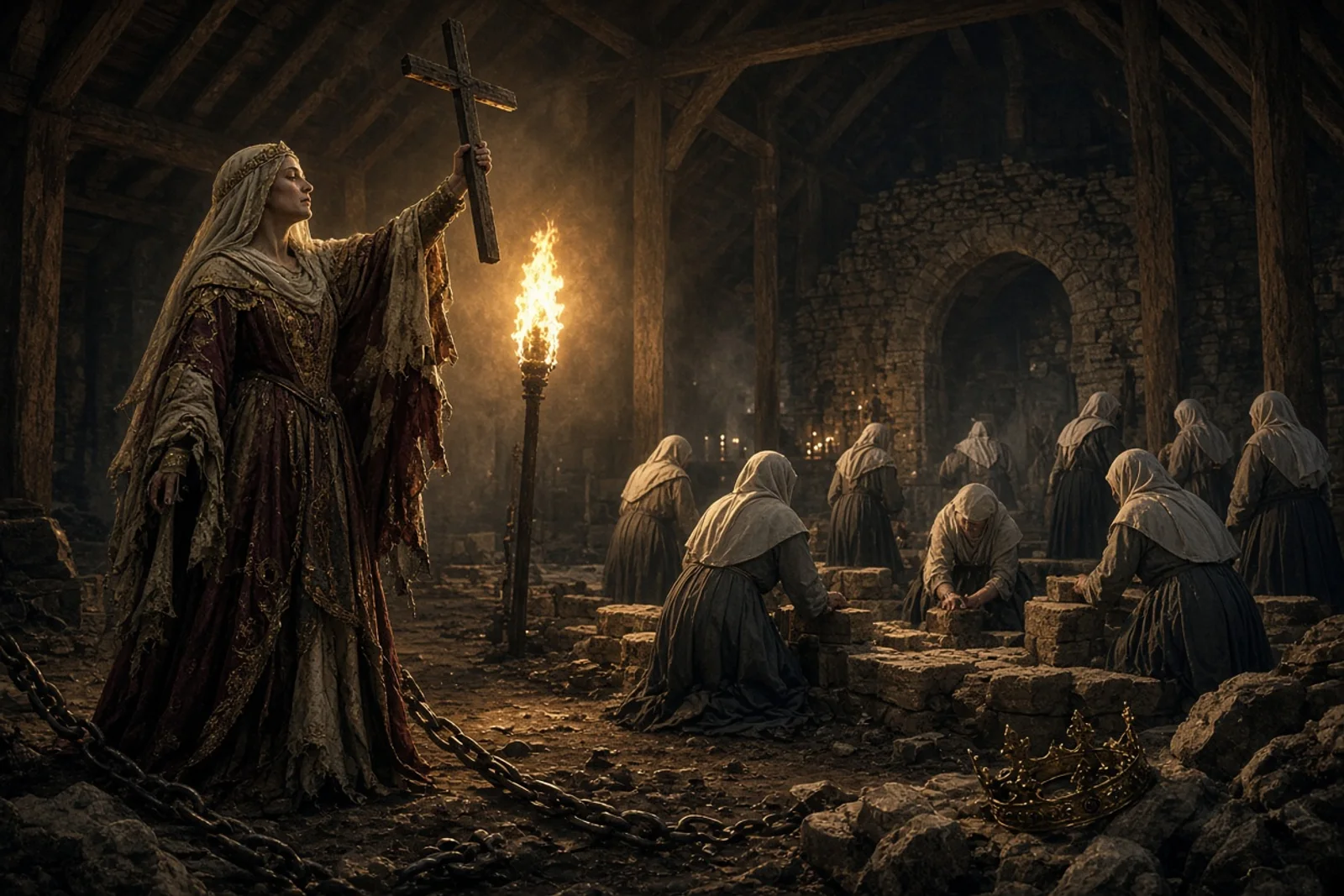
I was hauling water from the river when the wagons rolled in. The sun sat low over Poitiers, turning the stones of the old Roman walls gold, and my back ached from the buckets. I had come up from Saix the month before because the lady said the new house needed hands that knew how to keep the sick clean. My own skin still carried the faint sour smell of the baths I had scrubbed there.
Radegund walked at the head of the line, her veil tied back so she could see the ground. She wore a plain wool gown the color of river mud. Behind her came two carts loaded with timber and the relics she had begged from the bishop at Tours. The bishop himself rode last on a mule, looking as if he already regretted the gift.

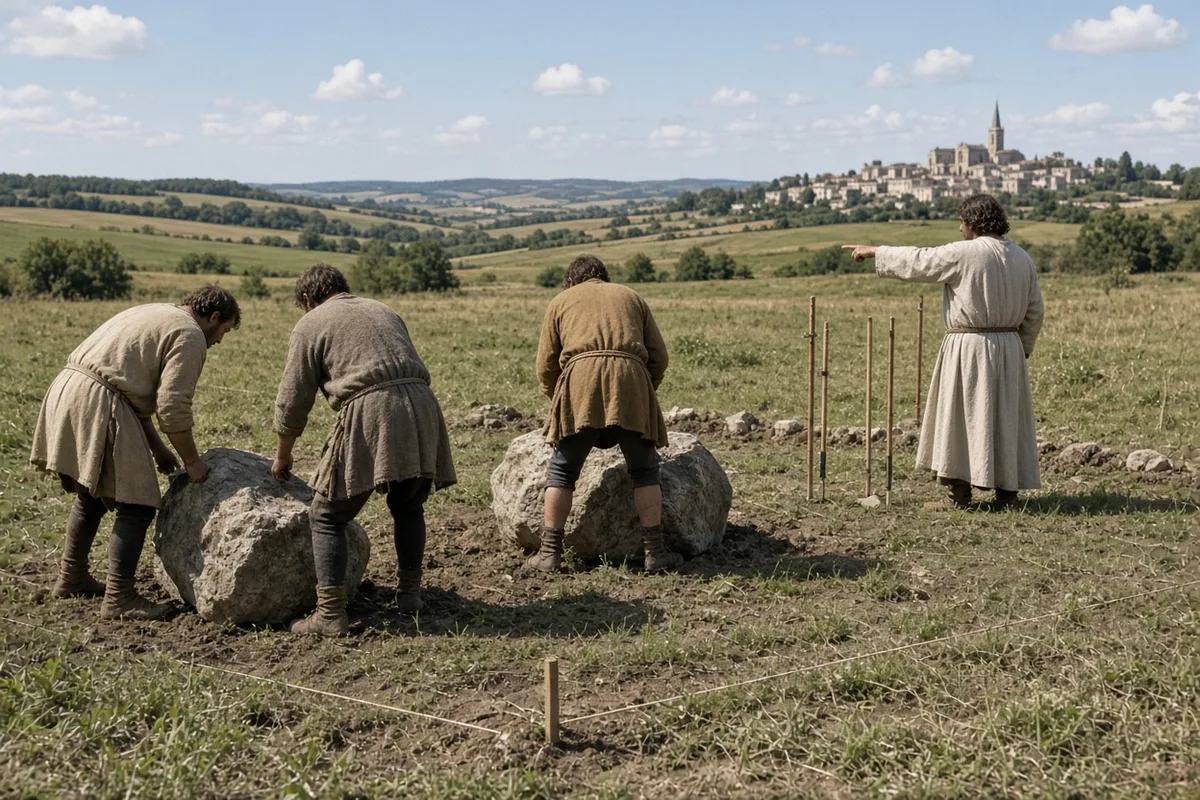
We set the first posts that afternoon. The ground was hard from the dry summer, and the mallets rang against the oak until my palms split. Radegund knelt in the dust with us, holding the measuring cord while a carpenter marked the corners. She did not speak of Clothar or of the brother the king had killed. She only asked whether the posts would stand level when the rains came.
By nightfall the outline of the church showed in the trampled grass. We ate barley porridge from a single pot. Radegund moved among the workers, pressing salve into cracked hands. One of the men from the town asked her why a queen would sleep on straw with laborers. She answered that straw kept the fleas off better than silk.
The next morning we dug the drainage trench. The clay stuck to the spades and the smell of wet earth rose around us. Radegund stood at the edge, calling measurements. When the trench reached the place where the altar would stand, she climbed down into it herself and laid the first stone for the foundation. Her sleeves were rolled to the elbows and the mud streaked her forearms.

Word spread through the town that the king’s wife had left him for good. People came to watch. Some brought bread. Others brought questions. Radegund met each one at the gate and turned them away only when they asked for gold. She told them the house would take in women who had nowhere else, and that the doors would stay open as long as the bread lasted.
On the third day the bishop consecrated the ground. The wind blew dust into our eyes during the prayers. Radegund stood with her head bowed, but I saw her lips moving with the words before the bishop spoke them. After the blessing she walked the perimeter alone. I followed at a distance and heard her name each corner for the women who would sleep there.
Basina arrived two weeks later. She came on foot, her face bruised and her cloak torn. Radegund met her at the unfinished gate and led her to the small room already roofed. I brought warm water and clean cloths. Basina did not speak for three days. When she finally asked where she was, Radegund answered that she was inside walls that no man could enter without permission.

We worked through the autumn rains. The roof beams went up slowly because the timber had to be seasoned first. Radegund slept in the open with the rest of us until the dormitory was finished. One night a fever took her. She lay on a pallet by the hearth while I bathed her forehead. She kept asking whether the bread for the morning had been set to rise. I lied and said it had.
By midwinter the church stood complete enough for the first Mass. The candles flickered in the draft. Radegund read from the psalter in a voice that carried to the back benches. After the service she stayed behind to sweep the floor herself. The dust she gathered she carried outside in her own hands rather than let anyone else touch it.
More women came as the roads cleared. Some brought dowries, others only the clothes on their backs. Radegund placed each one according to what she could do. Those who knew letters copied manuscripts in the scriptorium corner. Those who knew sickness tended the sick. I stayed with the water buckets because that was what I had always done.
Clothar sent messengers twice that year. The first time Radegund met them at the gate and refused to return. The second time she sent back the ring he had given her at their wedding. The messenger stood in the mud and called her name until his voice cracked. She did not come out again.
The abbey grew larger than the first plan. We added a second dormitory when the number of women reached forty. Radegund walked the new foundations at dusk, her lantern swinging. She stopped at each post and touched the wood as if testing its strength. I heard her say the names of the women already inside, one after another, until the light burned low.
In the spring the first girl was born inside the walls. Her mother had come from a village north of the city and had nowhere else to go. Radegund held the child at the font and gave her the name of her own mother. The mother wept. Radegund told her the child would learn letters before she learned to fear men.
By summer the hospital wing was finished. We moved the sick women from the old villa at Saix. The new beds stood in rows under a thatched roof. Radegund washed the first patient herself, the same way she had done years before. The water steamed in the morning air.
I still carry the buckets. The path from the river to the kitchen grows shorter each year as the buildings fill the space between. Radegund walks it sometimes at dawn, her steps slower now. She stops at the place where the first post was driven and looks at the ground as if she can still see the mark.
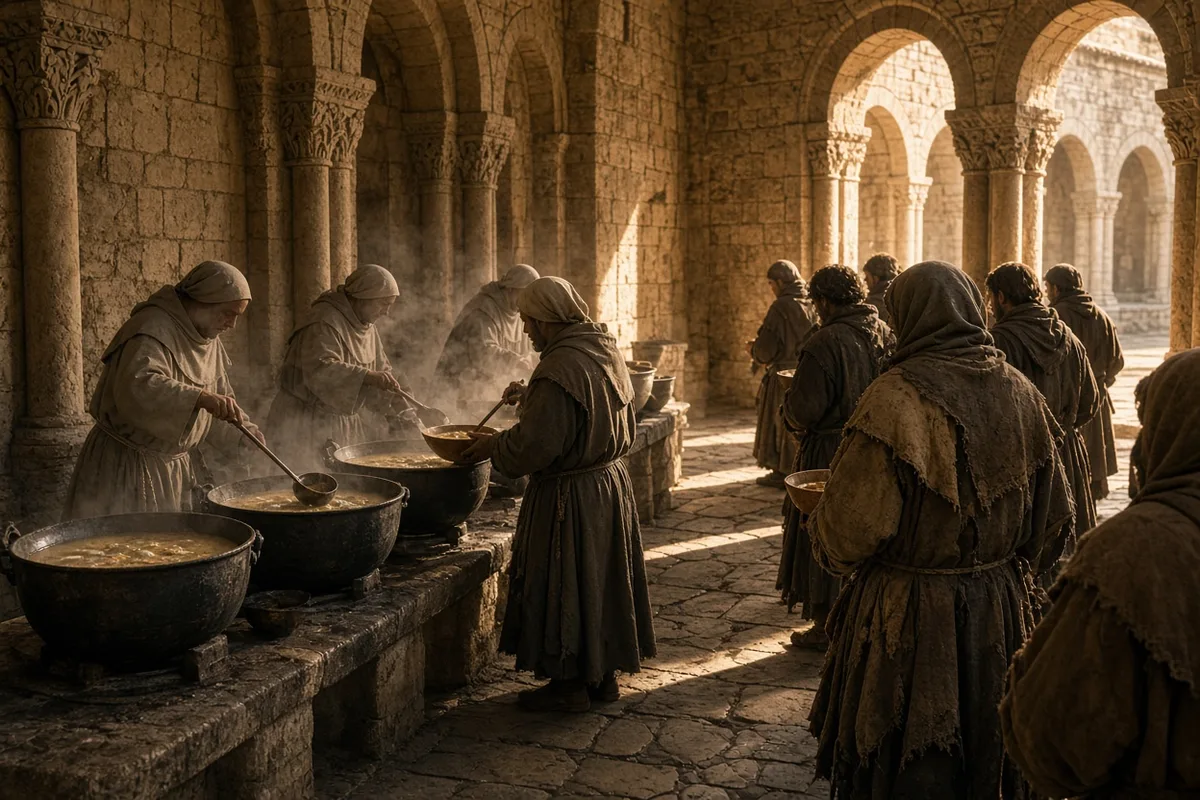
The path from the river still pulled at my shoulders when Venantius Fortunatus arrived from Tours in the spring of 567. He carried a letter from Bishop Eufronius that named the exact measurements for the new reliquary, seven feet long and four feet wide, to be cut from Lebanese cedar shipped through Marseille. Radegund read the letter aloud at the refectory table while Agnes, newly appointed abbess, counted the silver coins sent with it. Fortunatus stayed three weeks, sleeping in the guest chamber beside the church. Each evening he walked the cloister and dictated verses to the copyist Leubovera, who scratched them onto wax tablets before transferring them to parchment. One line he repeated until the words settled: “The standard of the King advances.” I heard him say it while he tested the new oak door that separated the nuns’ choir from the nave.
The True Cross arrived two years later, carried by two deacons from Constantinople under orders from Emperor Justin II. The relic reached Poitiers on 19 November 569, sealed in a silver casket the size of a child’s coffin. Radegund met the procession at the city gate and led it inside the abbey without music or banners. She placed the casket on the altar herself and remained kneeling until the lamps burned out. Agnes recorded the arrival in the house chronicle as the day the community received its name, Holy Cross, and added the detail that forty-three nuns were present to witness the opening of the seals. I carried water for the deacons that night and heard one of them repeat the emperor’s instruction that the fragment must never leave the abbey walls.
Basina left the following winter after a dispute over the rule. She took three younger women with her and returned to the court at Soissons, where she later married a count named Boso. Radegund did not send after them. Instead she added a new clause to the community statutes requiring every entrant to swear before the altar that she would not leave without written permission from the abbess. The clause was copied in the hand of the nun Baudonivia and dated to the kalends of March 572. By then the dormitory held fifty-eight beds, and the scriptorium produced two complete psalters each year for sale to churches in Angers and Nantes.
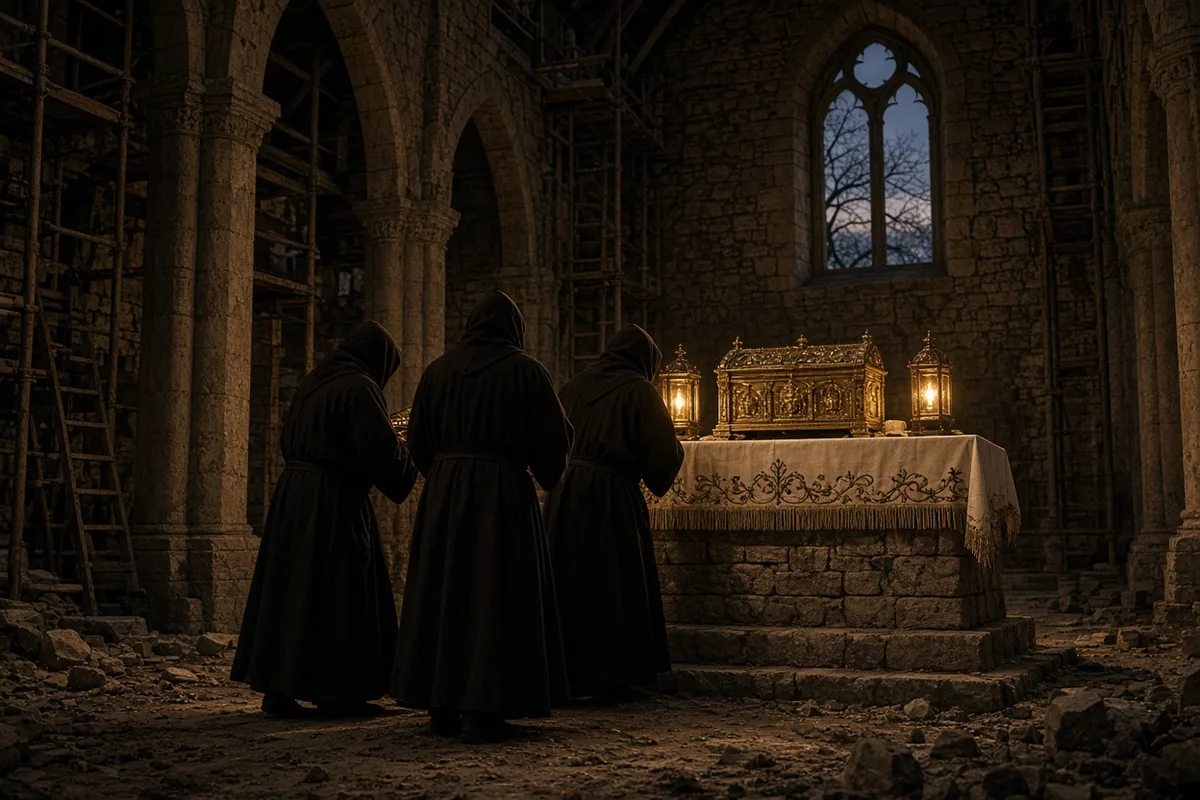
Radegund died on 13 August 587. She had asked to be buried in the church floor beneath the spot where the first post had stood. Agnes and Fortunatus, now bishop of Poitiers, carried the body themselves while the nuns chanted the same psalm Radegund had read at the first Mass. The tomb was covered with a plain stone slab that bore only her name and the year. I was sixty-three that summer and still fetched water, though the younger women now hauled most of the buckets. The abbey register listed one hundred and twelve residents, including twelve girls learning letters in the schoolroom next to the hospital.
Fortunatus died in 609. His successor, Bishop Austregisil, ordered a marble slab placed over Radegund’s grave and added an inscription quoting one of the bishop’s own hymns. The text ran seventy-two letters long and named the date of her profession at the abbey as 26 June 552. By then the original timber church had been replaced with limestone walls and a tiled roof paid for by a grant from King Childebert II. The hospital wing treated thirty patients at a time, and the kitchen garden supplied beans and leeks to the refectory every day except during Lent.
The Viking raid of 863 burned the outer buildings but left the church and the relic intact. Abbot Ebroin, who had succeeded the abbess that year, counted the losses at forty-seven volumes from the library and the entire stock of salted fish. Reconstruction took four years and used stone from the same quarry that supplied the cathedral. The new dormitory held one hundred beds, and the community grew again when noble families sent daughters after the Norman threat passed.
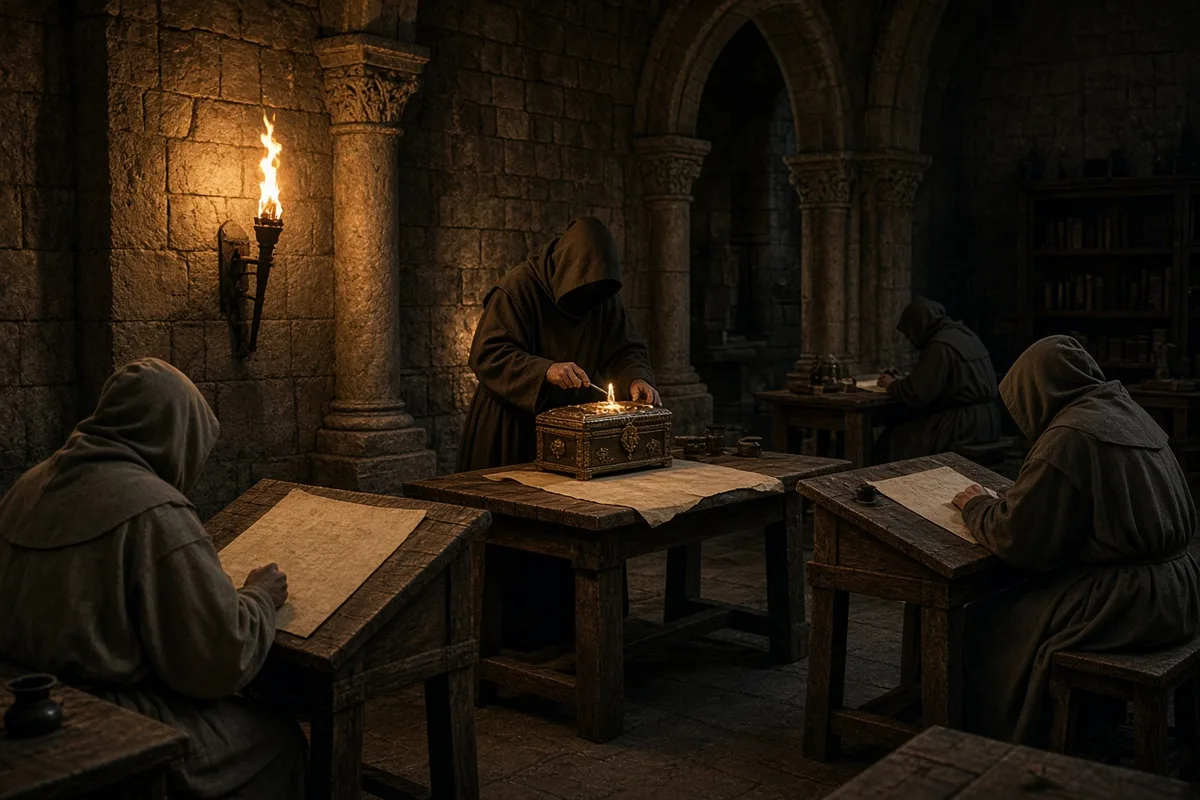
In 1072 the relic was carried in procession through the streets of Poitiers to end a drought. The bishop recorded that two hundred and thirty-seven people walked behind it and that rain began before the procession returned to the abbey gate. The stone slab over Radegund’s tomb had by then been worn smooth by feet, yet the letters of her name remained visible when light struck from the south window at midday.
I stopped counting the years after my eightieth winter. The last time I walked the path from the river, the kitchen stood where the first carts had unloaded timber, and the place where Radegund had driven the measuring cord was marked only by a darker patch in the cloister paving. One morning I set the buckets down at the threshold and did not pick them up again.
The winter after I set the buckets down, the new abbess, Leubovara, ordered the old well deepened by three feet because the spring flow had dropped to a trickle measured at four buckets an hour. I sat on the cloister bench and watched the masons reset the stones, each one cut to the same width as the original oak posts from 552. One of them, a man from Chauvigny, asked me the name of the woman who had first marked the corners, and I told him it was Radegund, the same whose profession date Bishop Austregisil had carved in seventy-two letters on the marble slab.
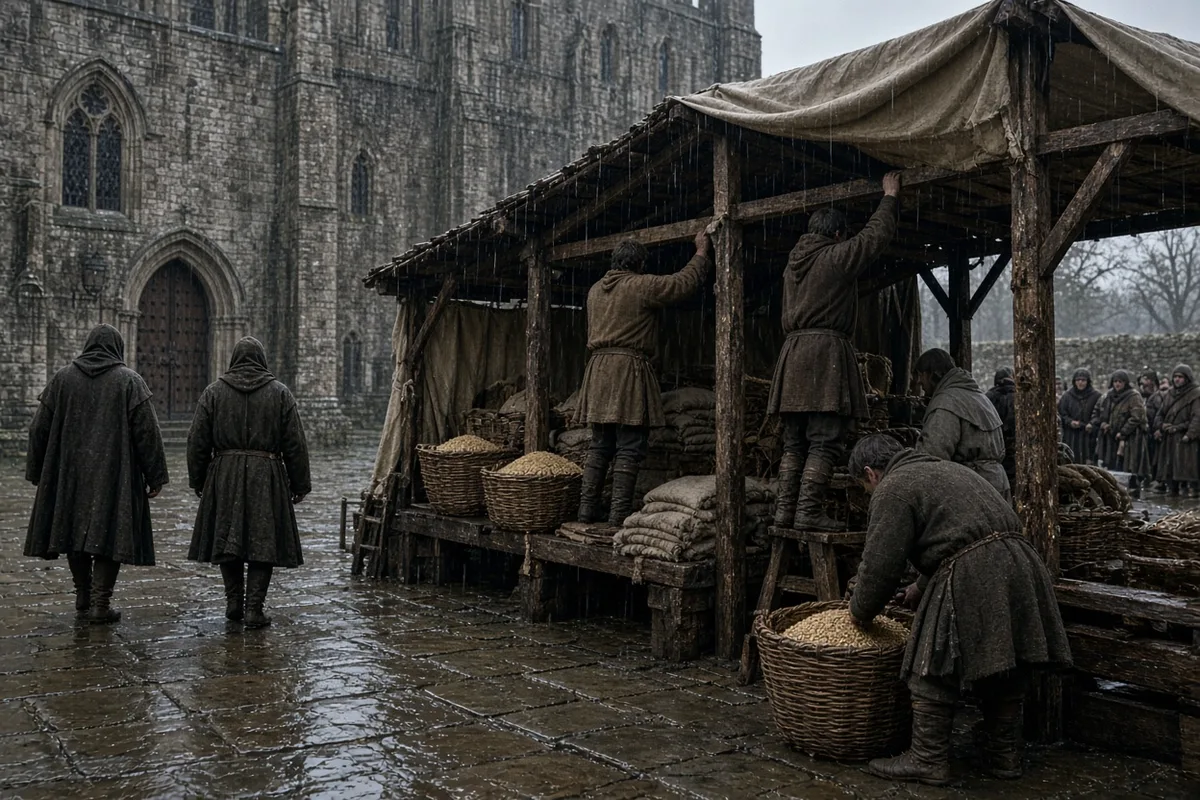
By 1204 the relic had been enclosed in a new chasse of gilded oak and crystal, nine feet long, paid for with twenty marks of silver from Eleanor of Aquitaine during her visit on the feast of the Invention of the Cross. The nuns recorded that she knelt at the altar for the length of the psalm “Vexilla Regis” and left behind a silver chalice engraved with her own arms. I no longer carried water, yet I still walked the cloister each morning and counted the new beds in the infirmary, which now held forty patients after the grant from King John allowed the purchase of an additional field at Savigny.
The Black Death reached Poitiers in May 1348. The register kept by Abbess Agnes de la Tour noted one hundred and nineteen deaths inside the walls that summer, including the entire novitiate of seventeen girls. The relic was carried around the cloister each Friday, and the surviving nuns sang the same antiphon Fortunatus had dictated to Leubovera three centuries earlier. I sat by the kitchen door and listened to the voices, my own hands empty for the first time since the year the wagons arrived from Tours.
During the Wars of Religion the Huguenot captain Mathurin Lussan demanded the silver from the high altar on 13 December 1562. Abbess Renée de Bourbon refused and was imprisoned for eleven days in the tower of the old Roman wall until the town council paid a ransom of three hundred écus. The casket itself remained untouched because the key had been hidden beneath the stone where Radegund had laid the first foundation block. When the nuns returned, they found the dormitory roof stripped of its lead, yet the psalters copied in Baudonivia’s hand were still stacked in the scriptorium.
Napoleon’s prefect closed the community in 1791 and turned the buildings into a barracks for the 14th Regiment of Dragoons. The altar stone was broken into paving for the courtyard, but the marble slab over the tomb was left in place because the colonel’s wife insisted it bore the name of a saint. I watched from the window of the small room where Basina had once slept as soldiers stacked their muskets against the cloister columns. The relic was removed to the cathedral treasury and stayed there until the Concordat of 1801 allowed its return.
Restoration began in 1853 under the direction of the architect Louis-Auguste Boileau, who rebuilt the nave with limestone from the same Chauvigny quarry used in the eleventh century. The new dormitory was converted into a museum that holds the wax tablets once used by the copyist Leubovera and the silver casket that arrived from Constantinople in 569. Pilgrims still arrive on 19 November, the day the deacons brought the fragment, and the current community of twenty-three sisters recites the office in the choir separated by the oak door Fortunatus tested in 567.
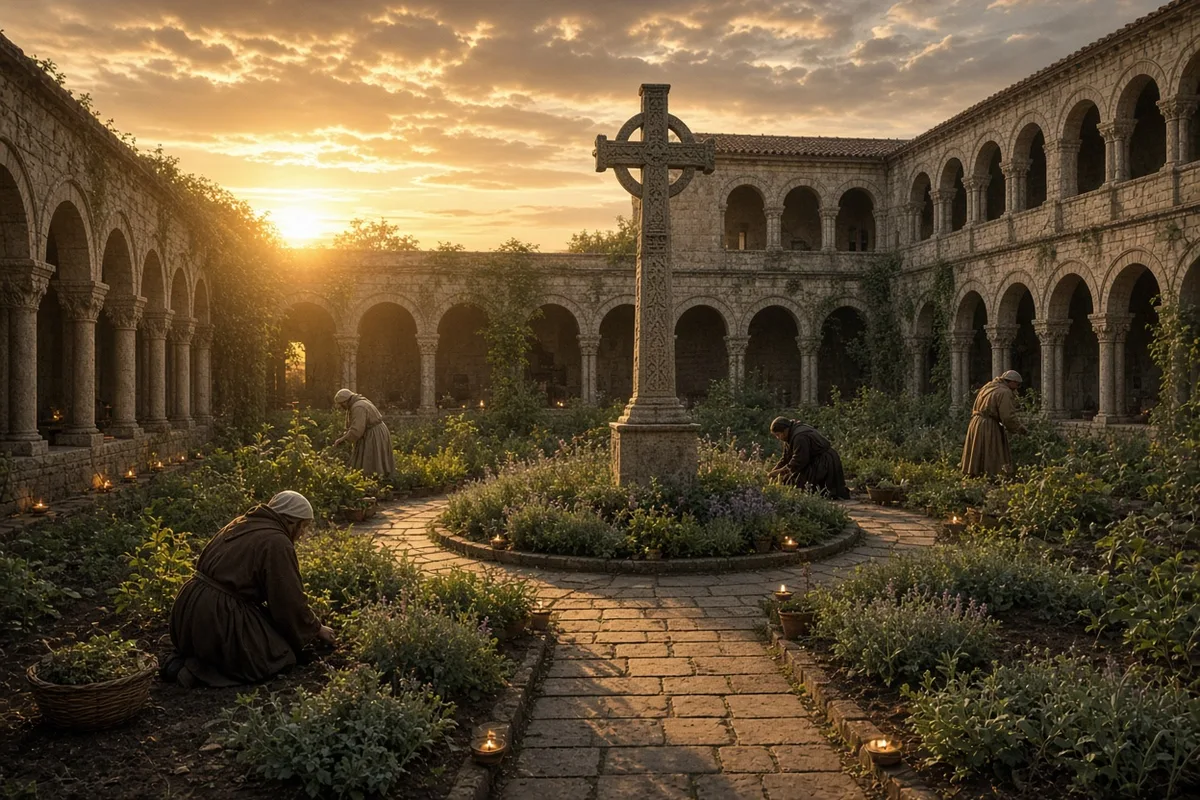
On the last morning I left the abbey gate, the younger sisters were planting leeks in the garden where Radegund had once measured the drainage trench. One of them carried a bucket from the river, her sleeves rolled to the elbows exactly as the queen’s had been on the day the first stone was laid. I turned at the corner of the old Roman wall and saw only the darker patch in the paving where the measuring cord had once been stretched, the same patch that had marked the ground for more than thirteen hundred years.