



Robert Raikes Starts Sunday School Movement
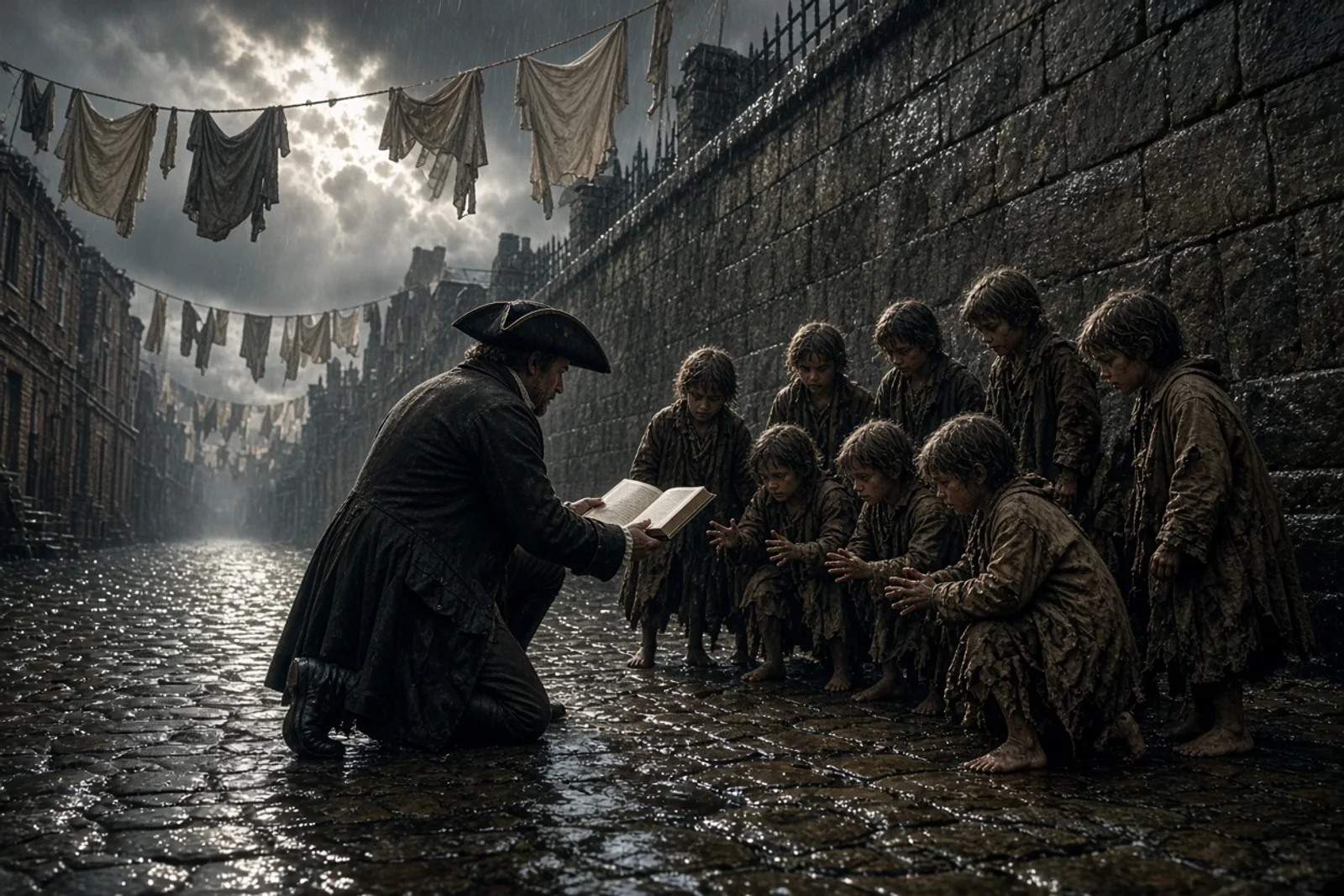
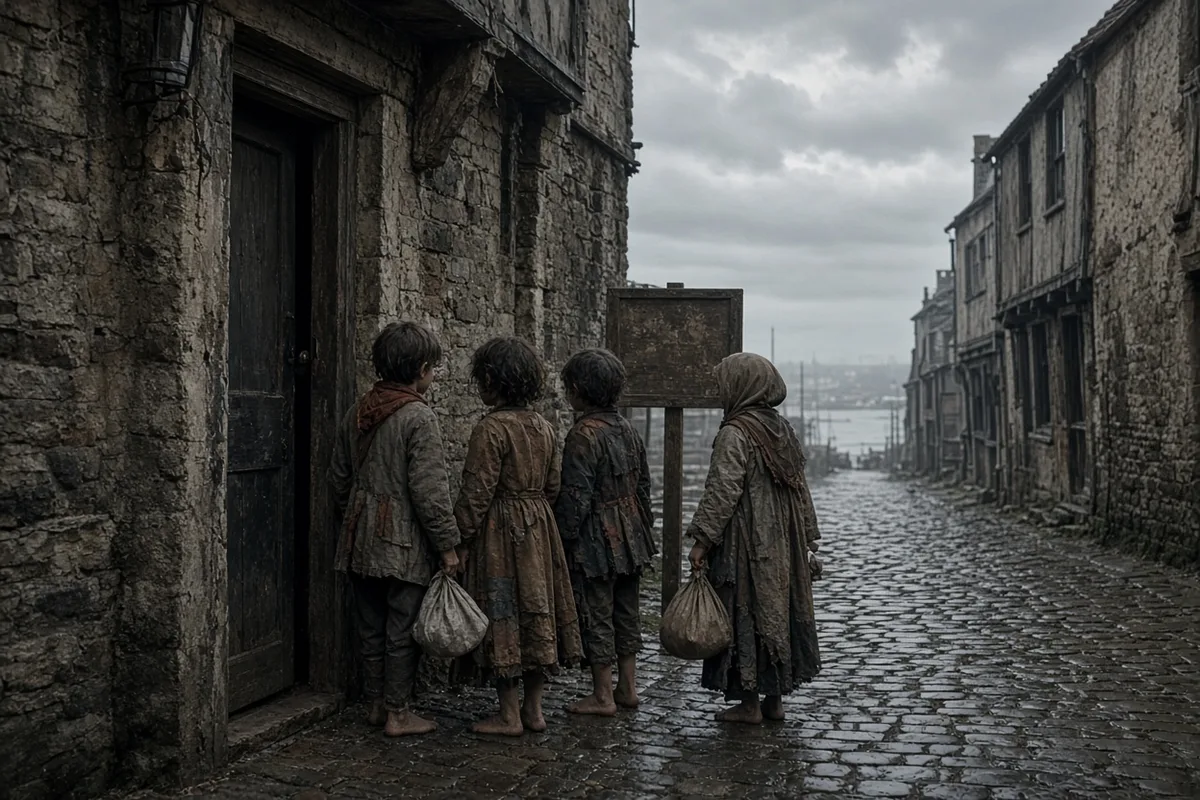
The children tore past the pump at the end of my lane, bare feet slapping the cobbles, one of them swinging a dead rat by the tail. Sunday meant nothing to them except an empty stretch of hours. I had just set a bucket down when Robert Raikes came round the corner with his hat pulled low against the drizzle. He stopped and watched them disappear toward the meadows.
He had been writing about the gaol for years by then. Men and women locked together, children born on the straw, no food unless the felons shared their own crusts. Raikes paid for some of those crusts himself. When he turned from the lane I followed at a distance, curious what had pulled him out on a damp afternoon.
We reached the edge of St Catherine’s meadows. A woman stood there with a basket of washing, her arms red from the stream. Raikes spoke to her. She pointed at the figures already kicking up mud and shouting across the grass. I heard only fragments, something about their mothers working the pin factories and no one to keep them from the river or the alehouse doors. Raikes nodded, wrote a note in a small book, and walked back toward the city.

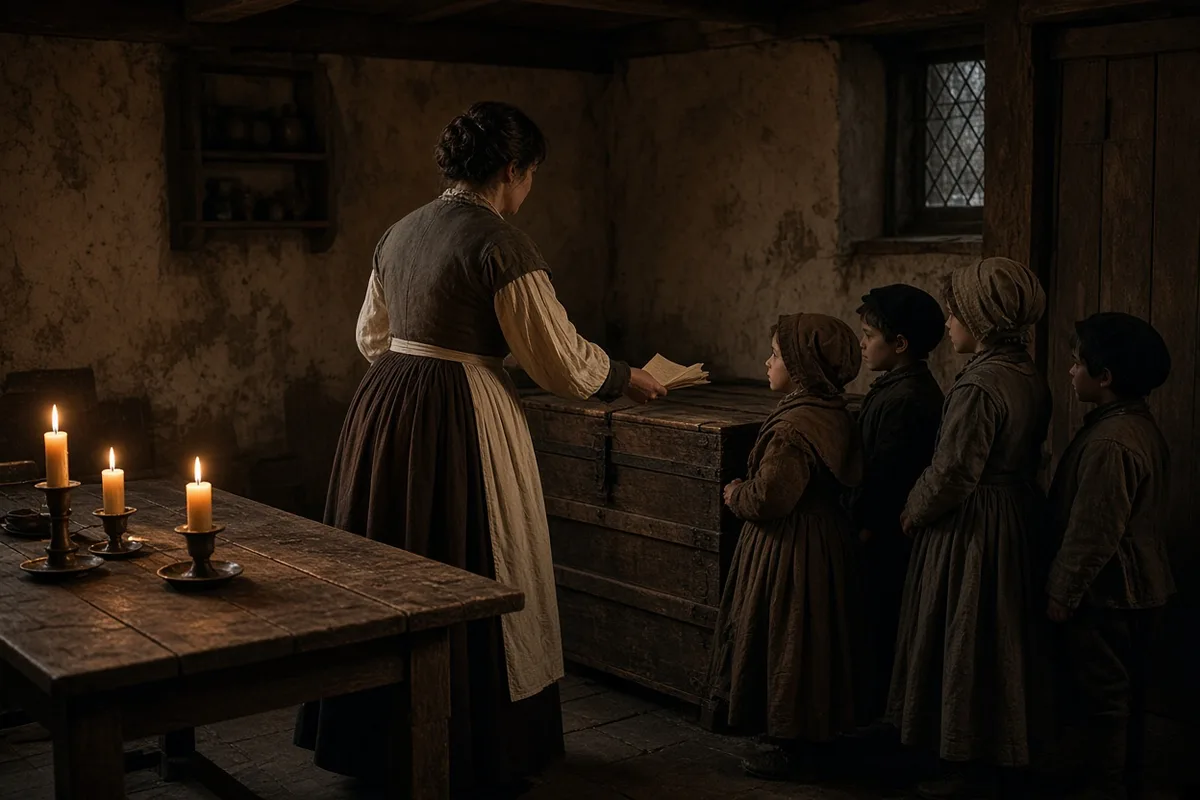
A week later he found Thomas Stock, the curate, outside St Mary le Crypt. They stood under the porch while rain ran off the roof. Stock had already tried a few children at Ashbury on Sundays. Raikes offered to pay most of the teacher’s wage if Stock would draw the rules. Stock agreed. They hired a woman from the next parish for one shilling from Raikes and sixpence from Stock. The room they rented smelled of damp plaster and old hymnbooks.
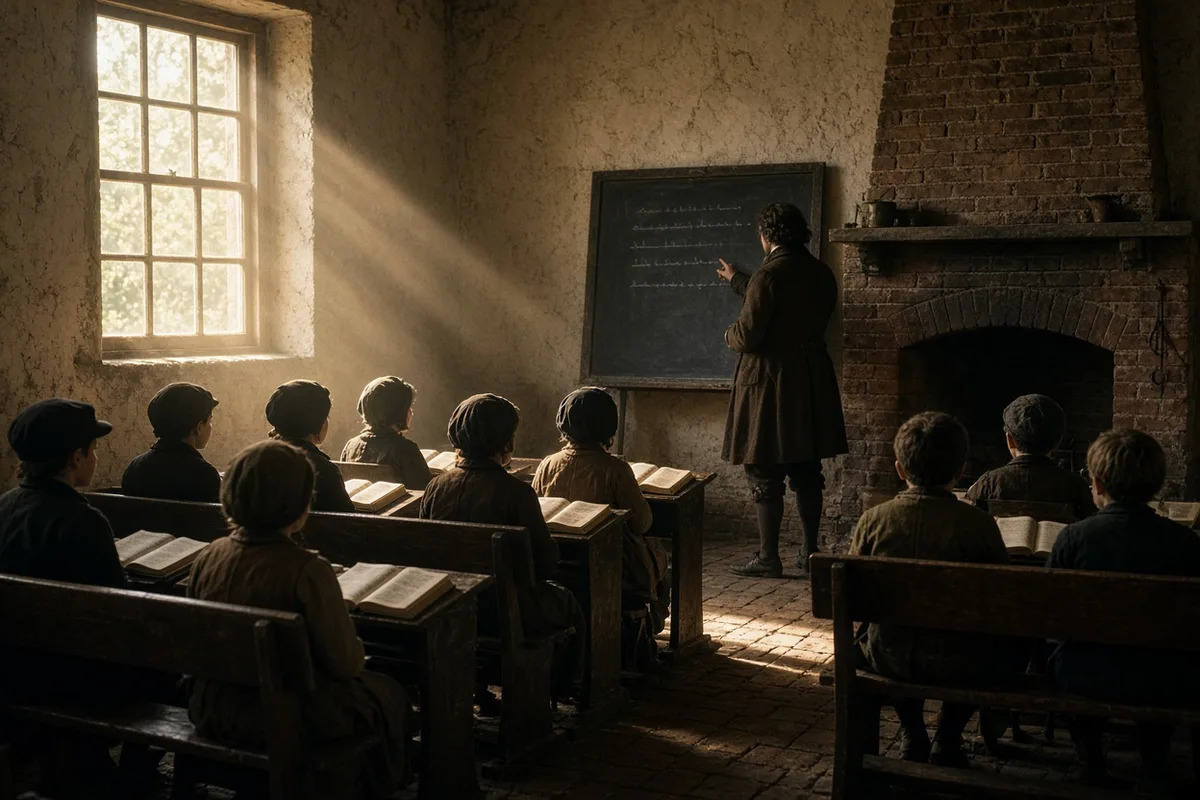
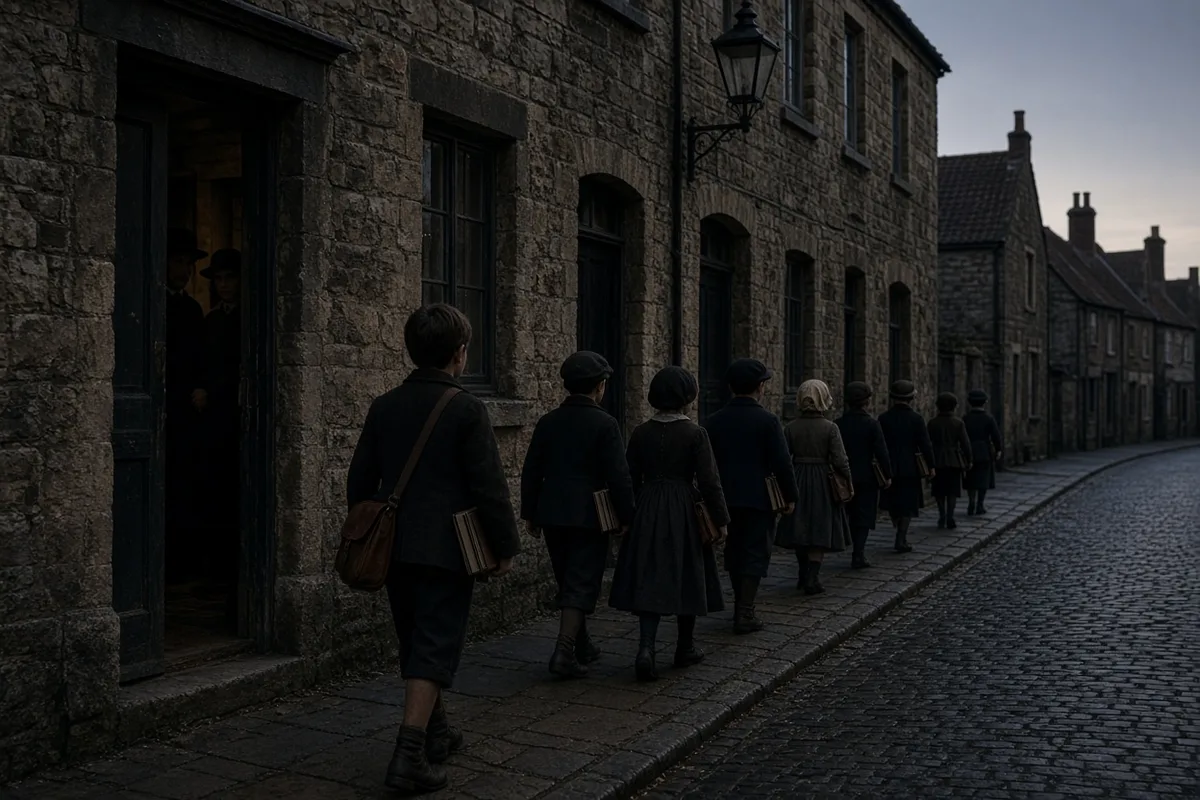
On the first morning the children arrived in twos and threes, some barefoot, some in shirts stiff with river mud. I stood across the lane with a basket of mending and watched them file in. One boy tried to bolt. Raikes caught him gently by the shoulder and spoke low until the boy came back inside. The teacher began with the alphabet on a board. By midday the noise had dropped to a steady murmur of repeating letters.
Raikes came every Sunday after that. He would stand at the back, hands clasped behind him, listening. When a child stumbled over the Lord’s Prayer he would step forward and say the line once, then wait for the repetition. Stock visited less often, busy with his own parish, but the rules he had written stayed pinned to the wall. No swearing, no fighting, shoes wiped on the mat. The children tested every line at first. One afternoon two boys fought over a slate until Raikes separated them and made them sit on opposite benches for the rest of the hour.
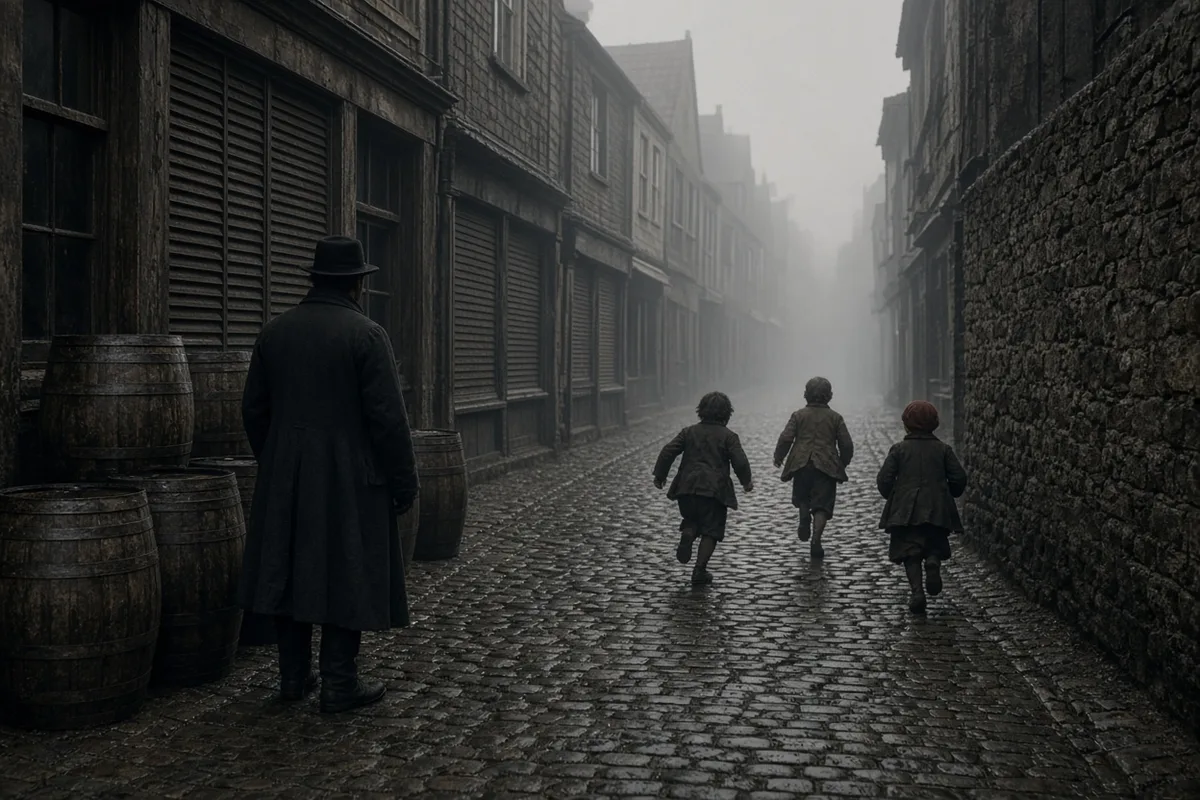
By the second month the street outside the room grew quieter on Sundays. Neighbours noticed. A woman whose boy had once thrown stones at her windows stopped me at the pump and asked whether the school would take her daughter as well. Raikes agreed without extra charge. He paid the teacher from his own pocket for three more children that week.
Word travelled to other parishes. A man from Painswick walked over one Sunday to see the room for himself. He left with a copy of the rules in his coat. Within a month a similar school opened there, using the same payment split between two local men. Raikes printed nothing about his own part. He only mentioned the children learning to read and sit still.
In November 1783 he slipped a short notice into the Gloucester Journal. It said the experiment in St Mary le Crypt had kept twenty-three children off the streets for several months and that they could now repeat the catechism. He signed no name. Letters began arriving from Sheffield and Leeds. One came from Colonel Townley asking for details. Raikes answered at length, describing the cost of the teacher, the hours from eight until noon, the value of starting with the youngest. The letter found its way into the Gentleman’s Magazine the next year.
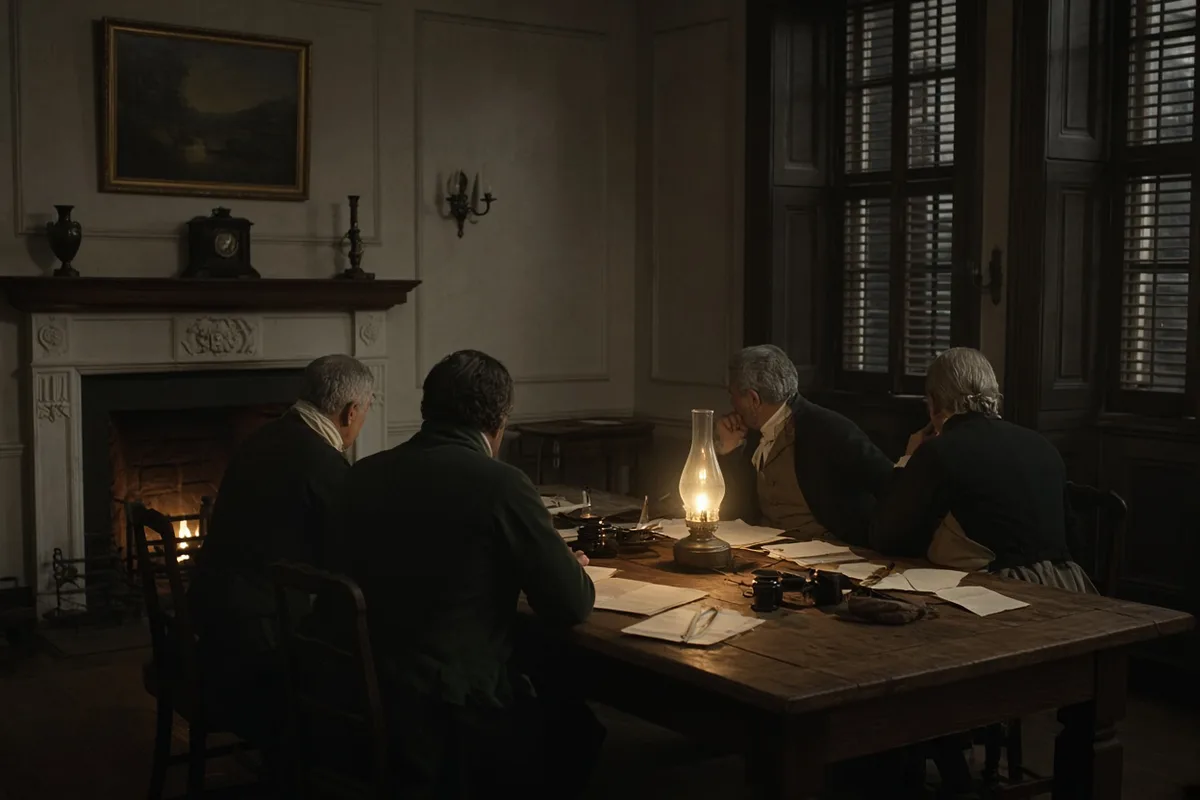
By then the room in Gloucester held forty children. Some arrived with bread crusts wrapped in cloth, eating while they traced letters. The teacher kept a stick by the door but used it only to point at the board. Raikes still came every week, though his own printing business grew busier. He would stand outside afterward and ask the children what they remembered of the morning. Their answers were short, but they answered.
The London society formed two years later. William Fox had wanted a larger plan at first, then decided Raikes’s method could be copied without waiting for government money. Jonas Hanway and Henry Thornton joined the committee. They wrote to Gloucester for the exact rules. Raikes sent them. Within ten years the same pattern appeared in more than a thousand places.
I still saw the original children on weekdays. Some now carried slates home to practise after the factories closed. One girl who had once sworn at passers-by began helping the teacher keep order on Sundays. Raikes never claimed the movement as his alone. When visitors asked he pointed to Stock and to the woman who first showed him the meadows. He continued visiting the gaol as well, though his attention stayed with the children.
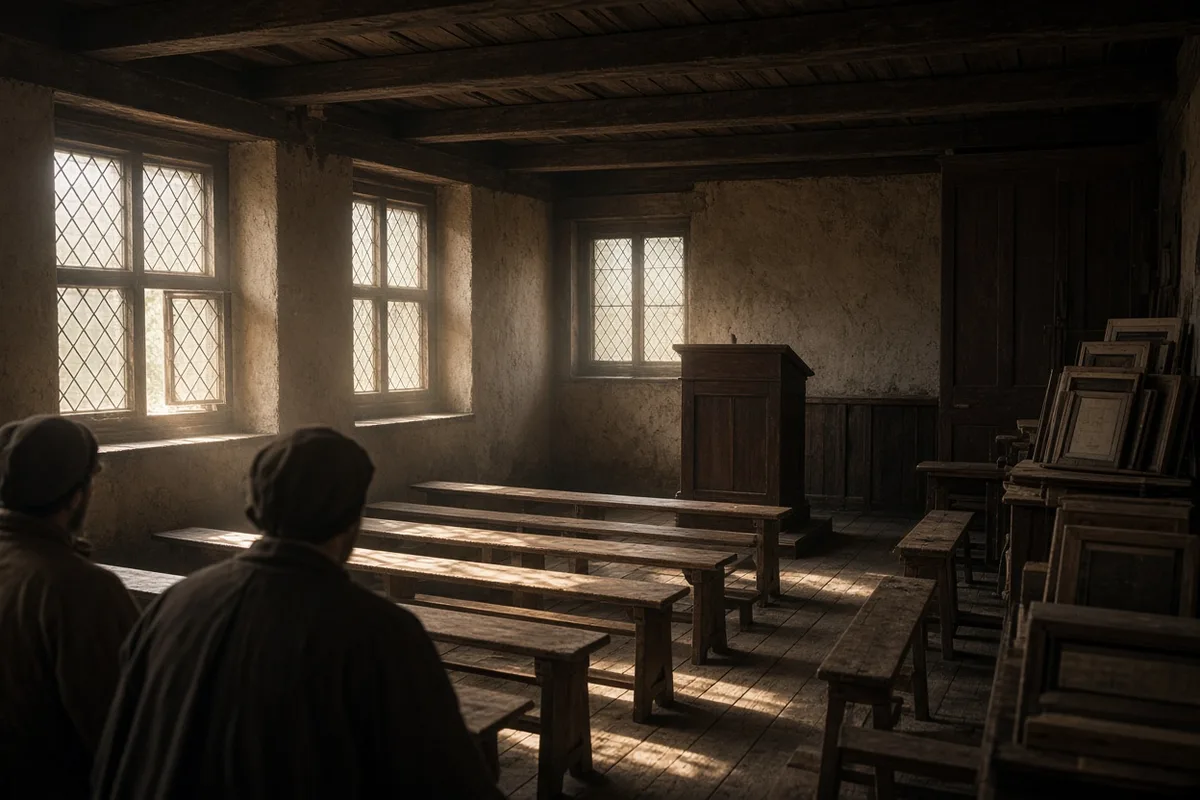
On a clear Sunday in 1786 the room at St Mary le Crypt held sixty-three children. Raikes stood at the back as usual, coat buttoned against the draught from the door. Outside, the lane was empty except for one small boy running late, his shoes slapping the stones the way they always had. He reached the step, wiped his feet on the mat without being told, and slipped inside.
Raikes kept the Gloucester school open through the hard winter of 1787, when the Severn froze for eleven days and the pin factories shut their gates. He paid the teacher an extra two shillings each week from the Journal receipts so that the children could receive a bowl of broth at noon. On 12 January he wrote to Jonas Hanway in London that sixty-eight pupils now attended and that three of the older boys had begun to read the whole of the Sermon on the Mount without prompting. The letter, preserved among Hanway’s papers at the Foundling Hospital, lists the exact cost of slates at fourpence each and notes that the mat at the door had been replaced after it wore through in six places.
By 1791 the original room could no longer hold everyone who came. Raikes rented a second space above the cooper’s yard on Quay Street and divided the children into two classes, one for reading and one for repetition of the catechism. Thomas Stock’s rules were copied onto a new board in larger letters so the back row could see them. That same spring a visitor from Manchester, the Revd Richard Cecil, counted forty-seven girls and thirty-one boys present on 3 April and recorded in his journal that Raikes himself still arrived each Sunday at eight o’clock carrying the same small black notebook.
Raikes’s health began to fail in 1805. He could no longer stand for the full four hours, so he brought a chair and sat near the door, correcting the youngest children when they stumbled over the words “suffer the little children.” On 5 April 1809 he made his final entry in the attendance book, noting seventy-two present and two absences owing to fever. He died at his house in Bell Lane on 5 April 1811 and was buried in the churchyard of St Mary de Crypt beside his wife. The Gloucester Journal of 8 April printed the notice without comment beyond the date and the names of the six pall-bearers.
The schools Raikes had started continued without him. In 1812 the London committee reported 1,835 schools across England and Wales teaching 207,000 children; by 1831 the number had risen to 1,250,000 pupils meeting every Sunday. One of the original Gloucester teachers, a woman named Mary Cook, kept the Quay Street room open until her death in 1824, after which her daughter Sarah took the post at the same wage of one shilling and sixpence. Parish registers for St Mary de Crypt show that twenty-three of the first pupils later became Sunday-school teachers themselves in other towns.
In 1840 a marble tablet was placed inside St Mary de Crypt listing the names of the first twenty-three children and the date July 1780. The tablet still stands on the north wall of the nave, its lettering worn but legible. During the rebuilding of the church in 1854 the original schoolroom was pulled down, yet the mat from the doorway was preserved and is now kept in a glass case in the Gloucester Folk Museum together with Raikes’s attendance book for the year 1789.
The movement spread beyond Britain after 1850. Missionaries carried the same rules to Sierra Leone in 1852 and to Calcutta in 1857, where the first school opened with forty-eight children using slates shipped from Gloucester. By 1900 the World Sunday School Association counted 13 million pupils in thirty-five countries, each following the pattern of payment to a local teacher, hours from eight until noon, and the rule that shoes be wiped on the mat.
Today the only remaining physical trace in Gloucester is the tablet and a single stone step outside the rebuilt church, worn in the centre by generations of small feet. On the first Sunday of each month a volunteer still unlocks the vestry at eight o’clock and sets out a handful of slates for any children who wish to come, though few do. The last person to sign the old attendance book before it was moved to the museum was a boy named Thomas Webb on 23 June 1929; his signature, in pencil, occupies the bottom right corner of the final page.
In 1937 the Gloucester Folk Museum received a letter from a woman in Sheffield named Edith Raikes, a great-granddaughter, enclosing a fragment of the original 1783 notice from the Journal that she had found among family papers; the fragment, measuring four inches by two, quoted the exact line “twenty-three children off the streets” and was placed in the same case as the mat. The step outside St Mary de Crypt was measured that same year by the city surveyor, who recorded a central depression of three-quarters of an inch caused by repeated foot traffic, and the measurement was entered in the municipal ledger under reference number 47/1937.
During the air raids of November 1940 the church suffered blast damage to the north wall, yet the marble tablet listing the first twenty-three names remained intact because it stood behind a stone pillar that absorbed the force; the vicar at the time, the Revd Arthur Parsons, noted in his parish diary on 15 November that the lettering was dusted with plaster but still legible when he inspected it by torchlight the following morning. Repairs to the nave were completed in March 1949, and the same pillar was rebuilt using the original Gloucester stone quarried at Painswick.
A schoolmaster from Leeds named Harold Benson visited the museum in June 1955 and copied into his notebook the precise wording of Thomas Stock’s rules as they appeared on the surviving board fragment; Benson later published the transcription in the Yorkshire Educational Journal of September 1955 under the heading “Gloucester Rules Observed,” quoting the line “shoes wiped on the mat” and attributing it directly to the 1780 document. The attendance book itself was rebound in 1962 by the museum conservator using calf leather matched to the original boards, and the final page containing Thomas Webb’s pencilled signature was protected with a sheet of archival tissue.
On 4 July 1970 the World Sunday School Association held its regional meeting in Gloucester and sent a delegation of twelve representatives to view the tablet; one delegate, a teacher from Calcutta named Sunita Rao, recorded in her report that the worn step measured exactly the same depth noted in 1937 and that the slates set out in the vestry that morning numbered seven, each initialled on the back with the letters “M.C.” for Mary Cook. The delegation presented the museum with a bound volume of attendance registers from the Calcutta school opened in 1857, which listed forty-eight pupils on its first page.
The volunteer who unlocked the vestry each month from 1984 onward was a retired pin-factory worker named George Hale, born in 1912 in the same lane where Raikes had first seen the children; Hale’s own notebook, preserved after his death, records that on 3 March 1991 he set out nine slates and that a single boy arrived at 8:17, traced the letters “A” through “G,” and left without speaking. Hale noted the boy’s arrival time and the exact number of slates used that day.
In 2003 the stone step was scanned by laser at the request of the Gloucester Civic Trust, producing a digital record that showed the central wear pattern matched the 1937 measurement to within one millimetre; the scan data were archived under file reference GCT/SS/2003/04 and remain available for comparison at the city records office. A descendant of one of the original twenty-three pupils, a woman named Margaret Collins living in Bristol, donated a sampler stitched in 1794 that bore the stitched words “Robert Raikes paid the teacher” along with the date 12 January.
The last entry in any modern register kept at the church occurred on 1 October 2017 when a nine-year-old girl named Lily Thompson signed her name in a new notebook placed beside the tablet; the volunteer on duty that morning, a retired teacher named Patricia Wells, recorded the time as 8:09 and noted that Lily had wiped both shoes on the mat before entering. Wells continued the monthly opening until her own final Sunday on 7 April 2019, when she placed seven slates on the table, waited until 8:45, and locked the vestry door with no children having arrived.