



Romantic love is an attachment bond, not a negotiation

In 60 seconds
- Adult romantic love runs on the same attachment system that binds infants to caregivers, so a spouse becomes a safe haven whose withdrawal registers as danger.
- Every recurring fight is really one disguised question: are you accessible, responsive, and engaged with me.
- Couples lock into a few self-feeding cycles—Find the Bad Guy, the Protest Polka, Freeze and Flee—driven by attachment threat, not bad character.
- Present overreactions usually reopen raw spots from earlier rejection or abandonment rather than new injuries alone.
- Lasting repair means voicing the primary fear under anger or silence so it can trigger caregiving instead of defense.
- Secure bonds need deliberate check-in rituals for life, because attachment needs resurface with every new stress.
The big idea
The big idea
Johnson argues that romantic partners function as attachment figures the way caregivers do for infants, so distress is protest about accessibility rather than a dispute over logistics or willpower. Repair comes from risking the vulnerable primary emotion beneath anger or withdrawal, being heard, and having that need answered—not from better negotiation technique.
The book in brief
The book in brief
Johnson opens by reframing romantic love as an attachment bond. A partner becomes a safe haven and secure base; emotional withdrawal hits the nervous system as threat, not inconvenience. Surface fights about phones, lateness, or money sit on a deeper question of whether the other will respond when needed.
She compresses what a secure bond requires into accessibility, responsiveness, and engagement. When the answer to that A.R.E. question feels uncertain, distress arrives automatically. Small repeated absences erode the bond as surely as dramatic betrayal.
Conflict then locks into a handful of demon dialogues—blame contests, pursue-withdraw spirals, or mutual numbness. Each partner’s move feeds the other’s. Old raw spots from family or prior relationships make present reactions disproportionate, so couples fight the past through the present without seeing it.
Repair is not a truce on logistics. It is the Hold Me Tight move: stating the primary fear under the secondary armor of anger or silence so the partner’s caregiving instinct can answer it. Serious attachment injuries—absence in crisis, affairs—need full emotional absorption, not quick apology. Sexual connection tends to follow the same emotional safety rather than lead it through technique alone.
The close treats the conversations as lifelong practice. Relapse into old cycles is normal; the measure of security is how fast a couple can name the pattern and step out. Johnson widens the same A.R.E. lens to parents, children, and fractured friendships, casting the work as a general account of human bonding.
Context
Sue Johnson developed Emotionally Focused Therapy across decades of clinical work and grounds this 2008 book in Bowlby’s attachment ideas. Outcome studies of EFT in controlled settings give the approach one of the stronger replicated track records among couple therapies, including durability of gains at follow-up, which is the evidentiary base she draws on for readers.
The key ideas

1
Love as attachment bond
Adult romantic love runs on the same neurobiological attachment system that binds infants to caregivers, so treating marriage as a negotiation of interests misdiagnoses the problem.
Surface fight
Phone rules, lateness, forgotten errands, money
Attachment layer
Am I safe with you? Will you respond when I need you?
Johnson borrows from Bowlby the claim that humans are wired from birth to seek proximity to a few irreplaceable others. That system does not switch off in adulthood; it transfers onto a partner. The spouse becomes safe haven and secure base—someone whose presence calms the nervous system and whose emotional absence registers as danger.
What looks like a fight about being late or forgetting an errand has two layers. The content layer is trivial. The attachment layer asks whether the partner will respond when needed. Johnson cites research linking felt security with a partner to physical health, stress-hormone regulation, and even pain tolerance, arguing that emotional isolation is processed by the body as threat comparable to physical danger.
Therapy that only negotiates surface rules while ignoring the fear underneath can produce a truce, not repair. Lasting change has to address the attachment layer.
In practice: A wife who explodes when her husband checks his phone during dinner is not mainly upset about etiquette; her nervous system has registered that he turned away, and the explosion is protest against disconnection.
2
The A.R.E. question
Every recurring conflict is really one question asked in disguise: are you accessible, responsive, and engaged with me.
Johnson folds the requirements of a secure bond into three qualities. Accessibility means a partner is reachable and open rather than shut down. Responsiveness means they attune to emotional signals instead of ignoring or minimizing them. Engagement means genuine emotional presence rather than going through the motions.
When one partner effectively asks “are you there for me” and the answer feels uncertain, distress follows before either person decides anything consciously. Reassurance on the wrong register fails. Logistics answers do not land when the nervous system wants evidence of accessibility.
Most couples, she observes, do not lack love; they lack a shared, legible signal for A.R.E. Years of being physically present but emotionally elsewhere answer the underlying question with a quiet no. The practical shift is diagnostic: stop asking only what you are fighting about and ask what each person is trying to find out about the other’s accessibility right now.
In practice: A husband who answers his wife’s tears with a spreadsheet showing the household budget is fine has solved a logistics question she never asked; she needed proof he was reachable.
3
The demon dialogues
Couples do not have random arguments; they fall into a few predictable cycles that each partner’s behavior reinforces in the other.
Johnson names three recurring negative cycles. In Find the Bad Guy, both fight to pin fault, converting attachment fear into blame because blame feels more bearable than helplessness. In the Protest Polka, one pursues with criticism or demands for contact while the other withdraws to avoid feeling like a failure; pursuit triggers more withdrawal, withdrawal triggers more pursuit. In Freeze and Flee, both have given up protesting and go numb, avoiding each other to limit further pain—calm from outside, serious danger to the bond inside.
These cycles are not proof of bad character. They are the attachment system doing what it evolved to do under threat: protest, then shut down if protest keeps failing. The key move is to help each partner see the cycle as the enemy rather than each other.
Naming the pattern out loud—giving it a shared label like “the polka”—lets a couple step back and observe the process instead of only living inside it. That distance is the necessary first move before deeper repair.
In practice: A wife’s rising volume and a husband’s silent exit from the room are not two separate problems but one interlocking mechanism: the silence drives the volume, the volume drives the silence.
4
Raw spots from the past
Present-day overreactions are usually old attachment wounds being reopened, not only new injuries created on the spot.
A raw spot is a place of heightened sensitivity formed by earlier rejection, neglect, or abandonment—often from childhood, sometimes from a prior relationship—that a current partner can touch without meaning to. Ordinary feedback can land as proof of fundamental inadequacy. An ordinary late night at work can land as evidence of impending abandonment.
Couples fighting about the present are frequently fighting about the past through the present. Neither usually realizes it in the moment because the reaction feels entirely justified by current events. Johnson’s clinical move is to trace the intensity back to its origin, not to excuse behavior but to make it comprehensible enough for compassion instead of contempt.
This is stronger than treating overreaction as a mere skills deficit. Skills training without addressing the raw spot underneath will not hold under stress, because the reaction is driven by an old survival-level fear. That also explains why the same fight can recur for years even when both partners already know the “right” words.
In practice: A husband who grew up with a critical, unavailable father may hear ordinary feedback from his wife as confirmation he is inadequate and react with disproportionate anger or withdrawal.
5
The Hold Me Tight conversation
Lasting repair requires each partner to voice primary vulnerable emotion directly, rather than the secondary anger or withdrawal that has been protecting it.
Secondary emotion
Anger, criticism, sarcasm, icy distance—protects, triggers defense
Primary emotion
Fear, sadness, longing—exposes need, can trigger care
Johnson distinguishes primary emotions—the raw fear, sadness, and longing that arise first when the bond feels threatened—from secondary emotions, the anger, criticism, or icy distance partners show instead because primary feeling seems too exposing.
The signature conversation asks each partner to state the primary fear under the habitual complaint: not “you never listen” but the fear of not mattering; not stony silence but the terror of disappointing the other again. Secondary emotion, however justified, tends to trigger defensiveness. A clearly stated primary fear tends to trigger the partner’s caregiving instinct because it reads as attachment need rather than attack.
The conversation is hard precisely because it means dropping protective armor. Many couples need a therapist or a structured process to do it safely the first several times. A handful of successful exchanges, repeated and generalized, can reorganize the relationship’s emotional climate more durably than years of negotiated compromises on logistics.
In practice: A husband who usually meets conflict with sarcasm instead says that criticism of his parenting makes him feel like a failure as a father and he goes quiet because he does not know how to fix that feeling; hearing fear rather than defensiveness, his wife moves toward reassurance.
6
Forgiving attachment injuries
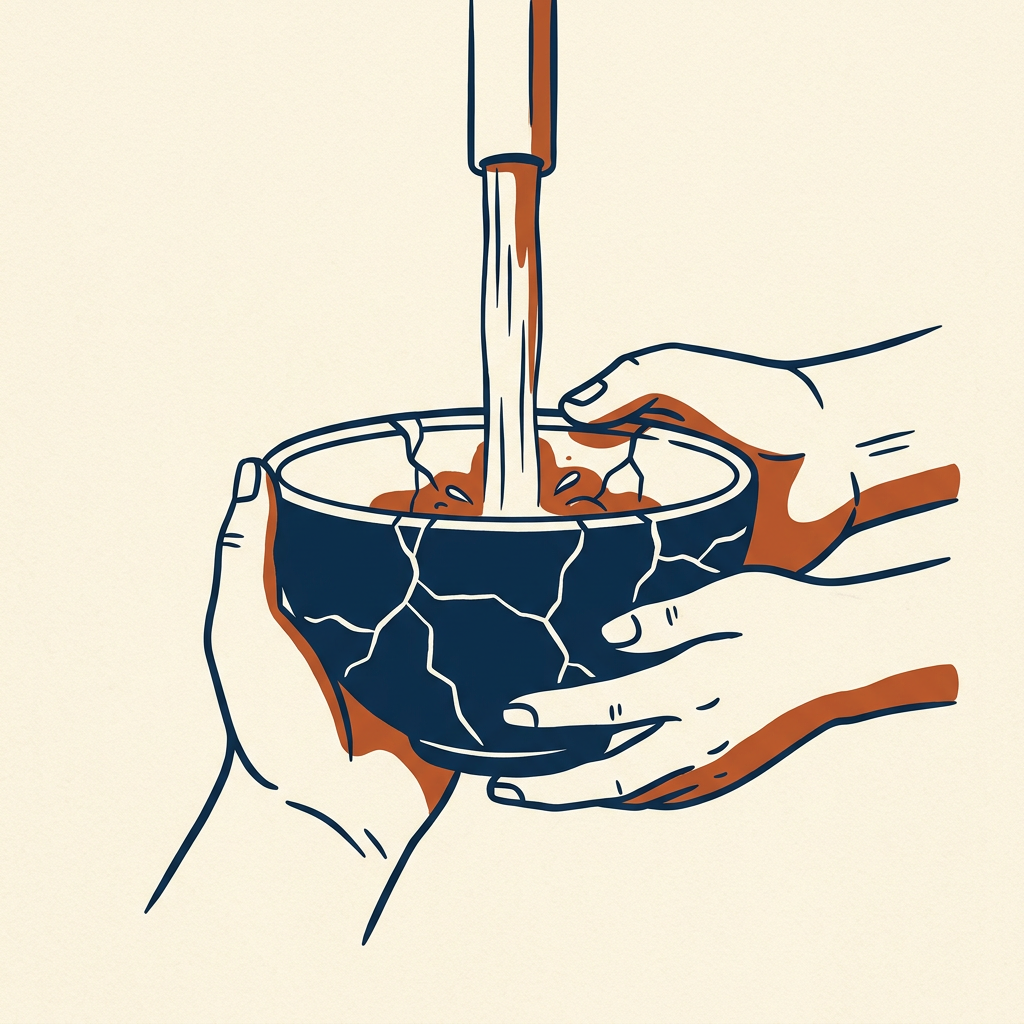
Serious betrayals and moments of abandonment in crisis cannot be forgiven through apology alone; the injured partner must fully express the wound and the other must emotionally absorb it.
Johnson separates ordinary hurt from an attachment injury: a moment, often at acute need such as childbirth, illness, or bereavement, when a partner was absent, dismissive, or unfaithful, frozen afterward as proof the relationship is not safe. These injuries get replayed obsessively and block progress no matter how much unrelated goodwill piles up later.
Quick forgiveness or a simple apology is not enough. The offending partner must stay present while the injured partner describes, in full emotional detail, what the moment meant and why it still hurts—without minimizing, explaining away, or rushing on. The task is to register the impact, not only the facts, and to offer remorse tied to the partner’s experience rather than only to one’s own guilt.
Unprocessed attachment injuries, she holds from clinical practice, are a leading reason couples stay chronically distant after the original event is officially “in the past.”
In practice: A wife who experienced her husband as cold and work-preoccupied during a miscarriage still finds that single episode surfacing in unrelated arguments years later as proof he cannot be relied on—until he acknowledges specifically how frightened and alone she felt.

7
Sex as emotional bonding
Sexual satisfaction in long-term relationships depends more on emotional safety and responsiveness than on technique, so novelty alone often solves the wrong problem.
Technique-first fix
Novelty, scheduling, skill drills while emotional distance stays untouched
Safety-first path
Repair demon dialogues and raw spots; synchrony sex tends to follow
Johnson pushes against the cultural assumption that great sex is mainly skill, frequency, or variety. For most long-term couples, desire and satisfaction track emotional accessibility. Partners who feel safe and responded to tend to experience sex as bonding and vulnerable—what she calls synchrony sex. Partners in a climate of distance or unresolved conflict often find sex absent, purely mechanical, or loaded with performance anxiety.
Technically competent sex can still feel hollow when disconnection outside the bedroom is unaddressed; sex cannot resolve a request it is not actually receiving. Withdrawal from sex after an unresolved fight is itself often an attachment signal—a protection against further rejection—rather than simple loss of interest.
Her recommendation is the same repair work already outlined: name the demon dialogue, process raw spots, hold the vulnerable conversation. Sexual connection tends to follow rather than lead. This is among the book’s more contested claims because it de-emphasizes desire discrepancy, physiology, and individual libido differences other therapists treat as primary; Johnson’s clinical argument is that emotional safety is the substrate any technique needs.
In practice: Couples who report competent sex lives that nonetheless feel hollow are often carrying unaddressed disconnection outside the bedroom that no new technique can fix.
8
Sustaining connection over time
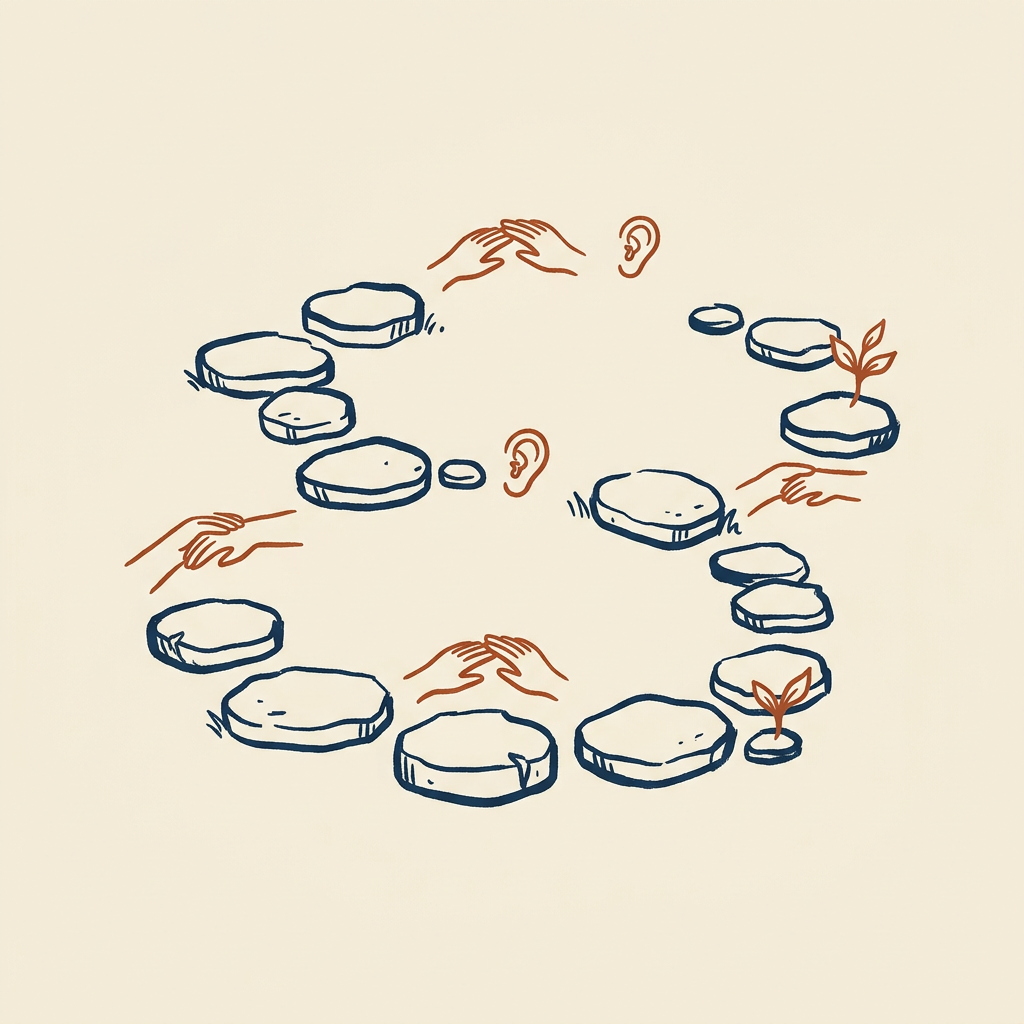
Secure bonds are not achieved once and kept on autopilot; they need deliberate small rituals of emotional check-in practiced indefinitely.
The seven conversations are not a cure to finish. They are skills to exercise for the life of the relationship. Attachment needs do not expire once addressed; they recur with new stresses, transitions, and ordinary daily distance.
Johnson urges small recurring rituals: brief daily moments of genuine attention, regular check-ins after conflict, explicit naming of the demon dialogue when it resurfaces. Repair becomes habit rather than rare crisis work. Relapse into old cycles is normal and should not be read as failure of the method; the attachment system will produce familiar protective patterns whenever a new raw spot is touched.
The measure of a secure relationship is not the absence of the old cycle but the speed and ease with which the couple can recognize it and step out. She closes by widening A.R.E. to parent-child bonds and to trust after long friendships fracture, casting the framework as a general theory of bonding—also the book’s most speculative stretch, extrapolating beyond couple-therapy evidence.
In practice: When the old pursue-withdraw pattern returns after a new stress, the couple’s job is not perfection but naming “the polka” quickly and exiting it faster than before.
Key terms
- A.R.E. Accessibility, responsiveness, and engagement—the three qualities that answer “are you there for me”
- Demon dialogues The small set of self-perpetuating negative cycles couples fall into under attachment threat
- Protest Polka The pursue-withdraw cycle where one partner’s demands for contact intensify the other’s shutdown, and vice versa
- Find the Bad Guy The blame contest that turns attachment fear into a fight over who is at fault
- Freeze and Flee Mutual numbness and avoidance after protest has failed, calm-looking but a sign the bond is in serious danger
- Raw spot A heightened sensitivity from earlier rejection or abandonment that a current partner can touch without meaning to
- Primary emotion The raw fear, sadness, or longing that arises first when the bond feels threatened
- Secondary emotion The anger, criticism, or icy distance shown instead because primary feeling feels too exposing
- Attachment injury A frozen moment of absence, dismissal, or betrayal at a time of acute need that keeps proving the relationship unsafe until fully processed
- Synchrony sex Sexual connection experienced as bonding and vulnerable because emotional safety is already present
What to do
- Name the pattern out loud in the next familiar fight—say you are doing the polka again—rather than re-arguing the topic.
- Before answering criticism with defense or silence, name the primary fear underneath and say that fear directly.
- Set aside time this week for any old betrayal that still surfaces: injured partner describes its emotional impact fully; other partner listens without explaining on the first pass.
- Build one brief daily moment of genuine attention where phones are down and you actually respond to each other.
- After a conflict, schedule a short check-in to name what each of you was afraid of rather than only what happened.
Questions to think with
- When we fight about a small logistics issue, what is each of us actually trying to learn about the other’s accessibility?
- Which demon dialogue do we fall into most, and what would it sound like to name it in the moment?
- What raw spot from earlier life might my partner be touching without knowing it—and which of mine might I be protecting with anger or silence?
- If I dropped the secondary armor in our hardest recurring fight, what primary fear would I have to say out loud?
- Is there an attachment injury we have officially “moved past” that still blocks us when unrelated stress hits?
The other side
The leap from structured EFT with a trained clinician to couples running the seven conversations from a book alone is not equally well supported by evidence. Adult pair bonds involve reciprocity, sexuality, and chosen commitment in ways that differ from the asymmetric infant-caregiver bond, and Johnson does not fully engage where that analogy breaks down. Case examples are drawn overwhelmingly from heterosexual, middle-class, monogamous couples in individualist Western contexts, with little on non-monogamy, arranged marriages, collectivist structures, or same-sex couples facing distinct external stressors. The Protest Polka’s pursuer and withdrawer roles risk quietly reinforcing gendered expectations, since examples often cast women as pursuers and men as withdrawers without enough attention to how socialization produces that distribution. Sex therapists contest the claim that emotional safety is the primary driver of sexual satisfaction, pointing to desire discrepancy, medical factors, and individual libido variation the book underweights.
Who it's for
Couples stuck in repetitive fights who already suspect the real issue is never the stated topic will get the most from the full book. Therapists and counselors who want a plain-language attachment framework for clients, and anyone told to “communicate better” who found that advice useless under stress, will also find it directly usable.