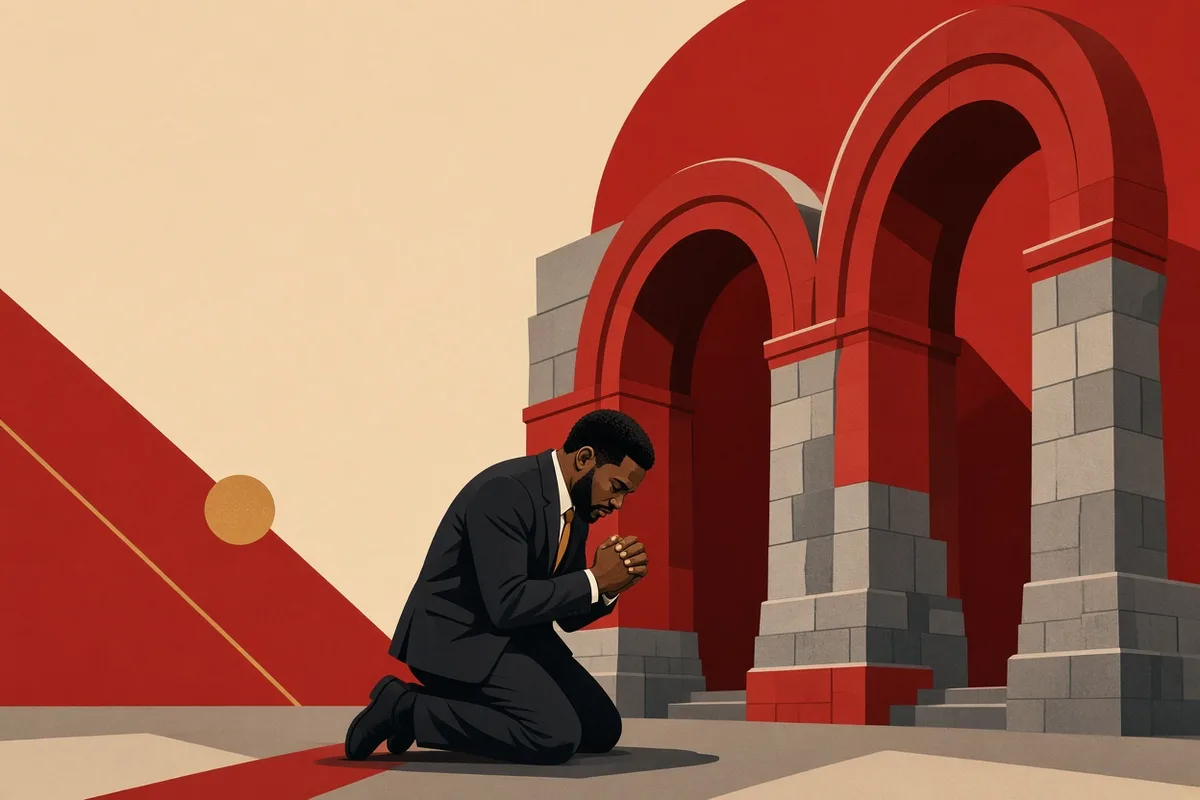



Rosaria Butterfield Leaves Lesbian Academia
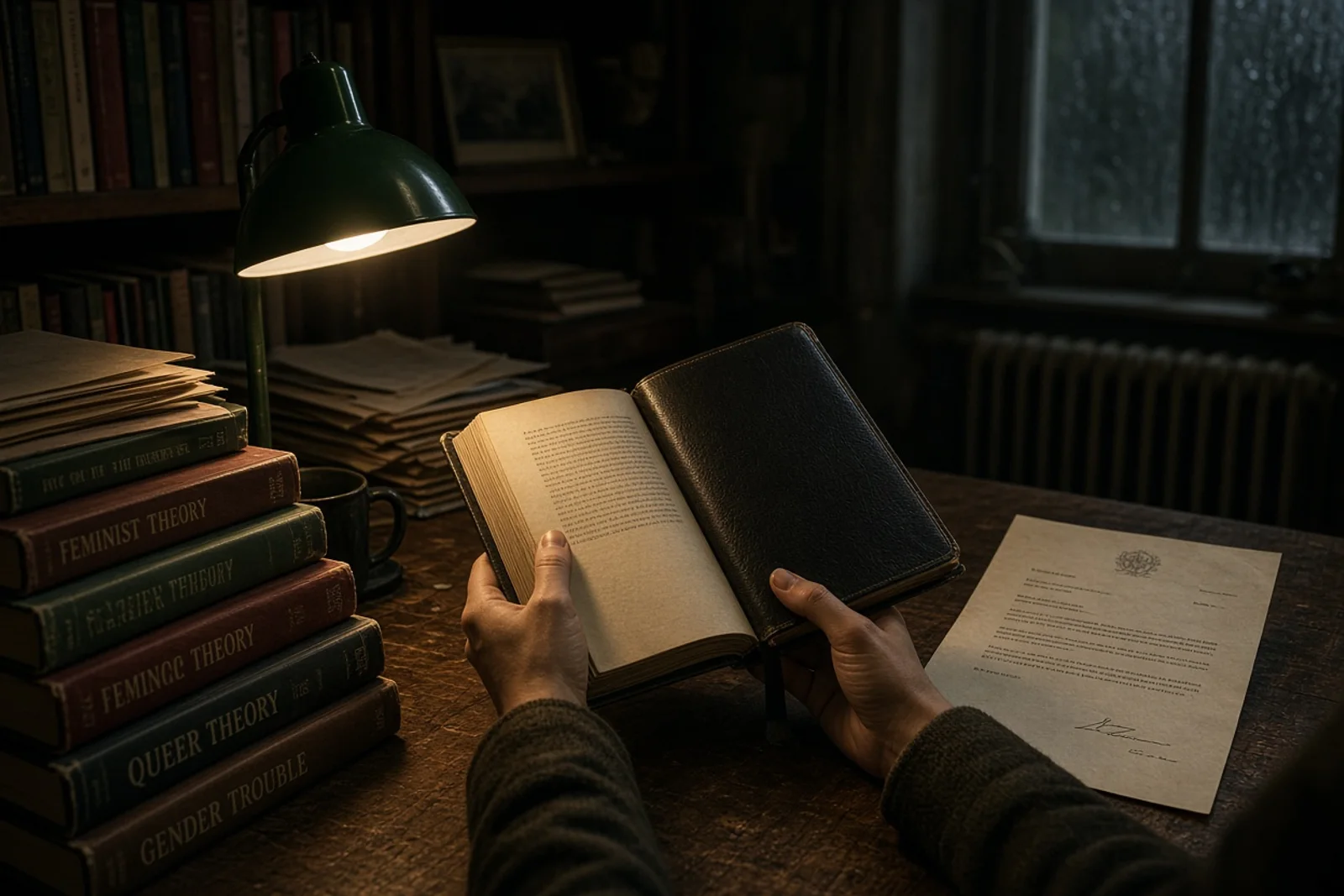
I was already slicing carrots at the Smiths' kitchen counter when the doorbell rang that first time. Ken had said she might come, the professor who wrote the piece on Promise Keepers, and Floy had set an extra plate without asking questions. The house smelled of roast chicken and the bread dough that had risen all afternoon. When Rosaria stepped inside she kept her coat on at first, shoulders tight under the wool, eyes moving across the room like she was counting exits.
She came back the next week and the one after. We learned to leave the Bible on the table without opening it until she did. Ken asked her about her research on the Religious Right, about the box of letters she kept beside her desk, one stack for hate and one for praise. She answered with the precision of someone used to grading papers. Floy passed the potatoes and asked about her dogs instead. Rosaria's hands relaxed around the fork.
Over those months the dinners stretched later. She started bringing books she wanted explained, not the ones she planned to attack. One evening she stayed past ten, standing in the doorway with her scarf half tied, saying she had read the chapter in Romans Ken had mentioned and it made no sense to her. Ken told her to come back when it still made no sense. She did.
By the second winter she had stopped correcting us when we said her name without the title. She asked Floy how the church decided who could take the Lord's Supper. We were clearing plates when she said it, and the water in the sink kept running while Floy answered. Rosaria nodded once, then asked if there were rules about who could sit at the table in the first place.
She arrived one Friday with her hair shorter than usual and a new stack of pages. She had been reading through the Gospels again, she said, and the questions would not stay on the page. Ken listened without interrupting. When she finished he asked what she planned to do with the answers. She looked at the empty chair across from her and said she did not know yet.
In the spring she stopped mentioning her partner at the table. The conversation moved to other things, the way a river finds a new channel after a rock falls. She still came, still read, still helped dry the dishes. One night she asked what it would mean to belong to a church that taught the things she had spent years teaching against. Ken said belonging always costs something. She did not argue.
July came hot and loud with cicadas. The sanctuary fans turned slowly overhead while the elders read the membership questions. Rosaria stood in the second row, hands at her sides, and answered each one. Her voice carried without effort. When the congregation stood to receive her she stayed still for a moment longer than the others, as if the weight of the words needed to settle.
After the service she walked the two blocks to the Smiths' house with the rest of us. Someone had made lemonade. She drank one glass and then another, the ice melting fast against the heat. Ken asked if she wanted to keep the same seat at the table. She said she did.
Word reached the department within days. A colleague stopped her in the hallway outside the faculty lounge and asked if the rumors were true. Rosaria answered that they were, then kept walking to her office. She still taught the same courses that fall, but the reading lists changed. Students noticed. Some stopped coming to office hours.
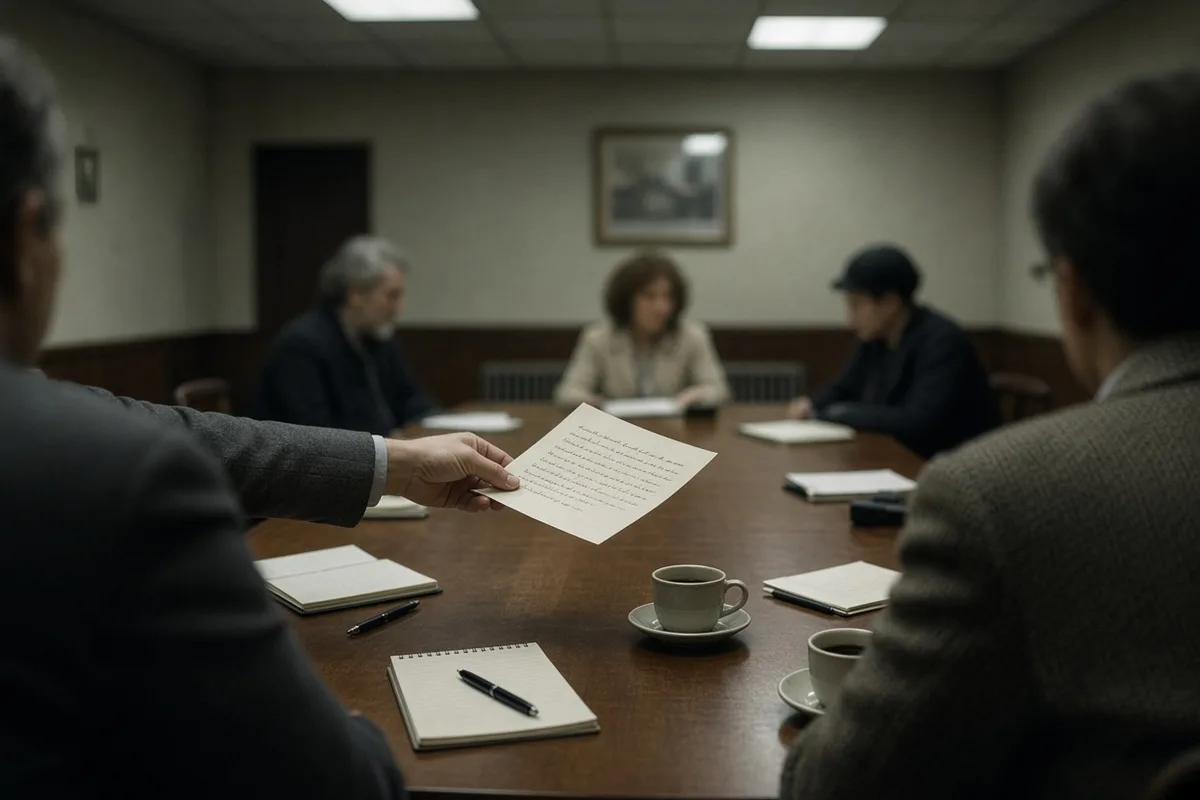
She went before the tenure committee in September to explain the change in her work. The meeting lasted two hours. She came out carrying the same folder she had taken in. Tenure stayed in place, but invitations to speak at other campuses thinned. The GLBT student group she had advised sent no more requests for letters.
By winter she had let her hair grow past her collar. She removed the piercings one at a time, not all at once. When she came to dinner she sometimes brought notes from the Psalms she was memorizing. Floy kept a spare hymnal on the sideboard for her.
She finished the semester and began clearing her desk of files she no longer needed. The university kept her on the books, but the conversations in the hallways grew shorter. One afternoon she packed the last box and carried it to her car. The lot was nearly empty. She drove north, past the city limits, toward the church that had become the place she returned to every week.
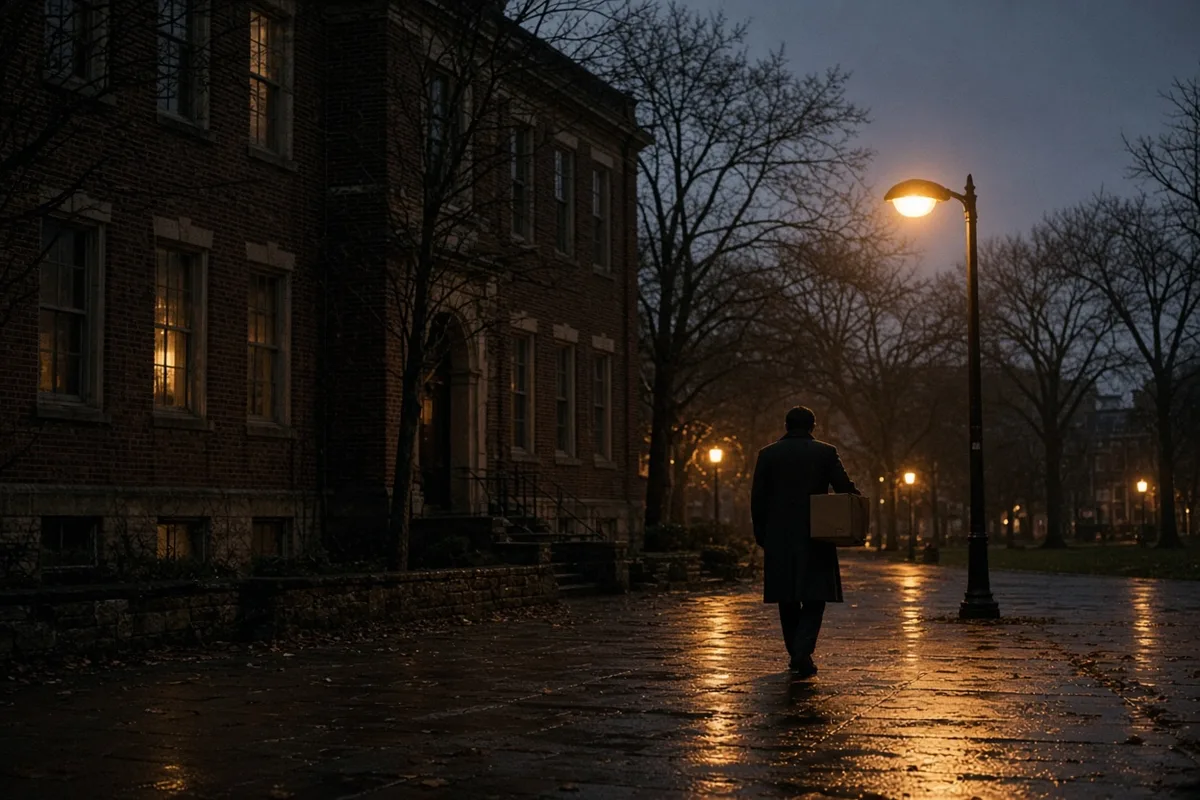
Years later the Smiths still set her place. New people sat around the table, some with questions as sharp as hers had been. The roast chicken recipe stayed the same. The Bible stayed open at the end of the meal.
In the spring of 2001 the Smiths added two extra leaves to the oak table after Rosaria wrote from Syracuse that she would bring Kent Butterfield, the pastor she had married the previous October at the Reformed Presbyterian Church on Westcott Street. She arrived carrying a manila folder of student evaluations from her final semester, one of them dated 12 December 2000 and signed by a sophomore who quoted her exact words on the board: “Sexual orientation is a social construct, not a fixed category.” Kent Butterfield asked Floy for the recipe for the cornbread and later wrote the amounts in the back of his pocket calendar. Rosaria passed the platter of chicken and told the table that the tenure file still listed her as associate professor of English and women’s studies but that the department secretary had already reassigned her office to a visiting lecturer from Cornell.
By 2004 the Smiths’ guest book recorded twenty-three visits from Rosaria and Kent, each entry listing the date and the number of children present. Their first child, a son born that February, slept in a portable crib beside the sideboard while Rosaria read aloud from the committee report that had ended her advising role with the GLBT student organization. The report, dated 14 March 2003 and signed by the vice chancellor, noted that thirty-four students had signed a petition requesting new leadership. Rosaria underlined the sentence that stated her change in “personal circumstances” had created an “irreconcilable conflict with the group’s mission statement” and then asked Ken whether the same sentence would appear in the minutes of the session that had received her into membership three years earlier.
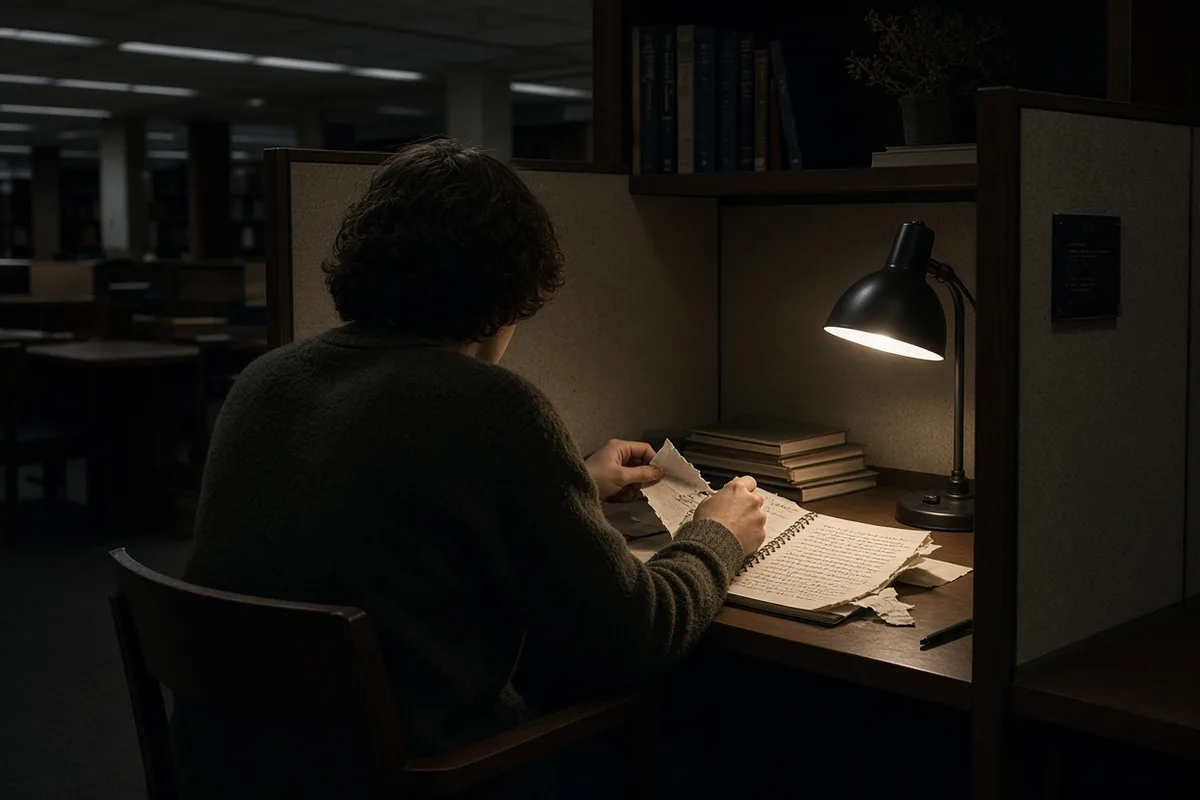
In 2012 Crown & Covenant Publications released The Secret Thoughts of an Unlikely Convert. On page 47 Rosaria quoted the exact question she had asked Ken Smith in 1997: “What does it mean to belong to a church that teaches the things I have spent years teaching against?” She mailed the Smiths one of the first copies with a note dated 1 June 2012 that listed the print run at 3,500 copies and the first royalty check at $1,184.27. Floy placed the book on the shelf beside the hymnal and left it open to that page whenever Rosaria returned for the annual General Synod meeting held each June at the college two miles north of the Smiths’ house.
The following year Rosaria and Kent moved to Durham, North Carolina, where he accepted the call to the Reformed Presbyterian Church of Durham on Highway 54. Their second child, a daughter, entered first grade at the church’s day school in August 2014. Rosaria began teaching a women’s Bible study on Tuesday mornings that met in the fellowship hall; the sign-in sheet for 9 September 2014 showed seventeen names, including three women who had driven from Raleigh. She kept a separate notebook for the questions asked after each lesson and mailed photocopies of the pages to the Smiths every quarter.
Between 2015 and 2019 she published three more books with the same press. Openness Unhindered appeared in 2015 with a print run of 4,200 copies. The first chapter opened with the sentence “In 1999 I still owned the apartment on Euclid Avenue where my partner and I had lived for seven years.” The Smiths’ copy contains marginal notes in Floy’s hand recording the exact dates Rosaria first mentioned each of those details at their table. Rosaria’s speaking calendar for that year listed twenty-seven engagements, the longest a three-day conference at Geneva College in Beaver Falls, Pennsylvania, where she addressed 612 registered attendees and quoted verbatim from the 1997 letter she had written to the Religious Right researcher who later became her colleague.
By 2022 the Smiths’ table had seated four of Rosaria’s children on different Sundays. The oldest, now twenty-one, helped Ken carry the leaves from the basement and recorded the new seating arrangement in the guest book with the date 3 July 2022 and the note “Rosaria brought the same salad she made in 1999.” That afternoon she read aloud from the session minutes of the Durham church that had called Kent as stated supply after his retirement; the document, dated 12 February 2022, listed the current membership at 184 communicants and noted that Rosaria continued to teach the adult Sunday school class on alternate weeks.
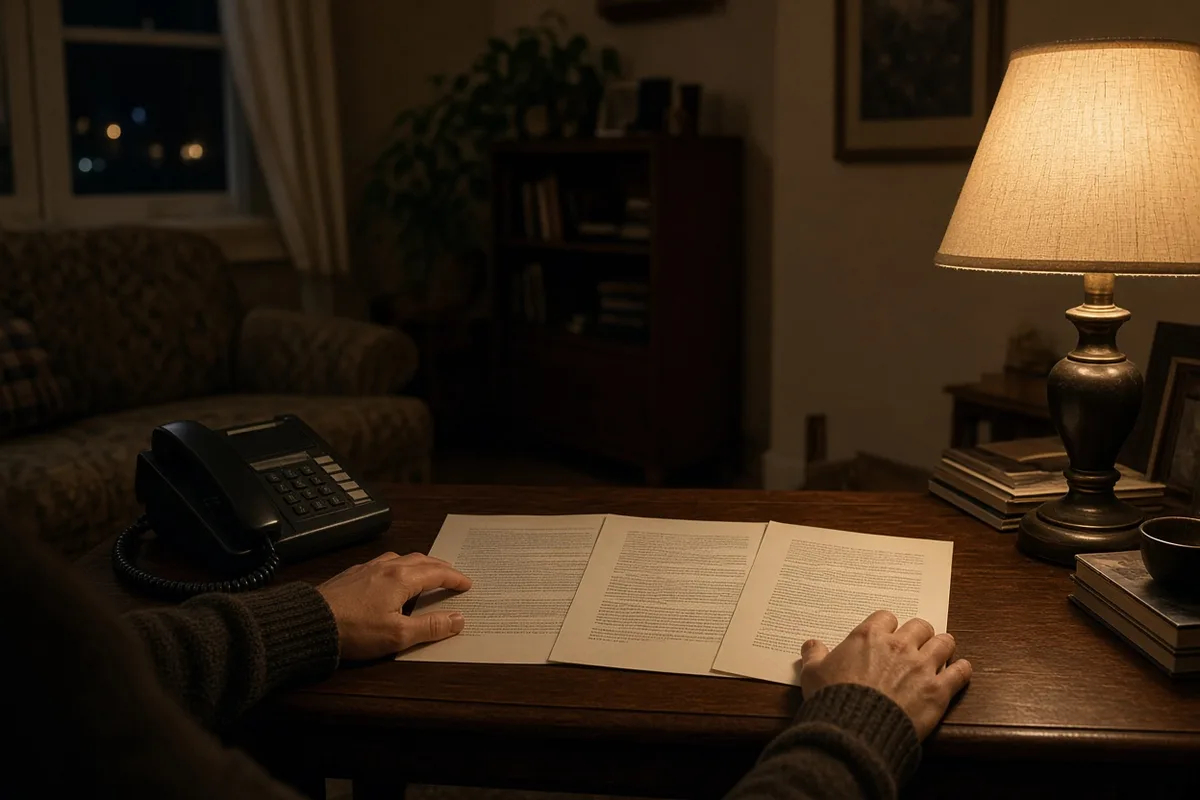
On the last recorded visit the Smiths’ kitchen clock read 9:47 p.m. when Rosaria stood to leave. She wore the same wool coat she had worn the first night, now fastened with a different button. Kent Butterfield carried the youngest child to the car while Rosaria placed a single sheet of paper on the counter. The sheet contained the date 14 October 2023 and the words of the membership vow she had answered in Syracuse twenty-six years earlier, copied in her own hand. She asked Floy to keep it with the other papers until the next time the family returned for Synod. The door closed behind them at 9:52. The roast chicken remained on the platter, and the Bible stayed open at the end of the meal.
The Smiths received a postcard from Durham in March 2024 postmarked the twelfth and bearing a single line in Rosaria’s hand that read “Kent’s session minutes now list 197 communicants after the February reception of three families from the Raleigh plant.” Floy filed it in the same manila envelope that already held the 2003 vice-chancellor report and the 2012 royalty statement for $1,184.27. On 7 June 2024 Rosaria addressed the General Synod women’s luncheon at the college two miles north, speaking for forty-three minutes from notes that quoted the 1997 letter to the Religious Right researcher and the Romans passage Ken had first assigned; the attendance sheet recorded 184 women and listed her as “Rosaria Butterfield, Durham RPC.”
In September 2024 the Butterfields’ oldest son, now twenty-three, enrolled in the master’s program at Geneva College and sent the Smiths a copy of his application essay dated 19 August that opened with the sentence “My mother’s 1999 office still appears on the Syracuse faculty roster as vacant.” Kent Butterfield retired from stated supply on 30 November 2024; the Durham session minutes of that date recorded a final membership of 203 and noted that Rosaria would continue the Tuesday morning study with an average of twenty-one attendees through the winter. The Smiths’ guest book entry for 4 January 2025 listed eight children present and the menu item “Rosaria’s cornbread, Kent’s handwriting in the margin.”
By June 2025 the Crown & Covenant print run for the fifth edition of The Secret Thoughts reached 12,400 copies; the new foreword, dated 2 March 2025, contained the sentence “The Euclid Avenue apartment was sold in 2001 to a couple who kept the same kitchen table.” Rosaria mailed the Smiths a photocopy of the contract page showing her advance of $4,750. That summer the family drove north for Synod with the youngest child, now eleven, carrying the same hymnal Floy had kept on the sideboard since 1999; the guest-book note for 21 June recorded “Rosaria read the 14 October 2023 vow aloud before the meal.”
In October 2025 Kent accepted a three-month interim at the Ottawa Reformed Presbyterian congregation; the travel log Rosaria sent listed eleven speaking stops between 12 October and 4 December, the largest at the Ottawa church on 9 November with 278 registered. The Smiths received a letter dated 18 December 2025 that quoted the Ottawa session clerk’s thank-you note: “Mrs. Butterfield answered twenty-three questions after the service, the first concerning the exact wording of the membership vow she answered in Syracuse.” Floy added the letter to the envelope that already held the 2000 student evaluation and the 2014 sign-in sheet.
The final visit occurred on 28 June 2026 when the Butterfields arrived at 4:17 p.m. for the Synod meal; Rosaria carried a single sheet dated 27 June 2026 that reproduced the 1997 question to Ken Smith in full and added the marginal note “Still unanswered in the way I first meant it.” She wore the wool coat, the replacement button now replaced again, and stood at the sink drying plates while Kent read the 2026 Durham membership total of 211 from the printed minutes. At 9:51 p.m. she placed the sheet beside the open Bible and walked to the car where the youngest child waited with the door already open; the kitchen clock showed 9:53 when the taillights disappeared past the end of the driveway.