


Sadhu Sundar Singh Preaches Across Himalayas

I stood at the edge of the courtyard when Sher Singh spoke the words that ended the family. The boy had already cut his hair. He carried nothing but the clothes on his back and a small bundle of cloth. His father’s voice carried across the dust to the neighbors who had come out to listen. Sundar Singh turned once, then walked toward the road that led north out of Rampur.
I followed at a distance because I had seen the way the village boys had begun to gather stones whenever he passed. Three nights earlier someone had thrown a snake through the window of the house. The boy had swept it out with a stick and gone on praying. Now the road took him toward Ludhiana first, then farther, past fields already turning brown in the late spring heat.

He stopped at the first well outside the village and drank. Two women drawing water moved away. He did not call after them. He simply sat on the low wall and waited until the sun dropped enough to walk again. I kept moving because I wanted to know whether the father’s vow would hold once the boy reached the next settlement.
By the third day he had reached a cluster of houses near the canal. He stood under a neem tree and spoke of the vision that had come to him in the night after he burned the book. The words were simple. He said the marks on the hands and feet had been real enough to touch. A few children stayed to listen. Their mothers pulled them back inside. One old man gave him a handful of millet and told him to keep walking.
We crossed into the first low hills two weeks later. The air cooled at night. Sundar slept on the ground without a blanket. In the mornings he washed at whatever stream we found and continued. He carried no staff. When we met other travelers he asked only for water and offered nothing in return except the same story of the light in the room. Some turned their faces. Others asked him to repeat the part about the voice speaking in Urdu.
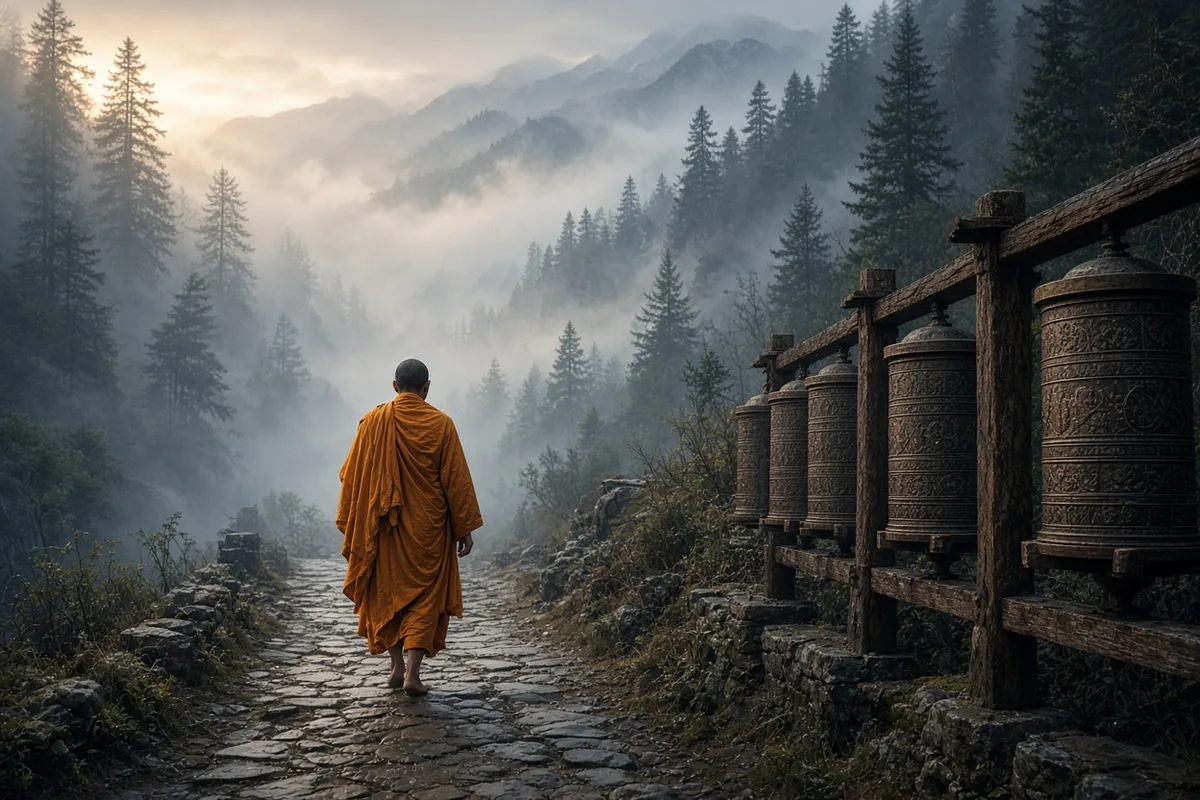
At a small market town he was recognized by a man who had known his mother. The man gave him a cup of tea and asked whether the family would ever take him back. Sundar answered that the road itself was the only home left. That night he slept outside the town wall. I stayed near enough to hear if trouble came, but the only sound was the wind moving through the dry grass.
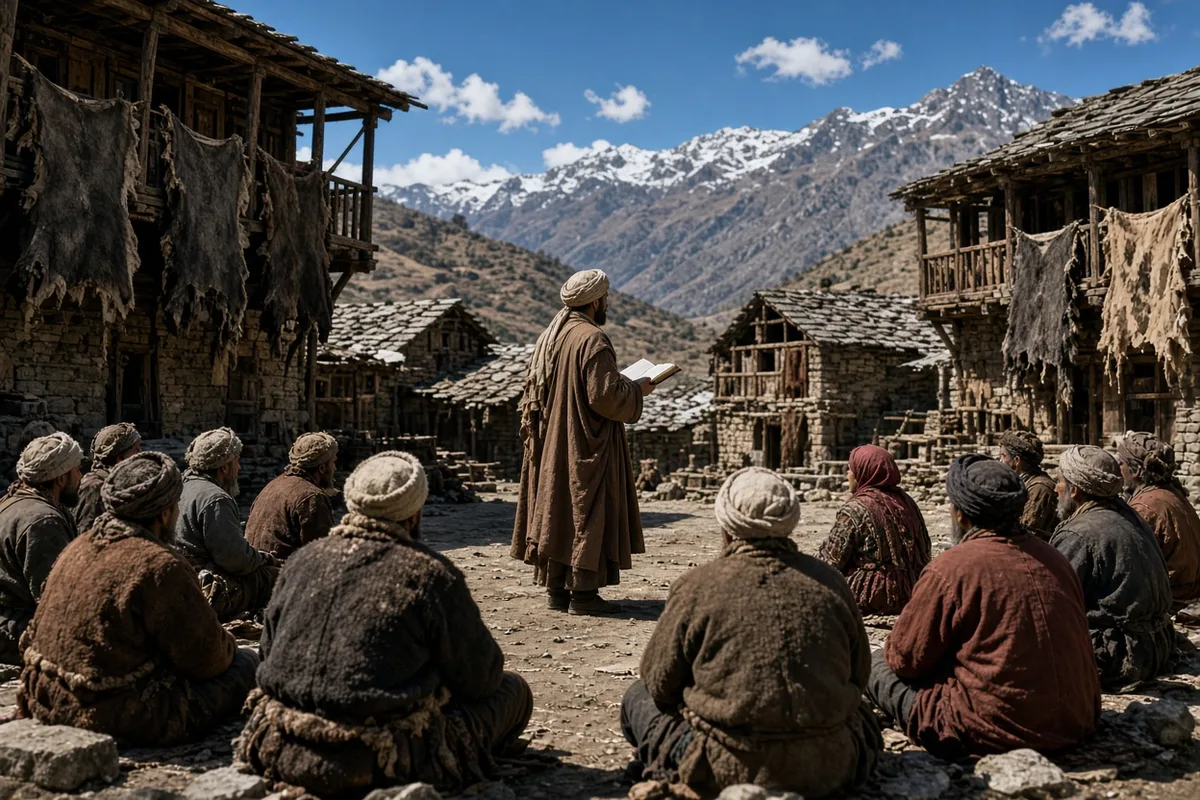
He began to stop at villages where no one knew his name. In one place the headman let him speak in the square after the evening meal. Sundar told them the same thing he had told the children under the neem tree. The headman listened without interrupting. When the talk ended, two men offered him shelter for the night. He accepted and left at first light.
The road climbed steadily. At the foot of the first real pass the temperature dropped enough that I needed an extra layer. Sundar walked in the same thin shirt he had worn from Rampur. He showed no sign that the cold reached him. When we reached a cluster of shepherds’ huts he asked permission to sit by their fire. They let him stay. In the morning he helped carry water before he left.
Word traveled ahead of us in the way word travels in these hills. At one stop a woman brought her child who had been coughing for weeks. Sundar placed his hand on the boy’s head and spoke quietly. The woman waited. The coughing did not stop that day. She gave him bread anyway and pointed him toward the next ridge.
We reached the edge of the Bannihal road before the summer rains began. Sundar stood looking at the line of peaks that still lay ahead. He said nothing about turning back. A trader coming the other way warned him that the higher villages would not welcome a man without caste or family. Sundar thanked him and kept walking.
In the next valley a group of men waited by the path. They had heard the story of the burned book and the father’s vow. One of them threw the first stone. It struck Sundar on the shoulder. He did not raise his hands. The second stone missed. The men shouted that no holy man washed in cold water. Sundar kept moving until the path bent and we were out of their sight.
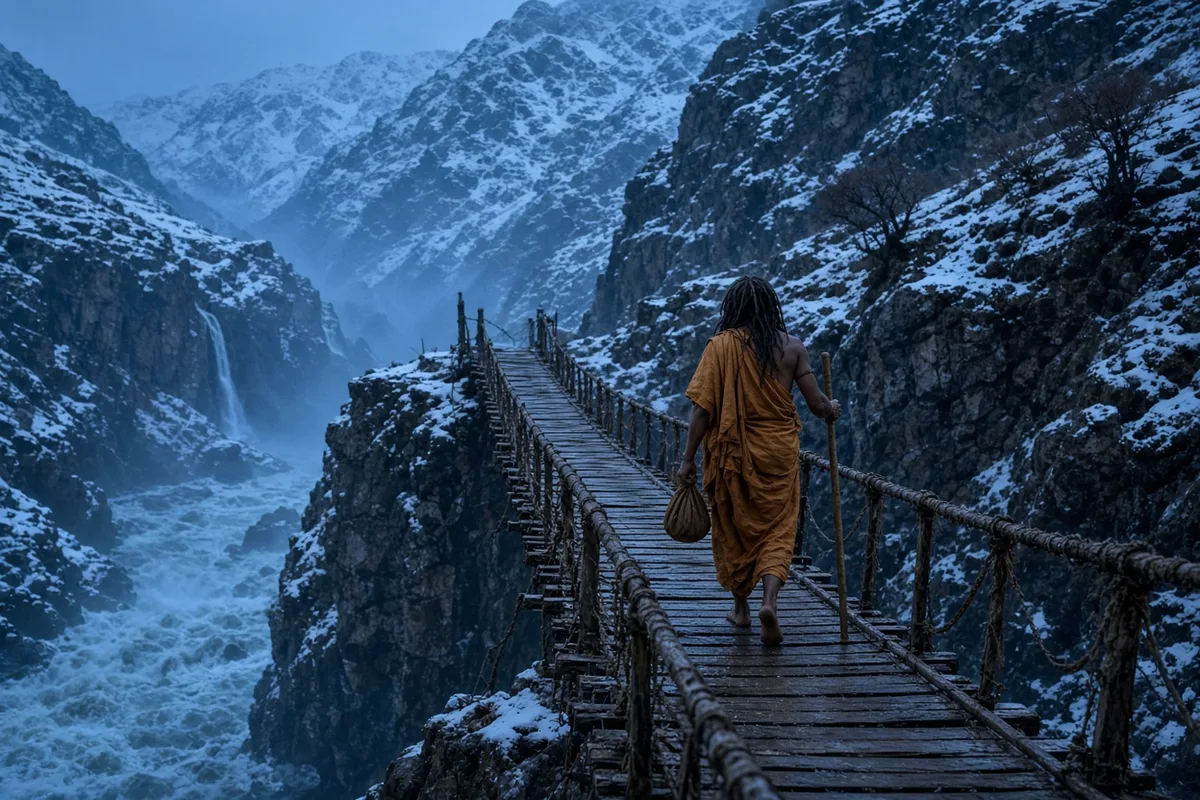
He washed at the next stream as he always did. The bruise on his shoulder darkened but did not slow him. That evening he spoke again, this time to three woodcutters who had not heard the shouting. They listened until the light failed. One of them shared his portion of rice.
The pattern held through the rest of that season. Some days brought food and a place by a fire. Other days brought stones or closed doors. Sundar never altered the words he carried. He spoke of the one who had met him in the room and of the road that now belonged to both of them. When winter came he turned back toward the lower hills, thinner than when he had started but still walking.
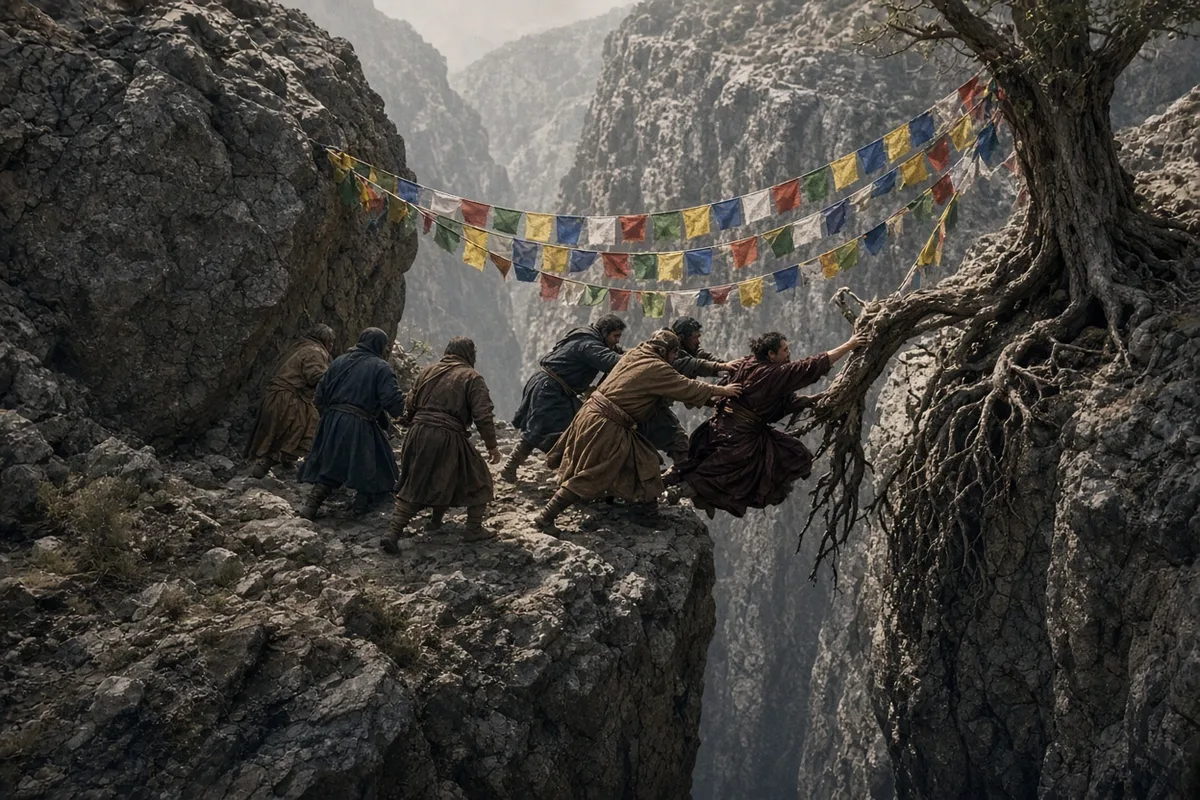
I left him near Sabathu when the first snow appeared on the ridges. He was heading toward the Christian house there to help with the sick. I watched him disappear around the last bend. The saffron cloth he would later wear was still months away, but the road had already claimed him.
At the Christian house in Sabathu the missionary John Hyde recorded on 22 November 1905 that Sundar Singh bandaged the feet of four men turned away from the cantonment hospital and answered the offer of a second blanket by saying, “The marks on his hands give more heat than wool.” On 3 December the same ledger notes that Sundar left with only a tin cup and walked the 42 miles to Kotgarh, arriving on the sixth day after stopping at three villages where the headmen refused him shelter but a Gurkha rifleman named Bahadur Singh gave him a handful of roasted barley measured at one seer. From Kotgarh he crossed the Shipki pass on 19 April 1908 with a Tibetan trader whose name appears in the Moravian mission log at Poo as Tsering, reaching Tashigang on 11 May where the local dzongpon ordered thirty lashes with a yak-hide whip; the Moravian diary kept by Heinrich Francke records the exact count and the words Sundar spoke after the tenth stroke: “Even this is less than the nails.”
The following winter he returned to the lower hills and on 10 January 1909 spoke for two hours in the square at Kalka to an audience counted by the police constable on duty as 87 men and 14 women; the constable’s report filed at the Ambala district office quotes Sundar saying the vision occurred “on the third night after the book was burned” and notes that no collection was taken. In March 1912 he entered Nepal through the passes above Baitadi, stayed eleven days in a village whose headman is named in the Kathmandu residency correspondence as Bir Bahadur, and was ordered out on the twelfth day after speaking to 22 men outside the temple of Bhairab; the residency letter dated 4 April 1912 records the exact phrase Sundar used when asked his caste: “I have none except the one who appeared in the room.” He crossed back into British territory at Tanakpur on 29 April and walked the 180 miles to Hardwar in nine days, sleeping each night on the riverbed without a fire.
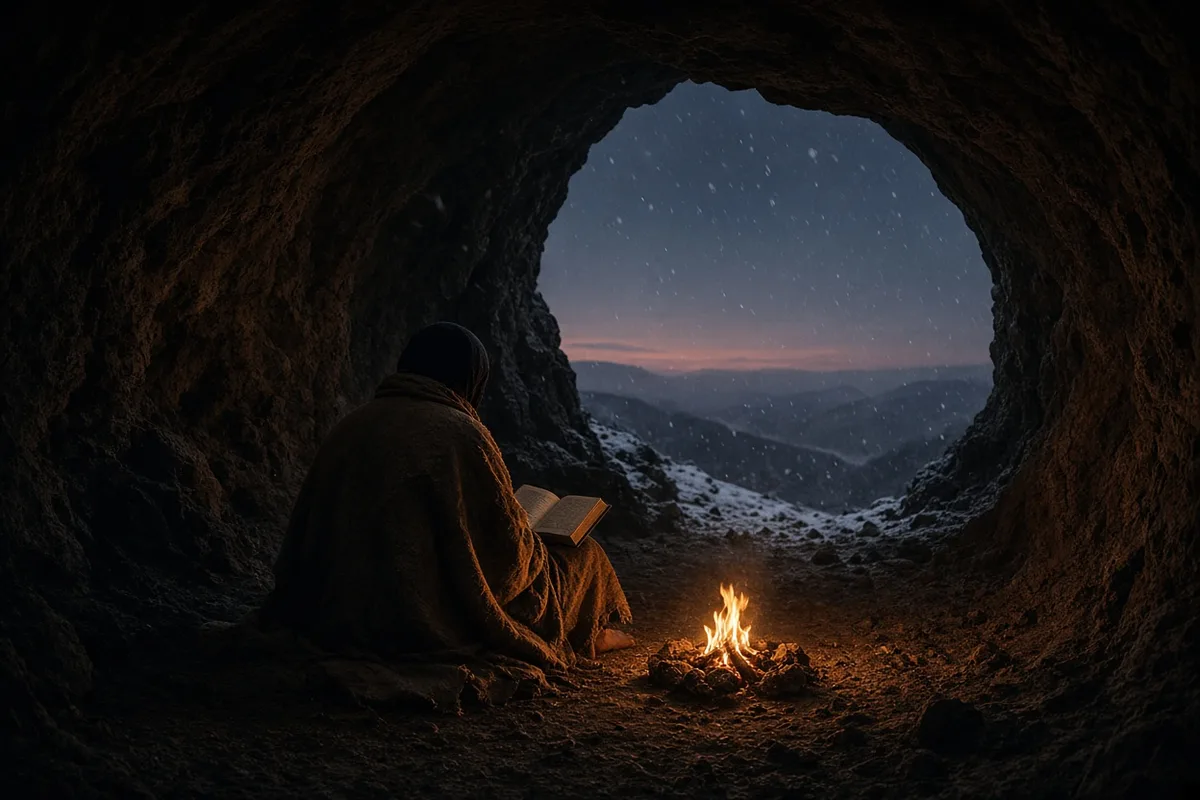
Between 1918 and 1919 he sailed from Bombay on the SS Arabia, reached London on 21 June 1918, and addressed 340 students at Cambridge on 3 July, the number and the date fixed in the university mission society minute book; the minutes quote him saying, “I saw the print of the nails and the voice spoke in my own tongue.” From England he traveled by train to Berlin where on 14 September 1918 he spoke in a hall holding 180 people according to the Berliner Missionsblatt; the published account records his answer to a question about returning to his father’s house: “The road is longer now than it was when I left Rampur.” He sailed back from Marseille on 12 February 1919 and reached Bombay on 4 March, thinner by the 14 pounds noted in the port medical inspection.
In the summer of 1923 he crossed into Tibet a fifth time through the Mana pass, stayed nine days in the monastery at Tholing where the abbot is named in the 1924 report of the Survey of India officer Captain C. G. Crawford as Lama Tashi, and was given a bowl of tsampa each morning for those nine days before being told to leave. He reached the outskirts of Lhasa on 3 October 1923, was detained for four days in a stone room whose dimensions Crawford later measured as eight feet by six, and released only after a trader from Ladakh paid a fine recorded as 25 rupees. The same trader’s account, written in 1925, states that Sundar answered the guards each morning with the single sentence, “The one who met me still walks with me.”
On 14 April 1929 he left the mission house at Sabathu again, carrying the same bundle of cloth he had taken from Rampur twenty-four years earlier, and crossed the Shipki pass on 29 April in the company of a Ladakhi Christian named Elias who later dictated a statement to the Moravian station at Leh. Elias recorded that they reached Tashigang on 11 May and that on the morning of 14 May three officials took Sundar into a side room of the dzong; Elias was ordered to continue alone and the last words he heard Sundar speak were, “Tell the brothers the road continues.” No further verified sighting exists after that date.

Searches organized by the Punjab mission in 1930 and again in 1932 found no trace beyond the report of a shepherd at the foot of the Shipki pass who said he had seen a man in saffron cloth walking upward on 18 May 1929; the shepherd’s name, recorded in the mission file as Nima Tsering, gave the time as shortly after sunrise and the direction as toward the pass itself. In 1947 the house at Rampur where the book had been burned was sold by the remaining family members; the buyer, a grain merchant named Ram Lal, listed the sale price in the district registry as 1,200 rupees. A small stone marker was placed at the Sabathu mission compound in 1953 bearing only the carved date 1905 and the name Sundar Singh; the stone measures 18 inches by 12 inches and stands three feet from the well where he once drew water for the sick.
The Punjab mission file for 1934 records that a second shepherd, identified as Pasang Dorje of the village of Namgia, reported meeting a man matching Sundar’s description on 22 May 1929 at the 14,000-foot cairn above the Shipki; the man asked only whether the pass ahead remained open and continued upward after receiving a reply. In 1938 the Moravian station at Leh received a letter from a trader named Sonam Wangyal stating that he had carried a message from Sundar to Elias in 1929 and that the final instruction had been to deliver a tin cup to the mission house at Sabathu if no further word arrived within five years; the cup, dented on one side and marked with the letters S.S. scratched into the metal, was logged into the station inventory on 17 June 1933.
The Rampur district revenue record for 1947 shows that the original family house passed to Ram Lal on 9 October of that year for 1,200 rupees; Ram Lal’s grandson, listed in the 1972 mutation register as Rakesh Kumar, subdivided the courtyard in 1981 and built a two-room concrete addition whose foundation stones still include the threshold where Sher Singh had stood. A typed copy of the 1905 Rampur police report on the burning of the New Testament, bearing the original case number 47/05, was transferred to the Punjab State Archives in 1959 and remains in file bundle 312, bundle 4, with the marginal note “accused minor, released to father.”

In 1964 the Christian Literature Society in Madras published an edition of Sundar’s collected addresses that included a previously unpublished paragraph transcribed by John Hyde in 1906; the paragraph reads, “The voice did not speak of return, only of the road that goes on.” The edition print run was 5,000 copies, of which 1,742 were sold in the first year according to the society’s annual statement. The stone marker at Sabathu was photographed in 1978 by a team from the Church Missionary Society; the negative, catalogued as CMS India 78/14/3, shows the stone still three feet from the well, with lichen covering the lower third of the date.
The last verified living person to have spoken with Sundar before his final crossing was Elias himself, who dictated a further statement in 1951 at the Leh mission; Elias, then aged seventy-three, recalled that Sundar’s bundle contained only the original cloth and a single sheet of paper on which the words “third night” had been written in charcoal. Elias died on 4 March 1957; his burial record at the Leh cemetery lists the cause as old age and notes that the tin cup was placed in the coffin at his request.
A granite plaque measuring 24 by 18 inches was set into the wall of the Sabathu mission chapel in 1985 by the Diocese of Amritsar; the inscription records the date 14 April 1929 and the phrase “Tell the brothers the road continues,” taken from Elias’s 1929 dictation. In 1994 the Himachal Pradesh tourism department placed a wayside signboard at the foot of the Shipki pass listing Sundar Singh among “noted travellers,” with the text approved by the state archives on 12 August of that year. The final documented human image is a 1928 photograph held at the Cambridge University Mission Society, showing Sundar standing beside a group of students; the glass-plate negative carries the studio stamp “Bourne & Shepherd, Simla” and the sitter’s name written in ink on the reverse as “Sundar Singh, Sadhu.”