



Salt once decided who ate, who ruled, and who rebelled
In 60 seconds
- Before refrigeration, salt was survival gear: without it, meat and fish spoiled within days across winters and voyages.
- Rare deposits drove deep Sichuan brine wells and early roads like Rome’s Via Salaria wherever usable salt appeared.
- States from Han China onward monopolized and taxed salt because demand never vanished, funding armies and bureaucracies.
- Venice and the Hanseatic League turned salt control into lasting mercantile power tied to preserved fish trades.
- The French gabelle and Gandhi’s 240-mile march to Dandi show a tax on necessity can symbolize illegitimate rule.
- The 1861 Solvay process and later mechanical refrigeration shifted salt from food savior to industrial feedstock and craft luxury.
The big idea
Kurlansky’s claim is that salt, not gold or spice, most shaped early civilization because it was the only reliable way to preserve meat and fish before refrigeration. Whoever controlled it held food security, trade leverage, and tax power; once cold storage arrived, that life-or-death urgency drained away even as industrial demand kept production high.
The book in brief
Kurlansky starts by resetting the mineral in the reader’s mind. Today it is a shaker accent. For most of human history it stood closer to oil or medicine: without it, communities faced hunger between harvests and on long voyages. Sodium chloride pulls water from cells and blocks the bacteria of decay, so fishing fleets, cities, and armies organized around securing it.
That urgency mapped onto uneven geography. Usable deposits were scarce, so early societies sank deep brine wells, evaporated seawater, and laid fixed salt roads. Settlement and engineering followed the mineral, not the other way around.
Because the need never faded, governments treated salt as perfect revenue. Monopolies, licensed merchants, customs posts, and smuggling crackdowns appeared independently across civilizations. Private and civic powers did the same at larger scale: control of pans and preserved-fish routes funded fleets and leagues that rivaled territorial states in wealth.
A tax on what people cannot avoid bred grievance out of proportion to its size. Regional unfairness in France’s salt levy fed revolutionary anger; a colonial monopoly in India turned a beach walk into mass defiance. Even the young United States felt the squeeze—wartime shortages, canal projects, and Civil War raids on works all tracked the same dependency.
Industrial chemistry then split salt’s identity. A new process made it the cheap feedstock for soda ash, glass, soap, and later chlorine products, so extraction scaled for factories rather than kitchens. Mechanical refrigeration finally ended the old monopoly on survival. Preservation no longer required curing, traditional salt trades shrank, and what remained of cultural prestige shifted to artisanal flavor salts sold to people who no longer needed the mineral to stay alive.
Context
Kurlansky writes as a journalist, not an economic historian, and helped popularize the single-commodity biography form with his earlier book Cod. Salt extends that method: vivid anecdotes strung along one everyday substance as a lens on trade, tax, and empire.
The key ideas
1
Survival, not seasoning
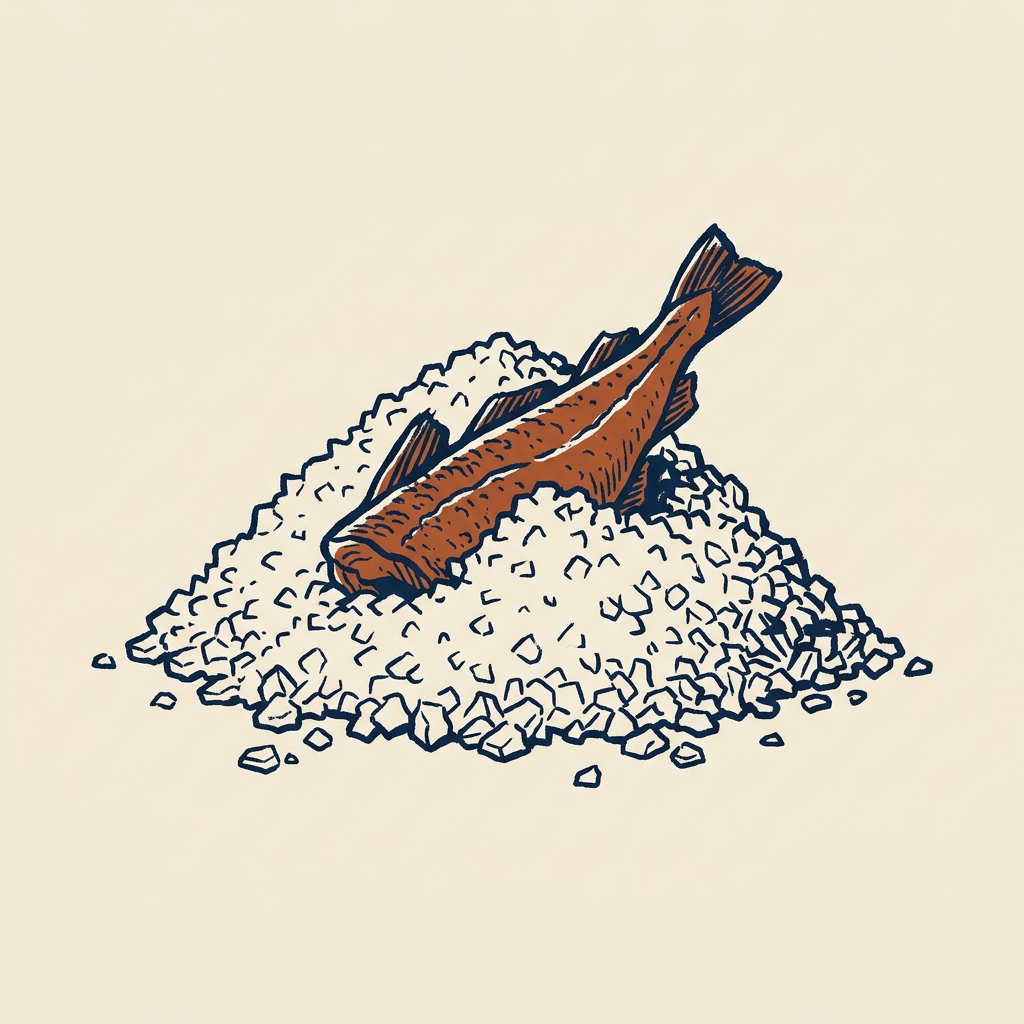
Before mechanical refrigeration, salt was essential preservation technology, so access was survival rather than taste.
Before refrigeration
Salt curing was the only reliable way to keep meat and fish edible across seasons and oceans
After cold storage
Salt becomes optional flavor; survival no longer hinges on the mineral
Kurlansky resets the modern picture first. Salt now sits cheap in a shaker. For most of history its absence meant spoiled protein, hunger, or disease within days.
Until the late nineteenth century, curing was the only method that reliably carried meat and fish across winters and oceans. That chemistry—drawing water from cells and starving decay bacteria—turned a humble crystal into leverage over food security.
Whole fishing economies formed around it. Populations between harvests depended on the mineral’s properties, not on a preference for salty flavor. Whoever controlled supply controlled who ate downstream.
In practice: Basque crews were salting and drying cod on the Grand Banks generations before Columbus’s voyages were recorded, feeding a trade that still shapes Portuguese bacalhau and Jamaican saltfish.

2
Geography of necessity
Usable salt is rare and uneven, so early civilizations built extraction tech and towns wherever deposits allowed.
3,000 ft
depth of ancient Sichuan brine wells
Kurlansky stresses that concentration, not choice alone, set early economic terms. Communities by the sea could evaporate brine; inland peoples needed springs, rock salt, or long trade.
That scarcity pushed real engineering. Sustained investment, skilled labor, and administration gathered around the few workable sites, turning extraction into mature industry long before modern factories.
Sacred and practical uses overlapped at the same deposits. Settlement patterns and the earliest fixed trade infrastructure followed the mineral’s map, creating regional dependency before formal treaties existed.
In practice: In Sichuan, workers around two thousand years ago drilled brine wells more than 3,000 feet deep with bamboo pipes and percussion methods that anticipated later oil techniques; Salzburg grew as a “salt fortress,” and Rome’s Via Salaria linked the city to Adriatic pans.

3
The tax that collects itself
Because salt was essential and geographically concentrated, governments repeatedly made it a durable target for monopoly and tax.
Kurlansky traces the same governmental instinct arising in unrelated civilizations. A necessity people cannot stop buying is revenue that gathers itself, even in famine or war.
Administrative machinery followed: licensed merchants, customs posts, smuggling crackdowns, and state monopolies appeared well before modern income tax systems.
He notes the popular story that Roman soldiers were paid partly in salt, the supposed root of “salary,” while marking that many linguists treat the link as unproven. The broader pattern still holds across the record he gathers.
In practice: Imperial China formalized a state salt monopoly as early as the Han dynasty, more than two thousand years ago, and drew on salt revenue for armies and bureaucracies across much of its later history.

4
Pans that built empires
Control of salt production and distribution, more than conquest alone, underwrote some of medieval Europe’s durable commercial powers.
- VVeniceAdriatic pans and fleet turned salt revenue into ships, mercenaries, and centuries of mercantile power
- HHanseatic LeagueBaltic and North Sea herring trade required inland salt such as Lüneburg’s to reach European markets
Kurlansky treats merchant empires as preservation-and-distribution machines. Salt was the hinge that turned a perishable local catch into distant profit.
Revenue from pans and trade routes bought ships, mercenaries, and diplomacy. A city short on farmland could still dominate seas if it locked up the mineral that made fish travel.
Northern leagues faced the same math: without steady inland salt, herring spoiled before it reached interior markets, and the trading network collapsed.
In practice: Venice dominated Adriatic salt pans and the Mediterranean salt trade, reinvesting into naval power; the Hanseatic League’s Baltic and North Sea herring wealth depended on salt from places like Lüneburg.
5
When the tax sparks revolt
A salt tax falls on what cannot be avoided, so popular resentment often outruns the levy’s size and becomes a political trigger.
Kurlansky frames taxes on necessity as uniquely visible daily grievances. Abstract theory does not sting like a forced purchase at inflated prices.
Regional rate gaps and harsh penalties for evasion made the unfairness concrete. The levy need not be the sole cause of upheaval to serve as a lasting symbol of overreach.
Open defiance worked when the act itself was simple enough to need no long argument: proving authority had criminalized something basic.
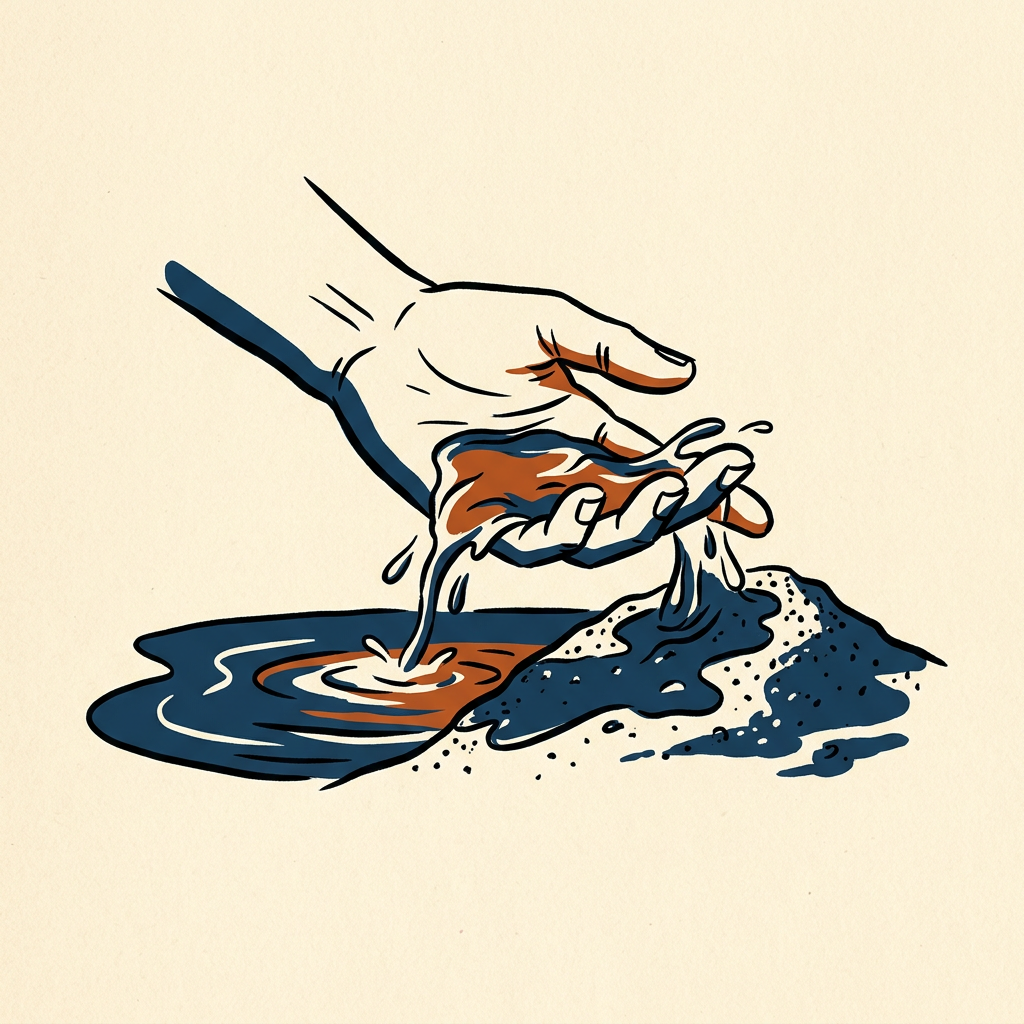
In practice: France’s gabelle forced households to buy set minimums from state sellers above market price, with galley sentences for faux-sauniers; in 1930 Gandhi walked roughly 240 miles from Ahmedabad to Dandi and made salt from seawater, igniting mass civil disobedience.
6
Salt and the young United States
Salt scarcity was a strategic vulnerability that shaped military planning and major infrastructure in early America.
- American RevolutionBritish import cutoff creates preservation hardship and spurs domestic salt works near Syracuse (Salina)
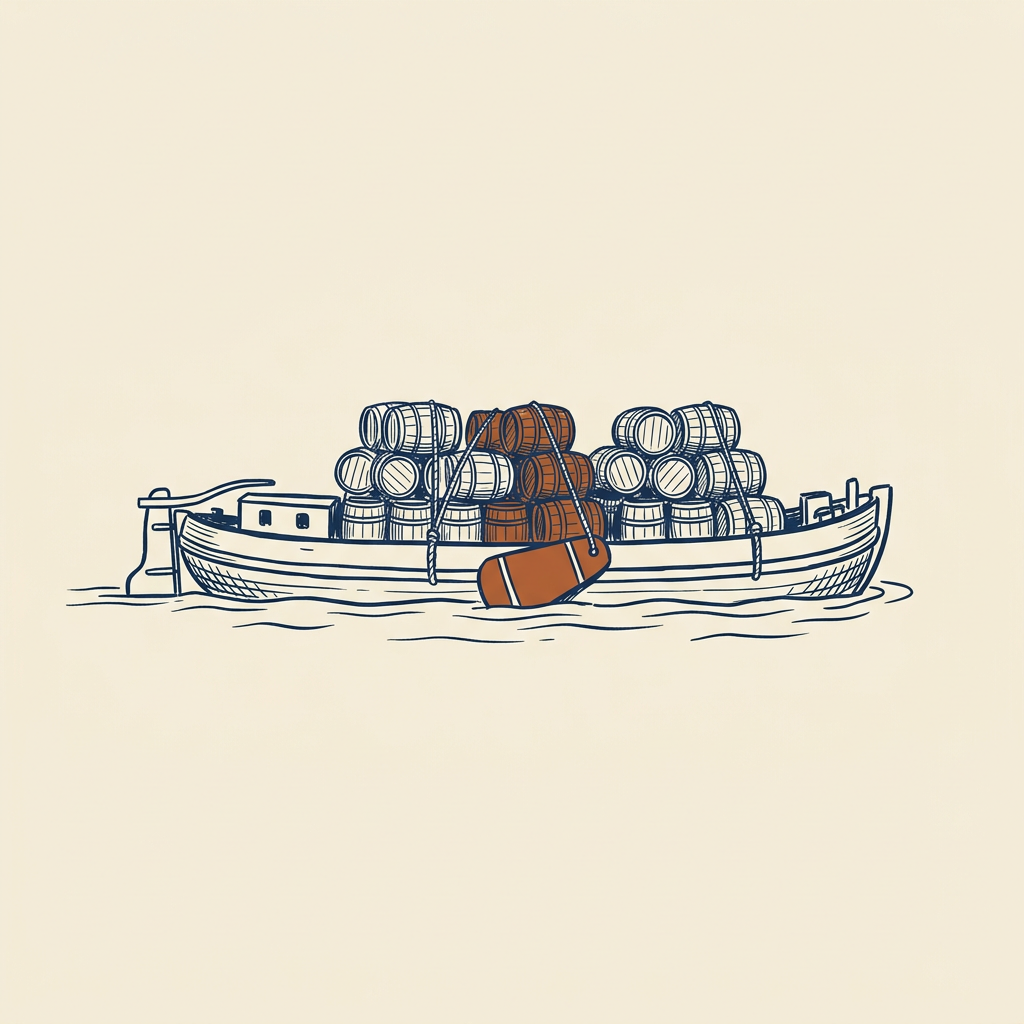
- 1825Erie Canal completed; bulk salt transport is a major economic driver beside grain
- Civil WarUnion forces target Confederate salt works at Saltville, Virginia, to cut meat preservation
Kurlansky shows supply was a live wartime concern, not background logistics. Armies and civilians alike needed a way to keep meat through winter.
Import dependence in colonial years pushed domestic works once conflict cut British shipments. Bulk movement of the mineral later helped justify big inland transport projects.
In civil conflict the same logic flipped to offense: hit the works that preserved enemy rations and you degrade fighting capacity.
In practice: Colonists’ shortage spurred works around Syracuse (then Salina); cheap bulk salt helped justify the Erie Canal, finished in 1825; Union campaigns targeted Confederate works at Saltville, Virginia.
7
Chemistry rewrites demand
The 1861 Solvay process shifted salt’s primary economic value from food preservation to industrial chemistry.
Old value
Worth driven by curing meat and fish for survival
New value
Worth driven by soda ash for glass, soap, textiles, then chlorine and PVC
Kurlansky marks a clean rupture, not a smooth continuation. For millennia biology—keeping food edible—set salt’s worth. After the new process, factories set it.
Salt plus ammonia and limestone yielded cheap soda ash, the backbone of glass, soap, and textile work central to nineteenth-century industry. Extraction scaled for chemical plants; ownership tilted toward large firms.
Later chains ran further from the table: chlorine and materials such as PVC still traced back to salt feedstock, so overall output did not shrink when kitchens needed less.
In practice: Belgian chemist Ernest Solvay’s 1861 process made soda ash efficient enough that industrial buyers overtook households and fishing fleets as salt’s growth market.

8
Cold storage ends the monopoly
Mechanical refrigeration stripped salt of life-or-death necessity within a few generations, even as new demand forms kept production alive.
Necessity era
Curing alone keeps distant meat and fish edible; salt equals survival
After refrigeration
Cold storage replaces curing; artisanal salts sell as flavor and provenance
Kurlansky closes the arc with the change no tax revolt fully managed. Ice harvesting, refrigerated rail cars, home iceboxes, and then mature mechanical cold removed curing as the only viable option.
Centuries-old preservation trades contracted once fresh and frozen fish could travel. Traditional marsh works faced cheaper mined salt and shrinking curing demand at once.
Industrial chemical buyers kept tonnage high, but cultural centrality as survival gear faded. What grew next was identity and taste: premium craft salts sold for flavor and place to people who no longer needed them to stay fed.
In practice: Basque and Portuguese cod-salting shrank; Brittany marshes lost curing markets; fleur de sel and Maldon rose as prized finishing salts.
Key terms
- gabelle French state salt tax that forced households to buy a set minimum from licensed sellers at above-market prices
- faux-sauniers French salt smugglers who risked penalties as severe as galley sentences
- Via Salaria Ancient Roman road built to move salt from the Adriatic coast to Rome
- Solvay process 1861 method using salt, ammonia, and limestone to make soda ash cheaply for glass, soap, and textiles
- fleur de sel Artisanal surface salt from Brittany later sold for flavor after preservation demand faded
- natron Salt mixture ancient Egyptians used in mummification as well as daily needs
What to do
- Pick one commodity or system your work or household fully depends on and write what breaks if that dependency vanishes the way refrigeration ended salt’s preservation monopoly.
- Name the single control point in a supply chain you rely on—a vendor, rule, or piece of infrastructure—and note who gains from your inability to substitute it.
- Before repeating a tidy origin story such as “salary comes from salt,” spend ten minutes checking whether historians treat it as settled or folk etymology.
- When you finish any commodity-centered history, list one region it skims and read a source that centers that place.
Questions to think with
- Which modern commodity still sits in salt’s old position—essential, hard to substitute, and easy for states or firms to choke?
- If refrigeration had arrived two centuries earlier, which empires or tax systems in the book’s story would likely have weakened first?
- Why do taxes on everyday necessities seem to generate more lasting anger than larger levies people feel less often?
- What dependency in your own field could technology remove as quietly as cold storage removed salt curing?
- Which geographic salt story does a Europe-and-China-heavy narrative still underweight, and how would adding it change the arc?
The other side
As popular history by a journalist, the book often implies salt caused what it only sat beside: the French Revolution had land taxes, food crises, privilege, and ideas; the gabelle was one grievance among many, yet the chapter shape still nudges readers to overweight it. The “salary from salt” story is repeated without a clear flag that linguists find it uncertain. Europe, China, and the United States get deep treatment while the trans-Saharan caravan trade through places like Timbuktu receives only brief mention, and the lack of footnotes plus heavy secondary sourcing leaves occasional looseness on dates and figures—an engaging entry point, not definitive economic history.
Who it's for
Readers who like world history told through one everyday object, home cooks curious about cured-meat and fish-sauce roots, and students wanting an accessible door into taxation, trade, and empire rather than a footnoted monograph.