



Mischel argues self-control works as a teachable attention skill, not fixed willpower

In 60 seconds
- Preschoolers who waited longest for a second treat did so by looking away, singing, or mentally turning the marshmallow into a cloud, not by raw willpower.
- Mischel frames self-control as a contest between a fast emotional hot system and a slower reflective cool system that gains ground when attention is redirected.
- Children in the top third of preschool wait times later averaged about 210 combined SAT points higher, and some still showed different prefrontal and ventral striatum patterns in their forties.
- Children who had just seen an experimenter keep a promise waited about four times longer than those who had seen a promise broken, so the test also measures trust.
- If-then plans formed in calm moments and abstract reframing of temptation can shift control to the cool system in children and adults.
- A 2018 replication found the preschool-to-achievement link shrank by half or more after controlling for family background, especially for lower-income children.
The big idea
Mischel argues that the capacity to delay gratification is not a fixed reservoir of willpower but a set of mental strategies that move attention from a temptation’s hot sensory pull to a cool abstract representation. Because those strategies can be taught in minutes, he treats self-control as a coachable skill for parents, schools, and adults facing habits, rather than a character trait people simply have or lack.
The book in brief
In the late 1960s and early 1970s at Stanford’s Bing Nursery School, Mischel and his students sat four-year-olds alone with a chosen treat and a deal: ring a bell for one now, or wait until the adult returned for two. Wait times ran from seconds to sometimes twenty minutes. What mattered was not the clock alone but how children occupied themselves—staring and cracking, or looking away, singing, covering their eyes, turning their chairs, or treating the marshmallow as a cloud or picture. The procedure was a window into managing the clash between an immediate want and a larger delayed one.
Mischel and Janet Metcalfe cast that clash as a contest between a hot system and a cool system. The hot system is fast, emotional, and reflexive, locked on smell and sweetness from infancy. The cool system is slower and reflective, able to cast the same treat as cotton or a cloud, and it develops through childhood. Self-control, on this view, is which system gets hold of the temptation in the mind, not a depleting moral reserve. Children who waited longest removed the treat from view, distracted themselves, or reframed it. Brief instructions to focus on shape and color rather than taste raised wait times substantially; bare orders to use willpower did little.
Follow-ups decades later unsettled the idea that early temperament and later achievement are unrelated. In the 1980s, longer preschool waiters were rated by parents as more academically and socially competent as teenagers. In a 1990 subsample, top-third waiters averaged about 210 combined SAT points higher than bottom-third waiters. A 2011 brain-imaging study of original participants in their forties still found weaker impulse control and different prefrontal and ventral striatum patterns among those who had struggled to wait at four. Mischel stresses this is a tendency, not a sentence, and most outcome variation stayed unexplained.
Later work complicated the picture. A 2013 study showed children who had just experienced a reliable experimenter waited about four times longer than children who had just been let down, so waiting also measures beliefs about whether delayed rewards arrive. Building on the coaching result with preschoolers, Mischel treats self-control as a skill: if-then plans preloaded in calm moments, distancing, and reframing can shift the cool system into charge for children and adults alike.
He extends the same hot-cool logic to addiction, overeating, and impulsive spending, where cues seize the hot system before cool can engage. The practical move is to hide cues and preload plans before craving peaks, not to out-will the urge once it has taken hold. He closes by arguing that homes and schools share responsibility for teaching these techniques inside trustworthy, stable environments, because early gaps need not be treated as permanent character.
Context
Walter Mischel draws on fifty years of follow-up research that began with preschool delay-of-gratification experiments. The book mattered because it reframed willpower as a skill schools and parents could teach rather than a character trait people either have or lack.
The key ideas
1
The waiting-room window
A four-year-old’s private strategy while alone with a treat reveals how the mind manages immediate want against delayed gain in ways intelligence tests miss.
- 1Choose the treatChild picks marshmallow, pretzel, or cookie
- 2Hear the dealOne now by ringing the bell, or two if you wait alone
- 3Sit with it in viewNo distractions; waits run from seconds to sometimes twenty minutes
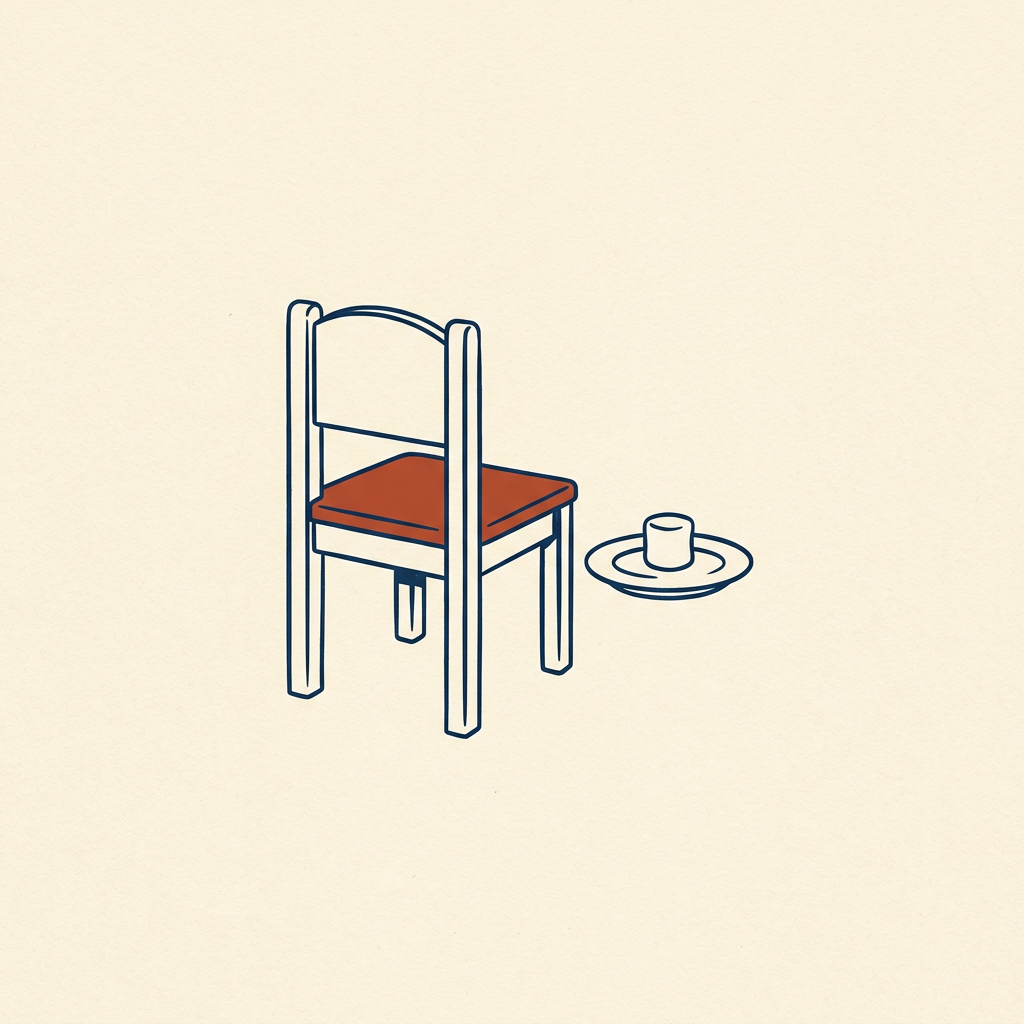
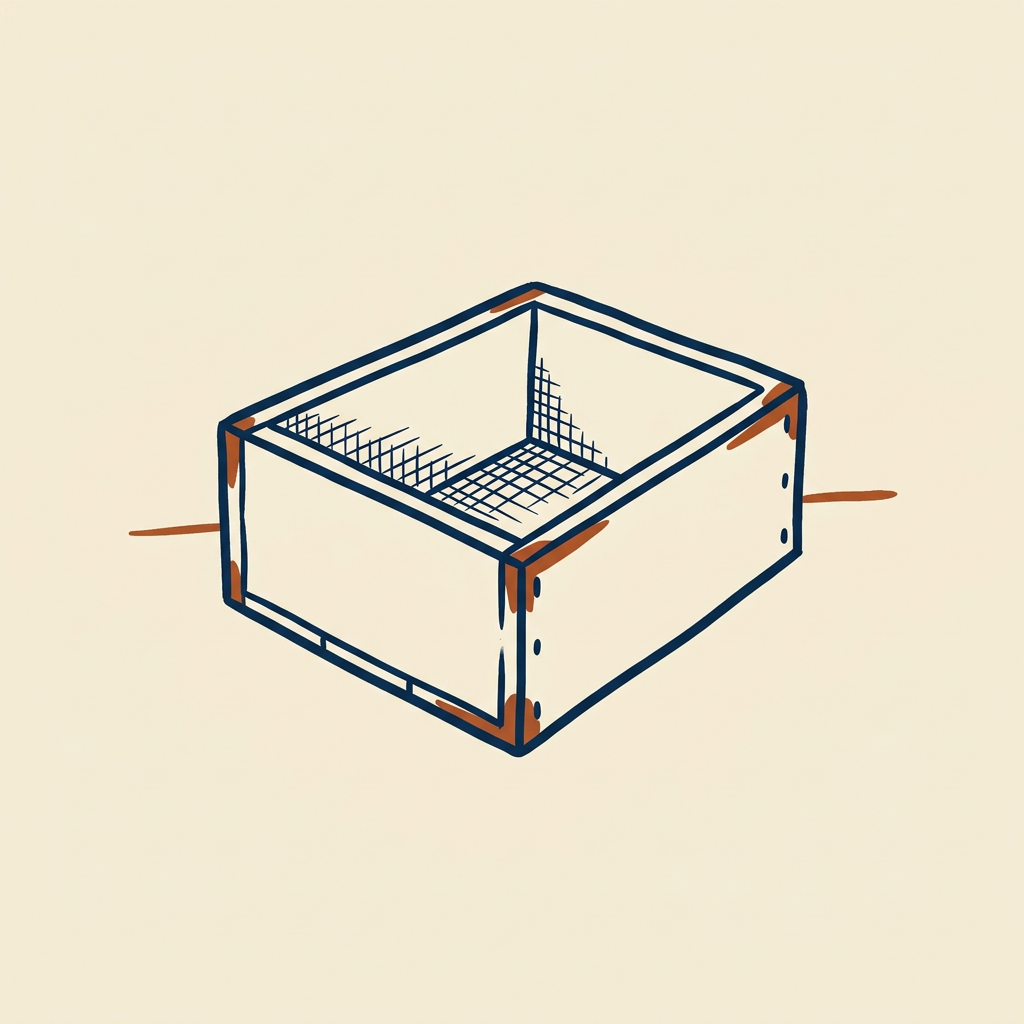
Mischel and his students ran a plain procedure at Stanford’s Bing Nursery School in the late 1960s and early 1970s. A child chose a treat—often a marshmallow, sometimes a pretzel or cookie—and heard the deal: ring a bell to bring the adult back for one now, or wait alone until the adult returned for two. The treat stayed in plain view with no distractions supplied. Wait times stretched from a few seconds to the full period, sometimes twenty minutes.
Mischel cared less about the stopwatch than about what children did while waiting. Some stared at the treat and cracked almost at once. Others looked away, sang, covered their eyes, or physically turned their chairs. A few treated the marshmallow as though it were not food, describing it as a cloud or a picture.
He presents the setup as a real-time window into internal conflict, not as an IQ or obedience test. The distinction between children captured by the temptation and children who mentally distanced themselves became the seed of the book: self-control is management of attention and mental representation, not raw suppression of desire.
In practice: Children who described the marshmallow as a cloud or a picture lasted longer than those who kept treating it as something edible.
2
Hot system versus cool
Willpower succeeds or fails by which of two competing systems controls attention to the temptation, not by moral fiber.
Hot system
Fast, emotional, reflexive; locked on smell and sweetness; present from infancy
Cool system
Slower, reflective, abstract; can cast a treat as cloud or cotton; develops through childhood
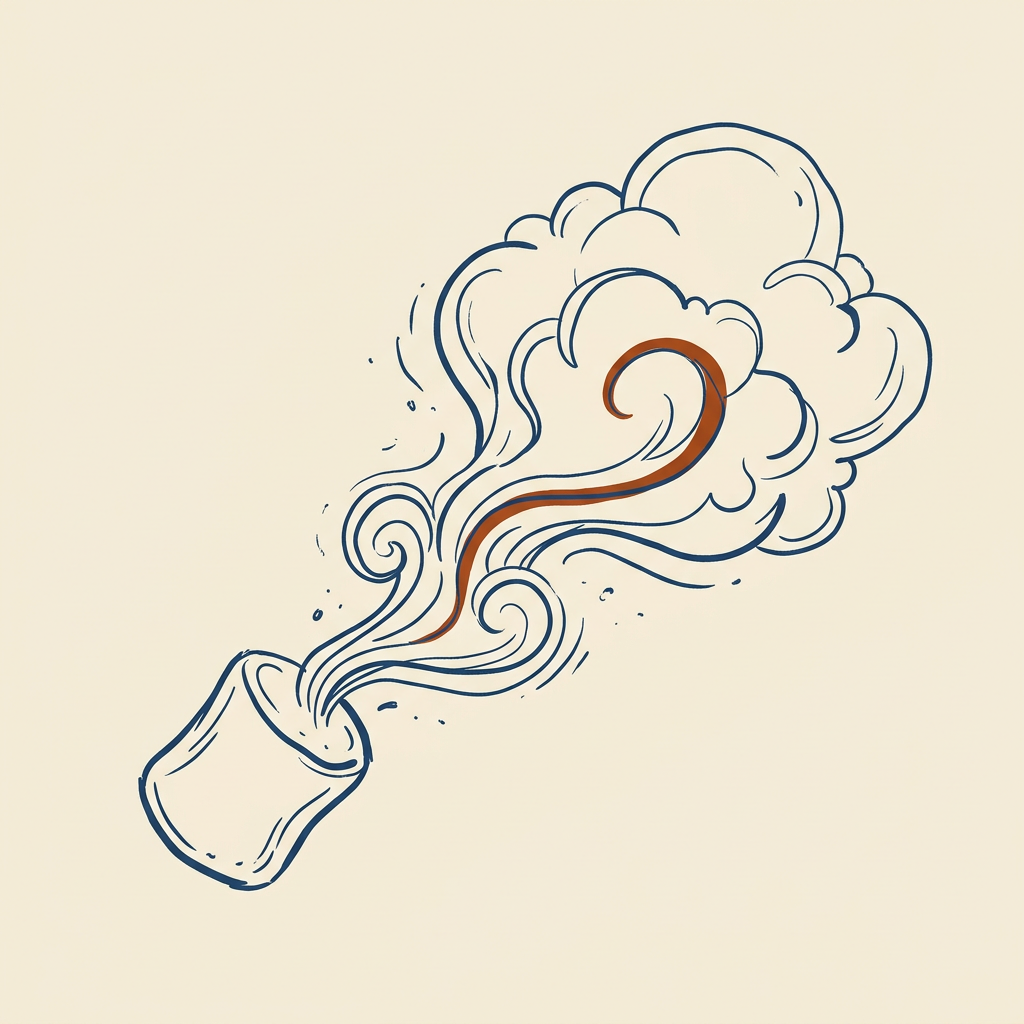
With collaborator Janet Metcalfe, Mischel proposed two systems in tension to explain waiters versus grabbers. The hot system is fast, emotional, and reflexive, rooted in structures like the amygdala. It answers to immediate sensory qualities—the sweetness and smell of a marshmallow—and is present in full force from infancy.
The cool system is slower, reflective, and cognitive, associated with the prefrontal cortex and hippocampus, and it develops gradually through childhood. It can represent the same marshmallow abstractly, as soft white cotton or a cloud, stripping immediate appeal.
On this model self-control is not a reservoir of strength that gets depleted. It is which system gains access to the object in the mind. Staring keeps the hot system engaged and the child loses. Mentally transforming the treat or looking away shifts control to the cool system and lengthens the wait. If control is a matter of representation and attention, it can be shifted deliberately through technique rather than through willpower alone—a break from the view that some people simply possess more self-control as a fixed quality.
In practice: A child who imagines the marshmallow as a puffy cloud strips its pull and can wait far longer than one locked on taste and smell.
3
Technique beats gritted teeth
The longest waiters used specific learnable moves that changed how the temptation appeared, not more raw willpower.
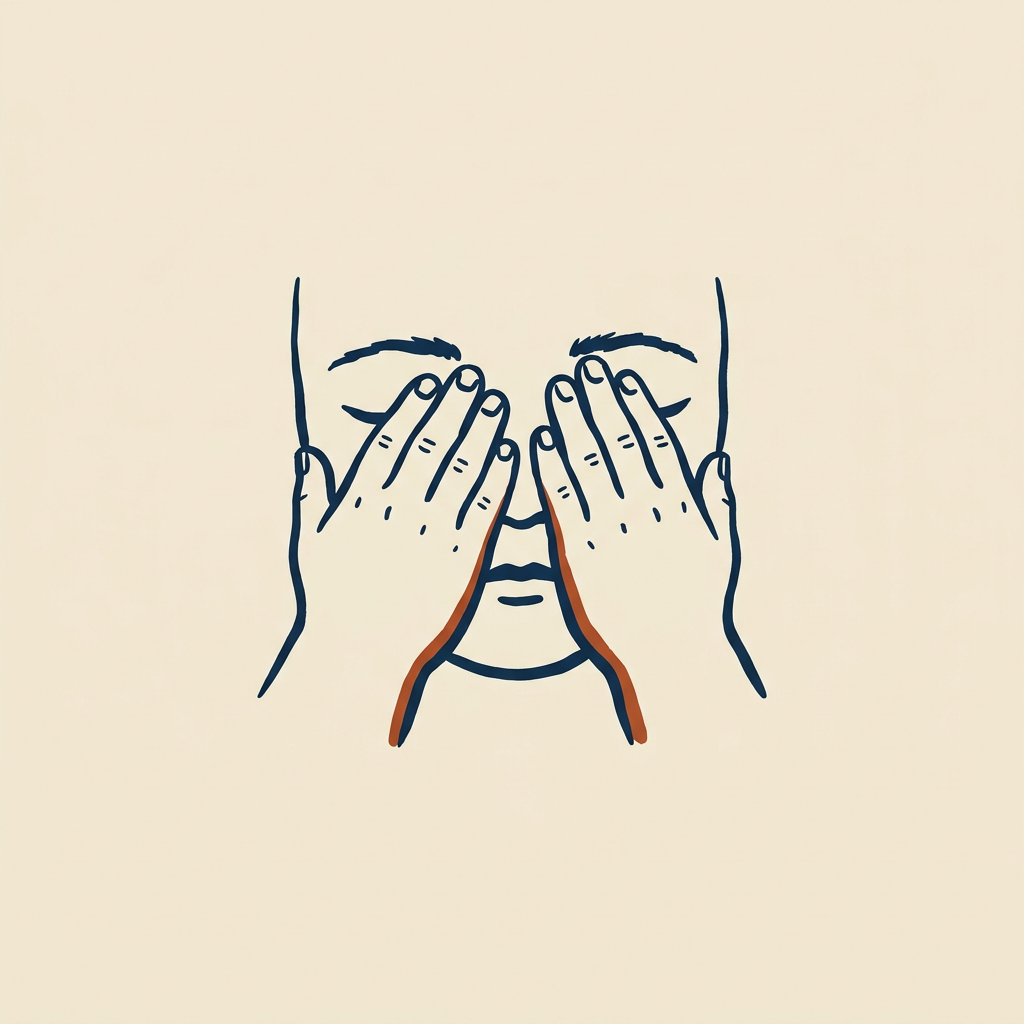
Close observation showed successful waiting was rarely gritted teeth. Longest waiters removed the treat from their perceptual field by covering their eyes, turning their backs, or looking toward a wall or window. Others invented games, sang, or talked to themselves about unrelated things.
A smaller group used cognitive reframing: they imagined the marshmallow as something inedible, like a puffy cloud, or focused on shape rather than taste. Reframing proved especially effective because it neutralized emotional pull without constant vigilance against looking.
Mischel’s team tested the point with instructions. Children told to think about roundness or color waited substantially longer than children told to think about how tasty and chewy the treat was. Simply telling children to use willpower with no strategy did little. If a few minutes of coaching could change a four-year-old’s wait time, the capacity being measured could not be simply innate; it was a repertoire of mental moves, some spontaneous, some teachable.
In practice: Instructions to focus on the marshmallow’s abstract qualities raised wait times substantially compared with instructions to dwell on taste.
4
From nursery to midlife
A brief preschool delay measure predicted competence, SAT gaps, and midlife brain-pattern differences strongly enough to unsettle the assumption that early temperament and later achievement are unrelated.
- Late 1960s–70sBing Nursery School delay sessions
- 1980sParent ratings of adolescent competence
- 1990About 210-point average SAT gap in subsample
- 2011Midlife scans still show impulse-control differences
In the 1980s Mischel, Yuichi Shoda, and Philip Peake tracked original Bing families. Parents rated children who had waited longer as preschoolers as more academically and socially competent as teenagers, better able to handle stress and plan ahead.
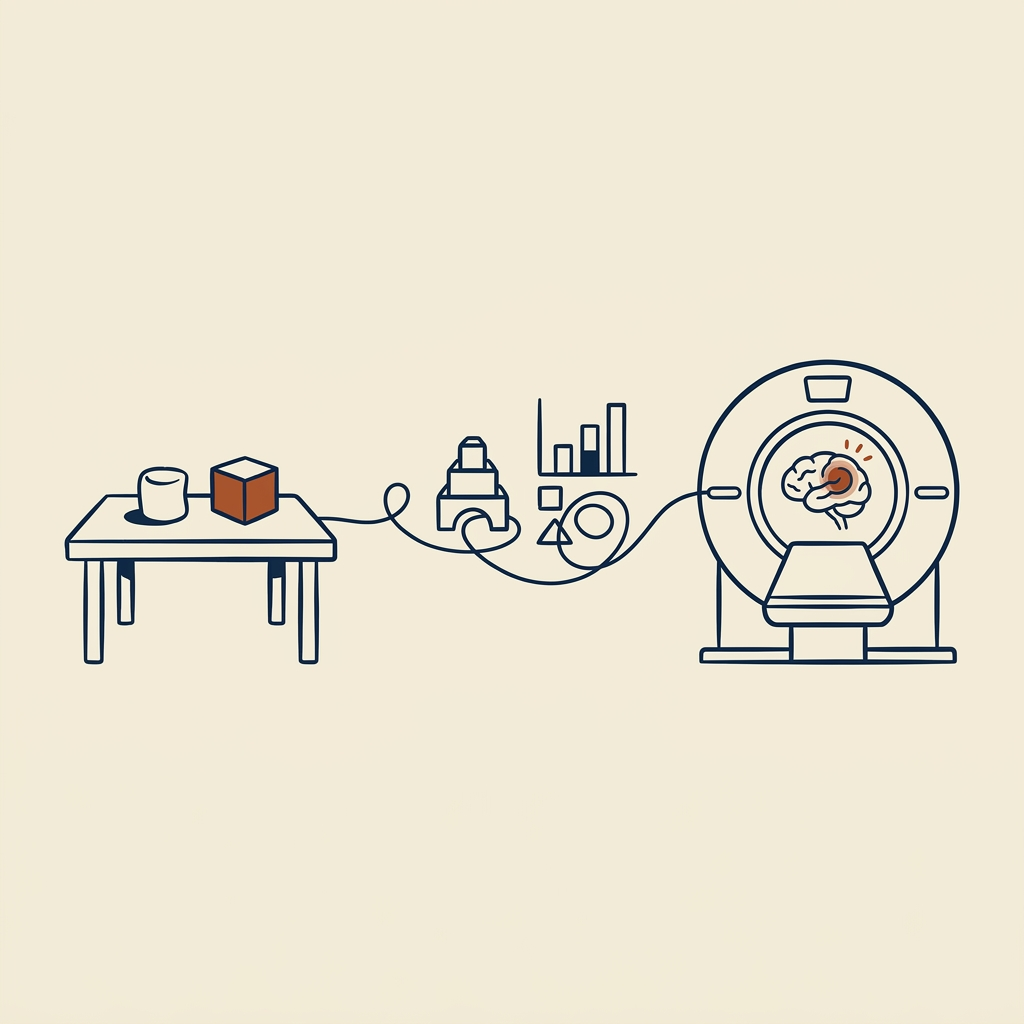
In the subsample with SAT scores, a widely cited 1990 finding showed children in the top third of preschool wait times averaged about 210 combined SAT points higher than those in the bottom third. Later work pushed into midlife. A 2011 imaging study led by B.J. Casey, with Mischel as coauthor, brought original participants in their forties into the lab. Those who had struggled to wait at four still showed weaker impulse control on cognitive tasks, plus different prefrontal cortex and ventral striatum activity when resisting temptation.
Mischel is careful: this is a statistical tendency, not a fixed sentence. Some low-delay children became high-functioning adults, and the correlation left most life-outcome variation unexplained. Still, any signal lasting roughly forty years from a short nursery-school session was itself the surprise that carried the marshmallow test beyond psychology.
In practice: Top-third preschool waiters later averaged about 210 combined SAT points higher than bottom-third waiters in the available subsample.
5
Waiting requires trust
A child’s choice to wait depends heavily on whether the adult’s promise feels real, so the test measures beliefs about the world as much as discipline.
4x
longer average wait after a reliable versus unreliable experimenter
Mischel discusses a 2013 study by Celeste Kidd and colleagues that first gave children an experience of the experimenter’s reliability. In one condition the experimenter promised better art supplies and failed to deliver; in the other the promise was kept.
Children who had just learned that adults in this setting followed through waited, on average, about four times longer on the subsequent marshmallow task than children who had learned promises were not kept. Waiting for a larger later reward is only sensible if the reward is likely to materialize.
A child raised among unreliable adults or unstable resources who grabs immediately is making a reasonable bet, not displaying weak character. Mischel treats this as a necessary complication: self-control strategies matter, but they operate inside trust and environmental stability that the original lab, run mostly with children from stable, affluent Stanford-affiliated families, did not vary.
In practice: After an experimenter failed to deliver promised art supplies, children waited only about a quarter as long as peers who had just seen a promise kept.

6
Coaching the cool system
Because delay depends on specific mental techniques rather than fixed character, self-control can be taught to children and adults who currently struggle.
- 1Name the triggerIdentify the situation where the hot system usually wins
- 2Write the if-thenIf X happens, then I will do Y, decided while calm
- 3Rehearse earlyPractice the substitution before the temptation appears
Building on the finding that brief reframing instructions improved preschool wait times, Mischel argues self-control should be coached like a skill rather than diagnosed as a personality trait. One method he highlights, drawn from Peter Gollwitzer’s work on implementation intentions, is the if-then plan: decide in advance, if X happens then I will do Y, so the response is preloaded and needs less in-the-moment willpower.
He argues this works because it shifts control from the hot system, which reacts to the immediate stimulus, to a plan the cool system laid down in a calm moment. Classroom efforts can teach the same distancing and reframing the original high-delay children discovered on their own—mentally transforming a tempting object or physically removing it from view.
The broader claim rejects the folk and some academic view that self-control is a stable trait fixed early. People vary in starting ability by temperament and environment, but attention control and reappraisal can be practiced, and doing so can change behavior in the situations—dieting, saving, studying—where self-control routinely breaks down.
In practice: A dieter who sets “if offered dessert at the office party, then I will ask for coffee instead” rehearses the substitution before the hot moment arrives.
7
Same mechanism, higher stakes
The hot-cool framework that explains a child’s wait for candy also structures adult struggles with addiction, overeating, and impulsive spending.
During craving
Hot system already holds the field; gritted-teeth resistance often fails
Before craving
Hide cues and preload if-then plans while the cool system still leads
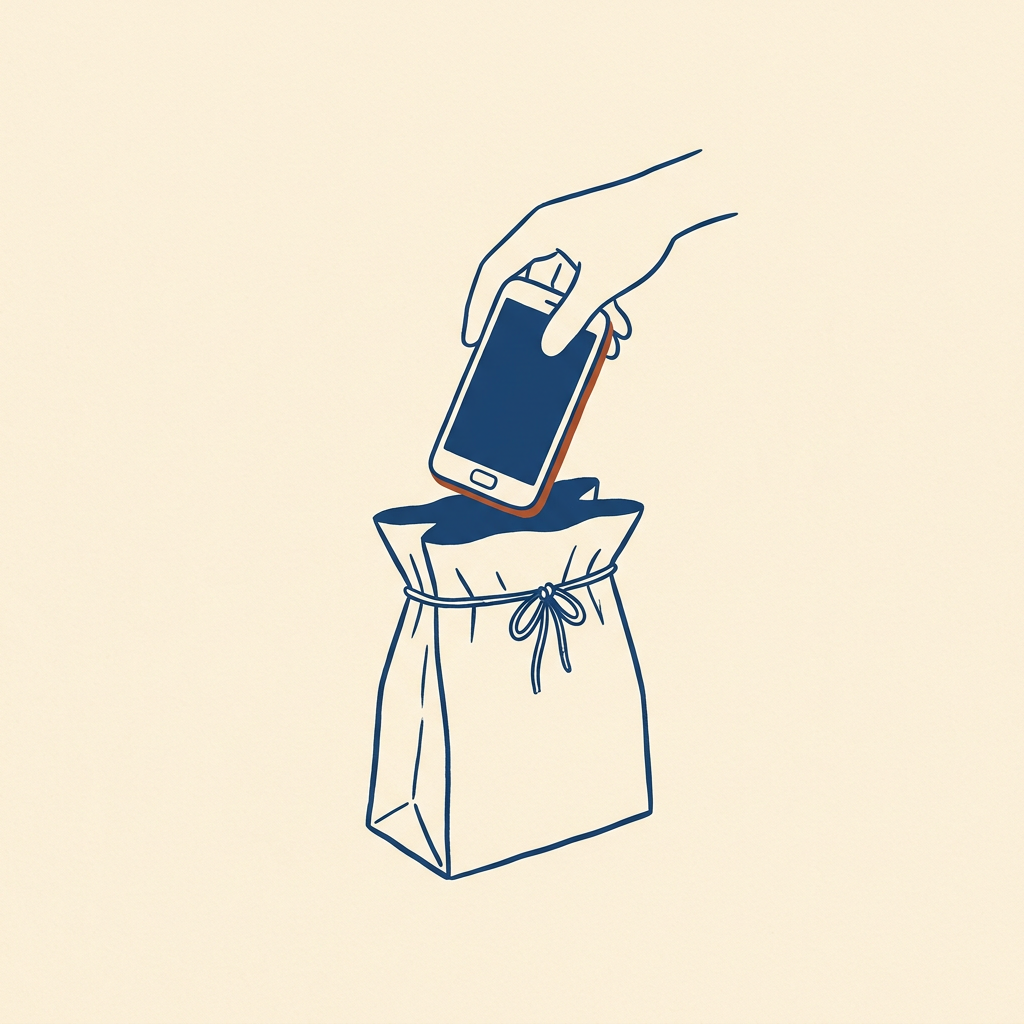
Mischel extends the laboratory finding to real-world self-destructive patterns under conditions the lab cannot fully copy: chronic stress, addictive substances, and environments engineered to trigger craving. Cues—the sight of a cigarette pack, the smell of fried food, a phone notification—activate the hot system automatically, often before the cool system has a chance to engage.
That is why willpower understood as gritted-teeth resistance in the moment so often fails against addiction: by the time a person consciously decides to resist, the hot system has already claimed the field. His prescription follows the childhood findings directly: change the situation and the mental representation before craving peaks.
That means keeping tempting cues out of sight, like a child turning away from the treat, and pre-committing to if-then plans formed when the cool system is in charge. He is candid the approach does not cure addiction or guarantee weight loss; it is a set of tools that shift the odds, most effective before exposure. He notes these applied chapters rest more on the framework’s plausibility than on the kind of longitudinal rigor behind the original findings.
In practice: Keeping a cigarette pack or phone out of sight follows the same logic as a child turning a chair away from a marshmallow.
8
Homes and schools can teach it
Because the relevant skills are teachable rather than fixed, parents and schools share responsibility for self-regulation, and early gaps need not be treated as permanent.
If delay of gratification were simply inborn, there would be little point in trying to cultivate it. Mischel’s research suggests the techniques of attention control and reappraisal can be taught to preschoolers in minutes, so classrooms and homes have real leverage over a skill linked to later academic performance and stress management.
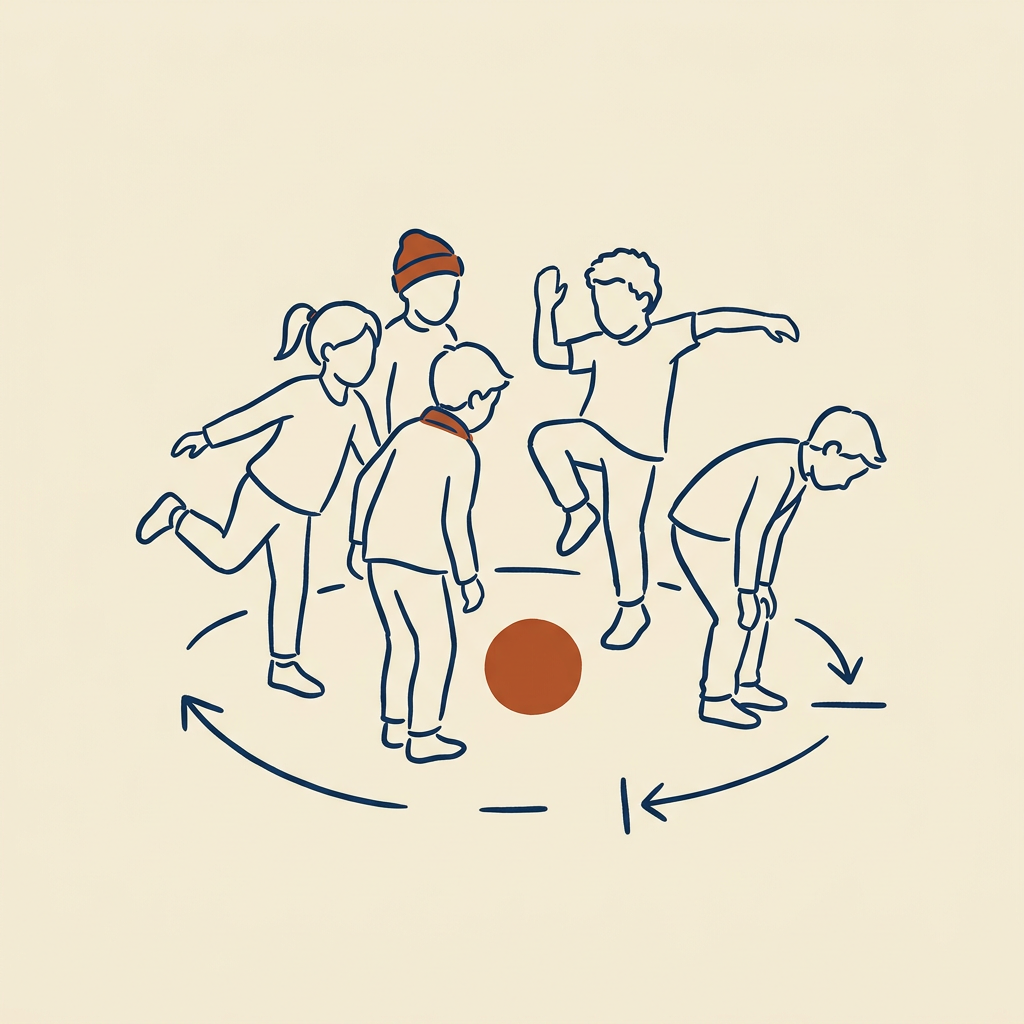
He points to programs that teach simple strategies, such as games that ask children to do the opposite of an impulsive instruction, as a way to build the cool system’s capacity to override automatic responses well before adolescence. He is cautious not to reduce parenting to drilling marshmallow tricks.
Trust and a stable, responsive environment are preconditions; a child who has learned that promises are not kept has little reason to apply reframing to wait for a reward that may never come. The recommendation is therefore twofold: build predictable, trustworthy environments, and within them teach concrete cognitive strategies rather than simply praising or punishing self-control as pure character. That optimistic close is also where the causal story is most open to the objection that family circumstance may drive both early waiting and later success.
In practice: Games that require doing the opposite of an impulsive instruction train young children to let the cool system override automatic responses.
Key terms
- hot system The fast, emotional, reflexive system that locks onto a temptation’s immediate sensory pull
- cool system The slower, reflective system that can represent the same temptation abstractly and strip its appeal
- delay of gratification Choosing a larger later reward over a smaller immediate one
- cognitive reframing Changing what a temptation means—treating a marshmallow as a cloud instead of food—to cut its emotional force
- if-then plan A pre-decided rule, formed in a calm moment, that names a trigger and the exact response to run
- implementation intentions Gollwitzer’s term for if-then plans that preload behavior so less in-the-moment willpower is needed
What to do
- Write one specific if-then plan Monday morning for a recurring temptation before you face it again.
- Physically remove one tempting cue from direct view in a place you control this week.
- When a craving hits, describe the object’s physical properties instead of its appeal, and track for a week whether that cuts how often you give in.
Questions to think with
- When you last gave in to a short-term urge, had the hot system already taken the field before you noticed?
- Does your environment make delayed rewards feel reliable, or does grabbing now look like the rational bet?
- Which single weekly temptation would change most if you hid its cue or reframed it abstractly?
- If self-control is technique rather than character, what would you stop praising or blaming in a child?
- How much of a preschool wait-time gap might really be trust and household stability rather than strategy skill?
The other side
A 2018 replication by Watts, Duncan, and Quan, using a larger and more socioeconomically diverse sample, found the link from early delay to achievement at age fifteen shrank by half or more after controlling for maternal education, household income, and home environment. For children from lower-income households the correlation was weak or negligible. Mischel’s celebrated samples came almost entirely from Stanford-affiliated families, and the 1990 SAT result rested on a small subsample of roughly three dozen to sixty children. The book’s applied chapters on addiction, dieting, and habit change lean on the hot-cool framework’s plausibility more than on trials showing durable results outside the lab. The book also says little about how poverty, chronic stress, and food insecurity directly tax cool-system development.
Who it's for
Parents wondering whether a child’s impulsiveness is fixed, psychology students who want the actual research behind the pop-science marshmallow story, and anyone trying to break the habit of choosing short-term comfort over longer goals will get the most from the full book.