



Self-control, not forecasts, decides who survives speculation

In 60 seconds
- Lefèvre shows raw tape-reading skill can work in isolation before a trader’s own orders move prices against him.
- Acting on tips removes exit criteria and responsibility, so even a right tip teaches nothing durable.
- Survival depends more on cutting losses fast than on being right often when entering.
- The real money is made sitting through a correct position, not in the buy or the sell.
- Fortunes come from a handful of major, well-timed campaigns such as the 1907 panic shorts, not constant small trades.
- Knowing the rules is not enough: under ego and sunk cost even a skilled operator will break them and have to rebuild.
The big idea
Lefèvre argues that speculation is a discipline of self-control rather than prediction, and that the recurring causes of ruin are psychological—tips, hope, fear, impatience, and ego—not analytical gaps. Skill and capital can be built, lost, and rebuilt in cycles because stating a rule and keeping it under real pressure are entirely different achievements.
The book in brief
### The clean training ground The story opens with a teenage board boy in Boston bucket shops, unregulated parlors where customers bet on price moves without owning shares. He learns to read recurring rhythms in the tape—price and volume sequences—without balance sheets or industry study, and wins so consistently that shops refuse his business. Lefèvre treats this as real, transferable pattern skill proven in a controlled setting free of order-flow complications.
### When the market answers back On real exchanges the same directional reads stop paying. His own buying and selling now moves prices, especially as size grows; a correct forecast can still produce a losing account if entry is abrupt or liquidity is thin. He must relearn accumulation, distribution, and testing capacity before full commitment. Speculation becomes an interaction with a responsive system, not one-way observation.
### Borrowed certainty and the loss rule Worst drawdowns follow tips, friends’ insistence, or brokers’ confidence. Even a right tip builds no judgment and leaves no internal exit marker, so the trader drifts on someone else’s reassurance. Against that trap Lefèvre sets the core mechanical habit: capital is the only tool, so a trade that violates the original thesis is exited at once, not averaged or defended. Being right often while letting losses run still wipes you out; being wrong often while cutting small can still pay if winners run.
### Trend, patience, and the few big campaigns He trades the line of least resistance—where price needs the least extra force—rather than personal views of value, because a stock can stay “wrong” long enough to break a value bettor. Impatience is as costly as stubbornness: money is made in the sitting while a thesis matures through normal noise. The celebrated 1907 panic episode shows large short positions held through a severe decline, producing several million dollars and the claim that fortune comes from a few aligned major turns, not busy small trades. At the peak he even eases selling at a request not to worsen systemic stress.
### Rules broken by the man who taught them After early success, a cotton campaign turns emotional: he doubles down on a loser instead of cutting, reaches near ruin, and must rebuild from a smaller base. Lefèvre places this after the patience chapters on purpose—framework is necessary but stress degrades judgment in predictable ways. Later chapters map corners and pools, deliberate insider engineering of price, which complicates any pure reading of the tape as neutral crowd judgment.
### The loop that does not close By the end he has made and lost fortunes repeatedly. Success breeds overconfidence that erodes discipline; collapse breeds caution that can block the next real opportunity. Fear of giving back gains, hope that a loser will heal itself, and boredom-driven trading reappear as structural features of the activity. The book lands on lifelong vigilance with no finish line, not a permanent fix.
Context
Edwin Lefèvre published the book in 1923 as fiction that closely tracks the real career of Jesse Livermore, from bucket-shop gambler to Wall Street figure who made and lost several fortunes. It became the foundational text of trading psychology literature by arguing that speculation is self-control rather than prediction and that ruin’s recurring causes are psychological.
The key ideas

1
Tape skill without fundamentals
Raw pattern recognition from price sheets alone can be a genuine trading skill built by repetition, not theory.
Livermore starts as a teenage board boy chalking prices in Boston bucket shops—betting parlors where customers wagered on moves without buying shares. He notices how prices tend to move, bets against the house, and wins until shops across the city refuse him. He is not reading balance sheets; he is reading the tape, the sequence of prices and volumes, for rhythm.
Lefèvre treats this as legitimate expertise, distinct from fundamental analysis and earned through feedback. Within the book’s logic the phase establishes a character who trusts direct observation over secondhand opinion. The shops matter because they were pure directional bets with no real order flow, so the skill was cleanly measurable.
That same cleanliness is why the skill later needs modification: it was proven before the trader’s presence could change the market he was reading. The early chapters function as a controlled experiment that the skill exists in isolation.
In practice: Bucket shops city-wide eventually refuse the teenage Livermore’s business because his tape reading beats the house without any company analysis.

2
When your order moves the tape
Forecasting direction is worthless without execution skill, because real orders change the prices you are trying to read.
Bucket shop bet
Wager never touches real supply or demand; edge stays measurable and clean.
Exchange order
Your own buying and selling moves price against you, especially as positions grow.
On real exchanges his directional sense at first seems intact, yet the account keeps losing. In a bucket shop his bets never touched supply and demand; on an exchange, buying and selling—especially in size—pushes price against him. A correct eventual direction can still leave a red balance if he entered too hard or ignored how thin the market was at that level.
Lefèvre makes this a recurring claim: markets are not a fixed puzzle solved once; they respond to the solver. The frustration is seeing the forecast vindicated while the P&L is not, because timing, size, and liquidity were ignored.
He has to rework everything—accumulate and distribute gradually, test absorption before committing, study liquidity as its own variable. The chapter strips the comforting idea that market skill is purely intellectual and reframes speculation as interaction, which sets up every later stress on discipline over cleverness.
In practice: After leaving bucket shops he repeatedly watches the market eventually go his way while his account does not, because abrupt size moved price against the entry.

3
Other people’s certainty
Acting on someone else’s conviction is more dangerous than having no opinion, because it outsources both judgment and the discipline to exit.
Own thesis
You know the exact evidence that would prove you wrong and can exit on it.
Borrowed tip
Exit criteria belong to someone else; you drift on reassurance after the market has spoken.
Livermore’s worst losses follow tips, a friend’s insistence, or a broker’s confident push. Insiders claim special knowledge of plans; friends swear a stock cannot fall further. Lefèvre’s point is not only that tips are often wrong. Even a tip that happens to be right teaches the trader nothing durable, so the win is accidental and the habit corrosive.
A trader on a tip has no internal basis for when to get out—the conviction was never his. He holds losers far past what his own analysis would allow because the source keeps reassuring him. Outsourcing judgment also outsources the willingness to act on bad news promptly.
Someone with his own thesis knows what would falsify it; someone borrowing a thesis drifts and hopes. The book presents this as a nearly universal trap, one experienced operators fall into because trust in confident authority is hard to override when it relieves the discomfort of uncertainty.
In practice: He holds a losing position longer than his own reading would permit simply because the tip’s source keeps telling him it will work.
4
Speed of the exit
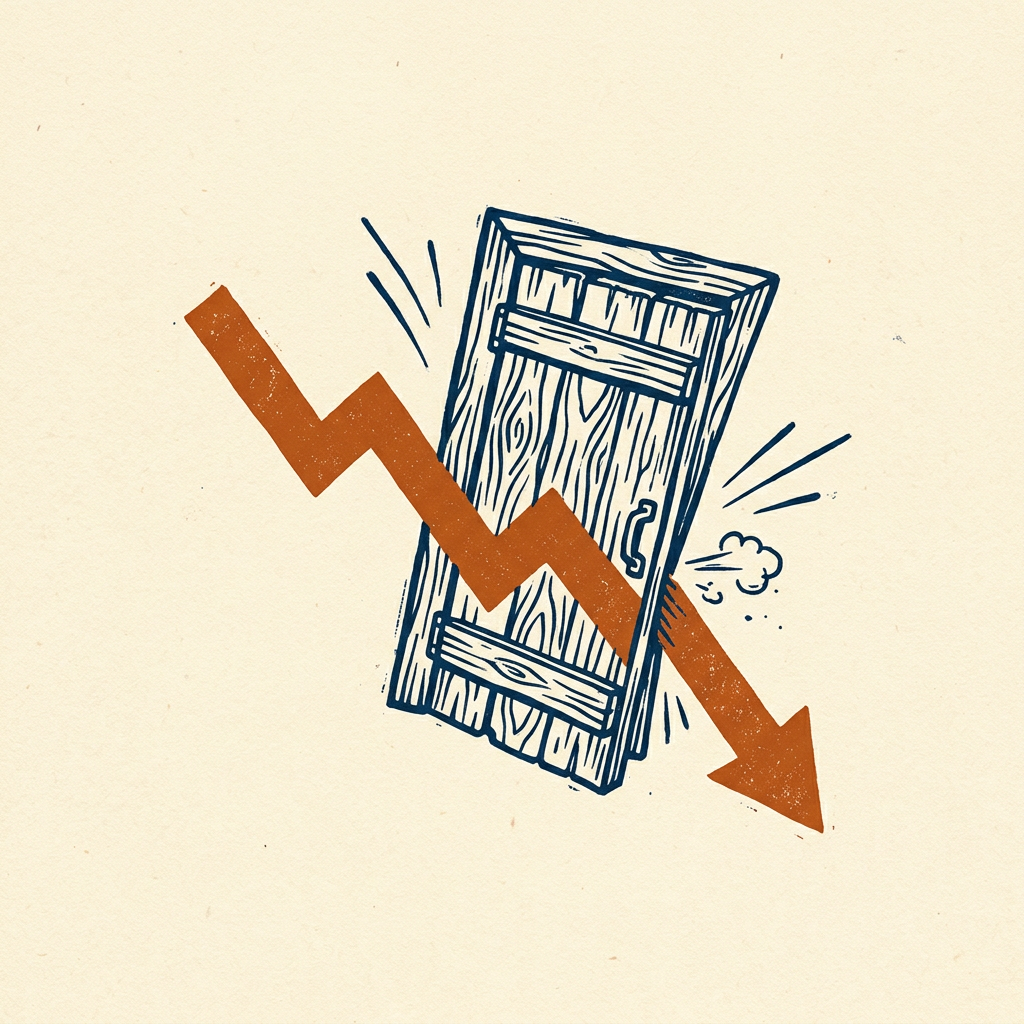
Survival depends more on how fast you exit bad trades than on how accurately you enter good ones.
Right often, losses run
Rare large drawdowns still erase the account despite a high hit rate.
Wrong often, losses cut
Small exits plus runners can still net profit over time.
Loss-cutting is framed as the single most important mechanical habit—more important than forecasting. Capital is the only tool; a trade that moves against the original thesis should be closed at once, not defended, argued with, or averaged down. The asymmetry is plain: right most of the time but letting losses run still ends in wipeout; wrong often but exiting quickly can still be profitable if winners are allowed room.
The book shows him prospering when he honors the rule and suffering when he does not. Psychological resistance is part of the lesson. Closing means admitting error in public as a realized loss, which is harder than watching an open loss and calling it temporary. An unrealized loss lets hope continue; a realized loss forces acceptance.
The rule is simple to state and, as later chapters prove, extremely hard to keep when money and ego are on the line.
In practice: In a wheat and cotton stretch, hesitation to accept a loss turns a manageable setback into a much larger one.

5
Line of least resistance
Trade the market’s dominant trend rather than personal value opinions; short-run price behavior reveals actionable pressure better than intrinsic worth.
Livermore’s line of least resistance is the direction that needs the least extra force, read from how prices act at key levels rather than from guesses about true value. If a stock will not break below a level despite bad news, that fact is information about buying and selling pressure—whether or not you think the stock is cheap.
This departs from value logic. Being right about worth is less useful than being right about where the crowd’s money is flowing now, because a stock can stay irrational long enough to bankrupt the correction bettor. His biggest wins come from riding major trends across markets, not from picking single undervalued names.
The book is explicit that speculation and fundamental investing are different games: one anticipates what participants will do next; the other calculates intrinsic value. Fundamentals matter mainly as they move the crowd. The claim is strong and disputable, and it assumes enough participation to make trends visible—a limit the book does not fully face.
In practice: His largest gains come from identifying and holding major market-wide trends rather than from individual cheap-stock picks.

6
The money is in the sitting
The hardest profitable skill is emotional discipline to do nothing while a correct position matures through noise.
- 1Define the thesisKnow what broader trend or condition justifies the position.
- 2Enter with patienceBuild when the line of least resistance aligns.
- 3Sit through noiseTreat small wiggles as normal unless the thesis itself breaks.
- 4Exit on thesis breakDo not exit merely to relieve the discomfort of uncertainty.
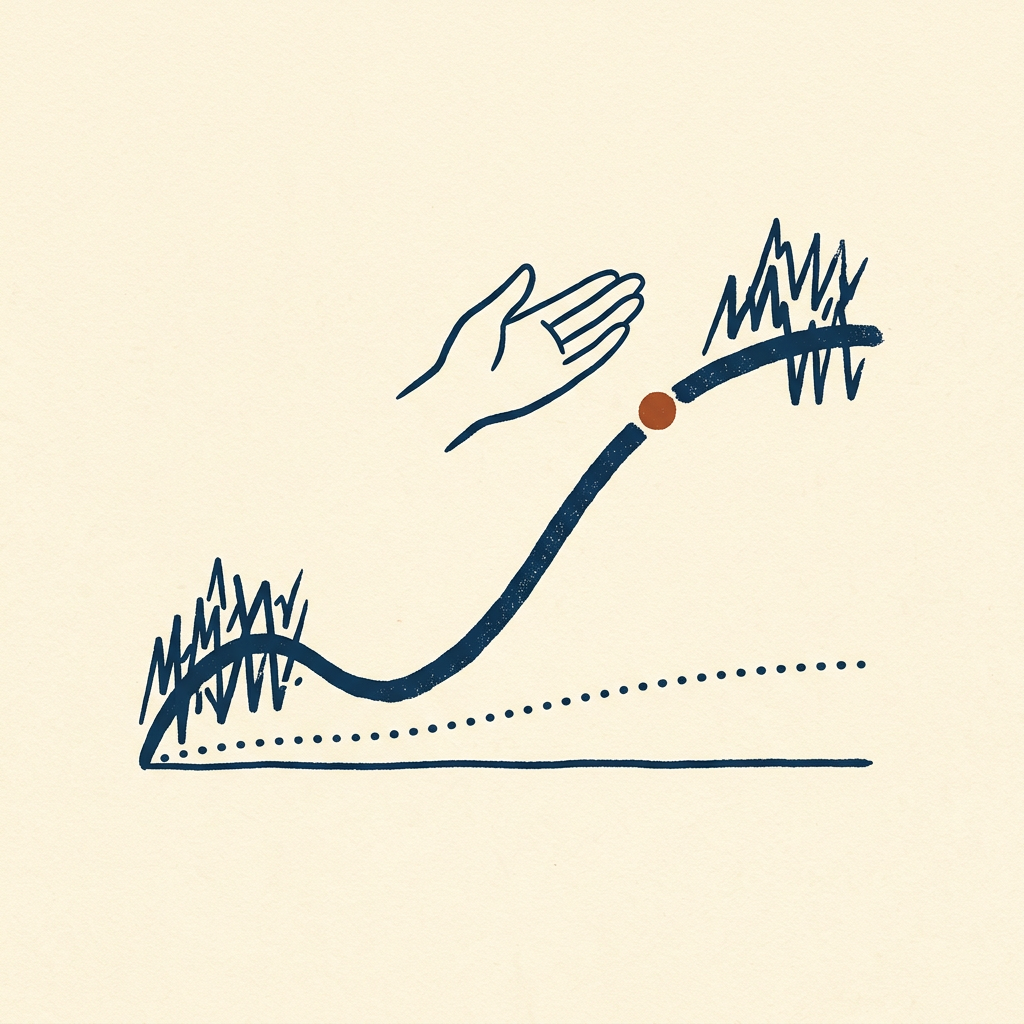
Livermore’s line is that money is not made in the buying or the selling but in the sitting—holding a well-timed position through small reversals, doubt, and the urge to snatch a quick profit before the larger move finishes. He repeatedly closes winners early out of impatience or nerves, then watches the move continue for a gain he already abandoned.
Impatience is as dangerous as stubbornness on a loser; both are failures to tolerate uncertainty. Cutting a winner because the tape wiggles applies loss discipline where it does not belong and confuses normal trend volatility with a thesis break.
Distinguishing the two needs a framework, not raw nerve: patience is tied to a clear view of the broader trend so short-term noise can be judged against it. Without that frame, patience and denial look the same. Letting winners run proves more psychologically demanding than cutting losers, because it resists the comfort of locking something in.
In practice: He closes winning trades too early from nervousness, then watches them continue in his favor for a much larger move he no longer holds.
7
Few major turns
Largest profits come from correctly holding through a handful of major market turns across a career, not from frequent trading.
- Early careerBucket-shop tape skill; shops eventually refuse his bets.
- Exchange yearsLearns execution, liquidity, and gradual accumulation the hard way.
- 1907 panicHolds large multi-stock shorts through the decline; several million dollars; eases selling under systemic pressure.
- Later cyclesCotton reversal and repeated make-and-lose fortunes show rules breaking under stress.
In the panic of 1907, having concluded the broader market faced a severe decline, he builds and holds large short positions across multiple stocks as prices fall apart. Lefèvre reports several million dollars made in that single episode, in an era when banking stress and the lack of a central bank made panics more violent and self-reinforcing.
The argument is that a speculator’s fortune is made in a small number of major, well-timed campaigns. Most of the time the right action is patience and small size, waiting for trend, fundamentals, and technical behavior to align—not constant activity. He turns down unclear periods rather than forcing trades.
The same episode adds a real-world complication: at the height of the panic he is asked to ease off selling so as not to worsen a systemic crisis, and he agrees. Even a self-interested operator sits inside a market that concentrated action can destabilize.
In practice: During the 1907 panic he holds large shorts through the break and makes several million dollars, then eases selling when asked not to deepen the stress.

8
Knowledge that does not hold
Even a trader who can teach the correct principles will violate them under emotional pressure; knowing is not the same as following.
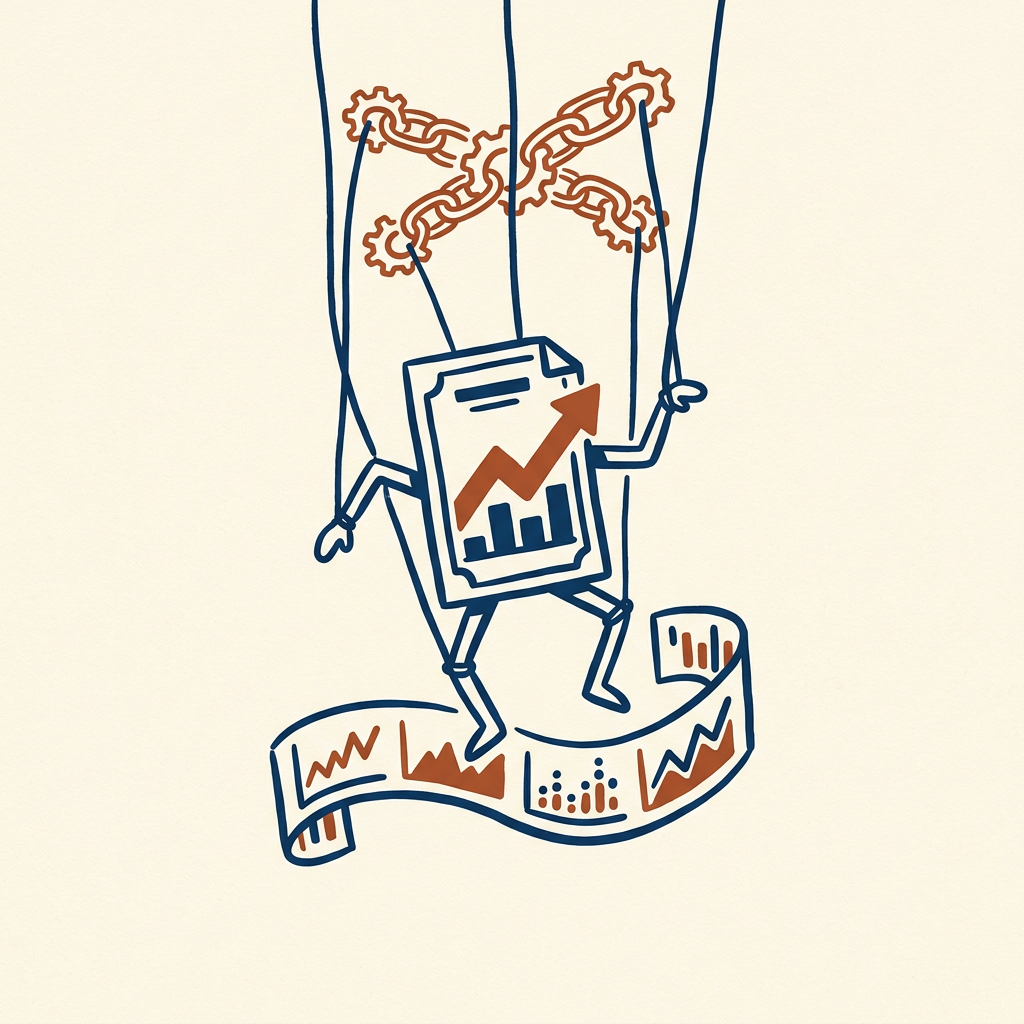
After successes he takes a severe cotton reversal. He becomes emotionally and financially overcommitted, doubling down as price moves against him instead of cutting as his own stated rules required. Lefèvre presents this as a failure of self-control at the moment ego and sunk cost overran analysis—not a failure to understand.
By then he had articulated the loss-cutting rule clearly enough to teach it, yet he broke it under a large existing loss and a stubborn belief the market would vindicate him. The chapter sits after the patience and trend material to complicate them: a correct framework is necessary but not sufficient because stress degrades judgment in predictable ways and makes traders abandon exactly the rules they preach.
Near financial ruin follows; he rebuilds from a much smaller base. The biography is not a straight climb of skill but a repeating cycle of building capital and discipline, losing both through a psychological lapse, and building again—presented almost as a law of the profession.
In practice: In cotton he doubles down on a loser against his own taught loss rule, reaches near ruin, and must rebuild trading capital from a smaller base.
9
Corners, pools, engineered tape
In the market the book describes, price was often the product of deliberate insider campaigns, not a neutral crowd aggregate.
Lefèvre spends real attention on early-twentieth-century manipulation mechanics. A corner secretly gathers enough of a stock’s available shares to control price and force shorts to cover at ruinous levels. A pool coordinates insider buying and selling—often with management—to drive a planned move and distribute to the public near the top.
Livermore joins some of these operations and describes their logic with little moral commentary, as features of the environment a speculator must understand. That undercuts the cleaner idea from the trend chapters that price simply sums many independent judgments. Tape reading may be reading manufactured theater aimed at the independent observer the book otherwise praises.
The book never fully resolves the tension. It still treats tape skill as legitimate while showing how much of the tape can be orchestrated. Extreme corners and organized pools were later restricted by 1930s securities regulation, so the book also documents a structure that no longer exists in the same form.
In practice: He participates in pool and corner-style operations and explains how insiders stage buying, the advance, and distribution into public hands.

10
Fear, hope, and relapse
Psychological weaknesses reassert themselves regardless of past success; no pile of skill permanently immunizes against the same emotional errors.
By later chapters he has made and lost fortunes multiple times. Experience does not simply stack into permanent wisdom. Each success breeds overconfidence that erodes the discipline that created it; each collapse breeds caution that, if it lingers, blocks decisive action when a real setup appears.
The recurring culprits are fear of losing what is already gained, hope that a loser will turn without action, and boredom that forces trades when no opportunity exists. Lefèvre frames these not as one man’s flaws but as structural features of real money, uncertain outcomes, and constant temptation to act.
Cutting losses, sitting tight, ignoring tips, and reading trends can all be written as rules. The ultimate claim is that stating a rule and following it under pressure are different achievements. Vigilance against one’s own psychology is lifelong work with no finish line—a reading consistent with what happened to the real Livermore after the book’s period ends.
In practice: Across repeated fortune cycles the same pattern returns: success softens discipline; fear, hope, and the urge to be active recreate old errors.
Key terms
- tape reading Watching the sequence of prices and volumes for rhythm and pressure, without relying on company fundamentals.
- bucket shop An unregulated betting parlor where customers wagered on stock moves without actually buying or selling shares.
- line of least resistance The direction a market tends to move because it needs the least additional force, read from behavior at key levels.
- sitting tight Holding a correctly timed position through small doubts and wiggles so the larger move can pay.
- cutting losses Exiting as soon as a trade moves against the original thesis instead of defending or averaging down.
- corner Secretly controlling enough of a stock’s supply to dictate price and squeeze short sellers.
- pool A coordinated insider group that stages buying and selling, often with management help, then distributes to the public.
- tip Someone else’s conviction—friend, broker, or insider—acted on without your own falsifiable thesis.
What to do
- Write down before any trade the exact price or condition that would prove your thesis wrong, and exit the moment it hits without renegotiating.
- Before acting on any tip or confident opinion, translate it into your own reasoning and name the evidence that would change your mind; if you cannot, skip the trade.
- At week’s end, list every quick-profit exit and every hold that ignored warning signs, and name which emotion—impatience, fear, hope, or ego—drove each one.
- When a position is working, check whether the broader thesis still holds before taking a comfort profit on ordinary noise.
- In unclear markets, default to small size or flat rather than trading to relieve boredom.
Questions to think with
- What would have to happen on the tape for you to admit this thesis is wrong today?
- Are you holding because the trend thesis is intact, or because someone else is still sure?
- Which recent winner did you exit from impatience, and what did the market do afterward?
- Where are you averaging down to avoid the feeling of a realized loss?
- If stress hit this position the way the cotton trade hit Livermore, which of your own rules would break first?
The other side
The book is a single retrospective case study told by its subject to a journalist, with no independent verification of trades or sizes and with survivorship bias baked into which episodes get remembered. Bucket shops, unregulated corners, pools, and thin slow tape largely vanished after 1930s regulation and electronic markets, so tactical tape-reading claims transfer poorly to algorithmic, information-dense markets; later efficiency research and behavioral work described the same errors more rigorously without implying a disciplined individual can reliably outperform through pattern skill alone. The book is silent on costs, taxes, and the reality that most people who emulate active trading lose money, says little to long-term or index investors, and stops before Livermore lost his fortune again and died by suicide in 1940—undercutting any reading of it as a permanent success formula.
Who it's for
Active traders who understand the rules yet keep repeating the same expensive emotional mistakes, plus readers who want a vivid pre-regulation picture of how ego, fear, and hope sabotage decisions under uncertainty. Anyone seeking a proven, transferable system for beating modern markets will get less than they hope from the full book.