



Self-justification, not lying, lets good people defend bad acts

In 60 seconds
- Self-justification, not deliberate lying, revises beliefs until harmful acts feel consistent with being a good person.
- One small ambiguous compromise, once justified, predicts later moral positions more reliably than original character via the pyramid of choice.
- People spot bias in others while staying nearly blind to the same bias in themselves, so honesty alone cannot correct misperception.
- Memory reconstructs the past to protect self-image, making confident recollection a poor proof of accuracy.
- The same mechanism scales from marriages and false confessions to recovered-memory panics, Watergate-style cover-ups, and medical error cultures.
- Character is a weak defense; structures that make admission cheaper than denial—outsiders, disclosure rules, recorded processes—interrupt the slide.
The big idea
Tavris and Aronson argue that the gap between who we are and who we need to believe we are closes through unconscious self-justification driven by cognitive dissonance, not through calculated lies. Small justified compromises, biased perception, and edited memory push ordinary people and institutions down a pyramid into entrenched wrongs that only external checks, not better character, reliably interrupt.
The book in brief
The book starts from a basic mental tension: people hold that they are decent alongside evidence they have done harm, and the mind will not leave that tension alone. Tavris and Aronson contend the usual response is not a conscious lie but self-justification—an unconscious revision of beliefs, perceptions, and later memories until the story fits. Classic dissonance experiments show that weak external excuses produce the strongest internal conversions, which is why deflecting talk of mistakes so often sounds sincere from the inside.
From that engine the argument builds a pyramid. Two people nearly alike take opposite tiny steps on an ambiguous choice; each justifies the step; each slides further until their moral identities no longer resemble the shared starting point. Early exit is cheap; later reversal is psychologically expensive, so people continue rather than face the earlier steps.
Perception and memory then lock the slide. Confirmation bias lets people experience their own reading of evidence as plain sight while rating identical evidence as flawed when it cuts against them. Memory reconstructs itself on each retrieval toward the self-serving version, raising confidence without raising accuracy. Spouses, colleagues, and witnesses can therefore be sincerely and vividly wrong about the same events.
Middle chapters scale the mechanism outward. Marriages erode as partners build incompatible private histories of who caused each friction. Interrogation methods built to extract confessions manufacture the pressure that produces false ones, after which prosecutors defend the original case against DNA because the alternative threatens professional identity. Suggestive recovered-memory practices implanted abuse claims that therapists and courts then defended at institutional scale. Power intensifies the pattern as aides filter bad news and leaders escalate commitment from limited missteps into sprawling cover-ups and flawed intelligence.
The closing arc turns to professions and remedies. Cultures that punish admission train doctors and lawyers to hide error; disclosure-and-apology systems reverse the incentive and can reduce total damage. The authors do not claim self-justification can be erased. They argue for narrowing the frame of an error, pausing before the excuse, inviting outsiders with no stake, and redesigning institutions so admission costs less than denial. Character is a weak shield; structure catches what the biased mind cannot see in itself.
Context
Carol Tavris and Elliot Aronson published the book in 2007 as a synthesis of decades of cognitive dissonance research. It mattered because it explained ordinary wrongdoing in marriages, courtrooms, clinics, and governments without requiring villains—only the normal mind protecting its own story.
The key ideas

1
Self-justification not lying
Self-justification, not deliberate lying, is the primary force that lets ordinary people commit and then deny wrongdoing.
$1 payment
Weak external justification; participants sincerely decided the boring task was enjoyable
$20 payment
Strong external justification; private opinion of the task stayed negative
Tavris and Aronson separate lying, where someone knows the truth and hides it, from self-justification, where someone genuinely comes to believe the story that protects self-image. The distinction rests on Leon Festinger's cognitive dissonance: holding “I am a good person” beside “I did something harmful” creates real discomfort, and the mind resolves it by revising a belief rather than enduring the tension.
Festinger and James Carlsmith's 1959 experiment makes the mechanism concrete. Participants performed a boring task, then were paid either one dollar or twenty dollars to tell the next person it was interesting. Common sense expected the higher-paid group to feel better about the lie. The opposite occurred. The dollar group, lacking enough external reason for dishonesty, convinced themselves the task had been enjoyable. The twenty-dollar group had an easy external excuse and felt no need to change their private opinion.
When external justification is weak, people manufacture internal justification, and that manufactured belief becomes sincere. Speakers who say mistakes were made are often not smirking liars; they have already restructured events so that, from their vantage, no mistake occurred. The authors claim this single mechanism explains a huge range of stubborn, self-destructive behavior that pure dishonesty cannot account for.
In practice: In the 1959 study, the one-dollar group changed their private view of the boring task to match what they had said, while the twenty-dollar group kept their negative opinion.

2
The pyramid of choice
A single small compromise, once justified, predicts a person's later moral position more reliably than their original character does.
Two people stand at the apex of a pyramid, nearly identical in attitudes and values. Each faces a modest ambiguous decision—whether to copy a few exam lines or cut a small corner at work. One crosses the line; the other does not. Neither choice fully aligns with a clear moral rule in the moment.
Self-justification then drives them apart. The one who cheated tells themselves everyone does it, the test was unfair, they needed the grade. The one who refused tells themselves cheaters are worse people than they realized. Each small act of justification pushes them further down opposite slopes until, at the base, their positions on honesty and even their self-image have diverged dramatically.
The authors apply the image to student cheating research and to professionals whose careers slide into fraud one justified step at a time. People who commit serious wrongdoing often insist they are not bad people because, from inside their own history, each step felt like a reasonable response to the step before. Early intervention matters: several steps down, the psychological cost of turning around exceeds the cost of continuing, so people continue.
In practice: Two students begin with similar values; after one copies a few lines and justifies it while the other refuses, their later stances on cheating and on themselves diverge far more than starting character predicted.
3
Blind to our own bias
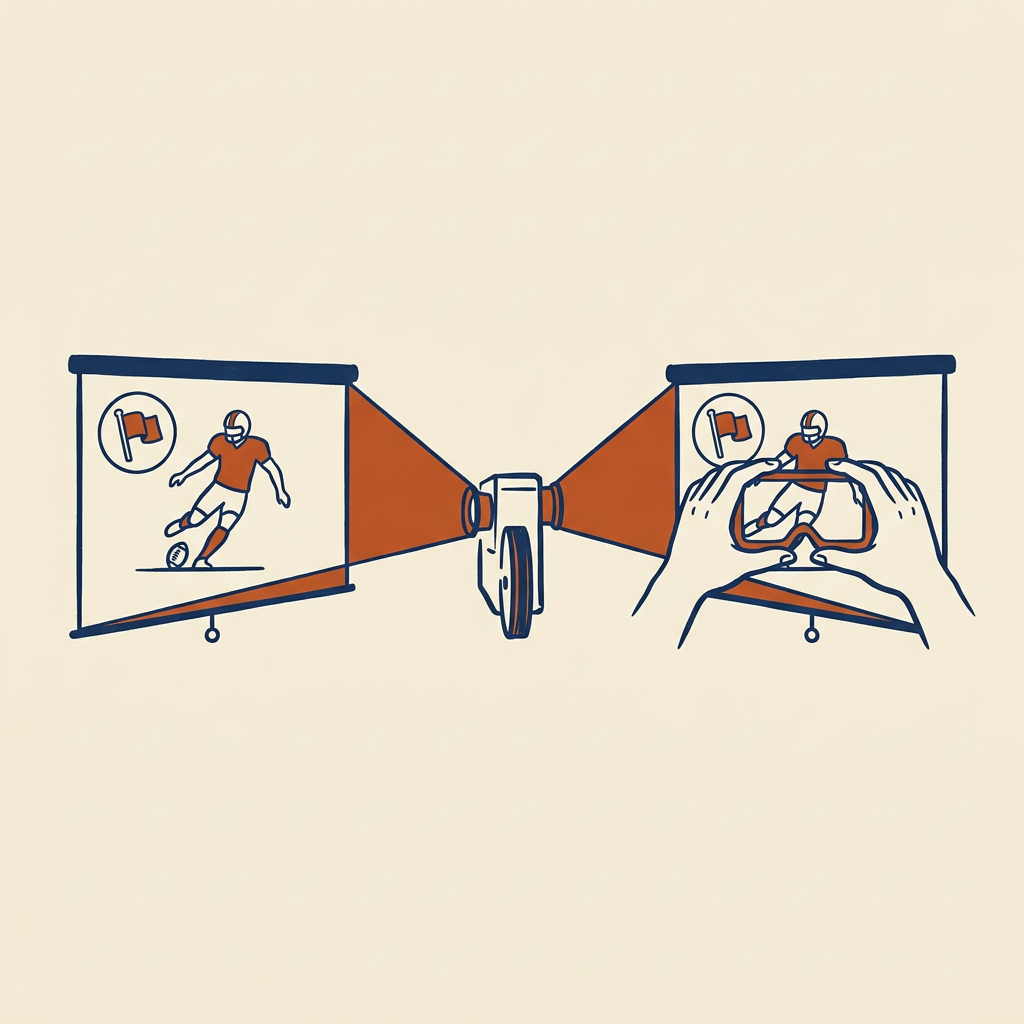
People accurately diagnose bias in others while remaining nearly blind to identical bias in themselves, protecting the ego at the cost of truth.
Home fans' tally
Other team commits far more fouls; feels like clear observation of one film
Visiting fans' tally
Reverse pattern in the same footage; equally certain of objectivity
Confirmation bias leads people to seek, interpret, and remember information that supports existing beliefs. They do not experience themselves as filtering evidence; they experience themselves as simply seeing clearly.
A 1954 study by Albert Hastorf and Hadley Cantril supplies the vivid case. Dartmouth and Princeton students watched the same rough football game between their schools. Each side saw the other team commit far more infractions, genuinely believing they were watching the same film objectively.
Tavris and Aronson extend the pattern to politics, science denial, and workplace disputes: partisans rate identical evidence as more credible when it supports their side and more flawed when it does not. The asymmetry is the danger—we notice the pattern in opponents and rarely suspect it in ourselves because biased perception feels like unmediated reality. The blind spot is a standard feature of normal cognition in judges, scientists, and therapists, not a flaw limited to fools. A person can pass a lie detector and still be wrong. Correction requires structural checks such as blind review or adversarial process rather than appeals to honesty alone.
In practice: Dartmouth and Princeton students watching the identical 1954 game film each saw the opposing team commit far more infractions.

4
Memory as self-serving editor
Memory is a reconstruction that quietly edits itself to preserve self-image, so confident recollection is not proof of accuracy.
Once perception is biased in the moment, memory continues the work of self-justification after the fact. Each retrieval reconstructs the memory, and the reconstruction tends to shift toward whatever version best supports current identity and beliefs.
People misremember their own past attitudes to make them consistent with present ones: someone who now opposes a war often misremembers having doubted it early, while a continued supporter misremembers early confidence. Married couples asked separately who initiated a past argument, who apologized first, or who did more housework consistently distort the account in their own favor, not out of dishonesty but because the distorted version is easier to live with.
Vivid, confidently held memory is not trustworthy simply because it is vivid. Confidence and accuracy are separate dimensions. Self-justifying pressure specifically increases confidence in the self-serving version over time, since each retelling reinforces the edited account rather than the original event. A person can end up sincerely certain of a past that never happened, without deliberate intent to deceive. That certainty is what makes disputes among spouses, colleagues, and courts so hard to settle.
In practice: Married couples recalling the same past argument separately each distort who started it, who apologized, and who did more housework in their own favor.

5
Marriage's two private histories
Long relationships break down less from the original offense than from each partner's self-justifying account of who caused it.
Partner A's history
Own behavior framed as reasonable response to the other's ongoing provocations
Partner B's history
Mirror-image account that makes Partner A the source of every friction
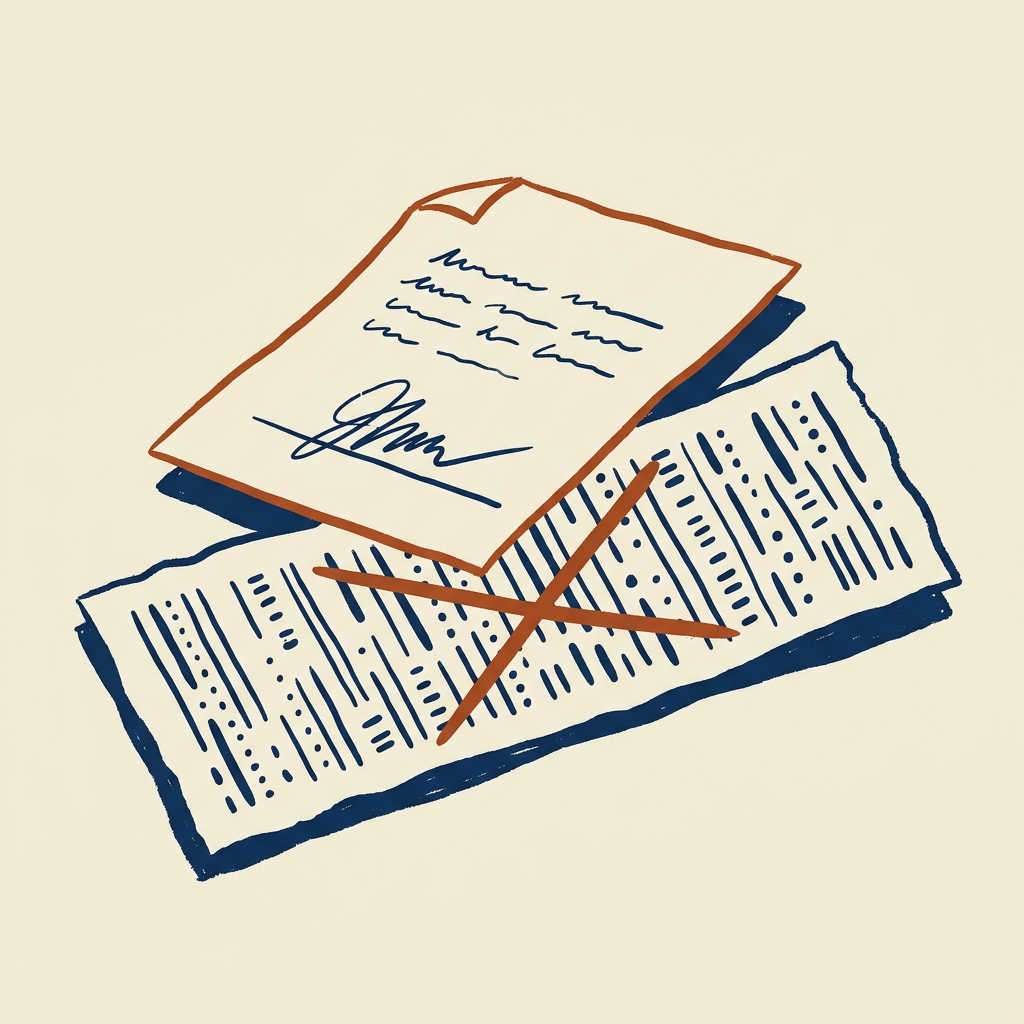
Conflict rarely begins as a single dramatic betrayal. It starts with small ambiguous frictions—an unreturned favor, a dismissive tone, a missed anniversary. Each partner, to avoid the dissonance of thinking “I am unkind to someone I love,” constructs a justification: the other started it, is unreasonable, or fails to appreciate what they do.
Over repeated cycles the private accounts harden. Each partner recalls the history so their own behavior looks like a reasonable response to the other's provocation. Two people end up living inside two different, mutually incompatible histories of the same marriage, each fully convinced their version is the accurate one.
Arguments escalate over trivial-seeming issues because the fight is rarely about the dish left in the sink; it is about whose justified narrative will prevail. Repair depends less on resolving the original factual dispute than on each partner's willingness to tolerate the dissonance of admitting some fault without collapsing their whole self-image. Couples who divorce badly often calcified self-justification early and spent years building an airtight case for their own innocence, making later reconciliation nearly impossible.
In practice: Partners escalate over a dish in the sink because each has already built a multi-year justified narrative in which the other is the unreasonable one.
6
False confessions, locked cases
Interrogation methods built to produce confessions generate exactly the dissonance that leads innocent people to confess, and prosecutors then defend those confessions long after DNA disproves them.
- Initial IDThompson confidently identifies Cotton
- Years of rehearsalMemory certainty increases rather than fades
- Over a decade laterDNA exonerates Cotton; portions of the system still resist
Techniques such as the widely used Reid method confront a suspect with presumed guilt, isolate them, and offer minimization—telling them a confession will go easier. Documented exoneration cases show this process can produce false confessions even from innocent people, because prolonged psychological pressure makes confessing, even falsely, the path of least immediate discomfort.
Jennifer Thompson confidently and mistakenly identified Ronald Cotton as her rapist. Her memory, following the earlier logic, became more certain over time as she rehearsed the identification. Cotton served over a decade before DNA evidence exonerated him.
Prosecutors and detectives who built a case around a confession or identification often resist DNA that contradicts it, not from malice but from the same self-justifying mechanism. Admitting the original conviction was wrong would mean admitting they sent an innocent person to prison—a conclusion so threatening to professional identity that some fought exoneration efforts even after DNA results were available. The authors treat this as a systemic, predictable institutional failure, not a few bad actors. Reform requires recorded interrogations and independent review boards rather than relying on officials to notice their own bias.
In practice: Jennifer Thompson's mistaken identification of Ronald Cotton grew more certain with rehearsal; he served over a decade until DNA cleared him, while some officials still resisted the correction.
7
Recovered-memory panic
Therapists who believed suggestion could recover buried trauma memories instead helped manufacture false memories of abuse, then defended those memories against all contrary evidence.
- 1980s–early 1990sRecovered-memory therapy and ritual-abuse accusations spread
- McMartin caseSuggestive interviews of children produce elaborate abuse claims
- AftermathConvictions overturned; episode becomes a case study in institutional self-justification
A wave of recovered-memory therapy and ritual-abuse accusations swept the United States in the 1980s and early 1990s, most visibly in the McMartin Preschool case, where teachers were accused of elaborate abuse based on memories elicited through suggestive interviewing of young children.
Drawing on memory research by scientists such as Elizabeth Loftus, the authors explain how leading questions and repeated suggestive interviews can implant detailed false memories that feel as real to the person recalling them as accurate memories do. Once a client or child produced a horrifying memory, therapists, parents, and prosecutors who had encouraged the process faced enormous dissonance in questioning it, since doubting meant admitting they had spent months or years pursuing an innocent person and sometimes destroying a family.
Self-justification then operated at institutional scale: therapists dismissed contrary evidence as denial, prosecutors continued pursuing convictions built on coached testimony, and the initial believers became the most committed defenders precisely because they had already invested so much. Several convictions from the period were later overturned. The episode stands as one of the book's starkest illustrations of the pyramid operating on whole professions and legal systems.
In practice: The McMartin Preschool case rested on memories elicited by suggestive child interviews; elaborate abuse claims against teachers later failed under scrutiny, and several related convictions from the era were overturned.

8
Power as dissonance fuel
The more power a person holds, the more completely self-justification insulates them from correction, because dissenting information gets filtered out before it ever reaches them.
Aides around powerful figures learn to filter bad news, since delivering it risks their own position. Leaders therefore receive an increasingly one-sided stream of confirming information even as they make higher-stakes decisions.
Watergate is the central case. Nixon and his inner circle, including John Dean, did not begin with a plan to commit a broad conspiracy; they escalated through a series of individually justified small decisions, each covering the last, until the cover-up became larger than the original offense. Foreign-policy failures, including the Bay of Pigs invasion and later the Iraq War's WMD intelligence failures, illustrate the same escalating commitment: once a policy is publicly committed to, officials become invested in justifying it rather than reassessing it, interpreting ambiguous intelligence to support the existing decision.
Leaders who take an early ambiguous step toward a costly policy find it progressively harder to reverse course as sunk costs and public commitments accumulate, so they escalate the justification rather than the caution. The authors' harder claim is that this is not specific to any party or personality type; it is a predictable output of concentrated power combined with ordinary dissonance reduction. Checks on power—a free press, formal channels for dissent, independent oversight—matter precisely because internal correction cannot be relied upon once someone has significant power and has already committed to a position.
In practice: Nixon's circle escalated from a limited break-in through successive justified cover steps until the cover-up dwarfed the original offense; similar escalation marked the Bay of Pigs and Iraq WMD intelligence failures.

9
When professions punish admission
Professional cultures that punish admissions of error guarantee more error, because practitioners learn to hide mistakes rather than learn from them.
Defensive silence
Hide error, blame patient or inevitability; concealment fuels anger and suits
Disclosure and apology
Prompt admission and repair; Michigan program saw litigation costs fall
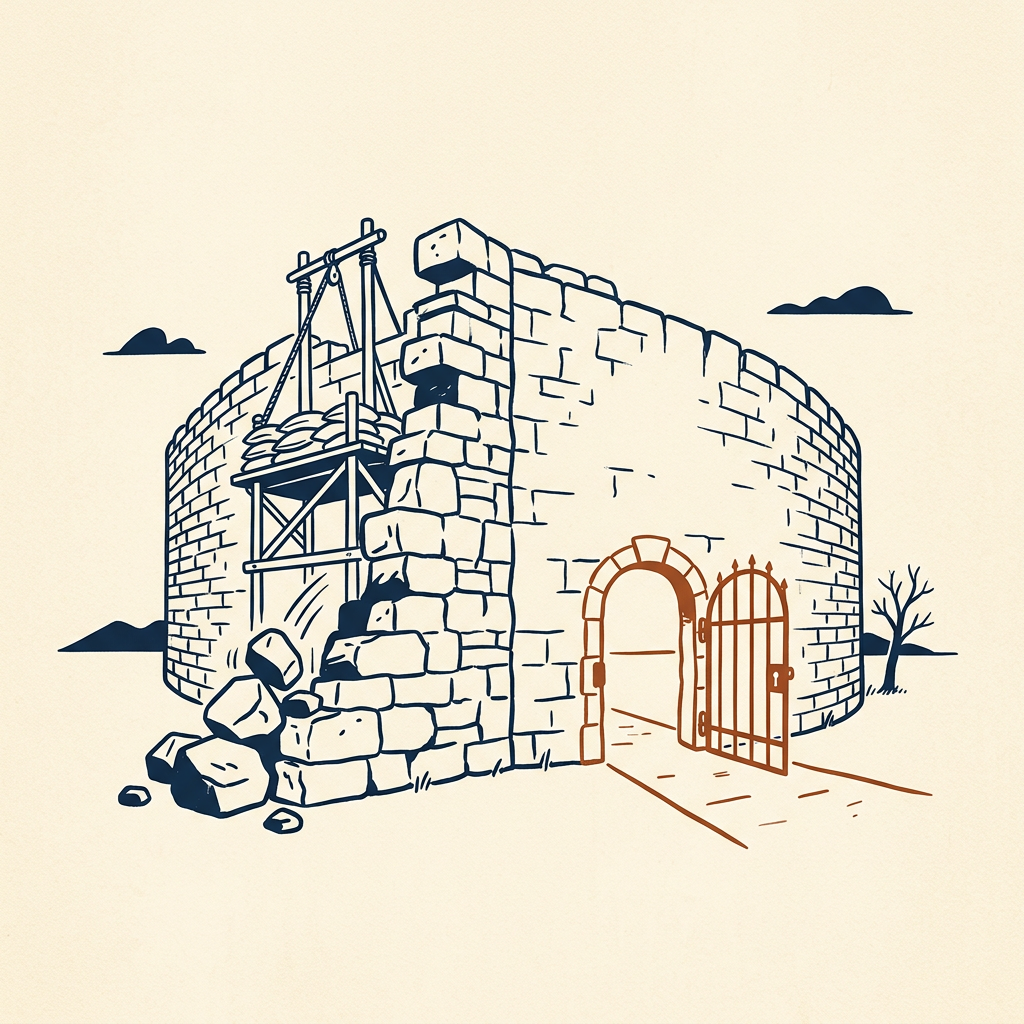
In medicine and law the stakes of self-justification are measured in ruined lives. Doctors trained in a culture where admitting error invites malpractice suits and reputational damage often respond to a bad outcome by constructing a justification that the outcome was unavoidable or that the patient's own choices were to blame. The pattern is self-defeating for safety, since it removes the incentive to identify and fix the systemic conditions that produced the error.
The book contrasts this with hospital systems, including the University of Michigan Health System's disclosure program, that adopted policies of promptly disclosing errors to patients and offering apology rather than defensive silence. These programs saw litigation costs decline, contrary to the defensive assumption that admitting fault invites more lawsuits. Much of the legal and reputational cost of error comes not from the mistake itself but from the perception of concealment and the anger it produces.
The same logic applies to lawyers who continue defending a losing legal theory rather than switching strategy, and to expert witnesses who defend flawed testimony rather than revisiting it once new evidence emerges. Individual character is a weak defense against self-justification; institutions can be redesigned so that admitting a mistake costs less than denying it, which changes behavior far more reliably than appeals to integrity.
In practice: The University of Michigan Health System's disclosure-and-apology program saw litigation costs decline after it replaced defensive silence with prompt admission.
10
Make admission cheaper than denial
The habit of admitting error can be built into institutions and relationships, but only by making the cost of admission lower than the cost of denial.
The final chapter is deliberately modest. The authors do not claim self-justification can be eliminated; it is a normal feature of mind. The goal is habits and structures that interrupt it before it hardens on the pyramid's lower slopes.
On the personal level they recommend treating the discomfort of dissonance as useful information rather than something to escape immediately, pausing before constructing a justification, and separating the specific action from a global judgment of character. “I made a mistake” is far easier to accept than “I am a bad person,” and the narrower frame makes admission psychologically survivable.
On the institutional level they point to disclosure-and-apology programs in medicine, recorded interrogations in policing, and structured dissent channels in politics as models where the incentive structure itself was changed rather than relying on individuals to overcome bias through willpower. Trusted outsiders and adversarial checks—people with no stake in a particular justified narrative—catch distortions that insiders cannot see in themselves. The passive phrase “mistakes were made” works because it lets the speaker acknowledge an error without accepting an actor. The harder alternative is a habit of saying, and structuring institutions to reward, “I made this mistake; here is what I will do differently.”
In practice: A manager names a specific misjudgment without defending overall competence, then asks an uninvolved colleague to review the next decision before more resources are committed.
Key terms
- cognitive dissonance The real discomfort of holding two inconsistent beliefs about yourself, which the mind reduces by revising one of them.
- self-justification Unconscious mental work that makes your actions feel consistent with a good self-image until the revised story feels true.
- pyramid of choice Metaphor for how two people start alike, take opposite small steps on an ambiguous decision, justify those steps, and end far apart in morals and identity.
- confirmation bias The tendency to seek, read, and remember evidence so it supports what you already believe, while experiencing the result as plain sight.
- external justification Outside reasons—pay, orders, strong incentives—that reduce the need to change your private beliefs after a questionable act.
- memory reconstruction The process by which each retrieval quietly edits a memory toward the version that best protects current self-image.
- minimization In interrogation, offering a softer path so that confessing feels like relief from immediate pressure.
- recovered memory A supposedly buried trauma memory that suggestive interviewing can also manufacture as a detailed false memory that feels real.
What to do
- Separate the specific act from your character the next time you catch yourself explaining away a mistake; say you did this one thing wrong rather than defending your whole self-image.
- Ask one person with no stake in your current decision to review it before you commit further resources this week.
- Write down your account of a live dispute at work or home before you discuss it, then compare notes explicitly to catch self-serving memory drift early.
- Pause when dissonance discomfort hits and treat it as useful information instead of immediately building the excuse.
- Propose or support one concrete disclosure or recording rule in your workplace that lowers the cost of admitting error.
Questions to think with
- Where in your last dispute did your memory of who started it most conveniently protect your self-image?
- What small compromise have you already justified that would look different from the pyramid's apex?
- Which structural check—an outsider review, a recorded process, a disclosure rule—could you add this month?
- How would your team behave if admitting error clearly cost less than hiding it?
- When have you been certain of a vivid memory that later proved edited toward your preferred story?
The other side
The central dissonance mechanism is experimentally solid, but the book is a case-driven popularization, not a research report, and it moves from twenty-minute lab tasks to multi-year disasters like Watergate or Iraq WMD intelligence without fully reckoning that bureaucratic incentives, careerism, and deliberate manipulation may explain those episodes better than dissonance alone. Treating structural failures mainly as universal cognitive quirks can let culpable actors and institutions off the hook. The book is thin on individual and cultural differences in willingness to admit error, the recovered-memory chapter reflects the authors' prior public commitments in the 1990s memory wars rather than neutral narration, and the remedies—build institutions that reward admission—are sound but underspecified for organizations whose short-term interests favor hiding error.
Who it's for
Managers and professionals who keep watching colleagues deny obvious errors instead of fixing them, plus general readers trying to understand political scandals, wrongful convictions, and failing marriages. Anyone in a role—parent, therapist, manager—where admitting mistakes quickly matters more than looking right will get the most from the full book.