


Sergeant Stubby, the Dog Who Went to War
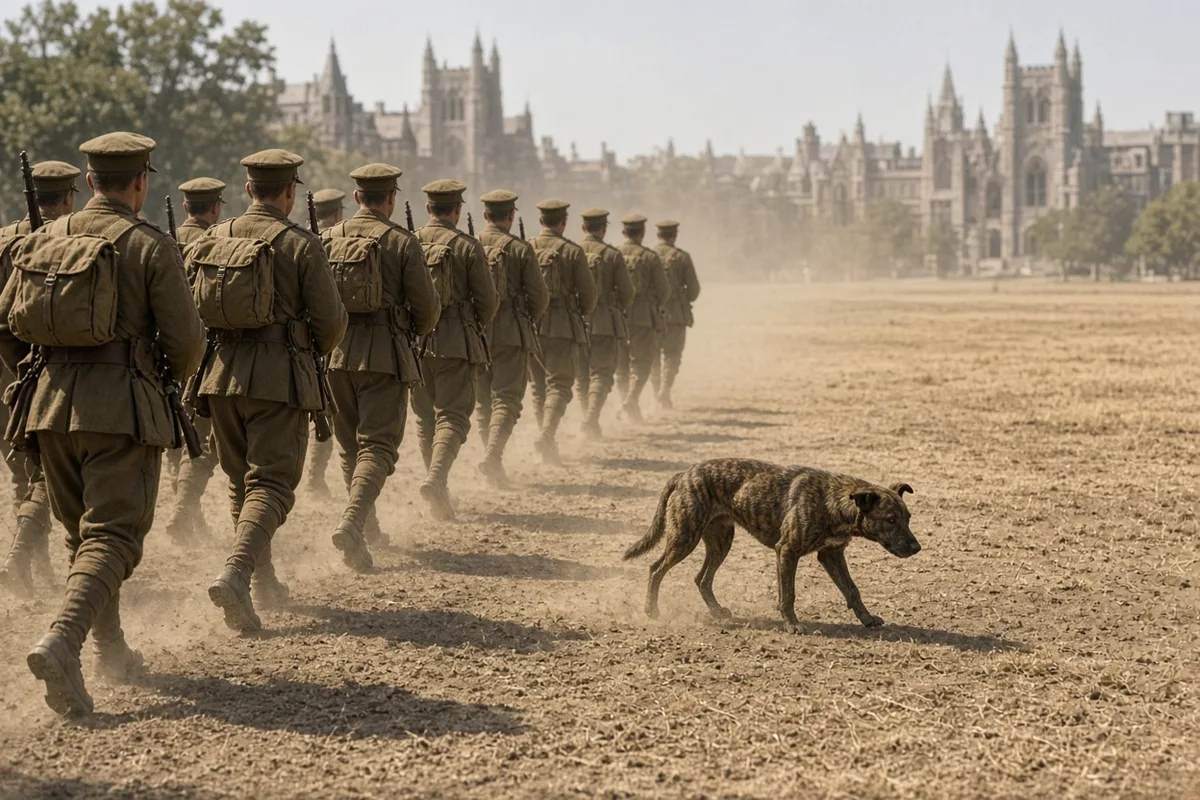
The mud on the practice field at Yale was ankle-deep that July, and I was cursing it with every step when I saw the dog. Brindle-coated, one ear folded wrong, a stub of a tail that never stopped going. He trotted along our column like he'd been assigned to it, weaving between boots without missing a step, and nobody had the heart to chase him off. We were the 102nd Infantry then, still soft, still learning to drill without tripping on our own rifles, and that dog watched us with an attention none of us had earned yet.
Corporal Conroy was the one who fed him first. I watched it happen — a strip of something from his mess kit, held low, and the dog took it soft-mouthed, gentle as a man shaking hands. After that the dog followed Conroy everywhere, and Conroy started calling him Stubby, on account of that tail, and within a week the whole outfit had picked up the name like it was regulation. Stubby learned our bugle calls faster than half the recruits. He learned to sit at attention. Somebody taught him to lift his right paw to his eyebrow when the men saluted, and he'd hold it there, ears back, dead serious, and the sergeants who were supposed to keep animals off the base looked the other way every single time.

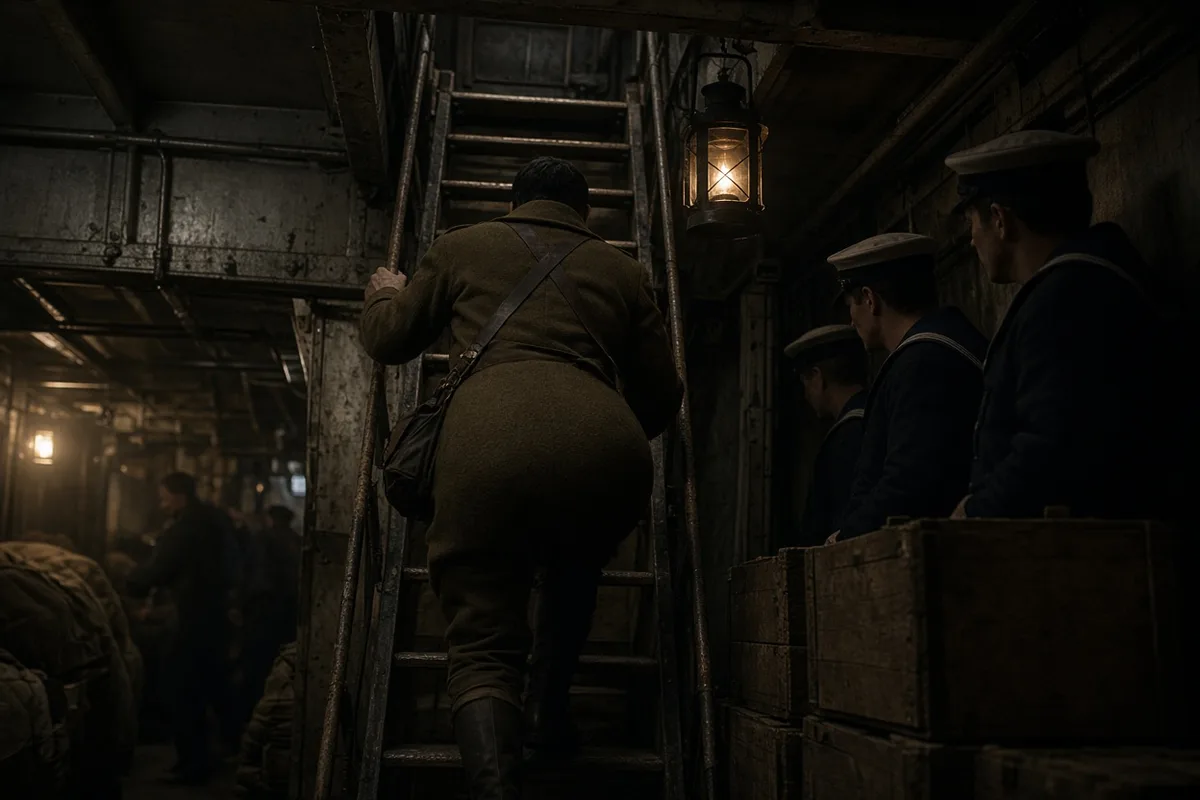
When the orders came down that we were shipping out, I remember the particular quiet that fell over the barracks. No one talked about the dog staying behind, but no one talked about him coming, either. Conroy took the matter into his own hands. He got Stubby onto the SS Minnesota hidden down in the coal bin, black dust and all, and kept him quiet until we were far enough out that the officers couldn't very well turn the ship around. When Stubby came up on deck, filthy and blinking in the salt light, the sailors took to him inside an hour. By the time we made landfall in France, he was as much a part of the regiment as any man's rifle.
The trouble came again at the docks, when Conroy tried to smuggle him off the same way he'd smuggled him on, coat buttoned over the dog like a lump of extra kit. The commanding officer caught the shape of it moving wrong under the wool and stopped him cold. I was close enough to see Conroy's face go the color of the coal bin all over again. And then Stubby, without anybody telling him to, lifted that paw to his eyebrow and held the salute steady, looking the officer dead in the eye. The officer stood there a long moment. Then he let it go. That was the whole of it — a dog's trick and a man's mercy — and it was enough to keep Stubby with the 26th Division for the rest of the war.

We reached the front on the fifth of February, 1918, up along the Chemin des Dames, north of Soissons, and whatever soft training-field notions we'd carried over the Atlantic got burned off inside the first night. The guns did not stop. Not for an hour, not for a meal, not for sleep. Stubby took to it faster than most of us did. He'd flinch at the first few concussions and then just stand there afterward, ears swiveling toward the sound the way a man might turn his head at a knock on a door. We were under fire, on and off, for more than a month straight, and somewhere in that stretch the dog stopped being a mascot to us and became something closer to a fellow soldier, one who happened to walk on four legs and never complained.
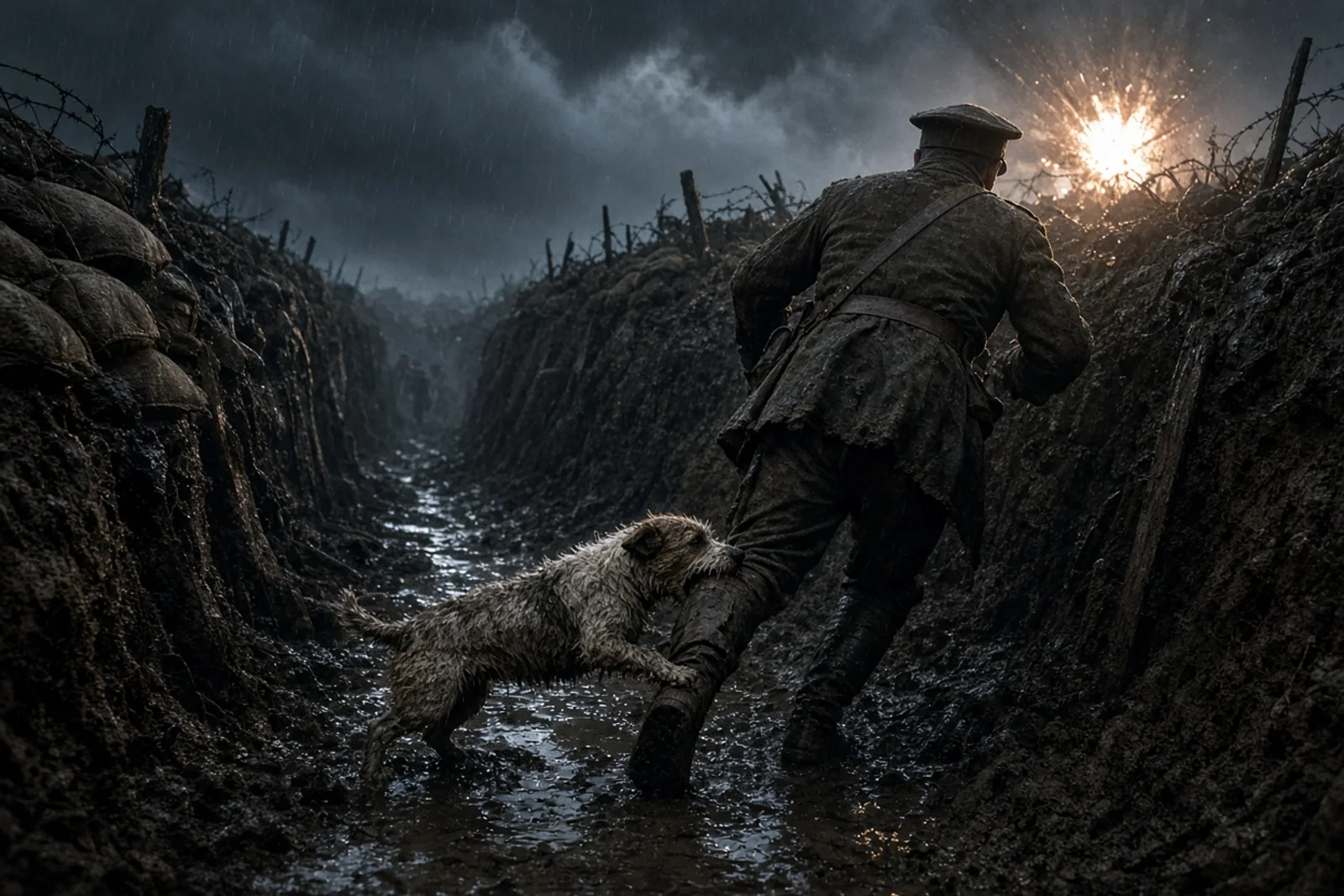
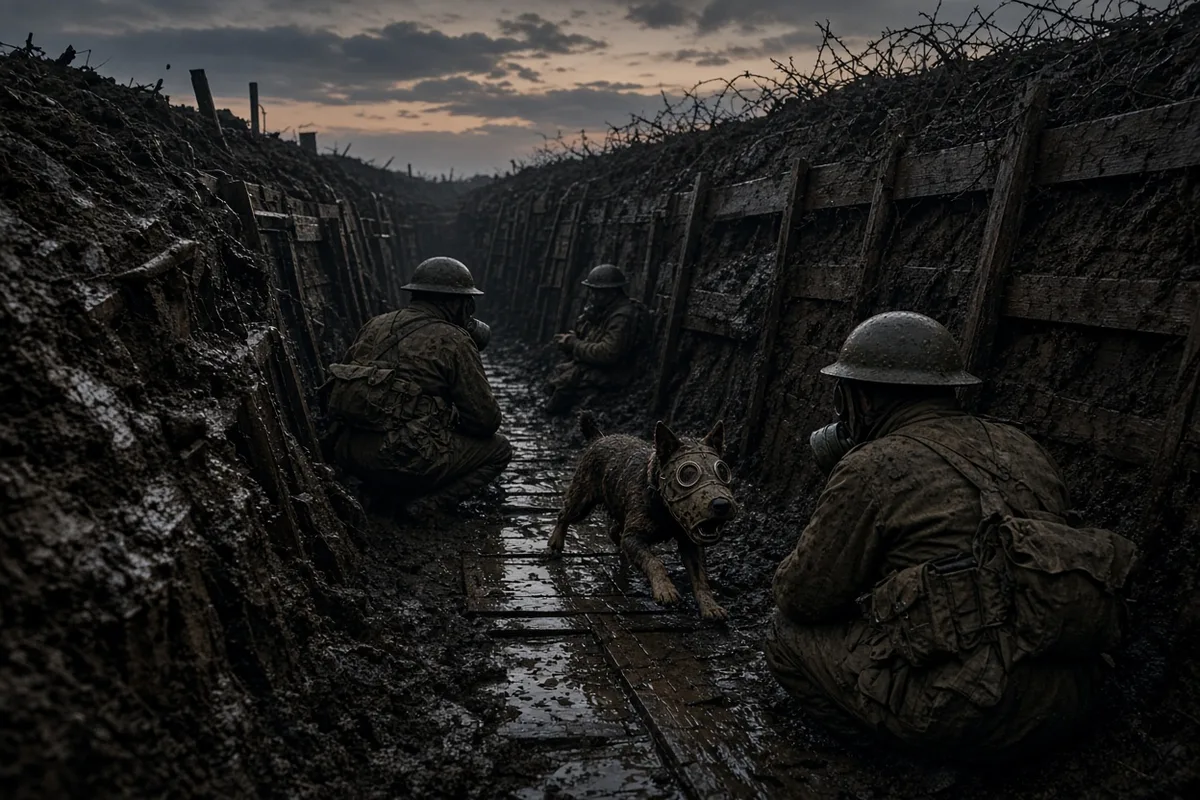
The gas came before we understood what we were smelling. Stubby went down with it early on, coughing, weak in the legs, and they carried him back to a field station same as they'd have carried a man. He came back to the line thinner and quieter, but something had changed in him — he'd learned the smell of that gas in his body, in a place words couldn't reach, and he never forgot it. Not long after, in the gray hour before dawn when most of the men were still dead asleep in the trench, the wind carried a fresh cloud of it over the wire. Stubby smelled it before any sentry did. He tore down the trench barking, snapping at collars, at boot heels, at anything he could reach, until men were coughing awake and fumbling for their masks. I've turned that morning over in my mind more times than I can count. A dog's nose bought us the seconds a man's eyes couldn't.
In April, during the push to take Seicheprey, the Germans fell back and threw grenades as they went, the way retreating men do when they want to make the ground behind them expensive. One of those fragments caught Stubby in the foreleg. They pulled him back from the line same as any wounded soldier, patched him, kept him behind while he mended. He didn't sit still for convalescence, though — he went from cot to cot in that hospital like he had orders of his own, resting his head against a man's hand, staying put beside the ones who couldn't sleep. The wounded took to watching for him. When he was fit again, he went back up to the front, and I don't think anyone in the regiment was surprised. It wasn't in him to stay behind.
They fitted him with his own gas mask after that — a small thing, made to his size, and he wore it without complaint whenever the alarm went, standing in the trench with the men, waiting the attack out the same as everybody else. It is a strange thing to say a dog understood a war, but he understood enough of it to know when to duck. Before any of us could hear the whine coming in, Stubby's ears would already be flat, his body already low, and the men nearest him learned to watch him instead of the sky. He never once got it wrong that I heard tell of.
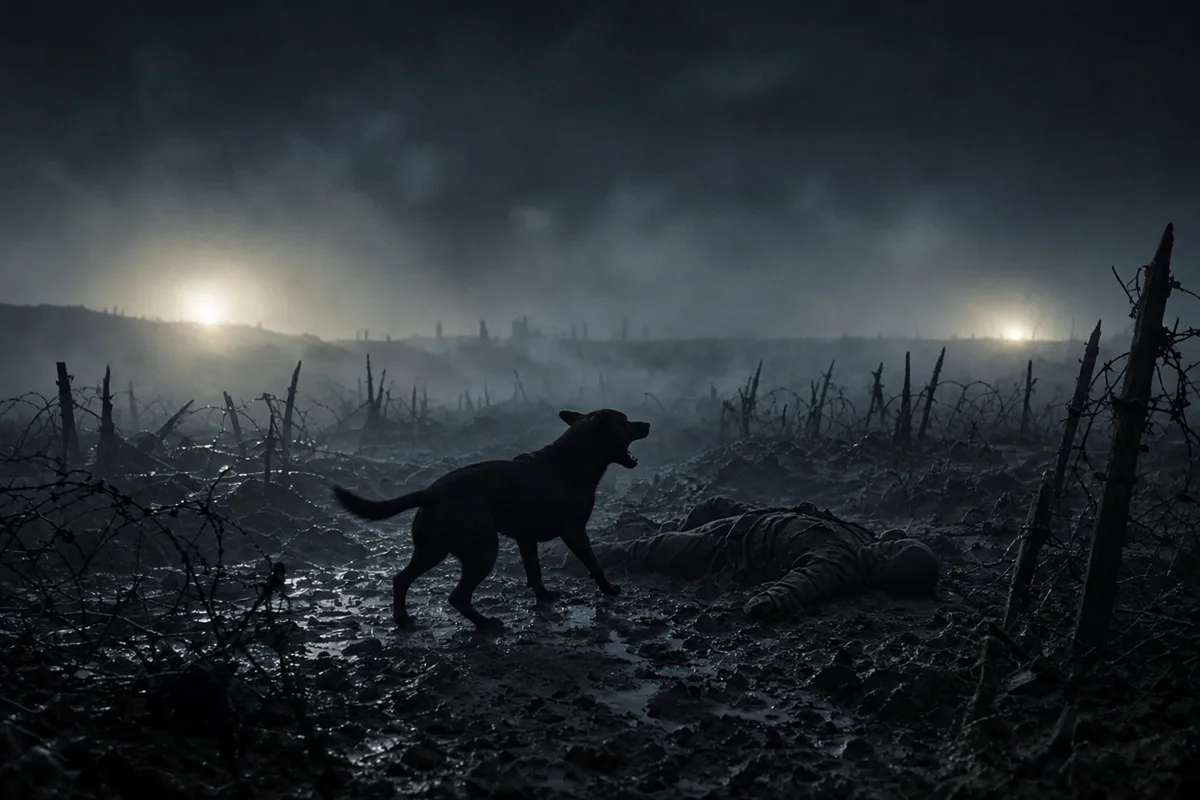
Between the barrages there was the other work, quieter and worse. No man's land at night was its own country, full of wire and shell holes and men who'd gone down and couldn't crawl back. Stubby had a way of finding them. He'd go still, head up, then move off toward some low sound none of us could catch, and he'd stand over a man calling out or half-conscious until the stretcher parties found the both of them, dog and soldier, holding the ground until help came. Nobody trained him for that. He simply did it, night after night, and there were men who came home who wouldn't have if he hadn't gone looking.
Late in the war, in the Argonne, he did something that turned into regimental legend inside of a day. A German soldier had gotten close in among our positions, and Stubby caught his scent or his shape and went straight at him. The man called out to him — friendly, coaxing, the way you'd call a stray — and Stubby only put his ears back and began to bark. When the German ran, Stubby ran him down and took him by the seat of the trousers, held on through the man's stumbling and cursing, worried at him until our own men came up and took the prisoner off his hands. Turned out the man was worth taking. Word went around the regiment fast, embellished a little with each telling the way these things always are, but the bones of it were true enough, and it reached our commanding officers with enough weight behind it that Stubby got put up for the rank of sergeant. A dog, ranked above half the privates in the outfit. Nobody begrudged him a day of it.
When American forces retook Château-Thierry, the women of the town got word of the dog who'd gone through the gas and the grenades with the rest of the regiment, and they sewed him a coat out of chamois leather, soft and fitted, made for pinning medals to. That coat came to carry more decoration than most men's dress uniforms — service stripes, a wound stripe for the shrapnel he'd taken, medals given by outfits and towns that had never had a dog in their lines before and didn't quite know the protocol for one now. He wore all of it without complaint, the way he wore the gas mask, the way he wore the rank. He took a second wound before the fighting ended, more shrapnel, chest and leg, and it healed the way the first one had. Two wound stripes, one small brave animal, and eighteen months of it start to finish.
When the armistice finally came and the guns went quiet — a quiet so total that men said it hurt their ears worse than the noise had — Conroy and Stubby made the crossing home together in 1918. I remember watching from the rail how the dog stood at the ship's bow same as he had going the other direction, coat and medals and all, like he understood there was a difference between the man who'd smuggled him aboard as cargo and the sergeant coming home as one of the regiment's own.
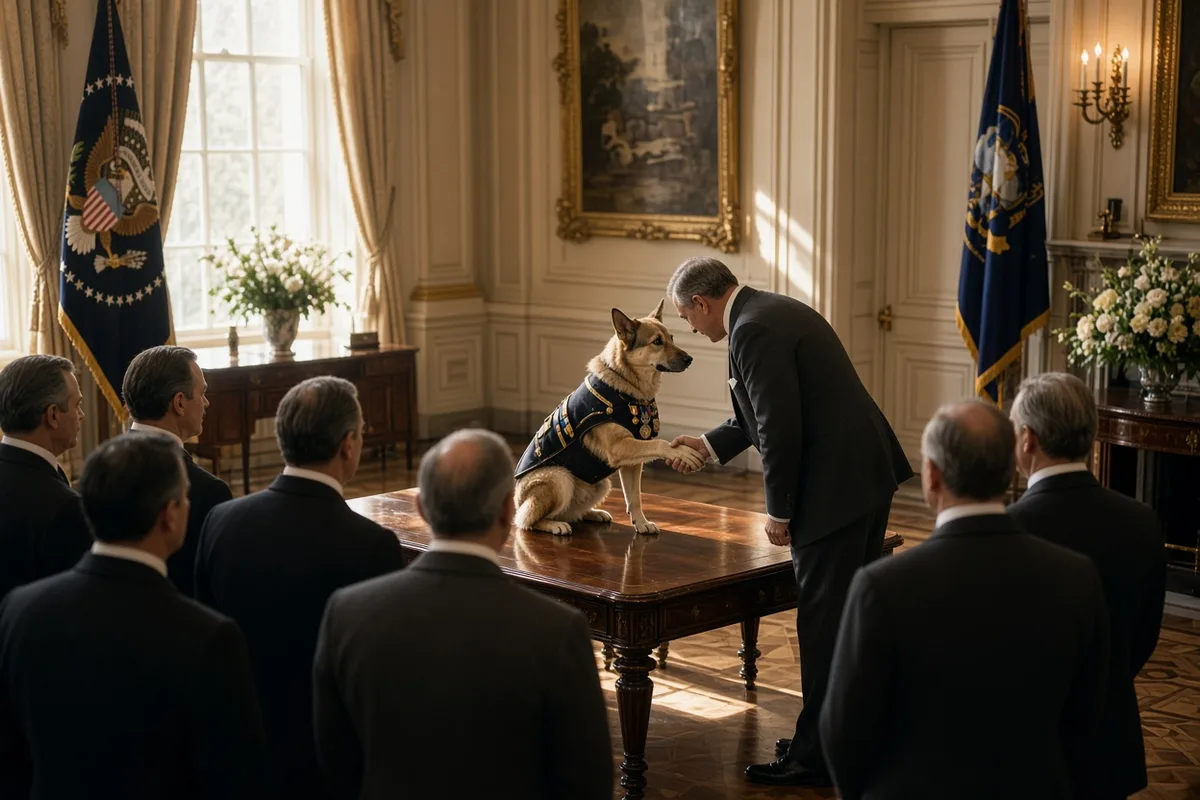
America took to him faster than any of us expected. He marched at the head of parade after parade, medals catching the light, and men who'd never smelled the Argonne stood along the curbs and cheered a dog like he was Pershing himself. He was received at the White House, more than once, and stood for photographs beside President Wilson, and later he'd meet Harding and then Coolidge too, three presidents shaking hands with the same paw that had once held a German soldier down in the mud. He took the stage in vaudeville houses under Sylvester Poli's lights, an old trench dog blinking under the footlamps, doing tricks for an audience that had no notion what he'd survived to get there. The American Legion gave him a lifetime membership. So did the YMCA. I don't know that any other enlisted dog in history has carried that much paperwork.
In 1921 General Pershing himself hung a gold medal on him, from the Humane Education Society, and the photograph of that moment went out across the country — the Commanding General of the Armies bent down to a small brindle dog like he was pinning honors on a man twice his rank. That same year Conroy started at Georgetown's law school, and Stubby went right along with him, into lecture halls and onto the football field, where the Hoyas took him on as mascot. Handed a football at halftime, he'd nose it around the turf for the crowd, no rank now, no gas mask, just a dog who liked the game and the noise of people laughing instead of shells falling.
He lived out his last years easy, as much as any veteran does, carrying the stiffness of old wounds in weather that turned. In March of 1926 he died in his sleep, at Conroy's side, the war eleven years behind him and half a continent between him and the trench he'd first smelled gas in.
The New York Times ran his obituary at half a page, longer by a good measure than what most senators got, and there wasn't a man in the 102nd who thought that was strange.
They preserved him afterward — his hide fitted over a cast, the rest of him returned to ash and sealed inside it, so that in some literal sense he has never fully left the shape he wore in France. Conroy kept him close for thirty years before he finally gave him over to the Smithsonian in 1956, and Stubby went into storage for a long stretch after that, crated, quiet, waiting the way old soldiers do for someone to remember there's a story attached to the object.
He came back out in the end. Connecticut borrowed him for a spell. The National Museum of American History gave him a case of his own inside their exhibit on the price of freedom, his chamois coat still hung with the same medals the women of Château-Thierry had once pinned there. Ninety years on from a muddy field at Yale, children walk past that glass case and stop, the way we used to stop when he trotted alongside our column, not yet knowing what he'd become, only certain that something about him was worth following.