



Show Your Work teaches generous sharing over hidden genius

In 60 seconds
- Creative growth depends on joining a visible peer scene more than on rare solitary talent.
- Showing drafts, tools, and failures builds more trust than finished products alone.
- A small daily share compounds into community and archive faster than rare polished releases.
- Credit influences, frame work with honest stories, and teach what you are still learning.
- Give more than you promote, train yourself to absorb criticism, and treat payment as legitimate support.
The big idea
Kleon argues that creative careers grow when makers generously share process, influences, and unfinished work so a networked audience can find them. Visibility practiced this way is generosity, not a sales pitch or a talent reserved for the already famous.
The book in brief
Kleon starts by rejecting the solitary-genius myth. Creative breakthroughs, he holds, come from scenius—an ecology of mutually influencing peers—more than from rare lone talent. The internet lets anyone join such a scene, but only if work and thinking stay visible enough for others to find and answer. Hiding until the masterpiece is ready cuts you off from the network that could have improved it.
He then turns to what is worth showing. Finished products hide the decisions, mistakes, and tools audiences actually want to see. Process invites conversation and trust; polish alone mostly invites silent judgment. Narrating that layer also forces makers to articulate unconscious choices, which sharpens their own craft.
Visibility needs a rhythm. A small regular share—notes, a sketch, a workspace shot—beats rare high-stakes reveals because it gives strangers many low-pressure chances to discover you and return. Over time the habit becomes infrastructure: an accumulating public record a community can watch grow.
The middle chapters fill that record with substance. Open the private cabinet of influences so audiences can map your taste and the scene receives credit. Frame each piece with a plain honest story, because most people cannot judge technical craft alone. Teach what you are still learning; recent learners often guide beginners better than experts who have forgotten confusion, and explaining exposes the teacher's own gaps.
The final chapters set limits and permissions. Do not become human spam—test every post by whether it gives value or only extracts attention. Train yourself to take a punch: criticism is inevitable once you are visible, so separate worth from any single comment, delay heated replies, and keep encouragement on file. Drop the romance that money corrupts art. Patronage, direct sales, and subscriptions are audience relationships; refusing them simply trades a purity myth for the real costs of spare-time-only making. Naming the need to earn is part of the same honesty the rest of the book demands.
Context
Austin Kleon's Show Your Work! (2014) mattered because it gave working artists, writers, and makers a practical, non-cynical language for using the internet without becoming salespeople.
The key ideas
1
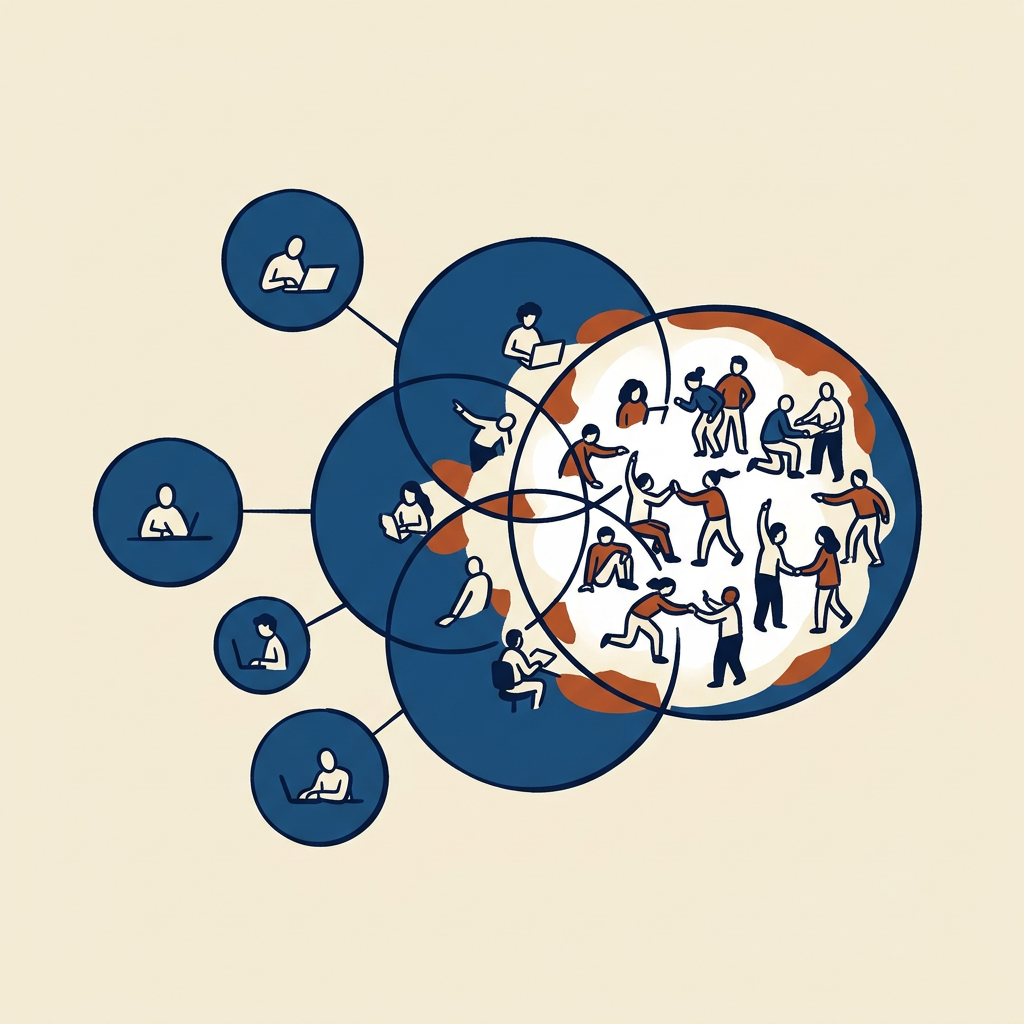
Scenius beats genius
Creative growth depends on being visible inside a peer community more than on rare individual talent.
Lone genius
Create in secret, wait to be discovered
Scenius
Stay visible so peers can find, influence, and improve the work
Kleon rejects the solitary genius who creates in a vacuum and is later discovered. He borrows Brian Eno's term scenius for the ecology of interacting people that produces most breakthroughs. Eno used it to explain movements like 1970s Kraftwerk-era German electronic music, where no single person was a lone genius and the scene as a whole generated innovation.
The internet, Kleon argues, lets anyone plug into a scenius regardless of geography or credentials—but only if work and thinking stay visible enough for others to find and respond. A musician posting daily practice clips or a novelist sharing chapter drafts offers entry points so similarly interested people can trade feedback, links, and encouragement.
Withholding work until it is polished cuts you off from the network that could improve it. Anonymity feels safe but carries a real cost. Amateur communities prove the point: early YouTube tutorial makers, fan-fiction writers, and open-source programmers show that expertise is not a precondition for joining a scene. Participation itself is what eventually produces expertise. Sharing is therefore not an add-on; it is the mechanism by which work gets better and gets seen.
In practice: A musician posting daily practice clips lets peers find the work, trade feedback, and grow together instead of waiting for a finished album.
2
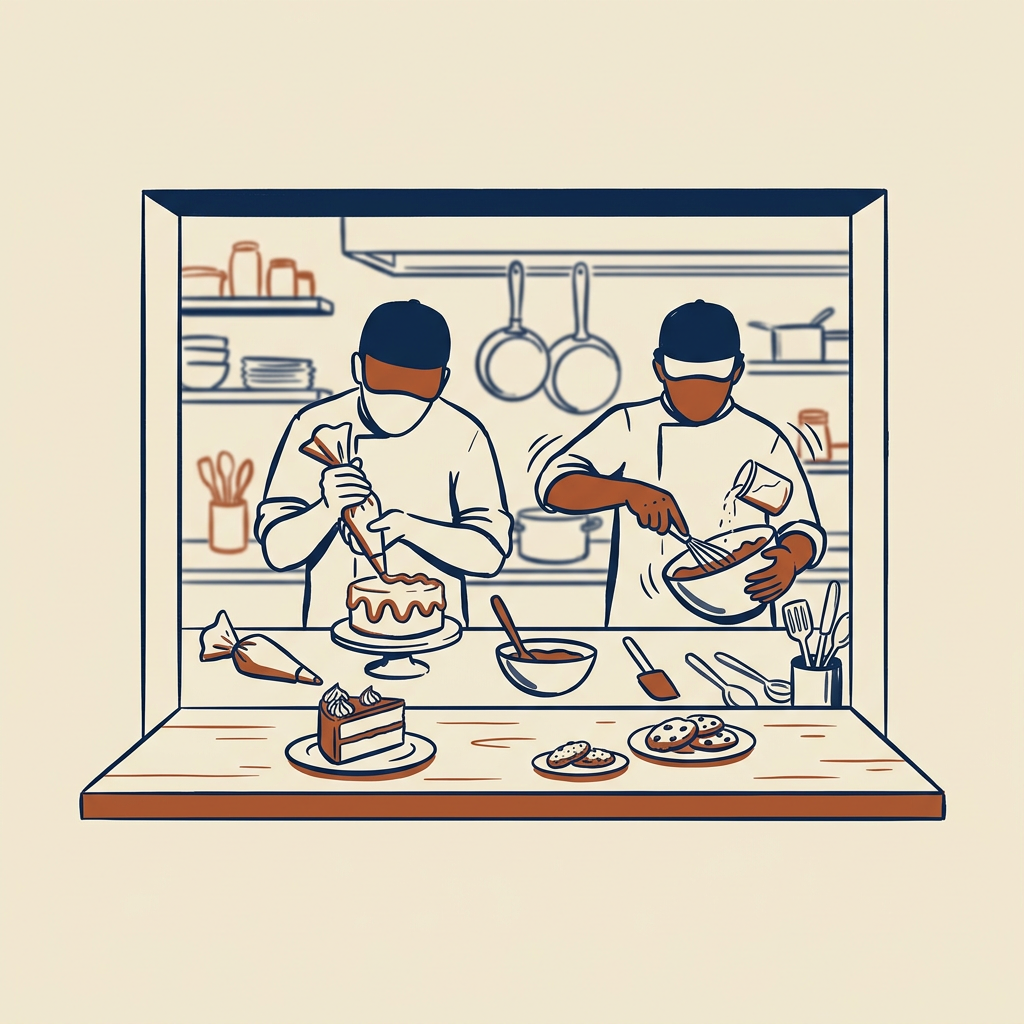
Process over product
Showing how something gets made is more valuable to an audience—and to the maker—than showing only the finished result.
Closed kitchen
Polish in secret, reveal only the finished plate
Open kitchen
Show sketches, failures, and tools so guests join the craft
Finished work hides the decisions, mistakes, and reasoning that make it interesting. Kleon holds that audiences are hungry for exactly that hidden layer. The traditional model works in secret and reveals a polished object; the alternative documents sketches, drafts, false starts, and tools alongside the final piece.
His anchor image is the open kitchen. Restaurants that let diners watch the cooking build more trust and loyalty because the guest feels included in the craft. The same move travels across fields: contact sheets next to the chosen shot, recipe failures next to the dish that worked. Process is human and relatable; a finished product can feel intimidating or unapproachable.
Narrating process also forces the maker to articulate decisions that might otherwise stay unconscious, which sharpens craft. A scene cannot form around finished objects alone. Someone can comment on a rough draft or suggest a fix; a gallery painting mostly invites silent judgment. Professionals trained to hide drafts cut themselves off from that collaborative energy without realizing it.
In practice: Open-kitchen restaurants build loyalty by letting diners watch the cooking instead of hiding it behind a closed door.
3
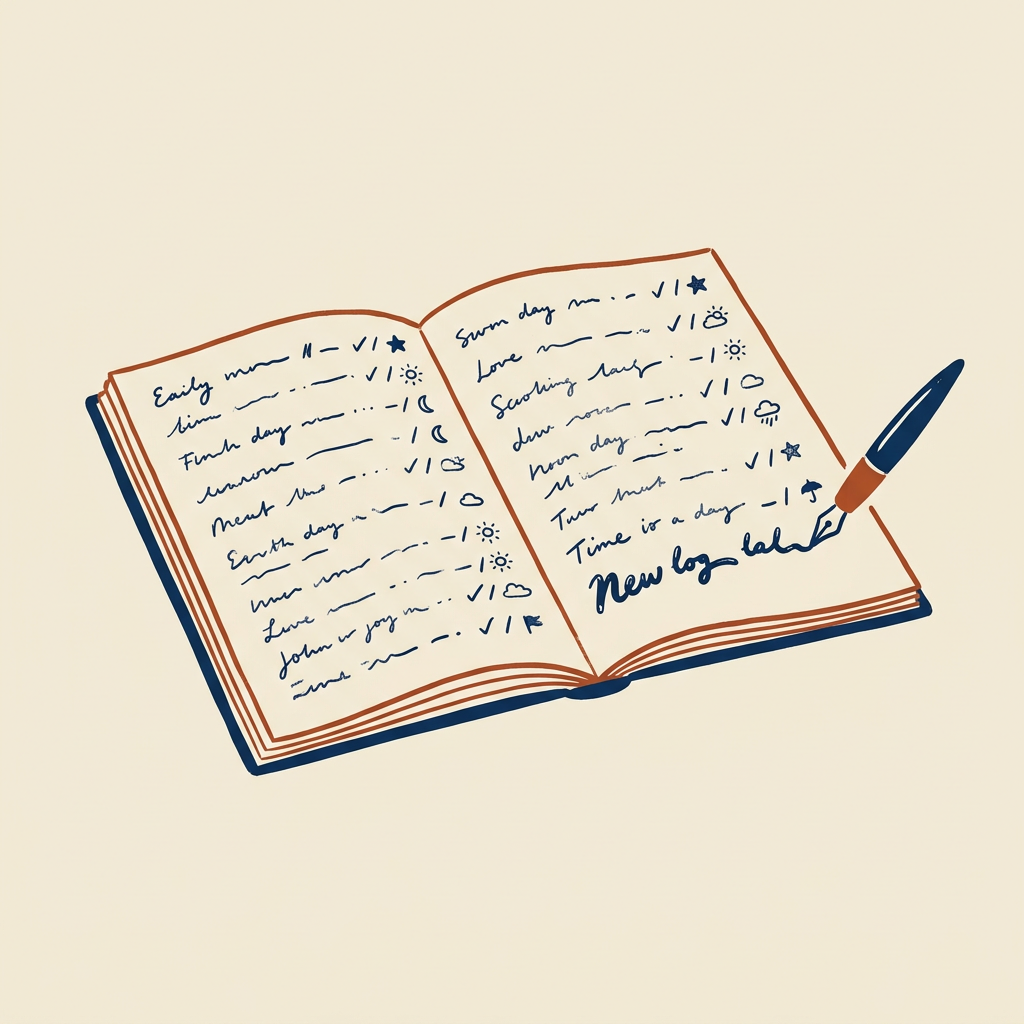
The daily dispatch
Publishing something small every day builds an audience more reliably than waiting for occasional polished releases.
Kleon proposes a discipline: share a small unit on a regular cadence, even daily. The post does not have to be finished creative work. A workspace photo, a paragraph of notes, or a single sketch counts, because the goal is a habit of visibility, not a stream of masterpieces.
Infrequent big reveals are high-stakes and rare, so they rarely build the steady following that turns strangers into community. A daily practice gives people many low-pressure chances to discover you and check back. He compares the practice to a diary or a ship's log rather than a highlight reel.
The cadence lowers psychological stakes. No single post carries the full weight of your talent. A weak day is forgotten quickly; a strong one still gets seen. Process without rhythm is only occasional openness. A daily dispatch turns openness into infrastructure others can watch grow, which is what makes long-term audience-building possible rather than accidental.
He returns to his own near-daily blog practice—poems, found phrases, doodles stacked for years into a searchable archive that later became raw material for books.
In practice: Years of near-daily posts of poems, found phrases, and doodles became a searchable archive Kleon later drew on for books.
4
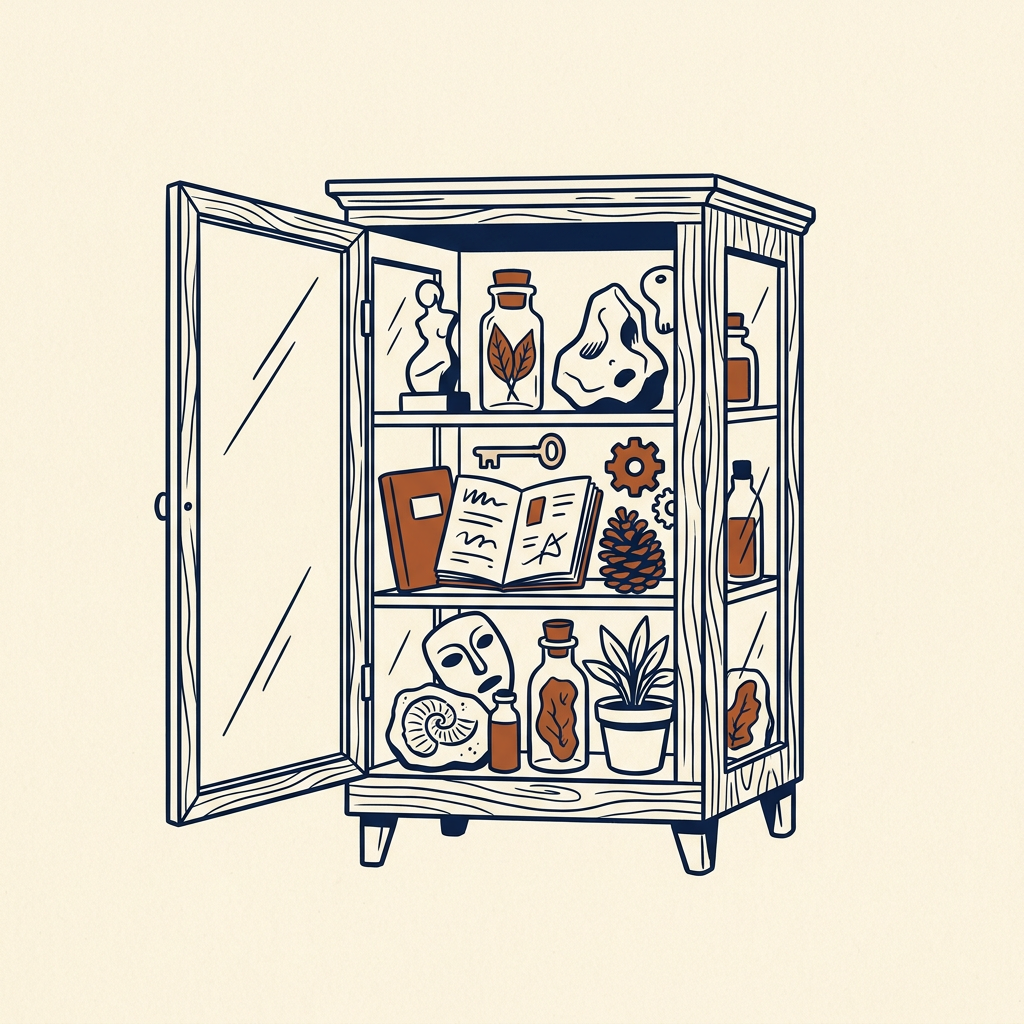
Open the cabinet
Publicly crediting the influences behind your work builds more trust than presenting work as if it sprang from nowhere.
Kleon uses the old cabinet of curiosities—a personal collection of odd objects and specimens—as a metaphor for every maker's private library of influences: books, songs, other people's work, half-remembered ideas. Sharing that cabinet rather than concealing it to look original does two jobs at once.
It gives the audience a map of your taste, which helps them understand and trust the work. It also credits the people whose work fed yours, which builds goodwill inside the scene. He rejects the fear that citing influences makes you look derivative. Influence is inevitable; hiding it is a kind of dishonesty that eventually gets noticed anyway.
The practical move is simple: post the books on your desk, the playlist you worked to, the artist whose technique you borrowed, and say so directly. Influences are also easy low-stakes material on days with no finished work, which solves the dry-well problem for the daily dispatch. A public cabinet maps the network you belong to and invites others to explore those same nodes.
In practice: Musicians who publicly acknowledge sampled tracks or covered songs send audiences back to the original source and build a chain of appreciation.
5
Tell good stories
Work needs a narrative frame to be understood and valued because most audiences cannot judge craft on technical merit alone.
Kleon's claim is uncomfortable for purists: the story around a piece often matters as much as the work itself in whether people notice, understand, or care. Most viewers lack the training to evaluate craft directly, so they rely on narrative cues—who made it, why, what problem it solves, what struggle it came from.
This is not a license to fabricate a backstory. It is a call to notice that raw talent without context often goes unseen, while a clear honest narrative makes decent work memorable. The discipline he recommends is modest and factual: state plainly what a piece is, why it exists, and what it took to make.
Silence lets work go unnoticed. Hype detached from anything true damages trust once people look closer. Daily dispatches and an open cabinet supply the raw material so that by the time a finished piece appears, the audience already holds a frame ready to receive it. Honest context does more persuasive work than either silence or exaggeration.
In practice: Small businesses and independent makers explain process and motivation on packaging, in videos, or in artist statements, turning a commodity into something with a felt history.
6
Teach what you're learning
Sharing what you are learning in real time builds authority faster than waiting until you feel qualified as an expert.
Wait for mastery
Withhold teaching until you feel fully qualified
Teach while learning
Share notes and explanations in real time so beginners—and you—gain clarity
The instinct to withhold teaching until mastery is backwards, Kleon argues. People who learned something recently are often better teachers of beginners than long-established experts who have forgotten what confusion feels like. Teach what you are learning: post notes, summaries, or explanations of a skill while still acquiring it.
The audience benefit is real. A novice explaining a concept in accessible language often serves other novices better than a veteran's more advanced take. The teacher benefit is real too. Explaining forces you to organize and test understanding, exposing gaps you would not have noticed otherwise.
Expertise is a moving target, not a gate you pass once, so the obligation to teach in public never really ends; it only moves to harder material as you grow. Teaching in public is also one of the strongest ways to attract peers at a similar stage, because shared struggle bonds more tightly than admiration of distant expertise. A post about what you just figured out is inherently shareable daily material.
In practice: Amateur bloggers and forum posters who documented learning a programming language or craft skill built followings of other beginners well before any claim to expert status.
7
Don't become human spam
Sharing designed to serve an audience earns trust; sharing designed only to promote yourself erodes it.
Human spam
Posts that only ask for attention, likes, or sales
Generous share
Posts that give information, credit, process, or honest failure
After six chapters urging people to share, Kleon names the failure mode: human spam—someone whose every post is transparently self-interested, adding noise without value. He draws a sharp line between sharing that gives something (information, entertainment, credit, useful process) and sharing that only asks (attention, likes, sales) without offering anything in return.
The test is simple. Before posting, ask whether the audience would want this even if you were not the one sharing it, or whether it exists only to remind people you exist. A maker who shares a useful tip or an honest failure differs from one who posts only announcements and self-congratulation. Audiences tune out the latter even when they cannot say exactly why.
All the earlier practices—daily dispatches, teaching, storytelling—can be run in a spammy way that follows the letter and breaks the spirit. The corrective is generosity as a standing rule: give more than you ask, credit others more than you claim, treat the audience's time as valuable. Trust damaged by self-serving patterns is hard to rebuild, so restraint functions as a long-term investment rather than a missed opportunity.
In practice: Audiences stay with a maker who shares a useful tip or an honest failure, and unfollow the feed that only announces and congratulates itself.

8
Learn to take a punch
Public sharing makes criticism inevitable, and the capacity to absorb it is a required skill, not an optional extra.
The more visible the process, the more exposed the maker is to criticism that may be unfair, cruel, or simply wrong. Kleon treats this exposure not as a reason to stop but as a cost to plan for and absorb, the way a boxer trains to take a punch rather than hoping never to be hit.
Concrete habits help. Separate self-worth from any single piece of feedback. Resist answering hostile criticism in the heat of the moment. Keep a private record of encouraging responses to counterbalance harsh ones, since negative feedback is disproportionately memorable. Train yourself to hear criticism aimed at the work even when it arrives mixed with criticism aimed at the person.
The chapter is honest about a limit of the book's earlier optimism. Not everyone who shares meets a generous scenius-style community; some meet organized harassment, trolling, or simple indifference. The book does not pretend otherwise, though it also does not dwell on the more severe forms this can take for marginalized creators. Resilience is trainable: start with small low-stakes shares so the first hard criticism arrives while the stakes are still manageable.
In practice: Keep a private file of encouraging responses so harsh feedback does not dominate memory, and delay any reply to hostility until the heat has passed.
9
Sell without selling out
Accepting money or patronage for creative work does not automatically corrupt it; refusing payment is itself a choice with real costs.
Purity myth
Refuse all payment so the work stays uncorrupted
Honest patronage
Accept direct support and name the need to earn without shame
Kleon challenges the romantic idea that commerce and art are natural enemies. Patronage, sales, and payment are simply one more form of audience relationship, no more inherently corrupting than any other. He revives the older idea of patronage—a supporter paying an artist directly to sustain the work—and notes that modern tools like direct sales, commissions, and subscriptions let audiences become patrons without wealthy sponsors or institutions.
A maker who refuses all payment is not automatically more pure. They are choosing a different set of constraints, often meaning work happens only in whatever spare time a day job leaves, which costs both the work and the maker's life.
Being transparent about wanting or needing to make a living from creative work, rather than pretending to be above money, is itself a form of the honesty the book has argued for throughout.
In practice: Direct sales, commissions, and subscriptions let an audience support a maker the way older patronage once did, without institutional gatekeepers.
Key terms
- scenius The ecology of mutually influencing people that produces creative breakthroughs, opposed to a lone genius
- daily dispatch A habit of sharing one small unit of work or process on a regular cadence
- cabinet of curiosities The private collection of influences a maker opens publicly to map taste and give credit
- process over product Showing drafts, tools, and failures alongside finished results so audiences can connect and learn
- human spam Sharing that only extracts attention without offering the audience anything of value
- teach what you're learning Explaining a skill in public while still acquiring it, rather than waiting for mastery
- take a punch The trained capacity to absorb public criticism without stopping the practice of sharing
- patronage Direct audience support—sales, commissions, subscriptions—that sustains creative work
What to do
- Post one small unfinished piece—a sketch, note, or workspace photo—today without waiting for polish.
- List three influences behind current work and credit them publicly in your next share.
- Before your next promotional post, ask whether the audience would want it even if you were not the source.
- Start a private file of encouraging responses to balance the sting of harsh feedback.
- Write one plain paragraph stating what a current piece is, why it exists, and what it took to make.
- Explain one thing you learned this week in a short public note aimed at beginners.
Questions to think with
- What work are you withholding until it feels polished enough, and what feedback might early visibility unlock?
- If your audience saw your cabinet of influences, would trust rise or would you fear looking derivative?
- Which of your recent posts gave the audience something useful, and which only asked for attention?
- How would your practice change if a small daily dispatch became non-negotiable infrastructure?
- What true story around your work is still untold?
The other side
The book admits that not everyone who shares meets a generous scene; some encounter harassment, trolling, or indifference, and it does not dwell on the harsher forms this takes for marginalized creators. The closing case for accepting payment also stops short of a full reckoning with how commercial pressure can distort the work it claims to sustain.
Who it's for
Freelancers and artists afraid that unfinished posts will look unprofessional, managers or teachers who want a low-pressure way for creative teams to build public reputation, and anyone starting a blog, newsletter, or portfolio who does not yet know what to post.