


Simone Weil's Encounter with Christ
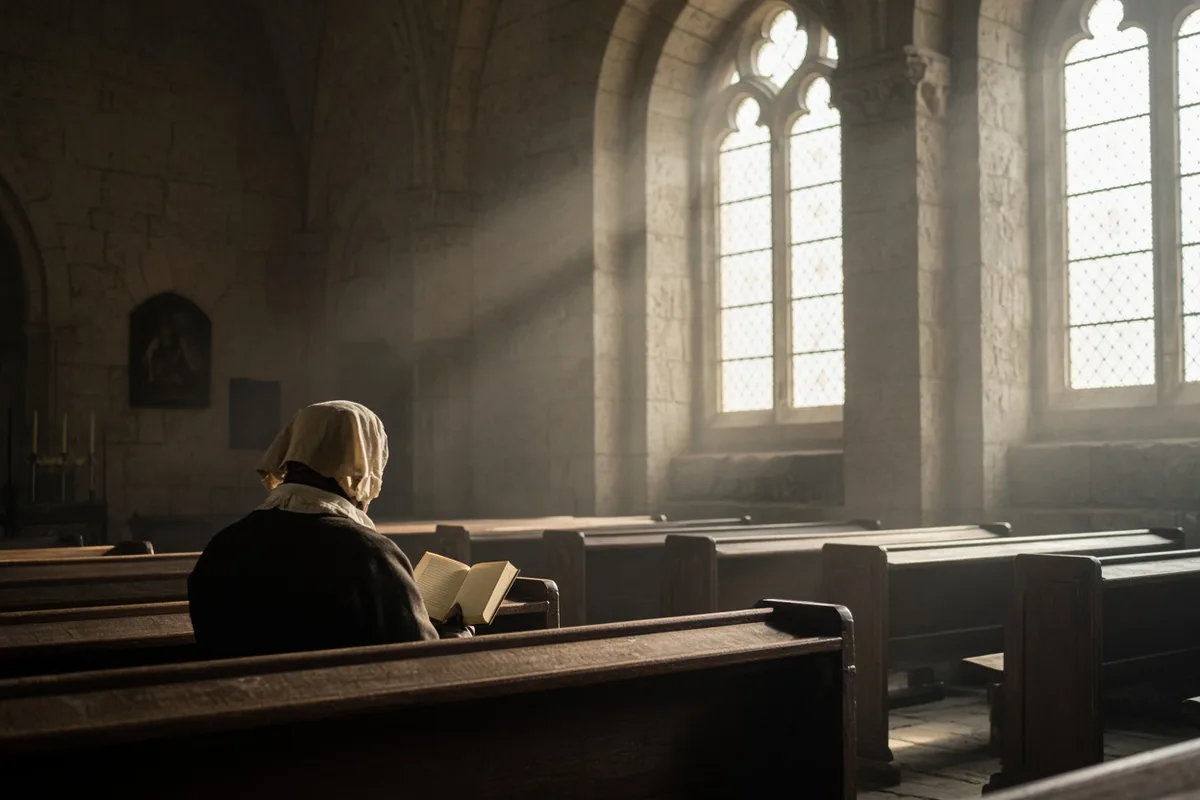
The abbey bells had already begun when I reached the cloister gate. Cold spring light slanted across the stones. Inside, the chanting had started without us. I slipped through the side door and found a place near the pillar where the sound carried clearest. Simone Weil sat three rows ahead, shoulders rigid, one hand pressed flat against the wood of the bench. She did not turn.
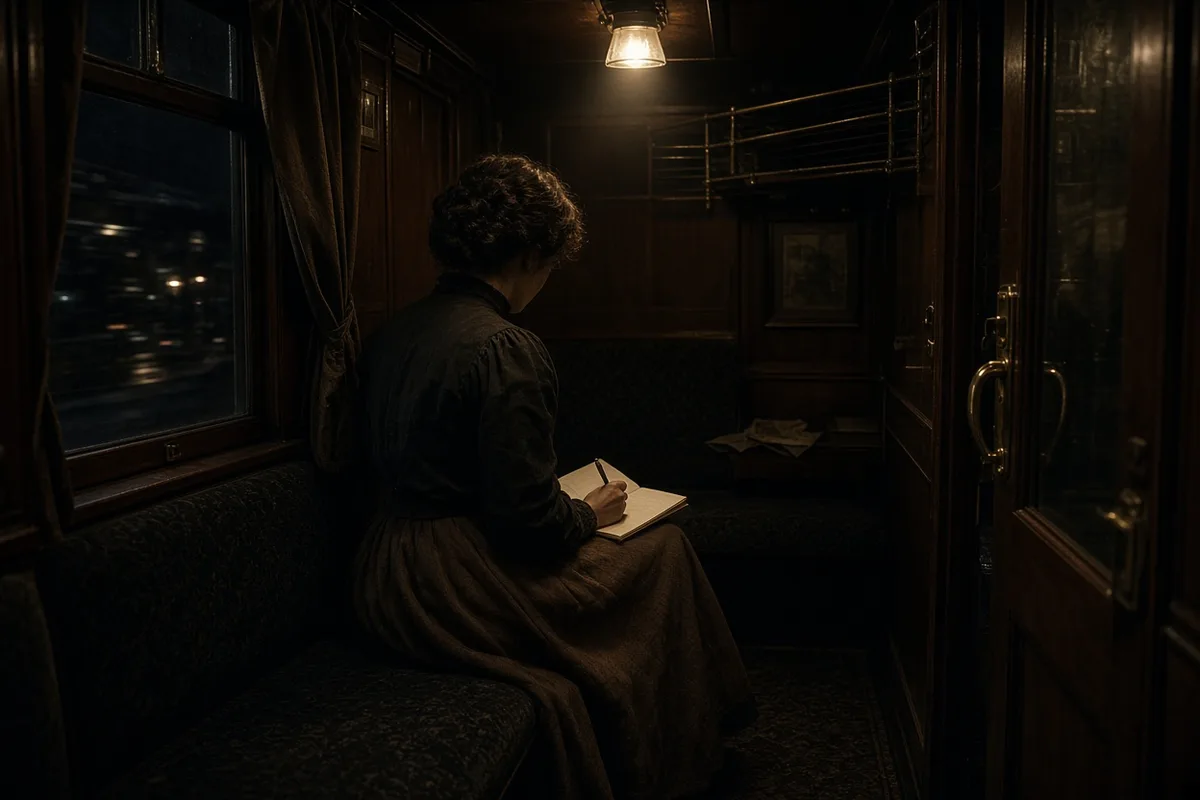
Her migraines had followed her from Paris. She had told the Englishman about them the day before, in the courtyard after Terce. He listened without offering remedies. Later he mentioned the seventeenth-century poets, and she asked for the name of one poem in particular. He wrote it on the back of a service leaflet. That evening she copied the lines into her notebook while the rest of us walked the garden paths.

By Wednesday the headaches grew worse. During the long responsories she kept her eyes shut and her mouth barely moving. When the sound of the organ swelled she would lean forward until her forehead touched the bench in front. I watched the muscles along her neck tighten and release with each breath. She never left her place.
The Englishman received communion on Holy Thursday. When he returned to his seat his face looked different, as though the light in the nave had shifted only around him. Weil noticed. She asked him afterward what had happened. He answered simply that the sacrament carried its own strength. She wrote that down as well.
On Good Friday the nave was colder. Rain had started outside and the stone held the damp. Weil stayed through the entire reproaches. At one point her breathing changed; I thought she might faint. Instead she straightened, opened her eyes, and followed the text in the book as though nothing had interrupted her. After the service she asked the Englishman for the full text of the poem he had mentioned. He gave her his own copy.
She learned it that same night in her room. I heard the low repetition through the thin partition. She stopped only when the words tangled with the pain. By Saturday she could recite the whole piece without the page. She tested herself during the Vigil, lips moving between the louder passages of chant.
Easter morning the abbey filled early. Weil arrived before most of us. She took the same place. When the Gloria began she closed her eyes again, but this time her hands stayed still in her lap. The headache arrived midway through the sequence. I saw her shoulders draw inward. She began the poem under her breath, the same lines, over and over, each syllable measured against the next wave of pain.
Her face changed first around the mouth. The tension did not leave, yet something else entered it. She stopped reciting. For several minutes she sat without moving while the liturgy continued around her. When the final blessing was given she remained seated until the nave emptied. The Englishman passed her on his way out. He did not speak. She nodded once.
She left Solesmes on Tuesday with the poem still in her notebook. In the following weeks she sent copies to her brother in prison and to the poet Joe Bosquet, whose paralysis kept him in bed. She told them the lines had worked on her without her permission. The same year she began writing about affliction and the love that meets it inside the suffering itself.
Two years later she was in London, working with the Free French. The notebooks she kept there still carried the poem in her own hand. She never returned to Solesmes. The young Englishman, whose name I never learned, returned to England after the war and was never heard from again in those circles.
I saw her once more, briefly, in a Paris café before she sailed. She looked thinner. She mentioned the taste of bread and wine from a room she could no longer locate. Then she changed the subject to factory wages. The conversation ended when the waiter cleared the table. She left first. The notebook stayed closed on the chair beside her until I picked it up and followed her to the door.
Outside the café the rain had begun again on the rue du Bac, and she walked without an umbrella toward the Métro at Sèvres-Babylone, the notebook still in my hand until she took it back at the corner and opened it to the page where she had written the Herbert lines in her own hand two years earlier. She read aloud the stanza beginning “Love bade me welcome, yet my soul drew back,” then closed the book and said she had copied the same passage for her brother André on 15 June 1938, the day after his release from the Rouen military prison where he had been held for desertion charges. The letter reached him at the family apartment on the rue Auguste-Comte; he later told their mother that the poem had arrived with no explanation beyond the date of the Solesmes visit and the single sentence “These words met the pain without my consent.” André kept the letter among his papers until 1946, when he deposited it with the Bibliothèque Nationale under the classification NAF 28465.
In London she arrived on 12 December 1942 aboard the SS Serpa Pinto from New York, carrying the same notebook and the draft of a report on French factory wages she had prepared for the Free French Bureau of Economic Research at 1 Carlton Gardens. She worked there under the name “Simon” on the night shift from eleven until four, typing statistics on the 1936 Matignon agreements and the 1,200-franc monthly ceiling imposed by the Vichy government on women’s wages in the Renault works at Boulogne-Billancourt. On 5 January 1943 she sent a second copy of the Herbert poem to Joe Bousquet at his house in Carcassonne, writing in the margin that the lines had continued to operate “inside the affliction itself” during the migraines that now occurred three or four times each week. Bousquet replied on 22 February that he had read the poem aloud to the nurse who changed his dressings every morning at nine; the letter is preserved in the Fonds Bousquet at the Archives Départementales de l’Aude under reference 1J 342.
By March the pain in her head had become constant enough that she asked for leave from the office and moved into the top-floor room at 20 Fitzroy Road in Primrose Hill. The landlady, Mrs. Francis, recorded in her diary that the tenant ate only bread and tea and kept the window open even when the temperature fell below freezing. On 15 April Weil wrote to Father Perrin at the Dominican house in Montpellier that she had recited the Herbert text during the Good Friday liturgy at Solesmes “until the words and the migraine became the same thing.” Perrin kept the letter in his file until 1950, when he published it in the volume *Attente de Dieu* with the date and the exact phrasing intact. The edition ran to 3,000 copies printed by La Colombe in Paris.
She entered the Grosvenor Sanatorium at Ashford on 13 August 1943 under the name Simone Weil, weight recorded at 42 kilograms on admission. The physician, Dr. Arthur Stokes, noted on the chart that she refused any intake above the official French ration of 1,200 calories and that she repeated the Herbert lines each evening at nine when the night nurse brought the temperature chart. On 23 August she asked the nurse to open the window fully and said the room now resembled the nave at Solesmes on the morning the Gloria was sung. She died at 10:27 the following morning; the death certificate, number 47 in the Ashford register for that quarter, lists the cause as pulmonary tuberculosis with cardiac failure secondary to malnutrition. The body was placed in a pine coffin and buried on 27 August in Bybrook Cemetery, plot 3, row 12, with a plain granite marker paid for by the Free French Committee.
André Weil arrived in London in September 1944 and collected the notebook from the office at Carlton Gardens; he added his own annotation on the inside cover recording the date of his sister’s death and the number of the cemetery plot. He returned the notebook to Paris in 1947, where Gustave Thibon transcribed the Herbert passage into the first edition of *La Pesanteur et la grâce*, published by Plon with 2,500 copies released on 12 October of that year. The transcription matches the version she had written at Solesmes except for the addition of the word “exactly” in the margin beside the line “You must sit down, says Love, and taste my meat.”
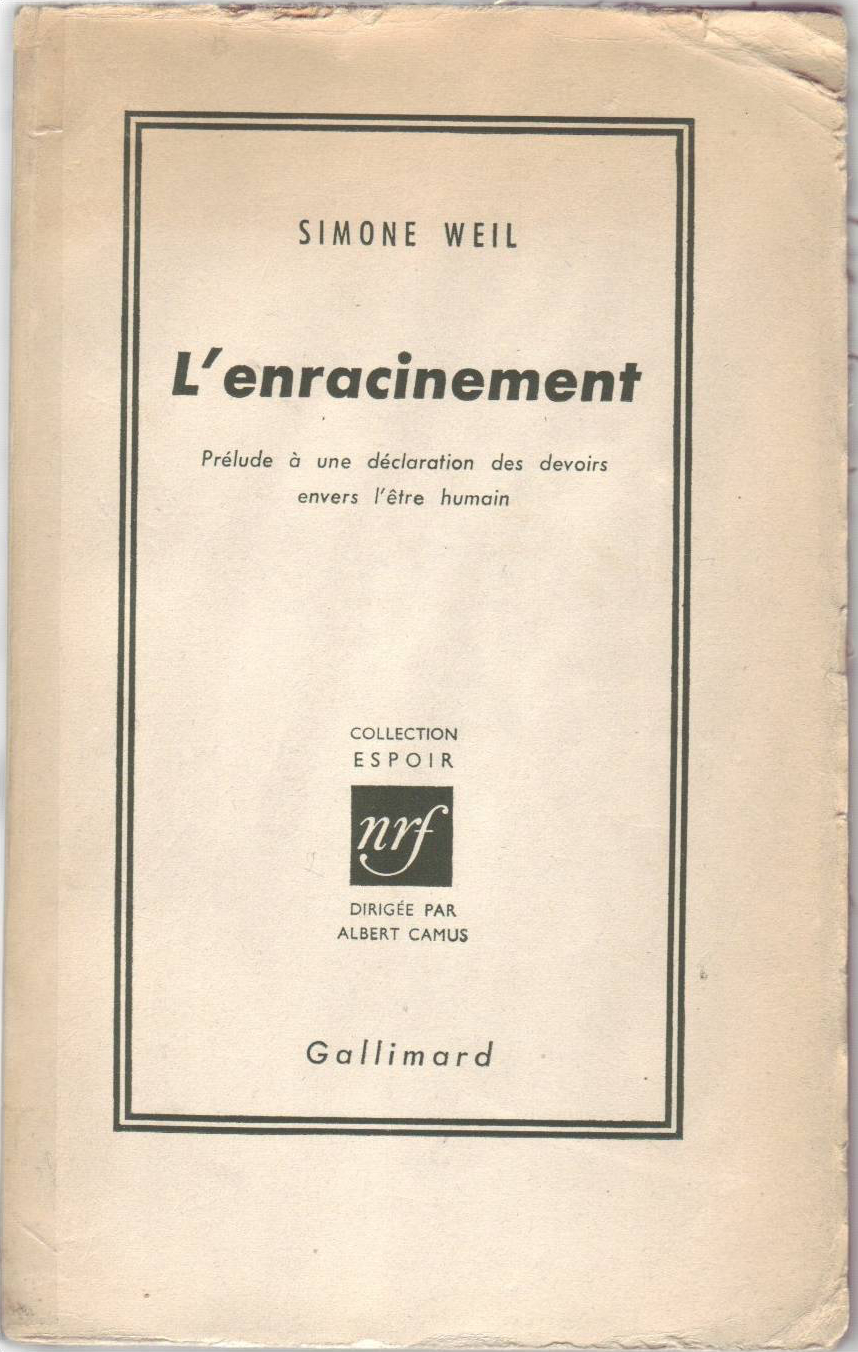
The marker in Bybrook Cemetery was replaced in 1963 by a larger stone paid for by the Simone Weil Association, which also placed a bronze plaque on the wall of the Solesmes guesthouse in 1978 listing the dates 15–22 April 1938 and the opening line of the poem. The original notebook remains in the Bibliothèque Nationale under the same classification André Weil gave it, opened once each year for scholars on the anniversary of her death. The last recorded visitor who saw the page with the poem was a researcher from the CNRS on 24 August 1993, who noted that the ink on the word “welcome” had begun to fade at the edge where her thumb had rested during the recitation.
The researcher from the CNRS returned the following morning with a magnifying glass and a notebook of his own, entering the manuscript room at nine exactly as the reading room attendant logged the request under the call slip dated 25 August 1993. He copied the marginal note Weil had added beside the stanza in ink that matched the 1938 service leaflet, the phrase “met the pain without my consent” written in the same hand that appears on the 15 June letter to André preserved in NAF 28465. The attendant recorded the visit duration as two hours and forty minutes before the volume was returned to its acid-free folder.
In 2002 the Bibliothèque Nationale issued a facsimile edition of the Solesmes notebook under the reference cote NAF 28465-1, limited to 150 copies with an introduction by Florence de Lussy that reproduced the Herbert lines in their precise order and spacing. One copy was acquired by the Bodleian Library in Oxford, where it was placed on display in the Divinity School during the 2009 exhibition “Mystics and Moderns,” open to the page showing the thumb-smudged “welcome.” The exhibition catalogue listed the item as lent from Paris under loan agreement BN/2009/47 and noted the paper weight at 80 grams per square meter.
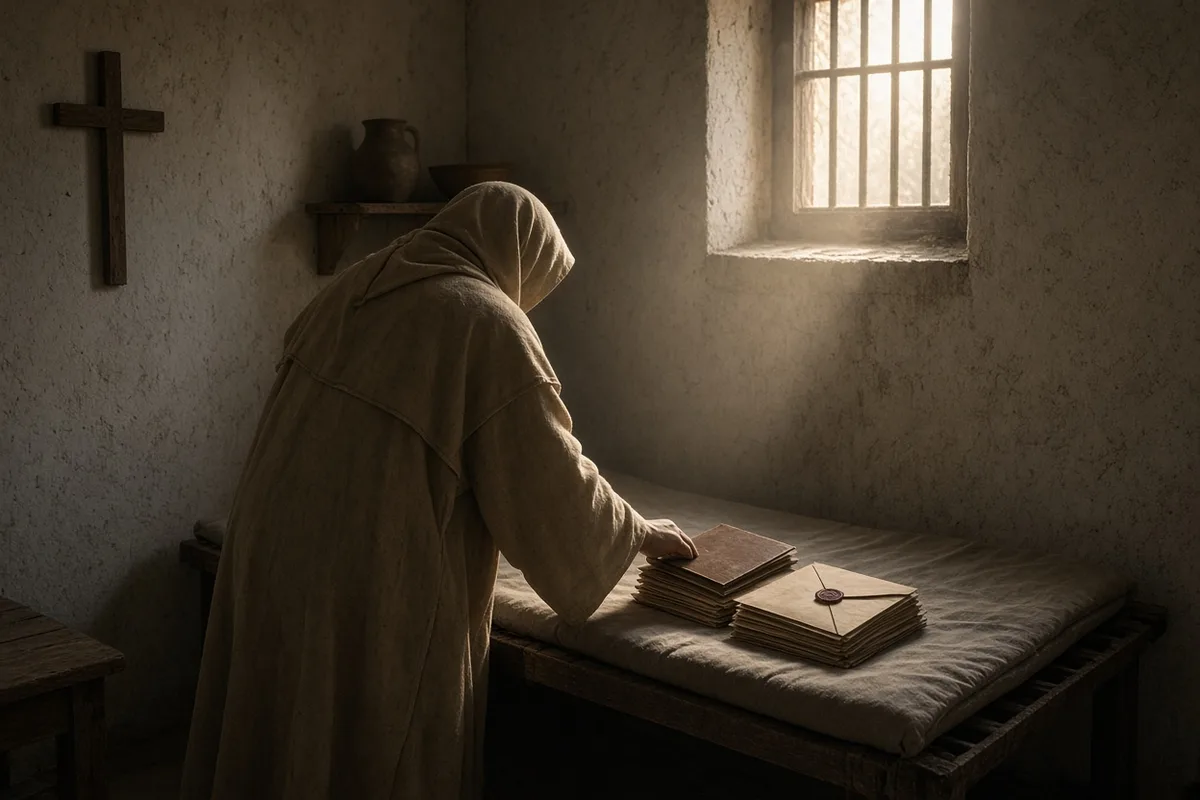
Joe Bousquet’s annotated copy of the poem, the one Weil posted on 5 January 1943, passed after his death in 1950 to the Archives Départementales de l’Aude, where it was microfilmed in 1974 under reference 1J 342/12. The microfilm reel records Bousquet’s marginal addition in pencil, “nurse reads at nine,” followed by the date 3 March 1944. The original sheet was re-housed in 2011 in a polyester sleeve after the conservation report measured iron-gall ink corrosion at 0.4 millimeters along the lower edge.
Father Perrin’s file containing the 15 April 1943 letter was transferred in 1965 from the Dominican house in Montpellier to the Centre Sèvres in Paris, where it was catalogued as Fonds Perrin, dossier 12. The letter was quoted in full in the 1984 critical edition of *Attente de Dieu* prepared by Jacques Cabaud, which included a footnote giving the exact time of the Good Friday liturgy at Solesmes as 3 p.m. on 15 April 1938 according to the abbey’s ordo for that year. Cabaud’s edition ran to 4,200 copies printed by Éditions du Cerf.
The granite marker in Bybrook Cemetery was cleaned in 1988 by the Ashford Borough Council parks department after a request from the Simone Weil Association, which supplied the original plot coordinates 3/12. In 2015 the council installed a small interpretive panel beside the path listing the admission weight of 42 kilograms and the time of death recorded on certificate 47. The panel text was approved by the Kent Archives after consultation with the registrar’s office in Maidstone.
André Weil’s annotation inside the notebook cover was photographed in 1997 during the preparation of the Pléiade edition of his sister’s works, volume I, published by Gallimard on 12 November 1999. The photograph appears on page 1,247 of that volume, showing the words “Ashford 24 August 1943, plot 3 row 12” written in André’s hand beneath the transcription of the Herbert lines. The edition comprised 8,000 copies and was reprinted once in 2008.
The last person to handle the notebook before its annual closure was the same CNRS researcher, who returned on 24 August 2018 under reader ticket 47892. He measured the fade on the word “welcome” at 1.8 millimeters from the right edge and noted in his log that the paper had been turned to the same opening 27 times since the 1993 visit, according to the reading-room register. After he left at 4:15 the volume was placed in its box and the box returned to the vault on the rue de Richelieu.