



Six million private flights remade northern American cities
In 60 seconds
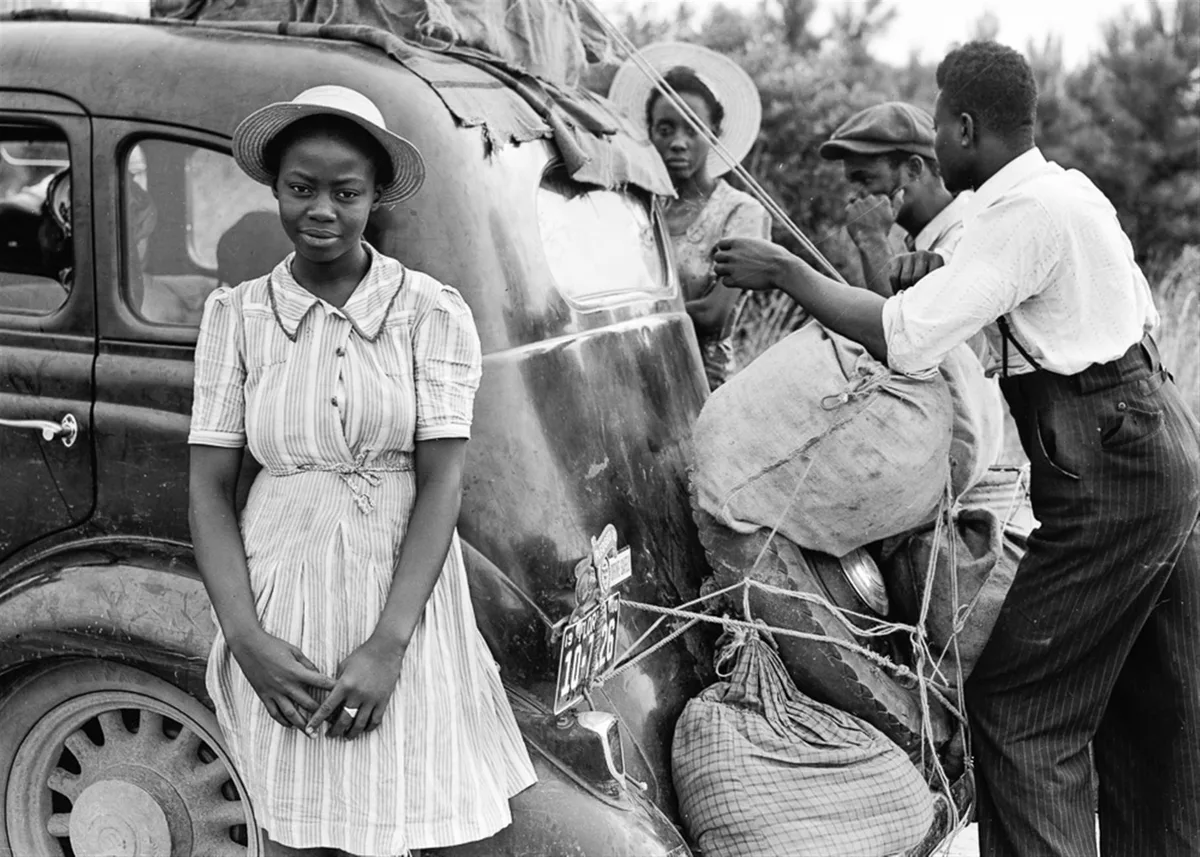
- Between 1915 and 1970, six million Black Southerners left for northern and western cities with no single leader, founding date, or public name.
- Wilkerson treats the movement as internal immigration across a caste boundary, not a civil-rights footnote or simple wage hunt.
- Specific terror often set the exit date; George Starling fled Florida in 1945 after word of a lynching party reached him.
- After more than 1,200 interviews she tracks Ida Mae Gladney, George Starling, and Robert Foster to show decisions aggregate charts cannot.
- The North replaced statute and lynch law with covenants, redlining, kitchenettes, and hiring walls.
- Chicago's Black population rose from about 44,000 in 1910 to more than 800,000 by 1970, almost entirely from this movement.
The big idea
Wilkerson argues that six million Black Southerners left the South between 1915 and 1970 as individual emergency exits from a terror-enforced caste system. Three closely tracked lives show how those choices rebuilt cities while constraint followed into housing, work, and private cost.
The book in brief
Wilkerson opens on a fact hidden in plain sight. Over roughly fifty-five years, six million Black Americans left the South for the North and West. The movement had no leader and no name while it ran. People simply left, one family at a time.
She names what they fled. Jim Crow fixed status by birth through debt peonage, curfews, deference rules, and the constant background threat of lynching. Fear, not income tables, usually fixed the departure day.
The book then narrows to method. From more than 1,200 interviews she holds three lives in view for decades: Ida Mae Gladney leaves Mississippi for Chicago in 1937; George Starling leaves Florida for Harlem in 1945; Robert Pershing Foster drives from Louisiana to Los Angeles in 1953. Dialogue, trains, and household detail carry claims tables cannot.
Secrecy shaped the exits. Landowners blocked labor loss; families left at night on lines such as the Illinois Central and lied about their plans. Arrival brought no clean refuge. Covenants, redlining, kitchenettes, job walls, and the 1919 Chicago beach riot proved northern hostility could still turn rigid and violent.
Against that reconfigured constraint the three lives diverge. Ida Mae builds quiet stability and a first vote. George pays for earlier resistance with stalled work and family fracture. Robert wins conspicuous professional success that does not erase the old wounds. Wilkerson closes by counting steadiness and costly exile beside more visible climbs as the migration's real record.
Context
Isabel Wilkerson published the book in 2010 after working as a journalist rather than a demographer. It mattered because it turned an invisible mass movement into a personal narrative and reframed American demography, urban politics, and culture as products of those private decisions.
The key ideas

1
An invisible migration
The six-million-person shift from 1915 to 1970 was genuine internal immigration across a caste boundary, not a backdrop to civil rights.
800,000
Chicago Black population by 1970, up from ~44,000 in 1910
Wilkerson names a movement larger than many international migrations taught in classrooms. It had no single leader, no founding date, and no name while it happened. Families left one at a time; the aggregate still remade the country's cities.
She insists on the word migration because the travelers crossed more than state lines. In Mississippi or Georgia, legal and social standing was fixed by birth. Chicago or New York meant, at least on paper, a different jurisdiction of status.
Historians and the public had absorbed urban Black populations without absorbing the decisions, routes, and casualties that produced them. The book exists to make the migration itself the subject.
In practice: Chicago's Black population went from about 44,000 in 1910 to more than 800,000 by 1970, a change driven almost entirely by this movement; Detroit, New York, Los Angeles, and Oakland saw comparable surges.

2
The system people fled
A violently enforced caste system—not general poverty—drove exits, and fear usually set the actual departure date.
Surface story
Migrants chase better northern wages
Wilkerson's evidence
A specific terror often fixes the exit day
Wilkerson describes Jim Crow as hierarchy maintained by law and by extralegal violence when the law's grip loosened. Sharecropping tied families to plantations through landlord-kept debt with no independent tenant accounting.
Curfews, deference rituals, and unwritten rules governed daily contact with white residents. Real or invented violations could bring a beating or a lynching. She treats lynching as a background threat that shaped behavior for everyone, reported often enough in Black newspapers that parents trained children around specific words and gestures.
The economic case for staying or leaving existed. Her evidence still shows that a dated threat, not a slow wage calculation, typically triggered the move. Ordinary ambition itself had become dangerous.
In practice: In 1945 George Starling organized citrus pickers in Eustis, Florida, to demand better pay; word came that a lynching party was forming, and he left for New York within days, telling almost no one.

3
Three lives as evidence
Granular decades-long tracking of three ordinary migrants reveals decision texture that population charts cannot.
- IIda Mae GladneyMississippi to Chicago, 1937; domestic and hospital work; lasting home and family
- GGeorge StarlingFlorida to Harlem, 1945; grove organizer turned railroad porter
- RRobert Pershing FosterLouisiana to Los Angeles, 1953; physician who builds a major practice
Wilkerson selected Ida Mae Gladney, George Starling, and Robert Pershing Foster after more than 1,200 interviews with elderly migrants. A demographic chart cannot show what it meant to decide, at one kitchen table, to leave everything, or how the choice echoed through a whole remaining life.
The same historical pressure yields three outcomes in her pages: quiet stability, activist exile, and outward success with private cost. She lets weather, train schedules, dialogue, and household detail carry the argument.
She accepts the tradeoff openly: three lives are not statistically representative of six million. Representativeness was never the aim. Documented specificity was meant to prove the migration was made of decisions like these, multiplied by millions.
In practice: Ida Mae leaves Mississippi for Chicago in 1937; George leaves Florida for Harlem in 1945; Robert drives to Los Angeles in 1953—three dated exits standing in for the unnamed millions.

4
Leaving in secret
Departure was often covert and dangerous because the plantation economy treated Black labor as property that must not leave.
- 1Threat landsA beating, a debt trap, or a lynching rumor makes staying untenable
- 2Cover storyEmployers and neighbors hear a false plan so landlords cannot lock the family down
- 3Night exitWhat can be carried goes; the rest is abandoned
- 4Rail northLines such as the Illinois Central become the escape route
Landowners had strong incentive to stop workers from going. Wilkerson records trains met by white men hunting runaway sharecroppers, northern labor agents arrested or run out of town, and families slipping away at night with only what they could carry.
Migrants often fed employers and neighbors a false story. Word of a planned exit could let a landlord invent a debt and hold a family in place by law. Decisions were rarely collective celebrations. They were private, anxious calculations, often by one adult for a whole household, executed fast once final.
The sudden quiet exit recurs across her three subjects and anchors the larger claim: this was flight from named danger, not a casual step toward opportunity.
In practice: After Ida Mae's cousin was severely beaten on a false theft charge in Chickasaw County, Mississippi, the Gladneys left for Chicago on the Illinois Central, the direct line that carried tens of thousands of Mississippi migrants north.

5
Arrival without refuge
The North and West offered no freedom from caste, only a less openly named version enforced by markets and custom.
What migrants fled
Statute, debt peonage, deference codes, lynch threat
What they met
Covenants, redlining, kitchenettes, hiring walls, riot violence
Legal segregation did not greet arrivals in Chicago, New York, or Los Angeles. Housing covenants, lender redlining, and union and employer discrimination drew rigid boundaries anyway.
Landlords carved South Side houses into kitchenettes and rented single rooms at inflated prices to Black tenants who had nowhere else to go. Severe overcrowding filled a few square miles while vacant housing stood elsewhere in the same city.
Job bias pushed skilled or educated migrants into domestic work, factories, or service jobs regardless of training. The clean-break hope died against a system that denied opportunity through markets rather than statute and lynch law. Later chapters read all three lives against that persistent constraint.
In practice: Wilkerson revisits the 1919 Chicago race riot, sparked when a Black teenager drifted into a whites-only section of a Lake Michigan beach, as proof northern hostility could turn lethal.

6
Ida Mae's ordinary endurance
Quiet stability, a first vote, home ownership, and an intact family count as real triumph when public fame was never the aim.
Ida Mae worked as a domestic and later a hospital aide in Chicago. She stayed married for decades, raised children in the same South Side neighborhood, and eventually bought a home there.
Wilkerson refuses to score the migration only by dramatic upward mobility. Ida Mae never became famous or rich. She did cast a ballot for the first time after leaving Mississippi, a right legally and practically denied her in the South, and she lived to see grandchildren in integrated schools.
The same neighborhood that gave mid-century stability later met disinvestment, crime, and the loss of the manufacturing jobs that had drawn her generation. She stayed rooted rather than moving again. Wilkerson reads that steadiness, under conditions never fully friendly, as achievement rather than a failed version of flashier success.
In practice: In old age Ida Mae still hosts family gatherings and stays civically engaged while watching the South Side decline around her.

7
George and resistance's price
Organizing or resisting in the South could buy a lifetime of professional exile and personal loss even after the physical threat ended.
George had education ambitions before the grove fight. Harlem removed the immediate threat to his life; it did not restore his path. Work matching his intelligence was scarce, so he became a railroad porter on the New York–Florida run.
Wilkerson dwells on the bitter loop: the same rails that carried him to freedom forced repeated involuntary return to the region he had fled. As porter he smuggled Black newspapers south and counseled younger men on how and when to leave, becoming an informal migration node while his own advancement stalled.
His marriage suffered. He grew estranged from his children under the strain of unfulfilled work and the residue of fleeing home under mortal threat young. His courage is not framed as a mistake. His decades still insist stalled lives belong beside prospering ones in the migration's record.
In practice: Trip after trip, Starling's porter job returned him to Florida—the place a lynching party had once forced him to abandon within days.

8
Robert and success's limits
Even conspicuous professional success did not dissolve psychological wounds cut by growing up inside caste.
- 1953Solo drive from Louisiana toward Los Angeles
- En routeHotels refuse a trained physician lodging
- Los AngelesBuilds a leading Black-owned medical practice; enters celebrity circles
Robert Pershing Foster drove alone from Louisiana to Los Angeles in 1953. Wilkerson narrates the trip at length because hotels refused him along the route despite his being a trained physician. The refusals mark how far west he had to go before daily caste indignities loosened.
In California he built one of the most successful Black-owned medical practices in Los Angeles and treated celebrities. Wilkerson links him to Ray Charles's circle and suggests his story colored Charles's tie to a song.
Outward victory still sits beside the private cost of the system he was raised in. The book uses his climb to show that arrival and status did not automatically heal what caste had taught him to expect of himself and of the country.
In practice: A trained physician, Foster still could not find a hotel willing to house him on the drive west until he was deep into the journey toward Los Angeles.
Key terms
- Great Migration Wilkerson's name for the 1915–1970 movement of six million Black Southerners to northern and western cities, treated as internal immigration.
- Caste A birth-fixed hierarchy of legal and social status in the Jim Crow South, enforced by law and by the threat of violence.
- Sharecropping debt Plantation bookkeeping that tied families to the land through landlord-calculated balances tenants could not independently verify.
- Kitchenette A large house subdivided into single rooms and rented at inflated prices to Black tenants hemmed in by housing barriers.
- Housing covenant Private agreements that blocked sales or rentals to Black buyers and kept neighborhoods closed after legal segregation fell away.
- Redlining Lender practice that starved Black neighborhoods of mortgage credit and locked migrants into narrow districts.
- Illinois Central The railroad that ran a direct Mississippi-to-Chicago route and carried tens of thousands of migrants north.
- Internal immigration Wilkerson's frame for crossing from a caste jurisdiction into one where, on paper, that fixed status did not apply.
What to do
- Map one family line from a southern county to a northern or western city and date the actual move.
- Read a 1919–1970 city directory or census page for a South Side, Harlem, or Los Angeles block and note birthplaces.
- List the job a skilled relative held before leaving the South beside the work they took after arrival.
- Visit or virtually walk a former kitchenette block and compare lot density with a nearby unrestricted neighborhood.
- Ask an elder what cover story, if any, the family used the week they left.
Questions to think with
- What would have to be true on the ground for a 'better wages' story to fully explain a midnight departure?
- Which of the three outcomes—steady roots, stalled exile, or costly success—does your city still reward most visibly?
- How should a migration's record weigh a first vote and an intact family against a famous practice or a broken household?
- Where do today's housing maps still echo the covenants and red lines migrants met on arrival?
- If three lives cannot represent six million, what can they prove that the six-million figure alone cannot?
The other side
Wilkerson accepts that three lives cannot be statistically representative of six million people; readers who want demography-first proof rather than documented individual texture will find the method deliberately narrow.
Who it's for
Readers who want to know why major American cities look and vote as they do, and anyone tracing family lines from the rural South to Chicago, New York, or Los Angeles. Students of race seeking a narrative counterpart to purely legal or statistical histories will get the most from the full book.