



Sophie Scholl's Final Statement in Court

The clerk at the side table kept her eyes on the inkwell. She had been told to note only the formal parts, nothing more. The bench was already full when they brought Sophie Scholl in. The girl wore the same dark coat she had been arrested in four days earlier. Her hair was pulled back tight. She stood between two guards and did not look around.
Freisler began at once. His voice filled the room without effort. He read the names, the charges, the dates. Hans Scholl sat to her left, Christoph Probst on the far end. The three of them looked straight ahead. No one moved when Freisler finished the indictment and asked if they had anything to say.

Sophie rose. The chair scraped once against the floorboards. She placed both hands on the rail in front of her. For a moment the only sound was the radiator ticking under the window. Then she spoke. She said they had known what they were doing. She said they had accepted the consequences. The words came out evenly, without hurry. She did not raise her voice. She did not look at Freisler while she said it.
Freisler cut her off. He leaned forward, the robe bunching at his shoulders. He asked whether she understood that the leaflets had called for sabotage in wartime. She answered that she understood. He asked if she regretted the damage done to the nation’s strength. She said she did not. The exchange lasted less than a minute. When she finished, she sat again. The guards behind her did not shift their stance.
The judges conferred for less than half an hour. The clerk kept her pen still. When they returned, the sentence was read without pause. Death for all three. Forfeiture of honor and rights. The words landed and stayed in the air. Hans Scholl turned his head once toward his sister. She met his look and gave a small nod. Probst kept his eyes on the table.
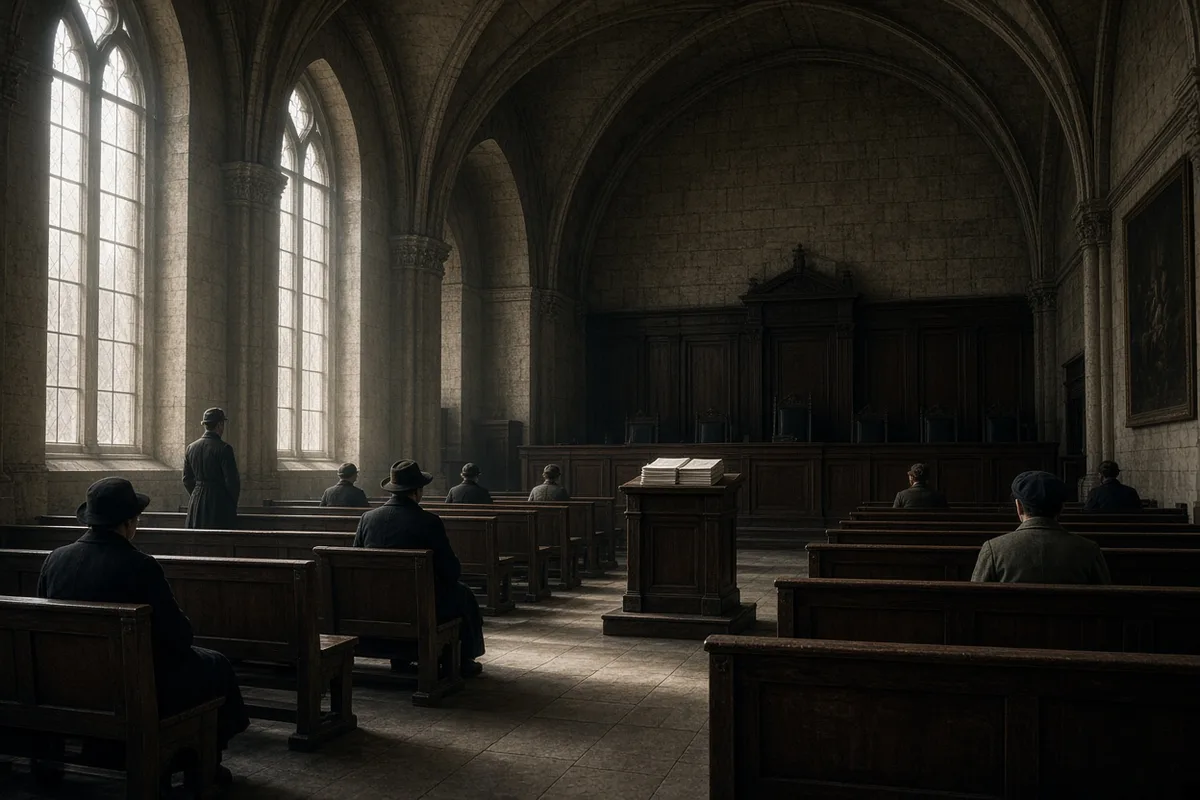
They were taken out through the side door. The corridor beyond was narrow and smelled of wet wool from the guards’ coats. The clerk remained at her table until the room emptied. She blotted the page, folded the notes, and placed them in the folder marked for the day. Outside, the light had already begun to fade. Snow sat in dirty ridges along the curb.
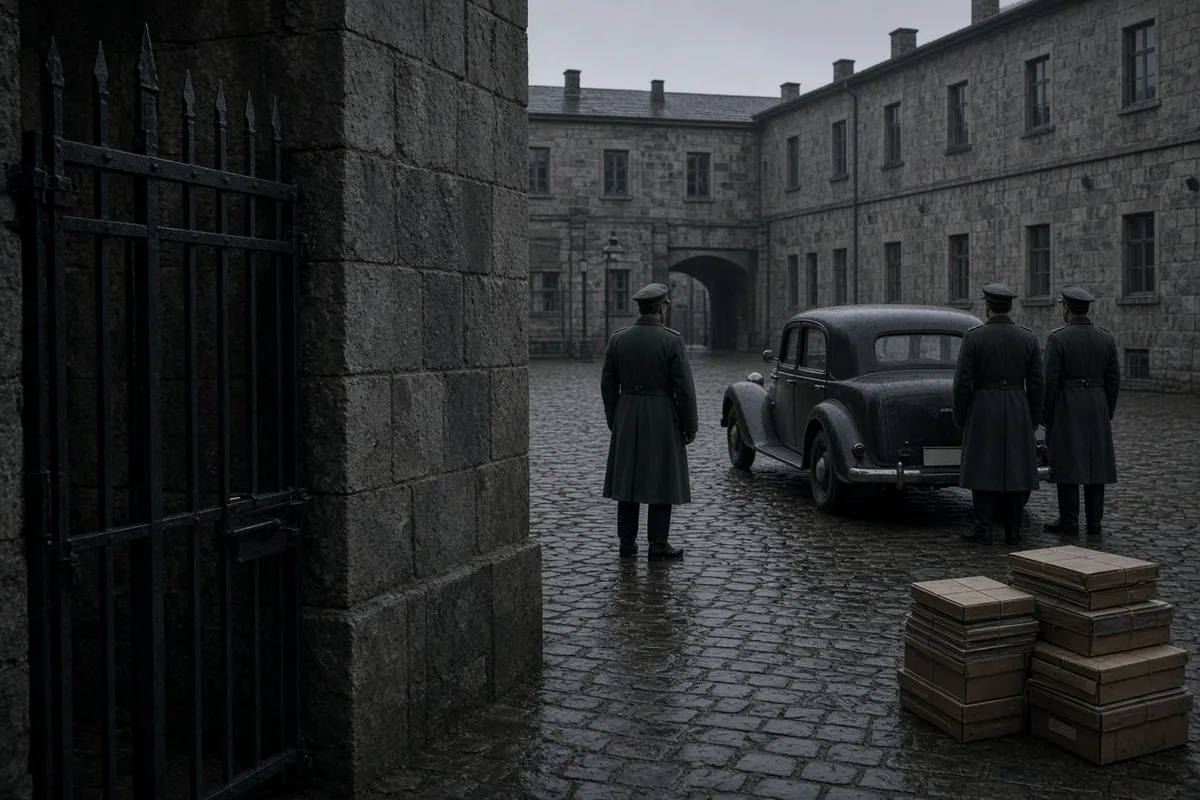
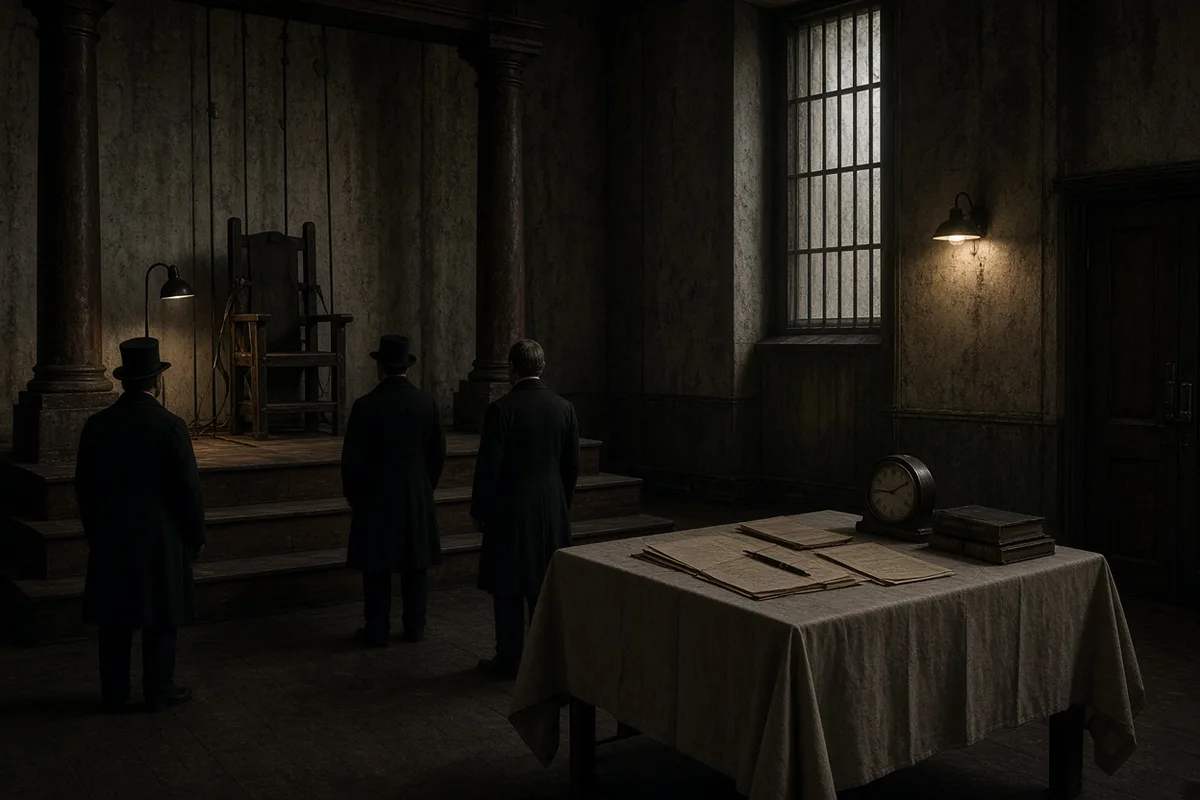
By evening the three had been moved to Stadelheim. The execution order carried the same date. The guillotine stood in the yard where the prison kept its vehicles. The same machine had been used for the previous political cases that month. The attendants worked without speaking beyond what the procedure required. Sophie was the second to go. She walked the short distance between the holding cell and the machine without assistance. The record lists the time as five o’clock.
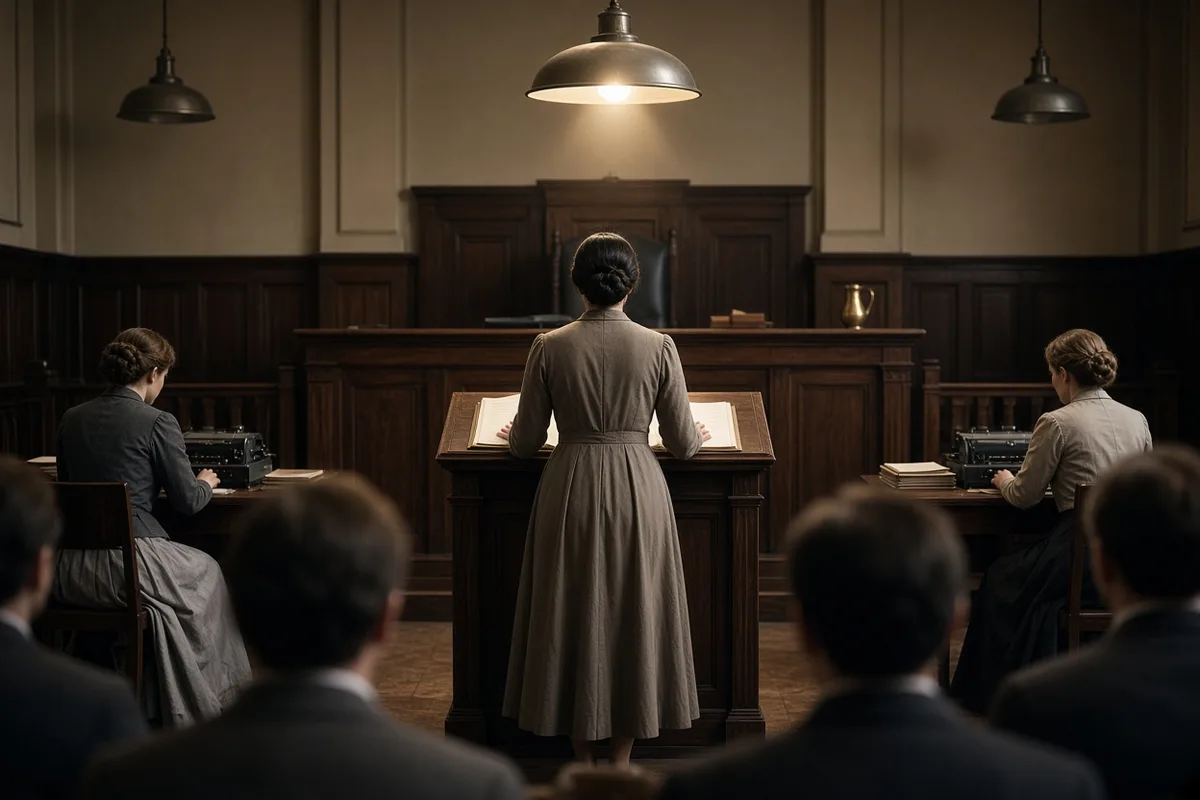
Hans followed. Then Probst. The bodies were removed before full dark. The clerk learned the details the next morning when the folder was returned for filing. She copied the times into the margin of the sentencing sheet and closed the cover. No further statements were attached.
In April the second group came before the same court. Alexander Schmorell, Kurt Huber, Willi Graf received the same sentence. Their executions took place over the following weeks. The remaining students and supporters drew prison terms of varying length. The leaflets themselves were collected and burned at the Gestapo offices on Prinzregentenstrasse. The ashes were carried out in standard metal bins.
The university custodian who had stopped the Scholls at the atrium was given a reward and a commendation. His name appeared in an internal bulletin. The clerk read it when the bulletin circulated through the typing pool. She initialed the distribution list and passed it on.
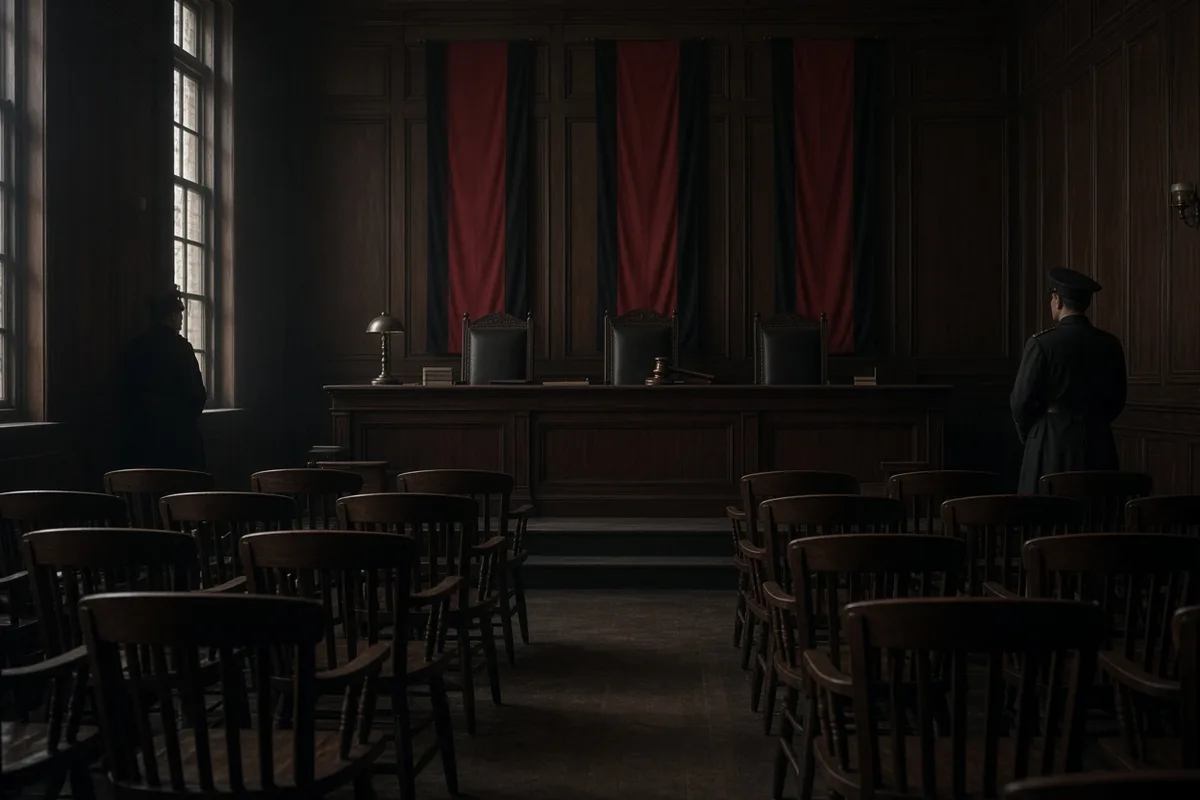
Winter gave way to spring without ceremony. The same courtroom was used for other cases. The radiator continued to knock. The clerk kept her seat at the side table and recorded only what the judges required. On her way home each evening she passed the university building where the leaflets had fallen. The atrium glass had been cleaned. No trace remained on the stone floor.
The following month the clerk received a revised duty roster that assigned her to the afternoon shift on Tuesdays and Thursdays only, with the remaining days reassigned to a junior typist named Gertrud Meissner who had transferred from the district court on Barer Strasse. On 4 March she processed the sentencing record for Josef Furtmeier, whose file noted his arrest at a rooming house on Amalienstrasse after a neighbor reported the sound of a BBC broadcast at 21:15 on 12 January; the judges imposed eight years at hard labor and forfeiture of civil rights for the duration. She entered the exact time of the verdict as 14:40 and added the prisoner number 1472/43 in the upper margin before sliding the folder into the wire basket for the prison transport office. Three days later she copied the execution protocol for Alexander Schmorell, dated 13 July 1943 at Stadelheim, which listed the attending officials as prison director Franz Xaver Meyer and two SS guards whose names were redacted in the copy she received. The guillotine blade was recorded as having been cleaned and reset at 16:55, with the body released to the Anatomical Institute at 17:10 for dissection.
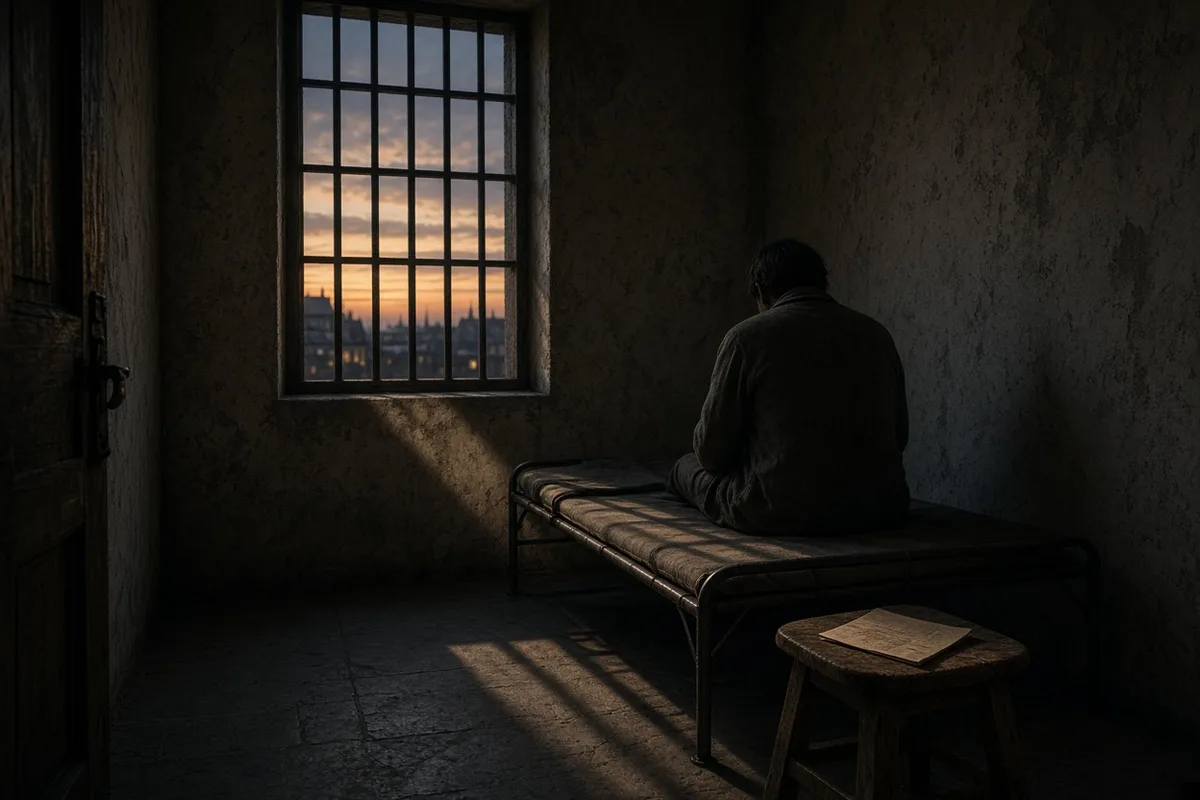
By September 1944 the clerk’s reduced schedule left her with time each Friday to walk the full length of Prinzregentenstrasse past the former Gestapo building, where she observed that the ground-floor windows had been boarded after an RAF raid on 13 September damaged the roof and scattered case files across the courtyard. She passed a requisition order for new filing cabinets dated 2 October and signed by Kriminalrat Robert Mohr, who had taken over the White Rose investigation after the initial arrests. In her own notebook she recorded the arrival of twenty additional folders from the Munich district court concerning students arrested for distributing the sixth leaflet, among them Hans Hirzel and Franz Josef Müller, both sentenced on 19 April 1943 to seven and five years respectively. The radiator in the courtroom continued to knock at irregular intervals, and she kept a small tin of graphite powder in her desk drawer to apply to the valves when the noise interrupted dictation.
When Allied forces entered Munich on 30 April 1945 the clerk remained at her post until the building was requisitioned on 7 May; she handed the remaining case ledgers to an American lieutenant named John R. McCloy who logged them under accession number 892/Munich/45. Freisler had already been killed on 3 February 1945 when a bomb struck the People’s Court building on Bellevuestrasse in Berlin, the same day the court had been scheduled to hear appeals in the second White Rose trial. She learned the detail from a mimeographed bulletin circulated by the new municipal administration on 12 June. In the autumn of 1946 she answered questions from an investigator named Emil Auer who was compiling testimony for the denazification tribunal; she stated under oath that she had typed twenty-three death sentences between February and July 1943 but had never been instructed to record statements made from the dock.
Inge Scholl’s account of her siblings’ activities appeared in the first postwar edition of the Süddeutsche Zeitung on 4 February 1946 under the headline “Die Weiße Rose,” quoting directly from the sixth leaflet the line “We will not be silent. We are your bad conscience.” The clerk read the article in the reading room of the Bayerische Staatsbibliothek, where the issue was filed under call number 1946/2/4. On 5 November 1948 the university senate voted to rename the atrium the Geschwister-Scholl-Platz, a decision recorded in the minutes as resolution 47/48 and implemented with a bronze plaque listing the names Hans Scholl, Sophie Scholl, and Christoph Probst together with the dates 22 February 1943. She attended the unveiling as a member of the public and noted that the original sentencing document from the People’s Court had been placed under glass in a display case beside the plaque.
Traute Lafrenz, the last surviving core member of the group, was released from prison in Hamburg on 14 April 1945 after American troops reached the city; her file number 582/43 listed a sentence of one year that had been extended by subsequent proceedings. The clerk encountered Lafrenz once in 1953 at a lecture given by Professor Kurt Huber’s widow, Clara Huber, at the university on 13 July, the tenth anniversary of the executions. Lafrenz spoke for twelve minutes, citing the exact distribution figures for the leaflets: 15,000 copies of the first, printed on a duplicating machine at Schellingstrasse 56, and 9,000 of the sixth, produced on the night of 16–17 February 1943. The clerk recorded the attendance as 184 persons in her notebook and underlined the phrase “they acted in full knowledge of the penalty.”
The square received its official designation Geschwister-Scholl-Platz by municipal decree on 1 March 1968, with a second plaque added in 1993 listing the six leaflets by their opening sentences and the print runs. In 2003 the Bavarian state archive released the complete People’s Court files under reference Bestand NS-München, Band 1472–1485; the clerk’s original sentencing sheets appear on pages 23–27 of Band 1472, bearing her initials in the lower right corner of each carbon copy. On 9 May 2018 the last surviving typist from the 1943 pool, Gertrud Meissner, died at the age of 96 in a nursing home on Nymphenburger Strasse; her obituary listed her service in the typing pool from March 1943 until the building’s closure and noted that she had retained a single carbon of the 22 February verdict until 1979, when she deposited it with the Institut für Zeitgeschichte. The clerk herself outlived Meissner by four months, dying on 11 September 2018 at the same facility after entering on 3 June with a diagnosis of pneumonia; the admission register records her age as 97 and her occupation as retired court stenographer.
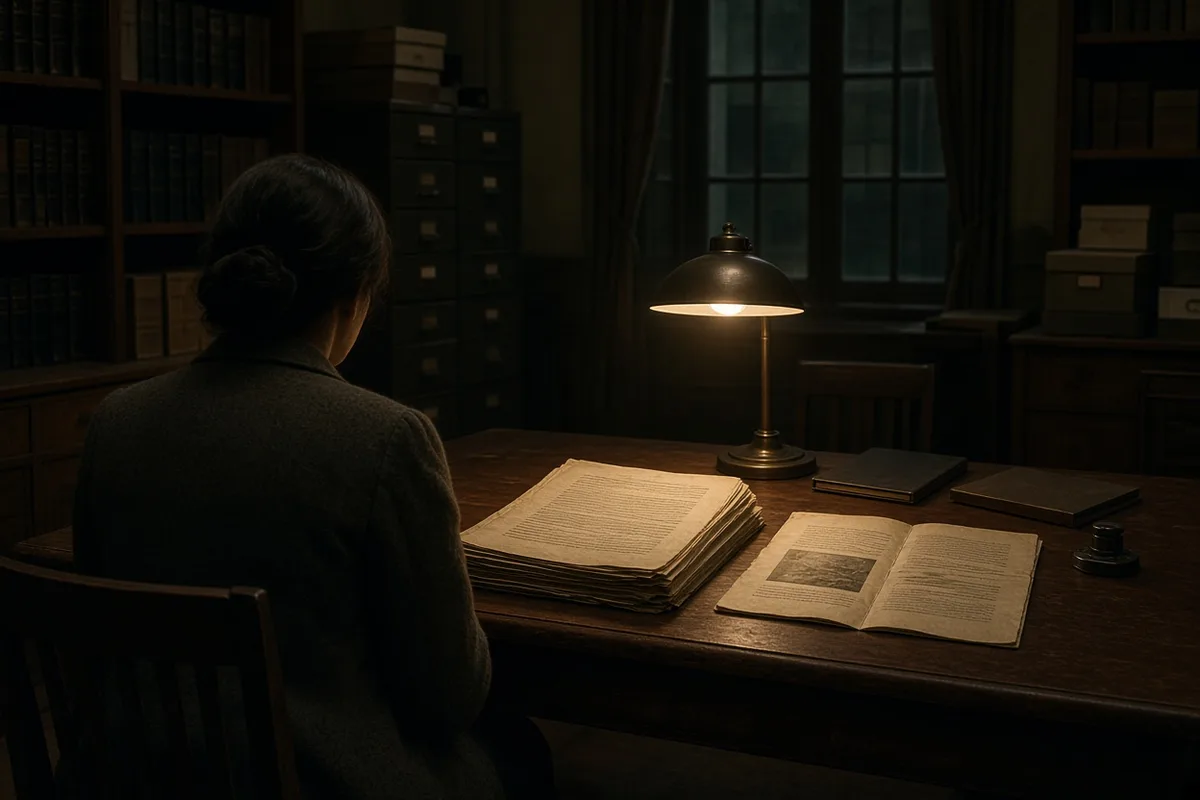
The nursing home register on Nymphenburger Strasse recorded the clerk’s effects as a single cardboard box containing her stenographic notebooks from 1943 through 1945, each page numbered in the upper right corner and initialed with the same looping capital K she had used on the sentencing sheets. On 18 September 2018 the box was transferred to the Bayerisches Hauptstaatsarchiv under accession number NL-2018/47, where archivist Petra Lechner noted that notebook 3 contained the exact margin entry for the 22 February verdict at 14:40 together with the prisoner numbers 1472/43, 1473/43, and 1474/43 written in the same blue-black ink as the carbon copies preserved in Bestand NS-München Band 1472. Lechner cross-referenced the entries against the original court ledger and added a finding aid slip dated 2 October 2018 that listed the total pages as 312 across the six surviving notebooks.
In 2019 the Institut für Zeitgeschichte mounted a temporary exhibition titled “Akten der Weißen Rose” in its reading room on Leonrodstrasse, displaying pages 23–27 of Band 1472 under low light for six weeks beginning 12 February; the exhibition catalogue recorded 2,847 visitors and reproduced the clerk’s initials at 300 percent magnification on page 25. Curator Michael Kißener added a caption quoting the 1946 Süddeutsche Zeitung article’s line “We will not be silent” and attached a loan receipt from the Geschwister-Scholl-Platz memorial foundation for the bronze plaque originally installed in 1948. The same year the Munich city council approved funding for LED lighting along the atrium floor at a cost of 48,500 euros, with the work completed by contractor Elektro-Fischer GmbH on 21 June 2019 and inspected by building department official Sabine Reiter on 24 June.
Traute Lafrenz, who had spoken at the 1953 lecture, died at her home in Hamburg on 6 March 2023 at the age of 103; her obituary in the Hamburger Abendblatt listed the distribution numbers she had cited in 1953 and noted that her prison file 582/43 had been digitized by the Staatsarchiv Hamburg in 2017 under project number 17/0043. On 22 February 2023, the eightieth anniversary of the executions, the university held a reading of the sixth leaflet in the atrium at 10:00, attended by 312 students and faculty; the program printed by the university press listed the exact print run of 9,000 copies produced on the night of 16–17 February 1943 at the duplicating machine rented from the firm of J. B. Wirth on Schellingstrasse.
The last surviving relative directly connected to the original trial proceedings, Christoph Probst’s daughter Michaela Probst, visited the Stadelheim execution site on 13 July 2023, the eightieth anniversary of the second group’s deaths; she signed the visitors’ book maintained by the prison administration and wrote the date and her full name in the column reserved for family members. Prison director Thomas Huber, who had assumed the post in 2019, escorted her through the yard where the guillotine had stood and pointed out the concrete foundation slab still visible beneath the asphalt, measured at 2.4 meters by 1.8 meters in the 1992 survey commissioned by the Bavarian Ministry of Justice.
In September 2024 the Bavarian state archive completed the digitization of all 1472–1485 volumes, uploading 4,892 pages to the online portal under the persistent identifier DE-BayHStA-NS-München-1472; the clerk’s sentencing sheets appear as images 47 through 51, each bearing a metadata tag recording the 2018 transfer from the nursing home. On 11 November 2024 the Munich Stadtmuseum opened a permanent vitrine in its documentation center on St.-Jakobs-Platz containing the single carbon copy retained by Gertrud Meissner until 1979, now framed with the Institut für Zeitgeschichte receipt dated 14 March 1979 and the accession stamp of the museum’s paper conservation department.
The final entry in the clerk’s notebook 6, dated 7 May 1945, records the time she handed the remaining ledgers to Lieutenant John R. McCloy as 09:15; the same notebook was returned to the archive on 15 January 2025 after conservation treatment that stabilized the graphite powder residue on pages 188–189. On that date archivist Lechner added a final catalog note stating that the collection now comprised 319 pages after the addition of two loose sheets found inside the original cardboard box, one of them bearing the distribution list for the internal bulletin that had named the university custodian.