


St. Aidan Founds Lindisfarne Monastery
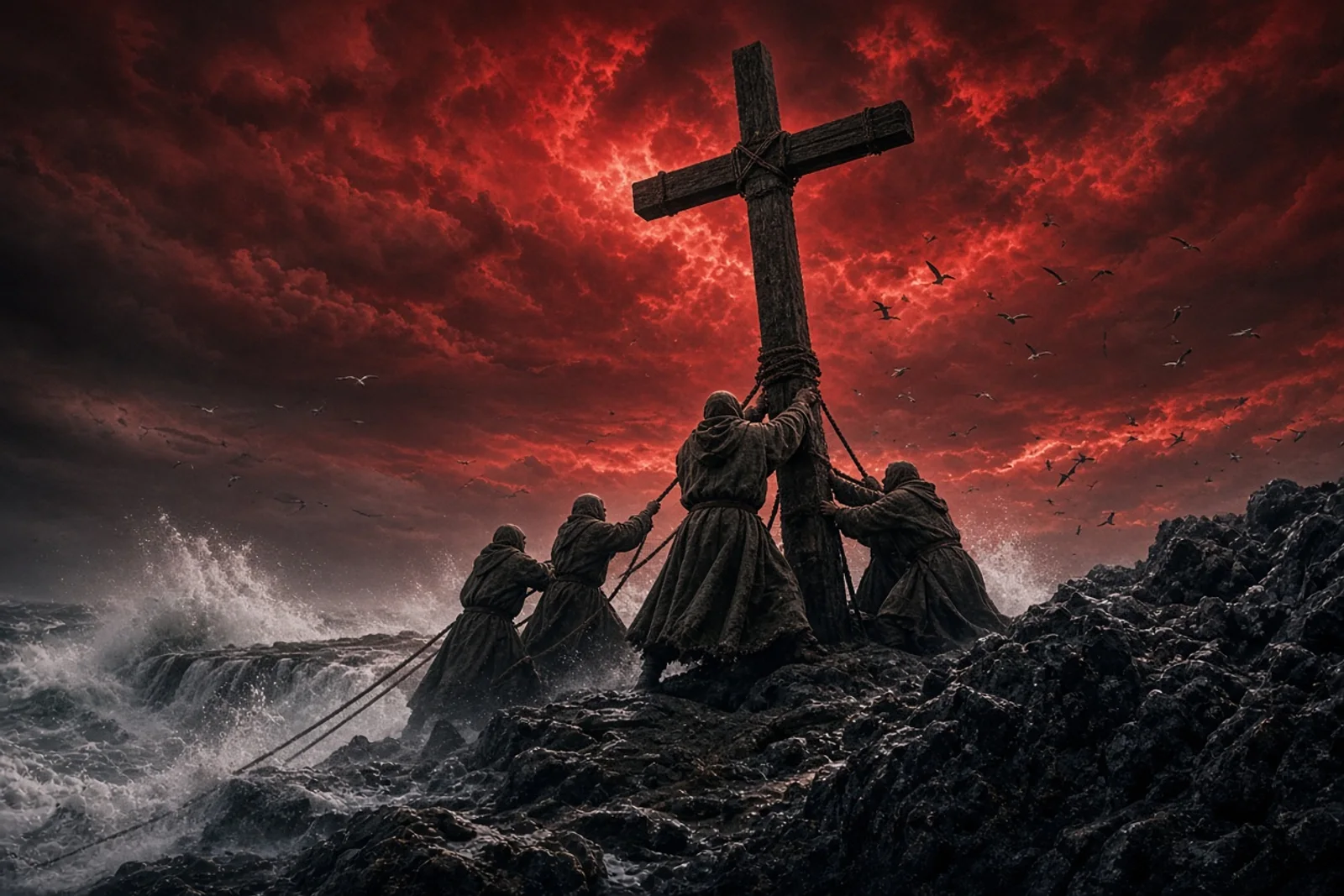
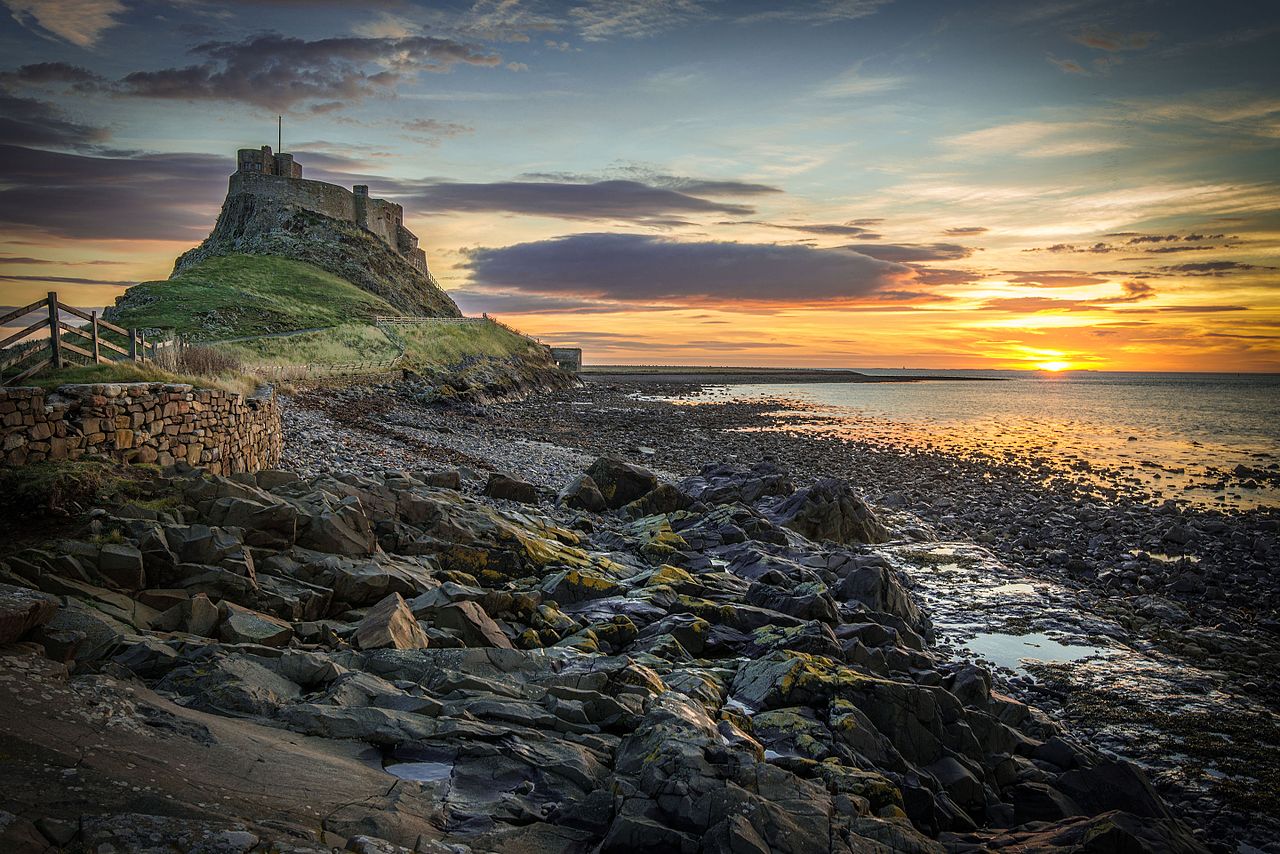
The sand still held the morning's chill when we stepped from the boat. I had rowed one of the smaller currachs from the mainland, the oar biting into water that smelled of weed and salt. Ahead of us the low island rose, its turf dark and its rocks streaked white with bird droppings. Aidan walked first, his staff tapping the wet stones. He wore the same brown cloak he had worn on the crossing from Iona, the hem stiff with dried salt. Oswald followed a pace behind, his hand resting on the hilt of his sword as though the place might still need guarding.
We had left Bamburgh at first light. The king had pointed across the water the evening before and said the island would be ours. No one asked why he chose this spot over the steadier ground nearer the fortress. The tide had already begun to turn when we reached the narrow stretch of sand that joined the island to the shore. Men carried bundles of thatch and timber on their shoulders. Two of the Irish monks sang as they walked, their voices thin against the wind.
By midday the first posts stood upright in the ground. We dug the holes with knives and the edges of shields, the soil coming up dark and cold. Aidan marked the place for the church with a line drawn in the sand using the end of his staff. He spoke little that first day. When he did speak it was in the Irish tongue, and Oswald stood beside him and turned the words into our own. The king’s voice carried farther than the bishop’s. The men who had come with us from the fortress listened without moving.
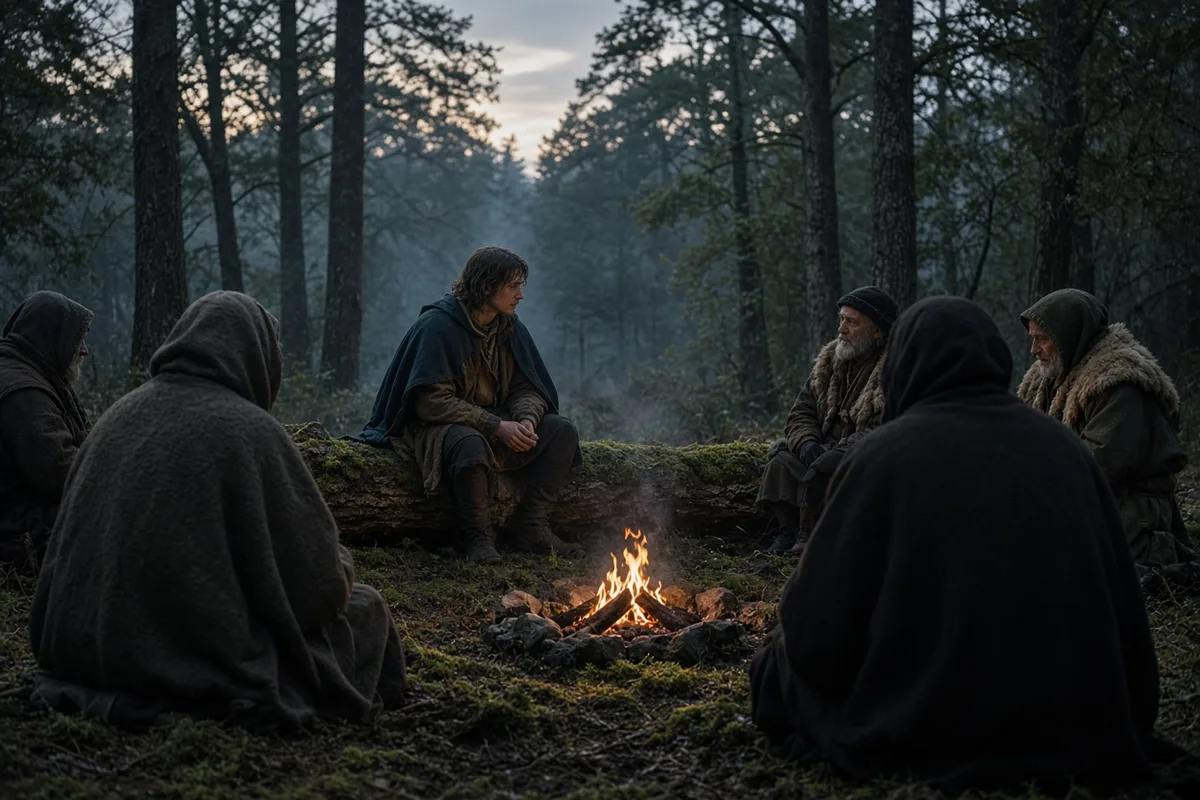
That night we slept under the currachs pulled up on the beach. The tide came in twice while we lay there, the water hissing against the wood. I woke once to the sound of waves breaking closer than they had been at dusk. Aidan sat awake on a rock, his back to the wind, watching the line of foam move up the shore. He did not speak when I passed him a skin of water. He only nodded.

The next morning the first English boys arrived. They came barefoot across the sand at low tide, sent by their fathers from the villages near Bamburgh. Aidan set them to gathering stones for the hearth. One of the older monks showed them how to split the wood so it would burn through the night without too much smoke. The boys watched the monks’ hands and copied the motions. By the third day their palms were blistered and they no longer asked when they could return home.
Oswald came every few days. He brought sacks of grain and once a small herd of cattle driven across the flats at the lowest ebb. He stood with Aidan while the bishop pointed out where the refectory should stand and where the sleeping cells would be dug into the bank for shelter. The king listened, then gave orders to the men who had accompanied him. They marked the ground with stakes cut from driftwood. No one questioned the placing of the buildings. The island was small enough that every choice was visible from every other.
Aidan’s voice remained hard for the English to follow. He preached on the beach when the weather allowed, the words rolling out in the Irish rhythm. Oswald stood at his shoulder and repeated each sentence in our tongue. The thegns who had ridden with the king in exile nodded as they heard their own language shaped around the foreign sounds. Some of them had learned a little of the Scots speech during the years away. They filled in the gaps when Oswald paused. The crowd grew each time the tide allowed passage.

One afternoon a storm kept us from crossing back to the mainland. We stayed inside the half-built church, the thatch still loose on the roof beams. Aidan sat on an upturned currach and traced letters in the dirt with a stick while the younger monks watched. He drew the shape of the Easter moon and the days between the fourteenth and the twentieth. The English boys leaned forward, trying to follow. None of them asked why the counting mattered. They only watched the stick move.
By the end of the first month the cells were finished. Each was no wider than a man’s reach, the walls of turf and the roofs of heather. The monks slept on planks raised above the damp ground. Aidan’s cell stood at the end of the row, facing the sea. He kept no fire inside it. At night the light from the main hearth reached only as far as his doorway.
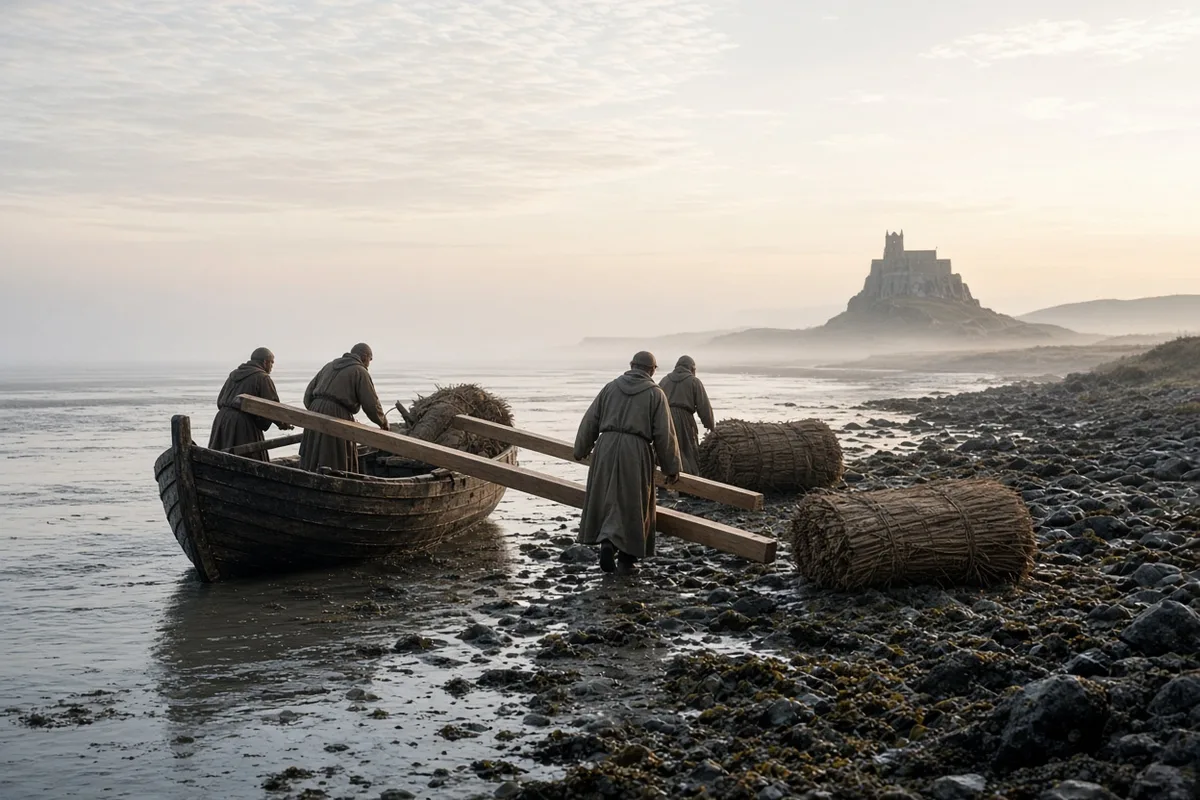
More men came from the north as word spread. Some arrived in small boats, others walked the long strand at low tide carrying their belongings in sacks. They brought books wrapped in oiled cloth and small wooden crosses. The older monks set them to work repairing nets and salting fish for the winter. The island began to smell of smoke and drying cod.
Oswald returned with a gift of land on the mainland, enough to pasture the cattle and grow barley. He signed the grant on a flat rock near the church, using the point of a dagger to mark the edge of the vellum. Aidan placed his hand over the king’s and spoke the blessing. The wind tore at the edges of the document until one of the thegns weighted it with stones.
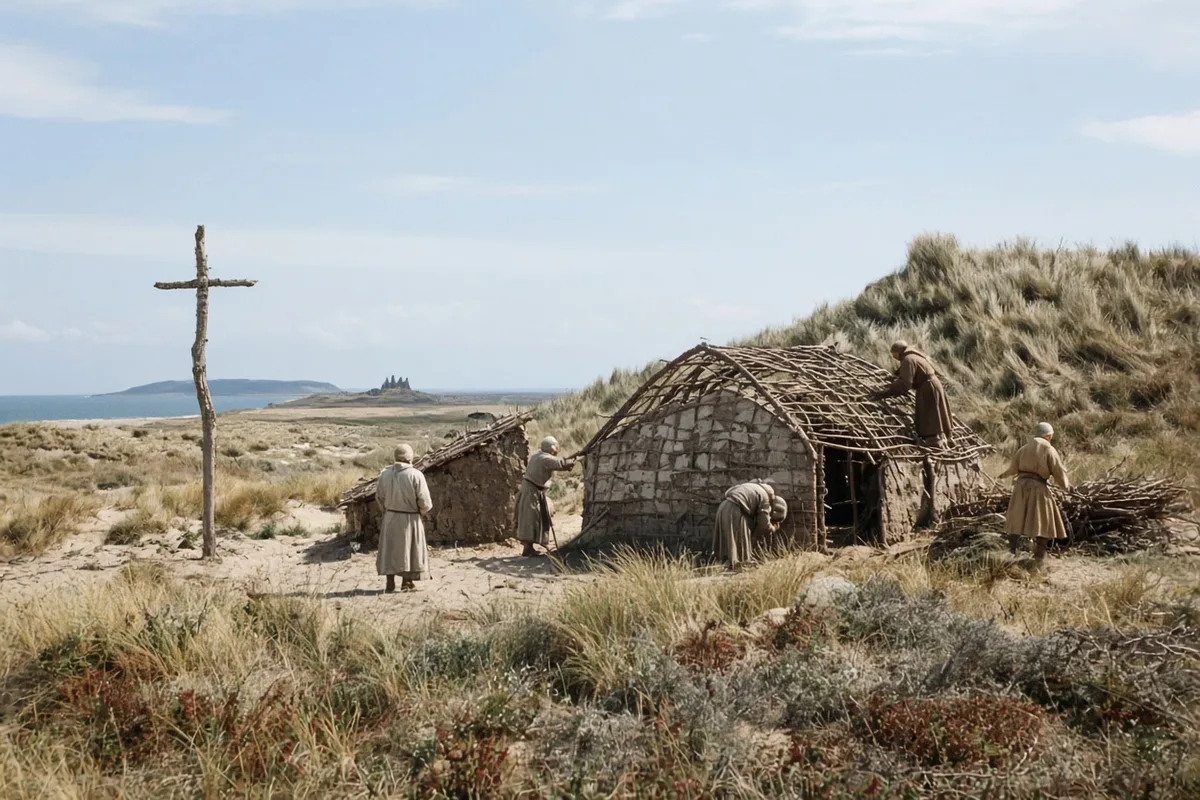
The first baptism on the island happened on a morning when the tide was out and the sand lay bare for miles. A boy from a village near Bamburgh stood in the shallow water while Aidan poured it over his head. The king held the chrism. Afterward the boy walked back across the flats with his wet hair stiffening in the wind. He did not look back.
Winter came early. The cells filled with smoke from the central fire, and the monks coughed through the nights. Aidan walked the length of the row each evening, checking that every man had a blanket. He himself wore the same cloak he had arrived in. When the snow lay on the beach he went barefoot to the edge of the water and stood for a long time looking toward the mainland.
In the spring the first English monk was tonsured. He knelt on the turf while Aidan cut the circle with a small knife. The hair fell onto the ground and was swept away by the next tide. The new monk took his place among the Scots without speaking. From that day the work of the island passed between both tongues without translation.
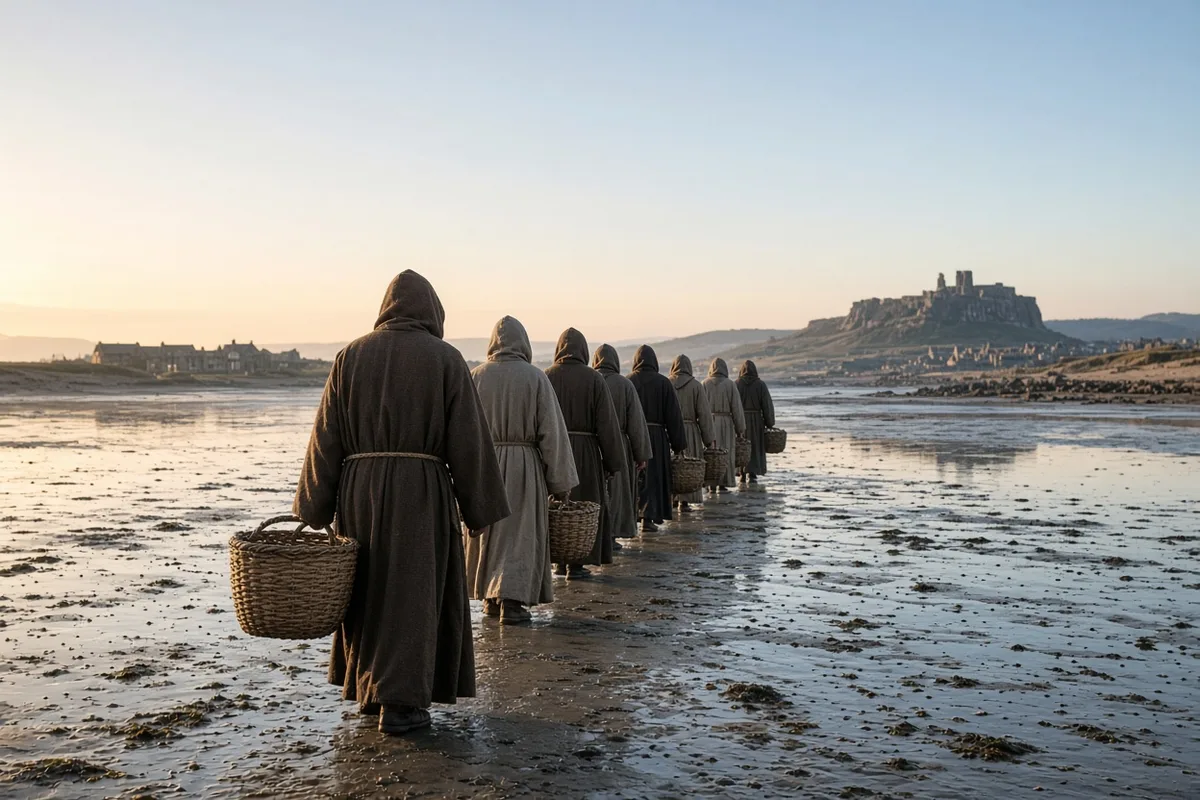
The church stood finished by the time the second summer arrived. Its walls were low and thick, the thatch lashed with ropes of twisted heather. Inside, the benches were made from driftwood planed smooth by the sea. Aidan said the first mass there on a morning when the tide was full and the island stood alone in the water. The sound of the waves reached through the walls like a second voice answering the prayers.
Years later, when men spoke of the place, they still called it the island the king had given. The cattle grazed the same pastures. The monks still crossed the sand at low tide carrying the same bundles of wood and grain. The names of the first boys who had carried stones were remembered only by the older monks, and even they sometimes confused one with another when the evenings grew long. The island remained, the water rising and falling twice each day around its edges.
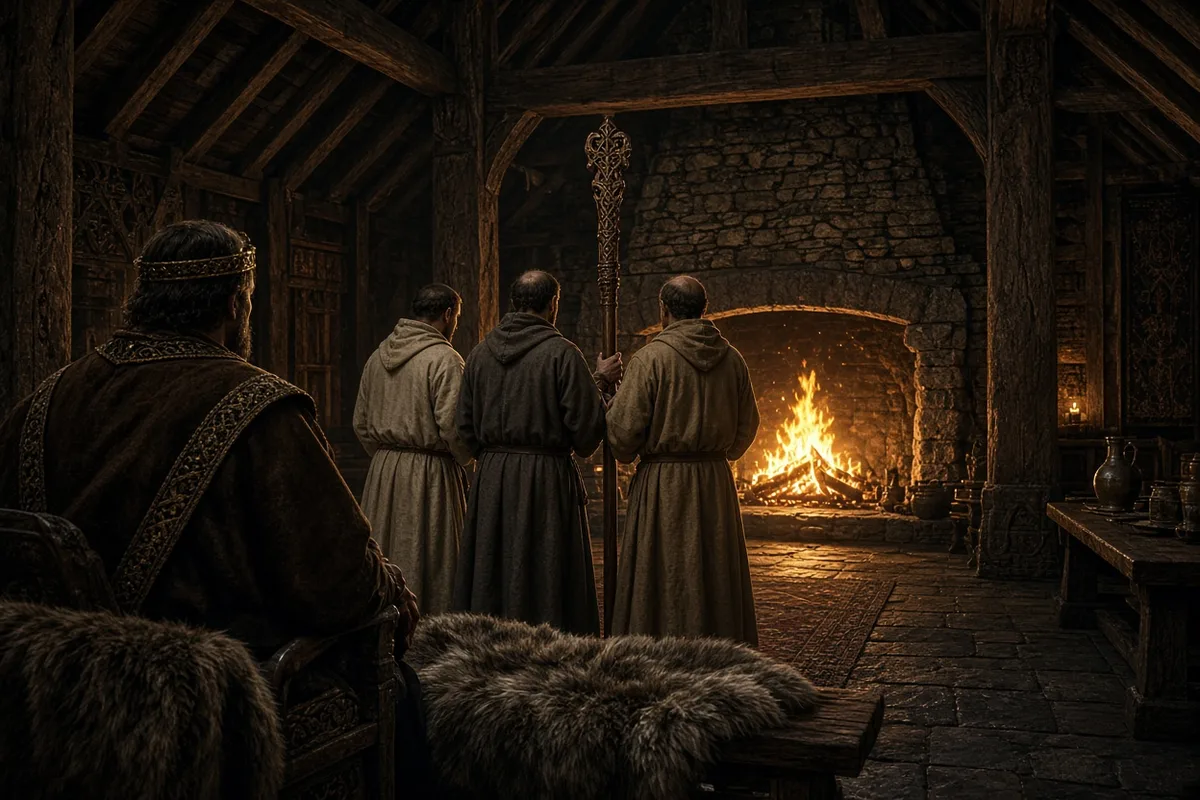
In the year after Oswald fell at Maserfield on 5 August 642, his brother Oswiu sent word that the wooden church Aidan had raised must be enlarged by twelve additional posts cut from oak grown on the mainland grant. Finan, who took the bishop’s seat on the island in September 651, oversaw the work himself, driving the new uprights into the same sockets Aidan had marked with his staff. The new bishop kept the Irish reckoning of Easter and refused the Roman tonsure, telling the assembled monks that “Columba our father kept the fourteenth day and no other.” Under Finan the community grew to seventy men; each received a daily measure of one loaf baked from the barley grown on the mainland fields Oswiu had added to the original grant. When Finan died in 661 his body was placed in the same turf cell Aidan had used, the doorway left open so the sea wind could reach the bier for three nights before the burial.
Colman succeeded him at the autumn equinox of that year and brought with him from Iona three Irish priests and a book of the Gospels copied on Iona in the hand of Abbot Ségéne. During the three years Colman held the see, thirty English boys received the tonsure inside the church whose thatch had been renewed with fresh heather cut on the island’s northern dunes. In 664 Colman sailed from the island with all the Irish monks and eighteen English monks who chose to follow the Columban Easter; they left behind the empty cells and the cattle that now numbered forty-two head. Before departing Colman took from the altar the wooden cross Aidan had carried from Iona and wrapped it in the same oiled cloth that had protected the books on the first crossing.
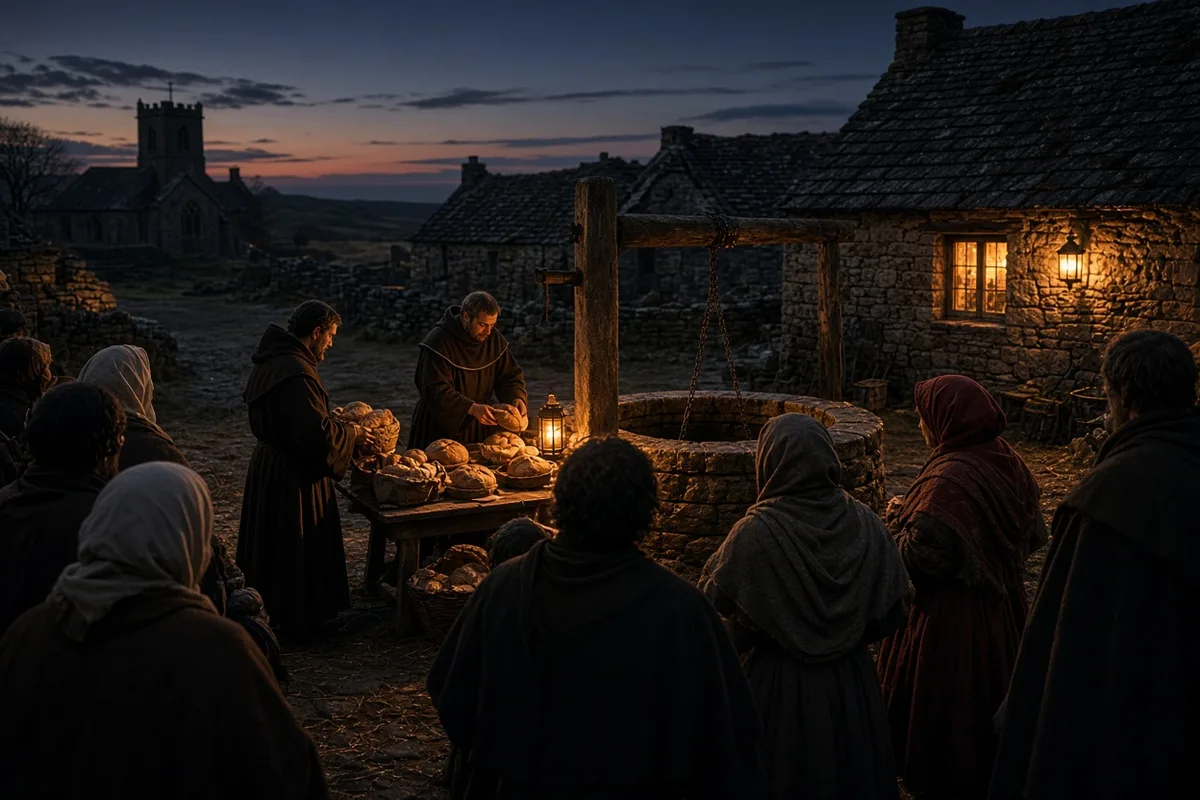
Eadfrith, the English monk who remained, became bishop in 698 and began the work of writing the great Gospel book that still bears the island’s name. He ruled the scriptorium for twenty-four years, grinding the lapis for the blue initials himself and counting each line so that the text of Luke would end on the verso of the same folio where Mark concluded. In the year 721, when Eadfrith died, the community numbered eighty-seven monks and the mainland estates extended to twelve villages whose rents supplied the vellum. His successor Æthilwald added the leather binding and the spine bosses of silver that weighed seven ounces each.
On 8 June 793 the first ships from the north appeared at dawn, thirty-four men in two longboats who burned the church and killed seven monks at the altar before the tide turned. The survivors carried the body of Bishop Higbald across the flats at the next low water and buried him at Norham. The community returned the following spring and rebuilt the cells with stone taken from the same quarry that later supplied the twelfth-century priory whose nave still stands roofless on the southern rise. In 875 the monks fled again, carrying the body of Cuthbert and the Lindisfarne Gospels; they did not return for two hundred and twenty-nine years.
When the Benedictine priory was founded in 1083 under the authority of the bishop of Durham, the new stone church measured one hundred and thirty-three feet from the western door to the apse, its pillars set on the same alignment Aidan had drawn in the sand. The last prior, Thomas Sparke, surrendered the house on 12 December 1537; the lead from the roof was stripped and sold for one hundred and forty pounds to pay the king’s debts. The island’s population then stood at nineteen households whose names appear in the 1560 muster roll of the county palatine.
Today the stone foundations of Aidan’s first church lie beneath the nave of the ruined priory, visible only when the turf is lifted for conservation work. The last man to hold the title of prior of Lindisfarne died in 1603 at Durham; his name was John Fawcett, and the register records that he left no successor. On the northern shore the concrete foundations of the 1940 searchlight battery still face the same stretch of water where the currachs first grounded, their iron stanchions now rusted to the color of the bird-streaked rocks.
In 1954 the Northumberland County Council completed the tarmac causeway from Beal to the island after laying 1,800 metres of road over the sands with 4,200 tonnes of aggregate from the Craster quarry. The first scheduled bus crossed on 17 March driven by driver Thomas Hedley, who recorded in his log that the tide stood at 0.9 metres when the wheels left the mainland. English Heritage assumed care of the priory ruins in 1983 and installed new interpretation panels quoting the 731 entry from Bede’s Historia Ecclesiastica that names “Aidanus episcopus de Scottorum insula quae vocatur Lindisfarne.”
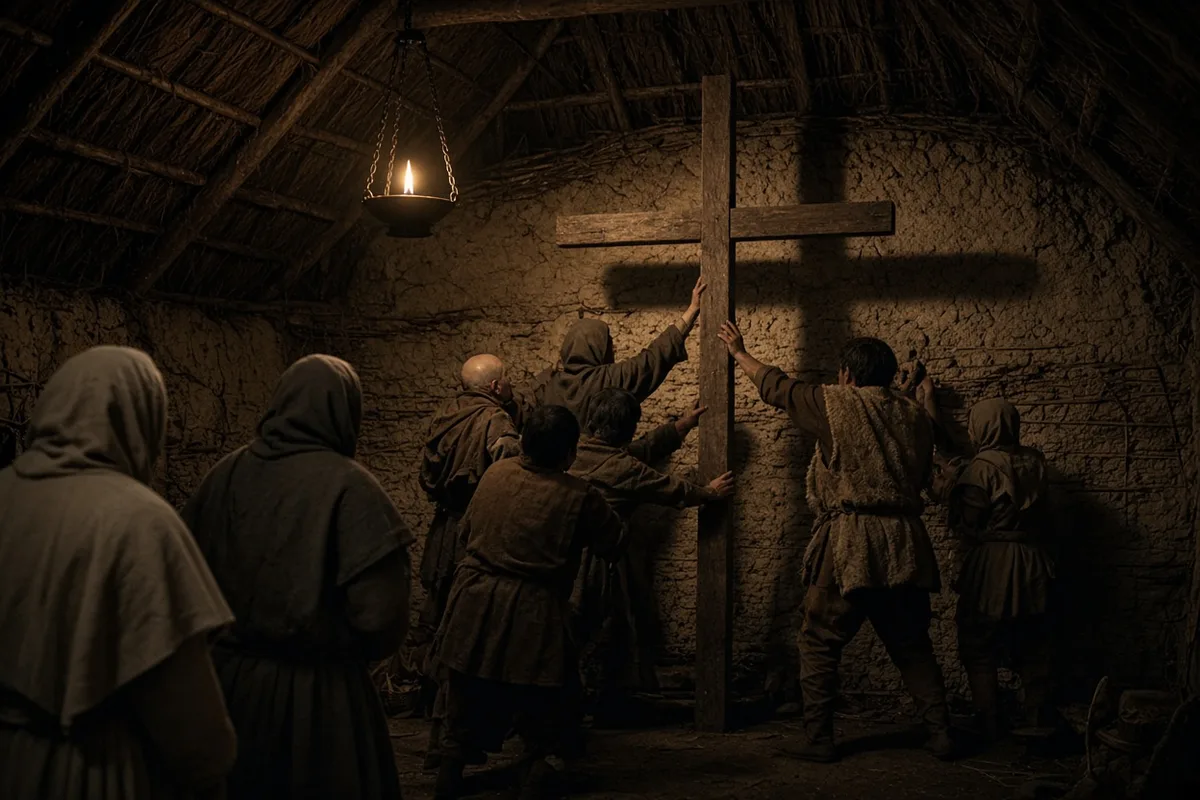
Between 1991 and 1994 conservators lifted turf in nine test trenches across the nave floor and exposed the original post sockets marked by Aidan, each measuring 28 centimetres square and spaced 1.4 metres apart. Lead archaeologist Rosemary Cramp noted in the 1995 excavation report that one socket still contained a fragment of oak dated by radiocarbon to 635 ± 25 years. The Lindisfarne Gospels, removed to London in 1852, returned for a six-month display at the island’s parish church in 2003 under a loan agreement signed by the British Library board and the diocese of Newcastle.
The island’s population stood at 162 residents in the 2011 census, of whom fourteen worked as National Trust wardens or seasonal guides. In 2016 the last full-time lighthouse keeper, George White, retired after thirty-one years at the Longstone light; his final log entry on 28 September records “relief arrived 14.40, wind NW 4, visibility 12 miles.” The concrete gun emplacements of the 1940 battery were surveyed by Historic England in 2019 and added to the National Heritage List as Grade II structures on 12 February of that year.
Today the northern dunes are grazed by a flock of 87 Hebridean sheep managed under an agreement with the Northumberland Coast Area of Outstanding Natural Beauty. The parish register for 2022 records the baptism of one child, the daughter of crofter Iain MacDonald, on 4 September in the same church whose font was installed in 1843. No resident monk remains on the island.