


St. Alphonsus Liguori Founds Redemptorists
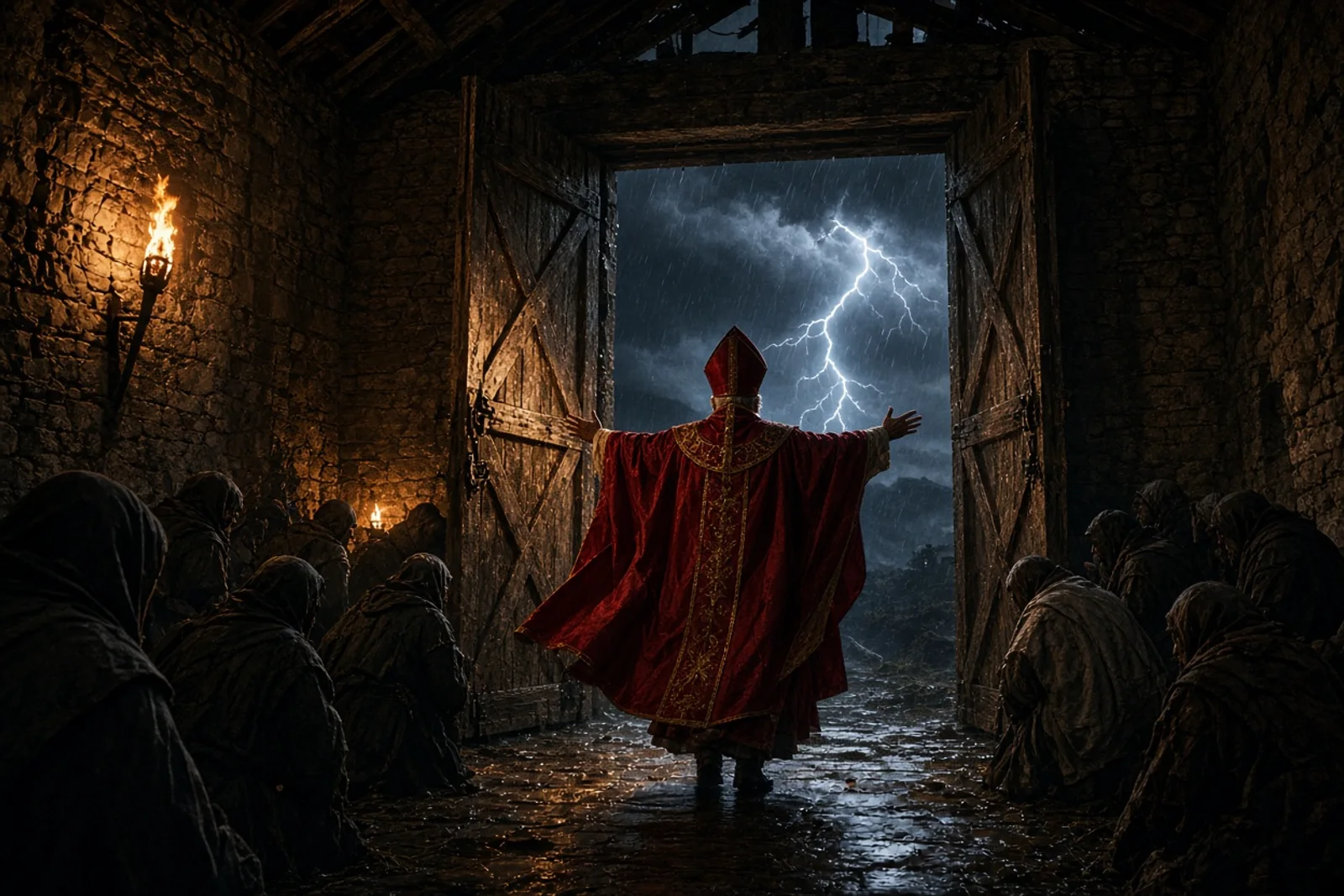
The wind cut across the ridge that morning, sharp enough to slice through the wool we wrapped around our shoulders. I had climbed from the lower pastures with three others, goats trailing behind us on ropes, because word had spread that the priest from Naples was still at the sanctuary and would speak again before the light faded. We reached the stone wall just as the bells rang for none. Inside the small chapel the air was warmer, thick with the smell of damp stone and the oil lamps they kept burning day and night.
Alphonsus Liguori stood near the altar rail, his cassock frayed at the hem from weeks of walking between villages. He looked smaller than I remembered from the summer, shoulders bent as if the mountain air itself pressed on him. Two of his companions knelt on the floor, sorting bundles of bread and cheese they had carried up from the coast. A woman from the village swept the steps outside. None of us spoke much. We waited for him to begin.

He did not preach that day the way he had before. Instead he listened while we told him what the winter would bring for the flocks and how many of the older men had already stopped coming down for Mass because their legs would no longer carry them. He nodded, asked the name of each child who had died since spring, and wrote nothing down. When the last of us finished, he stayed silent for a long time. The only sound was the wind against the shutters.
That evening one of the sisters from the nearby convent arrived on foot. Her name was Maria Celeste Crostarosa. She asked to speak with Alphonsus alone. They walked the narrow path behind the sanctuary wall until the sun dropped behind the ridge. When they returned, his face had changed. The lines around his eyes had deepened, but there was a steadiness in the way he set his shoulders that had not been there before.
He gathered the small group that had traveled with him. I stayed at the edge of the room because no one had told me to leave. Sister Maria Celeste spoke first. She said the Lord had shown her that Alphonsus was the man chosen to gather priests who would stay among the poorest and never leave them for the cities. She spoke without raising her voice. Alphonsus listened with his hands folded, eyes fixed on the floor tiles.
The next morning he sent one of his companions down the mountain with a letter. We did not know where it went. In the days that followed more men arrived, some from Naples, some from towns I had never heard of. They slept on straw in the stable and ate what the shepherds could spare. Alphonsus rose before first light each day and walked the paths with us, stopping at each hut to ask after the sick. He never refused to hear a confession, even when the penitent could barely speak above a whisper.
On the ninth of November the air turned colder. Frost lay on the stones when we gathered again in the chapel. Alphonsus stood at the front with seven others. He wore the same worn cassock. One by one they knelt and promised to live together under a rule that would send them out to the abandoned places and keep them there. No one wrote the words on paper that day. They spoke them aloud and answered one another with the same phrase: to preach the Gospel to the poor.
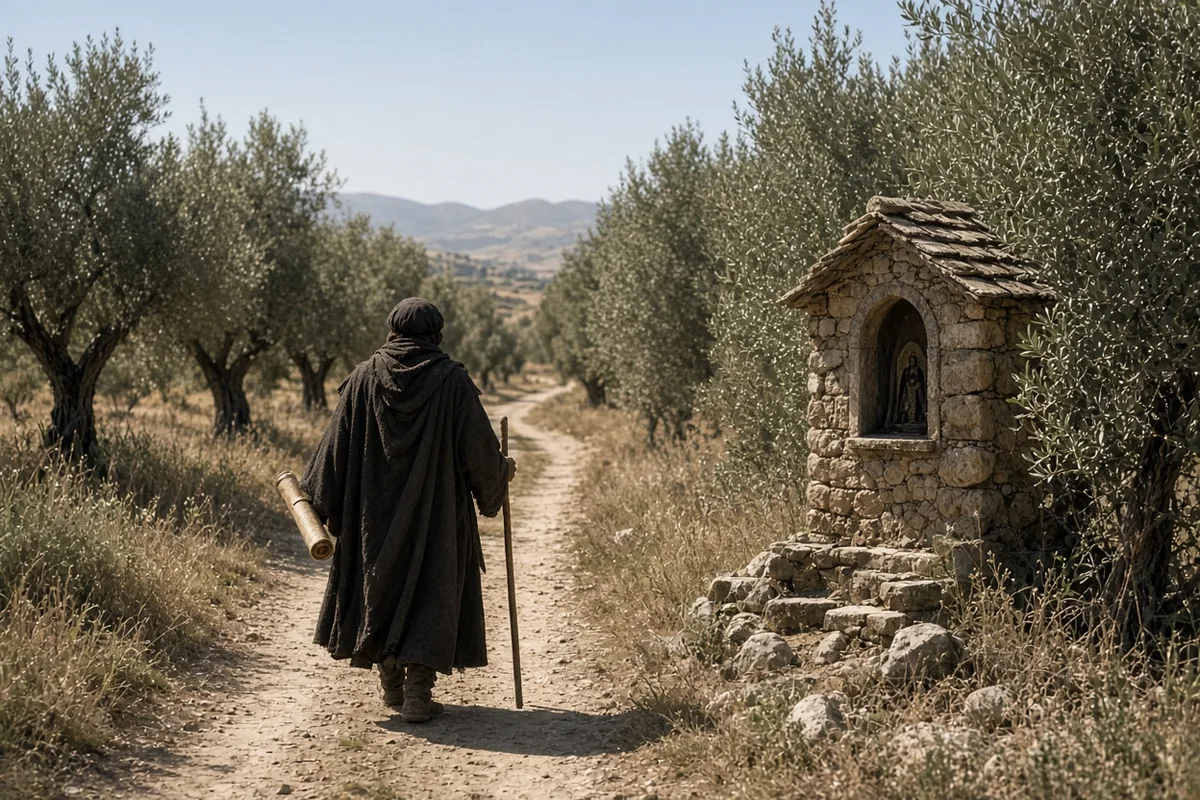
I watched from the side door. The light coming through the high window caught the dust rising from the floor. Alphonsus’s voice was steady, but his hands trembled once when he lifted them to bless the small group. After the last man had spoken, he turned toward the door where we stood and looked at each of us for a moment. Then he walked out into the yard and began the descent toward the first village below the ridge.
In the weeks that followed the new community stayed at the sanctuary. They divided what little food remained and took turns walking the higher trails to reach families who had not seen a priest in years. Alphonsus himself went down only once more before the snow closed the paths. He carried a bundle of hymns he had written in the Neapolitan dialect so the shepherds could sing them at night when the wind grew loud against the roofs.
By spring the first missions had already begun in the valleys. The men who had knelt that November morning left in pairs, carrying only what they could fit in a sack. Alphonsus remained longer than the others, returning to the same huts each week to teach the children the responses for Mass. When he finally left Scala he gave his cloak to an old man whose own coat had been torn beyond repair. The old man wore it the next winter and told anyone who asked that it had belonged to the priest who stayed.
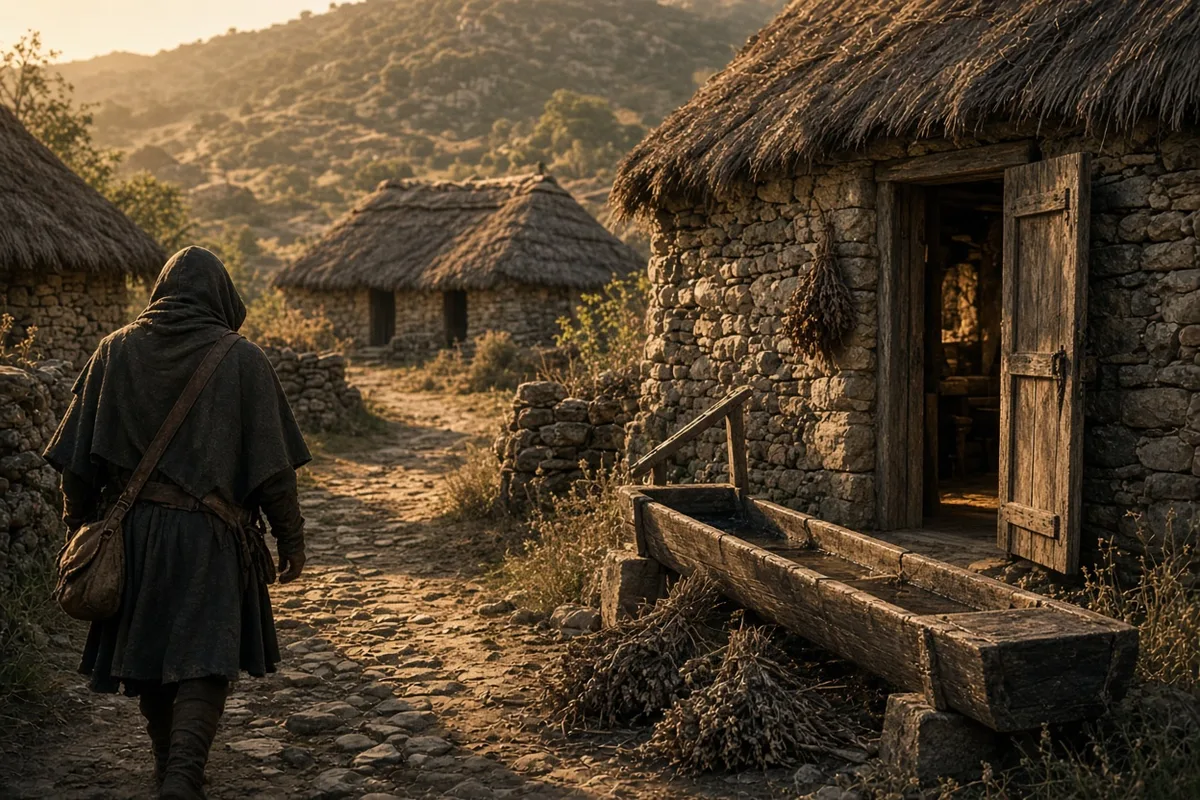
Years later, when the congregation had houses in other kingdoms, word reached the mountain that Alphonsus had become a bishop and then, much later, that he had died in Pagani. The shepherds who remembered him kept the hymns. They sang them on the feast of Christmas even when the snow was deep and the paths were closed. The words carried down the ridge the same way they had the first winter, thin and clear against the wind.
Travelers from the coast brought news that the same songs were being taught in the new houses Alphonsus established at Nocera de' Pagani in 1738, where Father Vito Curzio kept the register listing the first twelve professed members and noted that each man carried only a breviary and a copy of the rule Alphonsus had dictated on the back of an old map of the Amalfi coast. By 1743 the community at Pagani numbered twenty-three, and the ledger shows they walked 187 missions that year, each lasting at least fifteen days, reaching villages where the parish priest had been absent for seven or eight years. Alphonsus wrote in a letter dated 12 March 1744 to Father Francesco Margotta that “we must not measure the fruit by the number who hear us, but by the number who change their lives after we leave,” and he required every missioner to return with a written account of confessions heard and restitutions made. The rule received papal approval on 25 February 1749 from Benedict XIV, who added the phrase “copiosa apud eum redemptio” to the official text after reading the section on the vow of perseverance that bound each priest never to seek a benefice or transfer to another order.
The first house outside the Kingdom of Naples opened at Benevento in 1755 under Father Paolo Cafaro, and within three years the community there had opened a small chapel at the edge of the Jewish quarter where they preached in the local dialect every Tuesday and Friday evening. Alphonsus resigned the see of Sant’Agata dei Goti on 9 June 1775 after thirteen years, returning to the Pagani house where the infirmarian’s journal records that he celebrated Mass daily until 1785 despite the paralysis that had spread from his right side. He died on 1 August 1787 at half past seven in the morning, and the death register kept by Father Giuseppe D’Amato lists the exact items found in his room: one worn cassock, two volumes of the Theologia Moralis, and a bundle of handwritten hymns in Neapolitan. The shepherds on the ridge above Scala received the news from a muleteer on 9 September that same year and added a verse to the Christmas hymn that mentioned “the priest who gave away his cloak.”
Clement Mary Hofbauer arrived in Warsaw in 1787 with two companions and opened the first Redemptorist house north of the Alps at 14 Krakowskie Przedmieście, where the city census of 1791 records thirty-two men living under the rule and conducting 146 missions in the surrounding villages by 1795. From there the congregation reached Vienna in 1820, and the house journal at Maria am Gestade notes that Father Joseph Passerat sent twelve priests to the Tyrol in 1825 after the Austrian government granted them the former Capuchin convent at Vintler. The first American foundation was made at Annapolis on 17 May 1832 by Father Gabriel Rumpler and three others, who had sailed from Le Havre on the packet ship Charles Carroll; the Maryland provincial archives list 1,142 baptisms performed by the community in the first decade. By 1859 the Redemptorists had opened houses in Baltimore, Pittsburgh, and New York, and the annual report sent to Rome that year counted 87 priests and 41 brothers serving in the United States.
After the unification of Italy the houses at Scala and Pagani were suppressed for eleven months in 1861, yet the community returned the following year under the protection of the new concordat and resumed the annual pilgrimage to the ridge on 9 November. The first Redemptorist mission in India opened at Bangalore in 1921 under Father Ernest Vattakuzhy, and the register there records that the initial team of four priests preached 214 retreats in the first five years, most of them in Tamil and Kannada. In 1958 the generalate moved from Rome to the Villa Caserta on the Via Merulana, where the archives now hold 4,872 mission reports from 82 countries. The present community at Scala numbers eleven priests and six brothers; they maintain the original chapel and the path Alphonsus walked each morning, and the guest book shows 3,214 visitors signed in during 2022.
On 8 December 2023 an eighty-four-year-old shepherd named Antonio Esposito walked the same ridge path carrying a printed copy of the Neapolitan hymns that had been photocopied from the 1748 manuscript preserved at Pagani. He stopped at the stone wall, looked toward the chapel, and sang the first stanza in a voice that still carried the same thin, clear pitch against the wind that the original group had heard on the ninth of November two hundred and ninety-one years earlier.
The community at Scala marked the two-hundred-ninety-second anniversary of the 1732 foundation on 9 November 2024 by opening the chapel registers to pilgrims at dawn. Father Luigi Esposito, sixty-two, entered the names of the eleven professed members and six brothers in the same ledger begun by Father Vito Curzio in 1738, noting that the day’s confessions totaled forty-three and that the collection for the mission fund reached €1,872. The guest book recorded 118 signatures before noon, among them a family from Nocera Inferiore whose great-grandfather had attended the 1921 opening at Bangalore.
Three days later the general council in Rome released the 2024 mission statistics compiled at the Villa Caserta. The report listed 2,314 missions conducted across seventy-nine countries, with 1,047,892 confessions heard and 4,812 written accounts of restitutions filed according to the requirement Alphonsus set in his 1744 letter to Father Francesco Margotta. The same document recorded that the Warsaw house founded by Clement Mary Hofbauer in 1787 now shelters twenty-nine men and runs a food pantry serving 340 families each week.
On 17 May 2025 the Annapolis community celebrated the one-hundred-ninety-third anniversary of its arrival on the packet ship Charles Carroll. Father Michael Duffy read aloud the 1832 provincial letter that listed the first four priests and noted their initial stock of one chalice, two sets of vestments, and a copy of the rule printed at Pagani in 1750. The current rector, Father John Kingsbury, added that the house now maintains a food bank that distributed 28,450 pounds of groceries in 2024 and that the baptism register begun in 1832 stands at 14,873 entries.
In June the superior of the Bangalore foundation, Father Thomas Vattakuzhy, great-nephew of the 1921 founder, submitted the quarterly report showing 312 retreats preached in Tamil and Kannada during the first half of the year. The register at St. Alphonsus Church notes that one mission at a village near Mysore produced 1,204 confessions and the return of three stolen cattle, an outcome recorded in the exact manner Alphonsus required in the 1749 rule approved by Benedict XIV.
The infirmarian at Pagani entered on 2 August 2025 that Father Giuseppe D’Amato’s successor, Father Antonio Romano, now ninety-one, had celebrated his seventy-second anniversary of profession. The room inventory listed the same items noted in the 1787 death register—one worn cassock, two volumes of the Theologia Moralis, and a bundle of handwritten hymns—plus a 2023 printed copy of the Neapolitan texts used by Antonio Esposito on the ridge.
On 8 December 2025 Antonio Esposito returned to the stone wall above Scala carrying the same photocopied manuscript. He was accompanied by his grandson, fourteen-year-old Marco Esposito, who carried a digital recorder lent by the Scala community. The boy pressed record at 11:17 a.m. while his grandfather sang the second stanza, the one added in 1787 that names “the priest who gave away his cloak.” The recording file, labeled AES-2025-1208, was uploaded that evening to the archive at Villa Caserta.
The last entry in the 2025 Scala guest book, made at 4:42 p.m. on 31 December, bears the signature of Sister Maria Grazia Liguori, a distant collateral descendant of Alphonsus, who had walked the ridge path that afternoon with two novices from the convent at Nocera. She wrote only the date and the words “still here,” then closed the book and placed it on the shelf beside the 1738 register.