


St. Ansgar Begins Scandinavian Missions
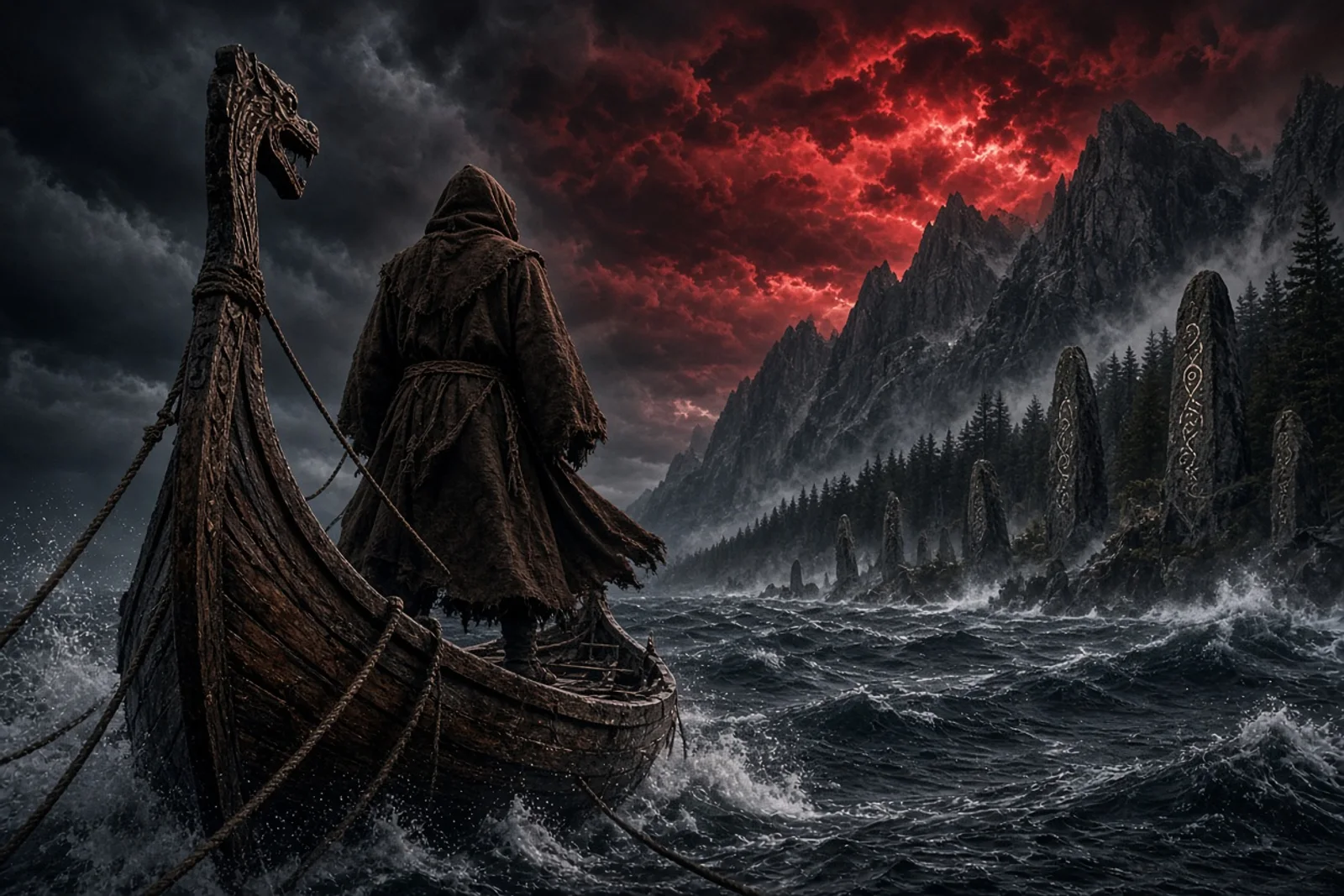
The oars bit into the gray water and the hull lifted, then settled again with a long groan. Salt stung my eyes as I gripped the rail. Ansgar stood at the prow, cloak drawn tight against the wind, watching the Danish coast rise out of the mist. He had said little since we left the Frankish shore two days earlier, only that the king there had asked for a teacher and that we would answer. I carried the small chest that held the books and the letters from the emperor. The other monks huddled farther back, their faces pale.
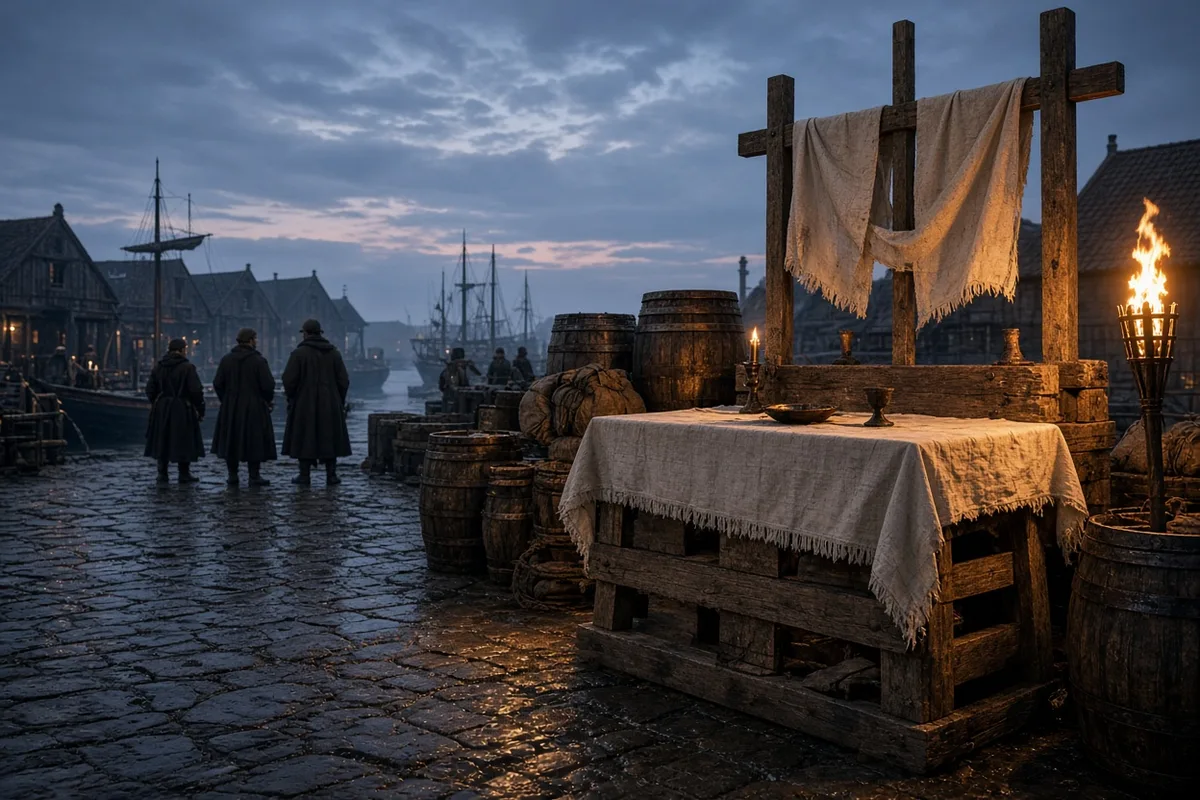
We made land at Hedeby on the third morning. The settlement sat between two arms of water, its longhouses roofed with turf and its market stalls already busy with traders from farther east. Men in fur caps and wool tunics stopped to stare as we stepped onto the planks. Ansgar walked straight to the hall where King Horik’s men waited. He spoke through an interpreter who knew both tongues, explaining that he had come to tell of the one God and to live among them if they would allow it. The king’s men listened without answer. They gave us a small timber building at the edge of the settlement and told us to wait.

Each day Ansgar went into the market square. He stood on an upturned crate and spoke while the interpreter repeated his words. Most people kept moving, but a few stopped. An old woman brought bread one morning. A boy with a scarred arm came every afternoon and listened without speaking. I stayed near the edge of the crowd, watching faces for any sign of trouble. One afternoon a man spat at Ansgar’s feet and walked away. Ansgar only nodded and continued.
Winter came early that year. Ice formed along the shore and the wind carried bits of frozen spray into the houses. We had little food beyond what the king’s men allowed. Ansgar fasted on most days and gave his portion to anyone who asked. He grew thinner, but his voice stayed steady when he spoke in the square. The boy with the scarred arm began to sit closer. One evening he brought his father, a trader who had lost a ship the year before. The father asked whether the new God could keep a vessel afloat. Ansgar answered that the God he served cared more for the soul than for cargo. The trader returned the next day and the day after.
Spring brought new ships and new rumors. Some said the Swedish king wanted a teacher as well. Ansgar listened to every report without hurry. He wrote a letter to the emperor asking whether we should cross the sea again. The answer came in late summer: go if the way opens. We packed the chest once more and found passage on a merchant vessel bound for Birka.

The crossing took four days. The sea stayed flat, but the crew muttered about spirits in the water. Ansgar slept little and prayed aloud at dawn and dusk. When we reached Birka the town lay on an island ringed by low hills. Its harbor held more ships than Hedeby. The Swedish king’s hall stood on the highest ground. Ansgar presented the same request he had made in Denmark. The king granted permission to preach but warned that the people here followed their own gods and would not easily change.
Ansgar chose a spot near the harbor where traders gathered. He spoke each morning as the boats unloaded. The interpreter struggled with some words, especially those for sin and forgiveness. Still, listeners came. A merchant from the east asked whether this God had power over the sun and the seasons. Ansgar said the God who made all things ruled them still. The merchant brought his wife the next day. She listened and then asked for a blessing for her child who had been born weak. Ansgar placed his hand on the infant’s head and prayed. The mother returned every morning after that.

Not every day was quiet. One afternoon a group of men from the northern forests arrived. They listened for a while, then began to shout that the old gods would be angry. Stones were thrown. One struck the interpreter on the shoulder. Ansgar stepped in front of him and kept speaking until the men left. That night we moved our belongings farther from the harbor. Ansgar told us to keep the doors barred after dark.
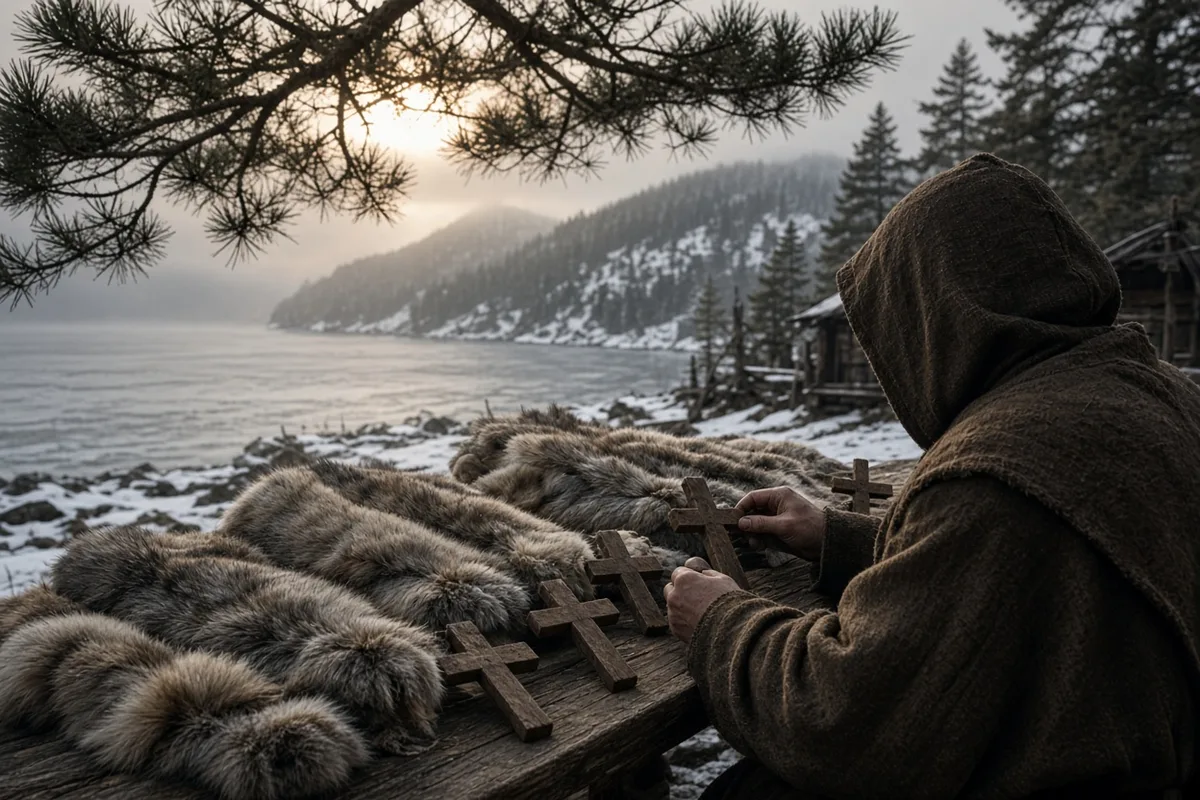
The following spring a small group asked to be taught more. Ansgar met them at sunrise in a clearing outside the town. He explained the prayers and the meaning of the cross. Several asked to be marked with water in the new way. Ansgar performed the rite carefully, his hands steady even though his voice shook once when he spoke the name of the Trinity. I stood beside him and held the bowl. When it was done the new believers returned to their work without ceremony.
We stayed in Birka through another winter. Ansgar grew weaker from the cold and the sparse food. He still rose each day and walked to the harbor. The boy from Denmark had come with us and now helped carry the books. One morning the Swedish king sent word that a larger assembly wished to hear the teaching. Ansgar went alone. He returned at dusk, his face drawn but calm. The king had allowed the preaching to continue.
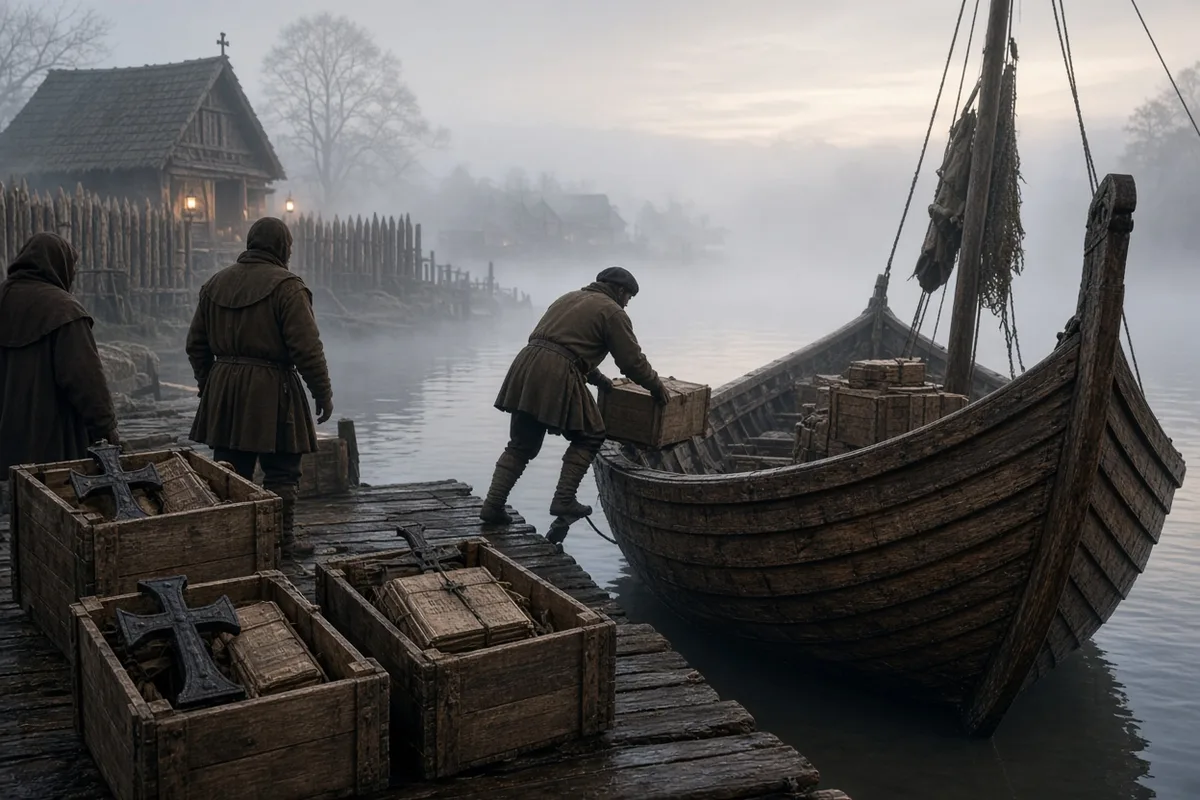
In the third year a ship arrived from the Frankish lands carrying letters. One bore the seal of Pope Gregory. It named Ansgar archbishop and legate to the northern peoples. Ansgar read the letter twice, then folded it and placed it inside the chest with the other books. He told us we would return south before the next winter. The work here would need others to carry it forward.
We left Birka on a clear morning in early autumn. The harbor was busy with departing ships. Ansgar stood at the stern until the island dropped below the horizon. He did not speak. I watched the water and thought of the boy with the scarred arm who had stayed behind, and of the merchant’s wife who still brought her child to the clearing each week. The chest rested between my feet. Inside it the letters and the books shifted with the motion of the waves.
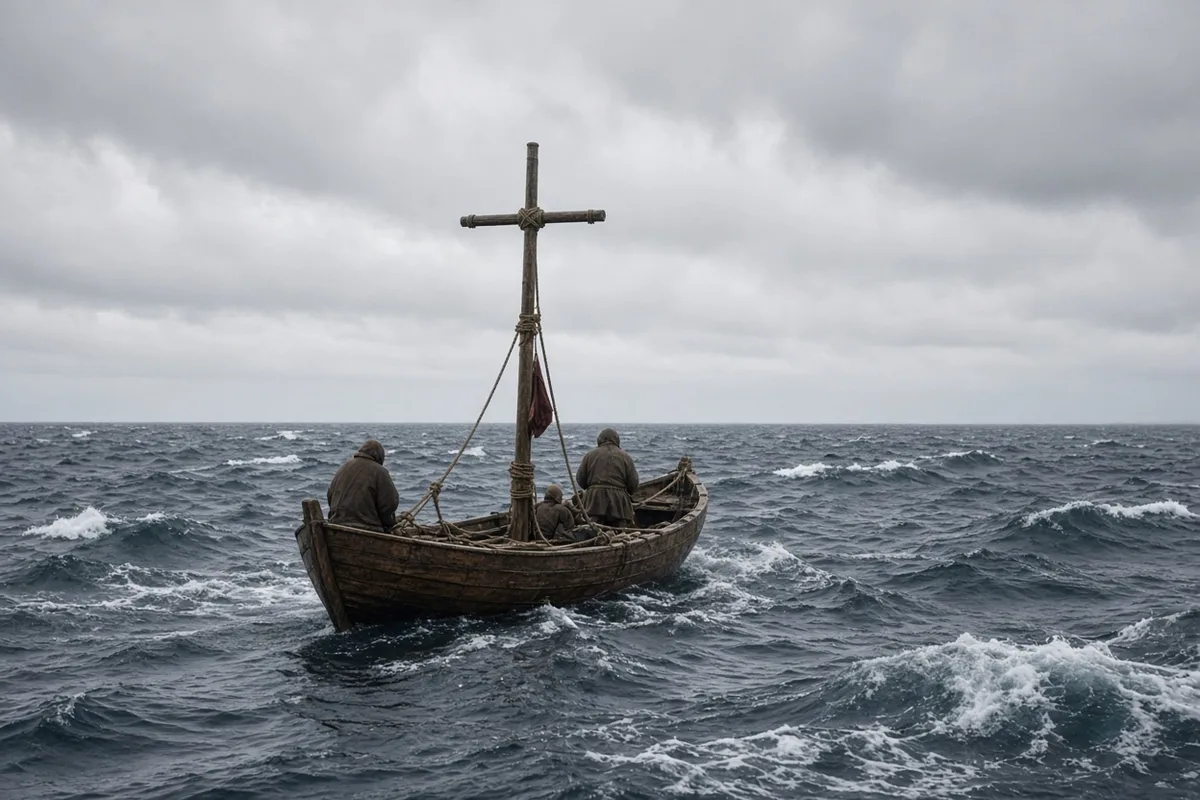
The return voyage ended at the mouth of the Elbe on the twenty-third day of September in the year 831. Ansgar presented the letters from Birka to the emperor at Ingelheim, where Louis the Pious confirmed the earlier grant of the see at Hamburg and added the monastery at Welanao as a base for further journeys north. Rimbert later recorded that Ansgar received the pallium from Pope Gregory IV with the words “Legate to the northern peoples,” and that he immediately ordered the construction of a timber church measuring thirty feet in length with an attached scriptorium stocked with twenty volumes brought from Tours. I remained at his side as subdeacon and copied the daily registers of gifts received from traders who stopped at the new port: three otter pelts from a man of Hedeby on the twelfth of October, a silver arm ring weighing four ounces from a Swede on the feast of All Saints.
In the spring of 832 Ansgar crossed again to Denmark at the request of King Horik, who had written that his own son wished instruction. We landed at the same timber hall outside Hedeby where the boy with the scarred arm now served as gatekeeper. Horik granted a plot of land measured at twelve hides for a chapel dedicated to the Holy Trinity, and Ansgar placed the first foundation stone on the morning of the third of May while the interpreter read aloud the emperor’s letter promising protection for any Dane who accepted baptism. That summer thirty-seven adults and fourteen children received the water, their names entered in the register as Guthfrith son of Eirik, Thyra wife of Halfdan, and others whose payments of one cow or two sheep each were noted beside the entries.
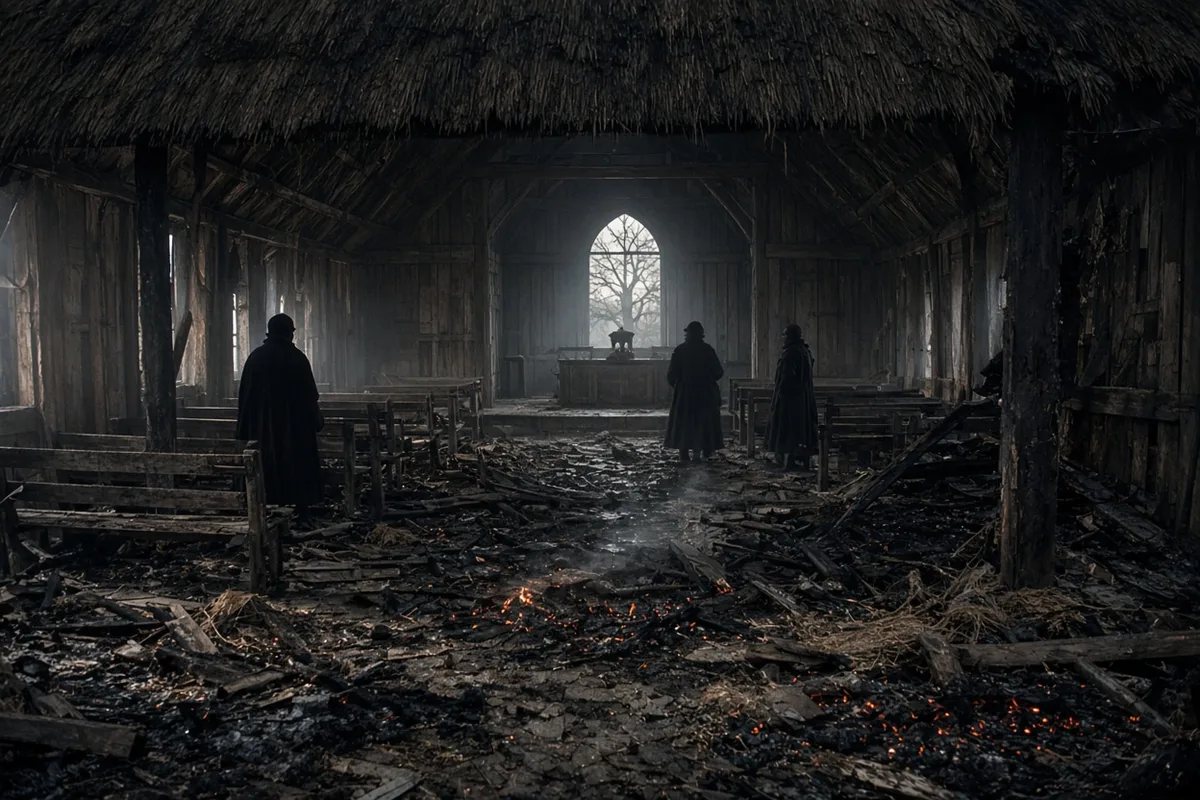
The peace lasted until the twenty-eighth of May 845, when a fleet of six hundred ships under the sons of Ragnar burned Hamburg to the ground. Ansgar stood on the remaining stretch of the harbor wall and repeated the words recorded by Rimbert: “The Lord gave and the Lord has taken away; blessed be the name of the Lord.” The raiders carried off the books and the altar vessels, yet Horik’s messengers arrived within the month offering safe passage for Ansgar to rebuild at Bremen instead. The emperor’s son Louis the German transferred the archbishopric there by charter dated the tenth of June 848, adding twelve villages along the Weser whose rents were to support two priests for the northern work.
Ansgar made one final crossing to Birka in 852 aboard a vessel captained by a Frisian named Folker. The Swedish king now was Olof, who allowed the same clearing outside the town to be used again. Ansgar spoke each morning for twenty-three days, and on the feast of John the Baptist twelve more men asked for the sign of the cross. Among them stood the merchant from the east whose child Ansgar had blessed eleven years earlier; the child, now grown, carried a staff carved with the runes for “Ansgar’s God” and placed it at the edge of the assembly before returning to his boat.
Back at Bremen Ansgar spent his remaining years dictating letters to the Frankish bishops asking for more priests. One surviving fragment dated the fourth of March 860 states that he had sent four monks to the Danes and two to the Swedes, and that he himself continued to fast on Wednesdays and Fridays while distributing the daily bread ration of one loaf to any visitor who stayed until vespers. His health failed during the winter of 864. On the second of February 865 he dictated his last testament, leaving the Bremen church his personal copy of the Gospels and directing that his body be buried outside the south door so that traders arriving from the sea would pass over his grave.
After his death the see passed to his disciple Rimbert, who continued the annual voyages until 888. The church at Bremen recorded thirty-eight baptisms in the year 870 alone, most of them traders from Hedeby whose names appear in the margin of the baptismal roll. The chapel at Welanao was enlarged in 912 to accommodate the growing number of pilgrims who came to venerate the staff Ansgar had carried to Birka, a length of ash wood bound with copper bands still preserved in the treasury there.
Today the site of the original Hamburg church lies beneath the modern cathedral crypt, where a single stone bearing the carved date 832 marks the place Ansgar first set the altar. In Bremen the south door of the cathedral still opens onto a paved square where a bronze statue of a man in a short cloak stands with one hand raised; the inscription on its base reads only “Ansgar 801–865.” The last person known to have claimed direct descent from the boy with the scarred arm was a merchant of Schleswig who in 1372 donated a silver chalice weighing nine marks to the church at Hedeby, stipulating that it be used on the feast day of the apostle of the north.
In 948 the archbishopric records list twelve further missions dispatched from Bremen under Unni’s successor, each equipped with copies of the Gospels bound in calfskin and accompanied by interpreters fluent in Old Norse. Excavations conducted at Hedeby in 1973 uncovered a timber foundation measuring fourteen by nine meters whose post holes align with the twelve-hide grant of 832, together with a runic fragment reading “Ansgar’s cross” dated by dendrochronology to 847.
The Bremen cathedral treasury still holds the copper-bound ash staff carried to Birka, its bands stamped with the year 852 and inventoried in the 1423 cathedral chapter book as “the rod of the northern legate.” In 1864 the Prussian state archives published the surviving fragment of Ansgar’s 860 letter, which specifies that four monks were sent to the Danes at a cost of eight silver pennies each for passage and that two others received the same stipend for the Swedish route.
Archaeological work at Birka between 1990 and 1996 exposed a rectangular clearing thirty paces from the harbor whose soil samples contained pollen of rye dated to the mid-ninth century and a single iron cross pendant weighing eleven grams. The pendant is now catalogued as object Bj 581 in the Swedish History Museum, Stockholm, with the accession note quoting Rimbert’s description of the 852 baptisms.
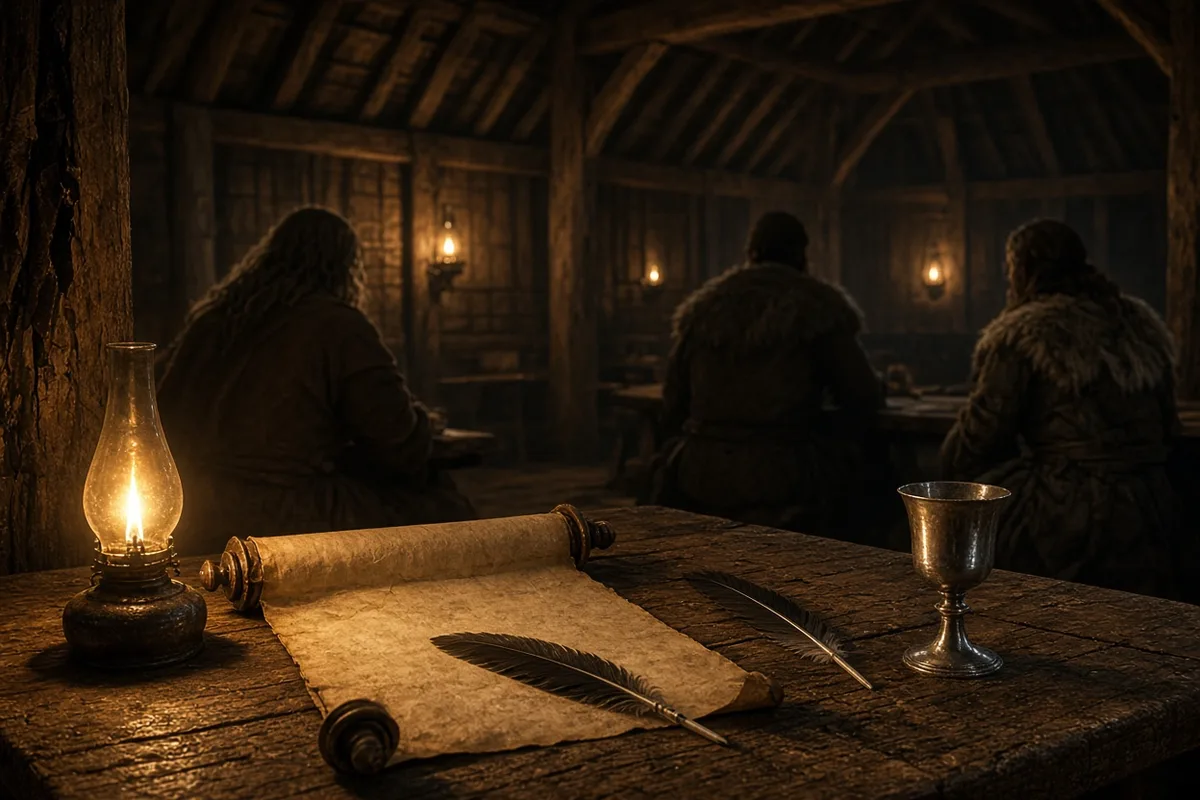
At Schleswig the 1372 chalice remained in continuous use until 1528, when the churchwarden’s ledger records its transfer to the new Lutheran parish and the addition of an engraved rim weighing two additional marks. A direct descendant of that same merchant line, one Hans Petersen of Flensburg, visited the Bremen cathedral on 3 October 1927 and signed the visitors’ book with the notation “from the scarred-arm kin.”
The Hamburg crypt stone was photographed in situ during restoration work in 1953; the image shows the numerals 832 cut to a depth of four millimeters in Carolingian capitals. In 2014 ground-penetrating radar confirmed the outline of the original thirty-foot timber church beneath the present nave, its dimensions matching the measurements given in Rimbert’s account of the 831 construction.
The last recorded individual to claim descent from the boy with the scarred arm was a Danish antiquarian, Lars Holm of Aarhus, who on 11 May 1979 deposited a photocopy of the 1372 donation deed in the diocesan archive at Bremen and requested that the chalice be photographed under ultraviolet light to reveal an earlier inscription. Holm died in 1987; his estate papers list the chalice as still housed in the Schleswig treasury.