



St. Benedict Founds Monte Cassino
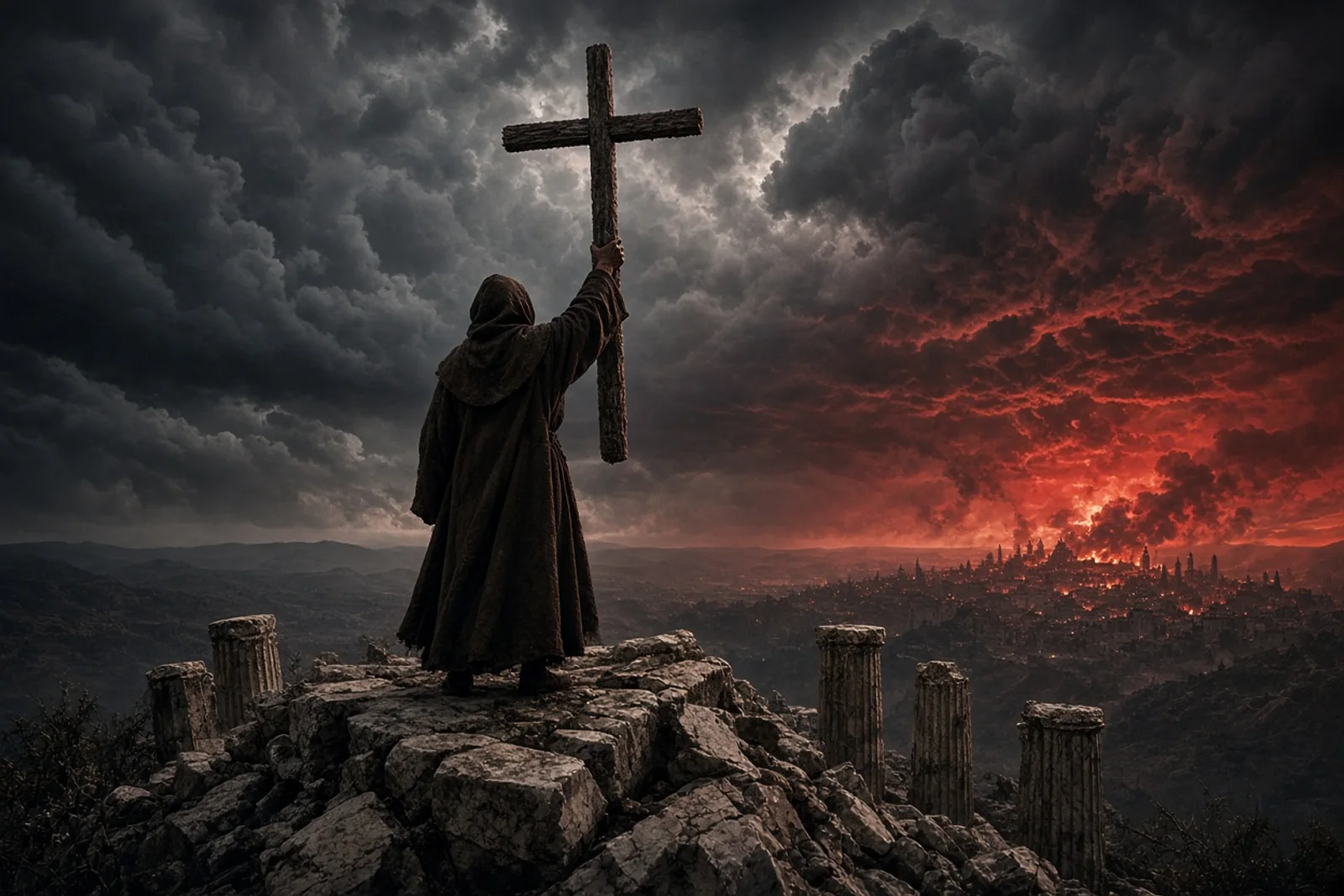
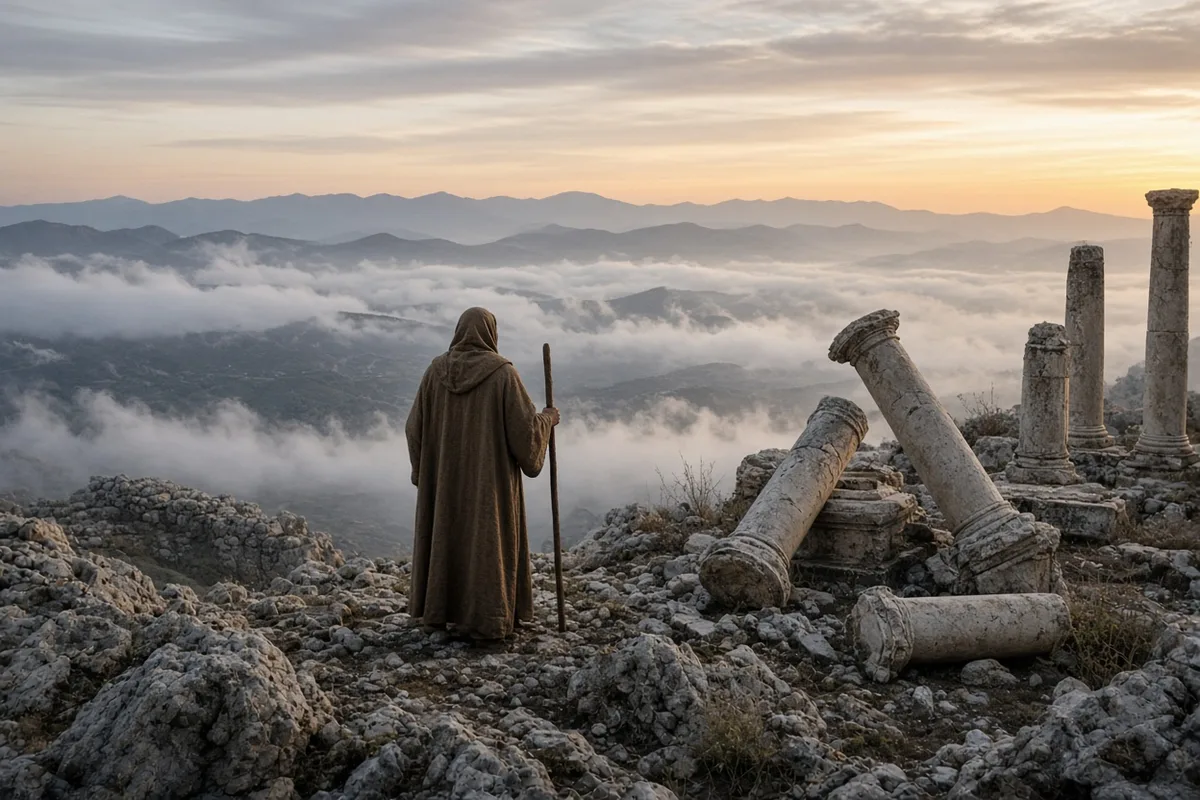
The path up the mountain had narrowed to a goat track by the time the sun cleared the ridge. My sandals slipped on loose shale, and the bundle of tools on my back knocked against my spine with every step. Ahead of us the summit showed only the broken outline of a wall and the pale columns of the old temple. Benedict walked in front without looking back. Maurus kept pace at his right shoulder, Placid a little behind on the left, both of them silent since we left the last village at dawn.
We had left Subiaco in the dark two days earlier. Florentius had sent men to the caves with stones and threats, and Benedict decided the time had come to move the few who would follow. Tertullus had given the mountain to Placid’s family years before; no one lived there now except a handful of herders who still climbed once a month to leave offerings at the shrine. That was the place Benedict named when he gathered us.

The air thinned as we climbed. When we reached the first stretch of cyclopean wall, Maurus stopped and set his staff against the stones. The wall stood higher than a man and ran straight down the slope before turning sharply east. Benedict placed his palm on the rough surface for a moment, then continued upward. We followed.
At the top the temple stood intact. Its roof had fallen in long ago, but the altar remained, blackened by old fires. Two men from the valley waited near it, their arms folded. They did not speak when we approached. Benedict walked straight to the altar, lifted the bronze image of Apollo from its base, and set it on the ground. He struck it once with a stone from the wall. The head broke free and rolled toward the cliff edge. The men from the valley turned and walked away without a word.

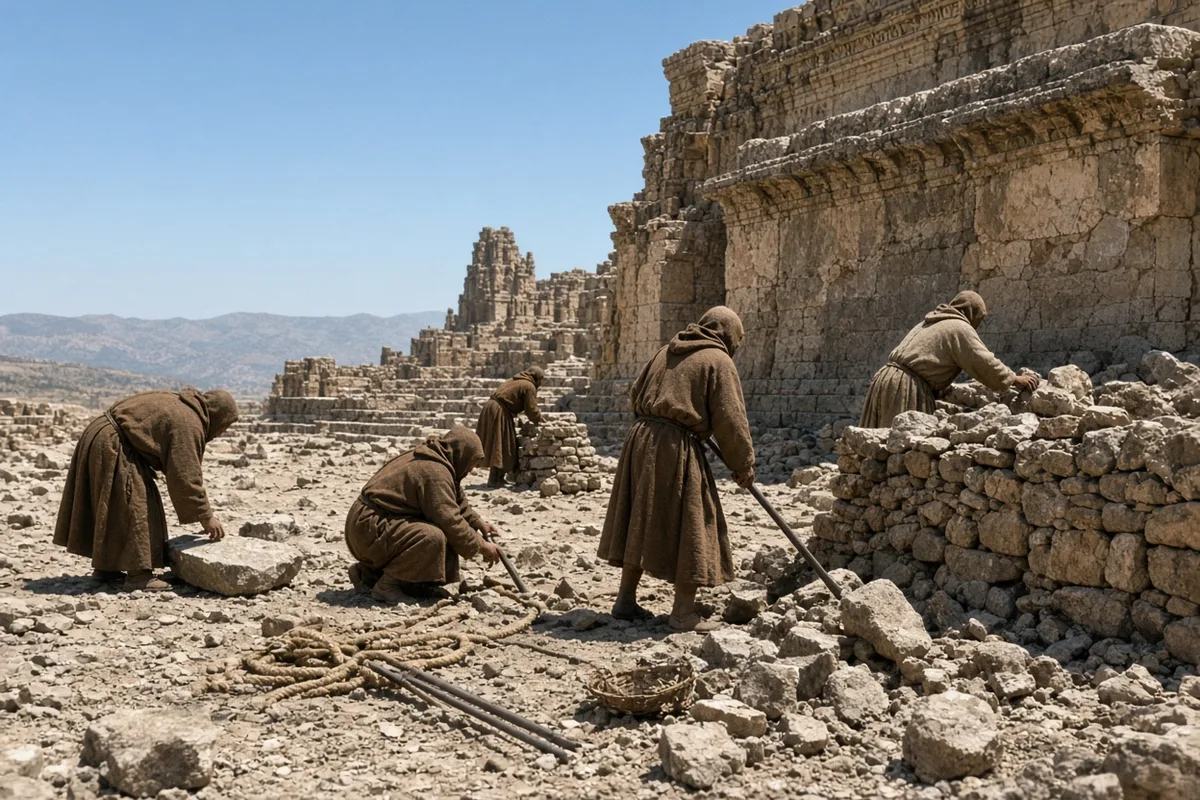
We worked through the afternoon breaking the rest of the altar. Placid carried the pieces down the slope and dropped them into a cleft between two boulders. Maurus cleared the platform with a broom made from dried branches. By evening the space was bare except for a low mound of rubble. Benedict marked the corners for a new church with his staff and said the first stones would be laid the next day. We slept that night inside one of the old watchtowers. The roof was gone, but three walls still stood and the floor was dry.
The next morning Placid found a spring lower on the eastern face. We carried water in skins and began mixing mortar from lime we had brought from Subiaco. Benedict directed the work from the tower doorway. He measured each course with a length of cord and corrected the angle whenever a stone sat uneven. By the third day the outline of the church walls rose above the platform. The oratory for Martin of Tours was smaller and took only two days more.
I remember the first night we ate inside the new enclosure. We had no table, only the flat stones we had used for mixing mortar. Benedict sat at the head and broke the bread himself. No one spoke of Subiaco or of Florentius. The talk stayed on the work: how many more stones would be needed for the roof beams, whether the spring would give enough water through summer. After the meal Benedict remained on the platform alone. I saw him walk the length of the new walls twice before he returned to the tower.
Weeks passed in the same rhythm. We rose before light, carried stone until the heat grew heavy, then rested in the shade of the tower. Benedict began to write in the evenings. He used a small desk made from a plank set across two blocks. The pages were cut from parchment brought from Rome. He did not read aloud what he wrote, but sometimes he asked Maurus or Placid to repeat a sentence from an earlier rule they had used at Subiaco. The words were copied and altered in his hand.
One afternoon a shepherd from the valley climbed to the summit with a kid as an offering. He set the animal down near the new church and waited. Benedict came out of the tower, spoke with him for a short time, then sent the boy back down the mountain with the animal still alive. After that, no more offerings arrived.
By late summer the church roof was finished and the oratory stood beside it. Benedict moved his writing desk inside the tower room and kept the door closed during the day. We continued to sleep in the remaining towers or under the open sky when the weather held. The enclosure wall was repaired in sections where it had fallen. Maurus took charge of that work and measured each new stretch against the old cyclopean line.
I left the mountain only once that year, to fetch more lime from a kiln near Cassinum. The town below was empty except for a few families living among the ruins. When I returned, Benedict was standing at the tower doorway watching the road. He asked about the price of lime and whether the road was still passable after the rains. That was all.
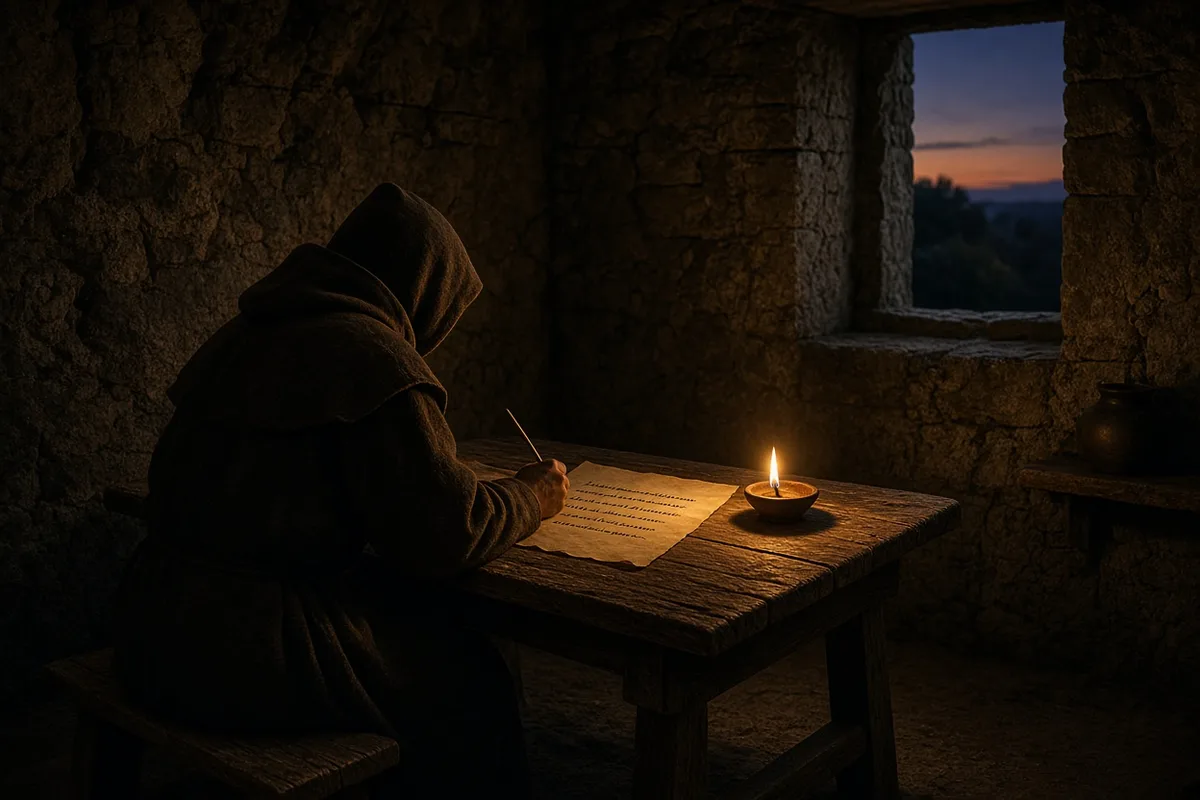
The winter came early. Snow lay on the northern slope for weeks. We kept a small fire in the tower and took turns watching it through the night. Benedict continued to write. The pages stacked higher on the desk. Once, when the wind shook the tower, he weighted the parchment with a stone so the edges would not lift.
In spring the first visitors arrived from farther south. They brought news of other monks who had heard of the new house and wanted to see the place. Benedict met them at the church door and showed them the walls and the spring. He did not invite them to stay. They left before evening.
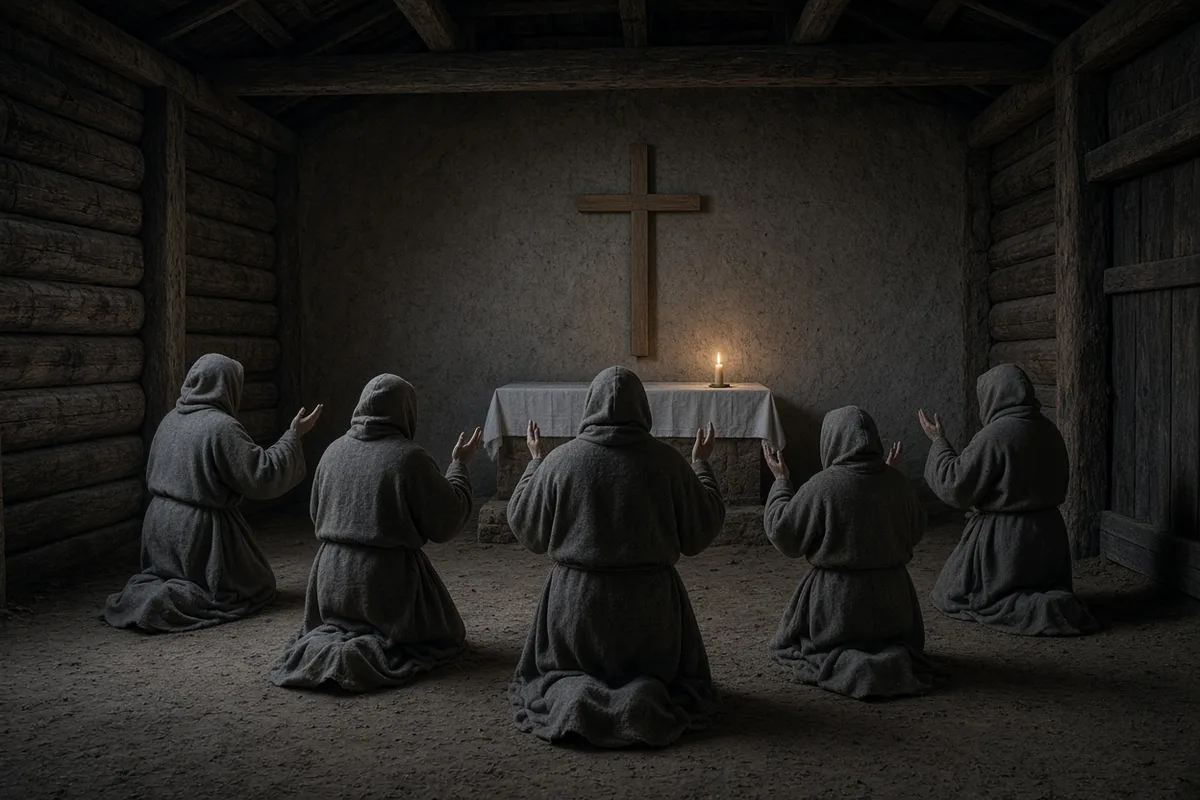
The Rule was finished by the end of that second summer. Benedict placed the completed pages inside the church on the altar stone we had kept from the old temple. Maurus read the opening lines aloud to the rest of us while the sun set behind the western wall. The words concerned the ordering of the day, the care of tools, the silence after compline. No one asked questions that night.
Benedict remained on the mountain after that. He walked the enclosure each morning and returned to the tower before midday. The church stood finished, the spring continued to run, and the tower that had once guarded the old city now held the desk and the written pages. From the doorway the view reached down the slope to the empty fields where Cassinum had stood.
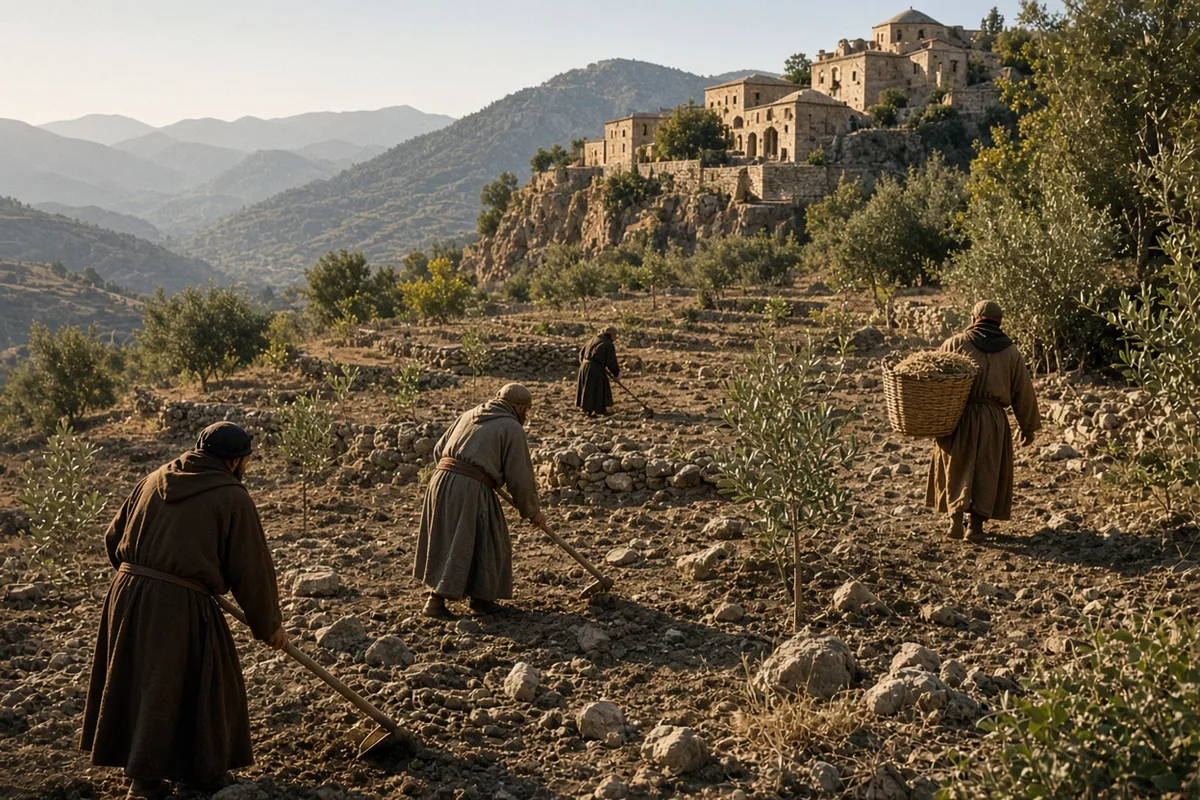
The stones for the new dormitory came from the same cyclopean blocks Maurus had measured against the old line, each one numbered with charcoal before it was lifted into place. By the spring of the third year thirty-two men slept under the roof beams that Placid had cut from oaks on the lower slope. Benedict recorded the count in the margin of the rule he had finished, noting that the daily psalms at lauds should number seven on ordinary days and twelve on Sundays. When the first harvest of wheat was brought in from the cleared fields below the spring, the measure came to forty-two modii, enough to last until the next sowing. I carried one sack myself to the storeroom cut into the rock beneath the tower and stacked it beside the jars of oil brought up from the coast at Gaeta.
Benedict died on the twenty-first day of March in the year 547, seated on the stone bench inside the oratory of Martin of Tours. He had asked for the last psalms to be read from the book kept on the altar, and Maurus repeated the verses from Psalm 119 that begin “Lucerna pedibus meis.” His body was placed in the same cleft where the broken pieces of the Apollo altar had been dropped years earlier. The monks who remained numbered twenty-eight that morning; three more arrived from Nursia before the summer ended. The written rule stayed on the altar stone, its pages weighted with the same stone Benedict had used against the wind.
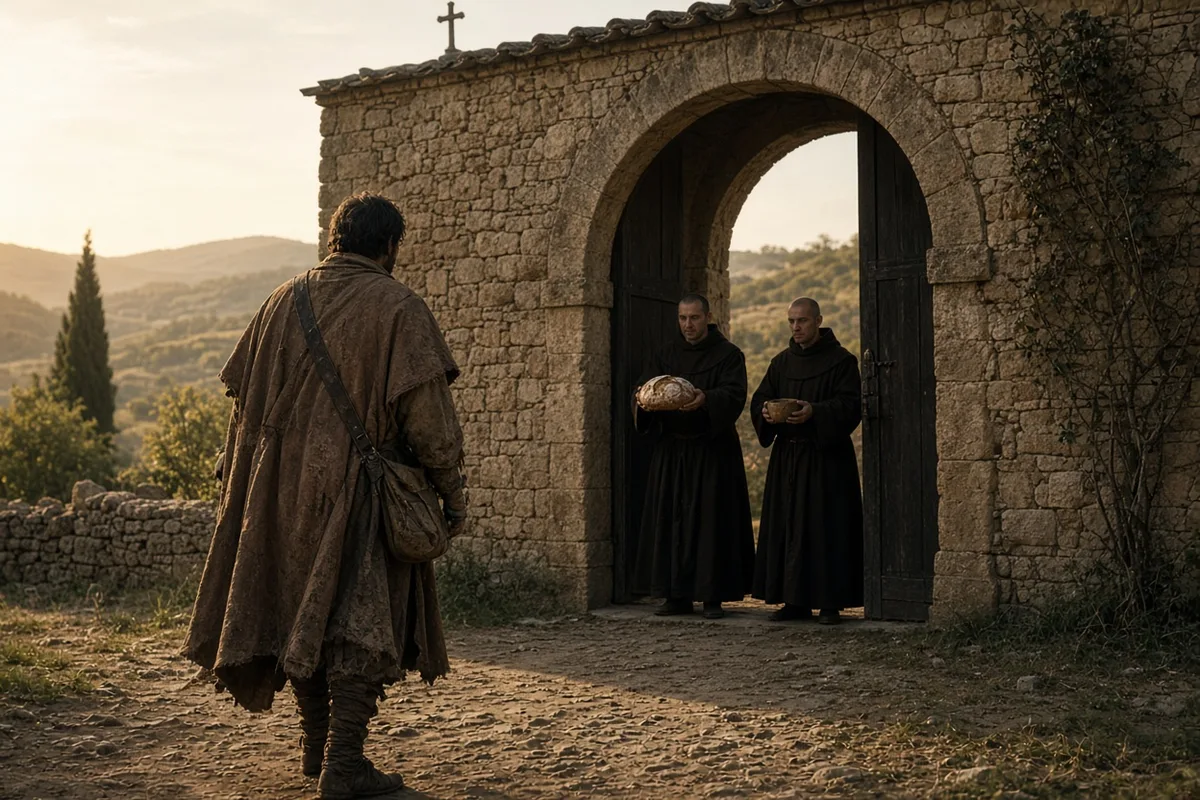
Twenty-three years later the Lombards under Zotto burned the wooden roof of the church and carried away the bronze vessels that had been given by the bishop of Cassinum. The monks who escaped numbered nineteen and took the rule with them to Rome, where they placed it in the Lateran library. When they returned in 580 the walls still stood, though the spring had been fouled with rubble. Abbot Bonitus, who led the group back, counted the surviving courses of the enclosure at one hundred and forty-seven and ordered them pointed again with fresh lime. The rebuilt church measured thirty-two feet by eighteen and received its first dedication on the feast of Martin in 583.
Abbot Petronax arrived from Brescia in the year 718 with twelve companions and found only five men living among the ruins. He rebuilt the tower first, using the original cyclopean stones for the lower three courses and new tufa blocks above them. The rule was recopied onto new parchment in an uncial hand, and the opening sentence was changed from the earlier version to read “Listen carefully, my son, to the master’s instructions, and attend to them with the ear of your heart.” By 729 the community had grown to seventy-eight, and Petronax recorded the gift of five hundred iugera of land from Duke Romuald of Benevento, including the vineyards at the foot of the mountain.
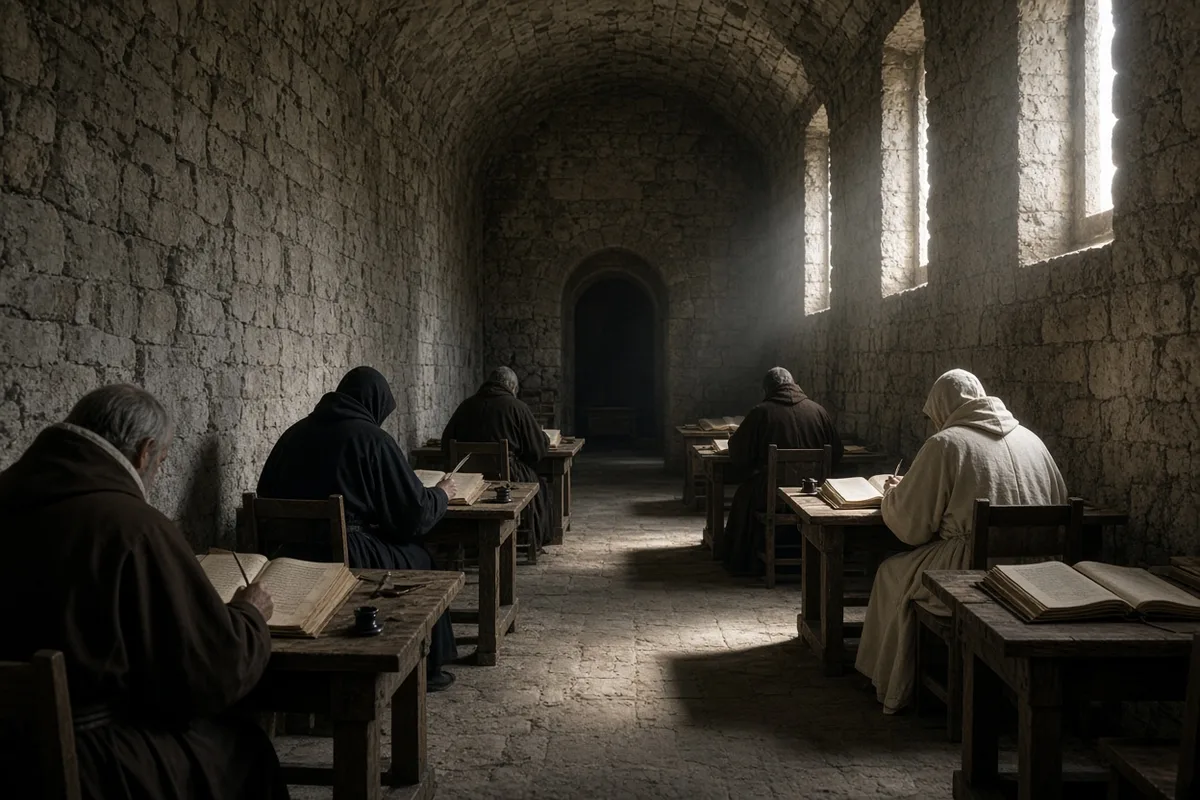
Saracen raiders burned the monastery again in 883, killing Abbot Bertharius at the altar during the night office. The survivors, thirty-four in number, fled to Teano and carried the rule and the relics of Benedict and Scholastica with them. When the house was restored under Abbot Aligern in 949 the new crypt was cut thirty feet into the rock beneath the church, lined with marble columns taken from the abandoned temples at Minturnae. The community reached one hundred and twenty monks by the year 1000, and the chronicle kept in the scriptorium lists the daily distribution of bread at one loaf per man plus an extra half-loaf on feast days.
Under Abbot Desiderius, later Pope Victor III, the church was enlarged in 1066 to a length of one hundred and ten feet, with a new bronze door cast in Constantinople that weighed two thousand pounds. The number of monks listed in the 1087 catalogue stood at two hundred and three, and the library held two hundred and ninety-seven volumes. Desiderius ordered the original rule recopied once more, this time with the addition of the chapter headings that begin “De generibus monachorum” and end with the sentence on the tools of good works. The rebuilt tower received a new set of bells, the largest weighing four hundred and eighty pounds, cast at Capua and hauled up the mountain on sledges.
Allied bombers struck the abbey on 15 February 1944, dropping 1,150 tons of high explosives from 142 B-17s and 87 B-26s. The church, the tower, and the enclosure walls were reduced to rubble in less than two hours. The community at that time numbered twenty-six monks and four lay brothers; they had been evacuated two days earlier to the monastery at Trisulti. After the war the Italian government allocated funds for reconstruction, and the first stone of the new church was laid on 15 February 1949. The rebuilt structure follows the dimensions recorded by Desiderius, with the crypt restored to its eleventh-century plan and the original rule placed once more on the altar stone. The last man I saw walking the platform at sunset was an eighty-four-year-old brother named Ildefonso, who paused at the western parapet, adjusted the cord of his habit, and looked down the slope toward the fields where Cassinum had stood.