


St. Bernard Founds Clairvaux Abbey
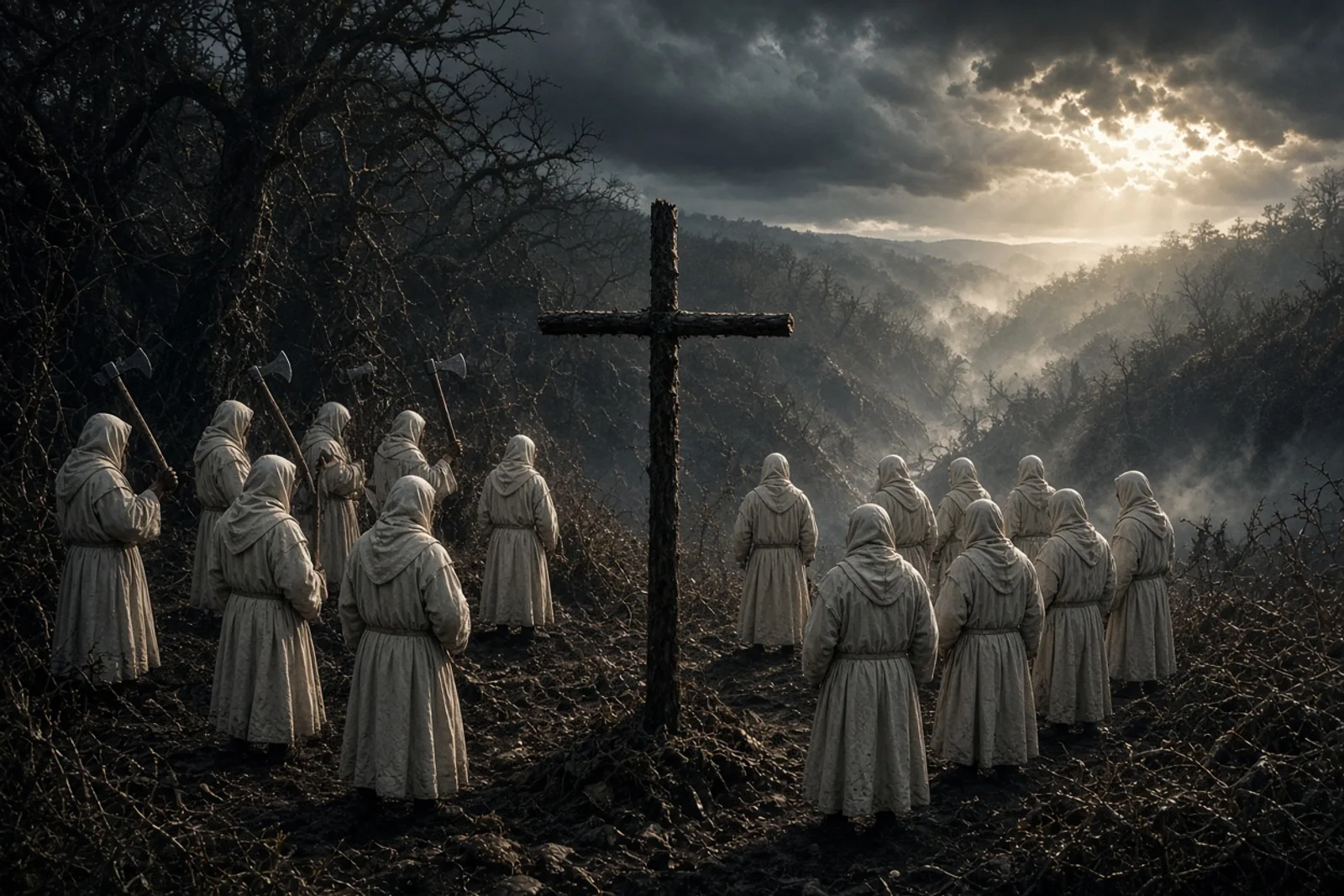
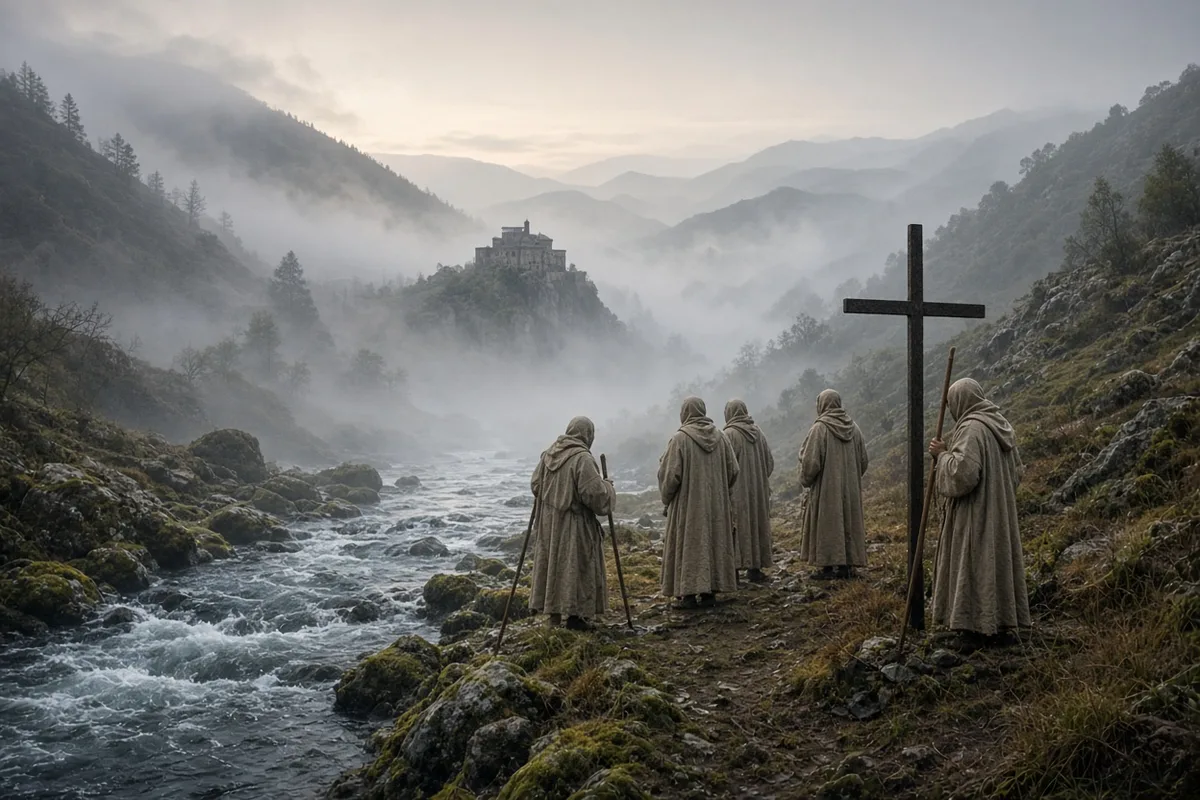
The cart wheel cracked against a root and the whole frame lurched, spilling two of the sacks. I dropped my own bundle and caught the nearest one before it split open on the stones. Bernard did not turn. He kept walking, staff in hand, the hem of his habit already dark from the damp ground. Twelve of us followed him that morning, and none of us spoke until the path opened onto the clearing.

The valley floor lay under a low mist that smelled of standing water and cut reeds. A few twisted alders marked the edge where the land rose again. Someone had once tried to pasture sheep here; the broken hurdles still leaned against a single oak. We set the sacks down and waited while Bernard walked the length of the stream that crossed the middle. He stopped at a place where the water ran clear over flat stones and drove his staff into the earth.
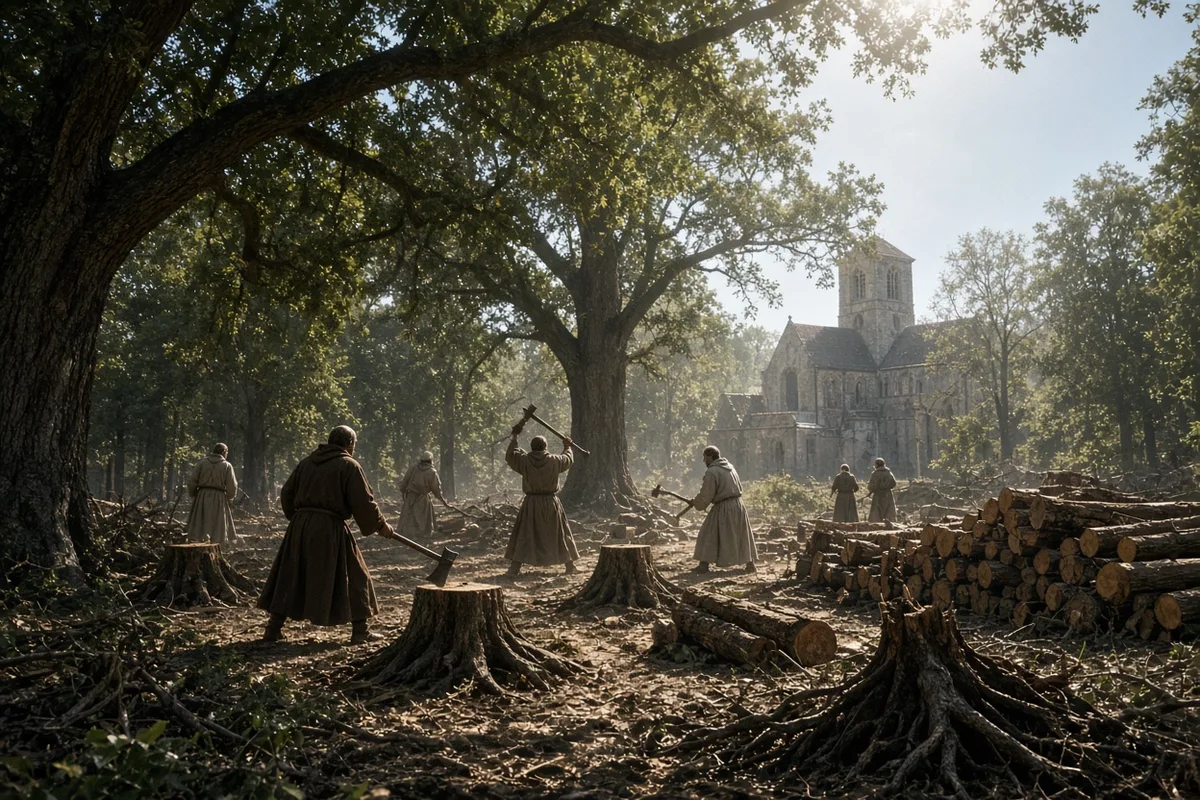
By noon we had marked the outline of the first shelter with cord and stakes. The ground was soft in places and gave under the mallet. Two of the brothers began digging the trench for the south wall while the rest of us hauled stones from the slope. Bernard worked with us until the light failed. When we stopped, his hands were raw and the sleeve of his habit torn at the shoulder. He ate nothing that night beyond a piece of dry bread and a cup of the stream water.
William of Champeaux arrived three days later. The bishop’s horse picked its way between the fresh stumps. Bernard met him at the edge of the clearing and knelt. William raised him at once and kept both hands on his shoulders while he spoke. The blessing took place beside the same oak where the hurdles stood. No one else moved until William finished and stepped back. Bernard remained on his knees a moment longer, then rose and pointed to the stakes we had driven. He gave the place its new name that same afternoon.
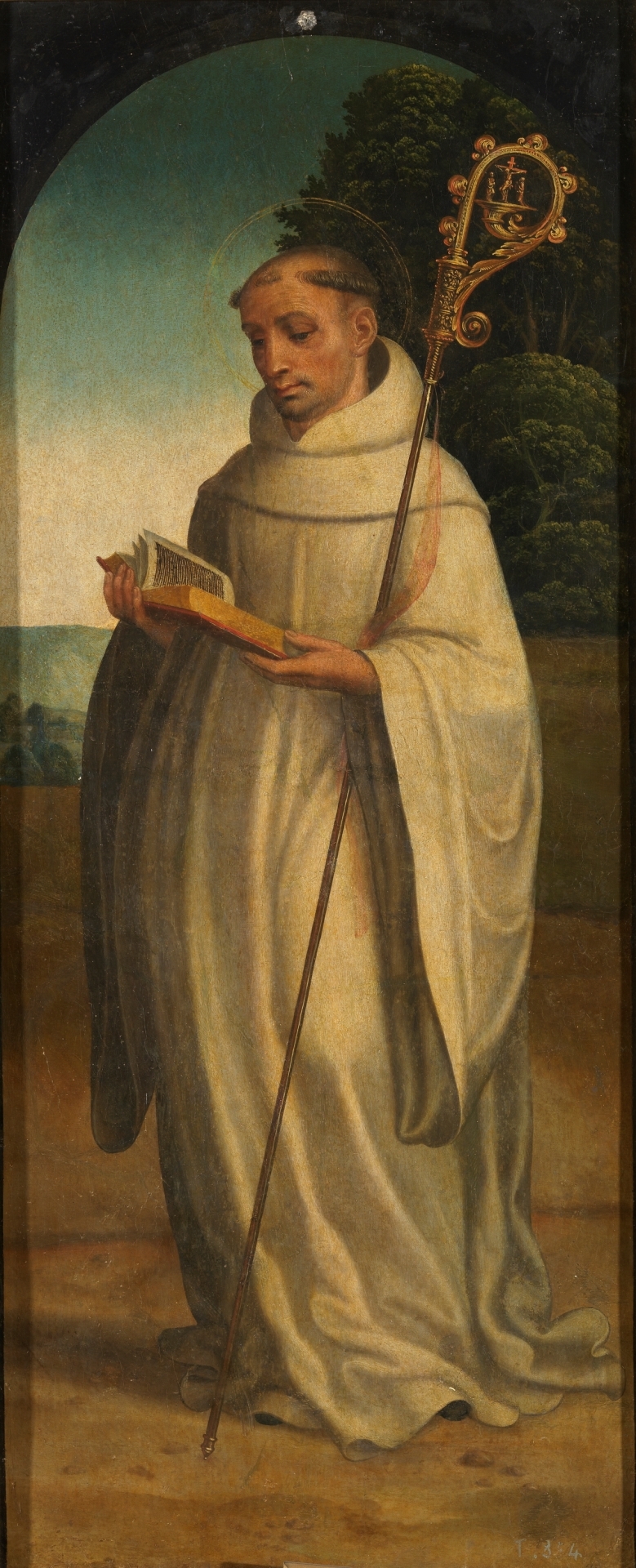
The first roof beams went up crooked because the timber had not been seasoned. Rain came through the gaps the second night and soaked the straw we had spread for bedding. Bernard told us to leave it; the damp would pass. By the end of the week one brother’s cough had settled deep in his chest and another could no longer close his left hand from the cold. Bernard’s own face had grown thinner, the skin drawn tight over the cheekbones. He still rose before the rest of us and returned to the trench work after the office.
A wagon arrived from Langres carrying two sacks of grain and a small iron pot. The driver stayed only long enough to unload. Bernard thanked him and sent him back with a letter for the bishop. That evening we boiled the grain into a thin porridge. No one asked for salt. The pot hung from a green branch over the fire, and the smoke drifted low across the clearing.

More men began to appear after the first month. Some came on foot from the nearest villages, others with a single bundle tied to a staff. Bernard spoke with each one at the edge of the stream before sending them to the work. Two of the newcomers knew how to shape stone. They took over the wall that had been rising crooked and reset the courses so the line ran true. By midsummer the shelter had a doorframe and a shutter that could be barred from inside.
Bernard’s father arrived without warning on a market day. Tescelin walked the cleared ground twice, then asked where he might lay his own pack. Bernard showed him a space near the north end of the trench. The old man set his bundle down and began carrying stones without another word. Three of Bernard’s brothers followed within the month. They brought their own tools and asked no questions about the rule.
The bishop returned in autumn to see what had been built. He walked the length of the new wall and nodded once. Bernard stood beside him, silent, while the wind moved the tops of the young saplings we had left standing for later use. William spoke of sending more grain before the roads froze. Bernard thanked him and said the valley would provide what was needed. The bishop mounted and rode out before dark.
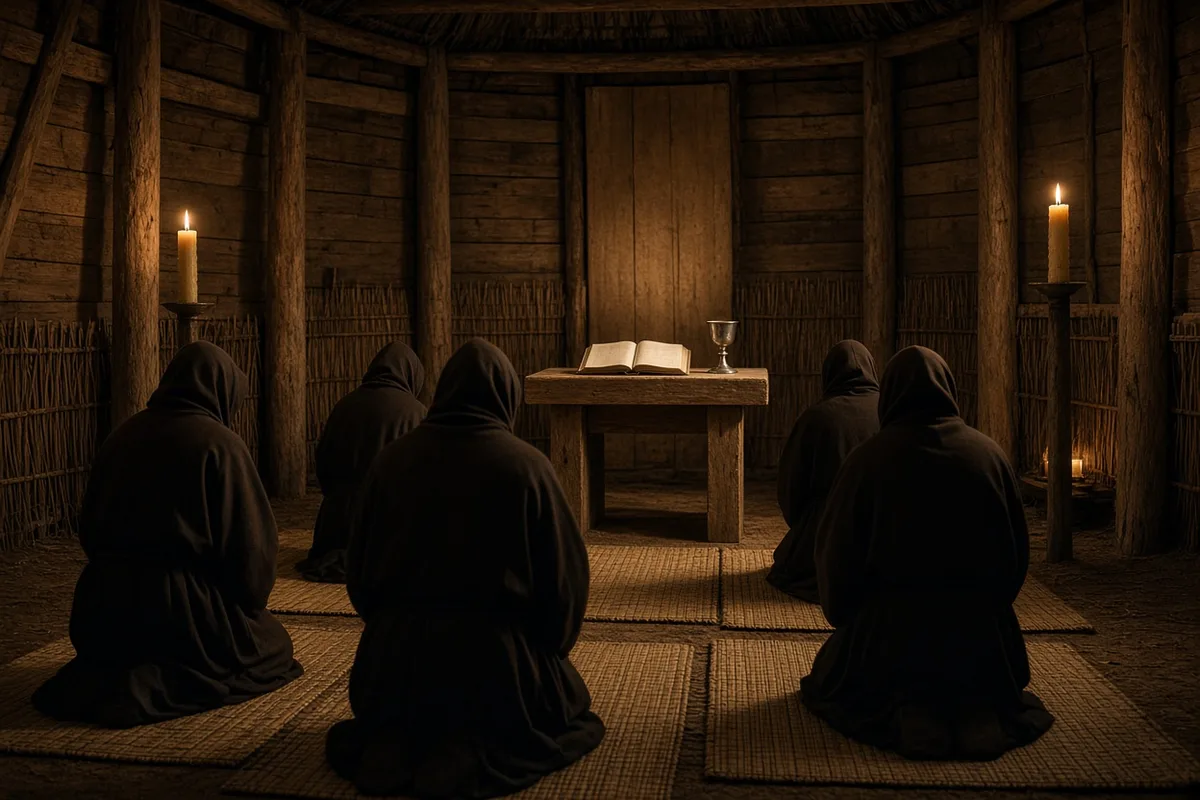
Winter closed the stream in a skin of ice. We broke it each morning with an axe and carried the pieces to the fire to melt. Bernard’s cough began then, a dry sound that came at the end of each office. He refused the extra blanket one of the brothers offered and continued to sleep on the bare boards. The General Chapter sent a letter that reached us after Epiphany. It instructed him to take more food and rest. Bernard read it aloud to us by the fire and set it aside without answer.
Spring brought the first clear water back into the channel we had dug around the shelter. The ground warmed enough to set posts for a second building. Bernard marked the corners himself, driving each stake with three blows of the mallet. When the last post stood, he stepped back and looked across the valley toward the ridge we had crossed the year before. The light lay flat on the new grass. He turned and walked to the stream again, staff in hand, the same way he had walked it on the first day.
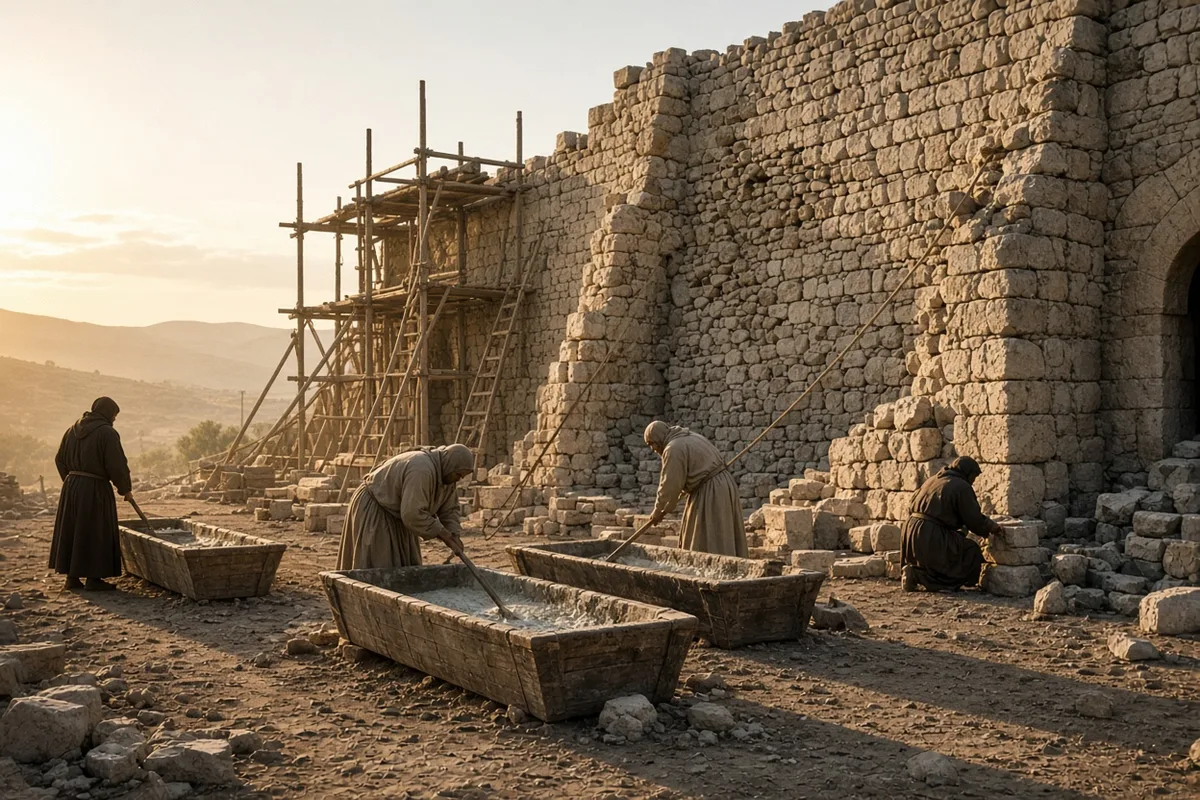
That summer the masons from Troyes arrived on the feast of the Assumption with their own ropes and squares and set the first dressed blocks for the nave piers, each one cut to the measure of seven feet as the master had directed from the pattern at Cîteaux. We hauled the lime in baskets from the kiln they built beside the stream, and the mortar set so hard that a chisel left only a white scar. By October the walls stood seven courses high and the brothers who had come from Fontenay laid the lead sheets on the roof ridges, sealing them with pitch that still smelled of pine resin when we walked beneath at compline. Bernard kept the tally in a small book bound in calfskin, noting each cartload of stone that left the quarry at Bar-sur-Aube and each brother assigned to the hod. One entry records that on the twenty-third day after Michaelmas we used one hundred and forty-three baskets of lime and lost only two trowels to the mud.
In the spring of 1118 the first colony left for Trois-Fontaines, twelve men again, carrying the same rule and a portion of the psalter copied by hand in the scriptorium we had roofed the winter before. Bernard gave them the blessing at the oak where William had raised him three years earlier, and the cart that carried their grain was the same one whose wheel had cracked on the day we first entered the valley. Letters came back within the month reporting that the new site had running water already channeled and that the prior, a man named Rainald, had begun the foundations for a second dormitory of twenty cells. Our own numbers had reached forty-seven by then, including the five lay brothers who worked the forge and kept the accounts of wool sold at the Troyes fair. Bernard wrote to the bishop that the valley now yielded enough rye to feed the community through Lent without recourse to outside alms.
By 1124 the infirmary stood finished on the north side of the cloister, its windows glazed with horn scraped thin enough to pass light yet keep the wind from the beds where the brothers lay during the quartan fevers that returned each autumn. The apothecary kept a chest of simples sent from the mother house at Cîteaux, among them the root of gentian for the cough that still troubled Bernard on damp mornings. That same year the General Chapter at Cîteaux recorded that Clairvaux had sent colonies to Fontenay, to Cour-Dieu, and to Le Reclus, each group taking with it a copy of the customary and a single silver chalice from the set given by the count of Champagne. Bernard himself traveled to La Ferté to settle a dispute over tithes, returning with a charter sealed in green wax that granted the abbey the right to pasture its sheep on the common lands beyond the ridge.
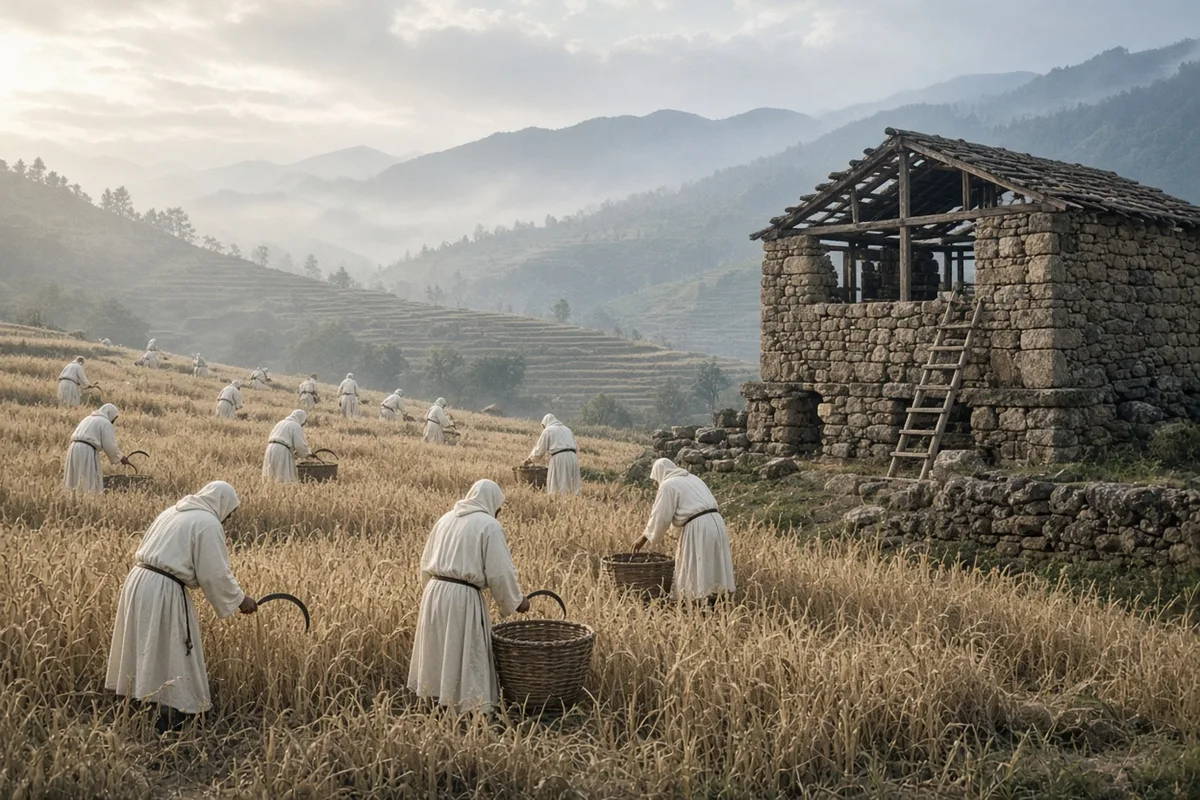
The year 1135 saw the consecration of the great church whose nave ran one hundred and twenty feet from the west door to the apse. Bishop Hato of Troyes performed the rite on the Sunday after the octave of Pentecost, assisted by the abbots of thirteen daughter houses who had ridden in the night before. The procession circled the altar three times while the choir sang the antiphon “Fundata est domus Domini,” and Bernard stood at the gospel side holding the crozier that had been carved from a single piece of blackthorn. After the mass he read aloud a letter from Pope Innocent II thanking the community for the support sent during the schism, noting in particular the one hundred marks of silver that had reached the papal court at Pisa the previous October. The pavement of the new church was laid with tiles brought from Châlons, each stamped with the lamb and the cross.
When Bernard died on the twentieth day of August in 1153 he had already named his successor, the prior Robert, who had entered the community as a boy of fourteen and knew every stone of the watercourse. The body lay in the chapter house for three days while the monks from the nearest houses came to keep vigil, and the burial took place at the foot of the altar in the presence of the count of Champagne and two of Bernard’s nephews who had become abbots elsewhere. The epitaph cut into the slab recorded only his name, the year of his entry into religion, and the number of houses that had sprung from Clairvaux, which by then stood at sixty-eight. Robert kept the same daily order, rising at the same hour and requiring the same measure of silence, yet the scriptorium produced fewer new manuscripts once the founder’s own hand no longer corrected the copies.
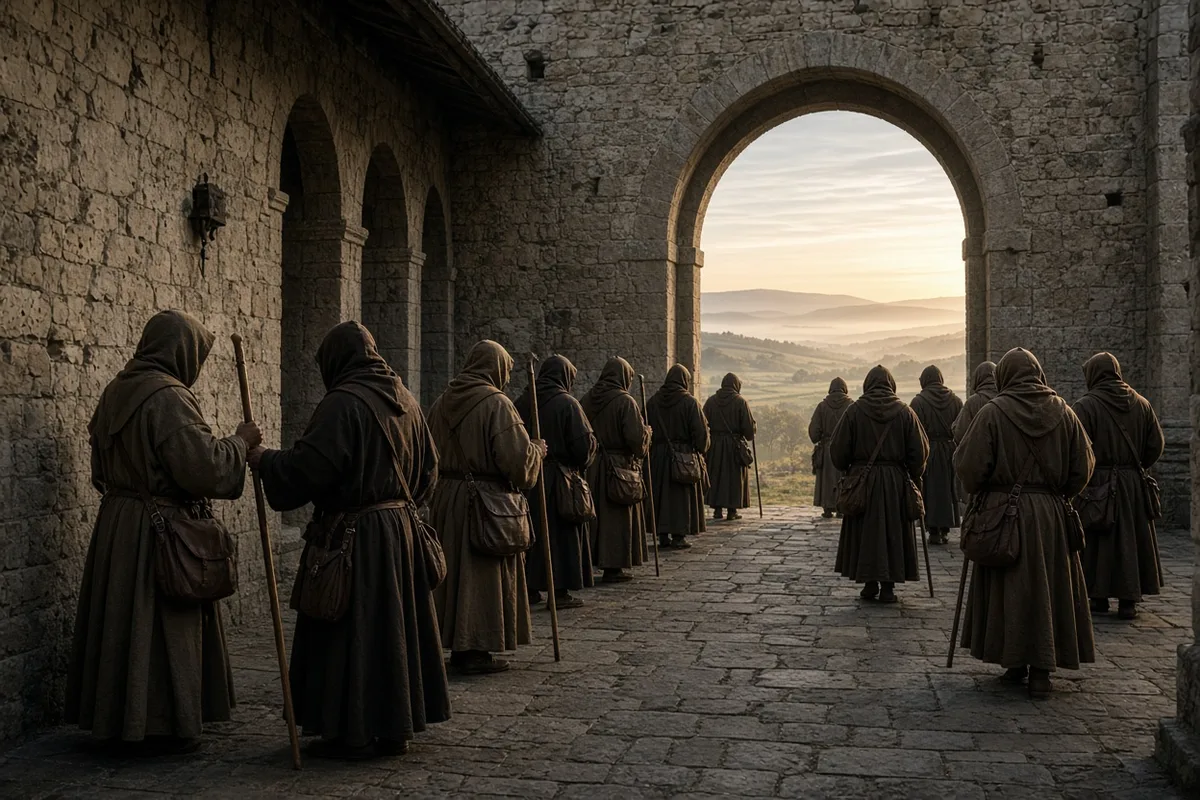
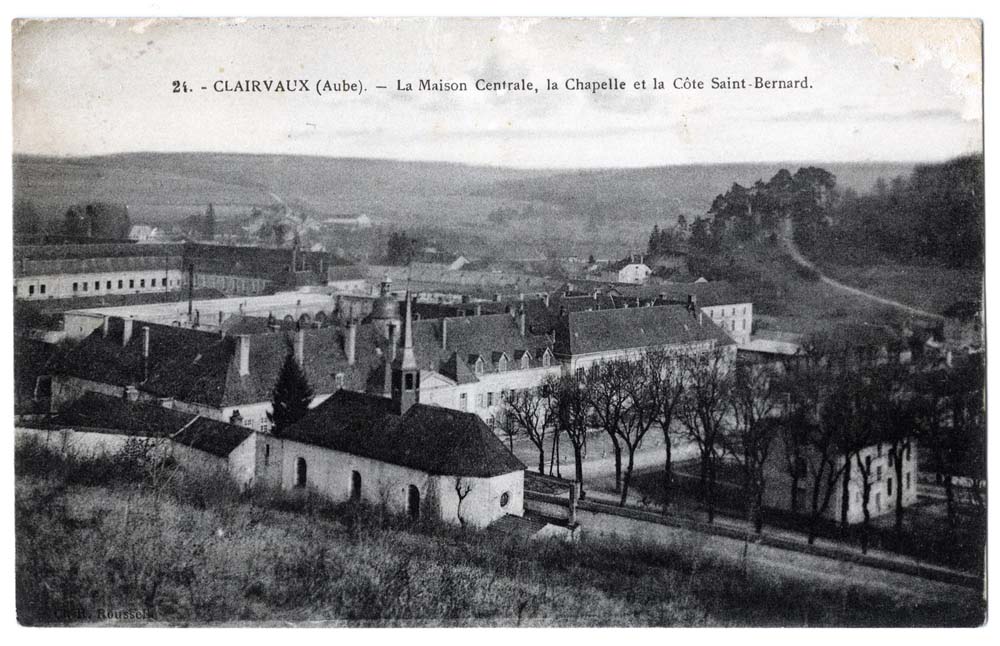
In 1790 the National Assembly suppressed the monastery and the last abbot, Dom Jean-Marie Billard, signed the inventory of plate and vestments before the commissioners sealed the doors. The buildings passed to the state and in 1808 were fitted with iron grilles and guard towers to serve as a maison centrale for prisoners sentenced to hard labor. The nave was divided into workshops where convicts wove cloth and made shoes, and the cloister arcades were bricked up to form cells measuring eight feet by six. A register from 1823 lists three hundred and twelve inmates, among them men convicted of poaching and forgery, each assigned a number and a portion of bread that weighed exactly twenty ounces. The church roof was stripped of its lead in 1832 to pay for repairs to the perimeter wall.
Today the surviving transept walls and the base of the crossing tower stand within the prison enclosure at Clairvaux, visible only to those permitted to walk the inner yard. The stream still crosses the valley floor, though its channel has been straightened and culverted beneath the modern exercise ground. On the ridge above the site a single oak marks the place where the first stakes were driven, its trunk now surrounded by a low iron fence that keeps visitors at a distance of ten meters. The last recorded image of a living monk at the abbey is a photograph taken in 1904 of an elderly lay brother named Frère Joseph, who remained as caretaker of the cemetery after the community had been dispersed; he stands in a patched habit beside the stone that once covered Bernard’s grave, his right hand resting on the handle of a spade.