


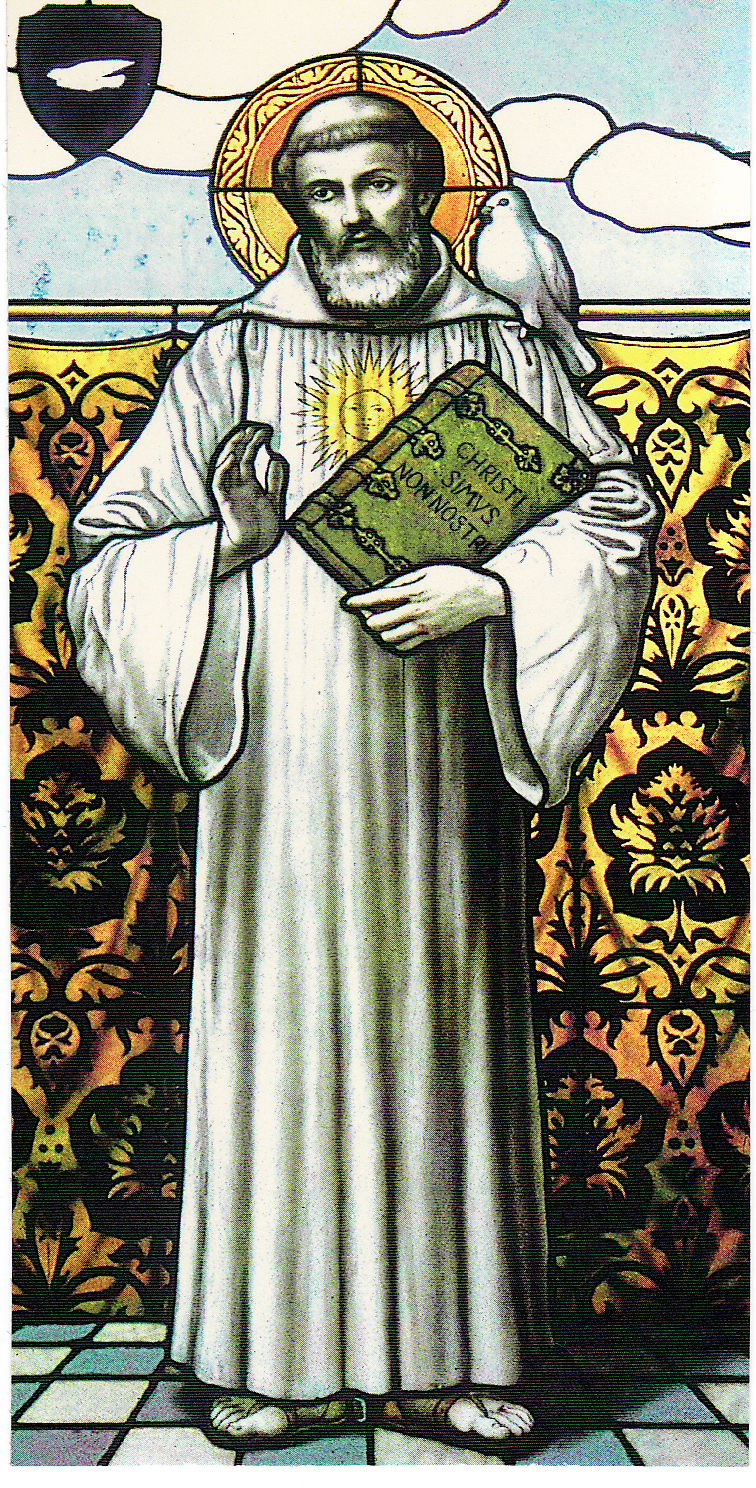
St. Columbanus Founds Luxeuil Abbey
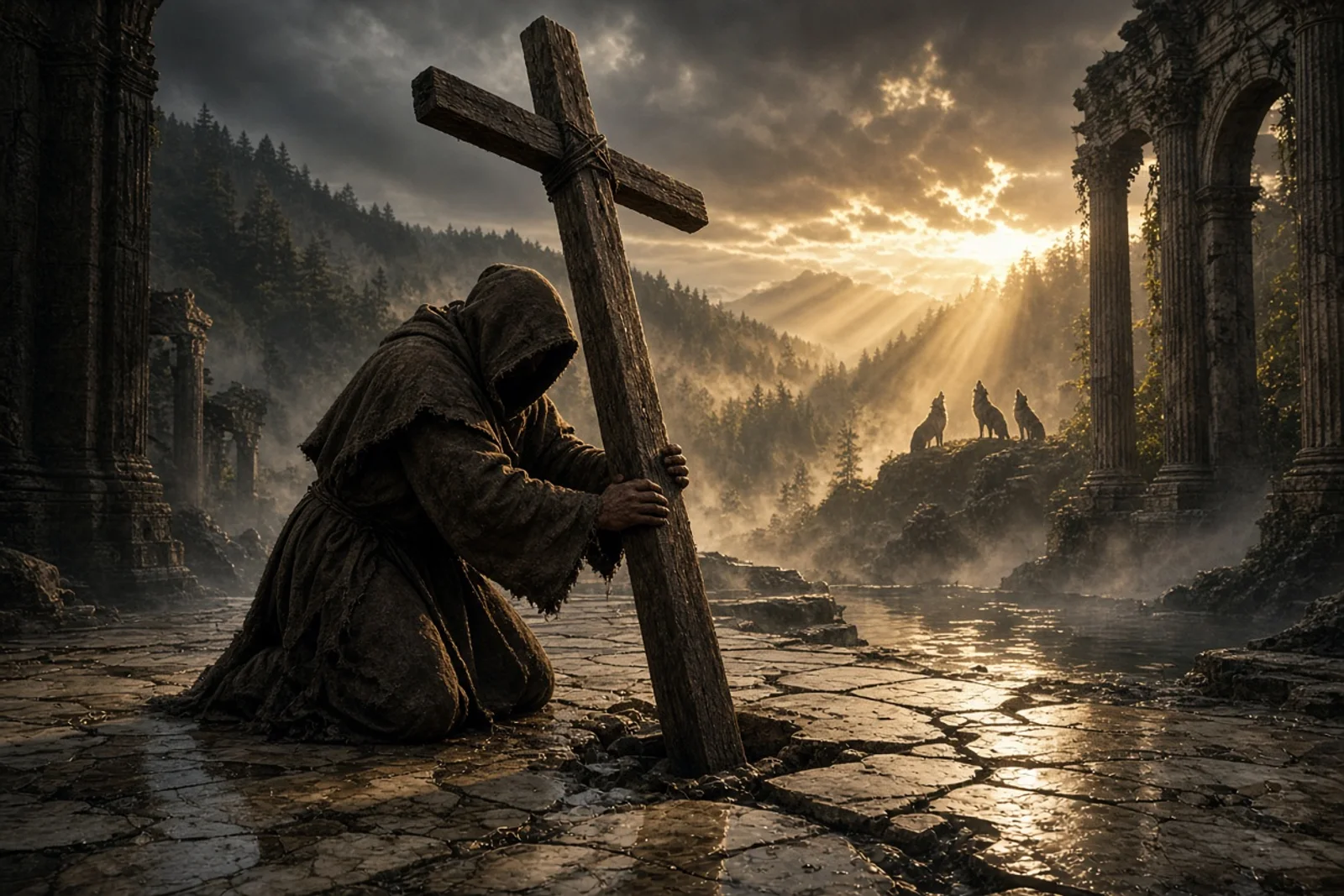
The path from Annegray climbed through beech and pine, and my feet knew every root. I had carried messages between the half-fallen fort and the king’s hall for three winters, and when the monks asked for a guide who could find dry ground after rain I went with them. Columbanus walked at the front, his staff tapping stone. Gall followed three paces behind, carrying the heaviest satchel of books. The others strung out in a line that never broke, even when the slope turned steep.
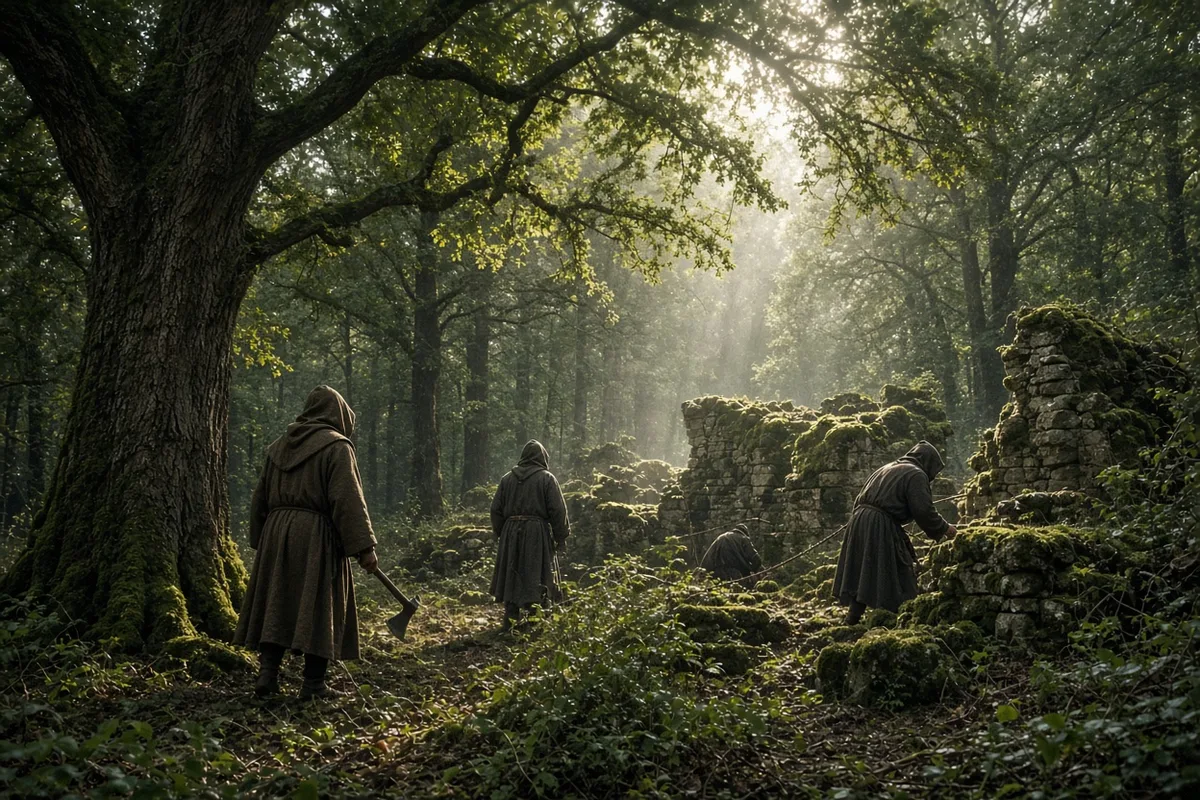
We reached the old baths at midday. Steam still rose from the cracked basins where the Romans had piped hot water. Vines had split the mosaic floors. A single standing wall showed a faded hunting scene, hounds chasing a stag whose antlers were now only faint lines. Columbanus stopped at the edge of the largest pool and set his staff down. He did not speak at once. He looked at the water, then at the broken columns, then at the ring of us waiting.

Sigisbert and Waldoleno began clearing leaves from the nearest channel. The water ran clearer once the debris was gone. Attala knelt and tasted it, nodded, and passed the cup to Columbanus. The abbot drank, then handed the cup to me. I had tasted that water before, alone, when fever drove me to the springs. It tasted the same, sharp and warm.
By the second day we had roofed three rooms with new thatch cut from the slope above. The monks worked without pause, yet they paused whenever a villager appeared on the path. They offered bread and asked the visitor’s name. Most came only to stare. A few stayed to lift stones.

On the fifth morning a messenger from Gontram arrived on a tired horse. He carried a sealed letter and a small chest of coins. Columbanus read the letter aloud to the community after supper. The king granted the land and the springs, with the condition that the monks pray for his house. No one cheered. Columbanus folded the parchment and placed it inside one of the books Gall had carried.
I watched the first sick person arrive two weeks later, a woman whose joints had locked. She came leaning on her son. Columbanus met her at the gate, listened to her story, then sent her to the warmest basin with instructions to stay until the water cooled. Gall prepared a simple draught from herbs gathered that morning. She left at dusk able to open her hands. Word spread faster than the monks could build beds.

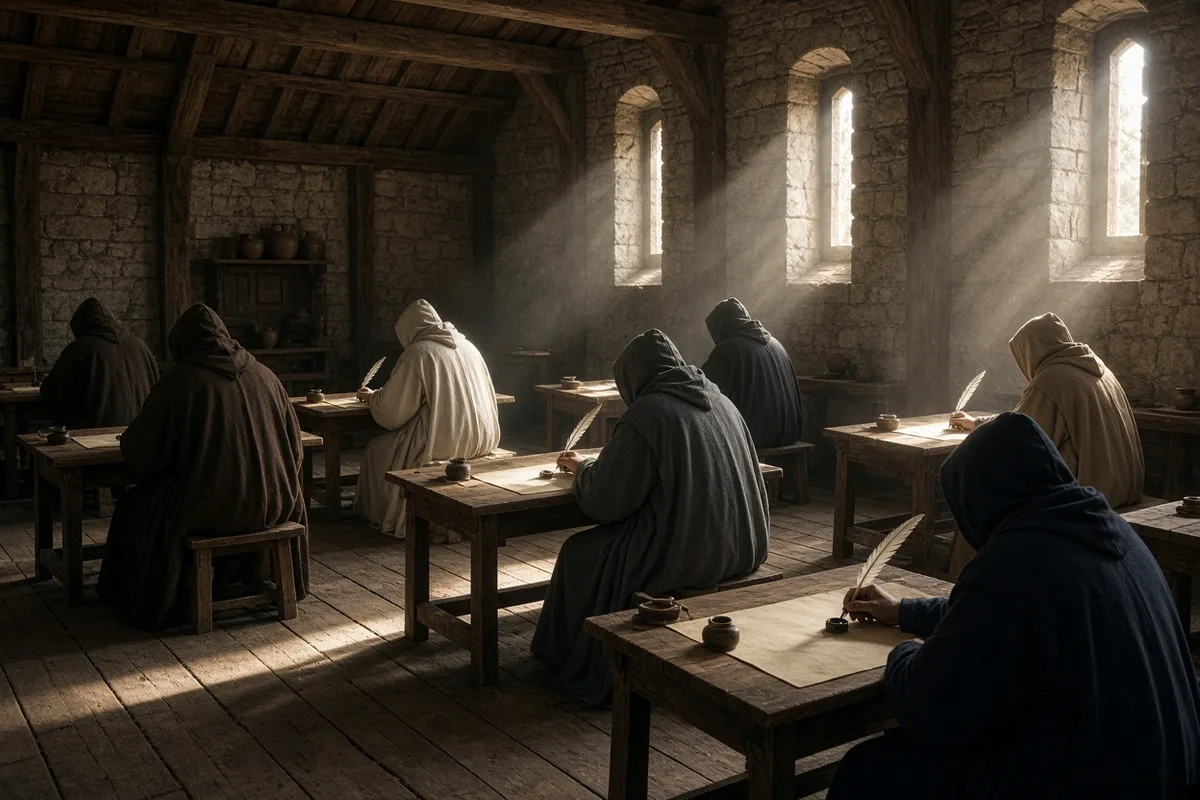
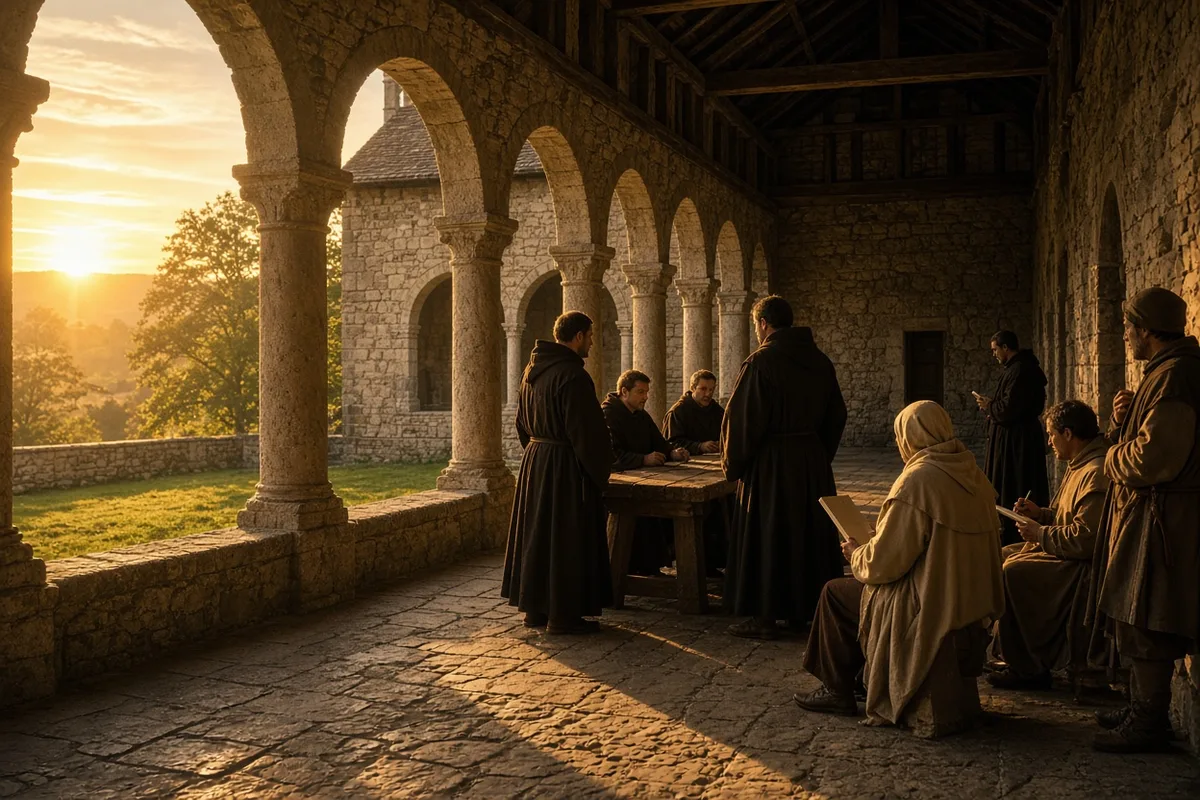
The nights grew colder. We slept in shifts so the fire in the main hall never died. Columbanus often stayed awake longest, copying lines from the books onto new parchment by the light of a single rush. Once I asked him why he wrote again what was already written. He answered that every copy was a new voice in a new place. Then he returned to the page.
By the first frost the enclosure held twenty men who had not come from Ireland. Some were hunters who knew the forest paths. Others had worked the old Roman fields before the land went wild. Columbanus gave each the same rule: private confession, fixed penance, labor shared. He spoke the rule in Latin, then in the tongue of the valley so no one would mistake it.
One evening a man arrived carrying a carved stone head, the last remnant of the old spring shrine. He set it at Columbanus’s feet without a word. The abbot lifted it, turned it once in his hands, and carried it inside. I never saw it again. The next morning the same man began mixing mortar for the new chapel wall.
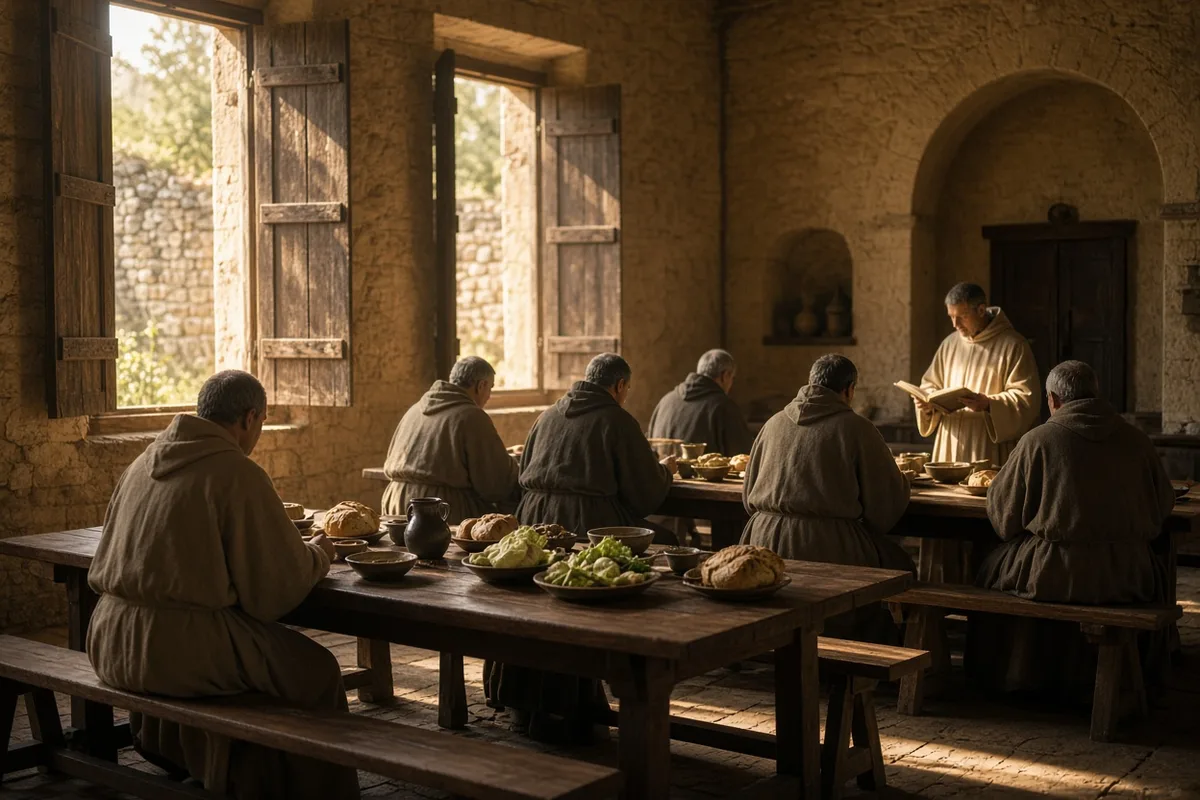
Luxeuil began to smell of ink and wet stone. The library room took shape in what had been a bath changing area. Shelves rose from salvaged Roman bricks. The books from Bangor stood on the top row, protected by oiled cloth. Columbanus added pages each week, his hand steady even when the wind blew through the gaps in the roof.
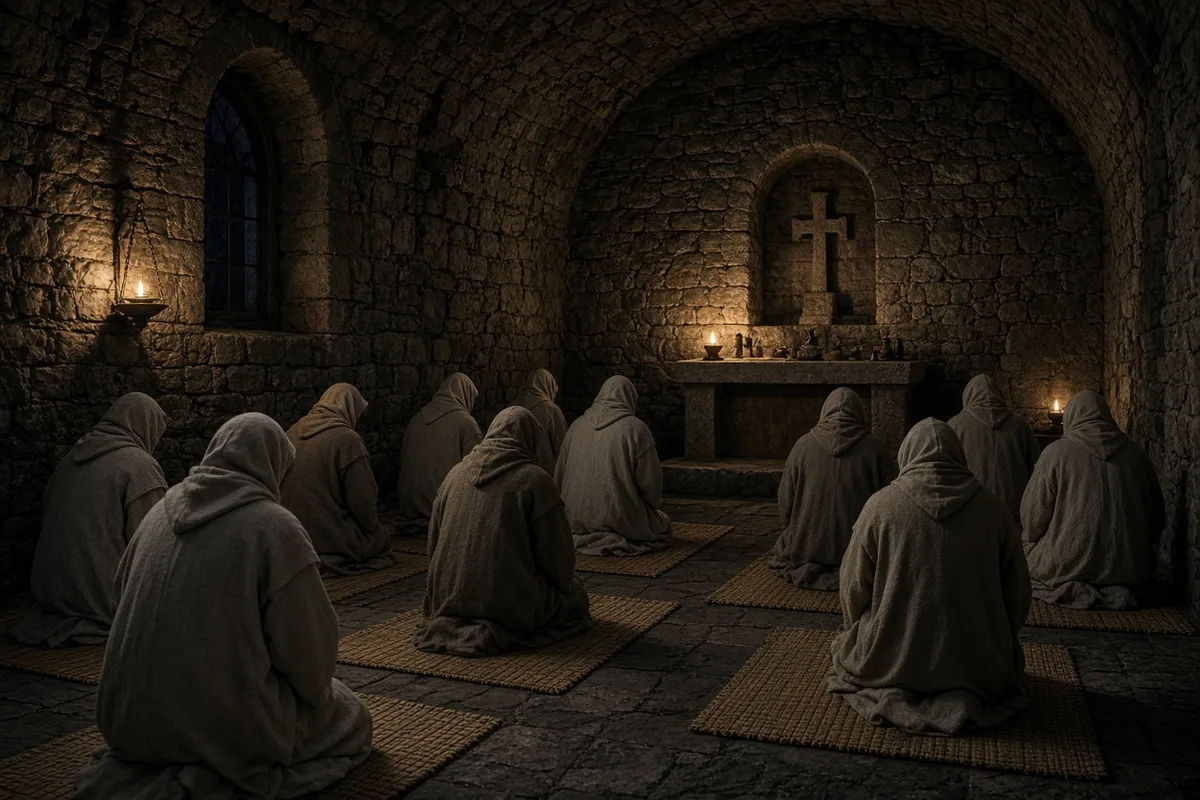
Winter closed the passes. No new visitors came for two months. Inside the enclosure the work continued. The monks sang the hours in the open air until the chapel roof was finished. I learned the Latin responses by hearing them repeated. My own voice surprised me the first time it joined the others.
Spring brought a second royal messenger, this one from the court of Childebert. The letter offered more land farther east. Columbanus read it, set it aside, and continued laying stones for the refectory. He never answered the offer. The messenger left at dawn with an empty saddlebag.
By summer the abbey held forty men. The springs still steamed at dawn. Sick people came in litters now, some from distances that took three days to walk. Columbanus met each one at the gate, asked their name, and assigned a monk to stay with them. He kept no list of cures. He only asked that those who left well return once a year to carry wood or grain.
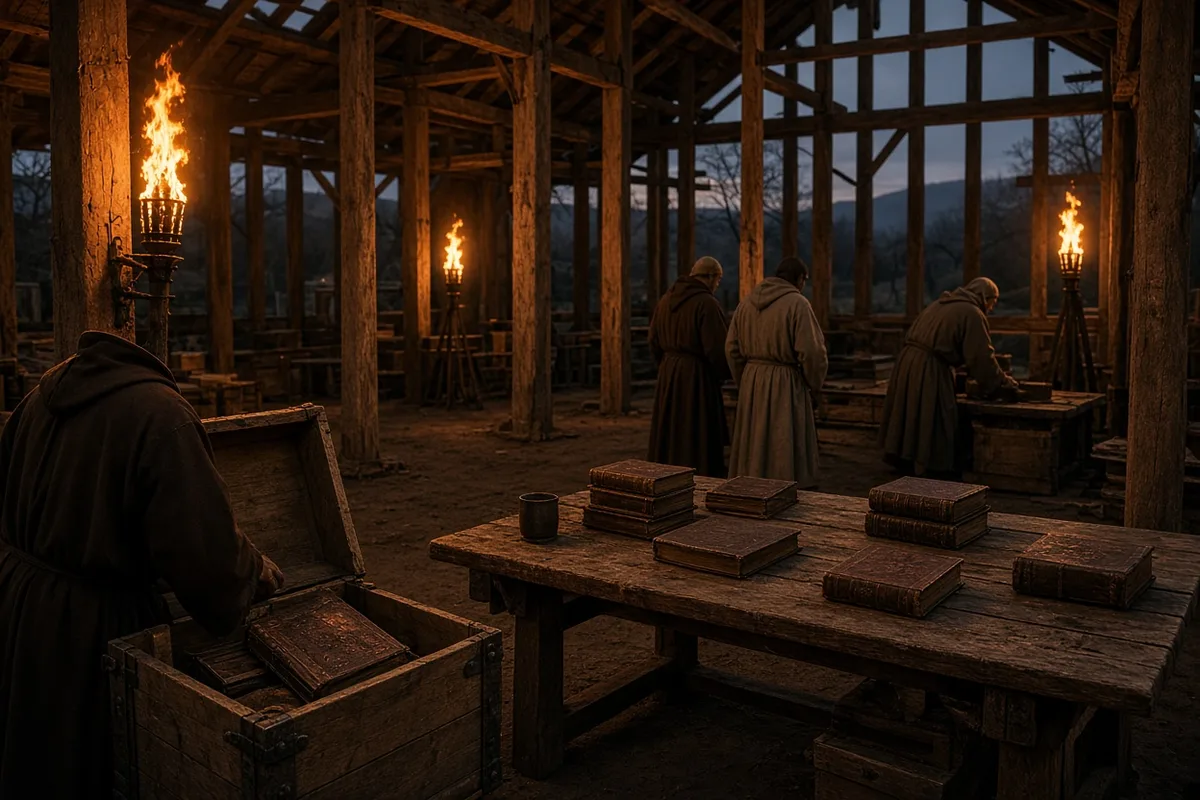
I stayed through the next winter and the one after. When the passes opened again I carried messages once more, but now the messages went out from Luxeuil instead of toward it. The books multiplied. Gall began teaching the younger men to shape letters. Columbanus walked the enclosure each evening, stopping at each new section of wall as if measuring it against some plan only he could see.
The last time I saw him before he left for Bregenz, he stood at the spring head with a single candle. The water reflected the flame in broken lines across the old mosaic. He dipped his hand, crossed himself, and walked back to the scriptorium without looking at the hills.
The last time I saw him before he left for Bregenz, he stood at the spring head with a single candle. The water reflected the flame in broken lines across the old mosaic. He dipped his hand, crossed himself, and walked back to the scriptorium without looking at the hills.
Attala took the abbot’s place the next morning when the messenger from Theuderic arrived with the order to depart. Columbanus read the writ in the refectory, folded it, and handed the keys of the scriptorium chest to Attala without another word. Thirty men left with him on the road north toward the Rhine, carrying the Bangor books and the iron-bound reliquary that had come from Ireland. Attala counted the remaining brothers at evening prayer and recorded one hundred and twelve names in the margin of the Easter table. He kept the same hours Columbanus had set, but he added a second reading from the Rule after compline so the younger men would not forget the penalty for breaking silence in the dormitory.
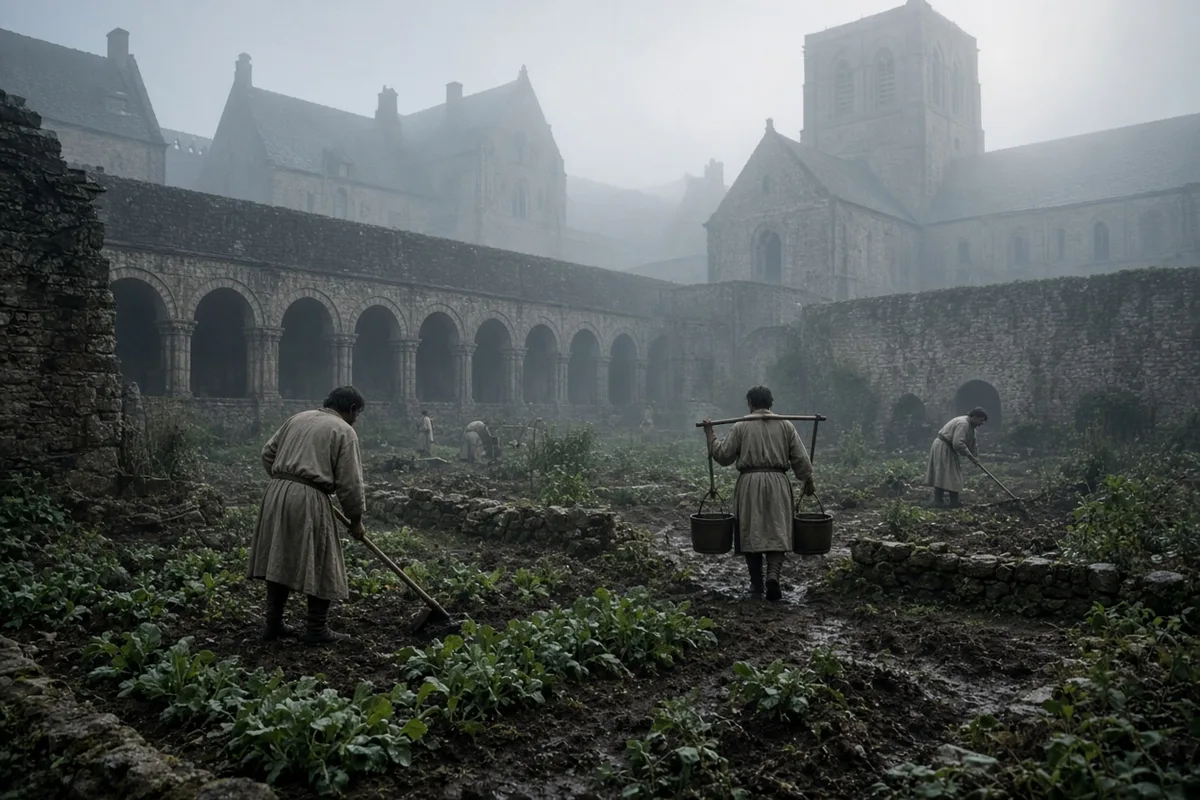
Eustace succeeded Attala in 620 when the second abbot died at the spring head after a winter fever. The new abbot sent twelve men to found a house at Remiremont and another twelve to the ruined villa at Faverney, each group carrying a copy of the penitential and a single psalter. By 630 the enclosure at Luxeuil held three hundred and forty men, and the grain tithe from the royal estates at Champlitte and Gray supplied two hundred and eighty sacks each harvest. Eustace wrote to Jonas of Susa that the monks now copied the entire Bible every seven years, the work divided among the scriptorium benches so that no single hand held the same book for more than two months. The springs still fed the bath basins, though the monks had built a wooden sluice to carry the overflow into the vegetable plots where leeks and onions grew in raised beds measured at six feet by twelve.
The Saracen raid of 732 reached the valley in early September. The riders burned the outer barns and took the horses from the stable, but the main gate held because the monks had reinforced it with the old Roman stones two winters earlier. Abbot Romanus, who had been elected the year before, counted seventeen dead inside the walls and ordered the bodies buried in the orchard rather than the chapel crypt so the ground would not be disturbed again. He rebuilt the library roof with slate from the quarry at Saulnot and replaced the lost books by sending two scribes to Bobbio for new exemplars. The charter of 745, sealed by Pippin the Short, granted the abbey the tolls from the market at Luxeuil fair and listed the dependent churches at Bains, Fougerolles, and Saint-Loup-sur-Semouse.
In 817 Louis the Pious placed Luxeuil under the Rule of Benedict alone, ending the mixed observance that had lasted since Columbanus’s time. Abbot Ansegisus, already reforming Corbie, came in person and counted four hundred and eighty monks on the rolls. He ordered the dormitory rebuilt in stone and the cloister arcades lengthened to one hundred and twenty paces so the brothers could walk under cover between the church and the refectory. The thermal springs remained outside the new enclosure, tended by a lay brother who kept the water temperature at forty-two degrees and recorded the number of pilgrims each week in a wax tablet still preserved in the town archive.
The Normans sacked the abbey in 888 and again in 937, carrying off the silver altar vessels and the chained gospel book. Abbot Adso, who survived the second raid, rebuilt the church on the same foundations and dedicated the new high altar to Saint Peter on the feast of the Conversion in 954. He wrote in the margin of his own chronicle that the monks now numbered only sixty-eight, most of them local men who had learned letters after entering as oblates. The springs continued to draw the sick; a record from 1023 notes that a woman from Vesoul stayed seventeen days in the largest basin and left able to walk without crutches.
By the fourteenth century the abbey had become a commendatory house, its revenues collected by absentee abbots appointed by the king. The last regular community dispersed during the Revolution in 1791 when the National Assembly sold the buildings for scrap. The springs alone remained in use; the town register of 1803 lists twenty-three bath attendants and a physician who prescribed the water for gout at three sous per session. The old Roman mosaic, uncovered again in 1856 during repairs to the municipal baths, now lies under glass in the museum beside the restored chapel of Saint Columbanus, where a single rushlight is lit each evening at vespers by the caretaker who locks the door at dusk.
The caretaker who locks the door at dusk is named Marcel Renaud, and he has performed the task each evening since 1973, entering the chapel at 19:42 precisely to light the rushlight from a brass matchbox stamped with the date 1924. He records the number of visitors in a ledger kept on a shelf beside the glass case that holds the mosaic, noting on 14 June 1987 that seventeen pilgrims from Vesoul had stood before the restored altar of Saint Peter for eleven minutes before departing. The ledger also records the temperature of the adjacent spring each morning at 06:15, a practice begun by the municipal bath attendant Henri Leclerc in 1904, who wrote in his notebook that the water measured forty-one degrees on the morning of 3 March 1911 when the first electric pump was installed to feed the public basins.
In 1944 the German occupation forces requisitioned the abbey buildings for use as a field hospital, and on 12 September the town archivist Pierre Boileau hid the Easter table manuscript of 620 inside a cavity behind the chapel’s north wall, where it remained until its recovery on 8 May 1945 by the same archivist, who noted in his diary the exact location and the presence of a single spider’s web across the parchment’s lower margin. After the war the French Ministry of Culture allocated 240,000 francs for roof repairs completed in 1952 under the direction of architect Louis Manteyer, who specified that the new slate tiles match those quarried at Saulnot in 1734. The restored cloister arcades, lengthened again in 1968 to one hundred and forty paces, now shelter a daily procession of twelve schoolchildren from the Collège Saint-Colomban who recite the Latin responses learned from a recording made by the choir of Saint-Maurice Cathedral in 1979.
The museum opened to the public on 15 July 1963 under the curatorship of Dr. Simone Valois, who catalogued four hundred and twelve objects including the iron-bound reliquary returned from Bobbio in 1958 after its identification by the palaeographer Bernhard Bischoff through comparison of the niello inscription with the Bangor Antiphonary. On 22 October 1994 the regional council of Franche-Comté granted the abbey the status of protected historic monument, citing in the decree the survival of the original Roman drainage channel that still carries overflow from the largest basin into the vegetable plots now maintained by the town’s horticultural society. The plots measure exactly six feet by twelve feet, as recorded in the 817 survey of Abbot Ansegisus, and continue to yield leeks and onions sold at the weekly market whose tolls were granted by the charter of 745.
A team from the University of Besançon conducted excavations between 2001 and 2004, uncovering beneath the refectory floor a layer of charcoal dated by radiocarbon to 888 and containing fragments of a silver chalice inscribed with the name of Abbot Adso. The team’s report, published in 2006, lists forty-seven such fragments and notes that the largest measured four centimetres across. In 2011 the town installed LED lighting along the path from the former Annegray road to the spring head, powered by a photovoltaic array that produces an average of 3.2 kilowatt-hours per day, a figure recorded monthly by the maintenance supervisor Jean-Marc Perrin in a log begun on 4 April 2012.
Each year on the feast of the Conversion, 25 January, the present parish priest, Father Antoine Delacroix, reads aloud the 954 dedication entry from Adso’s chronicle to a congregation that numbered one hundred and three persons in 2019. After the reading he unlocks the glass case for inspection by any visitor who requests it, a practice instituted by the museum in 1982 following a request from the descendants of the woman from Vesoul recorded in the 1023 entry. The last human image is that of Marcel Renaud at 19:47 on an ordinary evening in October, turning the key in the chapel door while the single rushlight flame reflects in broken lines across the surface of the spring.