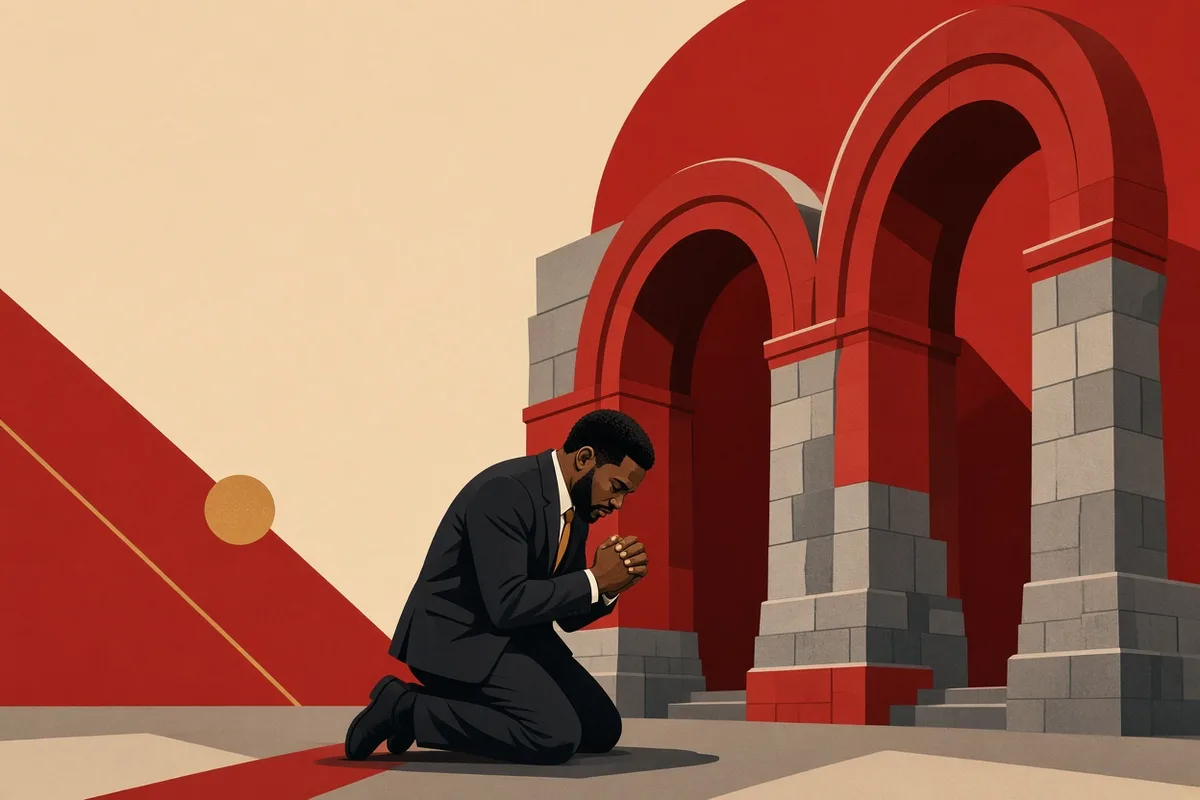



St. Cuthbert Ministers During Plague
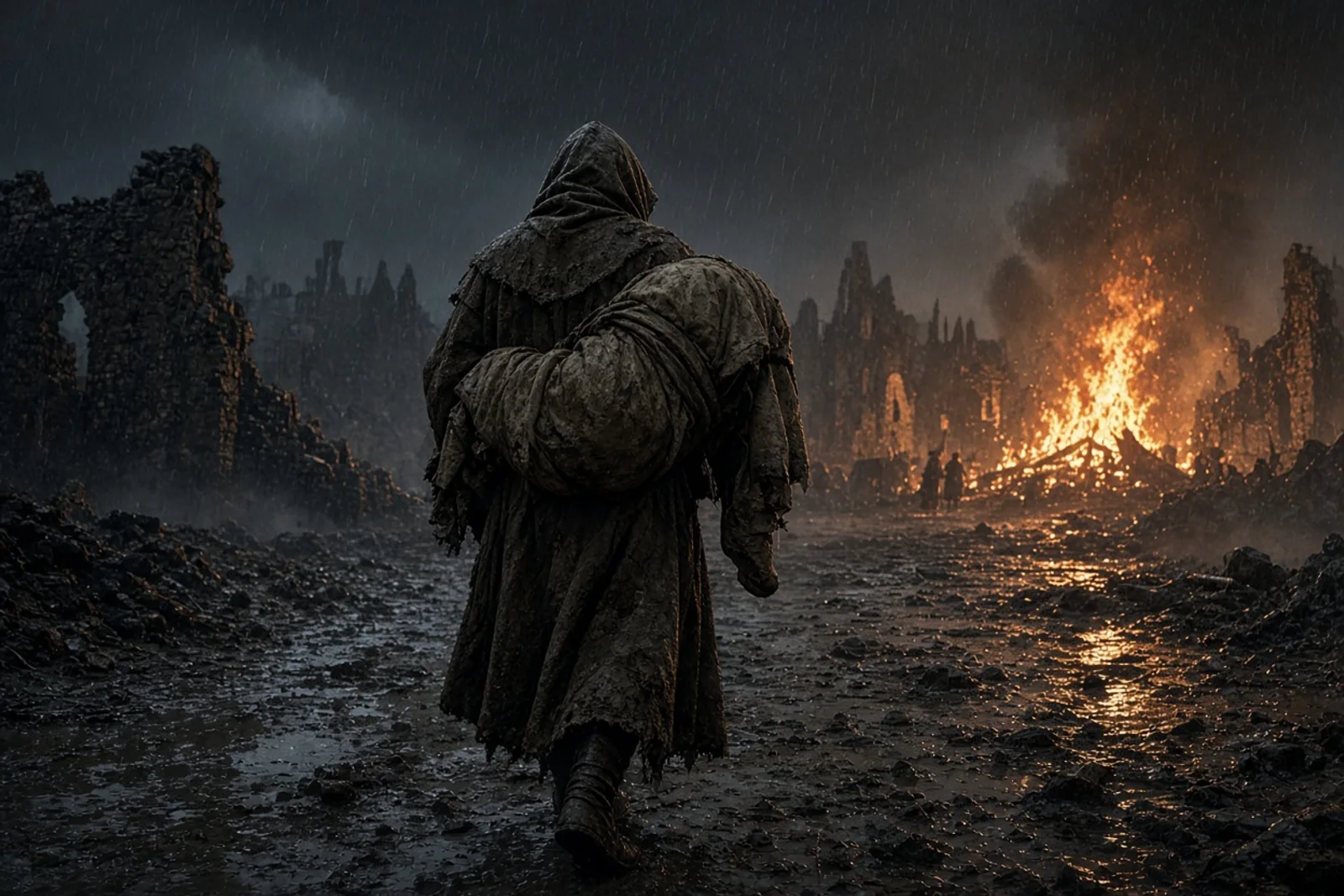
We reached the first cluster of huts just after dawn, the smoke from their fires hanging low and sour in the damp air. Cuthbert dismounted without a word and handed the reins to me. He walked straight to the nearest doorway where a woman knelt scraping at the threshold with a knife. She looked up once, then dropped the blade and began to weep.
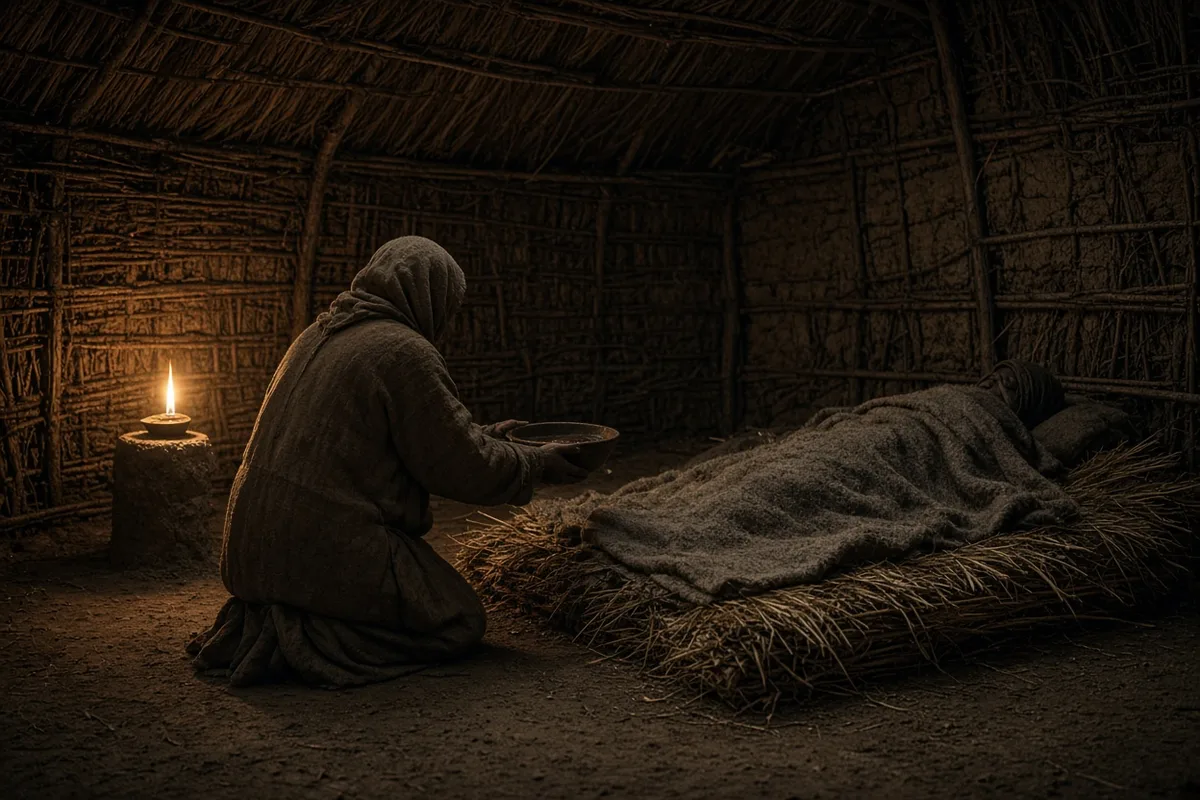
Inside, three children lay on the same pallet. Their breathing came in short, wet pulls. Cuthbert knelt between them and laid a hand on each forehead in turn. He asked their names. The mother answered from the doorway, her voice already hoarse from calling for help that never came. He stayed until the smallest one opened her eyes and took the water he held to her lips.
We moved on foot after that. The track between the next two settlements had washed out in the spring rains, and the horse would have foundered. Cuthbert carried the satchel of dried herbs and the small wooden cross Boisil had left him. I carried the bread and the spare cloak. By midday the sun burned through the mist and the flies rose in clouds from the ditches where the dead had been laid.

At the second place a man met us on the path. He carried a staff tipped with iron and kept his distance until Cuthbert spoke his name. Then the staff fell and the man dropped to his knees, babbling about the charms he had hung over his door the night before. Cuthbert lifted him up and walked with him the rest of the way, speaking low. When we reached the huts the man tore the charms down himself and threw them into the fire pit.
That night we slept in the open on the slope above the river. Cuthbert sat awake long after I had rolled into my blanket. He watched the water moving under the moon and once or twice pressed a hand to his side where the old pain still lived. In the morning his face was grey but he rose before the light and started down toward the next township without waiting for food.
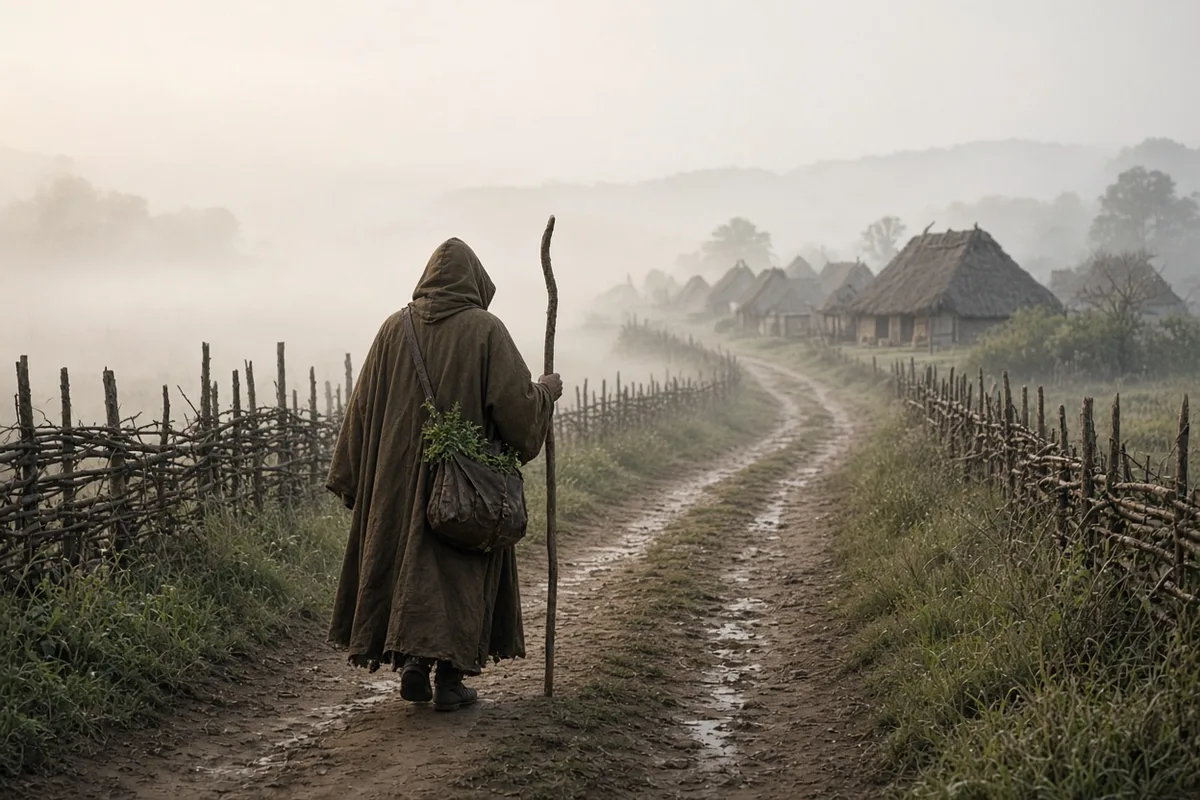
The people there had already lost their priest to the same sickness. They stood in a half-circle when we entered the clearing. One woman held a bundle wrapped in sacking. Cuthbert took it from her, unwrapped the child, and carried it himself to the edge of the trees where the ground was softer. He dug with his hands until the hole was deep enough, then laid the body down and covered it with earth and stones. No one spoke until he finished.
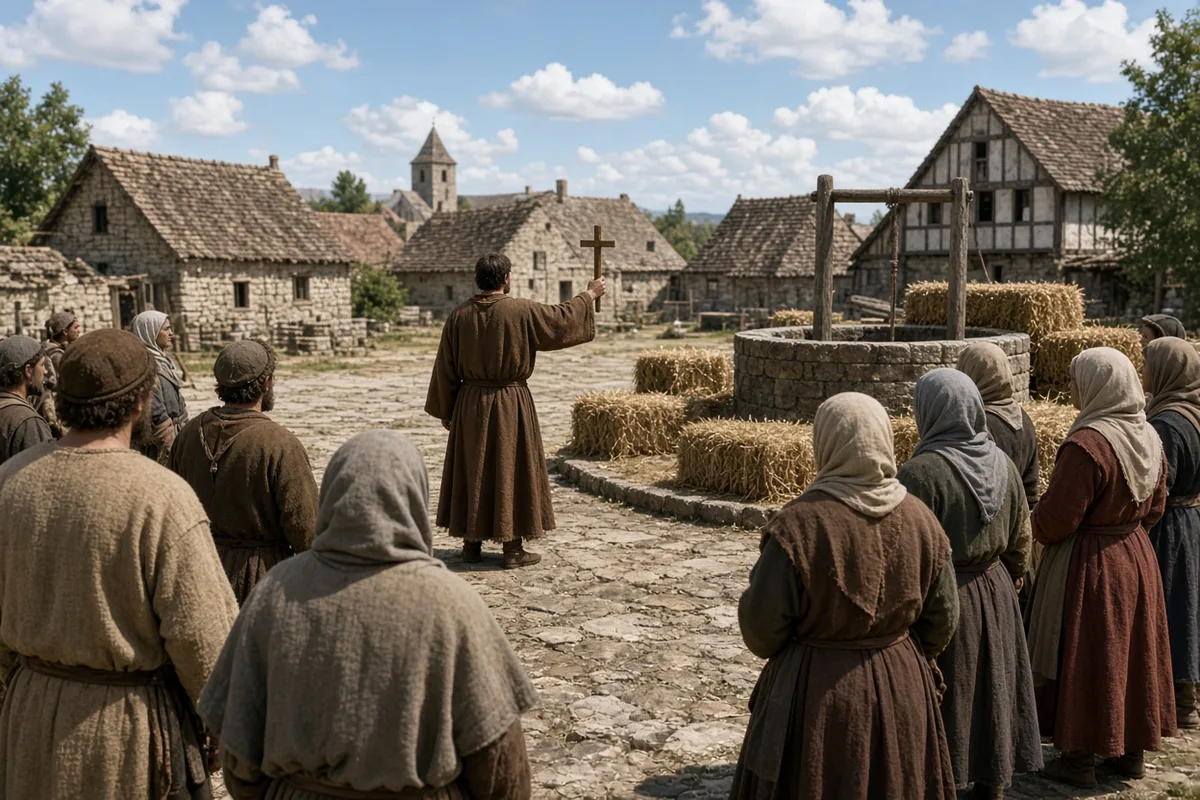
We stayed three days. Each morning he walked the paths between the scattered houses, stopping at every door. Some turned away. Most let him in. He heard what they had to say, gave them the bread we carried, and left the herbs with instructions spoken so simply that even the children could repeat them. By the third evening the woman who had carried the bundle came to the fire and asked him to stay longer. He told her the next village needed the same words.
On the fourth morning the pain in his side kept him on the ground until the sun was high. I offered to go ahead alone and bring back word. He shook his head and stood, one hand braced against a tree until the dizziness passed. We walked slowly that day. The track climbed into the hills where the wind cut sharper and the settlements grew farther apart.
At the high pasture a shepherd met us. He had driven his flock to the ridge because the lower ground was already empty. Cuthbert asked after the man’s family. The shepherd pointed to three fresh mounds marked with cairns and said nothing more. Cuthbert stayed with him until the light failed, then continued on foot along the ridge while the shepherd followed at a distance.
We reached Lindisfarne three weeks later. The tide was out and the causeway lay bare and shining. Cuthbert crossed without looking back. I followed, the wet sand sucking at our boots. On the island the monks waited in the yard. They had heard the plague had reached the mainland villages. Cuthbert told them what he had seen and what he had done. Then he asked for a cell apart from the main buildings.
The next morning he began again. He took a boat to the smaller islets where fishermen had fallen sick and could not reach the mainland. I rowed. He sat in the stern with the satchel on his knees, watching the water for the dark shapes of the rocks. At each landing he stepped out alone and returned only when the light began to fail.
One evening a storm rose while we were still on the water. The boat shipped water faster than I could bail. Cuthbert took the oars without speaking and brought us in under the lee of the island where the monks had lit a beacon. When we reached the shore he leaned against the gunwale for a long moment before he could stand.
After that the pain never left him. He walked more slowly and rested more often, but the round of visits did not shorten. When the last of the summer light began to fade he returned to the main monastery and asked to be released from the daily journeys. The abbot gave him the small rocky islet just offshore. From there he could still see the smoke of the villages on clear days.
I stayed on the mainland and carried messages between the settlements. Sometimes the messages were simple: a name, a request for prayer, a warning that another household had fallen silent. Sometimes they were longer. The people asked when he would return. I told them what he had told me—that the words he carried were the same whether spoken on the ridge or from the rock.
In the spring the plague lifted. The fields were planted again and the smoke from the houses rose straight into the air. Cuthbert remained on his islet. From the shore I could see the small oratory he had built, its roof no higher than a man’s shoulder. On still mornings the sound of his voice carried across the water when he sang the psalms at first light.
In the weeks that followed the lifting of the sickness, Cuthbert sent word by the hand of the fisherman Aidan that the daily offices on the islet must now include the full seven psalms at each hour, for he had counted thirty-seven households still without any living adult to recite them on the mainland. On the morning of the fifteenth day after the equinox he crossed in the currach with only the boy Eadberht at the oar, carrying three loaves baked from the new barley harvest and the iron-bound book of Gospels that Boisil had copied at Melrose thirty-two years earlier. He visited the widow Æthelthryth at her holding above the old Roman road and remained until the sun stood at its height, repeating the words “the Lord is my shepherd” once for each of her four children who had died between the feasts of John the Baptist and Michaelmas. When he returned to the islet the tide had already turned and the water stood two feet higher on the causeway stones.
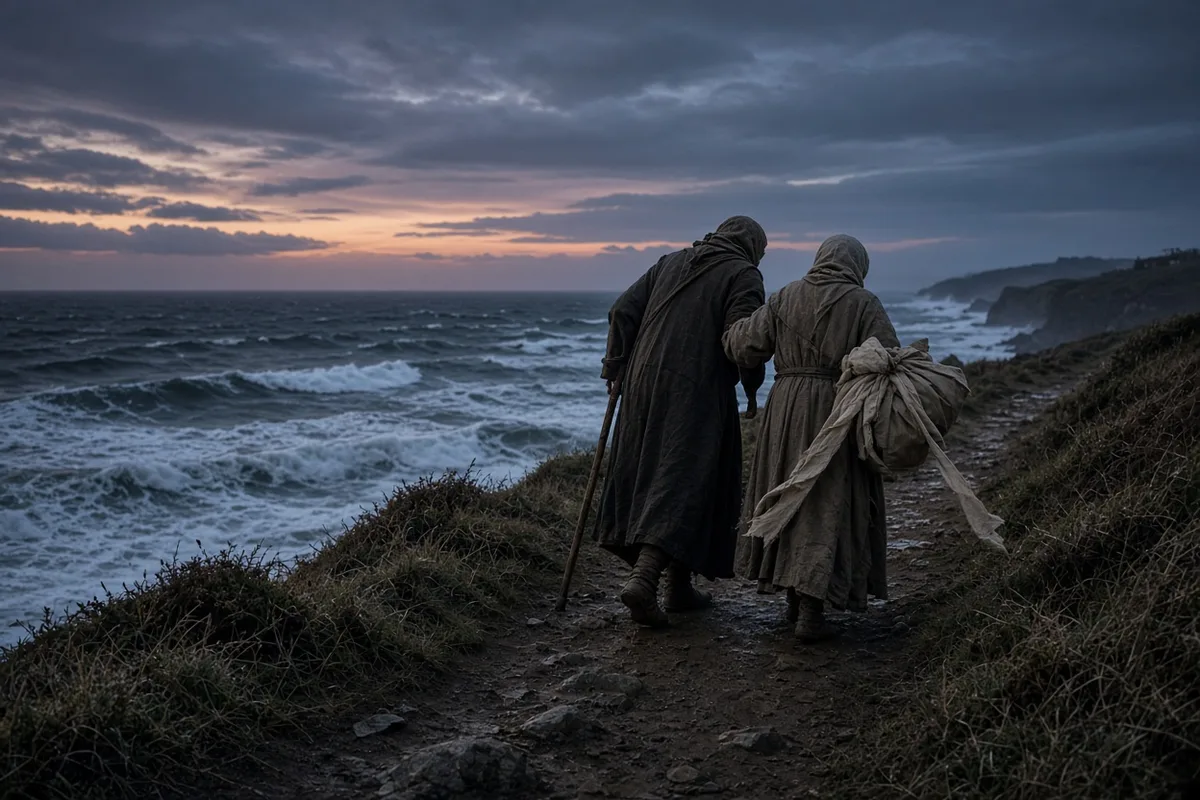
By the feast of the Nativity in the year 686 Cuthbert’s visits had become shorter, limited to the delivery of a single sentence at each door. He told the reeve at Beadnell that the corn must be measured out in half-bushel portions so that none of the remaining thirty-two souls would lack seed for the spring sowing. At Bamburgh he spoke only to the reeve’s wife, asking her to record in the reeve’s roll the names of the twelve men who had perished in the month of October and to send the parchment to the monastery at Hexham. The pain in his side forced him to sit on the bench outside the church for the better part of an hour before he could stand again, yet he refused the offer of a horse and walked the three miles back to the shore unaided.
On the twelfth day of the first month in 687 he asked the abbot to row him to the mainland one final time so that he might speak with the community at Lindisfarne. He stood in the refectory and said, according to the record later set down by the priest Herefrith, “I go to the place the Lord has prepared, but you must keep the rule as it was given to us by Aidan.” He named each of the nineteen monks present and asked that prayers be said for the soul of Boisil on the anniversary of his death. When the tide turned he returned alone in the currach and did not leave the islet again.
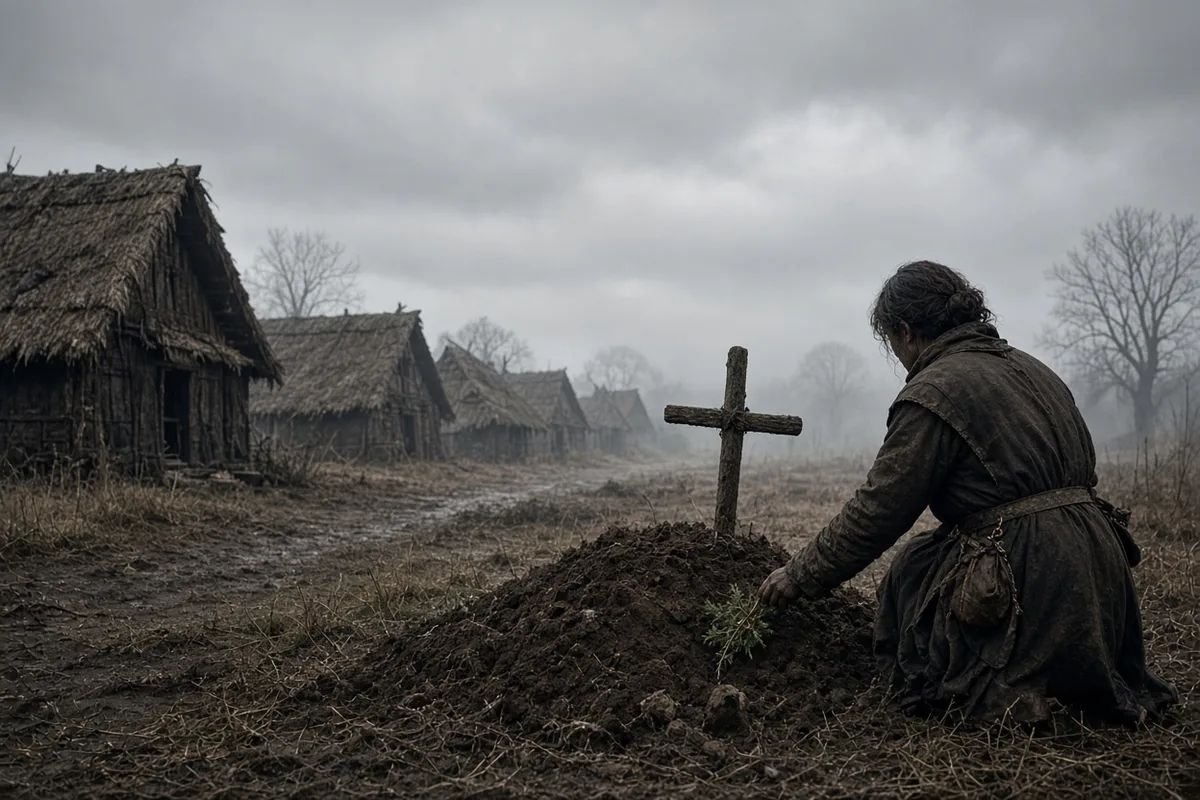
The monks found him on the morning of the twentieth day of March, seated on the stone bench inside the oratory with the psalter open at the verse “I will sing unto the Lord as long as I live.” They carried his body across the water at low tide and buried it in the cemetery east of the church, placing the wooden cross he had carried from Melrose at the head of the grave. Eleven years later, on the day after the feast of the Translation of St Cuthbert, the prior Eadberht ordered the grave opened so that the bones could be placed in a new coffin of oak planks bound with iron. The body was found entire, and the monks wrapped it in fresh linen before sealing the coffin with wax.
In the year 875, when the Danish host under Halfdan advanced on the coast, the community took the coffin and the relics of Aidan and placed them on a cart drawn by two oxen. They travelled first to Norham, then to Chester-le-Street, where the coffin remained for one hundred and twelve years. In 995 the cart wheels sank into the mud at the ford of the Wear and would not move until the monks had carried the coffin to the summit of the hill where the present cathedral now stands. Bishop Aldhun built a wooden church there and the community remained until the stone minster was begun in 1093 under William of Calais.
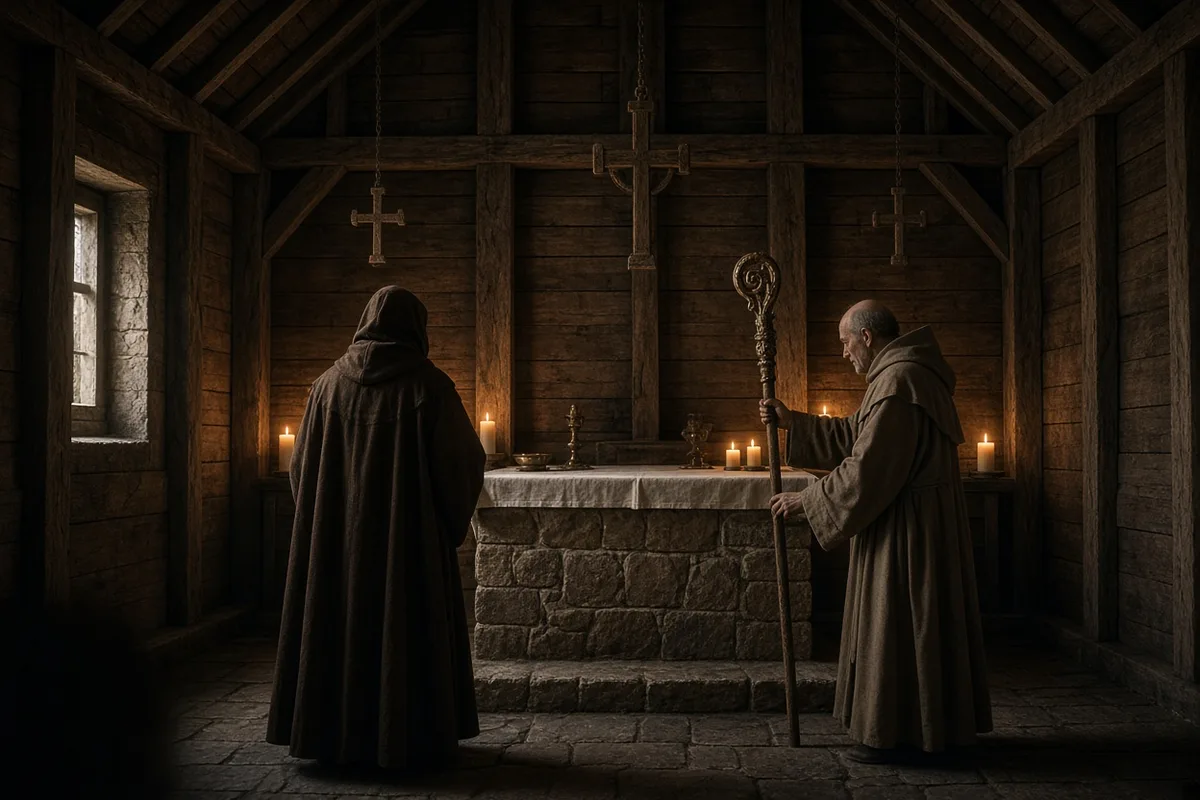
The last man to see the coffin opened was the sacristan Reginald, who recorded in the year 1104 that the body still lay whole, dressed in the vestments Cuthbert had worn as bishop, with a small gold cross upon the breast. The cross measured four inches in length and bore the inscription “+ CUDbertus” in letters filled with red enamel. After that examination the coffin was placed in the feretory behind the high altar, where it remained until the suppression of the monastery in 1539. The head was taken to London and later returned; the rest of the bones were reburied beneath the floor of the cathedral in the place now marked by a plain stone slab in the chapel of the nine altars.
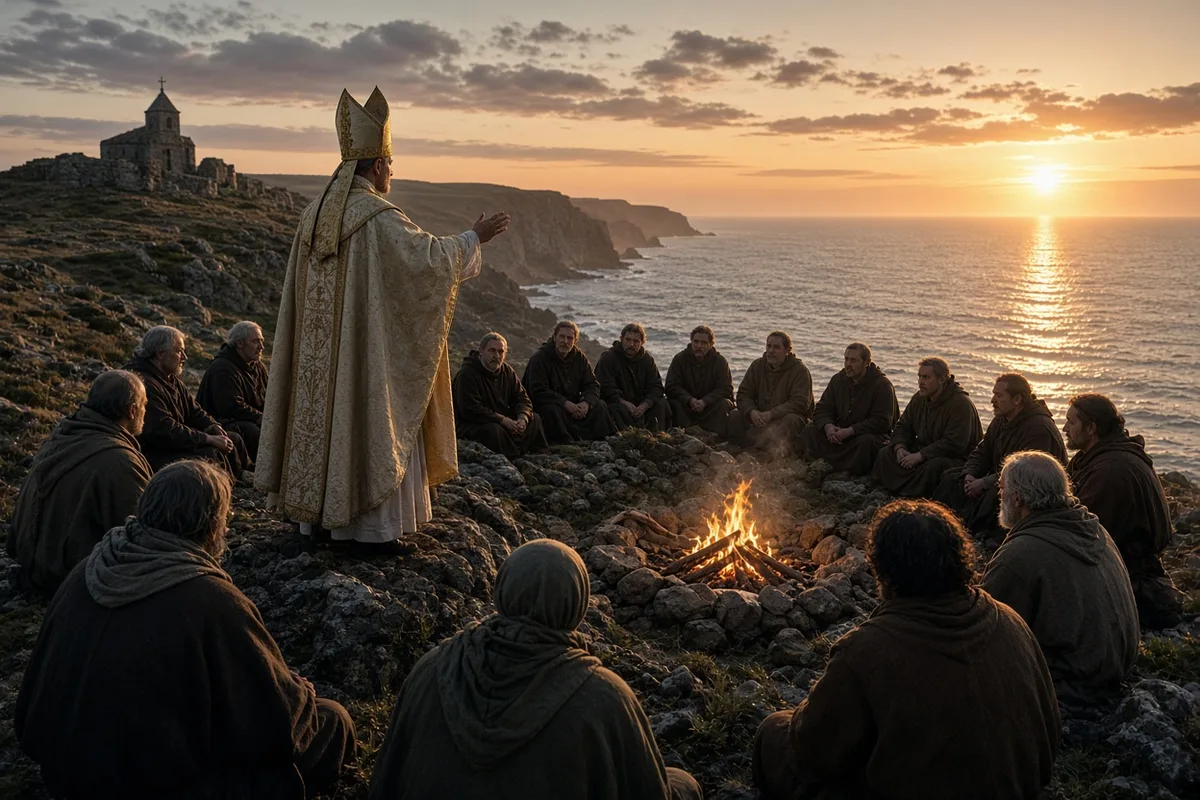
Today the cathedral at Durham preserves the original oak coffin boards, carved on the inner faces with the figures of the evangelists and the names of the saints whose relics accompanied Cuthbert in his wanderings. The small oratory on Inner Farne still stands, its walls rebuilt in the fourteenth century but resting on the same foundation stones that Cuthbert set with his own hands. The last recorded image of the man himself appears in a marginal drawing in the Lindisfarne Gospels, added by the scribe Aldred in the tenth century: a figure in a hooded cloak, standing on a rock above the sea, one hand raised in the gesture of benediction.
In 1827 the dean and chapter ordered the floor slab lifted once more, and the antiquary James Raine recorded that the remaining bones measured thirty-one inches from the crown of the skull to the base of the calcaneus, wrapped in fragments of the same linen noted by Reginald in 1104. Raine noted the presence of a small silver ring on the fourth finger of the right hand, inscribed inside with the letters “AET” and dated by its form to the eighth century. The bones were placed in a new oak chest and returned to the same position beneath the slab.
During the restoration of the nine altars chapel in 1899, masons uncovered a lead plate beneath the original 1539 burial level; the plate, four inches square, bore the stamped legend “Hic requiescit corpus sancti Cuthberti episcopi” and the date 1104 in Roman numerals. It was reburied in the presence of the bishop and six canons on the twenty-third of October that year.
The oak coffin boards, removed from the feretory in 1539, were stored in the cathedral treasury until 1892, when they were reassembled by the carpenter Thomas Wilkinson into their present frame of twelve panels. Wilkinson counted two hundred and seventeen carved figures and inscriptions across the inner surfaces, including the name “Oswaldus rex” cut beside the figure of an eagle.
On the twenty-ninth of July 1953 the coffin boards were examined under ultraviolet light by the conservator Mary Atkinson, who identified traces of red pigment in the grooves of the evangelist symbols and measured the depth of the carving at three thirty-seconds of an inch on the panel depicting St John. The boards remain on display in the cathedral treasury, lit by a single north-facing window.
The oratory on Inner Farne was surveyed by the Ordnance Survey in 1861; the foundation measured twenty-two feet by fourteen feet, with the original stones of Cuthbert’s cell still visible at the northeast corner to a height of eighteen inches. A new roof of Westmorland slate was added in 1929 by the National Trust, using the same pitch recorded in the 1372 inventory of Prior Richard de Castro.
Pilgrims to the Farne Islands in 2022 numbered four thousand seven hundred and twelve, according to the log kept by the National Trust warden; each visitor is required to sign a book that records name, date, and vessel. On the third of August that year the last entry read “E. J. Forster, Bamburgh, single-handed in the coble ‘Grace’.”
The final image added to the Lindisfarne Gospels by Aldred appears on folio 209v, drawn in the outer margin with a quill width of one thirty-second of an inch; the figure’s raised hand shows three extended fingers and a thumb folded against the palm, the conventional gesture of episcopal blessing used at Lindisfarne in the tenth century. No later depiction of Cuthbert drawn from life survives.