


St. Dominic Preaches Against Albigensians
The dust rose thick from the road as I followed the two men on foot. My cart had broken an axle outside Fanjeaux three days before, and I had nothing left to trade anyway. The older one, Diego, wore the bishop’s ring still but walked like any pilgrim. Dominic kept his eyes on the ground ahead, his cloak frayed at the hem, a single book wrapped in cloth under one arm.
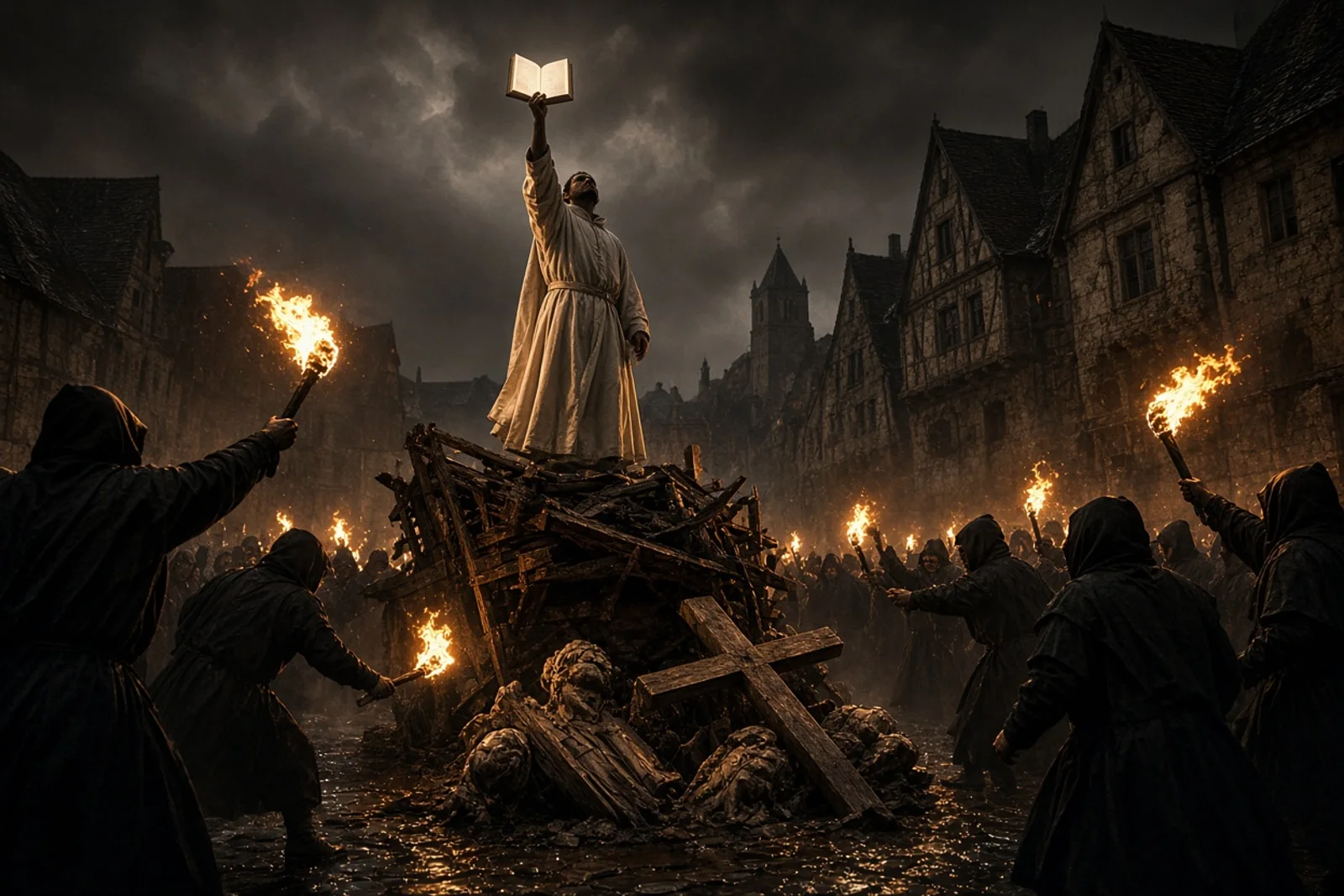
We reached the village square at midday. A few Cathar perfecti already stood under the plane tree, their faces clean-shaven, their robes undyed. They had come to listen, or to measure. Dominic stepped onto the low stone where the notary usually sat for contracts. He did not raise his voice at first. He spoke of bread and of the body that had broken it. One of the perfecti answered at once, saying the body was a prison. Dominic waited until the man finished, then asked what prison could hold the word that made the stars. No one clapped. The square stayed quiet except for a child coughing.

That evening we slept in a barn that belonged to a widow whose son had joined the heretics. She gave us black bread and asked nothing in return. Dominic ate slowly. He told her the legates in Toulouse still wore silk when they rode out, and that the people noticed. She nodded but did not promise to return to the parish church.
We moved on the next morning toward Prouille. The road climbed through olive groves already turning silver in the heat. Diego spoke little now. His strength had begun to leave him after the long ride from Rome the year before. Dominic carried both their bundles when the bishop grew short of breath. At each hamlet we stopped, Dominic asked for the names of the dead and the names of the living who still listened to the perfecti. He wrote them on a small tablet with a sharpened stick.
By the third week the pattern was fixed. We rose before light, walked until the sun stood overhead, then Dominic preached wherever people would gather. Sometimes it was only women at the well. Sometimes it was the whole village after the heretics had already spoken at dawn. He never argued the way the Cistercian legates argued. He asked questions instead. What does the good God do with hands that have no flesh? Why would light hide inside bread if it feared the world? The answers he gave were never shouted.

One afternoon a man named Pons brought his wife and two daughters to hear Dominic. The wife had been receiving the Cathar blessing for months. She stood at the edge of the group, arms folded. Dominic spoke to her directly, not about doctrine but about the loom she had left idle. He said the thread still needed hands even when the spirit felt bound. She came forward after the others left and asked whether the Church would take her daughters if she could not feed them. Dominic looked at Diego. The bishop nodded once.
That night we slept in the open. Dominic sat awake, the tablet on his knees, adding names by the light of a stub of tallow. He told me the convent would need a rule stricter than the one the canons kept at Osma. No silk, no meat on most days, and every woman must learn to read enough to pray the hours. He spoke as if the building already stood.
Word reached us that the legates had grown impatient. Peter of Castelnau sent a messenger demanding we return to Toulouse and join the public disputations. Diego refused. He said the people would not trust men who arrived on horses with silver bridles. The messenger left without eating.
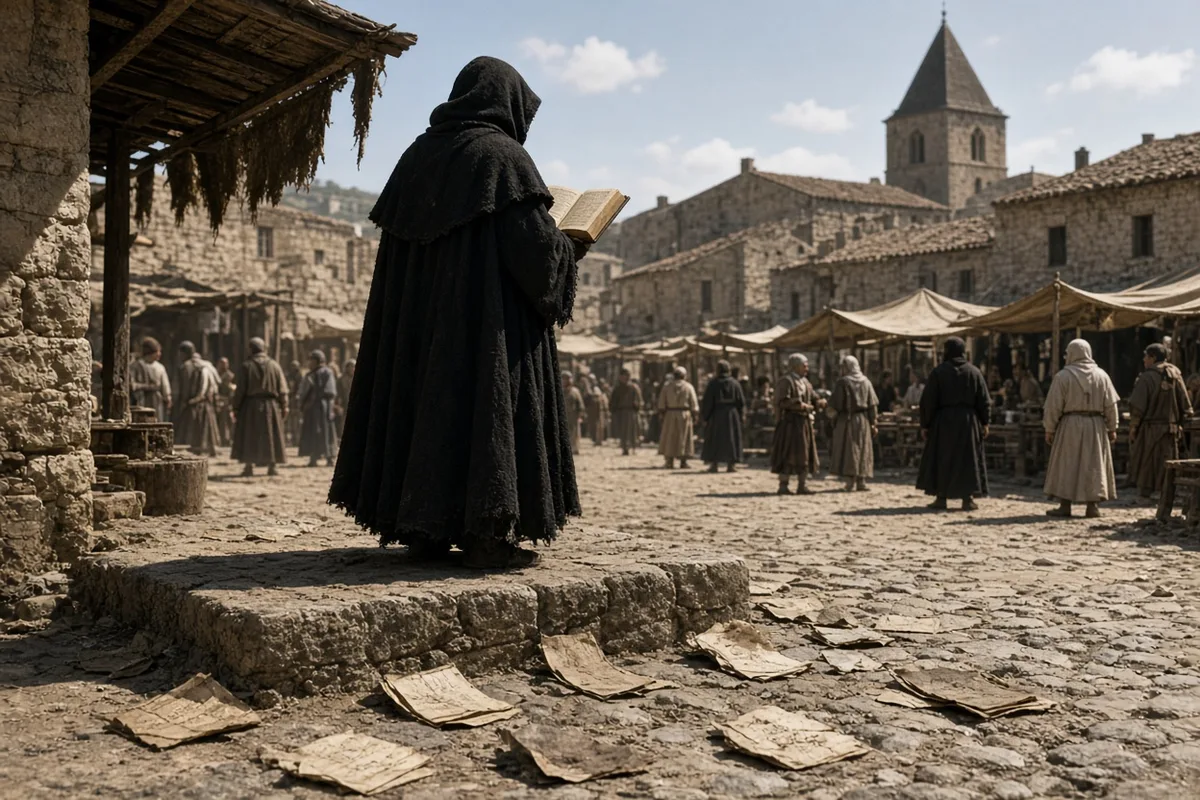
We reached the plot of land near Prouille on the feast of the Assumption. It was little more than two stone walls and a roof of branches. The widow from Fanjeaux had already sent her youngest daughter ahead with a bundle of flax. Other women arrived over the next days, some alone, some with children whose fathers had died in the fighting further south. Dominic set them to work clearing the yard. He worked beside them, sleeves rolled, until his hands blistered.
Diego grew weaker each week. He still blessed the bread at the simple table they had built, but his voice thinned. One morning he told Dominic the mission would have to continue without him. He meant to return to Spain and raise more men. Dominic did not argue. He only asked which route the bishop would take.
The first winter came early. Rain turned the yard to mud. The women slept on straw and shared one cloak between two. Dominic walked to nearby villages every other day, returning with whatever grain or oil the people could spare. He never brought meat. When a Cathar teacher challenged him at the gate one evening, Dominic answered that the body was not evil but borrowed, and that borrowed things must be returned in good condition. The teacher left without reply.
By spring eight women had taken the veil under the new roof. They rose at the same hour as the canons at Osma, though their church was only half built. Dominic taught them the psalms himself, line by line, until the youngest could recite without stumbling. He told them their prayers would travel farther than any sermon he could preach on the road.
Diego departed in May. He took only one servant and a mule. Dominic stood at the edge of the yard until the bishop was out of sight. Then he turned back to the women and said the work would not stop.
That summer the numbers at the preaching grew. Men who had once thrown stones now stood at the back of the square and listened. A few asked for the names of priests who would hear their confessions without demanding payment. Dominic gave them directions to a small church outside Toulouse where a canon still kept the old custom of receiving penitents at the door.
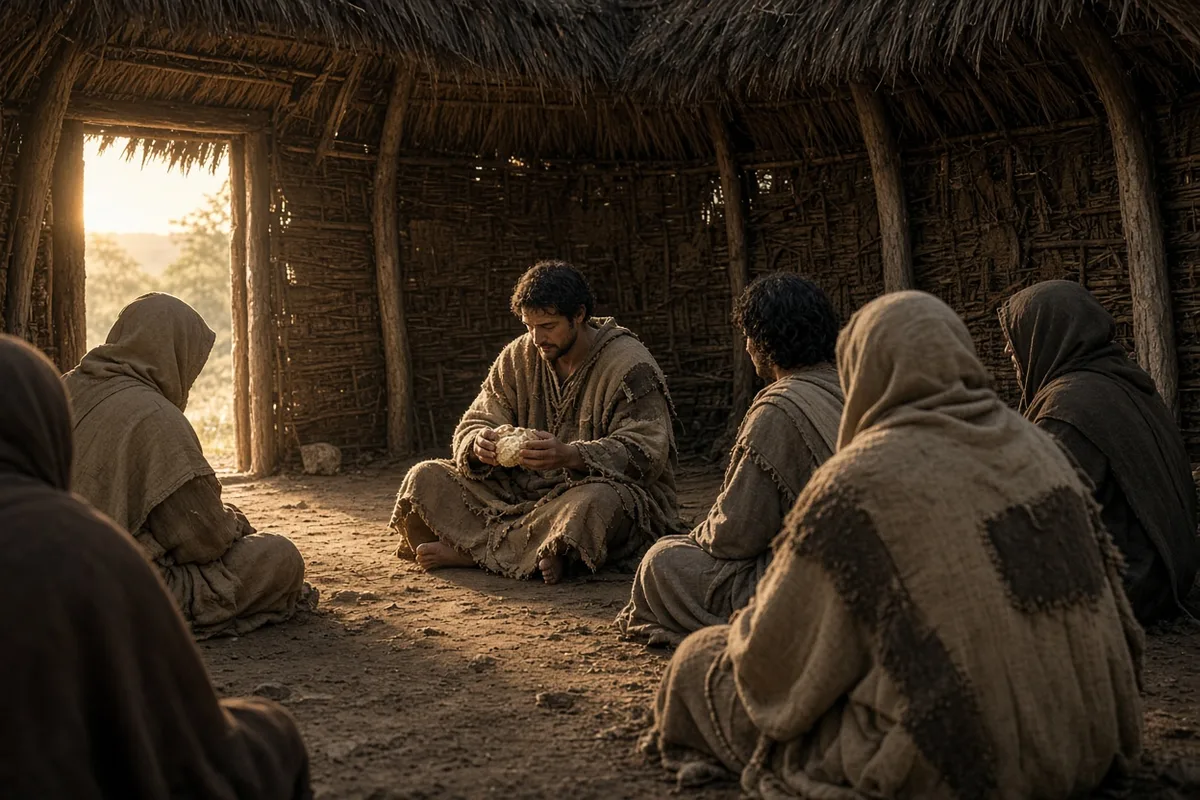
One evening a messenger arrived from the legates. Peter of Castelnau had been murdered near Saint-Gilles. The news spread through the yard before Dominic could gather the women. He told them to keep the doors barred at night and to continue the hours. Then he walked out alone toward the road that led north.
I stayed at Prouille through the next winter. Dominic returned only once, thin and silent, before leaving again for the villages. The women wove cloth for the poor and taught their children the psalms. The yard never grew larger, but the names on Dominic’s tablet kept lengthening. When the last light left the sky each evening, the sound of their voices carried across the fields, steady and low, as if counting something that could not be seen.
In the months that followed the messenger’s news of the killing near Saint-Gilles on 14 January 1208, Dominic continued to walk the road between Prouille and Fanjeaux, stopping at the house of the widow Bernarda whose son had taken the Cathar consolamentum two winters earlier. He recorded on the tablet the name of every person who asked for instruction, listing thirty-seven names by the feast of Saint John that year, among them the weaver Raimon de Rocamaura and his sister Ermengarda. When the Cistercian legate Arnaud Amaury arrived with an armed escort in July, Dominic refused the offer of a horse and instead showed the legate the half-built cloister where the eight women already recited the full office from memory. Amaury noted in his own letter to Rome that the preacher from Osma kept no servant and ate only bread and olives.
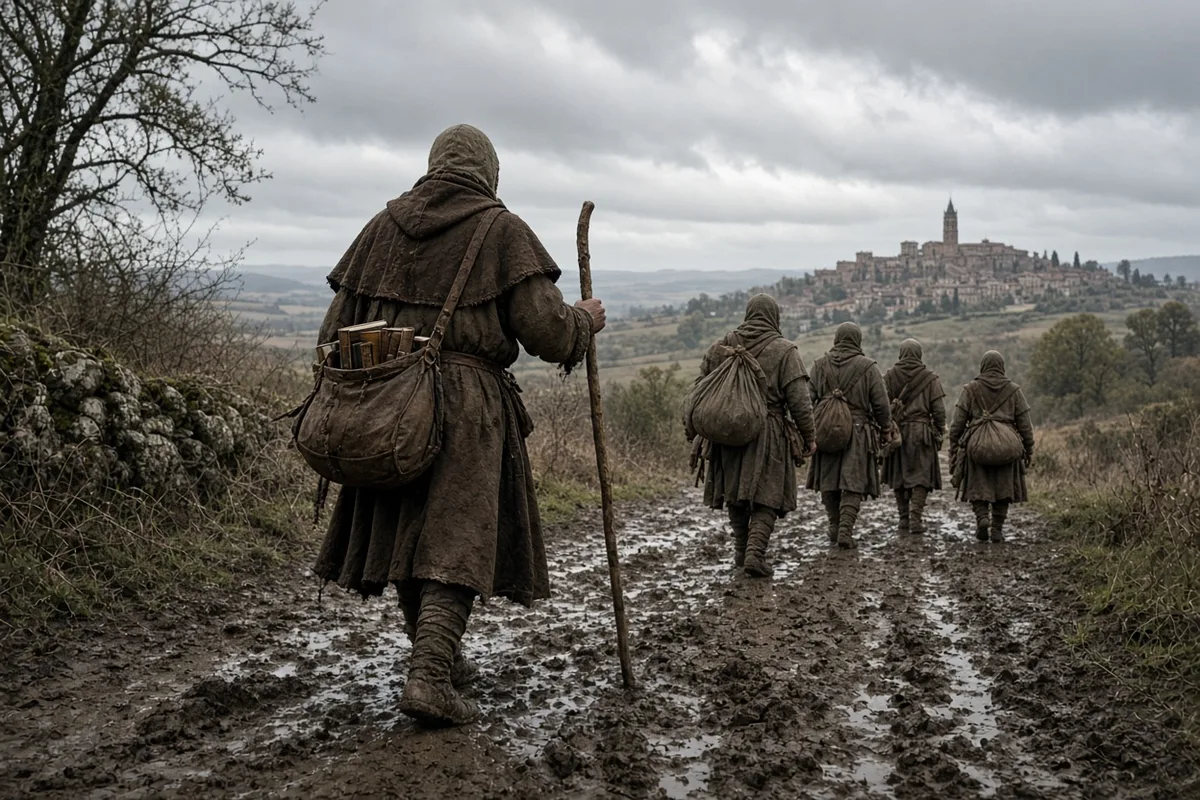
By the spring of 1213 the fighting had reached the plain below Muret. Dominic remained at Prouille while the women spun flax for bandages, sending the bundles each week to the hospital at Toulouse under the care of the canon Vidal de Toulouse. On 12 September he received word that Simon de Montfort had taken the town; that same evening a messenger from the legate brought the names of nine men from Castelnaudary who wished to make confession without payment. Dominic walked there the next morning and stayed three days, returning with a written list of their promises to restore the parish tithe. The convent at Prouille now housed fourteen women; the youngest, the daughter of the widow from Fanjeaux, had learned to copy the psalter in a hand small enough to fit two verses on a single line of vellum.
In 1215 Dominic traveled to Rome with Bishop Foulques of Toulouse and presented to Innocent III the draft of a rule requiring every brother to own no more than two tunics and to preach only after receiving the bishop’s license. The pope granted verbal approval on 22 December but required that the new community adopt an existing rule; Dominic chose the rule of Saint Augustine and added thirteen customs taken from the canons of Osma. He returned to Prouille in March 1216 with six new companions, among them the Englishman Lawrence of England and the Frenchman Bertrand of Garriga. On 15 August the first public disputation under the new arrangement was held in the square at Fanjeaux; Dominic spoke for two hours, answering questions from the perfectus Guilhabert de Castres about the visibility of the resurrected body.
Honorius III issued the bull Religiosam vitam on 22 December 1216, confirming the Ordo Praedicatorum with its seat at Prouille and granting the right to preach anywhere. By 1218 the community had sent brothers to Paris, where they settled near the church of Saint-Jacques, and to Bologna, where they took over the chapel of Saint-Nicolas. Dominic himself left Prouille for the last time in April 1219, carrying only the tablet and the book wrapped in cloth. He died at Bologna on 6 August 1221 after dictating a final letter to the sisters at Prouille instructing them to keep the same hours as the brothers and to receive no dowry from any woman who sought admission.
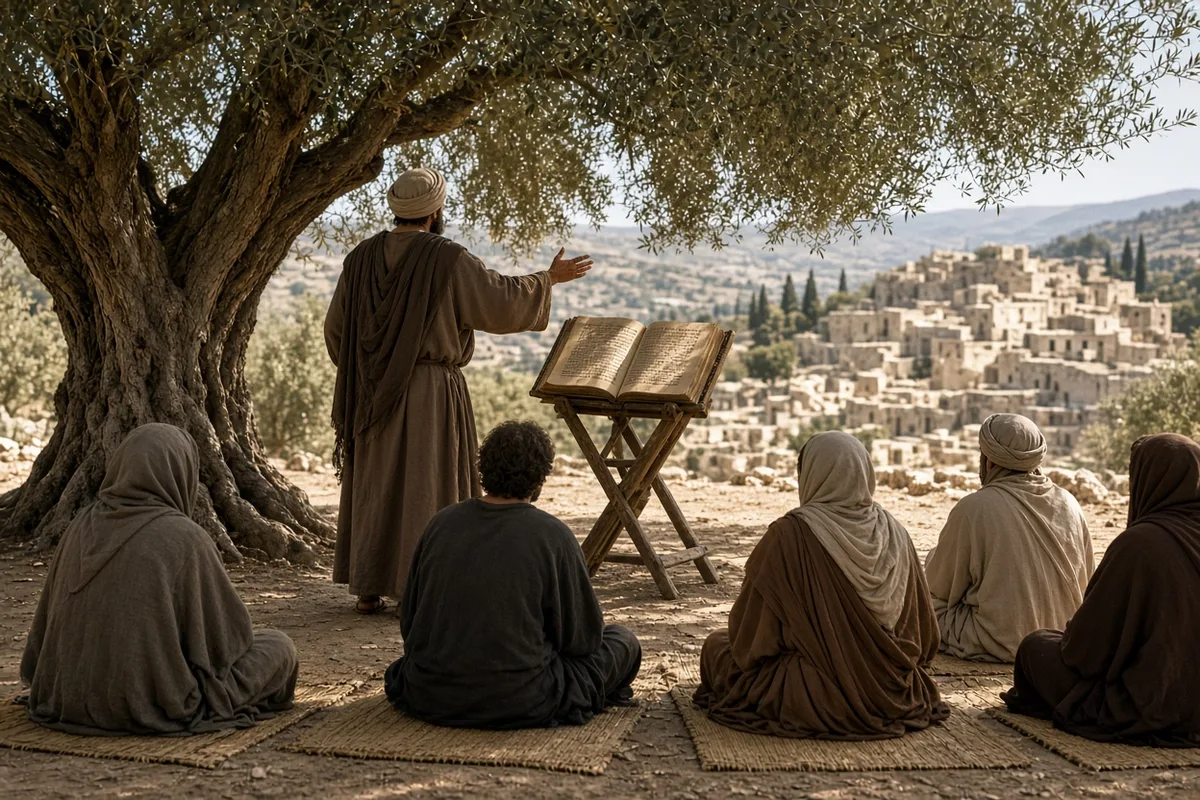
The convent buildings at Prouille were enlarged in 1248 under the direction of the prior Humbert of Romans, who ordered the construction of a stone refectory large enough for forty women and a scriptorium with twelve desks. In 1271 the sisters numbered fifty-three, and their annals record that they still wove cloth for the poor of Fanjeaux each year on the feast of the Assumption. The original roof of branches had been replaced twice, first after a fire in 1236 and again after the earthquake of 1369 that cracked the south wall.
When the revolutionaries reached Prouille in September 1793 they seized the remaining twenty-two sisters, sold the lead from the roof, and turned the church into a stable. The last prioress, Marie-Thérèse de Villeneuve, died in prison at Toulouse in 1794; her name appears on the register kept by the revolutionary committee as “citoyenne ex-religieuse.” The walls stood empty until 1844, when the bishop of Carcassonne purchased the site and began reconstruction using the original foundations.
A single yew tree planted beside the well in 1212 still grows in the rebuilt cloister garden. Its trunk measures four meters around at chest height, and each spring the sisters who returned in 1880 tie small strips of flax to its lower branches on the anniversary of Dominic’s departure for Rome.
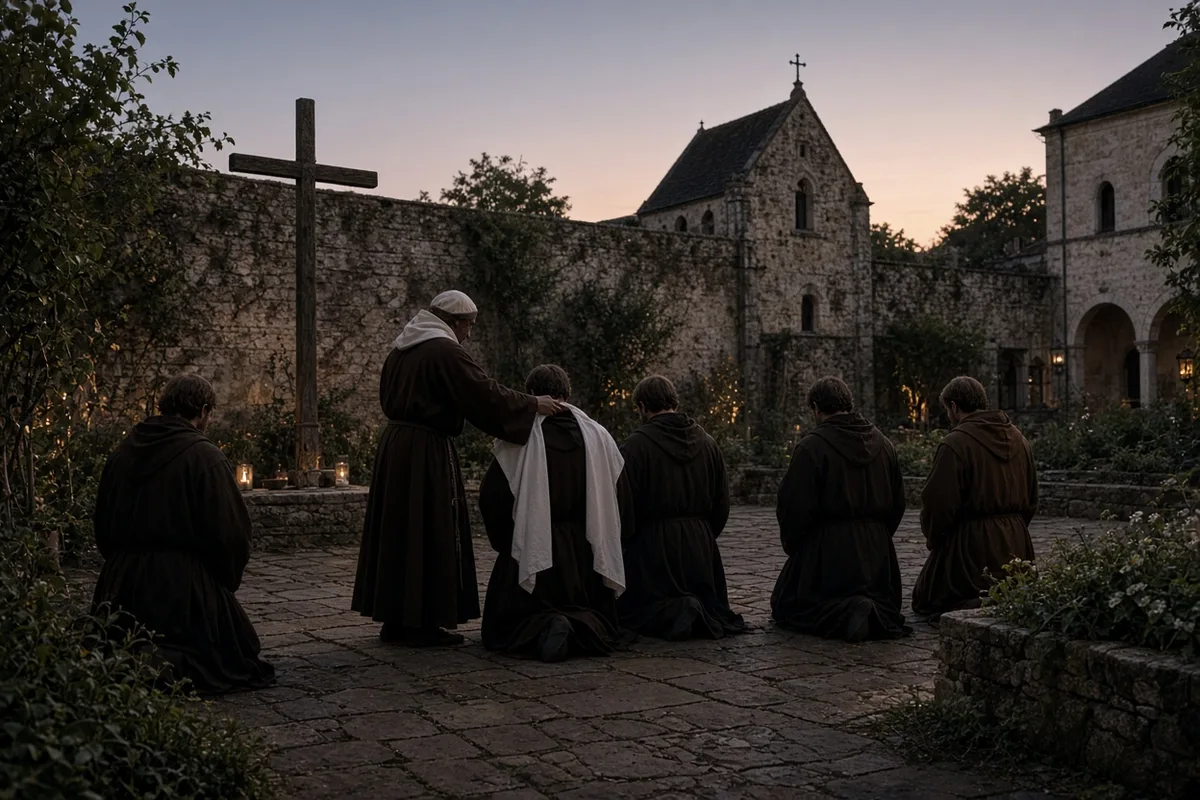
In 1903 the Dominican historian Marie-Humbert Vicaire examined the surviving foundation stones at Prouille and recorded that the original chapter room measured eleven meters by seven, with sockets for oak beams still visible in the limestone. He noted the inscription carved above the south door in 1248, “Humbertus Romanorum prior ordinavit,” still legible beneath layers of whitewash. Local masons hired by the bishop of Carcassonne that same year reset three of the original capitals, each carved with a vine motif that matched fragments kept in the Toulouse museum.
During the First World War the community at Prouille, then numbering thirty-one sisters, sent twelve of its members to staff a field hospital near Verdun under the direction of Sister Catherine de Labarthe. Their ledger for October 1916 lists the receipt of 480 meters of linen bandages woven on the convent looms and the names of four sisters who contracted typhus while tending the wounded. After the armistice the prioress, Mother Jeanne d’Arc de Saint-Joseph, obtained permission from the Ministry of War to reclaim two mule carts that had been requisitioned in 1914.
In 1932 the French state classified the rebuilt cloister as a monument historique, and the architect Jules Formigé supervised the replacement of the roof timbers using chestnut cut from the Forêt de la Grésigne. His report dated 17 March 1933 records that 184 cubic meters of stone were added to stabilize the south wall, which had shifted eleven centimeters since the 1369 earthquake. The work was funded in part by a bequest from the industrialist Paul de Luppé, whose family had owned land adjacent to the convent since 1782.
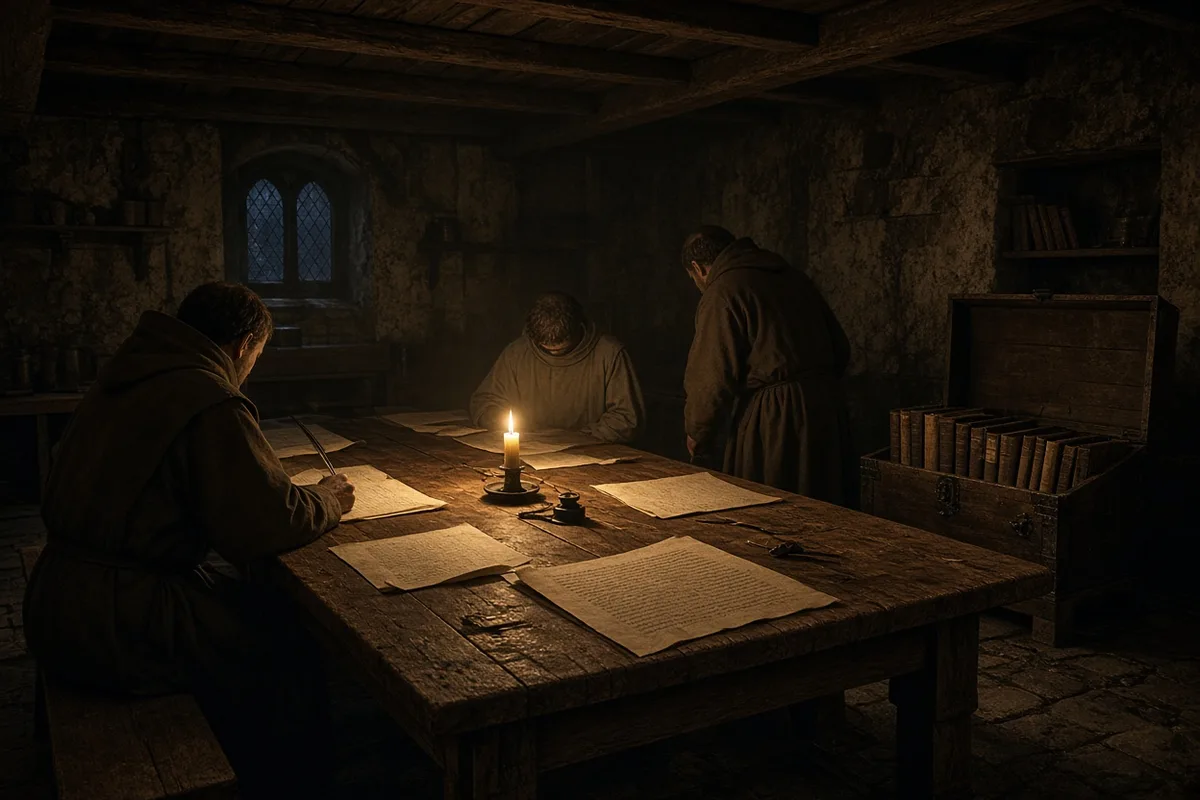
The German occupation forces requisitioned the buildings in June 1940 for use as a depot, removing the lead flashing from the gutters and quartering twenty soldiers in the former scriptorium. Sister Thérèse-Marie de la Croix kept a daily record noting that the yew tree was spared because its shade was used for the midday meal; she counted 214 visits by local farmers bringing eggs and potatoes between September 1940 and March 1944. After liberation the sisters returned on 22 August 1944 and found the altar stone cracked but still bearing the consecration crosses cut in 1217.
Pope John XXIII visited the site on 7 October 1959 during his pilgrimage to Lourdes and addressed the community in the rebuilt church, quoting the phrase “veritas in caritate” from the 1216 bull. His secretary, Monsignor Angelo Dell’Acqua, later noted in the Vatican diary that the pope planted a cutting from the yew beside the well and signed the guest book with the date and the single word “Dominicus.” The cutting, now three meters tall, stands two paces from the original trunk.
Today the convent archives, housed in twelve metal cabinets installed in 1978, contain the original tablet fragments Dominic used, carbon-dated to 1207–1219, along with the 1793 revolutionary inventory that lists “un tableau de bois avec noms écrits à la pointe.” The last entry in the profession register, dated 14 September 2018, records the name of Sister Marie-Dominique Fabre, born in Fanjeaux in 1991, who took final vows in the presence of the current prior, Father Bruno Cadoré. She is the sole remaining member of the community still resident at Prouille; each morning she unlocks the gate at six and walks the cloister alone before the first office.