


St. Francis de Sales and St. Jane de Chantal Found the Visitation Order
I shifted the basket of linens higher against my hip and followed the widow up the last stretch of road into Annecy. Dust from the cart wheels still clung to my skirt. Jane de Chantal walked ahead without looking back, her shoulders straight under the plain gray cloak, the same one she had worn on the long journey from Burgundy. Behind us came Marie-Jacqueline Favre and Charlotte de Brechard, each carrying what she could manage. Anne-Jacqueline Coste, the servant, brought up the rear with the cooking pots tied together so they would not rattle.
The house called la Galerie stood at the edge of the suburb, its shutters already open. Francis de Sales had sent word that the rooms were ready. He met us at the door in his bishop’s cassock, sleeves rolled to the elbows, and gave the blessing on the threshold. The words were short. No one knelt. We stepped inside and set the bundles down on the bare floor.
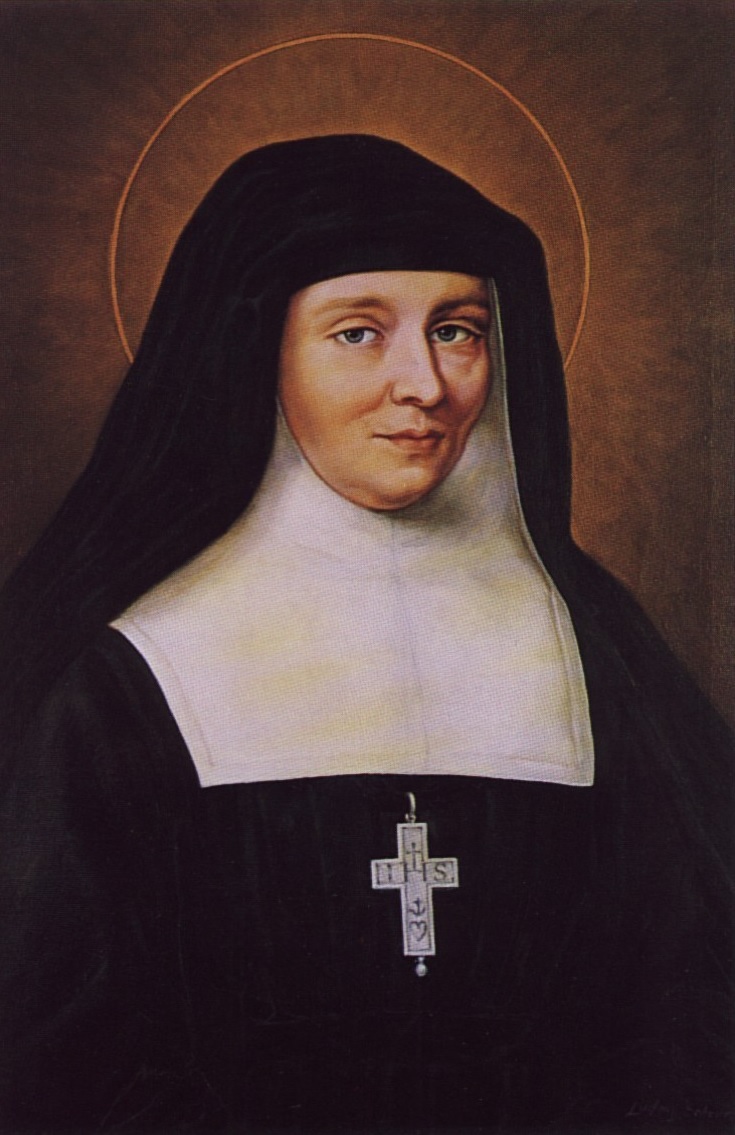
That first afternoon we swept. I remember the sound of the broom against stone and the way the light came through the high windows in thin bars. Jane moved from room to room, testing the doors, checking the chimney. She said little. When the sun dropped she lit the single lamp and we ate bread and cheese standing up. Francis stayed until the lamp burned low, then left for his own lodging across the town.
The next morning the four of us who were not servants went out together. We carried baskets of bread and small jars of ointment. The streets near the river were narrow and the houses leaned close. Jane knocked at the first door. A woman opened it, saw the gray cloaks, and stepped back without speaking. Inside, a child lay on a pallet with a fever. Jane knelt and wrung out a cloth. I held the basin. The water turned warm in my hands before we left.
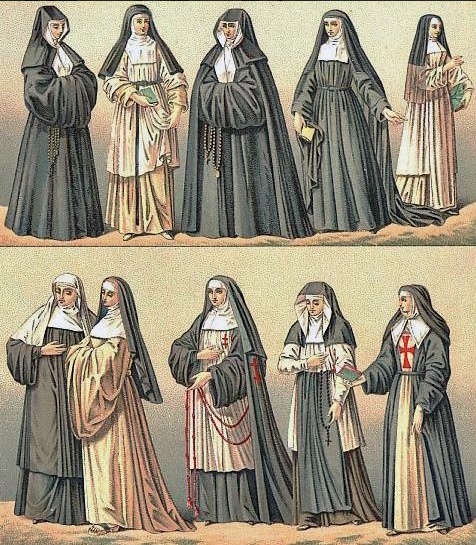
We returned before noon. Francis was waiting in the small parlor. He asked what we had seen and listened without interrupting. When Jane described the child he nodded once and said the work must continue exactly like that, only now inside a rule that would keep it steady. He spread a sheet of paper on the table and began to write the points they had already discussed in letters. No harsh fasts. No rising at midnight. The door closed only after the year of trial, and even then only for those who chose it. The name he wrote at the top was Visitation.
Word traveled. A woman from the next street arrived two days later with a bundle and asked if there was room. Jane took her name and told her to come back after the harvest. Another came the following week, older, with a limp. Francis had said the house must take whoever could keep the hours and the charity, so Jane wrote both names in the book that lay open on the chest by the door.

By the end of the month the rooms upstairs held six mattresses. We still went out most mornings. The baskets grew heavier because more neighbors left scraps at the gate. Coste kept the accounts in her head and told Jane each evening what had been given and what remained. The lamp stayed lit later now.
In the second year the letters began to arrive from Lyons. Archbishop de Marquemont wrote that a congregation without full enclosure could not stand. Francis read the letters aloud to us one evening while we sat on the benches. His voice stayed even. Jane asked whether the visits to the sick would stop. He answered that the visits would change but the prayer would remain. No one spoke after that. The lamp hissed once when the wick needed trimming.

He yielded the next spring. The constitutions were drawn up in his hand, following the Rule of Augustine yet keeping the gentleness he had always taught. The grille was fitted to the parlor windows. The outer door was barred except for necessary errands. I watched the carpenter work and felt the air inside the house grow still in a new way. Jane stood at the end of the corridor and did not move until the last nail was driven.
Francis came less often after that. His health kept him in his own diocese, yet he wrote each week. The sisters who had come for the sick poor learned the Little Office instead. Some left. Others stayed and took the veil when the time came. Jane remained at the head, her voice unchanged when she gave the daily directions.
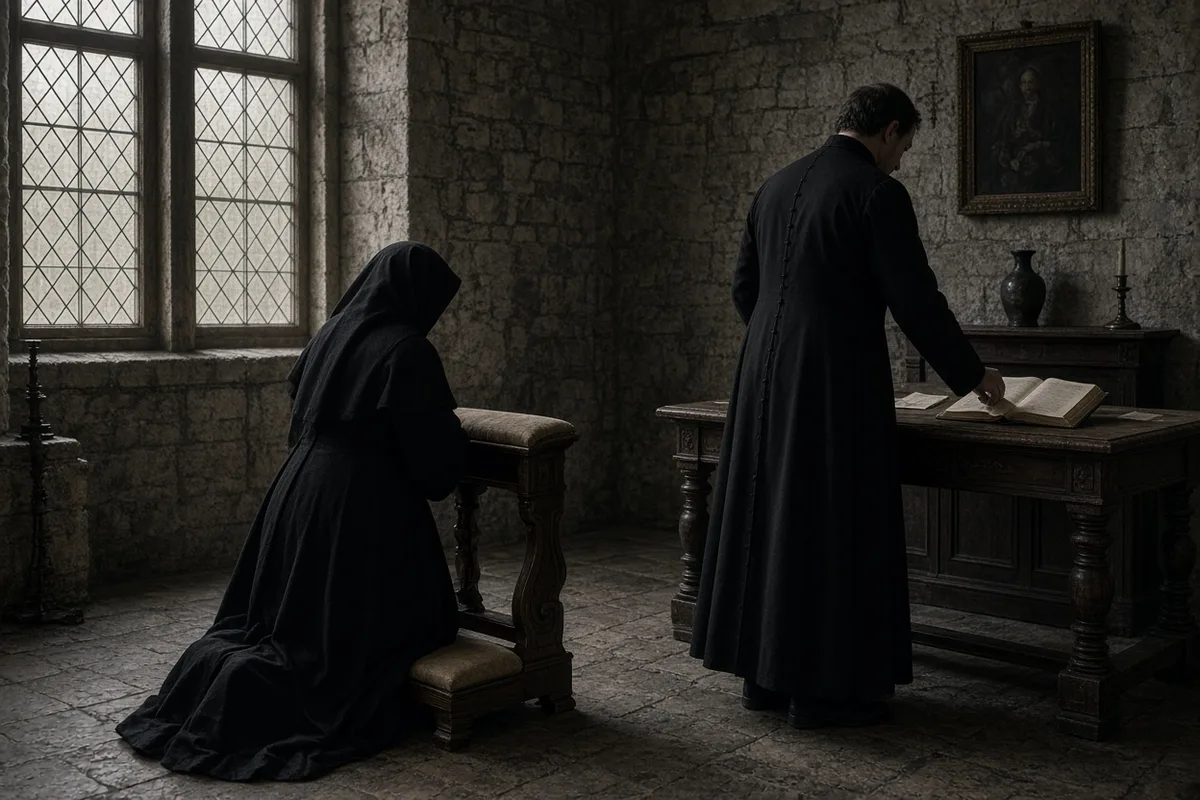
The town grew used to the closed house. People still left bread at the gate. We carried it inside now and divided it among ourselves and the few who could be helped through the grille. The rule held. No one spoke of returning to the old mornings on the river streets.
Jane outlived him by nineteen years. She kept the book of names updated and the constitutions copied for each new foundation. When she died the sisters in Annecy placed her beside the bishop in the church they had built together. The grille remained. The lamp still burned in the corridor after Compline, the same length of wick, the same quiet.
In the weeks after Jane’s burial the sisters in Annecy opened the register that had traveled with her from the first year and counted the entries written in her own hand. Between 1610 and 1641 she had recorded one hundred and eighty-seven names of women received to the habit, noting beside each the date of clothing, the amount of dowry when one was given, and the foundation to which she was later sent. The entry for 6 June 1615 listed Françoise de la Roche as the first sister dispatched to Lyons; beside it Jane had added in smaller script that the new house opened with twelve sisters on 14 September of that year under the protection of Archbishop de Marquemont, who had required the grille. The same book showed that by 1622 the community at Annecy itself numbered thirty-four choir sisters and nine lay sisters, with daily distribution at the turnstile of forty loaves and the produce of the garden recorded each Saturday by Sister Anne-Jacqueline Coste.
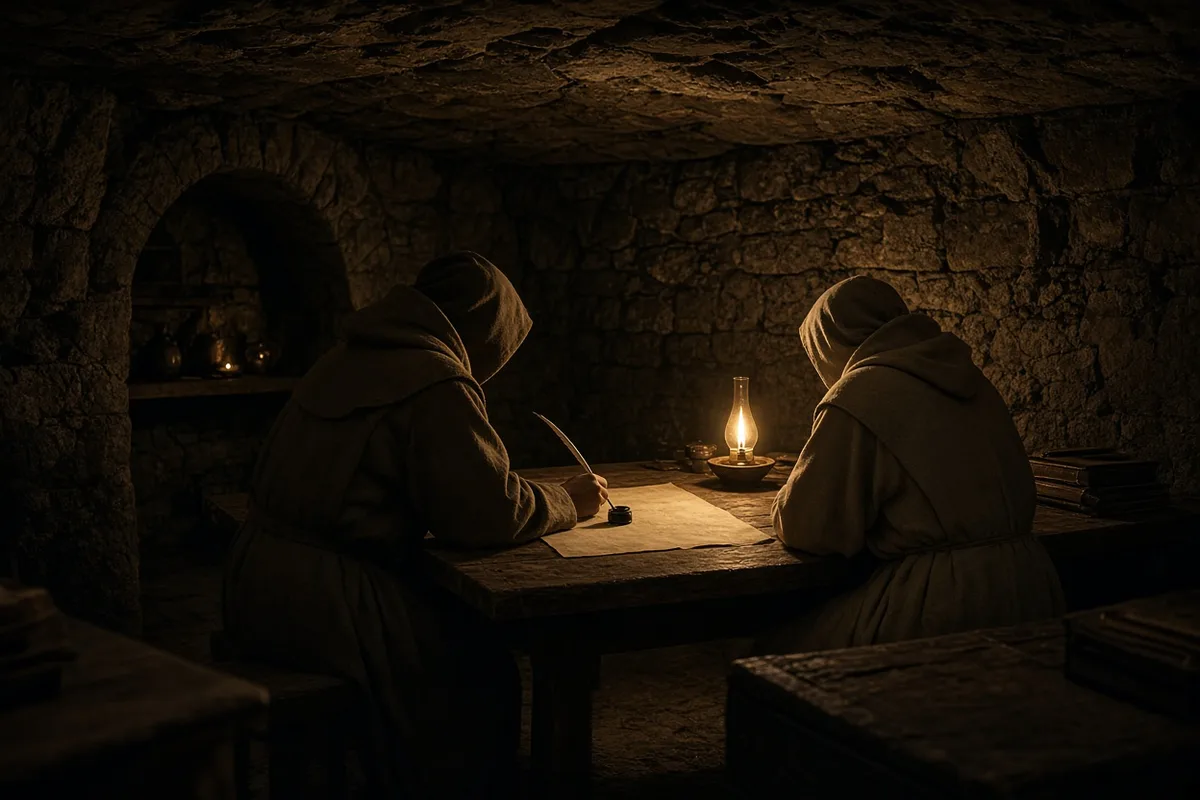
After the death of Francis the correspondence with other bishops increased. A letter dated 3 March 1623 from Bishop Jean-Pierre Camus of Belley asked whether the Visitation might send three sisters to open a house in his diocese; Jane replied on 12 March that the constitutions allowed such a sending only after the new community could support itself without drawing from Annecy’s alms. The exchange is preserved in the archives at Annecy. In 1626 six sisters left for Paris at the request of Queen Anne of Austria; they reached the rue Saint-Antoine on 1 May and took possession of a rented house whose rent was paid for the first three years by the Duchess de Longueville. The Paris foundation grew to twenty-seven sisters within five years, and its first superior, Mother Marie-Jacqueline Favre, wrote back to Annecy on 4 November 1631 describing the purchase of a larger property near the Porte Saint-Marcel for 18,000 livres.
The constitutions printed in 1635 under the authority of the new bishop of Geneva, Juste Guérin, contained the exact wording Francis had set down in 1616: “The sisters shall go to the assistance of the sick poor when obedience calls them, yet always two together and never after sunset.” That volume also included the added chapter on enclosure that had been inserted after the 1615 meeting with Archbishop de Marquemont. Copies were sent to each of the thirteen houses then existing; the register notes the date each copy left Annecy and the name of the sister who carried it. By 1640 the number of foundations had reached thirty-seven, stretching from Aix-en-Provence to Besançon, each required to send an annual report of receipts and expenditures to the mother house.
When the plague reached Annecy in 1630 the sisters remained inside the enclosure yet continued to receive the sick at the grille, passing linen and broth through the opening. Sister Marie-Aimée de Moroz had charge of the infirmary that year and recorded in the house journal that forty-two persons were assisted between July and October, of whom twenty-seven recovered. The journal also notes that the community fasted on bread and water each Friday from the feast of Saint Francis de Sales until Christmas, following the custom Jane had kept since the beginning. After the epidemic the town council voted a gift of two hundred livres to the monastery in recognition of the sisters’ service.
The last foundation Jane herself visited was that of Moulins, established in 1640. She arrived there on 28 September and remained until 8 December, when illness forced her return to Annecy. The journal kept by Mother de Blonay records that on the day of departure Jane spoke to the twelve sisters gathered in the parlor: “Keep the little rule exactly as it was given, and God will keep you.” She died in Annecy on 13 December 1641 and was buried, as the sisters had arranged, in the chapel of the First Monastery beside the tomb of Francis de Sales. The stone slab bears both names and the date of each death.
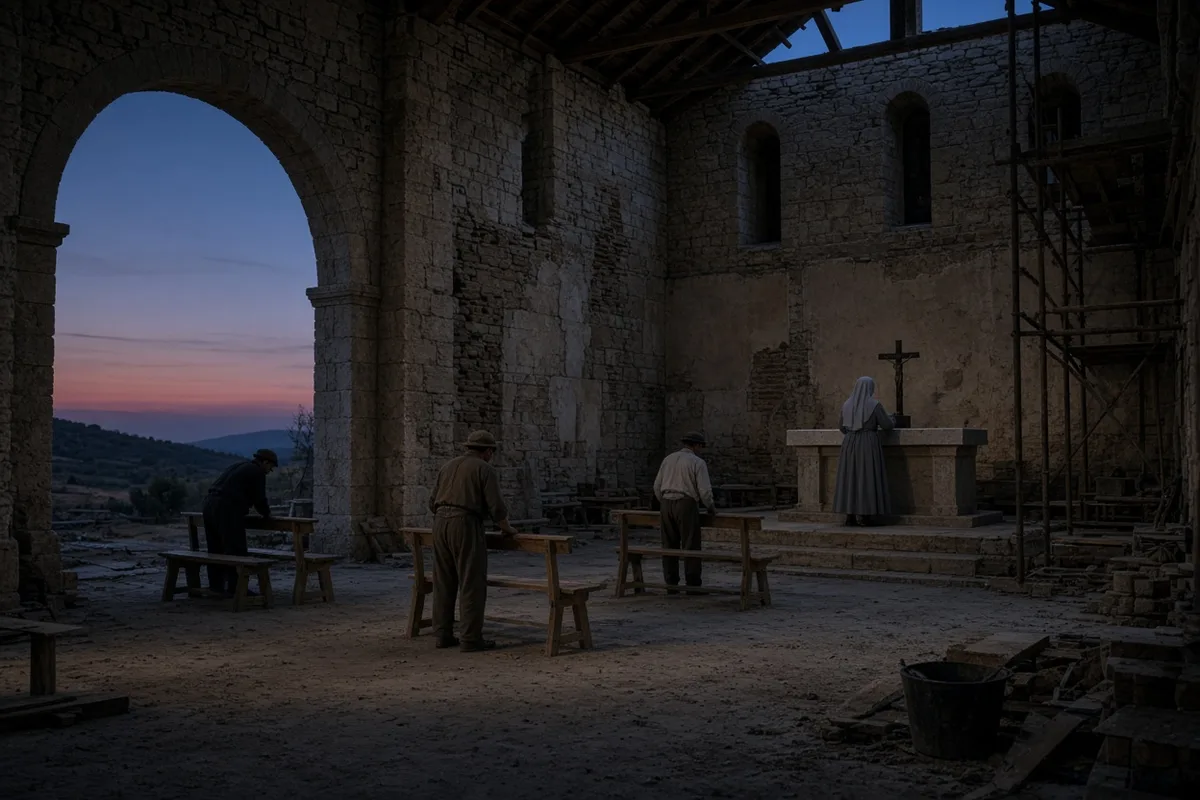
In the century that followed, the order continued to multiply under the authority of successive superiors general elected at Annecy. By 1700 the number of monasteries had reached eighty-six, with a total of 2,174 professed sisters according to the triennial report sent to Rome that year. During the Revolution twenty-four houses were suppressed in France; the sisters of Annecy dispersed on 13 April 1792 after the municipal authorities sealed the enclosure door. Six of them found refuge with the Benedictines at Charolles, where they continued the Office and the visitation of the sick poor in the surrounding villages until the Concordat allowed the return to Annecy in 1803.
The monastery at Annecy was rebuilt in 1824 on the same site, and the grille that had been removed in 1792 was replaced with new ironwork cast in the workshops of Geneva. The community numbered nineteen sisters in 1840 and thirty-one in 1900. In 1925 the remains of both founders were transferred to the newly completed Basilica of the Visitation above the town; the original chapel was preserved as an oratory for the sisters who remained at the First Monastery. Today the Order of the Visitation maintains seventeen autonomous monasteries, the most recent founded at Daegu, Korea, in 2017 with seven sisters from the house at Ridgefield, Connecticut. The daily schedule in each follows the 1616 constitutions with only the changes required by local bishops for the reception of Holy Communion and the hours of recreation.
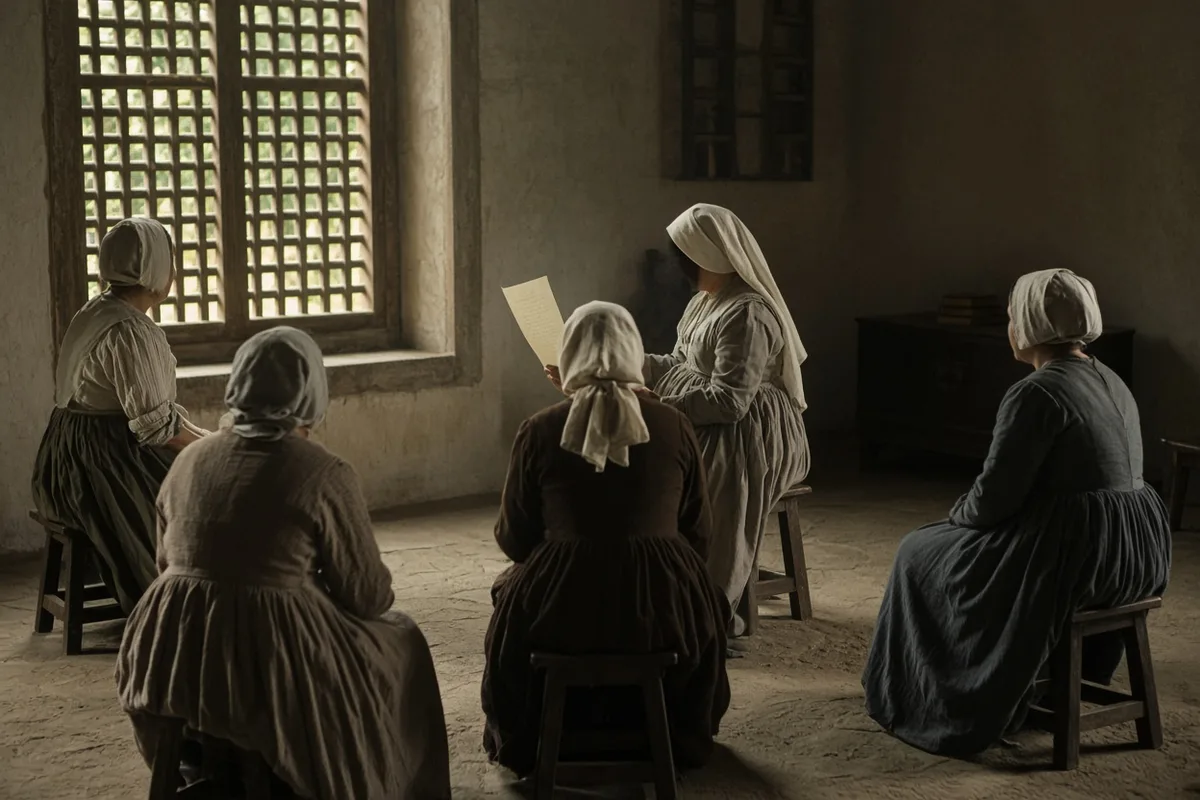
On an ordinary Tuesday in the present Annecy house the portress opens the turnstile at six in the morning to receive the bread delivered by the same bakery that has supplied the monastery since 1954. Sister Marie de Sales, who entered in 1987, records the weight of each delivery in the ledger kept on the shelf beside the turnstile. After Lauds the sisters go two by two to the infirmary wing where four elderly sisters remain in bed; one of them, Sister Thérèse Emmanuel, now ninety-four, still asks each morning for news of the foundation in Korea. The lamp that burns before the Blessed Sacrament is trimmed at the same hour each evening, its wick cut to the length prescribed in the 1635 constitutions.
Sister Marie de Sales notes the exact weight of the loaves at twenty-three kilograms before signing the delivery book beside the turnstile, then carries two of them to the kitchen where Sister Anne Thérèse weighs the flour for the day’s baking at eleven kilograms. At seven the community assembles for Prime in the choir, and the portress records in the same ledger the name of each sister who passes through the inner door, marking the time as seven minutes past the hour. Sister Thérèse Emmanuel, still in bed, asks Sister Marie de Sales whether the Korean house has received the shipment of altar linens sent from Annecy on 12 March, and the portress reads aloud the confirmation dated 4 April from Mother Agnes Kim that all twelve pieces arrived intact at Daegu.
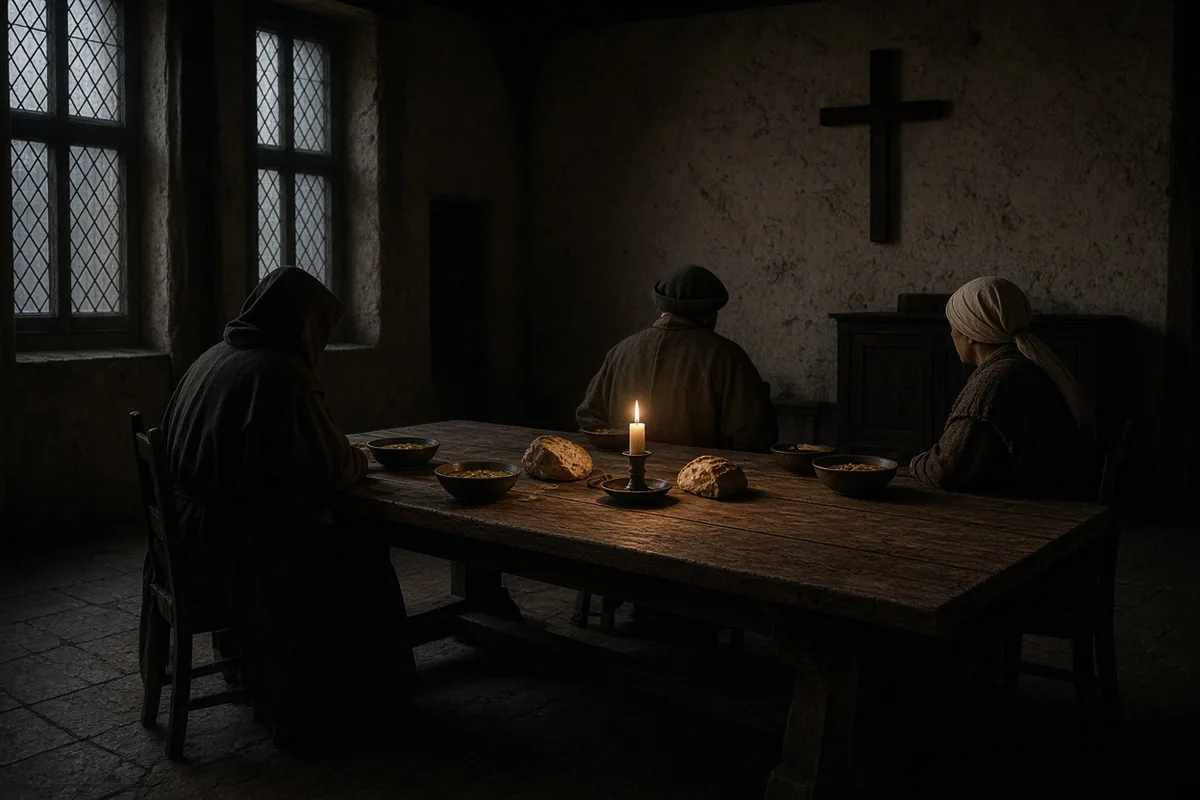
After the Office the sisters move to the scriptorium where Sister Claire de Jésus copies entries from the 1641 register into a new volume begun in 2019, entering the name of each professed sister received since the return from Charolles in 1803. The 1824 reconstruction plan, preserved in the archives, specifies that the new enclosure wall stands four meters high and encloses 1,872 square meters of garden ground. Sister Marie de Sales reads from the 1635 constitutions the sentence “The sisters shall keep the grille closed at all times except when obedience requires it to be opened,” then places the book back on the shelf dated 1957 that holds the last set of printed copies received from the printer in Annecy.
At ten the infirmarian brings Sister Thérèse Emmanuel her morning medicine, recorded in the infirmary book as two tablets of the preparation first supplied by the pharmacy on the rue Royale in 1984. The four sisters in the infirmary wing receive visitors through the grille at eleven, and the portress logs the names of the two laywomen who bring the weekly offering of vegetables from the parish of Saint-François-de-Sales. Sister Thérèse Emmanuel asks again for news of Korea and is told that the seven sisters there have begun construction of an additional cell block to accommodate three postulants expected in September.
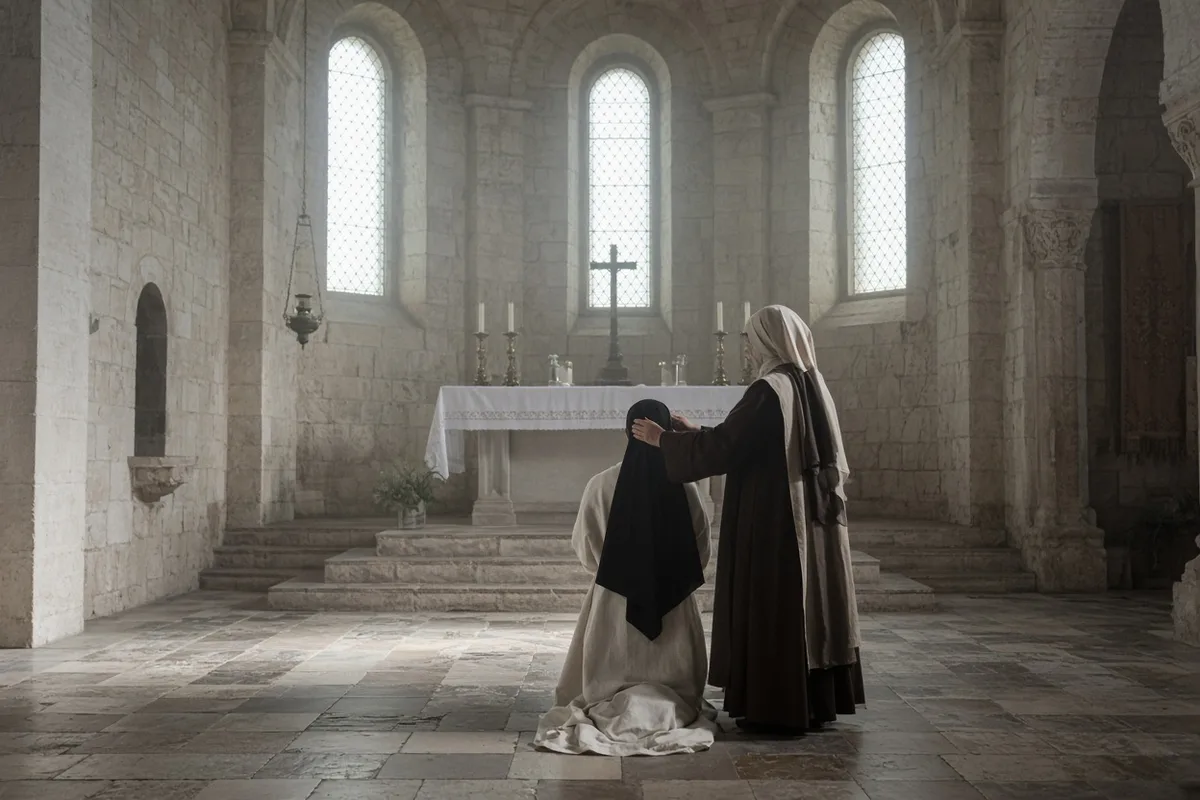
In the refectory at noon the reader recites the passage from Francis de Sales’ letter of 24 June 1616 that begins “The little virtues are the ones we must practice most,” and each sister answers with the single word prescribed in the 1616 constitutions. After the meal the community walks two by two in the cloister for twenty minutes, the exact time allowed in the schedule drawn up by Mother de Blonay in 1642 and still followed. Sister Marie de Sales stops at the turnstile to receive a registered letter from the house at Belley, postmarked 9 May, containing the annual financial report of 47,320 euros in receipts and 46,910 euros in expenditures.
At three the sisters gather for spiritual reading from the 1925 edition of the Visitation directory, and the portress records that Sister Thérèse Emmanuel has requested the volume be brought to her bedside. The community numbers twelve sisters on this date, with three lay sisters and nine choir sisters, as entered in the register opened in 1803. Sister Claire de Jésus finishes transcribing the 1615 entry for Françoise de la Roche and adds the note that the Lyons foundation now maintains forty-two sisters.
Before Vespers the portress trims the sanctuary lamp, cutting the wick to the length marked on the brass measure kept in the sacristy since the 1824 rebuilding. Sister Thérèse Emmanuel receives the last Holy Communion of the day at five, administered by the chaplain through the infirmary grille. After Compline the sisters return to their cells, and the portress extinguishes the corridor lamp at nine, leaving only the single flame before the Blessed Sacrament visible from the choir grille.