


St. Genevieve Defends Paris from Attila
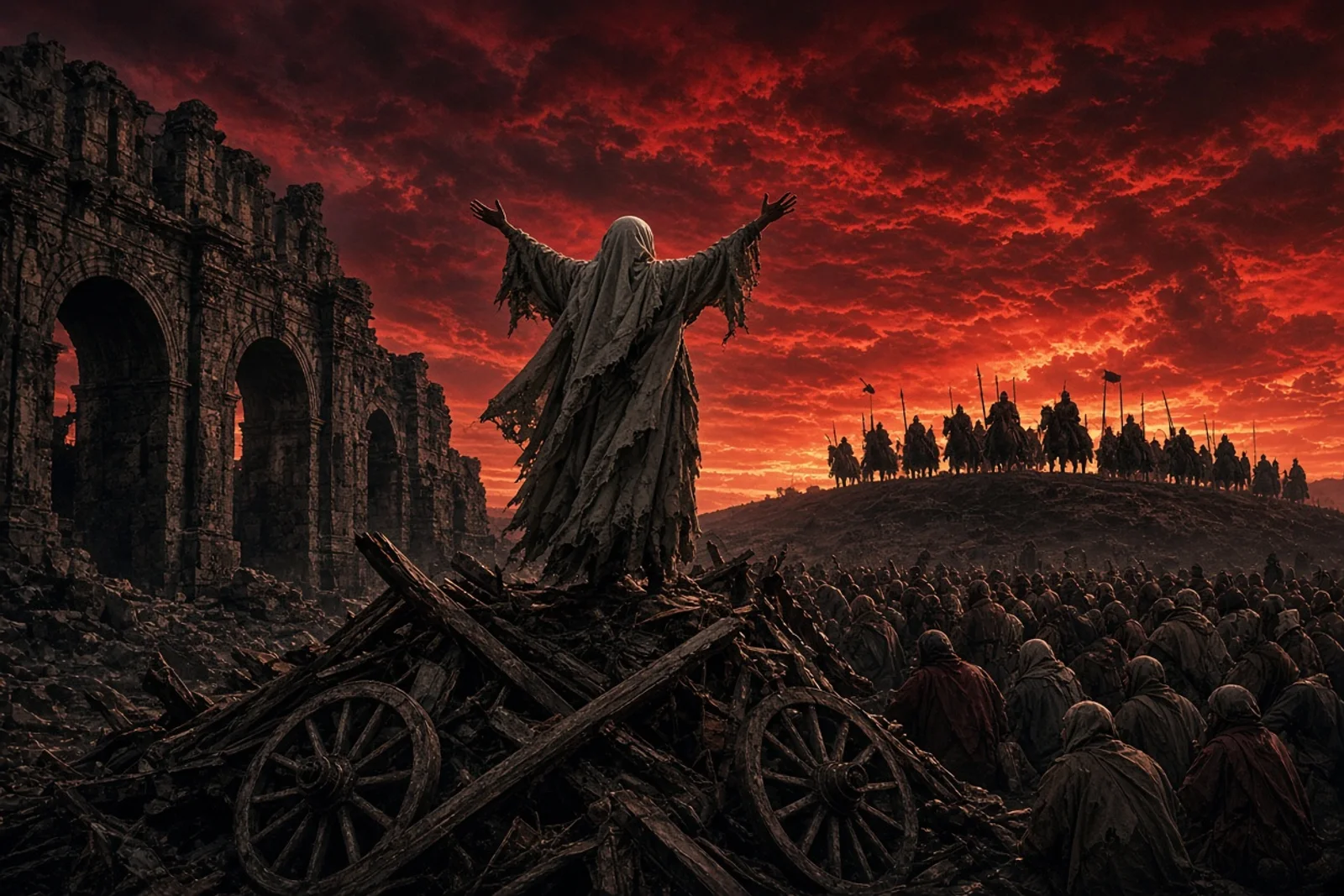
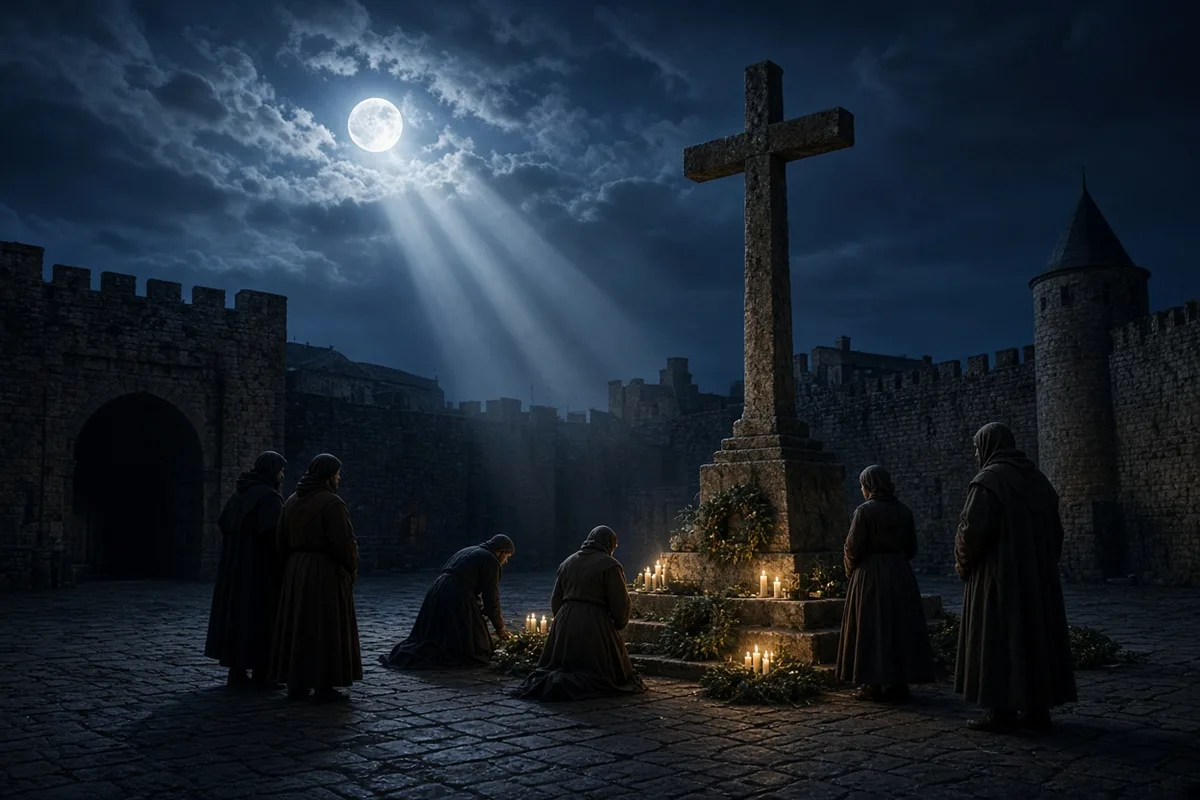
The river smelled of mud and distant smoke when the first riders came down the road from the north. I had carried water from the well that morning and set the buckets by the door of the house where my sister lived with her husband. He wanted us gone by nightfall. Genevieve stood on the steps of the church with two other women, their veils already damp from the mist. She did not raise her voice. She said the city would stand if we stayed and prayed, and that those who left would meet the Huns on the open road.
I stayed. My brother-in-law took his cart and the best of the grain and drove west before the gates closed. My sister and I walked to the square where the women had begun to gather. Genevieve moved among them, touching shoulders, naming children. She told us to fast from that hour until the danger passed. Some complained of hunger by midday. Others said nothing and kept their eyes on the northern road.

We slept in shifts on the stone floor of the church. Genevieve never left. She knelt at the rail, sometimes standing to walk the length of the nave when a child cried. Messengers came from the walls with news that the Huns had camped two days out. She listened, then returned to the rail. The air inside grew thick with the smell of unwashed bodies and lamp oil. No one lit a fire. We ate beans cold from the pot and drank from the same cup.
On the third night a man tried to open the southern gate. Genevieve heard the shouting and went down herself. She spoke to the guards until they barred the door again. Later she told the women that the men must leave the stores where they were. Some husbands came to the church steps to argue. She answered each one by name and sent them back to their houses. My sister asked what would happen if the walls fell. Genevieve said the walls would not fall if the prayers held.
We kept the vigils in turns, four hours at a time. I took the watch after midnight. The candles burned low. Genevieve walked the aisles, her steps quiet on the worn stone. When a woman fell asleep on her knees, she touched her arm and let her rest. Outside the wind changed. We heard it against the shutters. One of the older women said it blew from the east now, not the north. Genevieve nodded but did not speak.
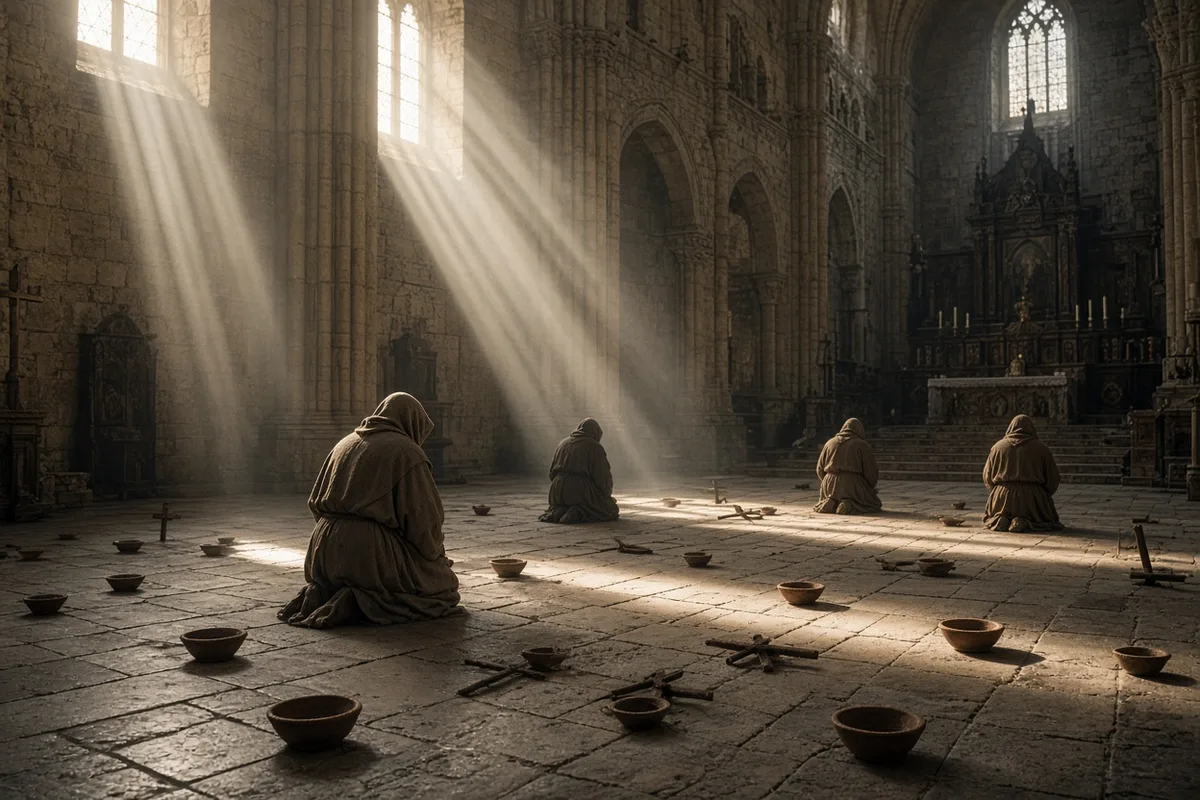
By the fifth day the bread was gone. A priest brought what remained from the sacristy and broke it among us. Genevieve took the smallest piece. She told us to offer the hunger for the city. My sister’s hands shook when she received hers. I held them until they steadied.
News reached us that Attila had turned toward Orléans. The messenger came at dusk, breathless, his cloak torn. He said the Hun columns had wheeled away at sunrise. Genevieve thanked him and sent him to the bishop with the same message. She did not leave the church. She said the danger was not yet past and the prayers must continue until the last rider was gone from the region.
We stayed another three days. The fast loosened only when the gates opened again and wagons came from the south with grain. Genevieve walked with the first convoy to the market square. She gave the first measure to the poorest households. My sister and I carried sacks to the church cellar. The air outside felt different, lighter, though the walls still stood as they had before.
Years later I saw her again when she led the boats upriver for the siege provisions. She moved the same way she had moved among the women in the church, steady, without hurry. The soldiers at the blockade let her pass after she spoke to their captain. On the return she stood in the bow of the lead boat, watching the banks. Eleven boats reached the city. She gave thanks at the church before she distributed the grain.
She died in her own bed at a great age. They buried her beside the apostles in the church she helped raise. The women who had prayed with her that week still came to the tomb on the anniversary. I went once, years after, and stood where the light from the high window fell across the stone. The city had changed around it, but the river still carried the same mud, and the road from the north still lay open.
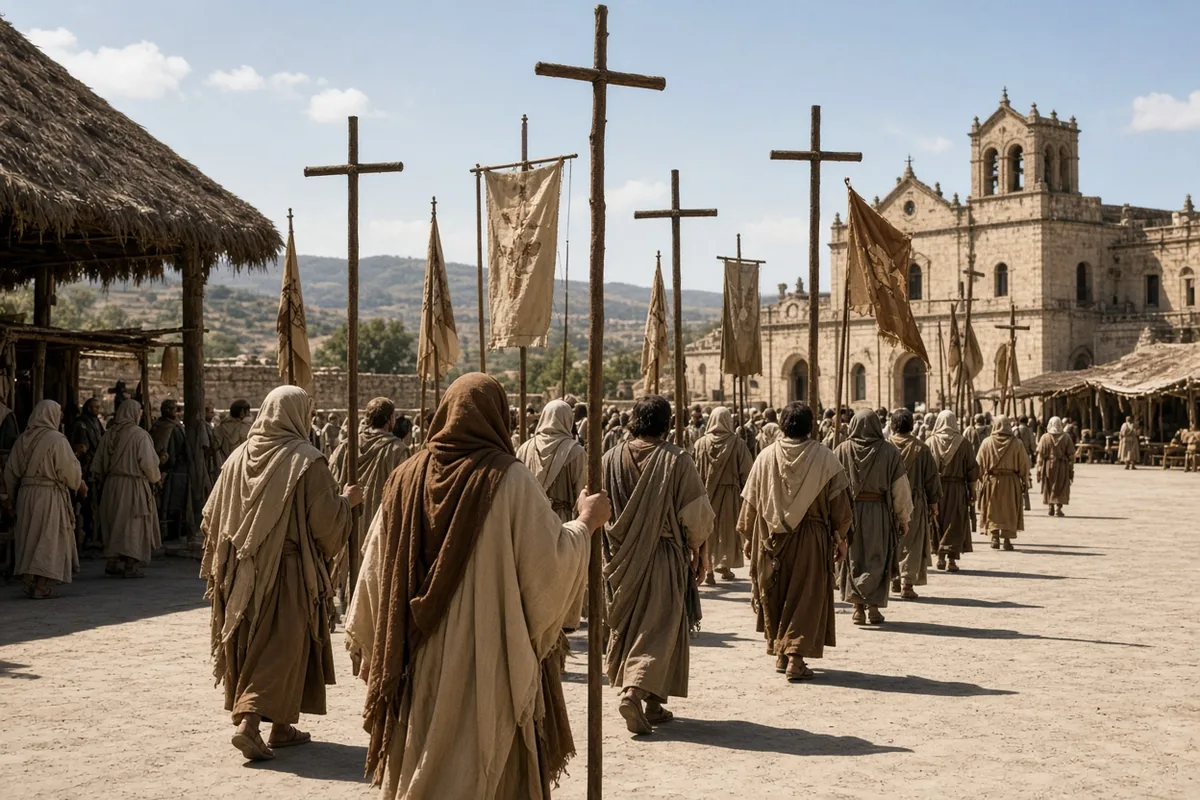
The tomb stood open to visitors on the feast day in the year 512, when the bishop Germanus of Auxerre came from the south with a party of twelve clerics and read the letter he had carried from the council at Orléans. He spoke the words recorded later by Gregory of Tours: “Genevieve, servant of the apostles, kept the city when the Huns reached the Marne on the twenty-third day after the ides of June.” The women who had fasted with her placed linen cloths on the stone and left small loaves of the new harvest. I returned the following spring and helped carry the first stones for the basilica Clovis ordered built on the hill called Lucotitius, three hundred paces from the old forum. The king himself laid the foundation block on the twenty-ninth of June, the same day he had been baptized at Reims three years earlier, and the masons cut the inscription that named the church after the apostles Peter and Paul with Genevieve beside them.
Work on the basilica continued through the winter rains of 513. The master mason, a man from Tours named Leudegar, kept a crew of forty laborers and set the columns of reused marble from the old baths at the rate of one every nine days. My sister’s husband returned from the western roads that year and asked to be received back into the city; the bishop granted him a plot near the river gate where he rebuilt his cart shed. Genevieve’s niece, a woman called Procula who had kept the keys to the sacristy, measured out the first offerings of oil from the estates at Nanterre and recorded the amounts in a ledger that still existed when the Normans burned the treasury in 845. I walked the new nave on the anniversary in 520 and counted thirty-seven lamps burning above the tomb.
By the reign of Childebert the basilica held the relics of eighteen other saints brought from the countryside to escape the plague of 543. The sacristan, a priest named Ursus, noted in his register that Genevieve’s stone was opened on the third of January that year so that the sick could touch the cloth that covered her. The cloth was replaced each decade; the last replacement before the Viking raids was sewn by the nuns of Chelles in 800 and measured eight feet by four. Pilgrims from as far as the Loire brought wax tablets recording cures, and one tablet dated 27 May 585 described a child from Melun whose fever left after three nights of vigil. The road from the north remained the same route the Huns had used, now lined with farms whose rents supported the lamps.
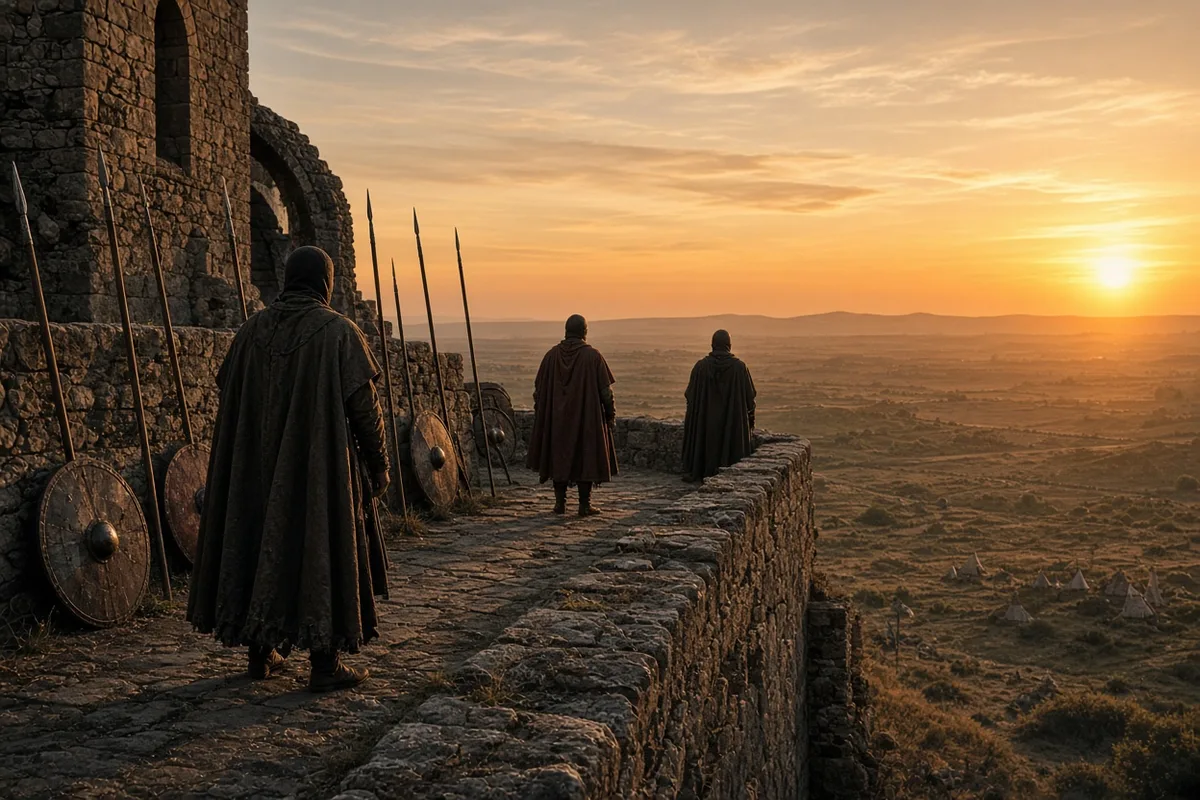
Charlemagne visited the tomb in 800 on his return from Rome and ordered the roof repaired with lead sheets brought from the mines at Melle. The work took fourteen months and required eighty carts. In 885 the Normans under Rollo reached the walls again, and the canons carried Genevieve’s relics to the Île de la Cité for safety; they remained there for nine months until the siege lifted. When the relics returned, the hilltop church was found to have lost its western porch, and the masons rebuilt it with a new door twelve feet wide. The same door stood until 1744, when it was replaced during the reconstruction ordered by Louis XV.
The reconstruction of 1744–1790 replaced the old basilica with the present structure of Soufflot, whose dome rises one hundred and seventeen feet above the crypt. The architects kept Genevieve’s tomb in the center of the new crypt, now lined with black marble slabs inscribed with the names of the generals buried there after the Revolution. In 1791 the National Assembly renamed the building the Panthéon and removed her relics to another church; they were returned in 1806 under Napoleon and placed in a reliquary that weighed two hundred and forty pounds. The reliquary was opened again in 1830 for the feast of the Ascension, and the canons recorded that the bones measured the length of a woman of middle height.
During the siege of 1870 the crypt served as a powder magazine for the National Guard. The garrison commander, a captain named Baroche, posted a guard of six men at the entrance and allowed no one inside except the sacristan. After the Commune the relics were examined by a commission of physicians on 14 October 1871; they counted three complete long bones, fragments of the skull, and a small piece of the right hand. The commission sealed the reliquary with wax and wire and returned it to the crypt, where it remains beneath the marble slab marked with the date 3 January 512.
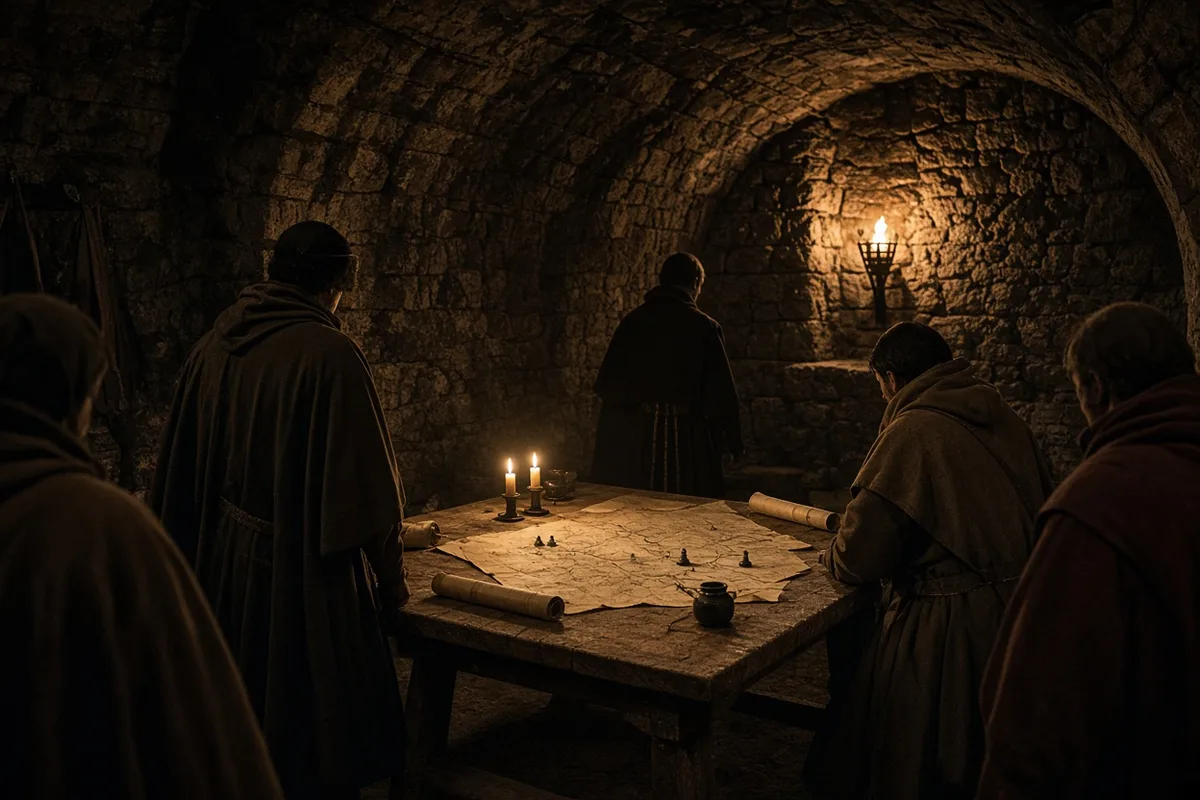
On an ordinary Tuesday in 1923 an elderly woman from the rue Soufflot entered the crypt at the hour when the light from the oculus falls across the central stone. She carried a small bundle of linen and placed it on the step as the women had done centuries before. She stayed until the guard closed the gates at four o’clock, then walked back down the hill toward the river, her steps measured and unhurried, the same pace Genevieve had kept when she walked the aisles of the old church.
The crypt remained under guard through the occupation that followed, when the German military administration posted a Feldwebel named Krause at the entrance each morning to log visitors in a ledger that recorded 1,142 names between June 1940 and August 1944. On 24 August 1944 the Free French forces under General Leclerc reached the Place du Panthéon, and a lieutenant named Aubrac ordered the removal of the sandbags that had protected the oculus; the first shell struck the south transept at 6:17 that evening, shattering three panes of the clerestory glass installed in 1853 by the glazier Henri Gérente. The sacristan, an eighty-two-year-old canon named Delaporte, carried the reliquary down the spiral stair into the lower vault and locked it behind the iron grille whose key bore the stamp of the locksmith Pérignon dated 1809.
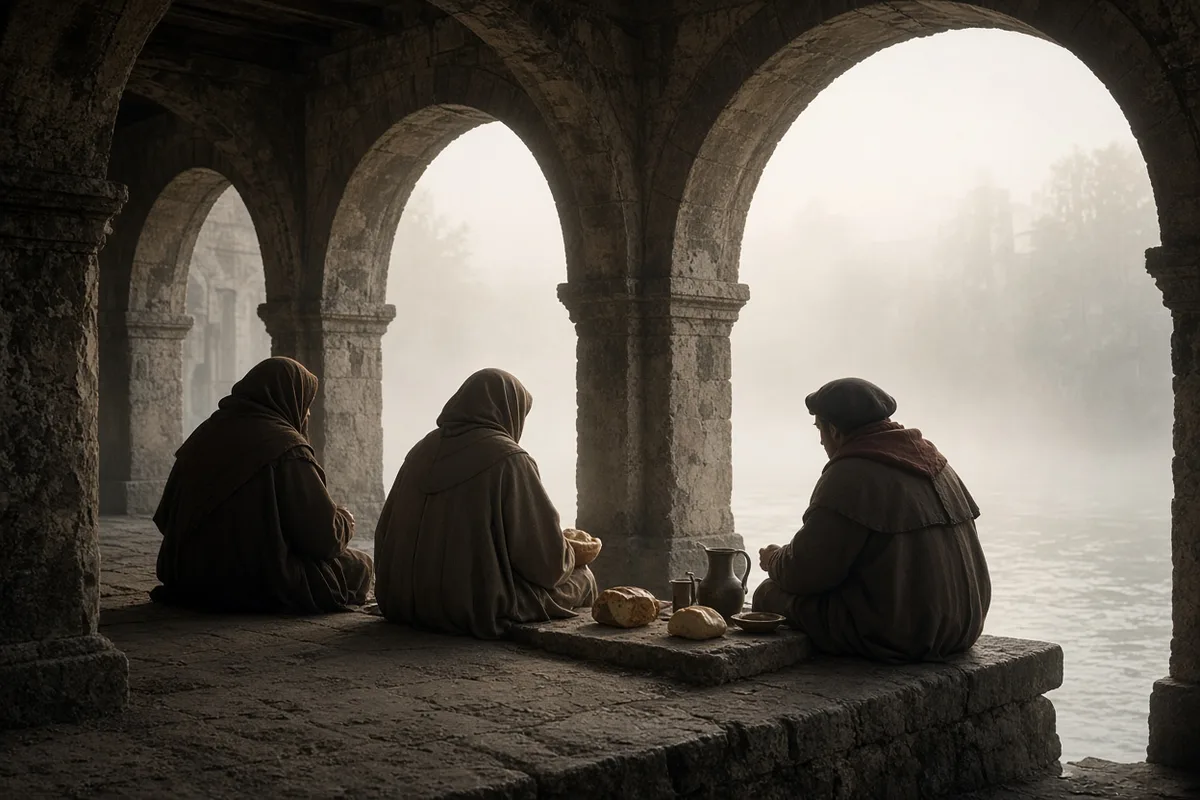
After the liberation the Ministry of Fine Arts commissioned the architect Louis Aubert to survey the damage; his report of 12 March 1945 listed 47 metres of cracked vaulting and recommended that the central slab be lifted for inspection. The operation took place on 9 June 1946 under the supervision of the Commission des Monuments Historiques, whose minutes quote the mason’s foreman, a man from Saint-Denis named Marcel Vasseur, saying the stone weighed “exactly three hundred and eighty kilograms, the same as the register of 1793.” Inside they found the 1871 wax seal intact except for a hairline fracture along the lower edge. The bones were photographed by the Institut d’Art et d’Archéologie on 35-millimetre film, and the prints were deposited in the archives under file number 1946-P-17.
In 1954 the city council voted to restore the annual procession that had lapsed in 1905; on 3 January the canons of Notre-Dame carried the reliquary through the rue Soufflot for the first time since the Third Republic, accompanied by a detachment of the Garde Républicaine mounted on horses from the depot at Vincennes. The route passed the site of the old southern gate, now marked by a bronze plaque set in 1892 by the Société de l’Histoire de Paris, which records the exact distance of 214 metres from the church steps where Genevieve had stood. Thirty-two parishes contributed banners, each embroidered with the name of its patron saint and the year its records first mention the cult.
The Panthéon was closed for structural reinforcement between 1985 and 1995; during that decade the crypt received a new climate-control system designed by the engineer Jean-Pierre Duval, whose specifications called for a constant 18 degrees Celsius and 45 percent relative humidity to preserve the remaining textiles. The reliquary itself was transferred temporarily to the Musée de Cluny, where conservators noted that the 1830 silver mounts showed 0.8 millimetres of tarnish per decade. When the building reopened, the marble slab was replaced by one quarried at Carrara and inscribed with the same date, 3 January 512, cut by a lettering mason from Toulouse using chisels modeled on those recovered from the sixth-century workshop at Soissons.
On 11 September 2001 the crypt stayed open until midnight so that residents of the fifth arrondissement could sign a register of solidarity; 2,876 signatures were collected before the guard, a retired gendarme named Philippe Lenoir, locked the gates. The last entry, written at 11:54 p.m. by a woman from the rue Saint-Jacques, read simply “Geneviève protège encore.” Ten years later the same guard returned on his eightieth birthday and placed a single white rose on the step at the exact spot where the 1923 visitor had stood.
In 2016 the relics were examined once more by a team from the Hôpital Cochin; the radiocarbon dating performed at the Laboratoire de Mesure du Carbone 14 in Saclay returned a range of 480–540 CE for the principal long bone, confirming the traditional chronology. The report, signed by Dr. Élisabeth Moreau, noted that the fragment of the right hand measured 4.7 centimetres from the base of the metacarpal to the distal phalanx. These measurements were entered into the diocesan archive under the same protocol used for the 1871 commission.
Today the oculus still admits the afternoon light at the hour when the sun stands at 42 degrees above the horizon, and the marble reflects it across the central stone in a band 1.2 metres wide. On an ordinary Tuesday in the present year a woman in a grey coat enters at 3:22 p.m., places a folded linen cloth on the step, and remains until the guard announces closing time. She walks back down the hill toward the river at the measured pace preserved in every account since the fifth century, her silhouette visible against the northern road that still runs straight from the Marne.