


St. Helena Discovers True Cross
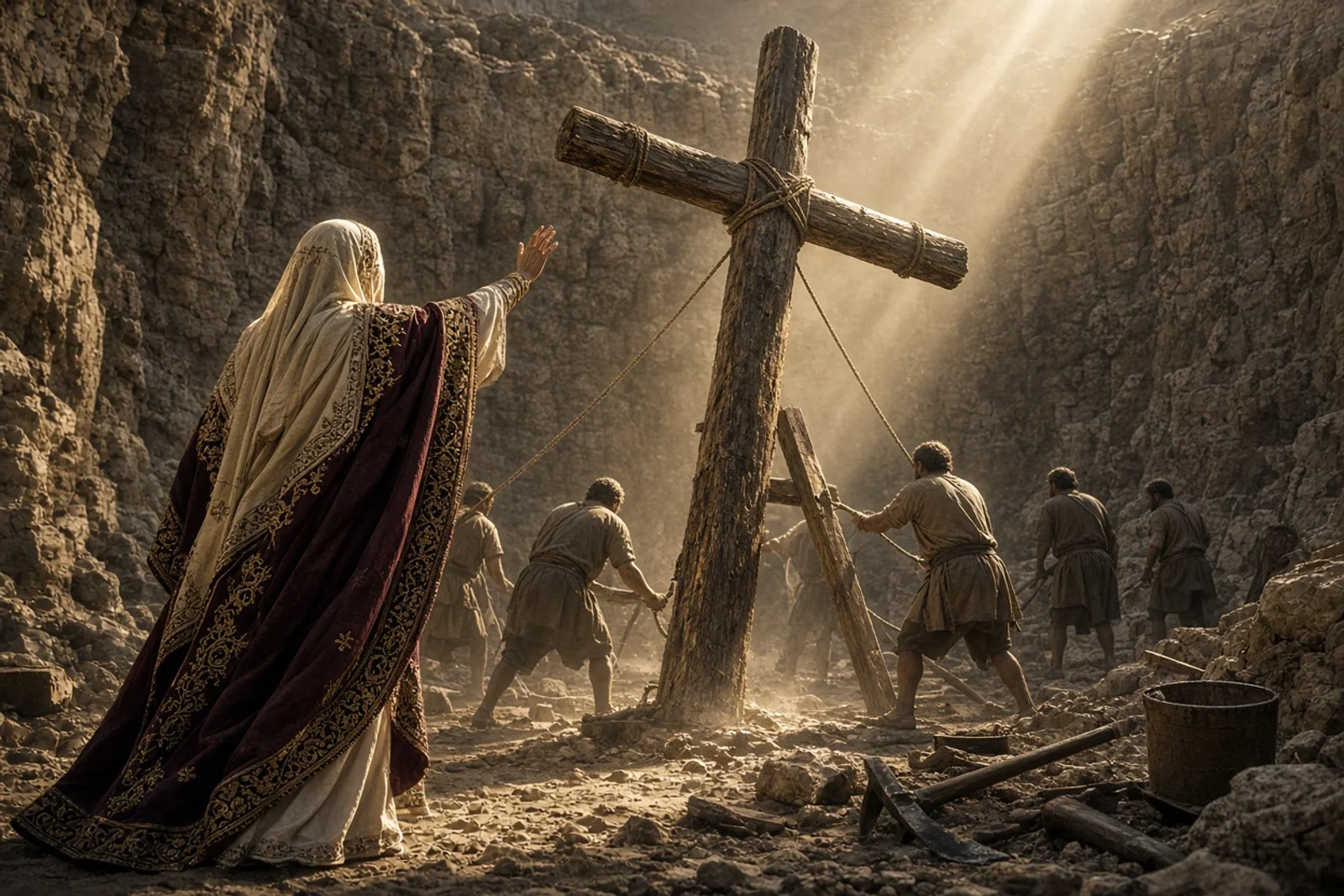
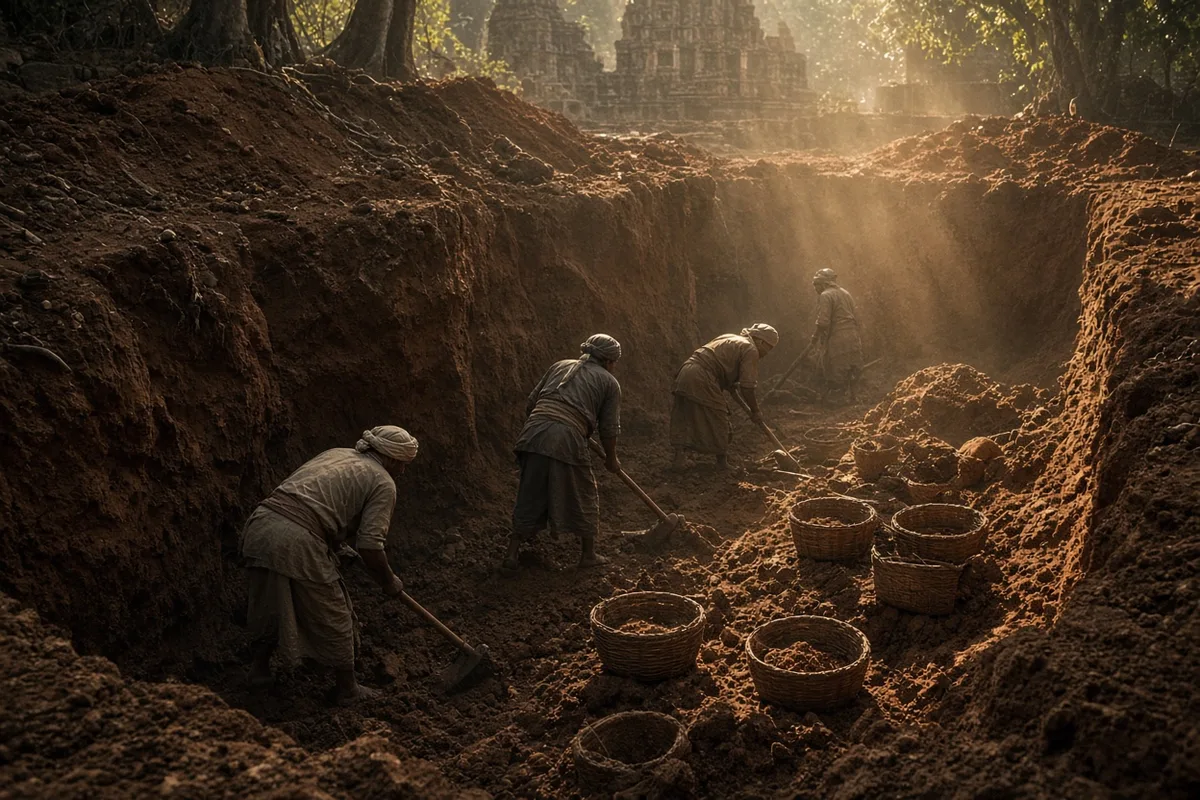
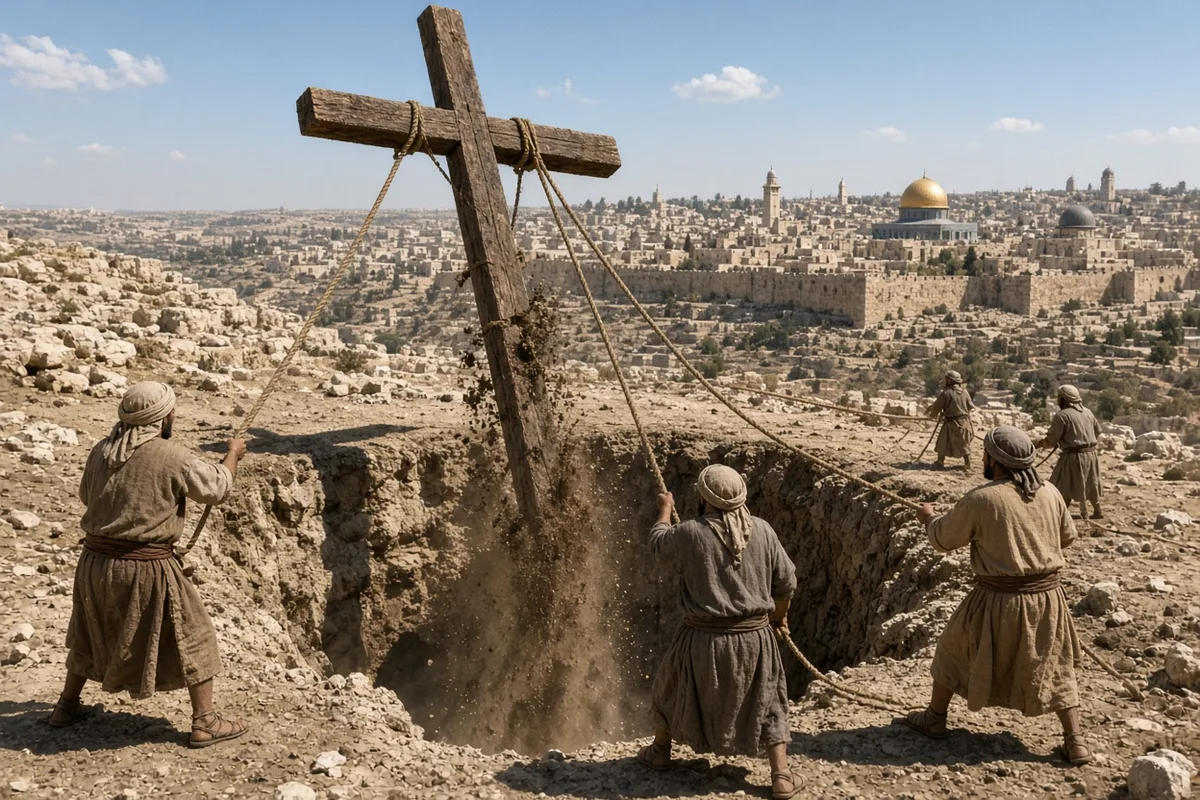
The picks bit into the mound just after dawn, when the air still held the night’s chill. I swung mine with both hands, the handle worn smooth from weeks of this work, and felt the jolt travel up my arms into my shoulders. Around me other men grunted and spat, their faces streaked with dirt. The temple to Venus had already come down; its columns lay broken in the square below. Only the earthen platform remained, and we had orders to level it to the rock.
Helena walked the edge of the cut each morning. She wore a plain wool mantle the color of sand and never raised her voice, yet the overseers straightened whenever she appeared. One day she stopped above our trench and asked how deep we had gone. A foreman answered that the ground still resisted. She nodded once and moved on, her sandals leaving faint prints in the loose soil.
By midday the heat pressed down. We paused to drink from skins passed hand to hand. A boy brought bread and olives. I ate standing, watching the bishop Macarius speak with two of the emperor’s officers near the carts. They pointed at the remaining mound and shook their heads. Macarius listened without interrupting. When they finished he simply said the work must continue until the rock showed.
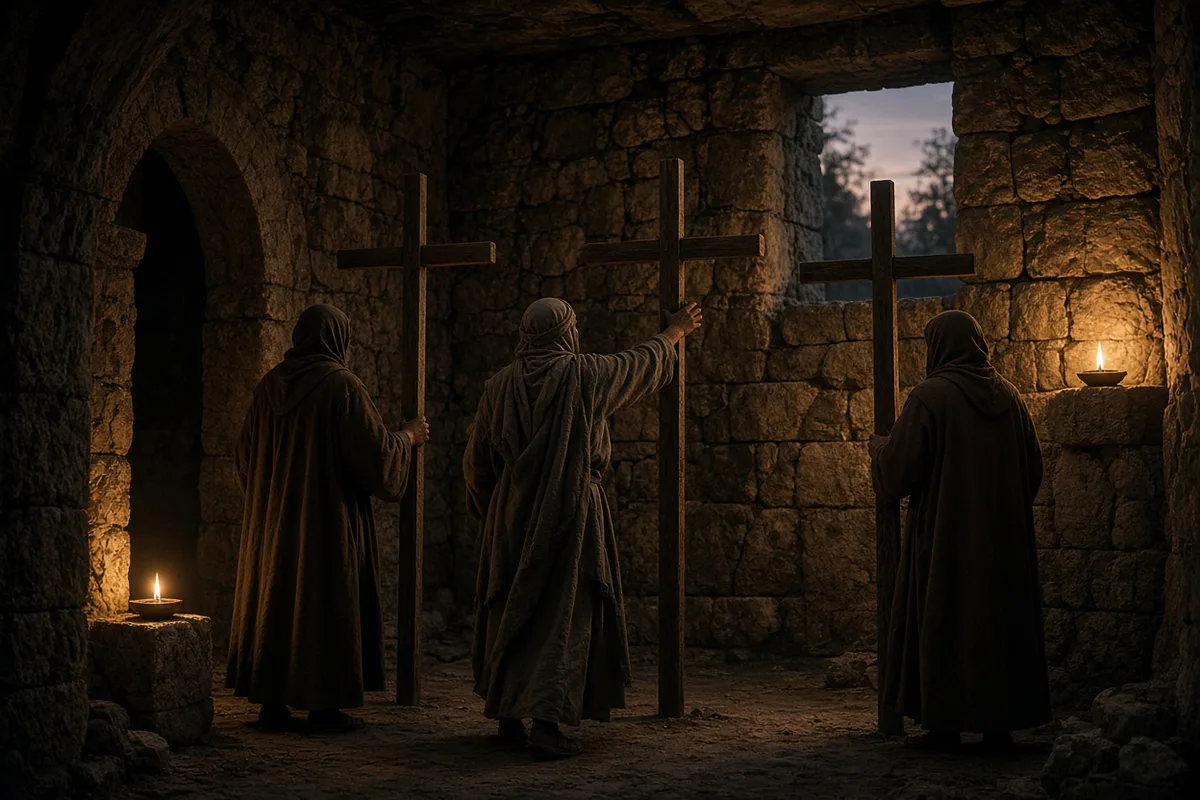
We dug another two days. On the third afternoon a pick struck something that rang instead of thudded. The man who had swung it stepped back. We crowded the spot and began scraping with trowels and bare hands. Three rough beams emerged, still joined at their crossing points by rusted spikes. A flat board lay beside them, its letters half erased but still legible in three scripts. One of the officers climbed down and read the words aloud: the king of the Jews.

Helena was summoned from the house where she lodged. She stood at the lip of the trench while the beams were lifted out one by one and laid on clean cloth. No one spoke above a murmur. The sun had begun to drop; long shadows stretched across the stones. She studied each cross in turn, then turned to Macarius.
The bishop asked for a sign. He sent men to fetch a woman from a nearby street who had not left her bed in months. They carried her on a litter to the edge of the excavation. Her skin had the gray look of someone already half gone. Macarius directed that the first cross be placed across her chest. She coughed but did not stir otherwise. The second cross was laid the same way. Her breathing stayed shallow.

When the third cross touched her, the change came at once. Color returned to her face. She drew a long breath, then another, and tried to sit up. The men holding the litter had to steady her. Someone laughed, short and surprised. Helena remained still, her hands folded at her waist.
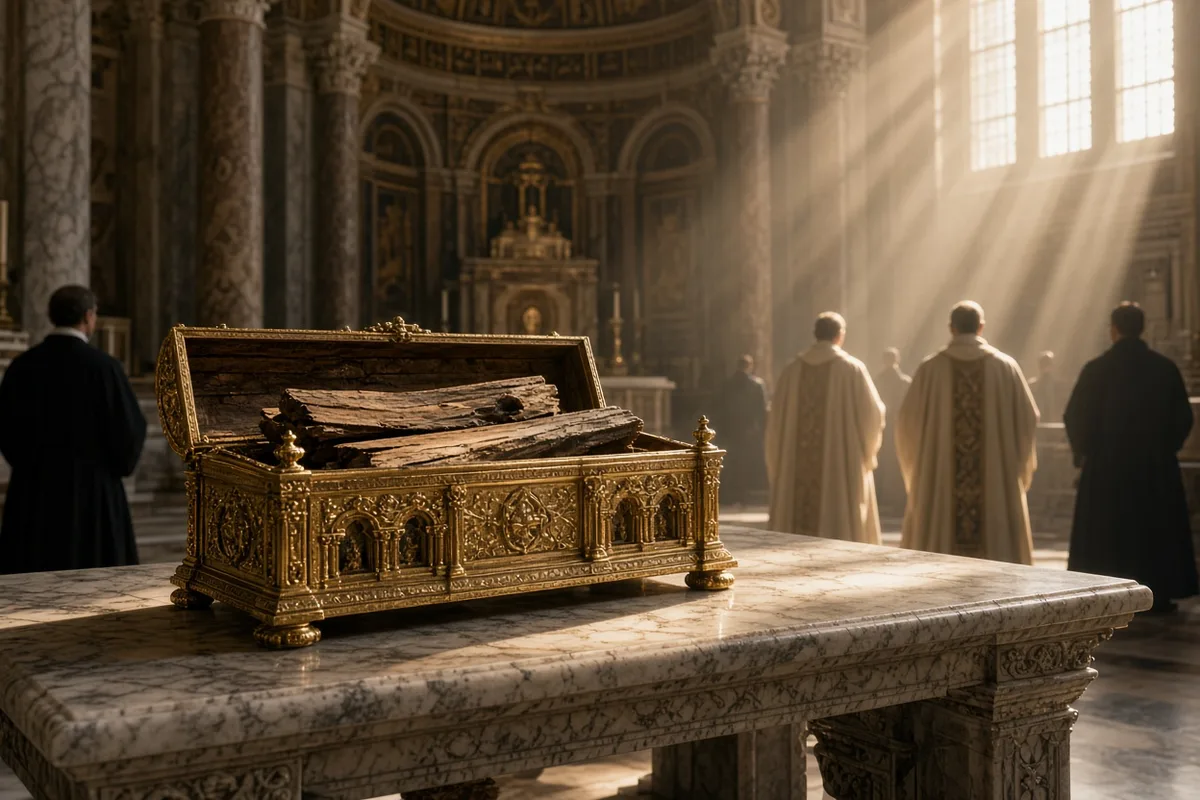
They built the church over the place where the tomb had been found. Constantine sent masons and marble, enough to raise walls higher than any house in the city. The work lasted through two winters. I stayed on as a laborer, mixing mortar and carrying stone. Helena left before the roof was finished. She took one of the crosses with her, wrapped in linen and sealed inside a silver chest.

The other two beams were given to the church. The board with the inscription stayed as well. I saw it once more before the doors were hung; it hung on a hook above the altar steps. Pilgrims began to arrive before the scaffolding came down. They knelt where the earth had been cleared and touched the rock with their fingers.
Macarius remained bishop. He walked the completed nave each evening, checking the lamps. The emperor never came himself, but letters arrived with further instructions about the nails that had been found with the crosses. Those were sent separately. Later word reached us that they had been worked into a helmet and bridle for the army.
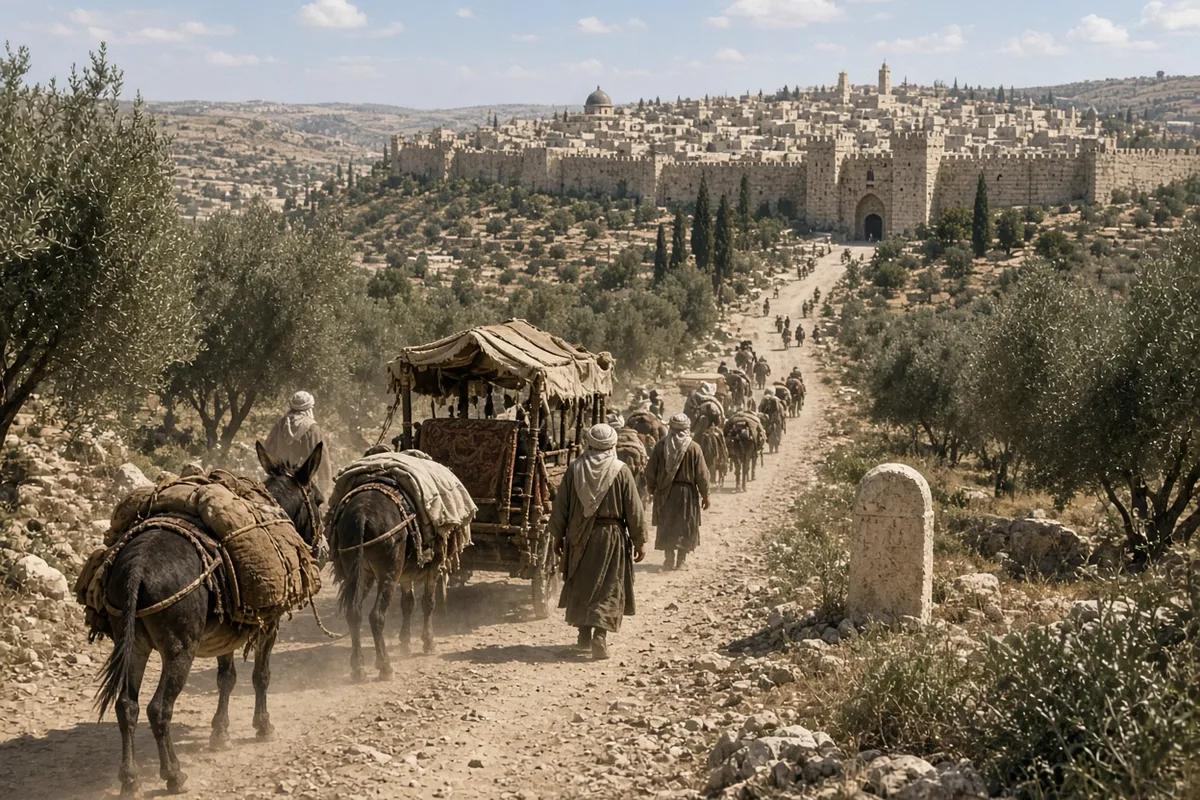
I left the site when the last scaffolding was taken away. From the ridge above the valley the new church stood white against the older ruins. Its roof caught the late light. Below it the old city still looked half-buried, its streets narrow and uneven. The road that led north carried the silver chest out of sight within an hour.
The silver chest reached the harbor at Caesarea Maritima on the twenty-third day after leaving Jerusalem, carried aboard the imperial transport that had brought the porphyry columns from the quarries at Mons Porphyrites. The captain, a man named Publius from the fleet at Antioch, later told the harbor scribe that Helena kept the sealed reliquary in the stern cabin and allowed no one to touch it except her attendant, a deaconess from the household of the Augusta. From there the ship sailed north along the coast to Tarsus, then across to Rhodes for water and olives before making the final run to the new city on the Bosporus. Constantine had already ordered a basilica erected on the site of the old temple to Apollo, and the cross fragment was placed inside a porphyry shrine lined with cedar from Lebanon. Eusebius of Caesarea recorded in his own hand that the Augusta presented the relic to her son on the tenth day of the month of Panemos in the year 327, and that Constantine ordered a portion of the wood to be set in gold and sent to the church at Golgotha while the remainder stayed in the palace.
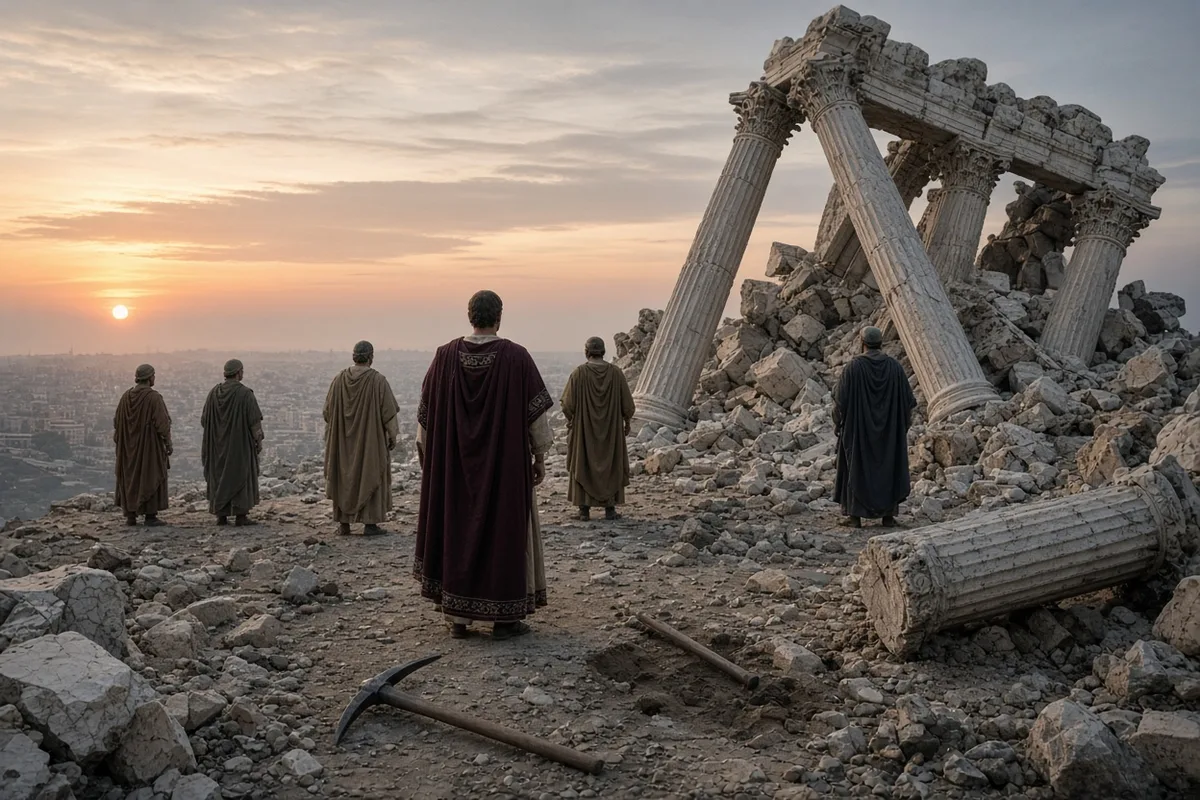
I remained in Jerusalem through the winter that followed, mixing lime for the walls of the new basilica that Macarius had named the Martyrium. The foundations measured one hundred and thirty feet in length and eighty feet across the transept, with steps leading down to the rock-cut tomb that the workmen had cleared of the earlier fill. In the spring of 329 a caravan arrived from Edessa carrying letters from the bishop there, asking for confirmation that the three crosses had indeed been recovered together with the titulus. Macarius dictated a reply that listed the measurements of each beam: the upright of the true cross stood seven feet and three inches above the crossbar, while the other two were shorter by half a foot each. The reply was sealed with the bishop’s ring and given to the caravan master, a Syrian named Barsauma, who carried it north along the same road the silver chest had taken.
By the summer of 333 pilgrims had begun to arrive in numbers large enough that the local tavern keepers raised the price of a night’s lodging from four to six folles. One of them, a man from Burdigala who kept a daily record of his journey, noted that he had counted forty-two steps down to the crypt and that the rock still showed the marks of the picks we had used. He also recorded that the three crosses were now kept behind an iron screen and that a priest read the gospel of John over them each morning at the third hour. I worked that year on the mosaic floor of the baptistery, setting tesserae of red and green glass brought from the workshops at Tyre. The pattern showed vines and clusters of grapes, each cluster containing exactly nine berries, following the design sent by the imperial architect Zenobius.
The dedication took place on the thirteenth day of September in 335. Constantine did not attend, but his letter to Macarius, preserved in the church archive, instructed that the feast should coincide with the anniversary of the finding and that the clergy of the province should assemble. Eusebius delivered the oration in the completed nave, speaking for two hours on the victory of the cross over the former idols. After the ceremony the nails that had been found with the crosses were sent under guard to the emperor’s armorer at Nicomedia, where they were hammered into the helmet and the bridle bits of the imperial cavalry. One of those bits was later carried by Constantius II during the campaign against the Persians in 338, according to the account of the comes Orientis who recorded the issue of equipment from the armory.
I left the city for the first time in the spring of 340, traveling with a party of masons who had finished their work and were returning to their homes in Antioch. Along the road we passed the estate at Daphne where the Augusta had once stayed on her return journey; the villa still stood, though the gardens had been neglected after her death the previous year. In Antioch I found employment on the restoration of the great church that had been damaged by an earthquake in 328. The new piers were built with blocks taken from the temple of Zeus, each block marked with the mason’s number so that the original facing could be replaced. While there I heard that a fragment of the cross had been sent to the church at Rome and placed in the basilica built by Helena herself on the site of the Sessorian palace; the fragment measured four inches in length and was enclosed in a crystal capsule set into the altar.
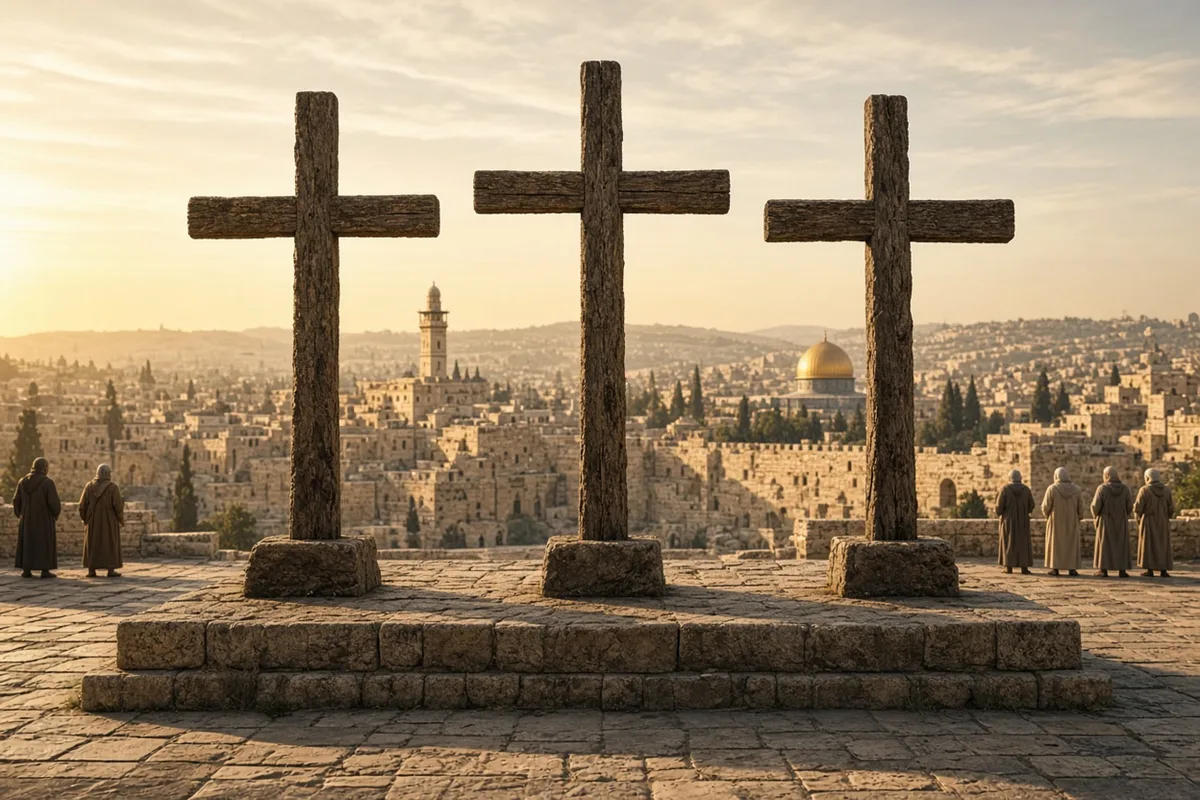
Years later I returned to Jerusalem in the company of a deacon from Constantinople who had been sent to obtain more relics for the new churches rising along the Golden Horn. The basilica we had built still stood, though the roof tiles had been replaced after a winter storm in 351. The rock of the tomb remained exposed in the center of the rotunda, and pilgrims continued to press their foreheads against it. The deacon obtained a splinter from one of the remaining crosses and sealed it inside a small ivory box before departing for the coast. I stayed another month, working on repairs to the aqueduct that brought water from the pools of Solomon, then returned north along the same road the silver chest had followed decades earlier.
The church at Jerusalem was sacked in the Persian invasion of 614, when the soldiers of Chosroes II carried away the relic that had been kept behind the iron screen. The beam itself was recovered seventeen years later by the emperor Heraclius and restored to the church on the feast of the Exaltation. After the Arab conquest the building passed into the care of the patriarch Sophronius, who negotiated a treaty allowing Christian pilgrims to continue visiting the site. In the eleventh century the Fatimid caliph al-Hakim ordered the destruction of the rotunda, yet the lower courses of the walls we had raised remained visible above the rubble. The present structure incorporates those same foundation stones, visible today in the eastern crypt where the rock is still marked by the grooves left by our tools. Pilgrims still descend the same steps counted by the man from Burdigala, and the last image is of an elderly woman from Georgia pressing her palm against the stone while a priest recites the same passage from John that was read when the crosses first lay on the ground.
The eastern crypt still receives its light through the same lancet windows inserted during the 1169 restoration ordered by Amalric of Jerusalem, whose masons recorded the insertion of twenty-three new voussoirs cut from limestone quarried at Beit Jala. Those stones bear the masons’ marks of a compass and an arrow, identical to marks found on the choir capitals of the Church of the Nativity at Bethlehem, where the same workshop had worked the previous year. A ledger kept by the prior of the Augustinian canons lists the daily wage paid to each cutter: three deniers for a master, two for an apprentice, with an extra obol granted on feast days when the relic was carried in procession around the ambulatory.
After the 1244 sack by the Khwarezmian Turks the canons removed the remaining cross fragments to Acre, where they remained until 1291; an inventory drawn up that year by the treasurer of the Templars notes one piece weighing eleven ounces enclosed in a reliquary of gilded copper. The fragment was later transferred to the treasury of Notre-Dame in Paris, where it was weighed again in 1623 by the sacristan Jean-Baptiste de Saint-Romain, who recorded the weight as ten and one-half ounces after a small portion had been given to the Jesuit mission in New France.
The present rotunda was completed in 1870 under the direction of the Greek architect Nikolaos Komnenos, who replaced the dome destroyed in the 1808 fire with a lighter iron armature supporting 1,872 glass tiles manufactured in Murano. The ironwork bears the stamp of the foundry at Tula and the date 1869. During the same campaign the Ottoman authorities installed the iron gates that still separate the Latin and Orthodox sections of the edicule, each gate fitted with a lock whose keys are held jointly by the sacristans of the three communities under the terms of the 1853 Status Quo.
In 1927 the British mandatory government commissioned a structural survey by the engineer George Jeffery, whose report measured the tilt of the south wall at fourteen degrees from vertical and recommended the insertion of eight reinforced-concrete buttresses. The work was carried out between 1934 and 1937 by the firm of Palestine Railways, whose payroll lists thirty-four Arab and twenty-two Armenian laborers paid at the rate of twelve piastres per day. One of those laborers, Ibrahim Khalil of Silwan, carved his initials and the year 1935 into the base of the fourth buttress, where they remain visible beneath a later coat of limewash.
The most recent conservation campaign, begun in 2016 under the supervision of the Greek Orthodox patriarchate and the Franciscan Custody, removed 2.4 tons of accumulated soot and wax from the interior surfaces. Laser scanning performed by the Polytechnic University of Milan produced a point-cloud model accurate to three millimeters, revealing that the original fourth-century foundation trench beneath the present floor lies 1.87 meters below the current paving. During the cleaning, conservators uncovered a previously unknown Greek inscription dated 15 May 335, quoting the opening words of Psalm 74 in the version used by the Jerusalem lectionary.
On ordinary weekdays the number of visitors passing through the main doors between 5 a.m. and 9 p.m. averages 4,800, according to the electronic counters installed by the Israeli Ministry of Tourism in 2018. On the feast of the Exaltation, 14 September, the figure rises to more than 11,000. The elderly Georgian woman returns each year on that date, arriving by the 6:17 bus from Bethlehem. She carries the same canvas bag containing a small tin of olive oil pressed from trees on the Mount of Olives and a linen cloth embroidered with the date 1997. After the third-hour reading she pours a few drops of the oil onto the rock, spreads it with the cloth, and presses her palm flat for the length of time it takes the priest to complete the prescribed verses. She then folds the cloth, returns it to the bag, and steps aside for the next pilgrim without speaking.