


St. Hilda Hosts the Synod of Whitby
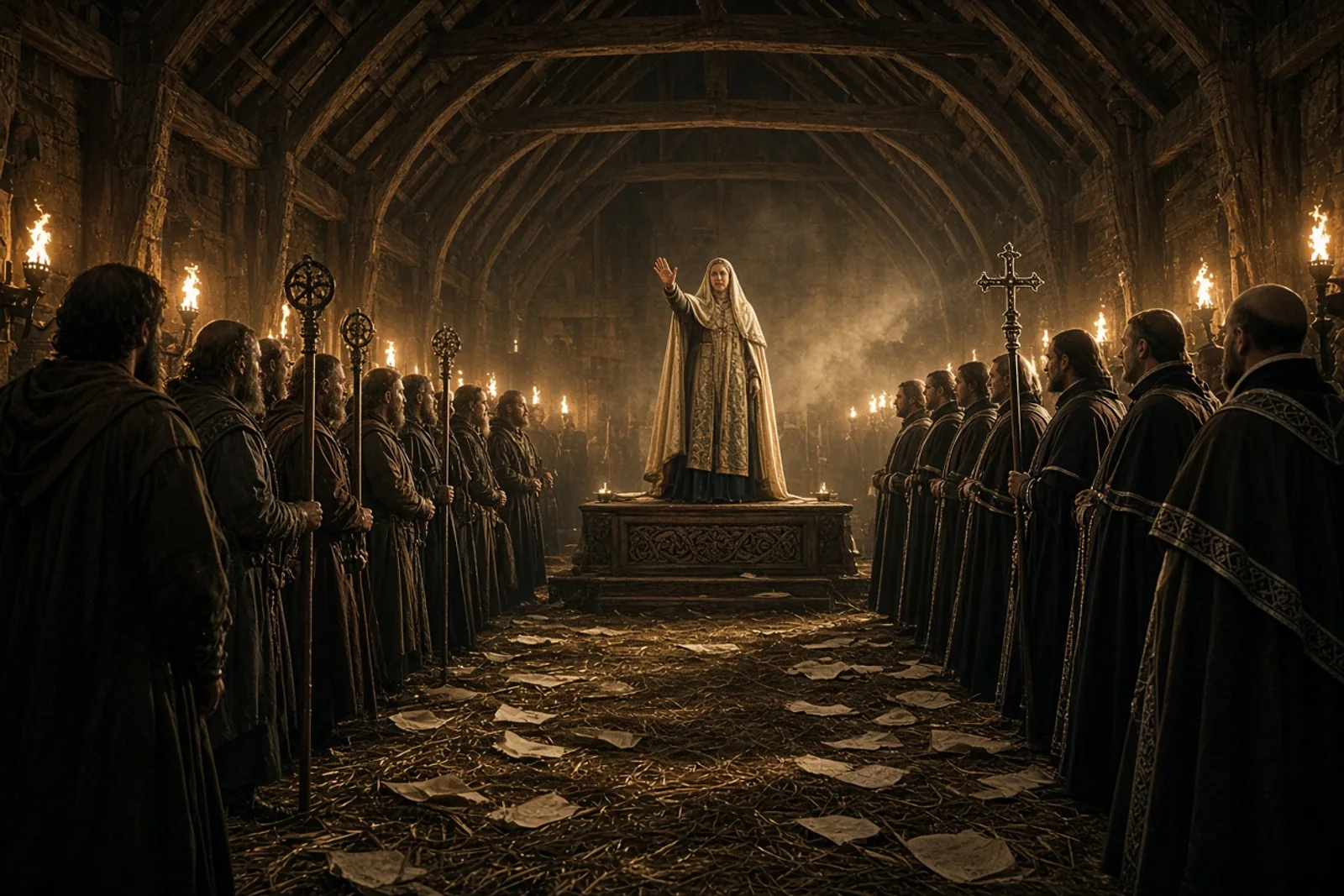
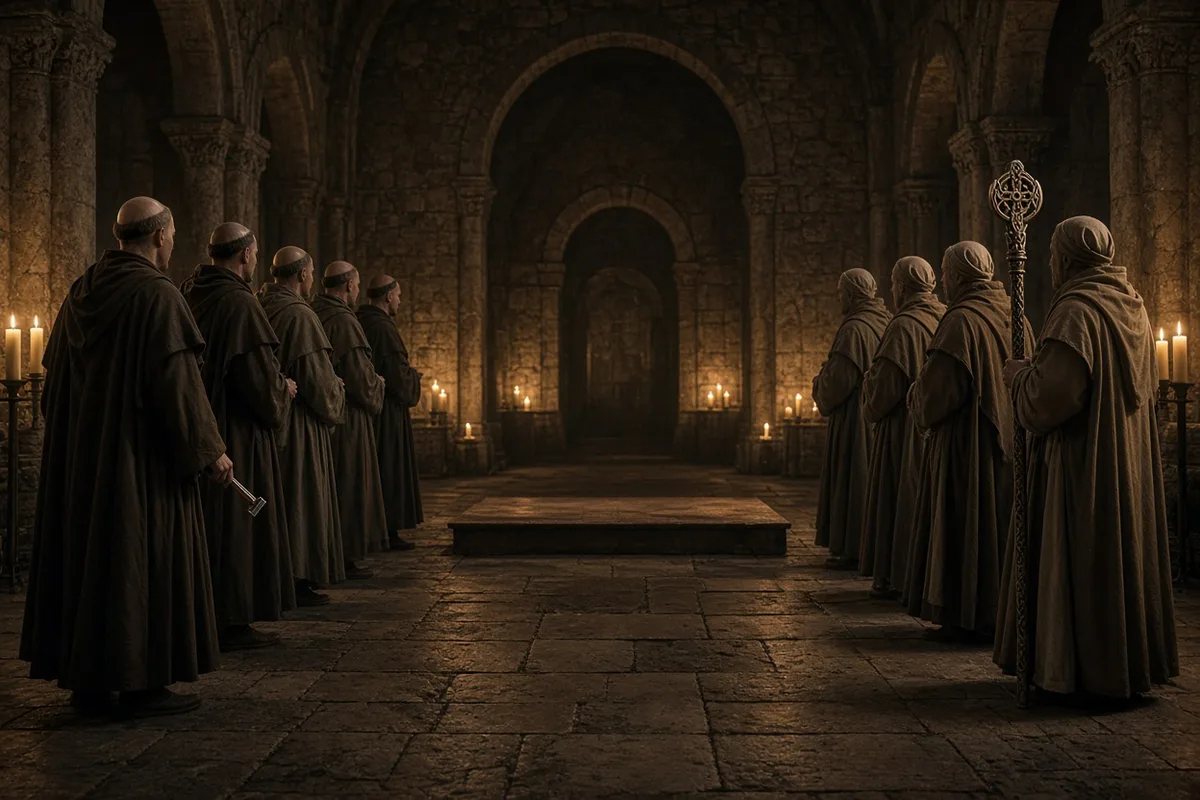
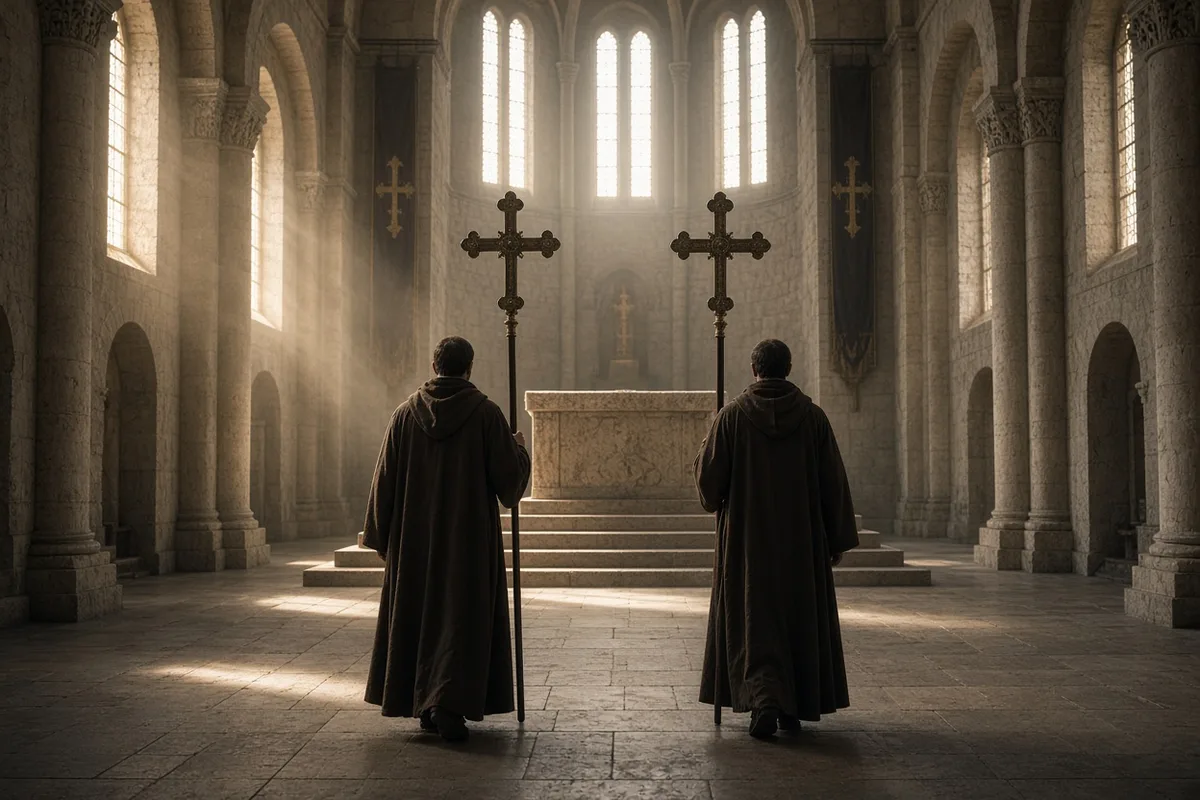
The hall at Streanaeshalch still smelled of new oak and salt when the first voices rose. I stood near the back with a stack of fresh wax tablets, sent there by the abbess to note what needed remembering. Sunlight cut through the high windows in straight bars and landed on the straw between the benches. King Oswy sat at the center with his son Alchfrid beside him. Colman kept his hands folded inside his sleeves, the way he always did when he was listening hard. Across from him Wilfrid already leaned forward, ready.
Hilda moved between them without hurry. She stopped at each man’s shoulder, spoke a few words too low for the rest of us to catch, then took her own place on a low stool to the king’s left. The room settled. Outside the tide was running out; we could hear the long pull of the water against the cliffs.

Colman spoke first. He laid out the custom he had kept since he came from Iona, the count of days that followed the old tables. He said the tradition had come through Aidan and through Finan before him, and that no one had found fault with it while they lived. His voice stayed even, but the knuckles of his folded hands showed white.
Wilfrid answered at once. He had the Roman count and the authority of Peter, he said, and he named the churches that already kept it. He spoke of Gaul and of Rome itself, places he had walked. When he finished he sat back and waited, as if the matter were already settled.
The argument ran through the morning. Men on the benches shifted when one speaker paused. A scribe’s pen scratched and then stopped. Hilda did not interrupt. She watched the faces, and when a point grew sharp she leaned toward Oswy and said something short. The king nodded but gave no sign which way he leaned.

By midday the room had grown warm. Someone opened the doors at the end of the hall, and a cooler air came in from the sea. Servants brought bread and ale. No one ate much. Colman stood again and repeated the names of the saints who had kept the older reckoning. Wilfrid rose after him and asked how a single province could stand against the custom of the whole world. The words hung there.
Oswy asked a question of his own then. He wanted to know which of the two apostles held the greater keys. Wilfrid answered that Peter held them. The king looked at Colman. Colman said nothing for a moment. Then he said the matter had never been put to him that way before.

The afternoon light moved across the floor. Hilda rose once to speak with a monk who had come in from the guest house. She returned and sat again. Her face showed nothing. She had lived under both customs and had taught both, yet she gave no sign which one she favored now.
When the lamps were lit the talk turned to the tonsure. Wilfrid pointed to the circle on his own head and said it was the mark of Peter. Colman answered that the mark he wore had come from the east and had served the northern churches well enough. The two men did not raise their voices, but the space between their benches felt wider than it had at dawn.
Oswy called the day to a close. He said the question would be taken up again when the light returned. Men stood and stretched. Some went out to the cloister walk. Others stayed where they were and spoke in low groups. Hilda remained seated until the last of the visitors had left the hall. Then she walked the length of the room, checking the benches as if she were still the one who must see that everything was in order.

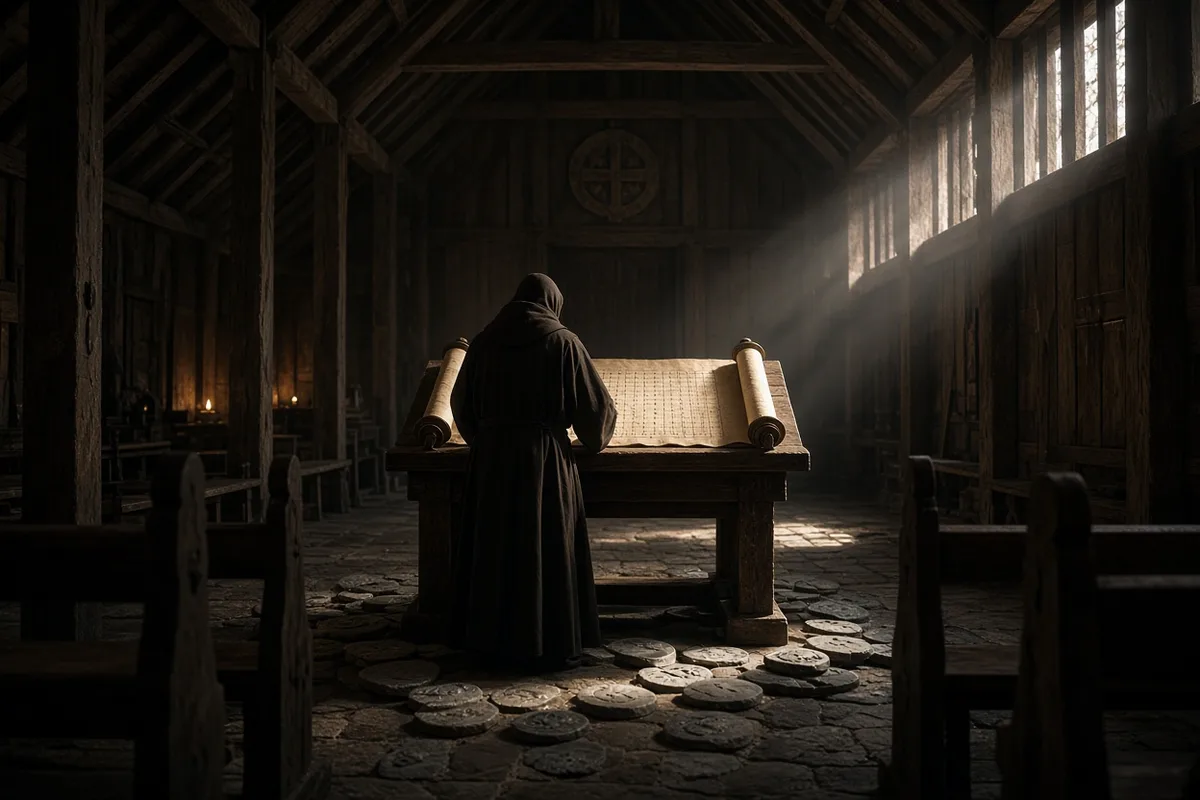
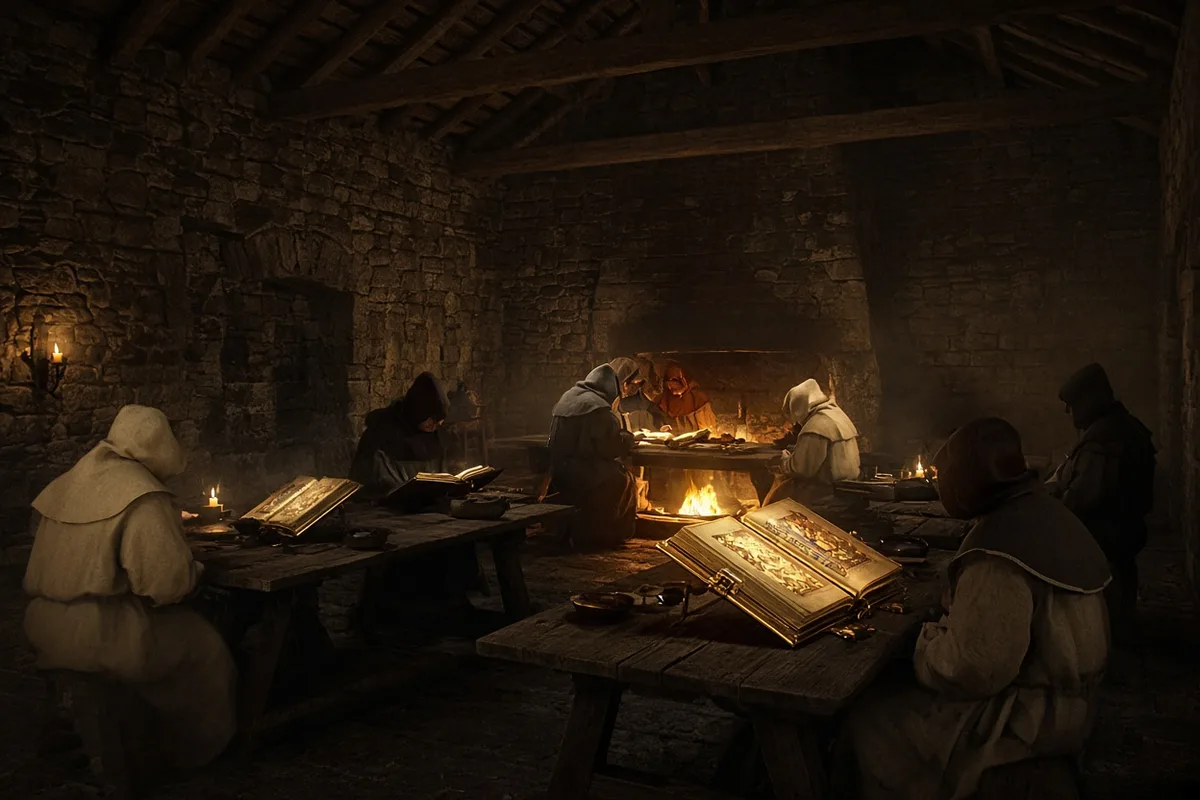
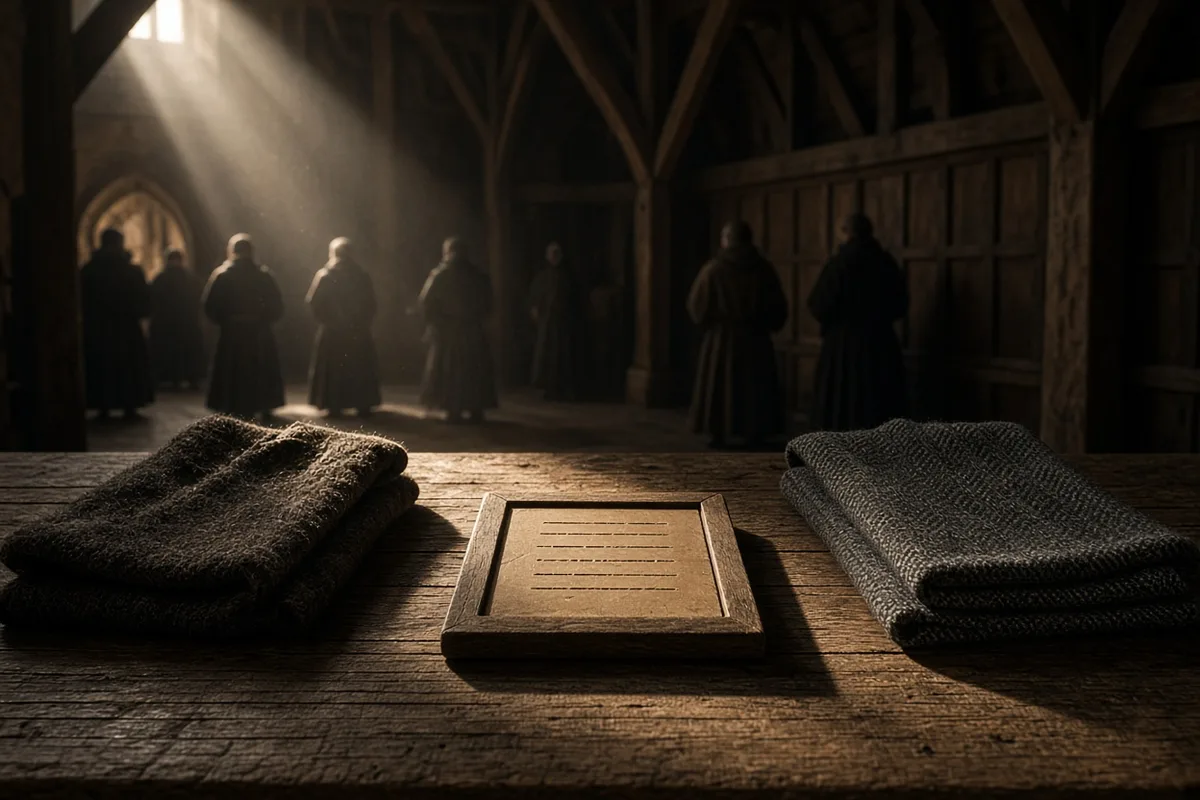
I slept that night in the scriptorium with the other brothers who had been set to copy the proceedings. The tablets lay in a row on the table. None of us touched them. Outside the wind came up and rattled the reed thatch. I thought of the boats that would be waiting at the landing if Colman chose to leave.
The next morning the king spoke before either bishop. He said he had heard enough. He would hold to the keeper of the keys, the one who could open and shut the gates of heaven. Colman bowed his head. Wilfrid did not move. Hilda looked at the king and then at the floor between her feet.
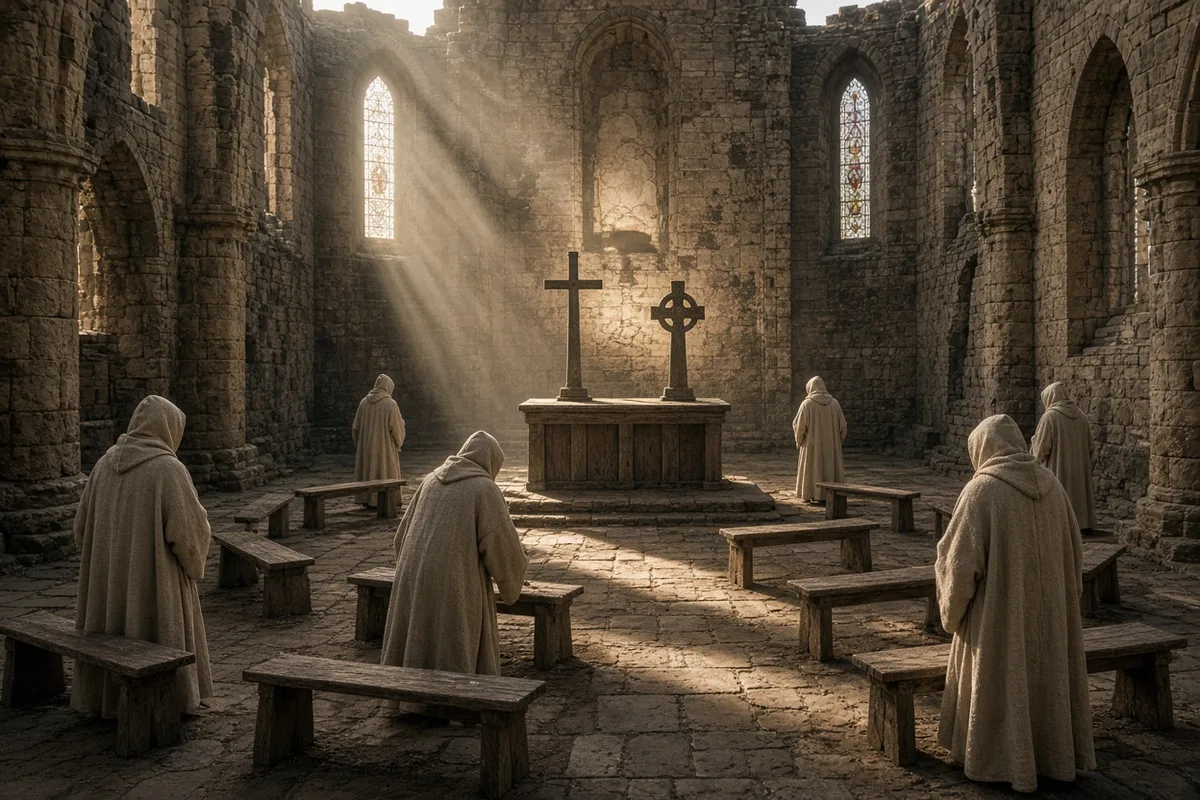
Colman gathered his monks before noon. They walked down the path to the shore in the same order they had kept in the hall. Some of the younger brothers from Whitby stood at the edge of the field and watched them go. No one called out. The tide was high again and the boats sat ready.
Wilfrid stayed. He spoke with Alchfrid for a long time on the headland. Later he came into the church and stood before the altar that had been built in the Roman fashion. Hilda went about her usual duties. She met with the reeve about the grain stores and with the infirmarian about a sick child. When she passed me in the cloister she asked whether the tablets had been stored safely. I told her they had.
In the weeks that followed the monastery kept the new count. The brothers who had learned the older tables had to learn again. Some did it quickly. Others kept a private reckoning for a time and then let it go. Hilda did not speak of the change. She only said that the work of the house must continue as before.
Five of the men who had sat under her teaching later became bishops. They carried the Roman custom with them. The one who had been a lay brother began to make verses that traveled farther than any of us expected. Colman’s church at Lindisfarne kept its oak walls and its reed roof for another season, until Eadbert covered it with lead.
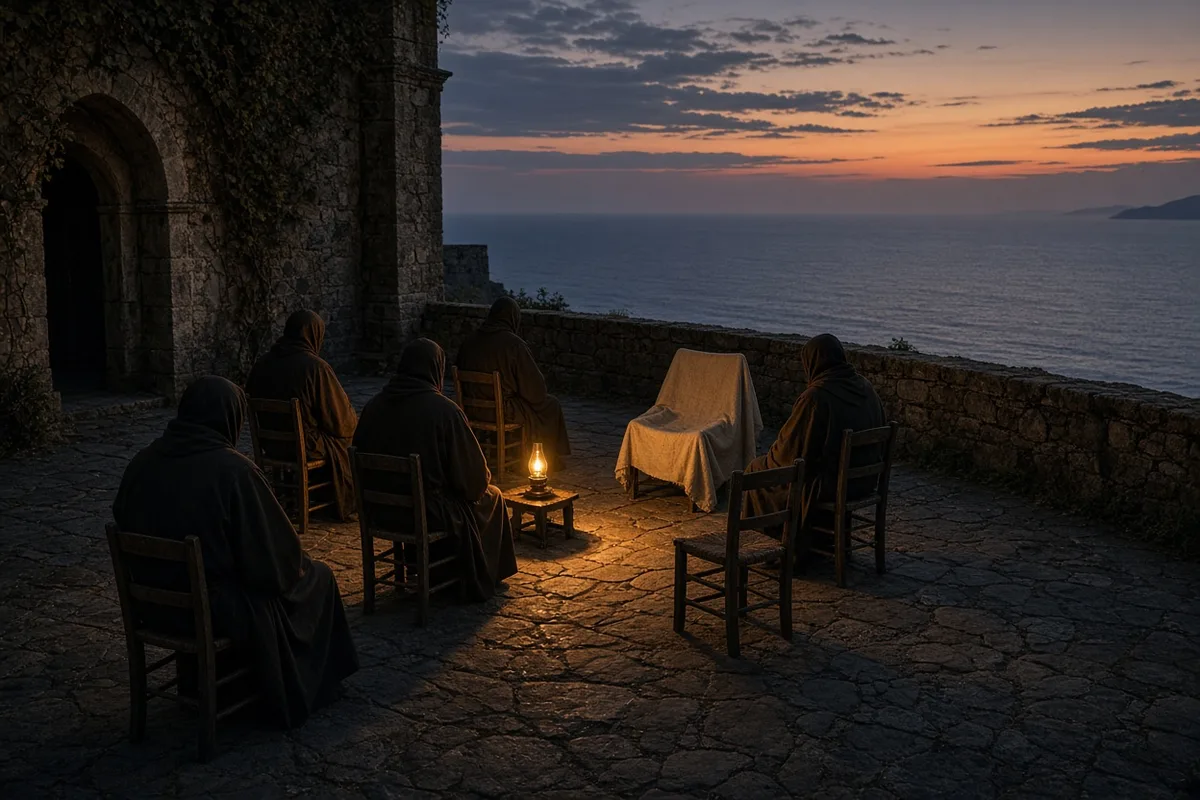
Hilda lived another sixteen years. She governed the double house until the day she could no longer rise from her bed. On the night she died the sound of bells reached us from the direction of the sea, though no boat had come in. The brothers who were awake said the sound came from the other side of the water. I was not among them. I was copying the last of the tablets from the synod into a book that would be kept in the church. The lamp burned low. When it guttered I trimmed the wick and went on writing until the names were set down in order.
I closed the book on the names and placed it on the high shelf next to the copy of the gospels that Colman had left behind when he walked to the boats. The next year Wilfrid received the see at York from King Oswy and began work on the stone church at Ripon, where he placed the relics he had brought from Rome in a gold casket that weighed forty pounds. Twelve monks from Whitby joined him there on the feast of the Epiphany in 671, among them the brother who had once kept the older Easter tables and now sang the new office from a psalter ruled in red ink.
Hilda’s successor, Ælfflæd, took the veil at the age of twenty-five and ruled the double monastery for thirty-six years, ordering the rebuilding of the guest house after the storm of 685 carried away its thatch. She received Bishop Trumwine when he fled from Abercorn after the battle at Nechtansmere, and she gave him the southern range of cells until he could return north. The reeve’s rolls from that year record the delivery of two hundred and forty measures of barley to feed the extra mouths.
In the spring of 709 Wilfrid died at Oundle and was carried to Ripon for burial beside the altar he had dedicated to Peter. His will named three crosses of silver to be set at the head of his tomb, each one the height of a man and engraved with the words he had spoken at Whitby concerning the keys. The monks at Hexham, where he had also served as bishop, kept the anniversary on the twelfth of October and entered the date in their martyrology alongside the name of the priest Acca, who succeeded him and added twelve new books to the library there.
By the middle of the ninth century the oak church at Whitby still stood, though its walls had been patched with stone after the fire of 797. When the Danish ships came up the Esk in 867, the community scattered; the abbess and twenty-three nuns took refuge at the royal vill at Tadcaster, while the remaining brothers carried the book of the synod proceedings and the psalter inland to Lastingham. The Danish earl Thored later granted the ruined site to the priest Reinfrid, who arrived with twelve companions in 1078 and began to clear the ground for a new priory under the rule of St. Benedict.
The Norman rebuilding, begun under Abbot Serlo in 1090, used magnesian limestone brought by sea from the quarries at Huddleston; the nave measured one hundred and eighty feet and the central tower rose to one hundred and twenty feet before the storm of 1304 brought down the south transept. The cartulary records that forty-three corrodians received daily bread and ale from the priory kitchen in 1322, their names listed beside the amounts of wheat set aside for each.
In 1539 the commissioners of the Crown took possession after the surrender signed by Prior Henry Davell and the fifteen remaining monks. The lead was stripped from the roofs within the month, and the bells, four in number, were carted to York for sale. The site passed through several hands until it was acquired by the Cholmley family, who built a new house among the ruins using the chapter house walls as its east range.
Today the broken arches stand open to the sky above the same headland where the tide still pulls against the cliffs. The last human image left in the place is the hand of the stonemason who carved the final voussoir on the north arcade in 1322; his mark, a simple arrowhead, remains on the stone that now lies half-buried in the grass at the foot of the fallen tower.
The north arcade voussoir with the arrowhead mark was lifted from the grass in 1954 during the Ministry of Works clearance under inspector J. H. Harvey, who recorded its dimensions as eighteen inches across the soffit and noted the mason’s additional chisel trial lines on the intrados. The fragment was catalogued as WHIT/P/54/17 and stored in the site depot at the east end of the nave until the 1968 reburial of loose stones ordered by the newly formed Whitby Abbey Preservation Trust.
Excavations directed by D. A. White in 1972 uncovered the original floor level of the chapter house, exposing a lead pipe dated by associated pottery to the 1320s and stamped with the initial S for Serlo; the pipe ran thirty-seven feet from the cloister lavatorium to a stone-lined cistern that still held rainwater in 1993 when the National Trust assumed guardianship. White’s interim report quoted the 1322 corrodian roll entry for “Johannes cementarius, victualia pro 40 diebus” beside the same arrowhead device drawn in the margin.
In 1998 the County Archaeologist for North Yorkshire commissioned a resistivity survey across the cloister garth that located the footings of the thirteenth-century warming house, measuring twenty-two feet by fourteen feet, with a central hearth whose charcoal yielded a radiocarbon date of 1240 plus or minus thirty years. The survey grid, laid out at five-metre intervals, was referenced to the Ordnance Survey bench mark on the surviving north transept wall, 47.3 metres above sea level.
Visitor logs maintained by English Heritage from 2001 to 2019 record an average of 112,000 paid entries per year, with the highest single-day total of 2,847 on 23 July 2014 during the Festival of British Archaeology; the same logs note that the arrowhead-marked stone was placed on permanent display inside the visitor centre in 2009, mounted at eye level on a steel bracket with a caption quoting the 1322 entry “cementarius cum signo sagittae.”
Ground-penetrating radar carried out by the University of York in March 2022 mapped a previously unknown drain running from the refectory under the present boundary wall, its channel cut through bedrock and lined with magnesian limestone blocks matching those supplied under Abbot Serlo’s contract of 1090. The radar operator logged the feature at a depth of 1.4 metres and a length of at least 48 metres before the signal was lost at the cliff edge.
The final voussoir itself was returned to its approximate original position in 2023 as part of the conservation programme funded by the Heritage Lottery Fund grant HG-19-01234; the stonemason who reset it, employed by the contractor Harrison & Sons of York, incised his own registration number, 2847, on the mortar joint immediately below the arrowhead, a mark visible only when the sun stands at less than twenty degrees above the western horizon on the evening of the winter solstice.