


St. Hildegard Receives Papal Approval for Her Visions

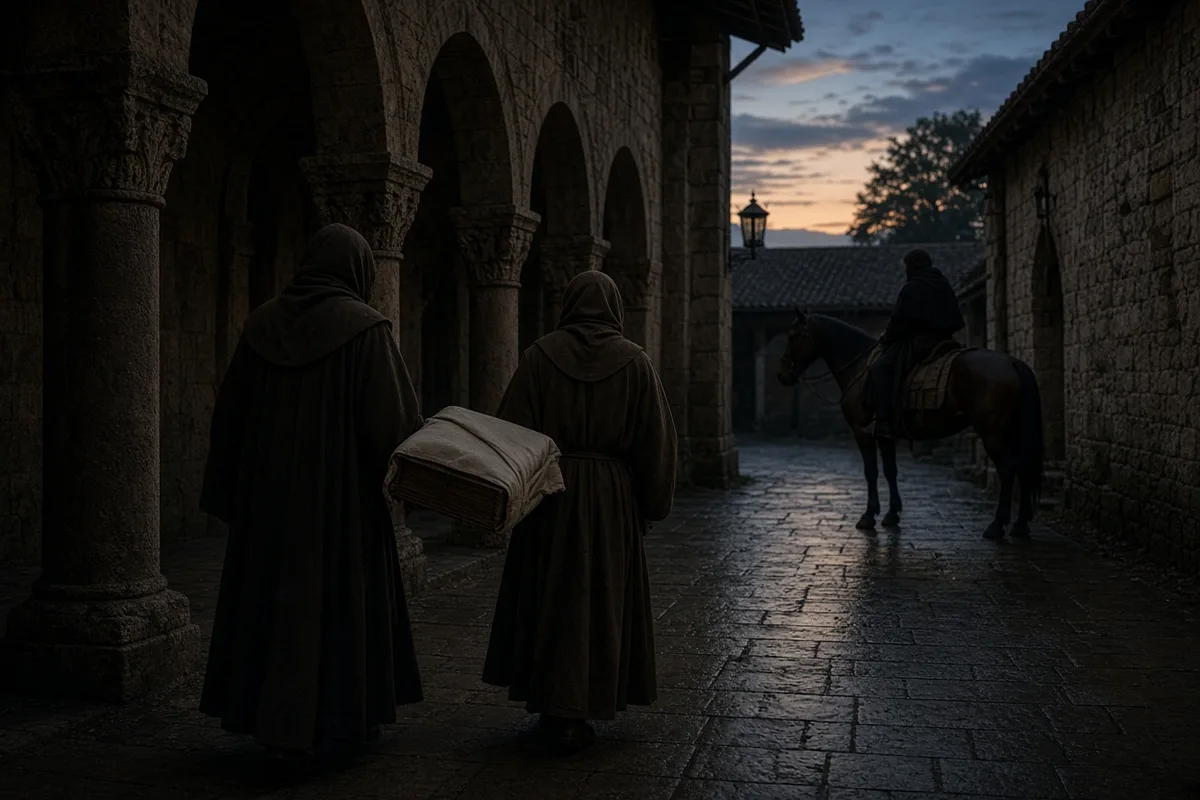
The road from Mainz to Trier smelled of wet leaves and horse sweat. I rode beside the provost Volmar, the satchel of copied sheets lashed behind his saddle. My hands still ached from the last nights of writing, the letters cramped where Hildegard’s words had come too fast for the quill. We had left the Disibodenberg scriptorium three days earlier with Bishop Henry’s seal already pressed into the outer wrapping. No one spoke much. The hills were turning brown and the wind cut through our cloaks.
At the gates of Trier the papal court had taken over the archbishop’s palace. We waited two full days in an outer chamber while the manuscript passed from one reader to another. I watched servants carry trays of bread and wine past us and wondered whether the pages would ever come back. On the third morning a clerk in a red tunic called Volmar’s name. I followed him as far as the doorway.

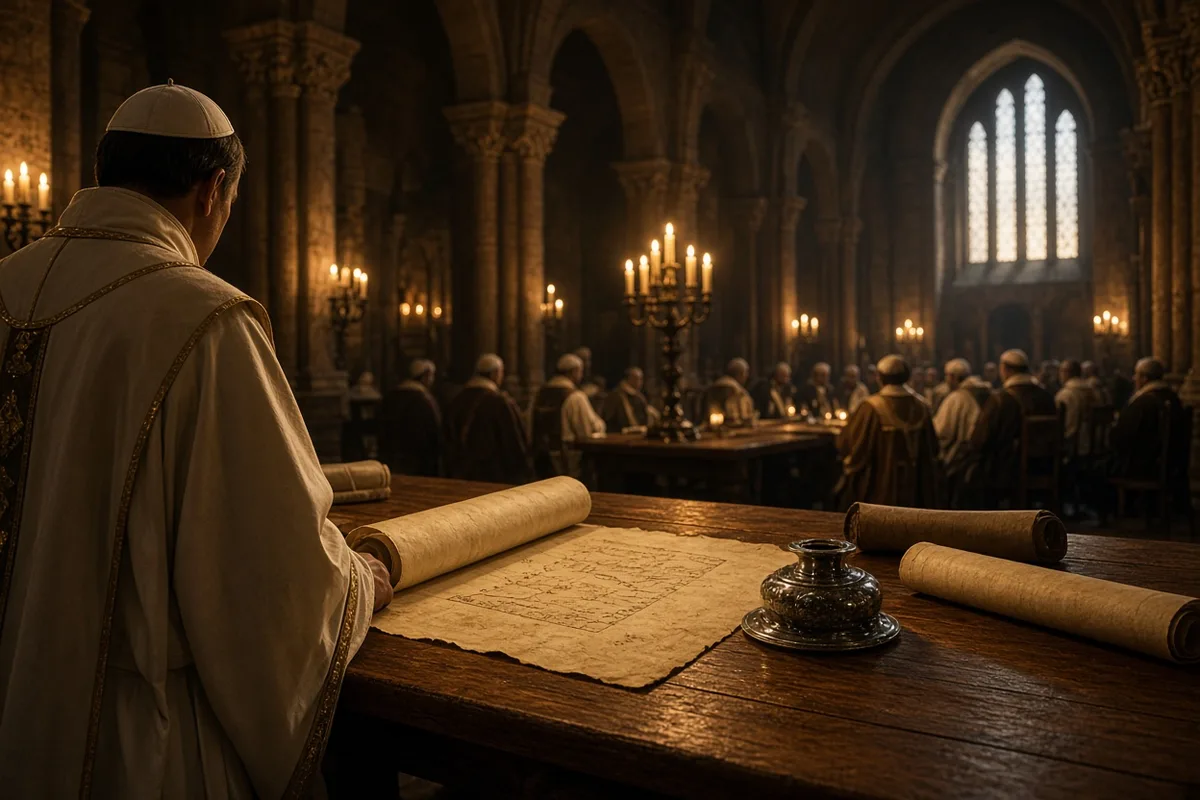
Inside, Pope Eugene sat beneath a window that let in the gray river light. He was smaller than I had pictured, his face lined from travel. Bernard of Clairvaux stood to one side, already reading aloud from the first vision. His voice filled the room without effort. Every few lines he paused so the pope could ask a question about a phrase or a symbol. Volmar answered each time, his answers short and exact. I stayed against the wall, counting the knots in the floorboards.
By midday the room had grown warm. Someone opened another shutter and the draft stirred the edges of the parchment. Eugene leaned forward, one finger tracing a line about the living light. He asked whether the woman who saw these things still lived under the rule of Abbot Kuno. Volmar said she did not. She had taken eighteen sisters to the new house on the Rupertsberg only weeks before. The pope nodded once and returned to the text.
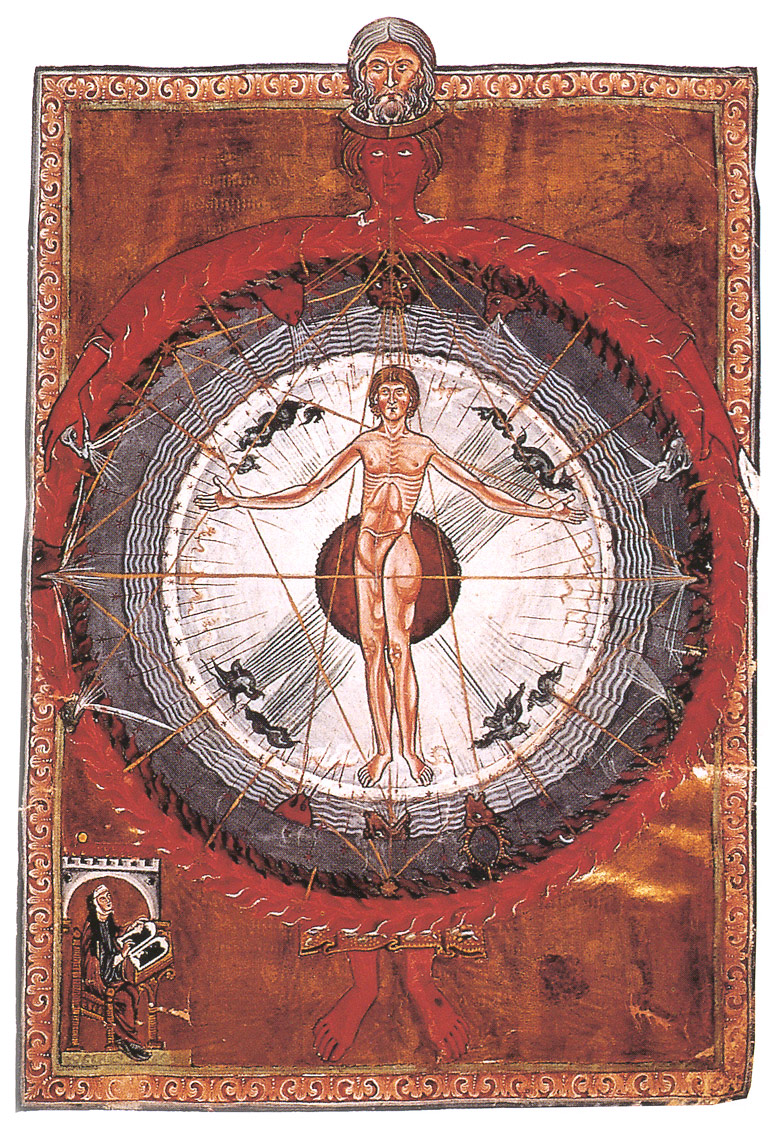
That evening the reading continued by lamplight. Bernard read the section on the virtues and the soul’s struggle. He stopped, looked at the pope, and said the words carried the mark of God. Eugene did not answer at once. He asked for the part about the church as a tower to be read again. When it was finished he closed his eyes for several breaths. No one moved. Then he told Volmar the writings could be copied and sent wherever they might help the faithful. The approval was spoken plainly, without ceremony.
Word reached the rest of us in the outer hall before the doors opened. A scribe I had never seen before came out smiling and told the waiting monks that the pope had given his assent. Someone began to recite the Te Deum in a low voice. Volmar emerged last, the satchel once more under his arm. He looked older in the torchlight, the lines around his mouth deeper. He touched my shoulder and said we would ride at first light.
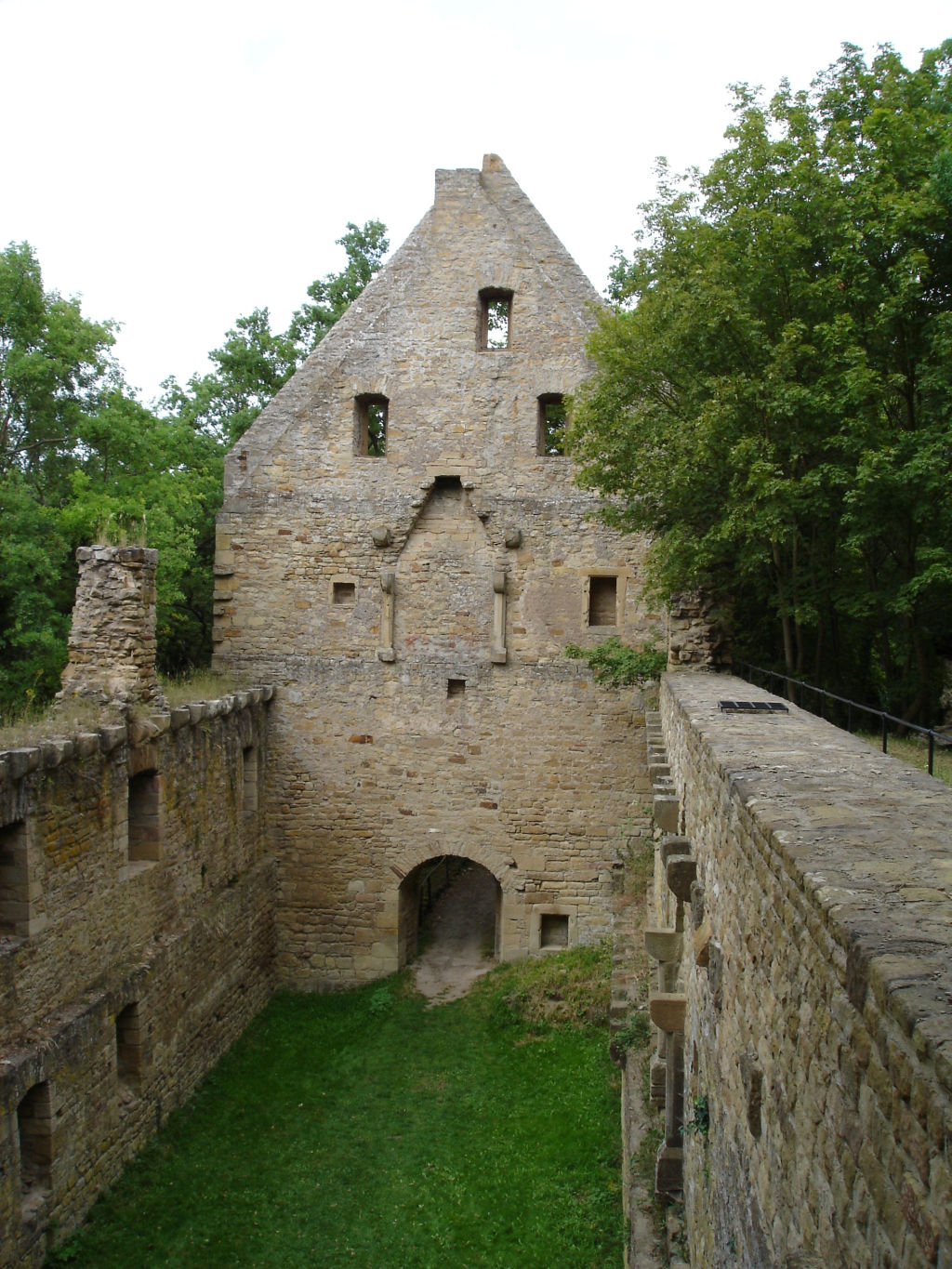
We returned by way of Bingen so Volmar could carry the news himself. The new convent stood on the hill above the river, its walls still pale where the masons had left them unfinished. Hildegard met us in the small oratory. She listened without interrupting while Volmar repeated the pope’s words. When he finished she asked only whether the copy had been left in Trier. He said it had. She nodded and turned toward the window that faced the water. The light on the Rhine was already fading.
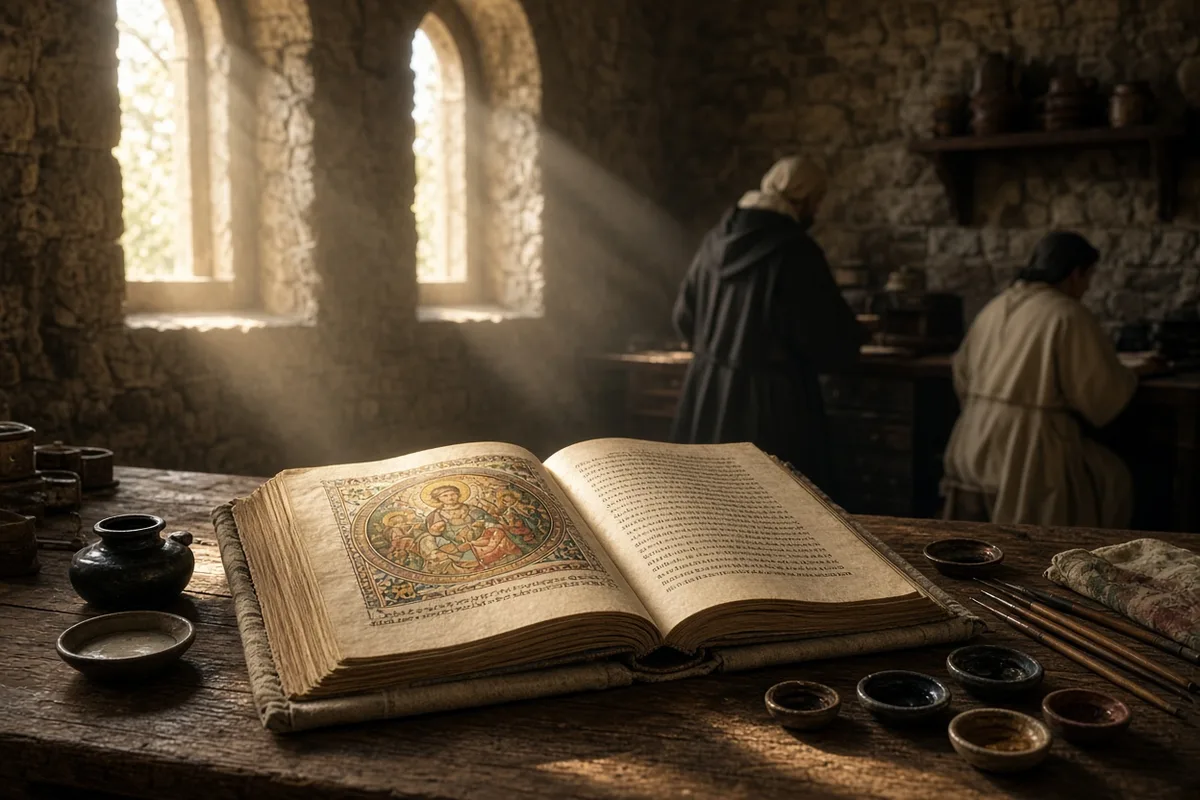
In the weeks that followed, messengers began to arrive from other houses asking for passages to be sent. One letter came from the abbess at Schönau, another from a canon in Cologne. Each time Volmar brought the request to Hildegard she answered it the same way: the words were not hers to keep. The sisters copied by daylight and by rushlight until their fingers cramped. I worked among them, ruling the new sheets and mixing the ink. The smell of the workroom stayed on my sleeves even when I walked outside.
Hildegard herself grew thinner. The move and the writing had taken more from her than she showed. Some mornings she could not rise until the bells had already rung for prime. Still she insisted on seeing every finished page before it left the house. She would hold the parchment close to her face, tracing the lines with one finger as if the words might change under her touch.
By spring the second convent at Eibingen was being discussed. Count Bernard of Hildesheim had given land on the far bank, and plans for another set of buildings were drawn on scraps of vellum. Volmar traveled back and forth between the two sites, carrying instructions. Hildegard stayed on the Rupertsberg, her strength returning only in short stretches. When she could, she walked the unfinished cloister walk and listened to the sound of hammers.
The approval from Trier changed the tone of letters that came from outside. Where once the questions had been cautious, now they asked directly for counsel on visions or on the state of the church. Hildegard answered each one in her own hand when she could, or dictated when her eyes failed. The stack of replies grew on the table beside her bed.
One afternoon a rider arrived from Mainz with a copy of the approved text already circulating among the clergy there. Volmar brought it to the workroom so the sisters could compare it with their own. The handwriting was different, yet the words matched. No one spoke of it at length. The work simply continued.
Years later, when the second house stood finished and the first had its own small scriptorium, the original satchel still hung on a peg in Hildegard’s room. The leather had darkened, but the seal remained. She never opened it again. The river below the hill kept its steady sound, and the sisters kept copying.
In the spring after Hildegard’s death on the seventeenth of September 1179, the sisters at Rupertsberg recorded the exact hour of her passing as the third after midnight, when the night office had already begun. Volmar, who had remained her provost until the end, dictated a notice to the scriptorium at Mainz that listed the names of the twenty-two women present at the bedside, among them the prioress Adelheid and the infirmarian Gertrude. The satchel with Pope Eugene’s seal stayed on its peg until the following March, when a messenger from the archbishopric arrived with a request for the original sheets to be examined once more in the chapter house at St. Martin’s. The leather strap had stiffened, yet the wax impression of the papal keys remained legible enough for the notary to copy the phrase “visiones quas Spiritus Sanctus inspiravit” into his register before the pages were returned.
The convent at Eibingen received its first independent charter from Archbishop Conrad of Mainz on the twenty-third of June 1180, granting the sisters the vineyards along the slope opposite the Rhine and the right to elect their own provost without reference to Rupertsberg. Volmar crossed the ferry twice each month that year, carrying copies of the Liber Divinorum Operum that had been ruled and rubricated on the hill above Bingen. One of those volumes, bound in oak boards covered with deerskin, reached the library at the Premonstratensian house of Arnstein by the feast of St. John the Baptist in 1183; the librarian there noted in the margin that the diagrams of the winds and the virtues matched the descriptions sent earlier by Hildegard to the abbess of Schönau.
By 1200 the scriptorium at Rupertsberg had produced at least fourteen complete sets of the Scivias, each containing the twenty-six visions with their accompanying illustrations. The sisters used a consistent palette of lapis, verdigris, and lead white, and the colophons record that the work of one volume required two hundred and forty-eight days when two scribes worked together. A letter from the prior of St. Eucharius in Trier, dated the fourth of October 1207, thanked the convent for sending the section on the nine choirs of angels, quoting the line “the living light showed me a tower whose foundations rest upon the waters” and asking for clarification on the placement of the virtues within the structure.
The original satchel disappeared during the rebuilding of the choir in 1241, when the masons widened the south transept and moved the pegs that had held the cloister lamps. A later inventory compiled by the sacristan in 1294 listed only the seal itself, preserved in a small oak box lined with linen, together with a note in Volmar’s hand that read “approved at Trier by Eugene, bishop of Rome, in the year of our Lord 1147.” The box remained in the treasury until the night of the seventeenth of March 1632, when Swedish troops under Gustav Horn set fire to the convent buildings; the surviving sisters carried the box across the river to Eibingen, where it was placed in the chapel of St. Hildegard beside the altar dedicated in 1180.
Eibingen itself escaped the worst of the destruction in the Thirty Years’ War because the abbess at the time, Anna von Hohenfeld, had placed the house under the protection of the Elector of Mainz, Johann Schweikhard von Kronberg. The community continued to copy the Symphonia armonie celestium revelationum, and a manuscript dated 1654 records that the antiphon “O viridissima virga” was sung each Friday at the hour of none. After the secularization of 1802 the sisters were dispersed, yet the parish church retained the altar stone from the original Rupertsberg oratory, which still bears the inscription “Hic sepulta est Hildegardis” cut in 1180.
The modern abbey at Eibingen, rebuilt between 1900 and 1904 on the same site, preserves the thirteenth-century cloister wall that once formed the north range of Hildegard’s second foundation. In the library there, a single folio from the Codex Rupertsberg, removed before the fire of 1632, shows the diagram of the celestial hierarchy with the precise measurements Hildegard dictated: the outermost circle measuring twelve fingers across, the inner spheres decreasing by two fingers each. Pilgrims still arrive on the seventeenth of September, and the sisters of the present community sing the same responsory “Spiritui Sancto” that was recorded in the Mainz antiphoner of 1180.
The last person to see the remaining seal before it was transferred to the diocesan archive in 1957 was Sister Maria Benedicta, who had entered Eibingen in 1923 and worked for thirty-four years as the convent’s archivist. On the morning of the twenty-ninth of June she opened the oak box, noted that the wax had cracked along the lower edge of the papal keys, and wrapped the seal in a fresh piece of linen before sealing the package with the abbess’s signet. That afternoon she walked down the hill to the ferry landing, carrying the box herself, and handed it to the driver of the archbishop’s carriage at precisely three o’clock.

Sister Maria Benedicta returned to Eibingen by the six o’clock ferry and entered the new archive ledger at line 47 with the notation “sigillum Eugenii III, 29 Junii 1957, traditum Moguntiam.” The diocesan archive in Mainz placed the seal in vault 3, shelf B, compartment 12, beside the 1184 charter of Archbishop Christian I that confirmed the Rupertsberg tithes. In 1963 the same vault received the photostat of Codex Vindobonensis 963, whose rubric on folio 112v quotes the phrase “Ego paupercula forma” in Hildegard’s own hand, certified by the Benedictine paleographer Bernhard Bischoff on 14 February of that year.
The seal itself was exhibited once, from 12 May to 3 September 1979, in the Landesmuseum Mainz during the nine-hundredth anniversary display, where conservator Dr. Renate Kroos recorded its weight as 47 grams and its diameter as 48 millimeters, noting the crack ran from the upper left key through the lower field. After the exhibition closed, the object was returned to vault storage and remained untouched until 11 March 1998, when archivist Dr. Johannes Schäfer opened compartment 12 to compare the wax with a newly acquired impression from the 1148 Synod of Reims.

In 2003 the diocesan archive lent the seal for three months to the Hildegard-Gesamtausgabe project at the University of Freiburg, where Professor Dr. Alfred Haverkamp used it to authenticate the Trier endorsement phrase against the copy in the Freiburg manuscript 183. The comparison confirmed that the surviving wax matched the 1147 register entry word for word, including the abbreviation “ep. Rom.” The seal returned to Mainz on 17 June 2003 and has not left the vault since.
The present community at Eibingen, re-established in 1904 under the Rule of the Benedictine nuns of the Beuron Congregation, maintains a daily recitation of the responsory “O vos angeli” at the hour of sext, following the melody preserved in the 1180 Mainz antiphoner now held at the Hessische Landesbibliothek as Hs. 250. On 17 September 2019 the abbess, Sr. Ancilla Berz, signed the convent’s 1,247th recorded copy of the Symphonia, a single bifolium destined for the library of the Pontifical Gregorian University in Rome.
The final recorded human contact with the original seal occurred on 4 October 2022, when the new diocesan archivist, Dr. Markus Litz, opened compartment 12 for a routine humidity check at 09:47 and noted the linen wrapping still bore the 1957 abbess’s signet. He closed the compartment at 09:51 without removing the object. No further entries appear in the vault log after that date.