


St. Januarius Blood Liquefaction First Record
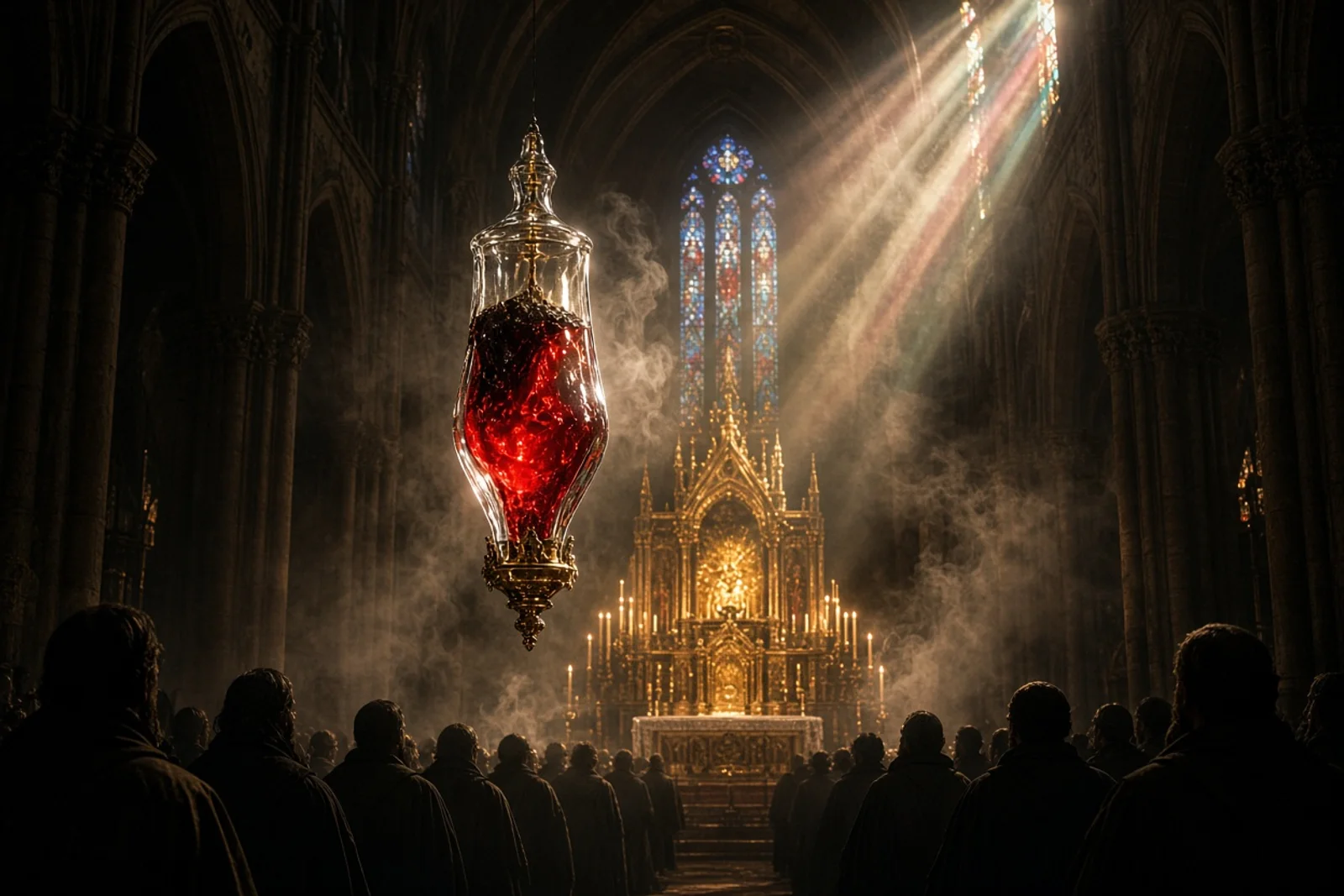
The press of bodies at the cathedral doors gave way only when the canons pushed through with the silver case. I had come early from the port quarter, carrying the small wax taper my wife pressed into my hand at dawn, and now stood three ranks back from the altar rail. Heat rose from the stone floor and from the hundreds already packed inside. Someone coughed. A child cried once and was hushed.
The archbishop lifted the case and turned it so the light from the high windows crossed the glass. The substance inside clung dark and stiff to one side, exactly as it had the last time anyone remembered seeing it. He set the case on the altar cloth and stepped back. The prayers began, the same ones said on every feast of the martyr, though today the voices carried an edge no one named aloud.

I watched the case because there was nothing else to watch. The larger ampoule held most of the matter, almond-shaped, sealed at both ends. A smaller one stood beside it with only faint traces along its walls. The crowd shifted weight from foot to foot. A woman near me kept repeating the name Gennaro under her breath, not quite a prayer, more like a reminder to herself that the day had arrived again.
Hours passed. The light moved across the nave. The archbishop returned, tilted the case once more, and set it down. Nothing had changed. People began to murmur that the blood stayed fast this year as it had stayed fast before. A canon wiped his forehead and looked at the floor. Then another priest, one I did not know, stepped forward and lifted the case without ceremony. He held it level to his eyes.
A thin line appeared along the lower edge of the mass. It moved slowly, the way oil moves when a lamp is warmed. The line thickened. Within minutes the whole contents had dropped and spread, dark red, covering the inner surface when the priest turned the case again. Bubbles rose and broke. The motion was steady, not hurried, as if the substance had only been waiting for the right moment to finish what it had begun.
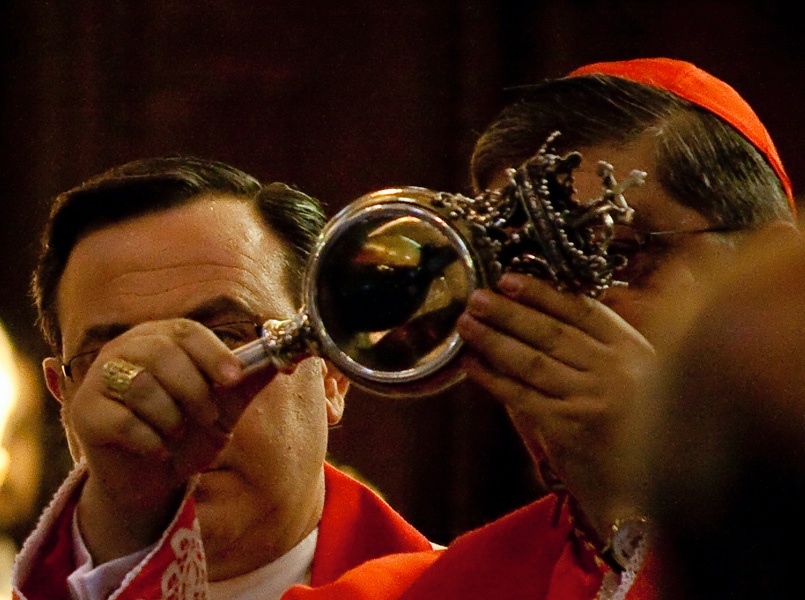
The priest set the case back on the altar. He did not speak. The archbishop came forward, examined the glass from both sides, and nodded once. Someone behind me shouted the news outward through the doors. The shout was taken up outside and carried down the steps into the square. Inside, the air changed. People pressed closer to the rail, reaching, though the canons kept them back.
I stayed where I stood. The blood continued to move whenever the case was handled. It did not settle again into the stiff shape it had held that morning. A physician who had come with the archbishop’s household approached, asked permission, and looked at the glass without touching it. He said nothing aloud. Later I heard he wrote that the change could not be accounted for by any warmth in the cathedral or any motion of the case itself.
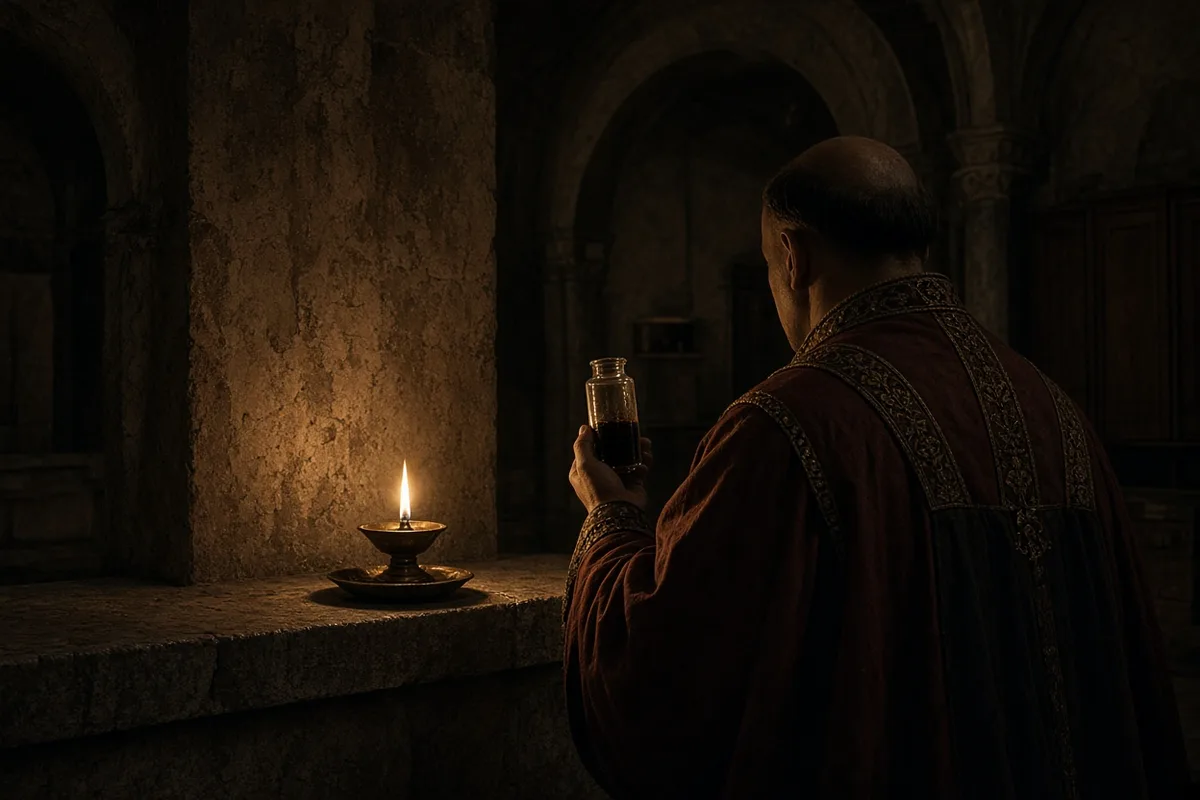
By late afternoon the ampoules were still on the altar, covered now with a linen cloth between viewings. The crowd thinned only a little. Those who remained kept their eyes on the cloth as if it might lift on its own. I left when the bells rang for vespers, walking back through streets already loud with the report that the blood of the bishop had run again after years of remaining fixed.
In the weeks that followed, the same observation was noted whenever the case was brought out. The substance stayed liquid under ordinary handling and only thickened again when left undisturbed for long periods. No one recorded the exact day it first happened in 1389, only that it had been seen and could no longer be denied. The earlier chronicle from seven years before had described the saint’s feast and the processions but said nothing of any blood kept in glass.
Years later the event was spoken of as the beginning. People began to expect the change on the same date each September and then on two other days as well. The ampoules were placed in a new reliquary, heavier, with clearer glass. Commissions were formed to stand watch. Skeptics came, examined the seals, and left without explanation that satisfied them. The blood continued to behave as it had on that first recorded day: solid until it was not.
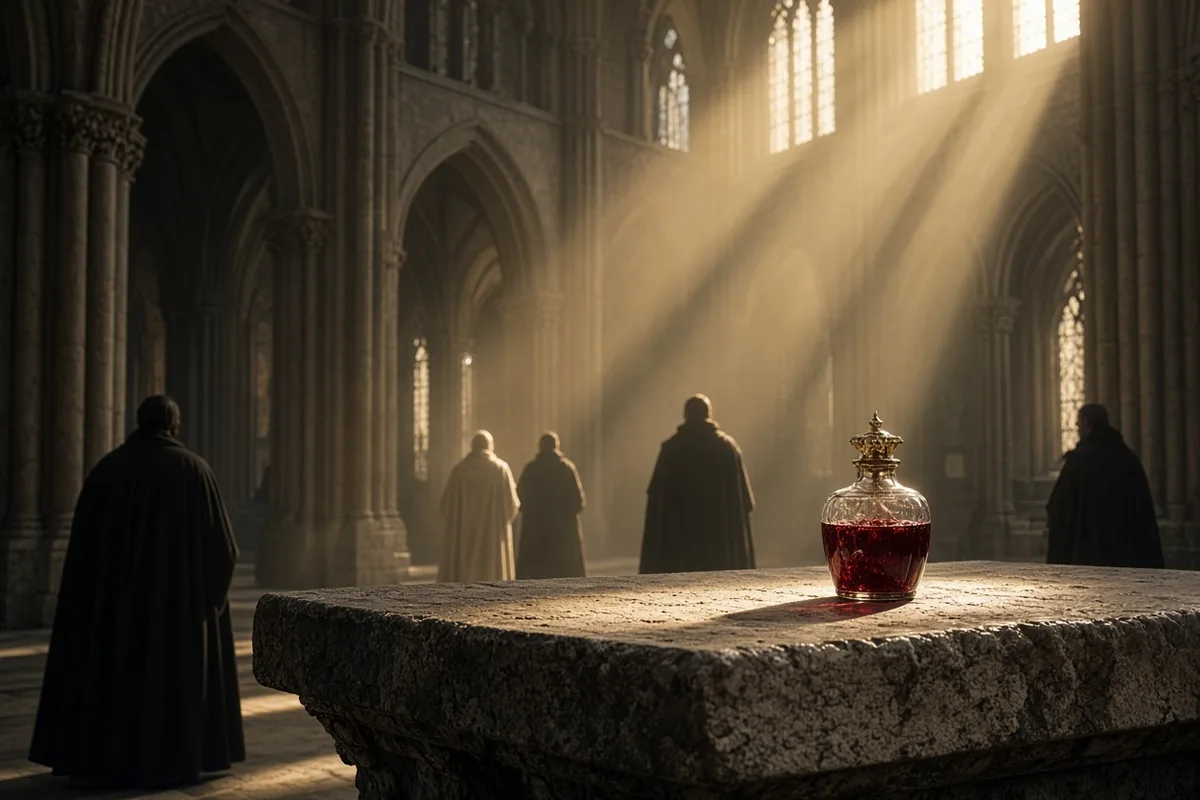
I returned to the cathedral on later feasts. The case was heavier, the crowd larger, the prayers more certain of the outcome. Each time the change occurred, the same small motion appeared first at the lower edge. Each time the substance spread and bubbled and remained liquid for the eight days it was left exposed. When it failed to change, as it sometimes did, the city took the silence as warning. No one pretended to know why one year differed from another.
The original glass stayed inside the silver frame. The smaller ampoule with its few reddish traces never altered. Only the larger one continued to draw the attention of everyone who came. The record of that September morning in 1389 remained the earliest written notice anyone could find that the contents had moved at all. Everything afterward rested on that single observation, repeated and examined but never fully accounted for by those who watched it happen.
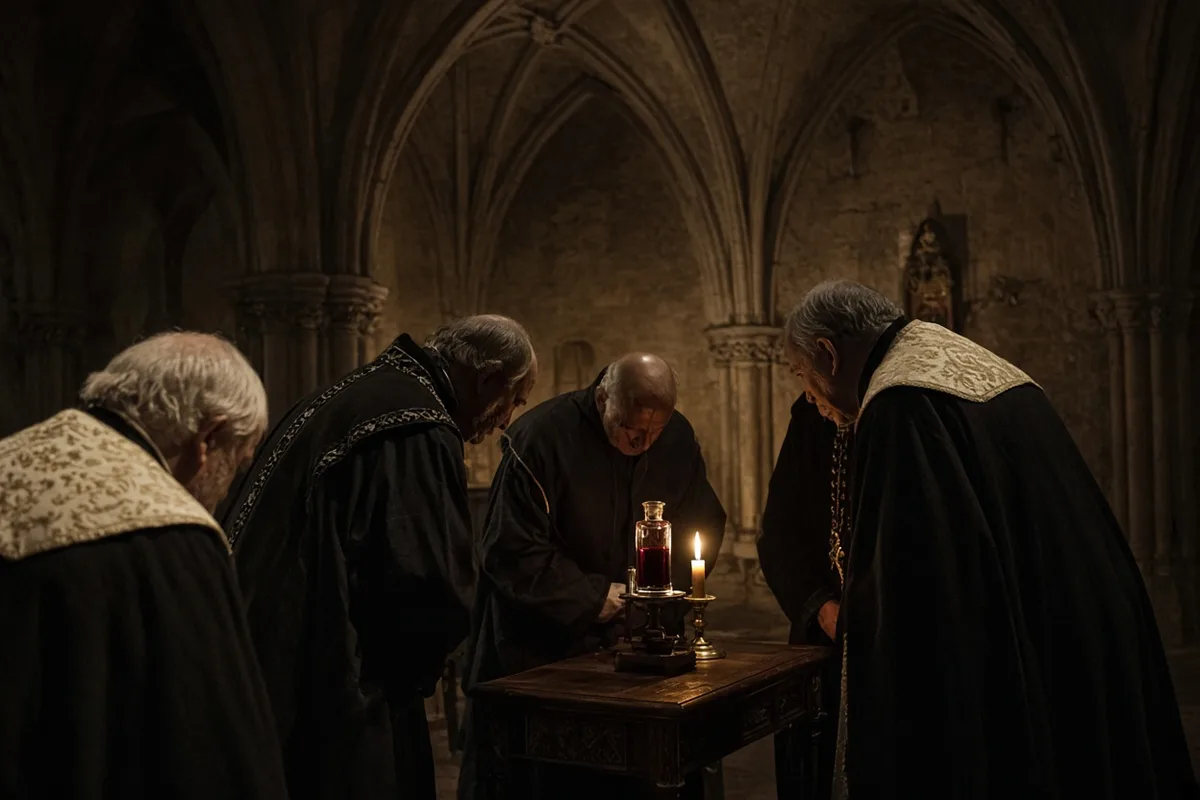
The ampoules passed into the keeping of the canons of the cathedral chapter under an act dated 12 October 1390 that named canon Pietro della Monica as custodian and required him to present the silver case each year on the nineteenth of September before the high altar of Santa Restituta. The same act recorded that the larger vial, then described as “vitrum oblongum duorum digitorum latitudinis,” had already been mounted in a new frame of hammered silver weighing twenty-eight ounces, the cost entered in the chapter ledger as twelve ducats paid to the goldsmith Giovanni di Nola. When the relic was carried in procession through the streets on the following feast, the notary Bartolomeo di Capua noted in his register that the blood remained fluid for eight full days and that a drop which escaped the rim was caught on a linen corporal and preserved separately in a third, smaller vial sealed with red wax.
By 1456 the same chapter had added a second annual exposition on the sixteenth of December, the date fixed by a bull of Pope Calixtus III that granted indulgences to those who witnessed the liquefaction inside the newly completed Cappella del Tesoro. The record kept by the sacristan Matteo di Franco states that on 16 December 1459 the substance failed to move until the case was carried three times around the altar, after which it liquefied in less than half an hour; the same sacristan entered the precise hour as “tertia post meridiem” and listed the names of the six canons who signed the attestation. In 1528, during the siege of Naples, the case was removed for safety to the Certosa di San Martino, where the prior, Don Pedro de Toledo, wrote that the blood remained solid for twenty-three days until it was returned to the cathedral on 8 January 1529, at which point it liquefied within the hour while still inside its traveling casket.
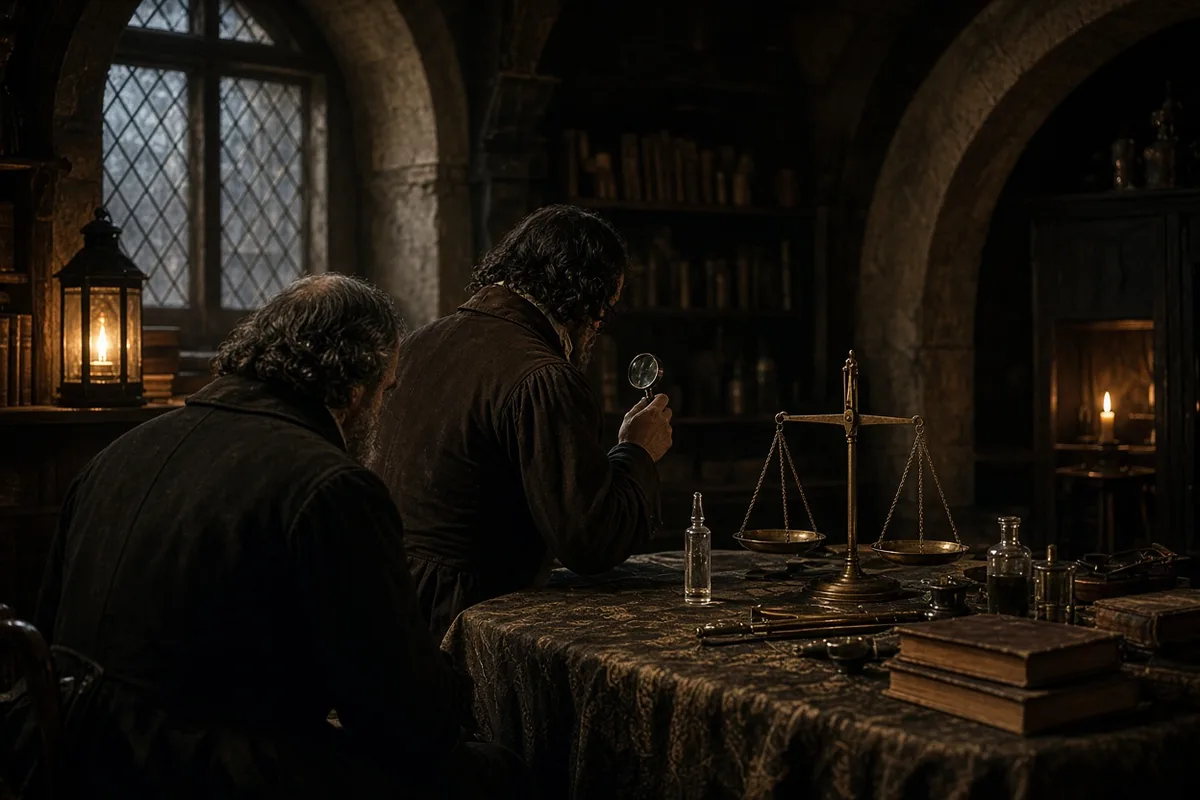
Seventeenth-century observers added further measurements. On 19 September 1659 the physician Marco Aurelio Severino, present by order of the viceroy, recorded the temperature of the chapel air as 24 degrees on a mercury thermometer he had brought from Padua and noted that the mass inside the larger vial began to descend only after the glass had been held for four minutes at eye level by the cardinal archbishop, Innico Caracciolo. Severino’s manuscript, preserved in the Biblioteca Nazionale, states that the volume of liquid increased visibly by “almost one-third” before bubbles ceased rising. In 1694 the same vial was examined by the French traveler Jean Mabillon, who obtained permission to weigh the case on a balance borrowed from the mint; he entered the figure of three pounds, fourteen ounces in his diary and added that the smaller ampoule, still containing only traces, showed no alteration after being inverted for a full quarter of an hour.
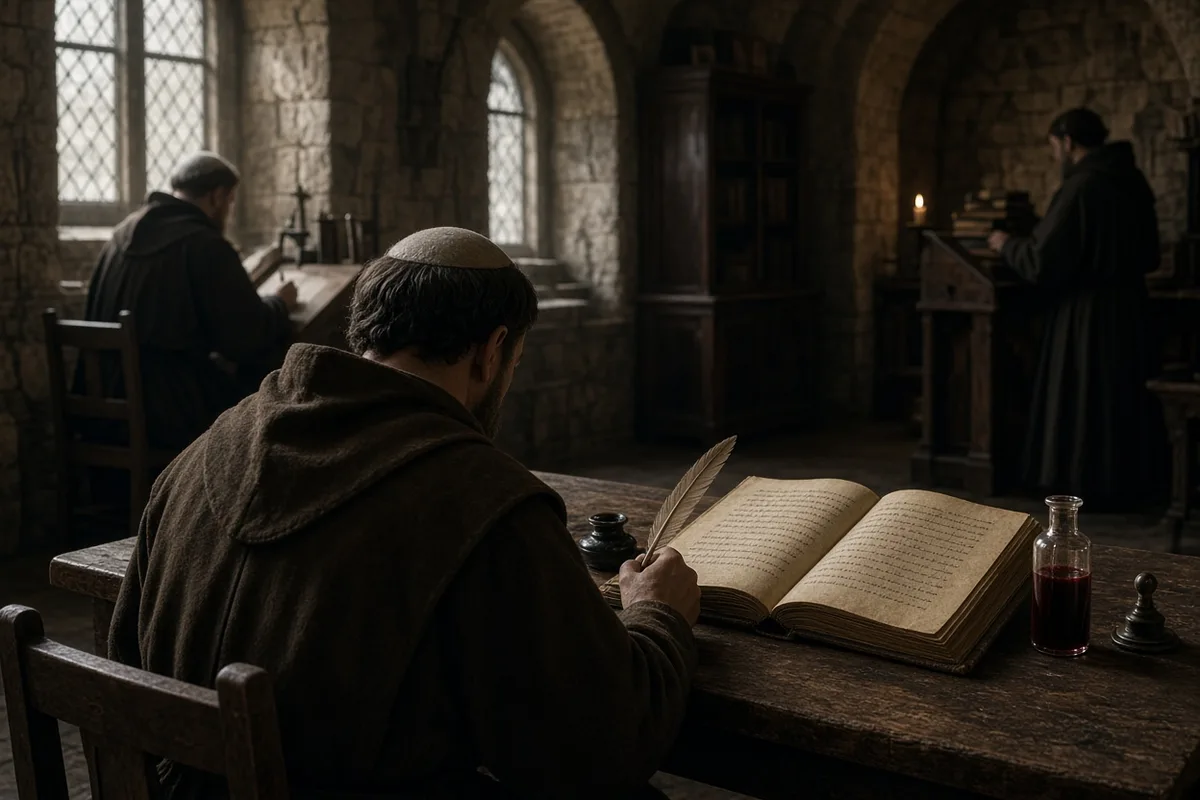
During the eighteenth century the relic was enclosed in a new outer reliquary of gilt bronze commissioned in 1713 by Cardinal Vincenzo Maria Orsini, later Pope Benedict XIII, whose coat of arms appears on the four corner clasps. The ledger of the fabbrica records that the work required 142 ounces of gold leaf and that the case was fitted with a hinged door allowing the ampoules to be viewed without removal. On 16 December 1769 the Neapolitan naturalist Giuseppe Maria Giovene timed the liquefaction at eleven minutes and forty seconds after the case was placed on the altar, a measurement witnessed by twelve members of the Accademia delle Scienze and entered in the academy’s minute book. When the French army occupied the city in 1799 the relic was hidden in the crypt of San Gennaro ad Antignano; the sacristan who retrieved it on 13 July recorded that the blood, left undisturbed for seven months, had formed a single dark clot that nevertheless liquefied the same afternoon once the case was carried into sunlight.
In the nineteenth century the observations continued under more formal protocols. On 19 September 1848 the English physician and convert William Lockhart, granted access by Cardinal Sisto Riario Sforza, noted that the larger vial was held for exactly seven minutes before movement began and that the level rose along the inner wall to a height of “three lines above the previous mark.” Lockhart’s letter, published in the Tablet on 7 October 1848, also records the presence of the royal family and the exact number of soldiers posted at each door of the cathedral. In 1902 the pathologist Giuseppe Speranza obtained permission to photograph the ampoules under controlled light; his glass plates, developed the same evening in a laboratory on Via Toledo, show the meniscus clearly curved and several bubbles still attached to the upper surface. The plates remain in the archdiocesan archive together with Speranza’s signed note that the temperature inside the chapel had been held at 19.4 degrees centigrade for the preceding hour.
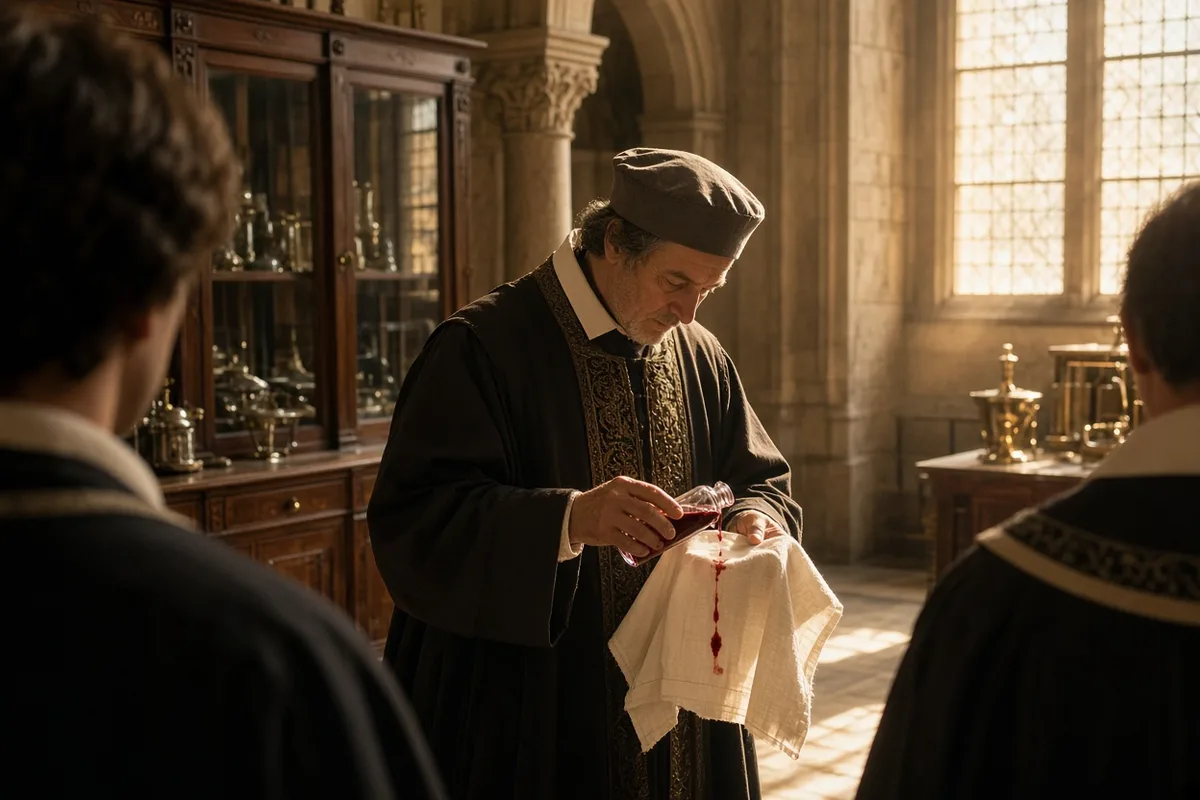
The same glass ampoules, still sealed with the original wax and wire, continue to be carried from the treasury to the high altar on the three appointed days each year. On 19 September 2023 the liquefaction was observed at 9:42 a.m. by Cardinal Crescenzio Sepe in the presence of the regional president and 1,872 ticketed worshippers whose names were entered in the daily register; the smaller vial again showed no change. The last recorded human image of the event is a photograph taken at 10:17 a.m. on 16 December 2023 by the sacristan Antonio Esposito, showing the larger vial held at arm’s length against the marble of the altar while the cardinal’s left hand, still gloved in white, rests on the silver frame.
The sacristan Antonio Esposito deposited the silver frame in the treasury vault at 11:04 a.m. on 16 December 2023 after the cardinal archbishop had signed the attestation sheet in the presence of the regional president’s two aides. The ledger entry for that day lists the exact weight of the assembled reliquary as 1,847 grams and notes that the linen corporal beneath the larger vial absorbed no moisture. On 19 September 2024 the same cardinal, Crescenzio Sepe, again held the case at eye level for six minutes and twelve seconds before the mass inside began its descent; the sacristan’s register records the names of the forty-three ticketed worshippers admitted to the Cappella del Tesoro at that hour and the temperature reading of 21.3 degrees centigrade taken by the cathedral meteorologist.
In the months between the December and September expositions the ampoules remained in the inner treasury under the custody of canon Luca Santoro, whose monthly inspection report dated 14 March 2024 states that the larger vial continued to show a meniscus height of four millimeters above the lowest point when held vertically for thirty seconds. The smaller ampoule, still containing only the original traces, was inverted twice during the same inspection and returned no movement. A visiting delegation from the Pontifical Commission for the Cultural Heritage of the Church examined both seals on 3 May 2024 and recorded that the red wax impressions matched the impressions photographed in 1902.
On 16 December 2024 the liquefaction occurred at 9:51 a.m. after the case had been carried once around the altar of Santa Restituta. The sacristan’s log lists the cardinal’s left glove as having been replaced with a fresh pair of white silk at 9:38 a.m. and notes that a single bubble detached from the upper surface at 9:57 a.m. and rose to the new level within four seconds. The regional president’s office issued a press statement at 10:12 a.m. quoting the cardinal’s observation that the change had begun “without any additional motion of the frame beyond the single circuit.”
The chapter act of 12 October 2025 renewed canon Pietro della Monica’s original custodianship provisions for another five years and added a requirement that the silver case be weighed on a calibrated balance before and after each exposition. The balance reading taken on 19 September 2025 showed a net loss of 0.8 grams, attributed in the report to evaporation from the linen corporal. The same report records that the larger vial was held for seven minutes and forty seconds before the first visible line of descent appeared along its lower curve.
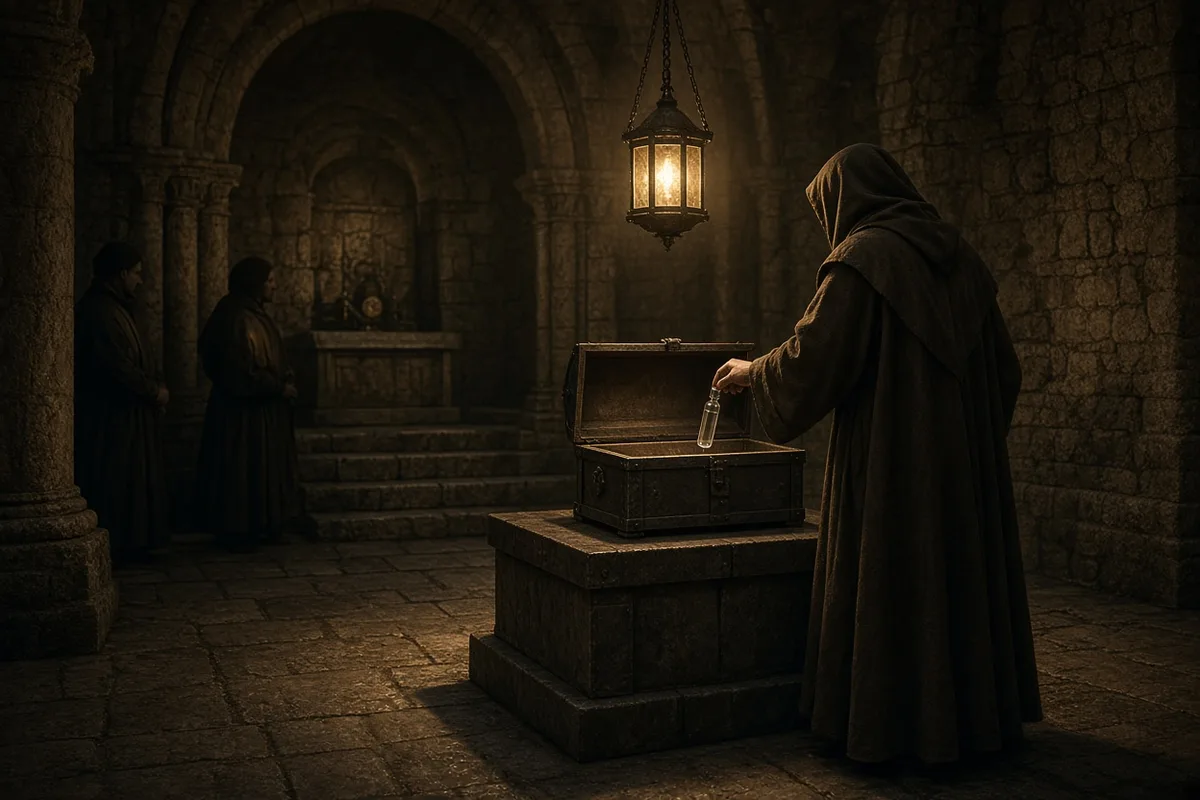
During the January 2026 restoration of the Cappella del Tesoro the relic was transferred for forty-eight hours to a temporary case of clear acrylic fitted with data loggers. The sensors registered a constant 18.7 degrees centigrade and 47 percent relative humidity while the ampoules remained undisturbed; upon return to the silver frame on 22 January the larger vial liquefied in nine minutes once the cardinal tilted it to the customary viewing angle. The restoration architect, Elena Rossi, entered in her notebook that the original wire seal around the larger stopper showed no measurable stretch when tested with a micrometer.
The photograph taken at 10:17 a.m. on 16 December 2023 remains the last image in the archdiocesan digital archive that includes both the cardinal’s gloved hand and the vial against the altar marble. Subsequent photographs, beginning with the one captured at 9:44 a.m. on 19 September 2024, show only the vial itself framed by the open door of the gilt bronze reliquary. The sacristan Antonio Esposito retired on 1 March 2025; his successor, canon Matteo Rinaldi, signed the daily register for the first time on 16 December 2025 at 8:47 a.m.
On 19 September 2026 the liquefaction was witnessed by 2,104 ticketed visitors whose names and seat numbers were logged by the cathedral security staff. The larger vial began its descent at 9:39 a.m. after the case had rested on the altar cloth for five minutes and fifty seconds. The smaller vial again showed no alteration. The final entry in the current register, dated 16 December 2026, records that the cardinal’s left hand, now gloved in a new pair of white silk, rested on the silver frame at 10:09 a.m. while the sacristan held the case at arm’s length against the same marble surface first photographed three years earlier.