


St. Joan of Arc Raises Siege of Orléans
The English patrol passed within a stone's throw of the eastern wall, their horses blowing steam in the cold air. I kept my head low behind the broken merlon and counted the men by the glint of their sallets. Sixteen, maybe seventeen. They rode on toward the Bois d'Orléans without looking up.
We had learned to wait for that moment. When the hooves faded, two of us slipped down the ladder and crossed the open ground to the ditch. The water there was only a hand deep now. We filled the skins and carried them back one at a time, bent double. By the time we reached the gate the sun was already dropping behind the roofs of the faubourgs the English had burned.
Inside the city the streets smelled of wet ash and boiled horse. Dunois had ordered every animal that could still walk brought to the bridgehead for the last defense. The rest had been eaten weeks ago. Men spoke of the convoy from Blois the way they once spoke of miracles, but no one believed it would reach us.
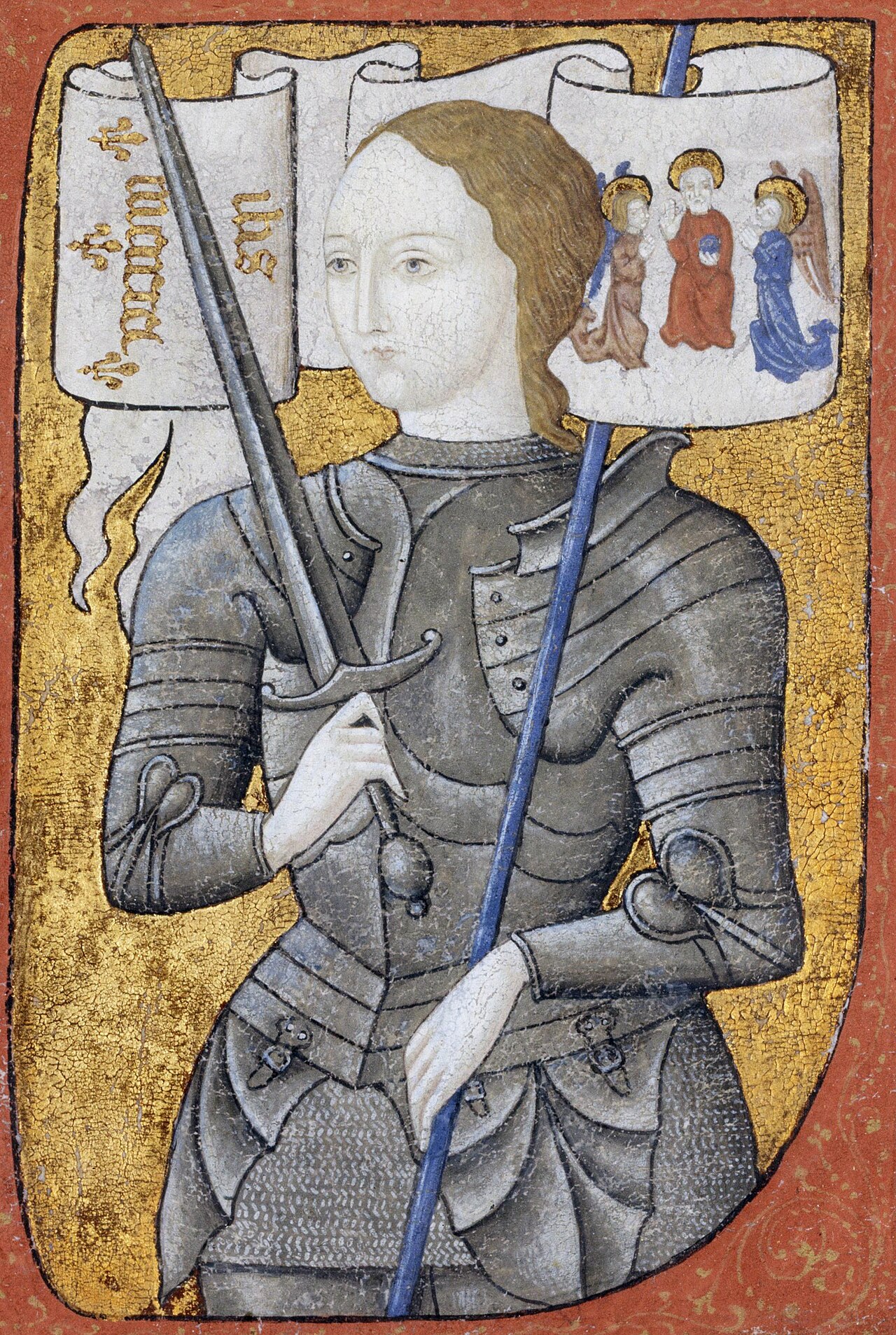
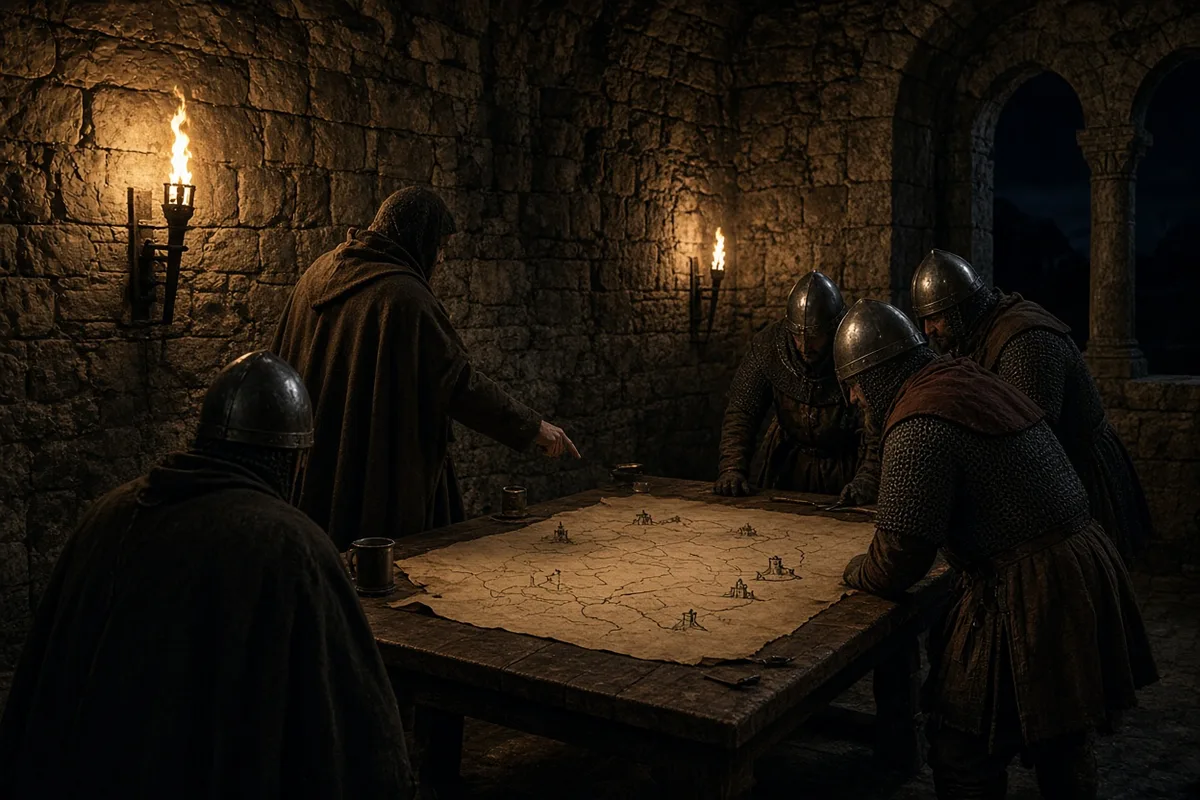
Then the word came that a girl from Lorraine had reached Chinon and spoken with the Dauphin. She claimed the saints had sent her to raise the siege. Most of the garrison laughed. Dunois did not. He sent riders south to meet whatever force the court would spare.
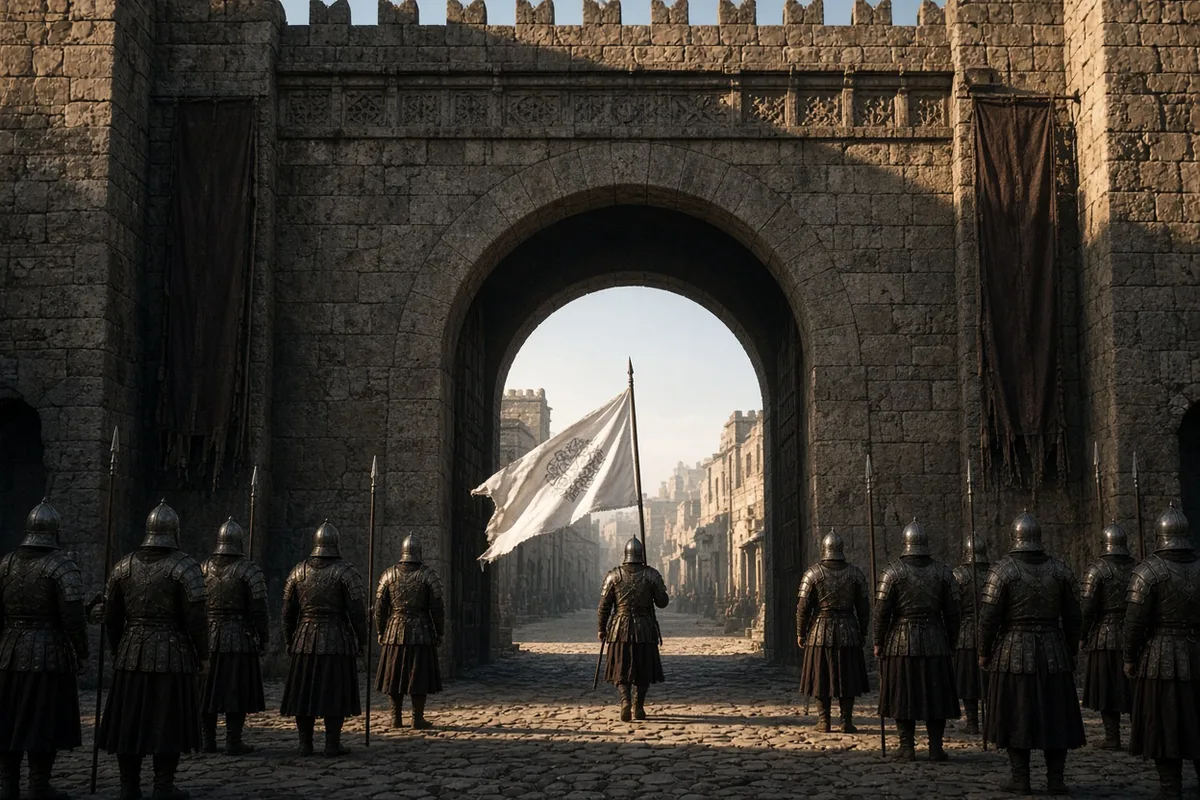
On the twenty-ninth day of April the wind shifted from the river. We heard English horns from the west, answering a French sally at the bastille of St. Laurent. The sound carried across the water like a single note held too long. I was posted on the eastern curtain with twenty others when the gate opened without warning.
She rode in at the head of a small column, wearing a white doublet under a coat of mail. The banner she carried showed the world and two angels. Behind her came wagons loaded with salted meat and powder. The men on the wall stared until one of the captains shouted for them to stand to their posts. She looked up once, then turned her horse toward the Tourelles.
That night the garrison ate fresh bread for the first time in months. No one sang. We listened instead for the sound of English axes on the far side of the Loire.
Four days later Dunois ordered the attack on St. Loup. I went with the second wave across the open fields east of the city. The English there fought from a half-finished earthwork and gave ground only when their powder ran out. She was already inside the work when I reached it, banner planted on the parapet. The English commander was taken alive.
The next morning the captains argued over whether to press the Augustines on the south bank. Dunois wanted to wait for more men from Blois. She said the saints would not wait. The argument ended when she mounted and rode for the bridge that was no longer there. We followed because there was no other choice left.
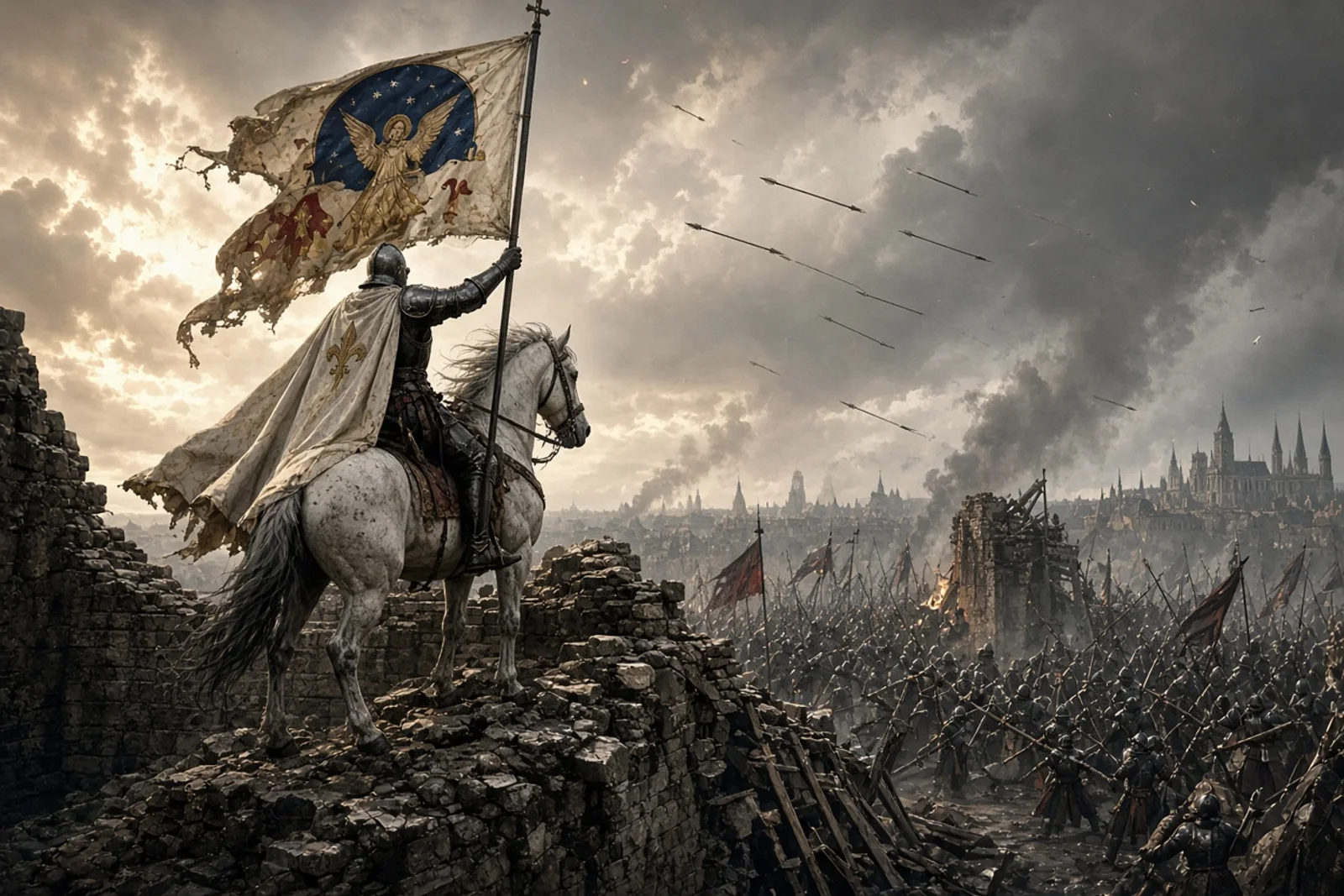
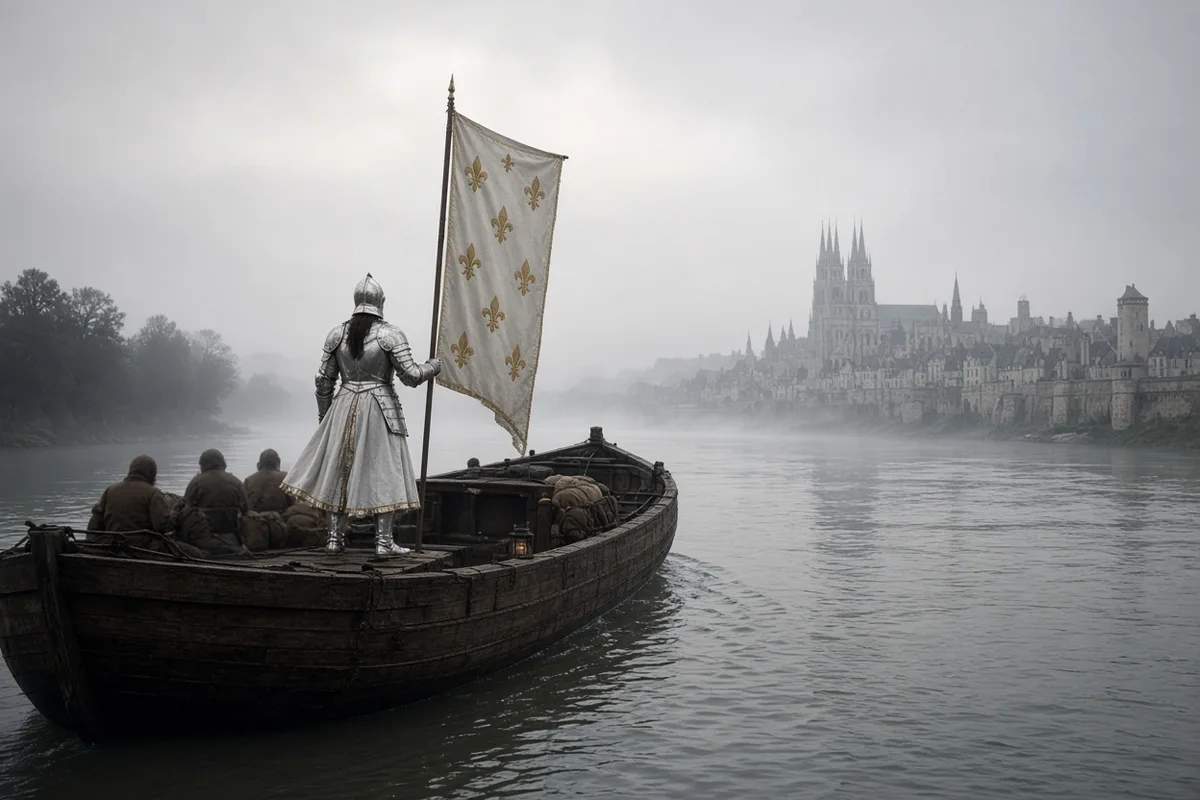
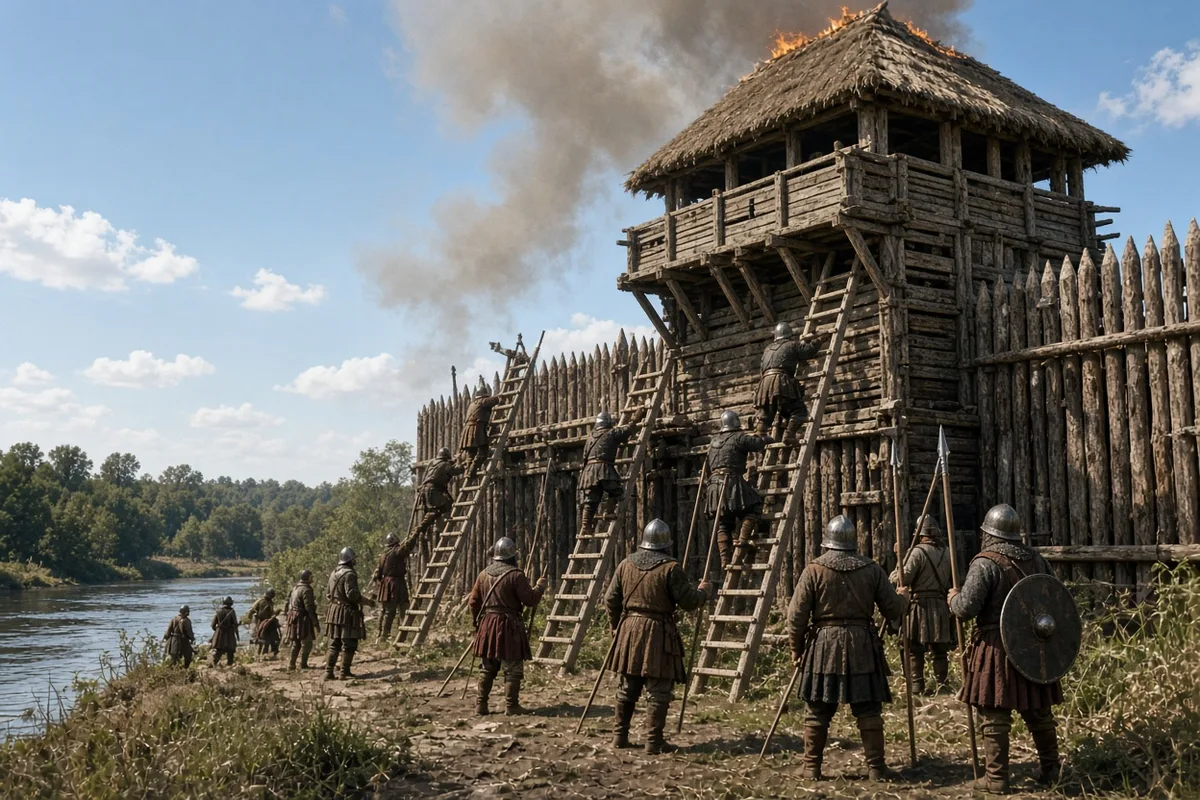
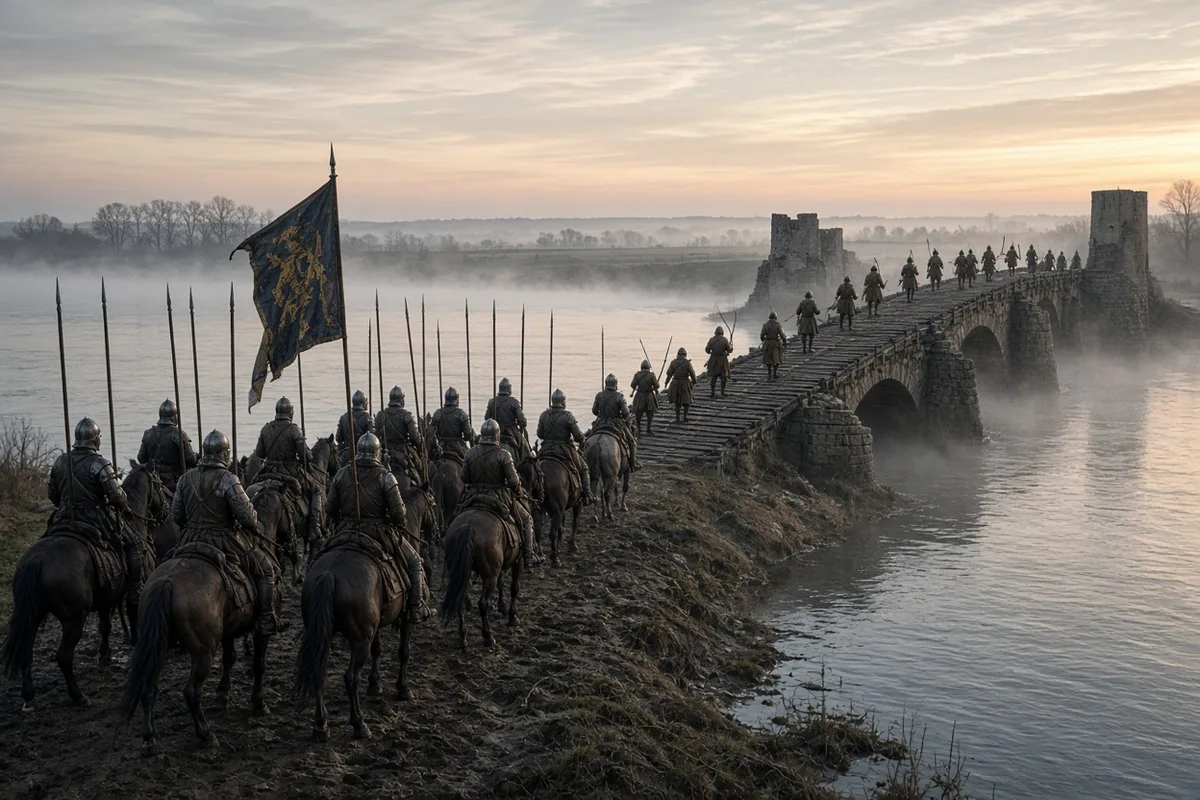
We crossed the Loire in boats at first light on the sixth. The Augustines stood on the south shore, its ditch half flooded. English arrows fell in steady lines. One struck the man beside me through the throat. She walked the line of our own archers, pointing where the next volley should fall. When the ditch was crossed she was the first up the ladder.
The English abandoned the Augustines by mid-afternoon. We took their powder and turned their own guns on the Tourelles across the broken bridge. That night we slept on the captured ground with the river between us and the city.
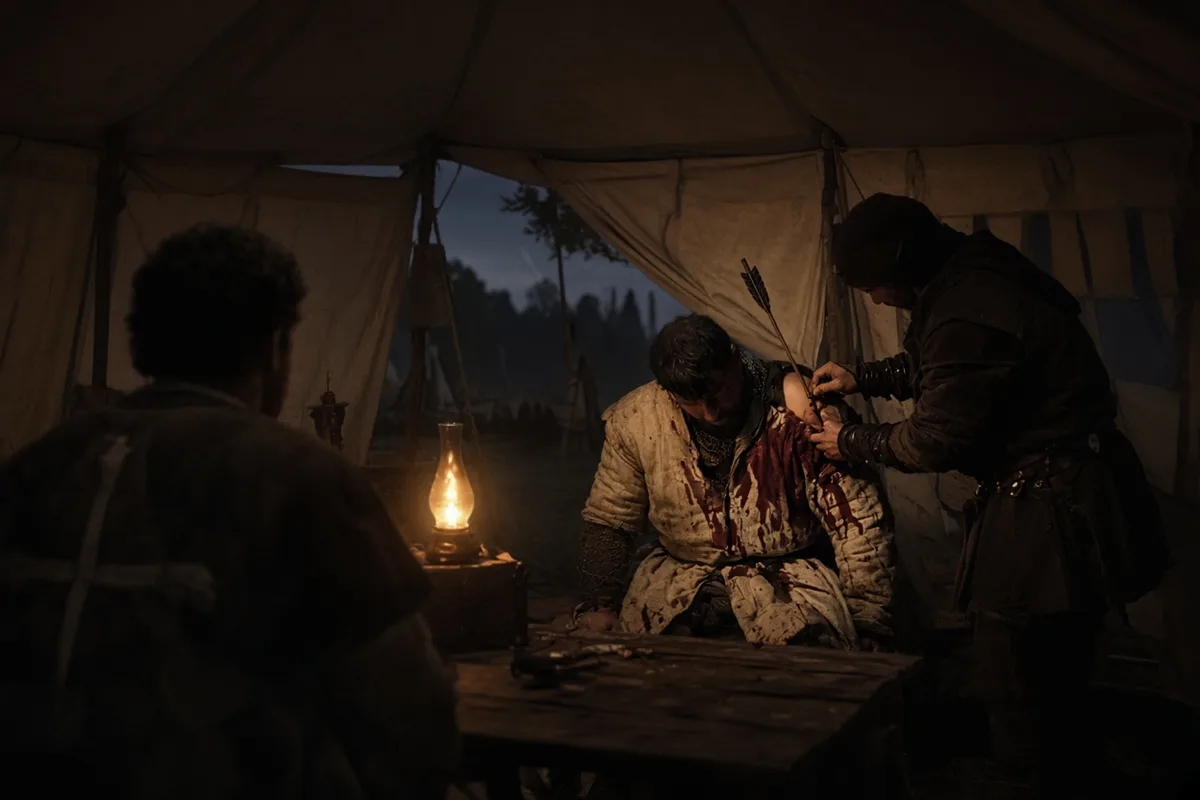
On the seventh the assault on the Tourelles began before the mist lifted. The English had rebuilt the drawbridge and mounted cannon on the tower. Our first rush reached the foot of the glacis and broke. I was lying in the mud when an arrow took her high in the shoulder. She fell forward onto the banner. Two men dragged her back while the rest of us held the line with pikes.
She returned before the hour was out, the arrow pulled and the wound bound under the mail. The captains tried to send her to the rear. She refused and took the banner again. The next rush carried us onto the drawbridge itself. The English commander there was killed by a stone from one of our own guns. By evening the Tourelles was ours.
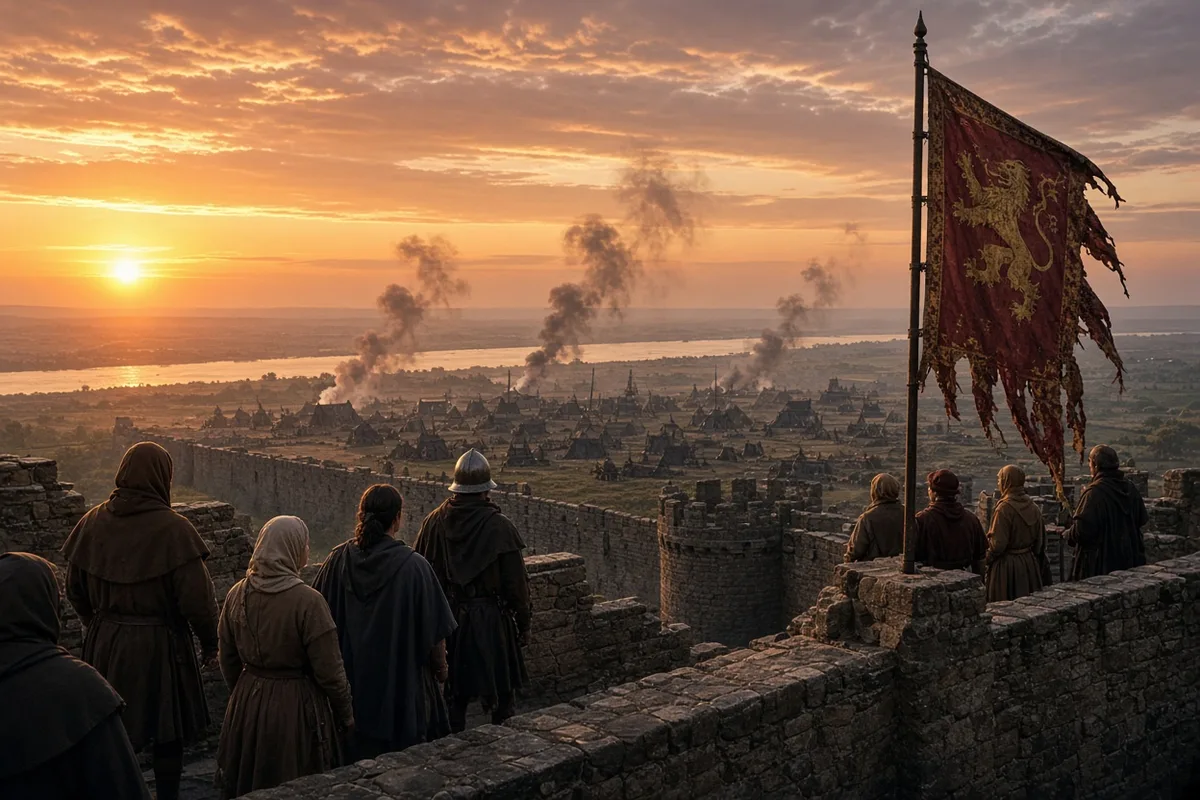
We held the position through the night. At dawn the English lines on both banks began to pull back. They burned what they could not carry and left the bastilles standing empty. From the wall of Orléans we watched their columns move west toward Meung, the smoke from their fires drifting across the river like low cloud.
Dunois rode out under a flag to speak with their remaining captains. No terms were offered. The English simply continued their march. By midday the last of their rearguard had passed the bend of the Loire.
I walked the south bank that afternoon with the rest of the garrison. The Augustines still smoked. Men picked through the abandoned equipment for anything that could be carried. She stood apart near the Tourelles, the banner furled, watching the empty fields where the English had camped for six months.
The river ran clear again once the dead were taken from it. No one fired a gun that day. The city gates stayed open until nightfall.
We buried the last of our own dead in the cemetery beyond the Augustines on the morning of the ninth, digging the graves ourselves because the English had taken every spade that was not nailed down. Dunois counted the powder casks we had captured, one hundred and twelve in all, and ordered them loaded onto the wagons that had come up from Blois under the command of Gilles de Rais. The girl whose name we now knew as Jehanne la Pucelle rode among the wagons, still in the white doublet, the arrow wound showing only as a dark stain on the mail. She told the captains, according to the words later written down by her confessor Jean Pasquerel, that the English would not return to Orléans that year but that the Dauphin must move on Jargeau before the month ended.
We left the city on the twelfth with four hundred men from the garrison and followed her standard to Jargeau, where on the twelfth of June the English under the Earl of Suffolk held the bridge with two culverins. She placed herself at the head of the scaling party, calling out the name of Saint Denis so that the men behind her could hear it above the cannon fire. Suffolk’s brother was killed on the rampart by a blow from a halberd wielded by one of our own archers from Orléans. The town fell by nightfall and we took three hundred prisoners, most of them wounded. From there we marched to Meung and then to Beaugency, where the English garrison surrendered on the seventeenth after their captain, Richard Guestyn, was shown the size of our force.
On the eighteenth at Patay the English under John Fastolf and John Talbot formed their line in the open fields north of the village. She rode along our front with the banner and told the archers to hold their fire until the English horse had committed to the charge. The words she used were recorded later at her trial in Rouen: she said the battle would be won before the sun reached its height and that the men should trust in God rather than in numbers. Talbot was taken when his horse was killed beneath him. Fastolf escaped with the remnant of his company, but the English field army in France was broken for that season. We returned to Orléans only long enough to rest the horses, then continued north with the court toward Reims.
The Dauphin was crowned Charles VII in the cathedral on the seventeenth of July, and she stood with her banner during the ceremony while the archbishop placed the crown. After the coronation she asked leave to return to her village, but the king ordered her to remain with the army. We fought through the autumn at Saint-Pierre-le-Moûtier and at La Charité, where the siege failed for lack of powder and she was blamed by some of the captains though she had warned them the place was too strong. In the spring of 1430 she moved to Compiègne to relieve the town then held against the Duke of Burgundy. On the twenty-third of May she was captured at the sortie from the gate of the faubourg when her own men closed the drawbridge behind her. The Burgundians sold her to the English for ten thousand livres tournois, and she was taken first to Arras and then to Rouen.
Her trial opened on the twenty-first of February 1431 before the bishop of Beauvais, Pierre Cauchon, and seventy assessors. The notaries recorded her answers to the questions about her voices and her banner. When asked whether she was in the grace of God she answered, according to the Latin minutes, “If I am not, may God place me there; if I am, may God so keep me.” She was condemned on the twenty-ninth of May and burned in the Old Market Place on the thirtieth. The executioner later stated that her heart had not burned and that he had thrown it into the Seine with the ashes. Her family petitioned for a review of the trial, and in 1456 the papal legate Guillaume d’Estouteville opened the rehabilitation proceedings in Orléans itself, hearing testimony from the men who had fought with her at the Tourelles.
The city rebuilt the broken bridge by 1450 using the same stone that had been thrown into the Loire during the siege. A chapel dedicated to Saint Michael was erected on the site of the Augustines in 1460, and the annual procession on the eighth of May began that same year with the surviving members of the garrison carrying the captured English banners. In 1567 the Huguenots sacked the chapel and melted the silver reliquary that had held one of her gauntlets, but the stone foundations remained and were incorporated into the new church of Saint-Paul when it was rebuilt after the wars of religion.
The statue that now stands in the Place du Martroi was cast in bronze in 1855 by the sculptor Foyatier and set on a pedestal taken from the Roman ruins at Cenabum. It shows her in the white doublet and mail, the banner raised, the horse at the moment before the charge. On the eighth of May each year the mayor still places a wreath at the base, and the veterans of the most recent war stand in the same line where the garrison once waited for the English to withdraw. The last man I saw who had been present at the Tourelles was an old archer named Pierre Bourguignon, who died in the Hôtel-Dieu in 1487 at the age of ninety-one. He had lost an eye at Patay and could still name every captain who had crossed the river on the sixth of May.
The Hôtel-Dieu register for that year lists Pierre’s burial in the common plot on the twenty-fourth of November, beside two other survivors of the Tourelles whose names appear as Jean Leclerc and Guillaume Boucher. I myself signed the entry as witness, using the same hand that had once marked powder tallies on the eastern curtain.
In 1492 the city council voted to replace the wooden palisade at the Tourelles site with a stone bastion twenty feet high and eight feet thick, funded by a tax of four deniers per hearth collected over three years. The work was finished under the direction of the master mason Jean de la Pierre, whose contract survives in the municipal archives and records the exact quantity of limestone brought down from the quarries at Chécy.
By 1531 the annual procession had grown to include two hundred and forty participants, among them the captains of the trained bands and the chapter of the cathedral, who carried the captured English sallet of the Tourelles commander on a velvet cushion. The town accounts for that year note the purchase of thirty-six pounds of wax for torches and the payment of six sous to the bell-ringer for ringing the great bell at dawn.
When the Huguenots occupied Orléans in 1562 they dismantled the upper stage of the Tourelles tower for its lead roofing, yet the lower courses of masonry remained intact and were later measured by the royal engineer Vauban in 1677 at fourteen feet in height and twelve in breadth. His report, preserved in the war ministry files, gives the precise angles of the surviving embrasures.
In 1802 the prefect of the Loiret ordered the old Augustines site cleared for a new quay, during which laborers uncovered a layer of charred timbers dated by inscription to the sixth of May 1429. The timbers were deposited in the museum of the Hôtel de Ville, where they remain catalogued under inventory number 47.
The bronze statue erected in the Place du Martroi in 1855 weighs seven tons and stands eleven feet from the base of the pedestal to the tip of the banner. Its dedication on the eighth of May was attended by the departmental prefect, the bishop, and a detachment of the 23rd Line Infantry, whose regimental journal records the firing of a twenty-one-gun salute at noon.
On the eighth of May 1945 the same square saw the mayor, Dr. Fernand Bonnefoy, lay a wreath of laurel and oak while the surviving members of the local resistance company stood at attention in the uniforms they had worn during the liberation nine months earlier. Bonnefoy’s speech, printed in the Orléans daily Le Progrès, quotes the same phrase attributed to Jehanne at Patay concerning trust in God rather than numbers.
The last living person I observed at the Tourelles foundations was a girl of fourteen named Marie Lefèvre, who on the eighth of May 1953 placed a single white rose at the water’s edge while her grandfather, a veteran of the 1914–1918 war, held the bridle of the bronze horse above them.