


St. John Bosco Founds Salesians
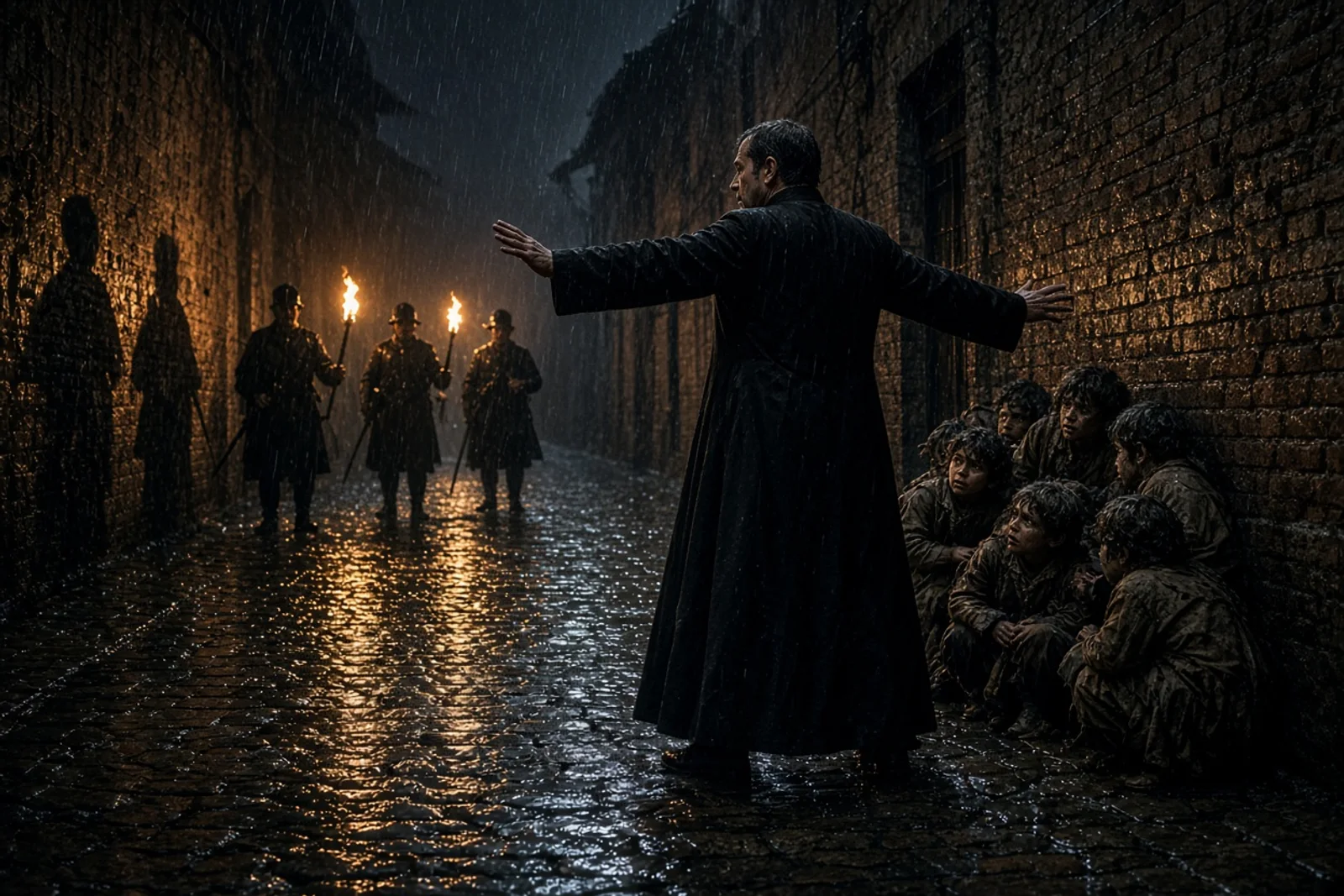
The sacristan’s boot caught the boy square in the ribs and sent him sprawling across the threshold. I was already inside, half-hidden behind the pillar where Don Bosco had told me to wait with the cassock, when the shout echoed off the stone. The ragged figure scrambled up, eyes wild, and bolted straight toward the vestry door. I stepped out without thinking and caught him by the sleeve before he could disappear into the street.
Don Bosco came out still tying his cincture. He spoke low to the sacristan, then turned to the boy and asked his name. Bartolomeo Garelli. Fourteen, no trade, no home that night. The priest listened, nodded once, and sent me for a piece of bread from the sacristy cupboard. By the time Mass ended the boy was still there, sitting on the bottom step, crumbs on his knees.
We walked him back to the rooms Don Bosco kept near the church. Two other lads were already sleeping on straw under the window. I spread an extra blanket for Bartolomeo and showed him where the bucket stood for washing. He said nothing, only watched the door as if it might open again with another kick.
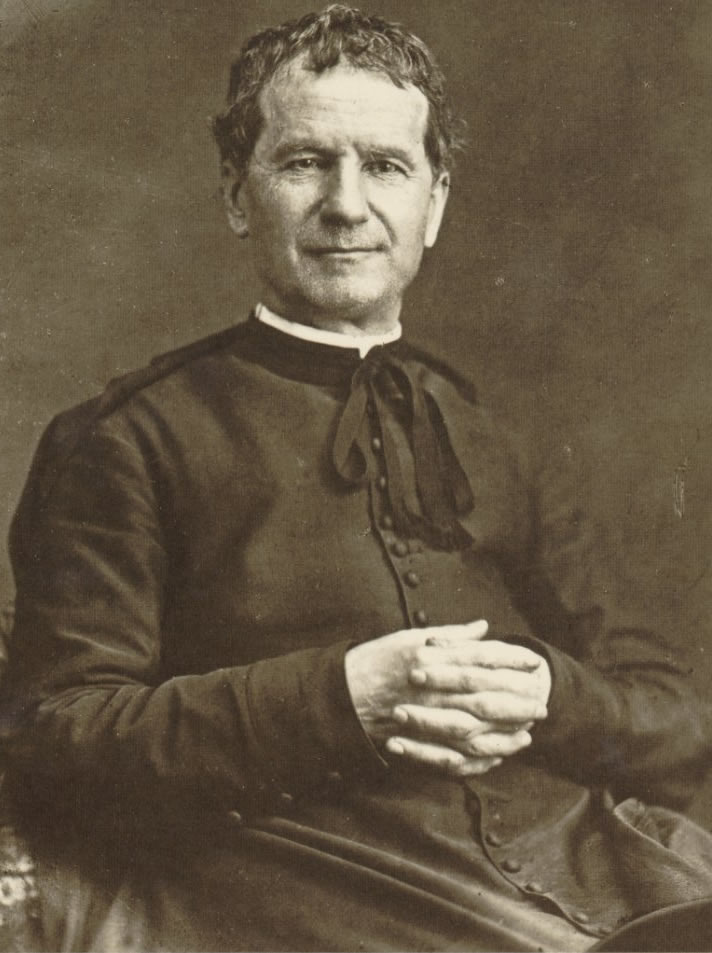
Within a week the number had reached twenty. They came after work, after the factories closed, after the market stalls were dragged away. Some brought younger brothers by the hand. Don Bosco kept a slate on the wall and marked each new name with chalk. By March the count stood at thirty. We met in the open when the weather allowed, and when it rained we crowded the two small rooms until the plaster on the ceiling showed cracks.
Don Borel arrived that autumn and took charge of the arithmetic lessons. He brought a stack of old primers and set the older boys to teaching the younger ones their letters. The nights grew cold, but the rooms stayed full because the candlelight meant warmth and because no one asked where the boys had slept the night before. Don Bosco walked the length of the benches each evening, stopping to correct a sum or to listen to a whispered trouble.
The move to the Rifugio came after the landlord at the first place refused another month. Two rooms beside the chapel of St. Francis de Sales were cleared and whitewashed. We carried the benches ourselves on a Sunday morning before the bells rang. The chapel was small, yet the boys filled it twice over. Don Bosco said the oratory would keep that name because prayer was its first work.
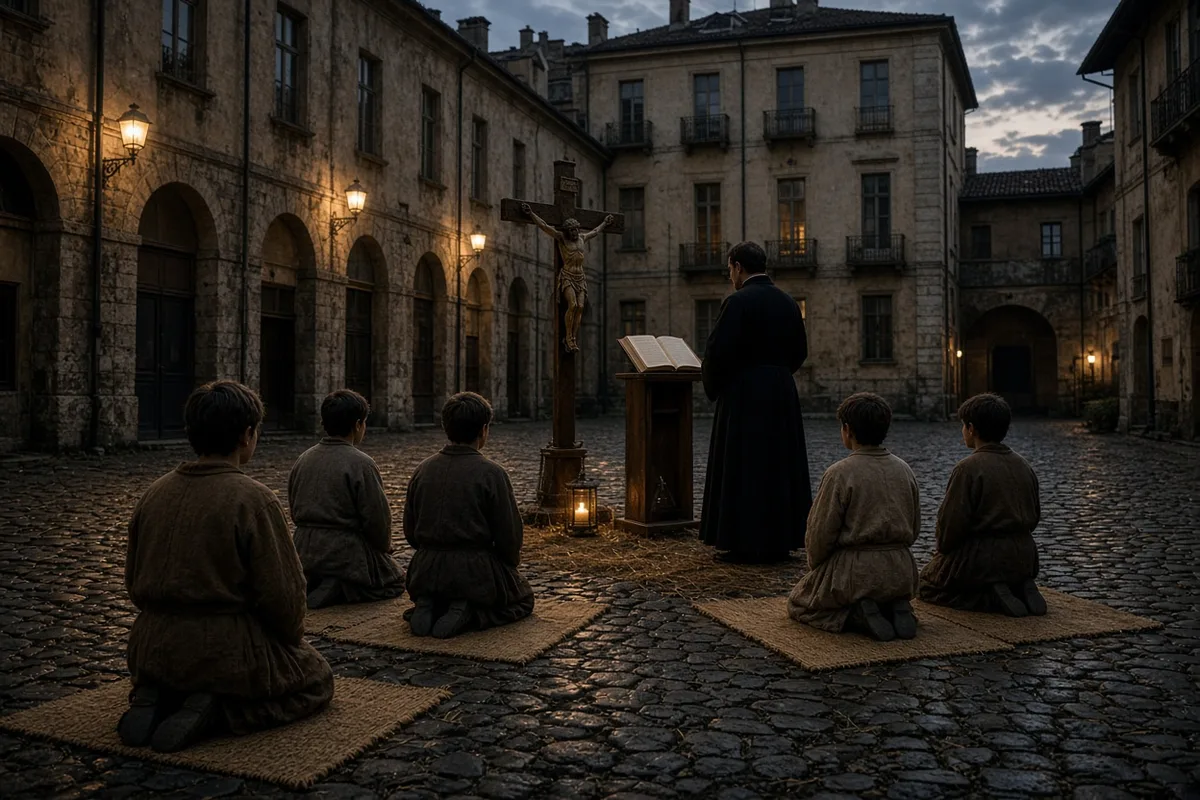
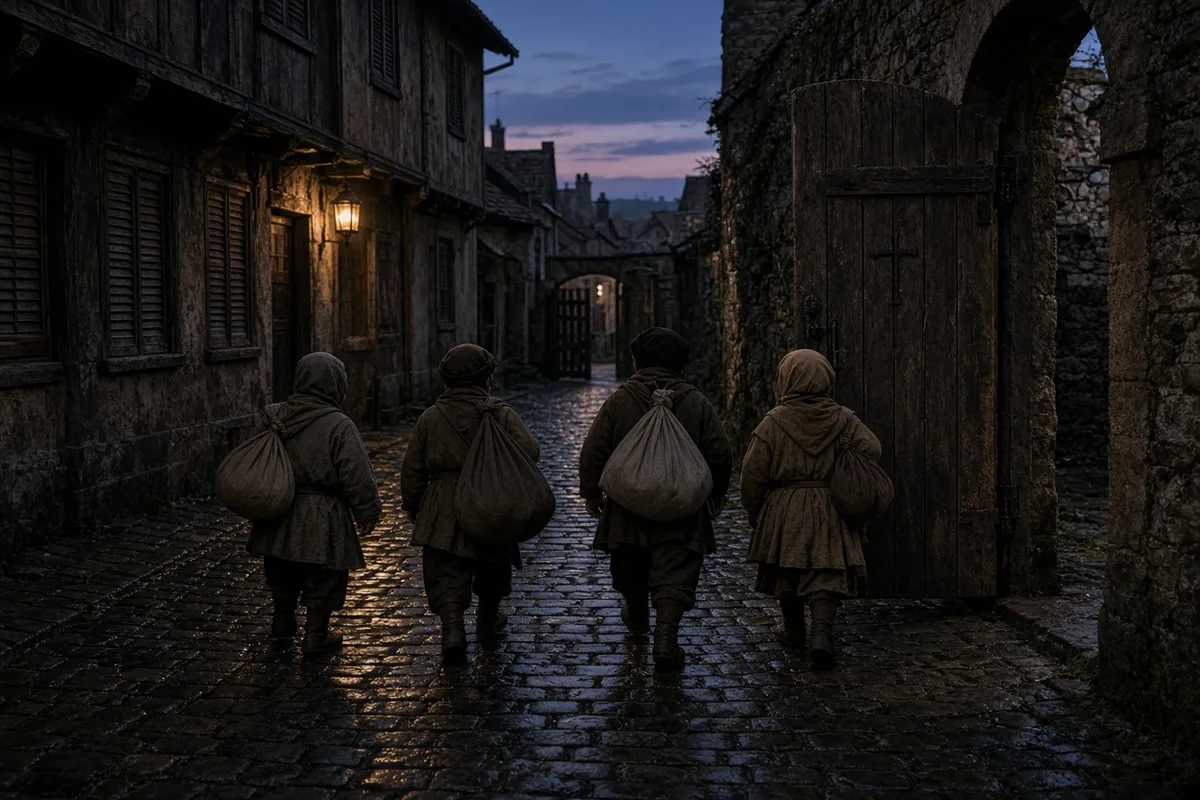
By the following spring the count reached four hundred. On feast days we walked out of the city gates in columns of four, a brass band at the head playing whatever tunes the old instruments could manage. Lunch was bread and cheese spread on the grass near the river. The younger ones chased one another through the trees while the older ones sat with Don Bosco and talked about what they might do when they found steady work.
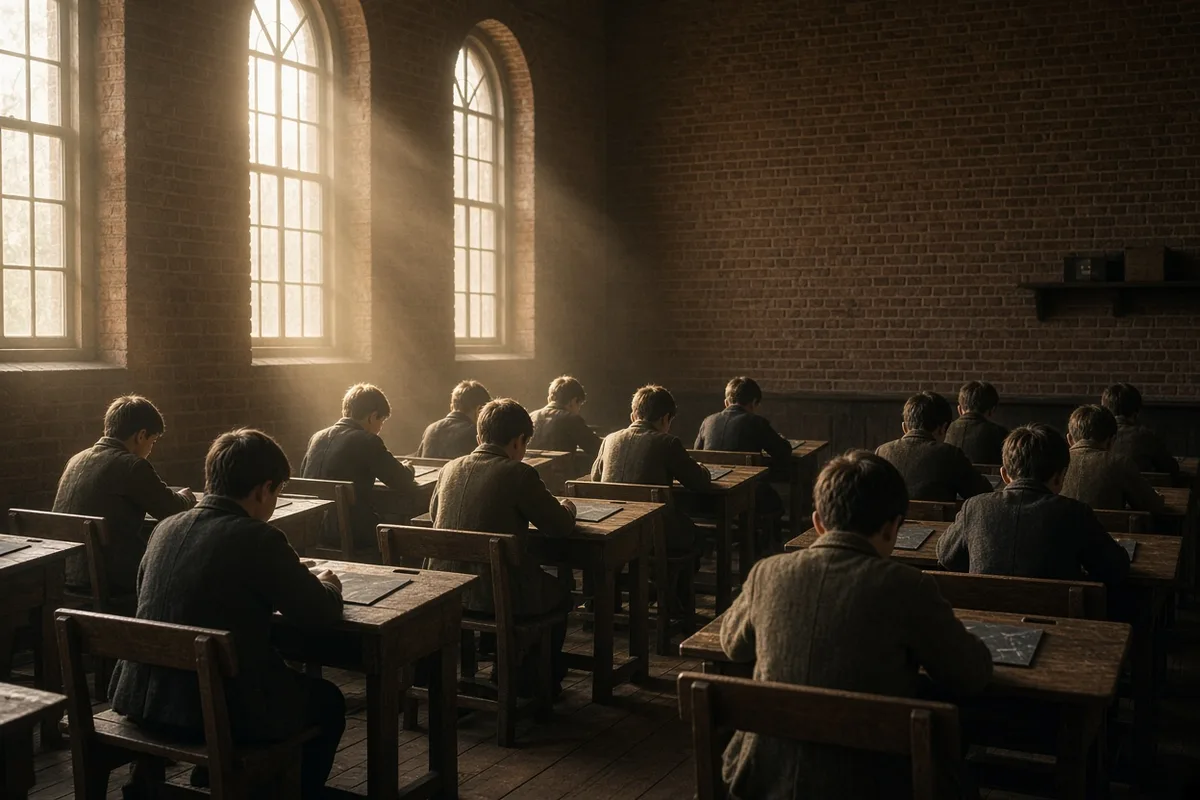
The night schools began the same year the factories shut for winter. Boys who could not read crowded the tables after dark. Don Borel taught the first class while Don Bosco moved among the rest, showing how to hold the pen so the ink would not blot. The room smelled of wet wool and lamp oil. When the last boy left, we swept the floor by the light of a single candle and stacked the slates for the next evening.
The landlord at the Rifugio gave notice in the spring. We carried the benches again, this time to St. Martin’s, then to St. Peter’s when that door closed as well. Each time the number of boys stayed the same or grew. Complaints reached the city officials that the oratory disturbed the neighborhood. One afternoon two men came with papers ordering Don Bosco to appear before a magistrate. He went alone and returned before supper with the papers still in his hand.
The worst night came when a doctor arrived at the door with two attendants and a carriage. They said Don Bosco had been declared out of his mind and must be taken away. He spoke quietly with them on the step until the attendants put the straps back in the carriage and left. After that the boys posted watches at the corners whenever strangers approached.
We moved once more, this time to a field beyond the last houses. Tents were raised for the Sundays when rain threatened. Don Bosco kept the register of names in a leather book that he carried inside his coat. Each new entry was read aloud so the older boys could greet the newcomer by name before the first lesson began.
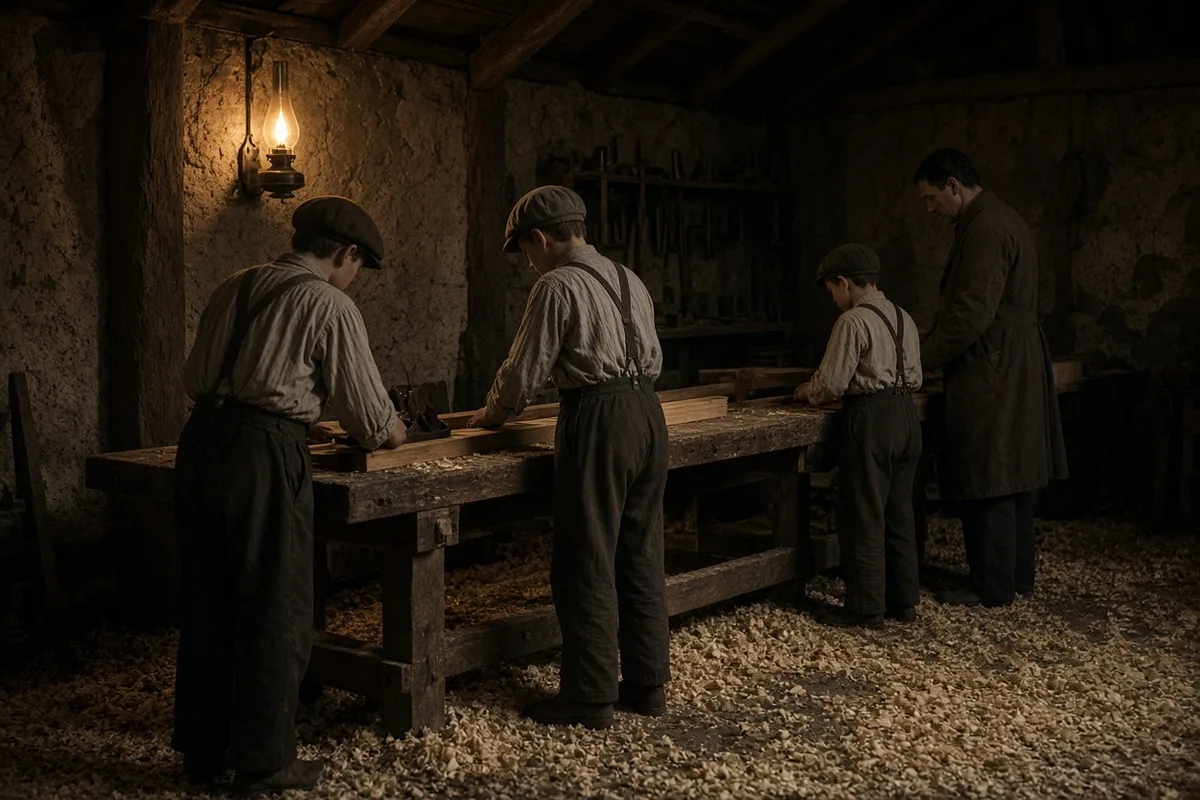
In the years that followed the oratory found a permanent stretch of ground at Valdocco. The first permanent chapel rose there, still under the patronage of St. Francis de Sales. The boys who had slept on straw now slept in long dormitories with numbers painted above each bed. Don Bosco continued the night classes and added workshops for tailoring and shoemaking so the older ones could leave with a trade.
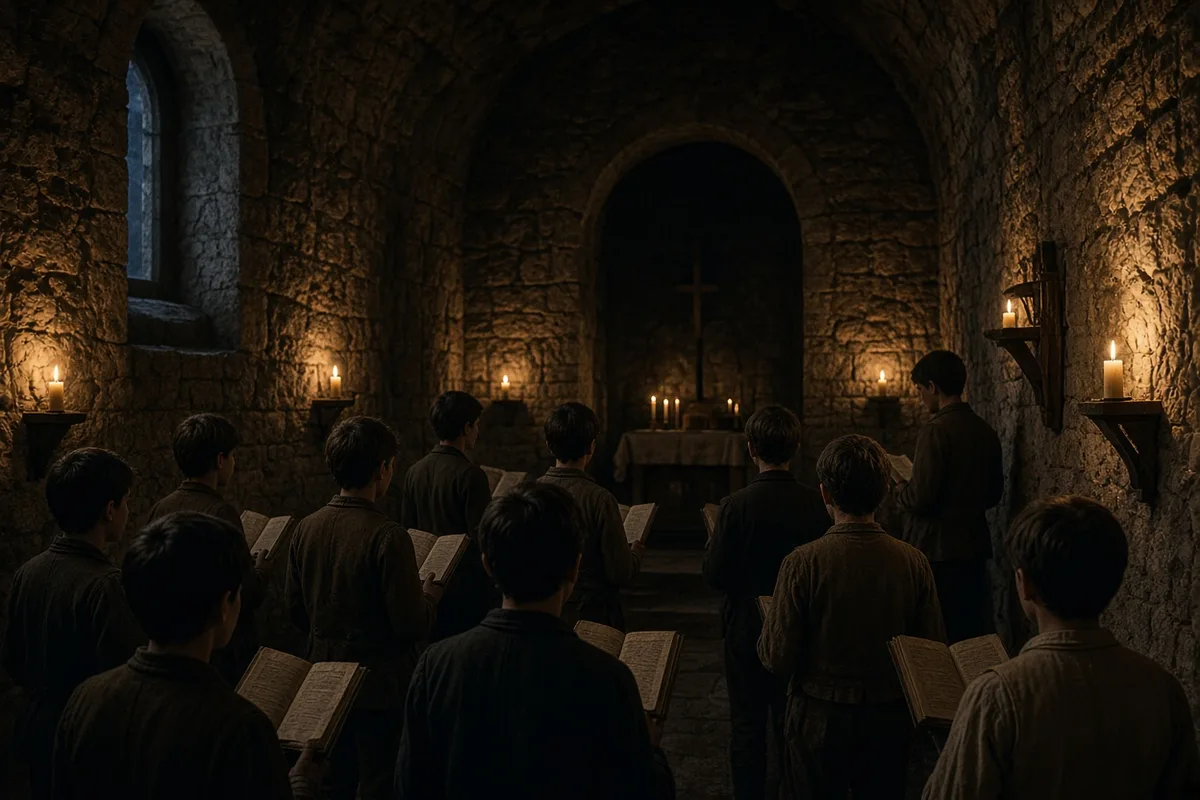
By the end of the decade the first group of those same boys stood with him in the chapel and promised to remain together under the same rule. The register that had begun with one name now held the names of the men who would carry the work forward. The brass instruments that once played on country walks were stored in a wooden case beside the new sacristy door. When the last promise was spoken, Don Bosco closed the book and set it on the altar without another word.
The seventeen men who had spoken their promises remained kneeling on the stone floor until Don Bosco rose and motioned them toward the refectory, where a single pot of soup waited on the long table. Michele Rua, then twenty-two, entered the names in the register that evening of 18 December 1859: Giovanni Cagliero, Angelo Savio, Carlo Gastini, Francesco Vasio, and the others whose signatures filled the first page beneath the heading “Società di S. Francesco di Sales.” Rua later recorded that Don Bosco had said only, “We begin with what we have,” before extinguishing the lamp. By spring 1860 the workshops at Valdocco employed thirty-six boys in the tailoring room and twenty-two at the shoemaker’s benches; each received a weekly wage of one lira and fifty centesimi, recorded in the ledger kept in the sacristy cupboard.
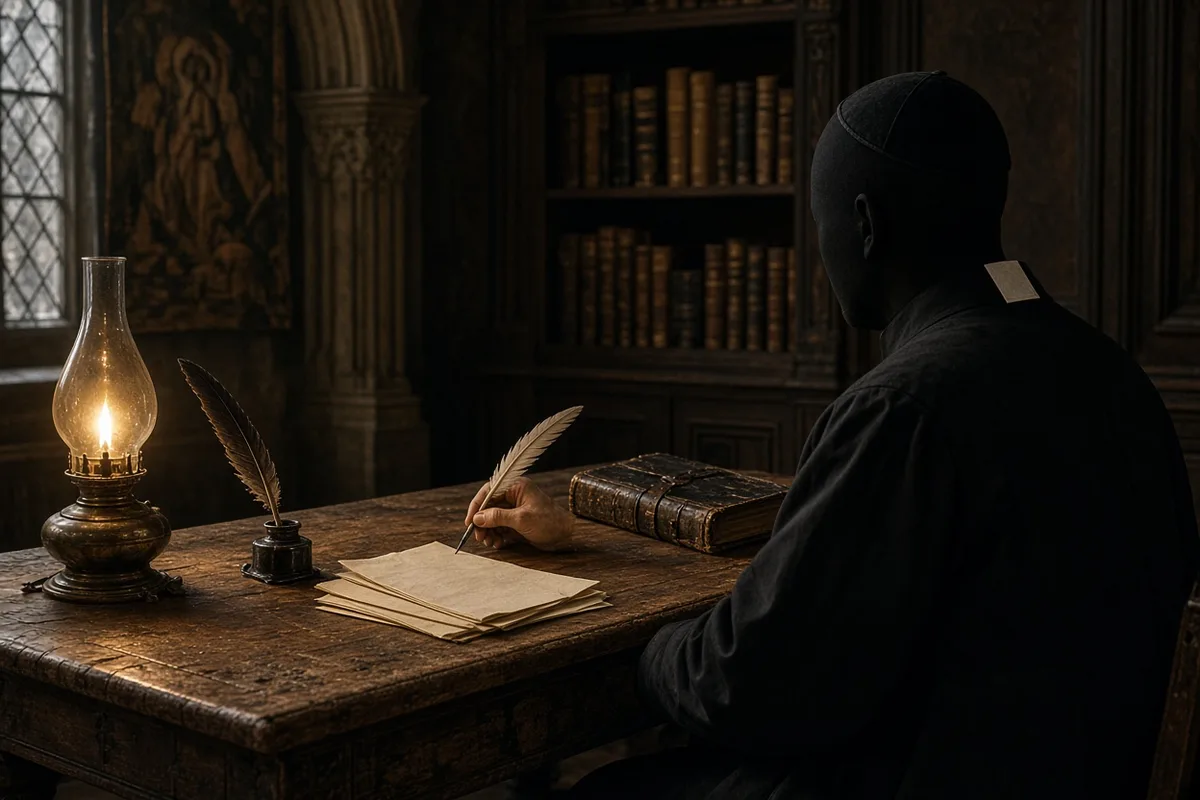
The first printed constitutions, drafted in longhand by Rua and copied by Cagliero, reached Rome in 1864 with a covering letter from Don Bosco dated 31 March. Cardinal Gaetano de Angelis read the document aloud to Pius IX on 23 April, noting the clause that members would “live in common under obedience” without fixed revenues. Approval came in stages: the decree of commendation on 1 April 1869, the definitive approval of the constitutions on 3 April 1874. By that date the congregation counted 320 professed members across twelve houses in Piedmont and Liguria. Don Bosco kept a second ledger listing each foundation: Mirabello in 1863 with forty boarders, Lanzo in 1864 with a new printing press that produced 1,200 copies of the monthly “Letture Cattoliche,” and the hospice at Sampierdarena opened on 8 December 1871 with space for 180 orphans.
On 11 November 1875 the first missionary expedition sailed from Genoa on the steamer “Sud America.” Cagliero, now thirty-seven and already a doctor of theology, led the group of ten Salesians and four Daughters of Mary Help of Christians. The letter of obedience Don Bosco handed to Cagliero at the dock contained the sentence, “You will find the boys of Buenos Aires as poor as those of Valdocco; begin with the oratory.” Within three years the Salesians opened the Colegio Pío IX in Almagro, enrolling 240 pupils by 1879, and the agricultural colony at San Nicolás de los Arroyos that housed 150 boys working 120 hectares of vineyard and wheat. Annual reports sent back to Turin listed 4,872 confessions heard and 1,036 First Communions distributed in 1881 alone.
Don Bosco’s final visit to the mother house occurred on 30 January 1888. He entered the chapel at five in the afternoon, asked Rua to read the names of the 1,012 professed Salesians then living, and remained seated while the community recited the Te Deum. He died the following evening at 2:10 a.m. in the room above the sacristy, his hand resting on the same leather register begun in 1841. Rua succeeded him as rector major the next morning; the first circular letter he issued on 8 February directed every house to add one extra hour of night adoration each week for the space of a year.
Under Rua the congregation expanded to 38 houses by 1892 and 64 by 1900. The first foundation outside Europe opened in Montevideo in 1891, followed by the house at Battersea in London in 1892 that received 47 boarders its first winter. In 1904 the Salesians took charge of the technical school at Asti with 312 apprentices learning mechanics and telegraphy. Cagliero, consecrated bishop in 1884, returned from Patagonia in 1908 and was created cardinal on 7 December 1915; his red biretta was placed on the altar at Valdocco during the Mass celebrated on the fiftieth anniversary of the society’s approval.
By the centenary year 1959 the register contained 17,892 names of professed members distributed among 1,146 communities. The printing press at Valdocco had produced 4,280,000 volumes of the “Bollettino Salesiano” since 1877. The missions in India, begun at Thanjavur in 1906 with twelve Salesians, counted 48,000 pupils in 112 schools by 1965. The last surviving member of the original seventeen, Carlo Gastini, died at the house of San Benigno Canavese on 14 March 1933 at the age of ninety-four; his funeral was attended by 2,400 boys from the surrounding oratories.
The final image belongs to 11 October 2023 at the basilica of Mary Help of Christians in Turin. Cardinal Ángel Fernández Artime, rector major since 2014, stood at the same altar where the 1859 promises were made and read the names of the 14,767 Salesians then in vows, pausing after each continent: 6,412 in Europe, 4,103 in the Americas, 2,891 in Asia, 1,108 in Africa, and 253 in Oceania. Outside, the bronze statue of Don Bosco cast in 1908 held an open book whose pages, worn smooth by rain, still showed the faint lines of chalk marks once used to record the attendance of the first twenty boys.
On 12 October 2023 the community at Valdocco opened the leather register from 1859 and added the name of the newest professed member, Salesian Brother Luca Bianchi, born in Genoa on 4 May 1997, who had completed his novitiate at the house in Pinerolo. The entry, written in black ink by the current economer Brother Paolo Rossi, recorded the exact vow formula: “I, Luca Bianchi, promise to live in chastity, poverty and obedience according to the constitutions of the Society of St Francis de Sales for three years.” That same afternoon the tailoring workshop, still operating in the building erected in 1862, completed 47 school uniforms for the oratory pupils using the same Singer machines purchased in 1927.
The agricultural colony at San Nicolás de los Arroyos, expanded in 2018 with a 40-hectare solar installation, reported 312 boys enrolled for the 2024 term, each assigned a plot of 0.8 hectares for wheat or alfalfa under the supervision of Brother Miguel Ángel Torres, who arrived from Paraguay in March 2019. The colony’s ledger for October 2023 listed 1,847 kilograms of cheese produced in the on-site dairy and sold at the weekly market in Rosario, with proceeds entered as 284,000 Argentine pesos.
In Thanjavur the Salesian technical institute founded in 1906 now operates a CNC training centre equipped in 2021 with twelve machines donated by the German province. On 15 November 2023 the centre graduated 68 students, among them 19-year-old Selvam Raj, whose certificate noted completion of 840 hours of instruction in G-code programming. The institute’s annual report forwarded to Rome listed 2,134 First Communions distributed across its 27 feeder oratories during the preceding twelve months.
Cardinal Fernández Artime’s circular of 7 January 2024 directed every house to allocate 2 percent of its operating budget to the new “Project Africa 2030,” which had already opened a formation house in Addis Ababa on 3 September 2023 housing 24 novices under the direction of Father Tesfaye Haile, ordained in 2015. The letter quoted the 1875 instruction to Cagliero verbatim: “Begin with the oratory.”
At the Battersea house in London the original 1892 dormitory wing, restored in 2017, now accommodates 29 unaccompanied minors from Afghanistan and Sudan. On 22 February 2024 the community welcomed its 1,500th resident since reopening, 16-year-old Hamidullah Noori, who began English classes the following Monday using textbooks printed at the Valdocco press in 2022.
The bronze statue outside the basilica received its annual cleaning on 8 April 2024; conservators from the Turin civic museum removed 1.8 kilograms of accumulated grime and applied a fresh layer of microcrystalline wax to the open book. During the procedure a small chalk mark, previously hidden, became visible on the lower right page and was photographed for the archives.
Father Pierluigi Cameroni, postulator of the cause of Don Bosco’s canonisation, examined the same register on 19 June 2024 while preparing documentation for the 150th anniversary of the 1874 approval. He noted that the 1859 signatures of the original seventeen remained legible, the ink having been reinforced in 1934 by the then archivist Father Eugenio Faresin. Cameroni recorded the visit in the margin with the date and his signature.