


St. Louis IX Ransoms Christian Prisoners in Egypt

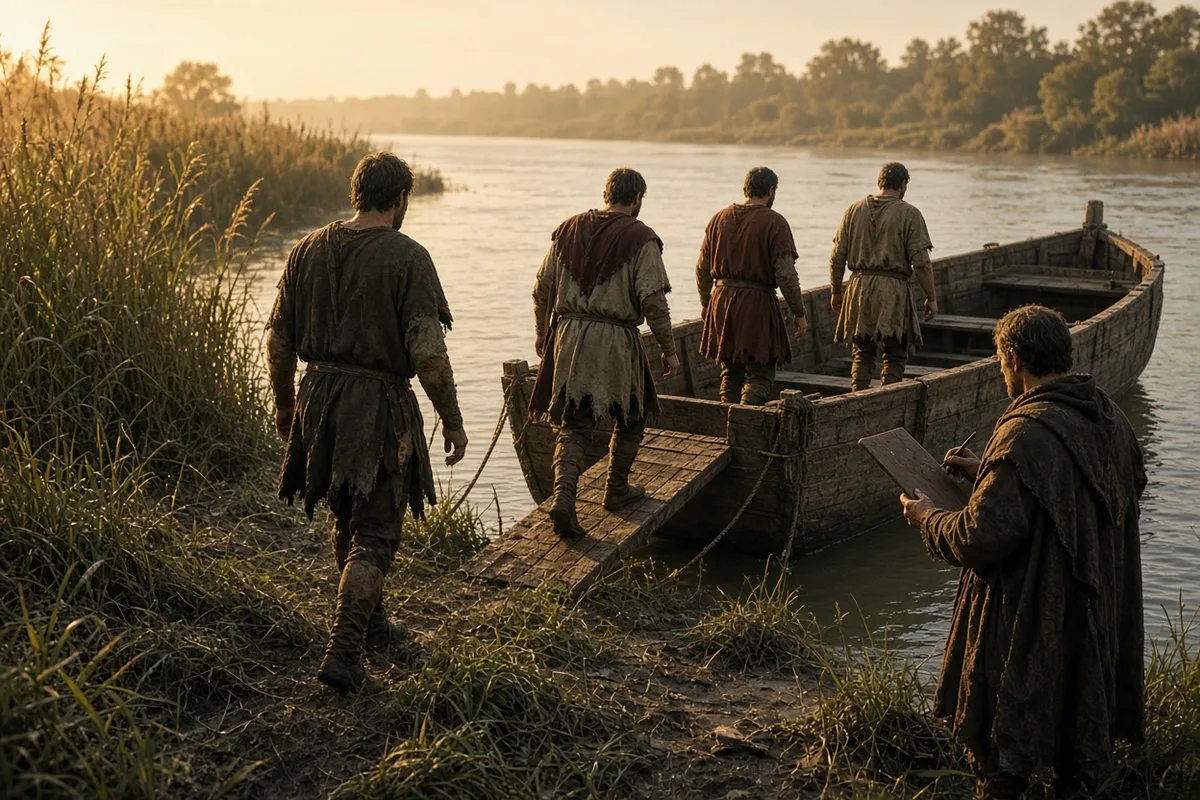
The oars struck the mudbank with a dull scrape and the barge tilted hard under me. I gripped the rail as the Egyptian guards shouted and prodded us forward into knee-deep water that stank of river weed and dead fish. My wrists were still raw from the ropes they had cut only that morning. Ahead, on the higher ground, a line of Frankish tents stood white against the brown fields. I counted the crosses on their standards and realized the king’s own banner flew above them.
We had been marched from the camp at Al Mansourah three days before. Most of the men around me were too weak to speak. One knight from Poitou kept whispering the names of his sons. The guards let him. They knew we were no longer worth killing.

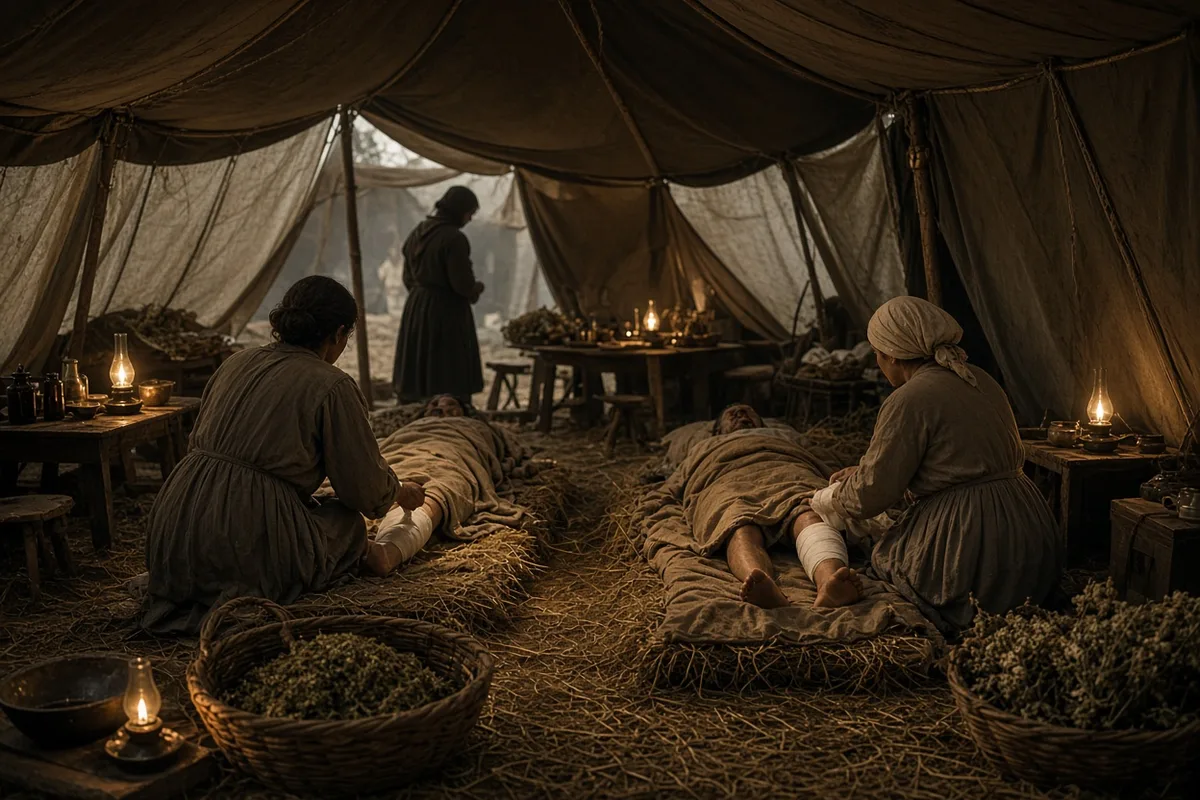
A clerk in a stained surcoat met us at the water’s edge. He carried no weapon, only a wax tablet and a list of names. He asked each man his lord and his village. When he reached me he looked at the cut on my forearm and the fever blisters along my lip, then wrote something small beside my name without asking more.
By midday the sun had burned through the haze. We sat on the dry ground outside the largest tent while the clerk read from his tablet. He stopped at a name I knew—Robert of Artois—and crossed it out with a single line. No one spoke after that.

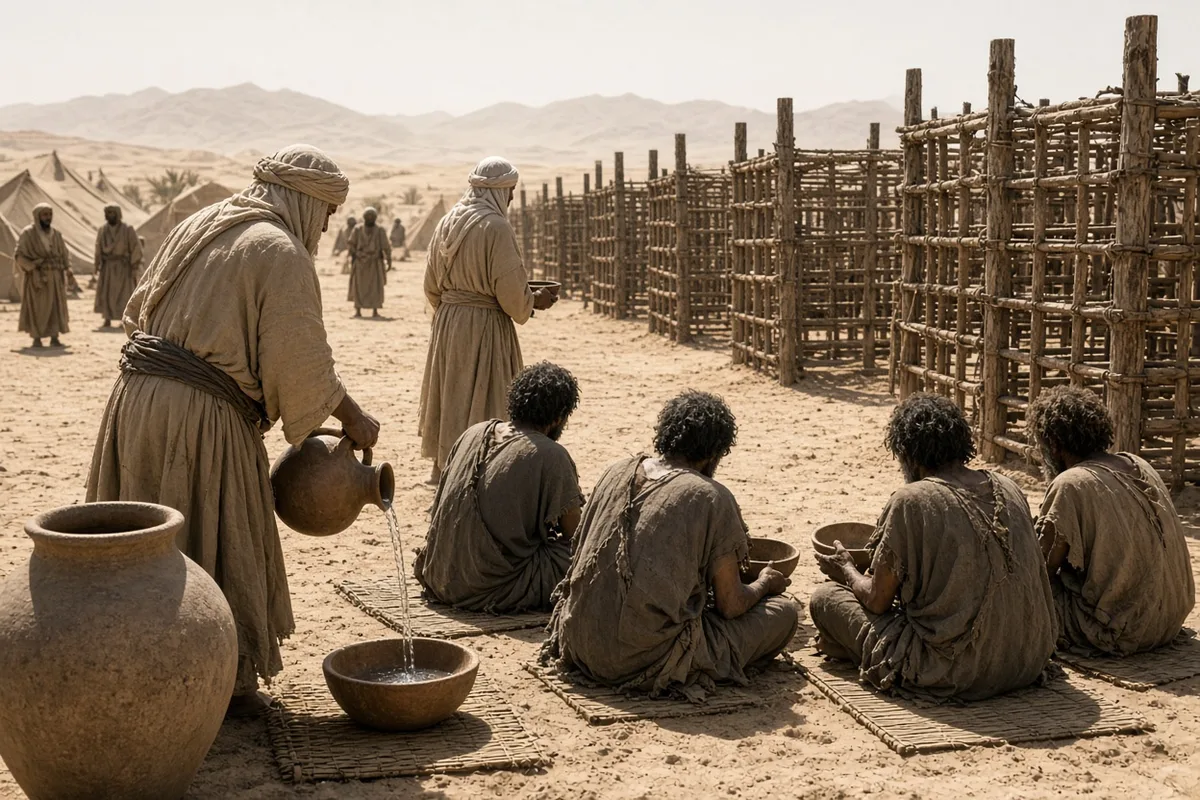
Toward evening a wagon arrived from the river. Barrels were unloaded and set in rows. One of the guards lifted a lid and the smell of salted meat reached us. Another barrel held wine. The clerk told us to form lines. We drank from tin cups passed hand to hand. The wine was thin and warm, yet no one left any in the cup.
Joinville came out of the tent just before dark. He walked slowly, one hand on his side where the arrow had gone in at Mansourah. He stopped in front of the nearest group and asked whether any man had seen his cousin fall. Three voices answered at once. He listened to each, then nodded and moved on. When he reached me he studied the bandage on my arm and asked how long the wound had been open. I told him. He said the king’s physicians would see to it before we sailed.
That night the guards posted fewer sentries. Fires were allowed inside the lines. Men who had not spoken for weeks began to trade small stories about the crossing from Cyprus and the first days at Damietta. The sound of their voices carried across the water to the Egyptian boats still anchored downstream.

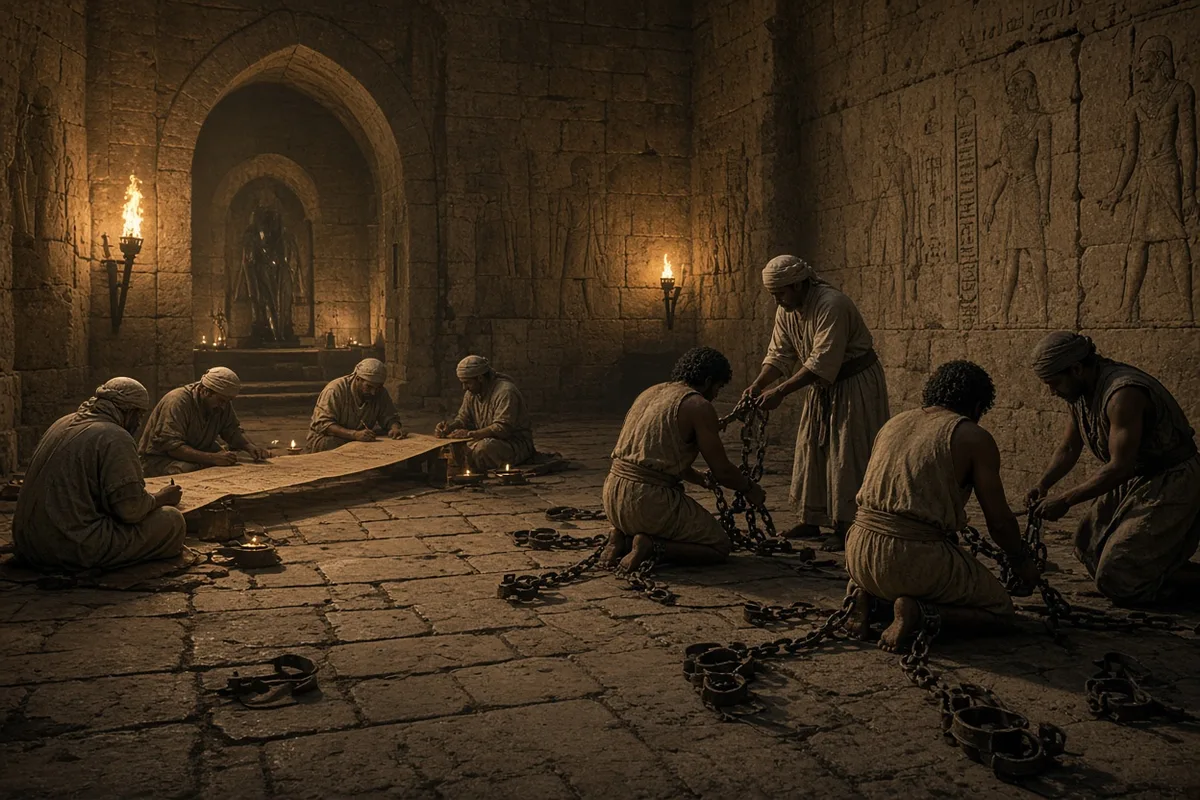
On the third morning after our arrival the clerk returned with fresh parchment. He read aloud a list of sums. Each name was followed by a figure in bezants. When he reached the end he looked up and said the king had ordered that every man whose ransom could not be met from his own house would be paid from the royal treasury. No one moved. The clerk repeated the words once, then rolled the parchment and walked back inside the tent.
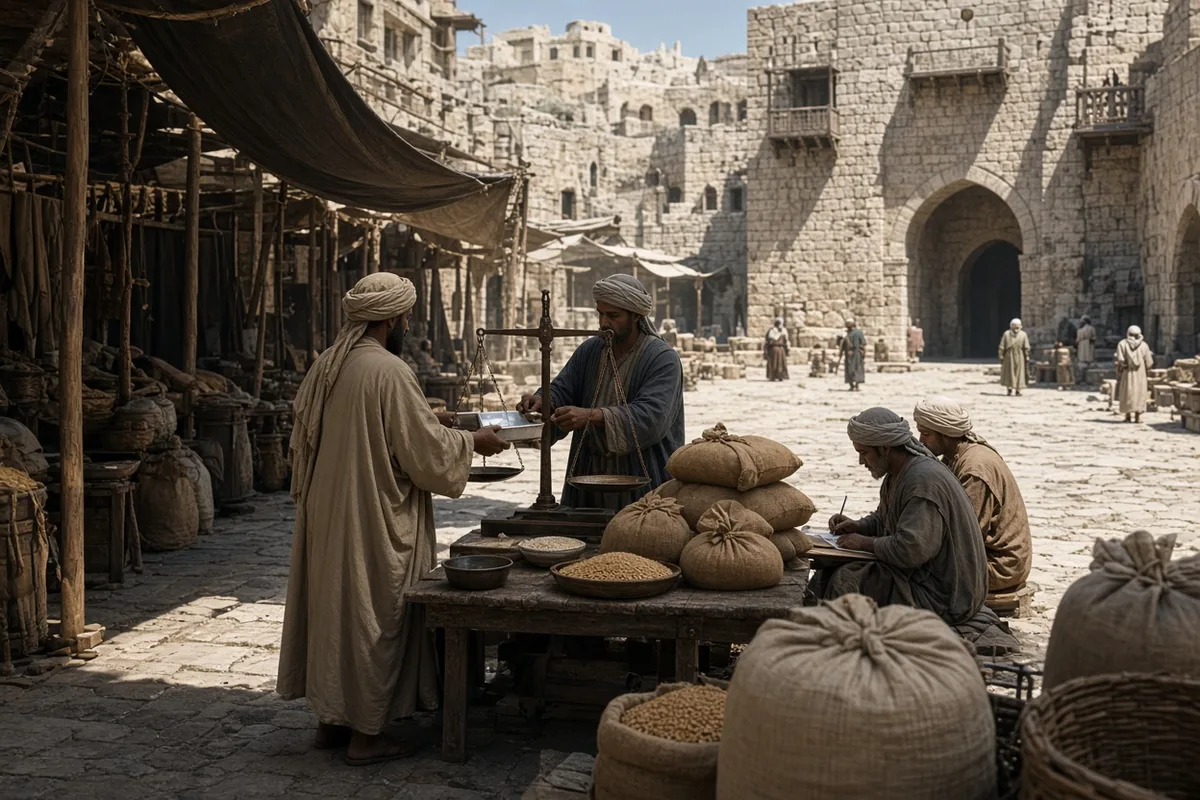
I watched the king himself that afternoon. He stood outside the same tent with his brothers Alphonse and Charles. All three wore plain linen tunics without armor. Louis held a small wooden box. He opened it, counted coins into a leather bag, and handed the bag to a Saracen officer who waited with two scribes. The officer weighed the bag on a small scale set on a camp stool, then nodded. Louis turned to the next bag without speaking.
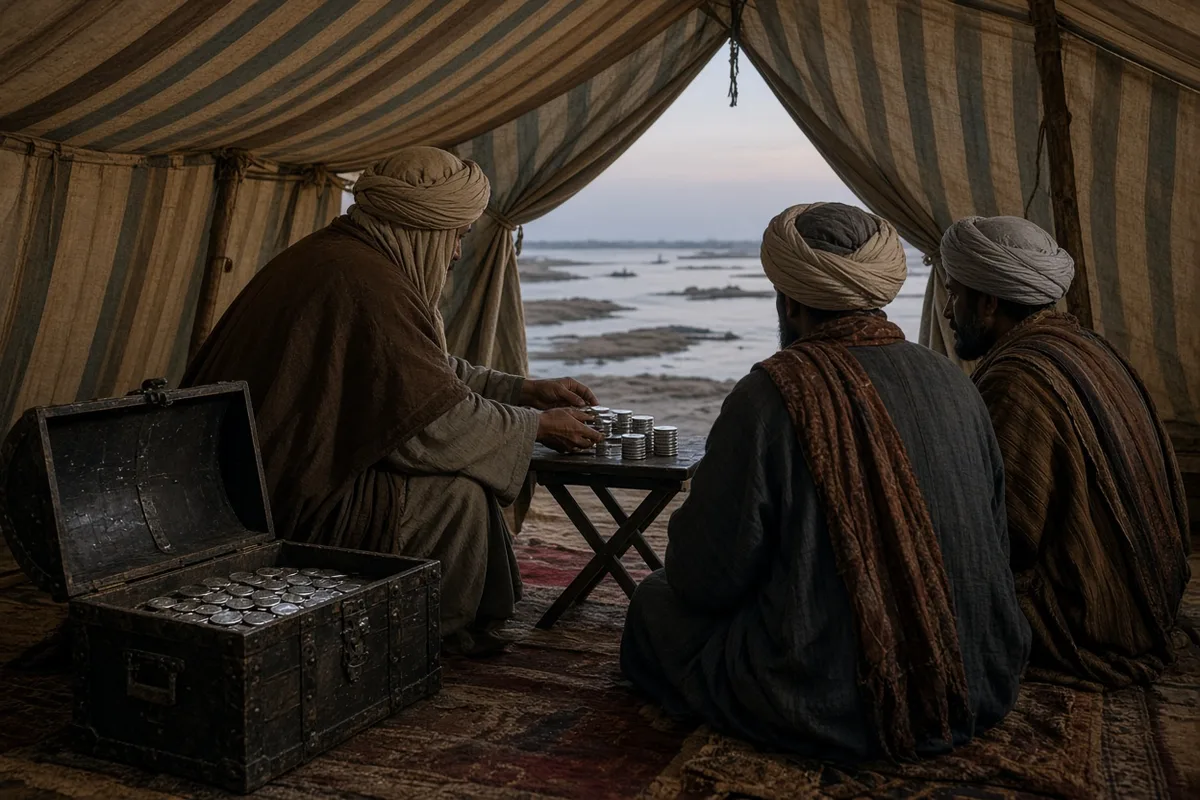
By sunset the counting was still going on. Men whose names had been read earlier were already being rowed out to the waiting ships. I saw one of them wave toward the shore, but the motion was small and the light was failing. The oars dipped and rose again until the boat was only a dark line against the river.
My own name was called two days later. The clerk gave me a slip of parchment with the amount written in both Latin and Arabic. I carried it to the table where the king still stood. He looked at the slip, then at the bandage on my arm, and asked whether I could still hold a shield. I said I could. He counted the coins himself and dropped them into the bag. The Egyptian officer weighed them, added one more piece from his own pouch, and marked the slip. Louis nodded once and turned to the next man in line.
We boarded the last boats at dawn. The river was flat and the air already warm. As the oars pushed us into the current I looked back at the line of tents. The royal banner had been struck. Only the Egyptian standards remained on the bank. The king’s tent was empty, its ropes loose in the wind.
The current took us past the last Egyptian pickets before noon, the oarsmen from Tyre calling out distances in their own tongue while the freed knights sat with their backs against the gunwales and watched the mud shoals slide by. One of them, a sergeant from the county of Champagne named Girard de Bourguignon, pulled a folded square of parchment from inside his shirt and read aloud the clause the Saracen scribes had added at the bottom of the ransom roll: “eight hundred thousand bezants for the person of the king and all who bear arms under his banner, to be paid in two parts, half before the departure from the river and half within forty days after the safe arrival at Acre.” He folded the sheet again and tucked it away, saying nothing more until we reached the open water where the Nile meets the sea.
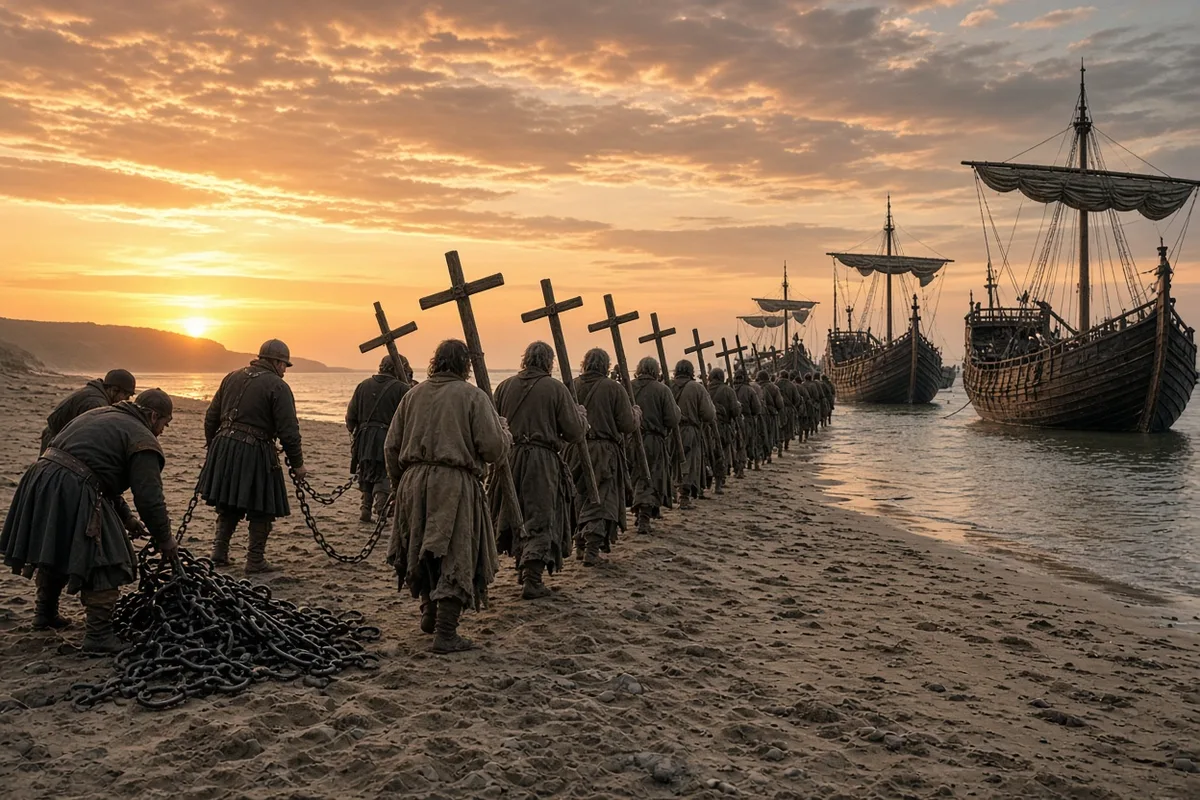
At Damietta the Genoese galleys lay at anchor with their lateen sails already hoisted. We were transferred in small boats, thirty men to each vessel, and the captains struck the Egyptian colors at once and raised the red cross of the kingdom of Jerusalem. The crossing to Acre took four days with a following wind; on the second night a storm scattered the convoy and one galley from Pisa was lost with every man aboard. When we landed, the bailli of Acre, Jean d’Ibelin, met the king’s party on the quay and read a proclamation in Latin and French that fixed the second installment of the ransom at four hundred thousand bezants, to be collected from the royal treasury in Paris and from the Temple and Hospital commanderies in the kingdom. Louis answered only that the money would be found.
In the months that followed I remained in the service of the king’s household at Acre, carrying dispatches between the palace and the orders. On the feast of Saint Michael I stood in the courtyard when the final payment was counted out before the Egyptian envoys: four hundred and one thousand three hundred and sixty bezants in gold dinars and Venetian ducats, weighed on a balance brought from the Templar treasury. The chief envoy, a man named Fakhr al-Din, signed the receipt with his own hand and added the Arabic phrase “the debt is paid in full according to the writing.” Louis watched the scales until the last coin was bagged, then ordered the ships made ready for the return to France.
We sailed from Acre on the twenty-fourth day of April in the year 1254. The king’s own ship carried the oriflamme at the stern and the relics of the True Cross that had been recovered from the Saracens at Damietta. Off the coast of Cyprus a contrary wind held us for nine days; during that time the king dictated letters to his brother Alphonse in Paris, directing that the royal demesne at Pontoise be sold to meet the remaining debt to the Italian bankers. One letter, copied by the clerk Pierre de Ville, survives in the archives of the Sainte-Chapelle and records the exact sum still owing: one hundred and sixty-seven thousand livres tournois.
At Hyères the king landed on the sixth of July and rode at once to Paris, where he was met outside the city by the queen and the children. I was released from service that same month with a grant of ten livres a year from the royal almonry and a letter of safe conduct signed by the seneschal of Champagne. For the next sixteen years I held a small fief near Joinville itself and twice a year traveled to Paris to render account at the Chambre des Comptes. In the spring of 1270 I received a summons to join the new expedition that Louis had vowed after the fall of Antioch; the muster rolls list my name among the two hundred and forty knights who sailed from Aigues-Mortes on the first of July.
We reached Tunis in the heat of August. The king fell ill on the twenty-third day of that month and died the following night in a tent outside the walls, his last recorded words, spoken to his son Philip, being the instruction that the army was to return to France without further fighting. His body was carried back aboard the same galley that had brought us from Acre; the heart was removed at sea and placed in a silver casket that now rests in the abbey church of Saint-Denis. I remained with the household until the fleet reached Sicily, then took ship for Marseilles and did not see the king’s remains again.
In the year 1297, when the same Philip who had stood at his father’s bedside obtained the bull of canonization from Pope Boniface, I was already past seventy and living on the income of the fief. The papal commissioners came to Joinville to take testimony; they asked me to describe the counting of the bezants on the bank of the Nile and the words the Egyptian officer had spoken when he added the extra piece of gold to the scale. I answered as I have set down here. The commissioners wrote the answers in a book that was carried to Rome and read aloud before the cardinals on the twenty-third of July. Three months later the king was declared a saint.
The last time I saw the place where the tents had stood was in a dream I had the winter after my eightieth birthday. The river was low, the mudbanks exposed, and a single figure in a plain linen tunic moved among the guy ropes, stooping now and then to gather loose pegs and coil them neatly. He worked until the light failed, then walked down to the water’s edge, stepped into a small boat, and pushed off into the current without looking back. When the boat was only a dark line against the river the figure raised one hand, not in farewell but as though testing the weight of a coin that was no longer there.
The commissioners returned the following spring with a sealed copy of the acts, dated at Anagni on the feast of Saint Lucy in 1297, and left it in the keeping of the abbot of Saint-Urbain at Joinville. I placed the volume on the shelf above the hearth in the hall, beside the roll of the ransom that Girard de Bourguignon had carried from the Nile, and read from it each winter when the roads froze. In the year 1309 the abbot’s successor asked leave to transcribe the passage concerning the extra dinar placed on the scale; the copy, witnessed by three monks and bearing the date 12 January, remains in the treasury of the collegiate church.
Two years later I rode to Paris for the last time, carrying the letter of safe conduct renewed by the seneschal’s clerk at Troyes on 3 May 1311. At the Sainte-Chapelle the treasurer showed me the upper chapel where the king had placed the Crown of Thorns in its crystal reliquary on 21 August 1239; the rose window above the south portal, measuring twenty-seven feet across, still held the medallions of the Exodus scenes ordered by the king’s own glaziers. The treasurer counted out the annual alms of ten livres in the presence of two notaries and entered the payment in the register under the heading “veteri crucesignato de Campania.”
At Saint-Denis the sacristan permitted me to stand beside the new tomb chest erected for the king in 1285. The effigy showed him in a plain dalmatic, the hands crossed over a scepter of vermeil; the inscription along the edge read “Ludovicus rex Francorum obiit in Tuniso anno Domini MCCLXX.” The heart casket, brought from the abbey of Saint-Corneille at Compiègne, rested in a niche behind the high altar, its silver lid stamped with the arms of France and Jerusalem.
My son, who held the fief after me, accompanied the commissioners of Philip the Fair to the Chambre des Comptes in 1313 when the last claims arising from the Egyptian ransom were examined. The auditors struck a balance of forty-three thousand livres tournois still owed to the Bonsignori of Siena, the entry recorded under the date 14 October and witnessed by the prévôt of Paris. The account book, now kept in the Trésor des Chartes, bears the marginal note “solvatur ex venditione nemoris de Pontoise.”
In 1323, the year I reached my eighty-sixth birthday, a messenger from the bailli of Chaumont brought word that the Egyptian standard taken at Damietta had been hung in the cathedral of Notre-Dame at Paris above the door of the sacristy. The silk, faded to the color of river mud, measured nine ells in length and still showed the crescent worked in silver thread; the chapter had it examined by a draper of the rue de la Buffeterie who valued the remnant at twelve sous.
My grandson, who succeeded to the fief in 1337, wrote from Joinville that the parchment slip given me on the bank of the Nile had been found among my papers and presented to the abbot. The Latin and Arabic figures remained legible; the Egyptian officer’s added dinar was noted in the margin by the same hand that had drawn up the receipt signed by Fakhr al-Din.
On the morning of the Assumption in 1342 the last surviving knight of the Acre household, a man named Pierre de Courtenay from the county of Champagne, died in the infirmary of the Hôtel-Dieu at Paris. The register of deaths records that he had been present when the king counted the final bezants and that his last words, spoken to the infirmarian, were the phrase “the scales are empty now.”