


St. Louis IX Ransoms Prisoners in Egypt

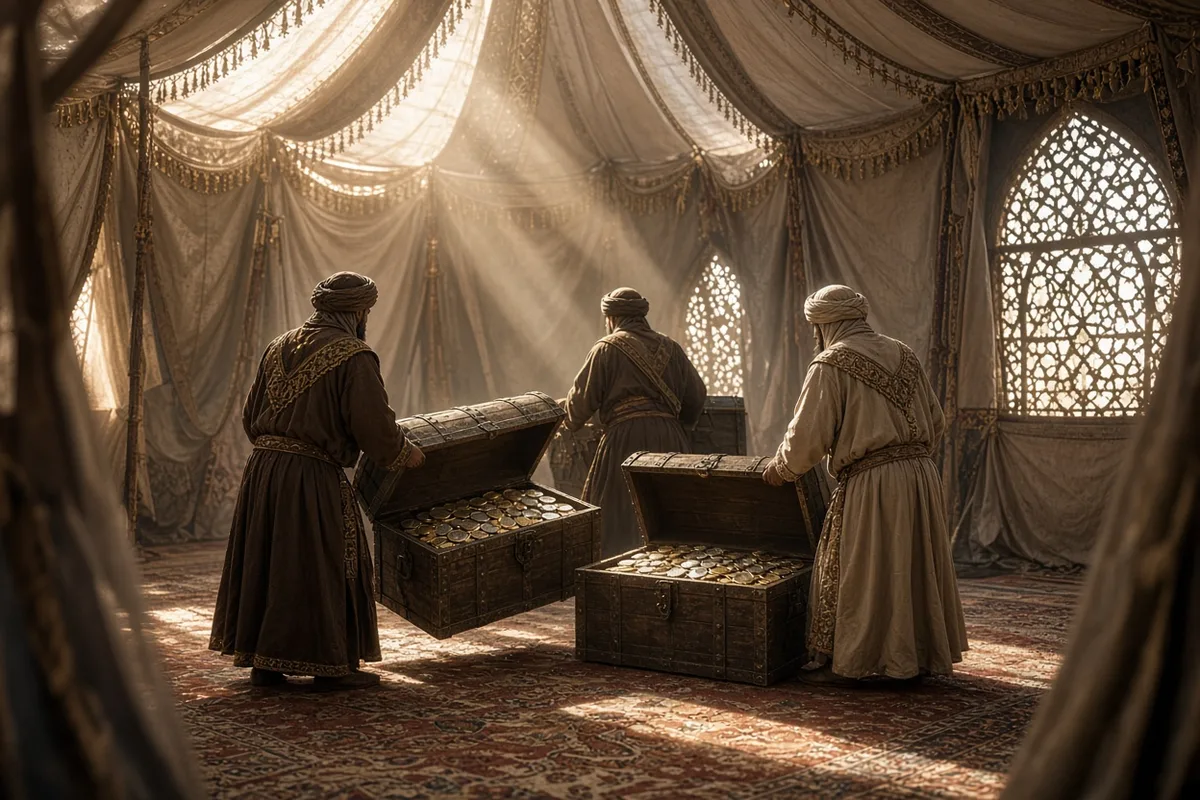
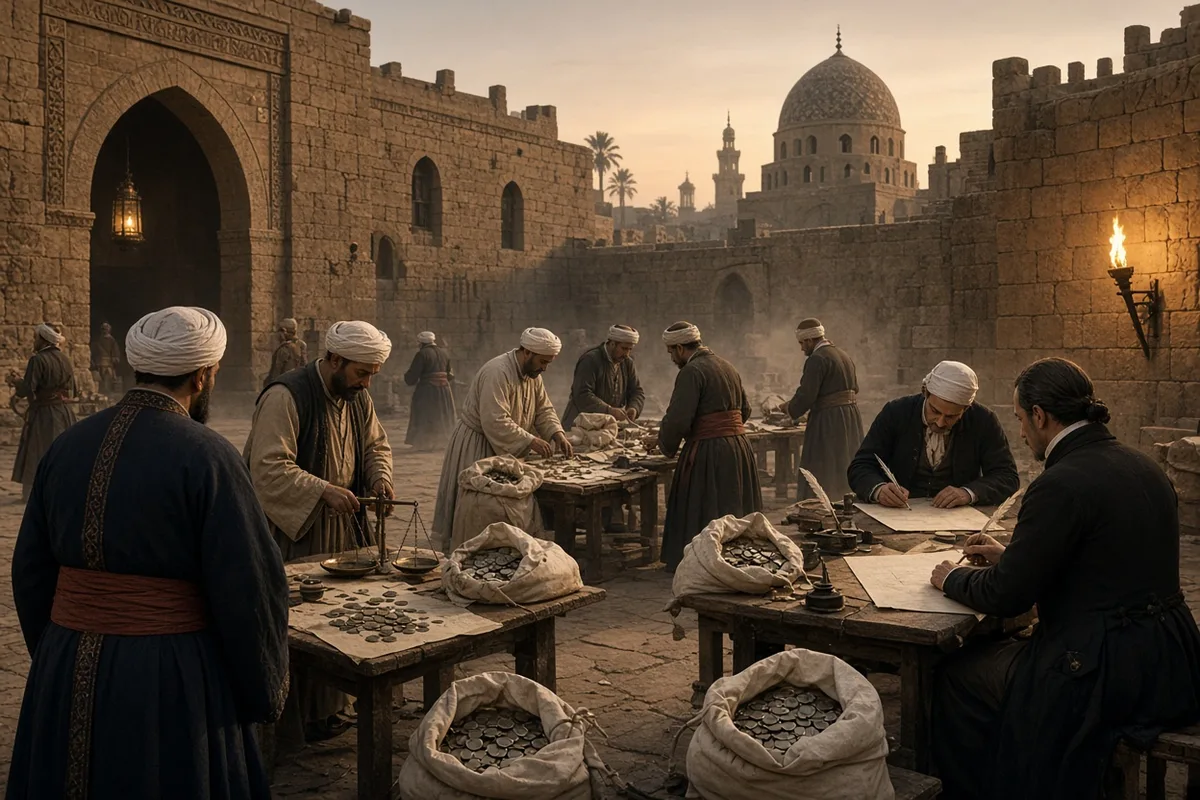
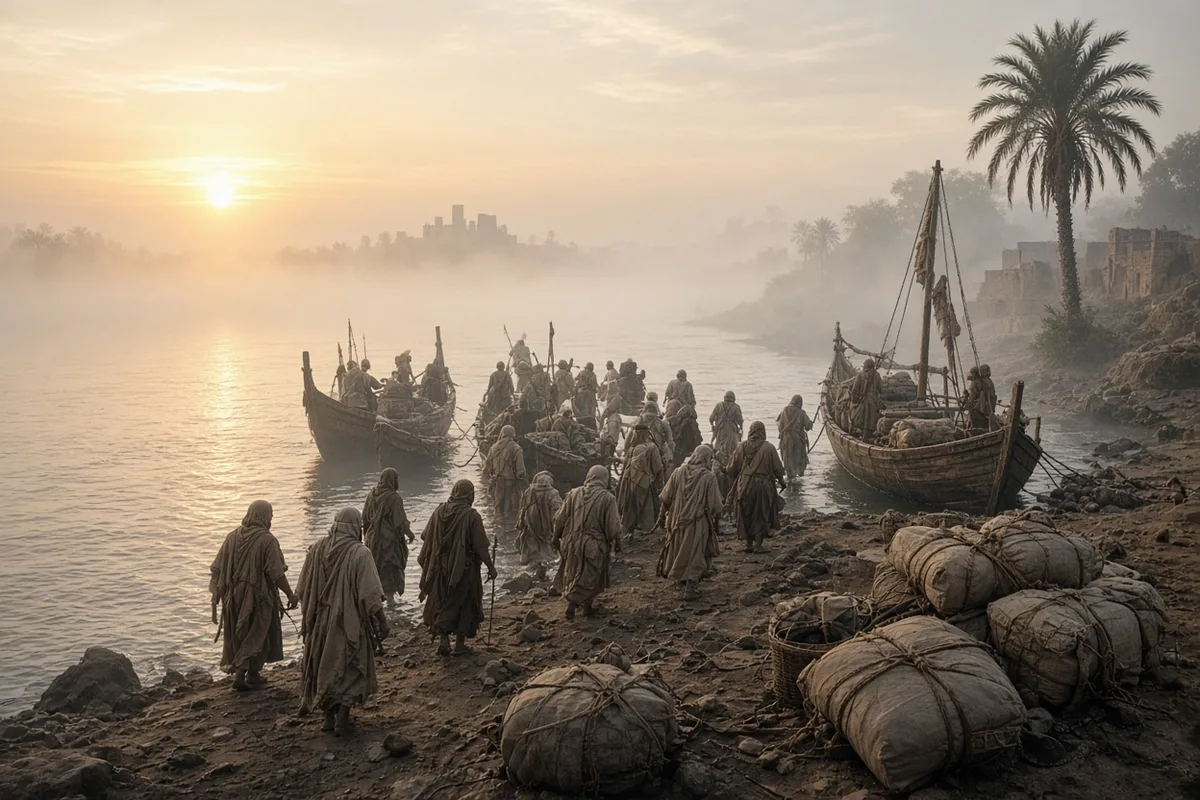
The oars of the Egyptian boat scraped against the mudbank at dawn. I stood among the other chained men on the shore, our feet sunk in the silt, watching the rowers haul the chests ashore one by one. Each chest carried the same weight in silver that the king had pledged the day before. The guards counted the pieces aloud, their voices flat against the river noise. No one spoke among us until the last chest was opened and the coins poured into leather sacks.
Four hundred thousand livres. That was the sum they demanded for the king and his brothers and the twelve thousand men still alive. I had heard the number repeated through the camp for weeks, passed from mouth to mouth like a rumor that might still turn false. France’s yearly income was said to be little more than three times that amount. The men around me did not discuss the cost. They watched the sacks disappear into the waiting carts.

The pledge came next. Louis stood before the Egyptian emirs with his brothers Charles and Alphonse beside him. He swore he would not return to Egypt and that Damietta would be given up at once. The words were translated twice, once into Arabic and once back into French to be sure nothing had changed. When the last phrase was repeated, the king nodded and the chains on the nearest prisoners were struck off. The iron rang against the stones.
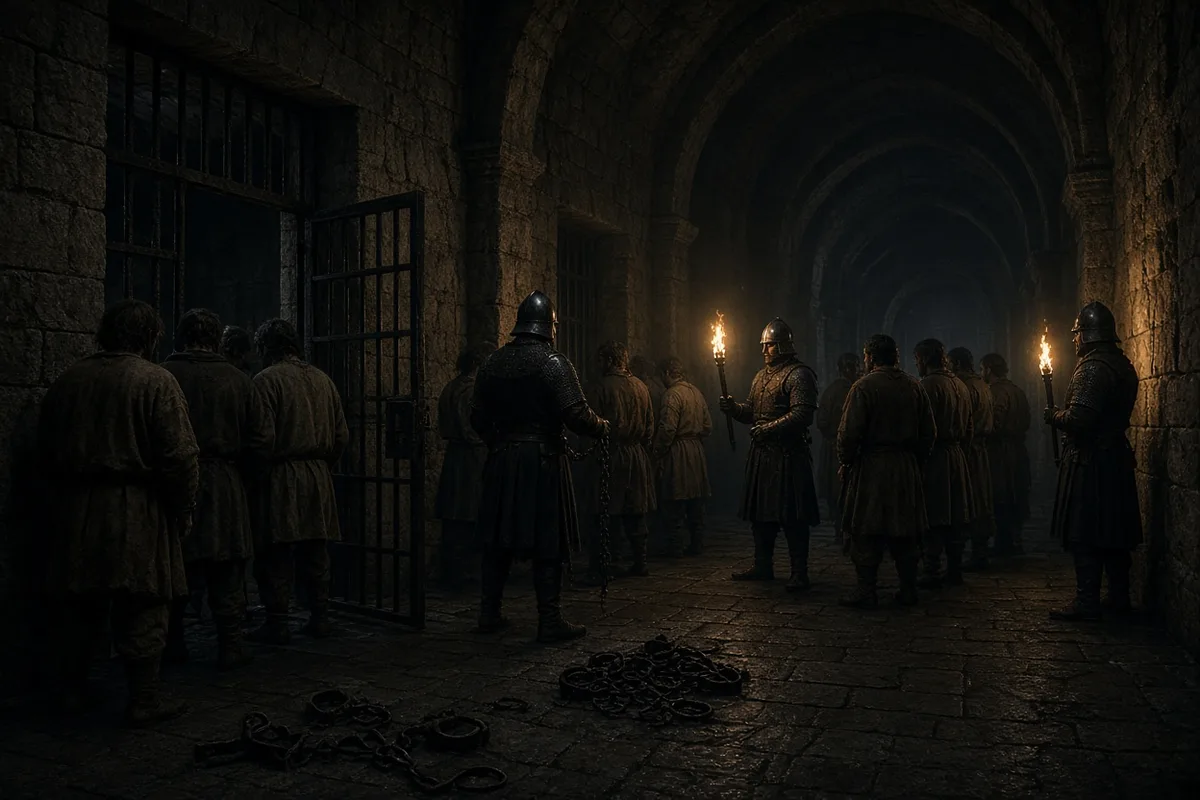
I was among those released that morning. The guard who unlocked my wrists did not look at my face. He moved down the line, key turning, key turning, until the sound became ordinary. Twelve thousand men walked free in groups of fifty under the eyes of mounted archers. We were told to keep moving toward the river. No one ran.

Further along the bank the executions had already begun. The men who held no noble title and brought no ransom were led out in batches. They were made to kneel facing the water. The swords rose and fell without hurry. I kept my eyes on the path ahead and counted the steps between each body. The count reached twenty-seven before the line turned inland.
By midday the last of the noble prisoners had been ferried across to the waiting ships. The king remained on the Egyptian side until every chest had been checked a second time. He spoke quietly with his barons, who urged him to sail at once for France. He answered that he would go to Acre instead. The queen had already left Damietta days earlier with their newborn son. No one argued further.
I boarded one of the smaller vessels with the released men from my company. The river smelled of dead fish and wet rope. We sat packed shoulder to shoulder, still in the clothes we had worn through the winter. No one removed the stained linen. The motion of the boat made some men sick; others slept where they sat.

We reached the open sea by evening. The Egyptian fleet kept pace for a time, then dropped back. Louis’s ship led the line. From where I stood at the rail I could see the king on the afterdeck, speaking with the master of the vessel. He pointed once toward the horizon and the ship changed course slightly. The wind held steady from the north.
In Acre the queen’s household received us in the lower courtyard. Marguerite had not slept through a full night since the news of the capture reached her. The women who attended her said she woke crying out that the room was full of armed men. They had moved her bed three times already, yet the dreams followed. When the king arrived she met him at the gate without ceremony. Their son was placed in his arms for the first time since the birth.
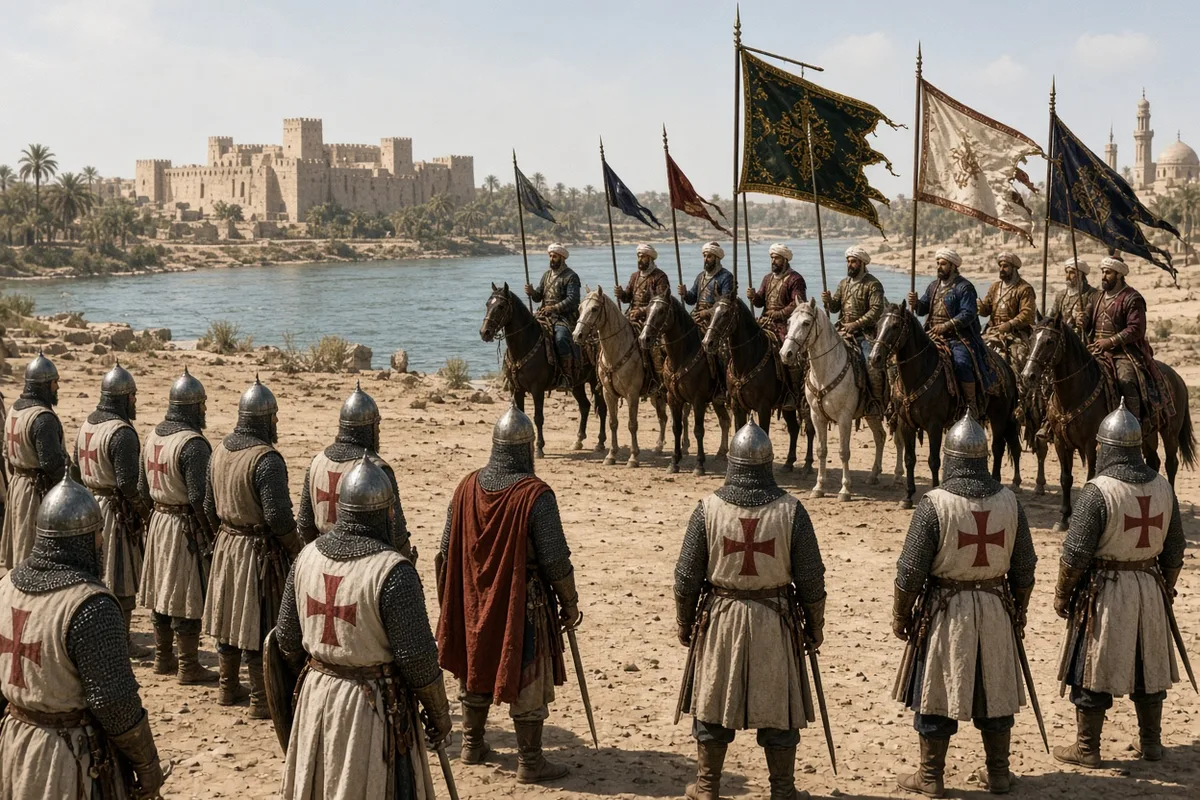
The refortification work began within the week. Louis ordered timber cut from the hills and sent men to repair the walls that had fallen during the last siege. I was assigned to carry water for the masons. Each morning the carts rolled out before first light and returned after dark. The sound of axes never stopped.
Some of the released prisoners chose to remain in Acre. Others found passage back to France on merchant ships. I stayed because the work paid in food and because the king had said the kingdom in the east still needed defenders. The executions at Damietta were not mentioned again among us. The number of men lost there was known only by the empty places at the evening meal.
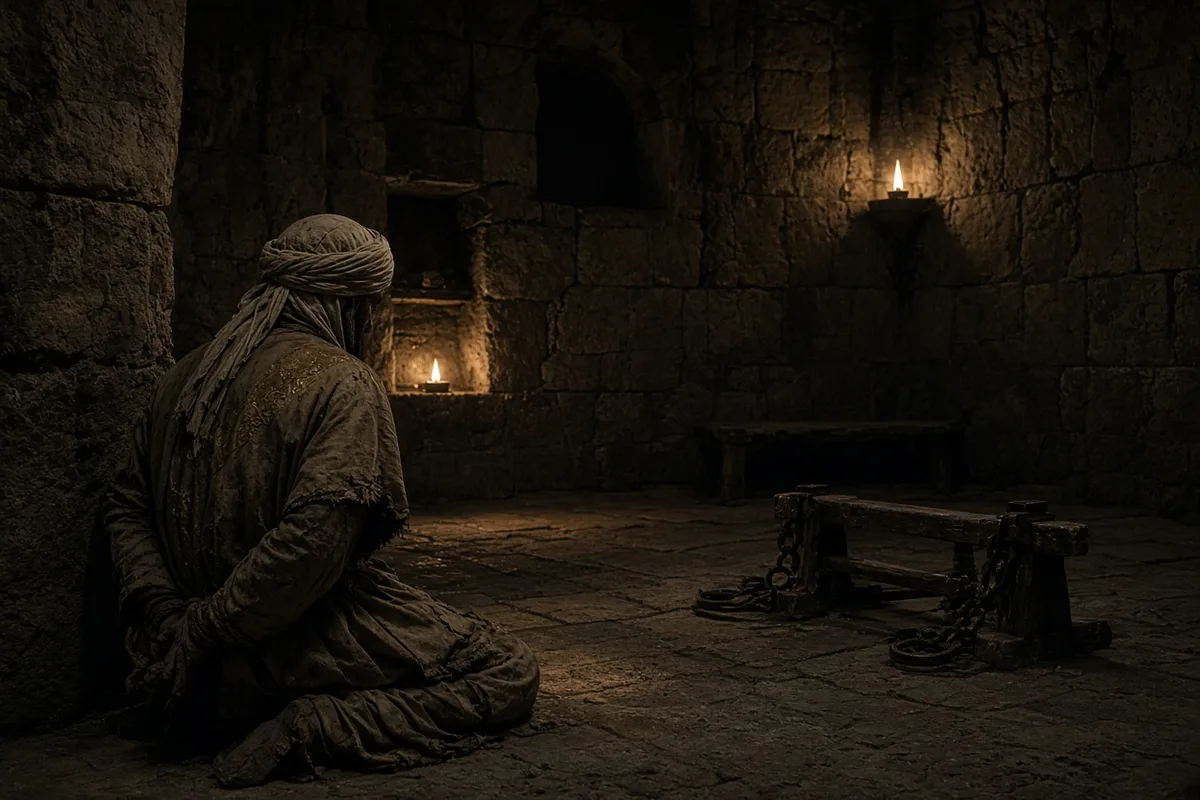
One evening I carried a message from the masons to the palace. The queen’s chamber door stood open for air. Inside, the lamps had been lit early against the coming dark. Marguerite sat with her back to the wall, the child asleep on her lap. She did not speak when I delivered the note. Her eyes stayed on the doorway as though she expected someone else to appear there. When I turned to leave, the corridor outside was empty and the lamps threw long shadows against the stone.
The queen’s hand moved once across the child’s head before she set the note aside on the table without breaking the seal. I waited in the doorway until a servant took it from her and carried it to the king’s council room where Robert of Artois’s younger brother, Alphonse of Poitiers, sat with the accounts from the ransom payment still open before him. Four hundred thousand livres had been counted out again that afternoon in the presence of the Egyptian envoys, each livre verified against the original agreement reached on 6 May 1250 at the camp outside Mansoura. The servant returned with instructions that the masons were to receive an extra ration of bread and wine for the night watch on the new tower at the eastern wall.
Work on the walls continued through the winter of 1250 into the spring of 1251. The timber came from the hills above Haifa, felled by men released from the Egyptian camps who had elected to stay rather than sail for Marseille. Louis directed the placement of each new merlon himself, walking the scaffolding with the master mason from Cyprus whose name was recorded in the royal accounts as George of Famagusta. By March 1252 the outer ditch had been cleared to a depth of twelve feet and lined with stone taken from the ruins of the old Templar commandery. I carried water for the mortar mixing until my hands split from the lime, then was moved to hauling the cut blocks on a sled pulled by two mules requisitioned from the Genoese merchants who had arrived with supplies from Tyre.

The king departed Acre on 24 April 1254 aboard the royal galley commanded by the Genoese captain Nicolas of Ventimiglia. Marguerite and the children sailed three days earlier on a separate vessel so that the fleet would not be delayed if one ship met contrary winds. The last chests of silver remaining after the ransom were loaded under guard and taken to the treasury at the citadel before the sails were raised. I remained with the garrison detail assigned to maintain the new sections of wall. The king’s final order before boarding was that the monthly wage for each laborer would continue at the rate of eight deniers per day plus the bread ration, paid from the revenues of the Cypriot estates pledged by Henry I of Cyprus.
In the years that followed, letters reached Acre from France describing the king’s arrival at Hyères on 10 July 1254 and the subsequent journey north through the Rhône valley. The same letters noted that the king had ordered the construction of the Sainte-Chapelle in Paris to house the Crown of Thorns acquired earlier from Baldwin II of Constantinople, with the first stone laid in 1248 and the upper chapel completed by 1248 at a cost of forty thousand livres. Alphonse of Poitiers returned to his county of Toulouse in 1250 and died there on 21 August 1271 after an illness contracted during the return voyage from the eastern ports. Charles of Anjou, the king’s youngest brother, was crowned king of Sicily in 1266 following the battle of Benevento and later led the expedition that ended with the death of Louis at Tunis on 25 August 1270.
The refortification of Acre continued under successive governors until the final loss of the city to the Mamluks under al-Ashraf Khalil on 18 May 1291. The tower I had helped raise withstood the bombardment for eleven days before the outer face collapsed into the ditch. The masons’ marks on the remaining inner stones include the cross and compass of the same George of Famagusta, still visible on three courses of the western face when the site was surveyed in 1874 by the British Palestine Exploration Fund. The Egyptian boatmen who had ferried the ransom chests in 1250 were recorded in the chronicles of Ibn Wasil as having been paid an additional twenty dinars each for silence concerning the exact number of prisoners released at the mudbank.
Marguerite died at the convent of Saint-Marcel near Paris on 20 December 1295. Her son Jean Tristan, born at Damietta on 8 April 1250 during the captivity, had died at Tunis in the same month as his father. The surviving children included Philip III, who succeeded to the throne, and the daughters Isabelle, Blanche, and Marguerite. The last surviving member of the royal party from the Acre years was the queen’s lady-in-waiting, Agnes of Harcourt, who recorded in her memoir written at the abbey of Longchamp that the king had spoken daily of returning to the Holy Land until the preparations for the Tunis campaign overtook those plans.
Today the remaining fragments of the Acre walls stand within the old city of Akko, incorporated into the Ottoman fortifications built after 1750 and the Israeli national park established in 1963. The lower courses of the tower built under Louis’s direction lie beneath the modern street level at the northeast corner of the Templar quarter, exposed only during the 1990s excavations conducted by the Israel Antiquities Authority. A single course of the original 1251 masonry remains in place, its mortar still containing the crushed shell aggregate brought from the beaches south of Haifa. The last recorded image of any participant from the ransom day is the effigy of Louis IX on his tomb at Saint-Denis, carved in 1280 by the sculptor Pierre de Chelles and showing the king in the chain-mail hauberk he wore at the time of his release from the Egyptian camp.
The masons who remained after the Genoese ships cleared the mole in 1254 included a man named William of Chartres, who kept a ledger noting that the eastern tower received an additional twelve courses of ashlar before the spring rains of 1255 halted work. He recorded the daily wage as eight deniers paid each Saturday at the citadel gate, with an extra measure of chickpeas issued on feast days. I hauled the final load of shell lime for that tower on 3 March 1255, the day the master mason George of Famagusta ordered the scaffolding struck because the mortar had set to a depth of four fingers. The next winter the same George sent a letter dated 12 January 1256 to the seneschal of Cyprus requesting two hundred more beams from the Troodos forests, each beam to be at least twenty-two feet long and squared on four sides.
In the spring of 1260 the Mamluk sultan Baybars captured the castle of Safed after a siege of forty-two days. The Acre garrison sent forty crossbowmen under the command of a knight named Philip of Montfort to reinforce the Templar outpost at Atlit. I traveled with that detachment and spent three weeks repairing the cistern that had cracked during the winter. The cistern held eight thousand gallons when full; the masons sealed the leak with a mixture of pitch and crushed pottery that Philip’s clerk listed in the supply roll as costing nineteen bezants. When we returned to Acre the city gates were closed each night at compline and reopened only after the first office of the day.
The last contingent of French knights left Acre on 24 June 1269 aboard two galleys chartered by Charles of Anjou. Their captain, a Venetian named Marco Navigajoso, carried sealed instructions from the French court directing him to deliver the men at Marseille no later than the feast of Saint Lawrence. One of the knights, a Poitevin named Guy of La Roche, gave me a silver denier struck at the mint of Tours in 1248, the same year the king had sailed from Aigues-Mortes. I kept the coin until the siege of 1291, when it was spent for a measure of barley during the final week the city still held.
After the Mamluk entry on 18 May 1291 the surviving defenders were marched to the beach below the new tower. The emir al-Ashraf Khalil ordered three hundred of them loaded onto galleys bound for Alexandria; the remainder, including myself, were taken inland to the village of al-Damun where we were held until ransom terms were settled in September. The ransom for each common soldier was fixed at forty dinars, paid in installments over six months through the Genoese factor in Tyre. I reached Cyprus on 11 November 1291 and worked for two years in the salt pans at Larnaca before finding passage on a Catalan merchantman that reached Marseille on 4 July 1294.
The sculptor Pierre de Chelles completed the tomb effigy in 1285 rather than 1280, according to the account book kept by the abbey of Saint-Denis that lists payments to the carver on 19 February and 7 October of that year. The hauberk on the figure is shown with riveted links at the shoulders and elbows, matching the type issued to the royal household before the departure from Cyprus in 1248. When the tomb was opened in 1793 during the Revolution the skeleton inside still wore a fragment of the same mail, identified by the conservators at the Musée des Monuments Français as weighing eleven pounds.
In 1874 the Palestine Exploration Fund surveyor Charles Warren measured the remaining courses of the Acre tower and recorded that the lowest visible stones measured 1.8 meters in length and 0.7 meters in height, each marked with the same mason’s compass that George of Famagusta had used. The Israel Antiquities Authority excavation of 1993 uncovered the foundation trench, which contained a single copper coin of al-Nasir Yusuf minted in Damascus in 1249. The coin lay directly beneath the mortar bed that contained the crushed shell aggregate brought from the beaches south of Haifa.
The final image of any participant appears on the seal of Philip III appended to a charter dated 5 September 1271 at the Louvre, where the young king is shown wearing the same style of hauberk visible on his father’s tomb. The charter confirms the continuation of the eight-denier daily wage for laborers still employed on the walls of Acre, a payment that ended only when the city fell twenty years later. No further likeness of the released prisoners or the Egyptian boatmen survives.