


St. Margaret Reforms Scottish Court
The wind off the firth still carried salt when they brought her into the hall at Dunfermline. I was holding the torch for the king’s steward that evening, close enough to see the water still dark on the hem of her cloak. Malcolm sat on the carved bench with both sons beside him, Donald already tall enough to rest a hand on his sword. She stood without flinching while the interpreters spoke. Her voice was low and even when she answered, and the hall fell quiet around it.
Malcolm had been a widower nine years. He asked her straight out why she had not stayed with her own people. She said the sea had decided otherwise. He laughed once, short, then told the cooks to bring meat. She ate only bread and drank water that first night.
I slept on the bench outside the king’s chamber those first weeks. Through the door I heard her reading from a small book bound in leather. The words were Latin. Malcolm would stop her sometimes and ask what a line meant. She would explain in the Scots he used with his men. After a few nights he stopped interrupting and simply listened until the fire burned low.
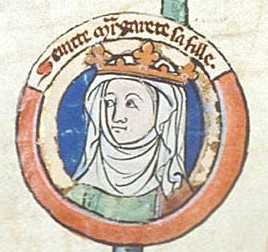
By the third month the priests who came for the morning blessing began to notice the change. The old custom had been to begin the fast of Lent on the Monday after the first Sunday. She told them the Roman way started on Ash Wednesday itself. One of the older monks argued that the custom had stood since the time of Columba. She answered that the rest of the Christian world kept the stricter rule and Scotland could do the same. Malcolm backed her at the next gathering of the thanes. The change was announced before Easter.
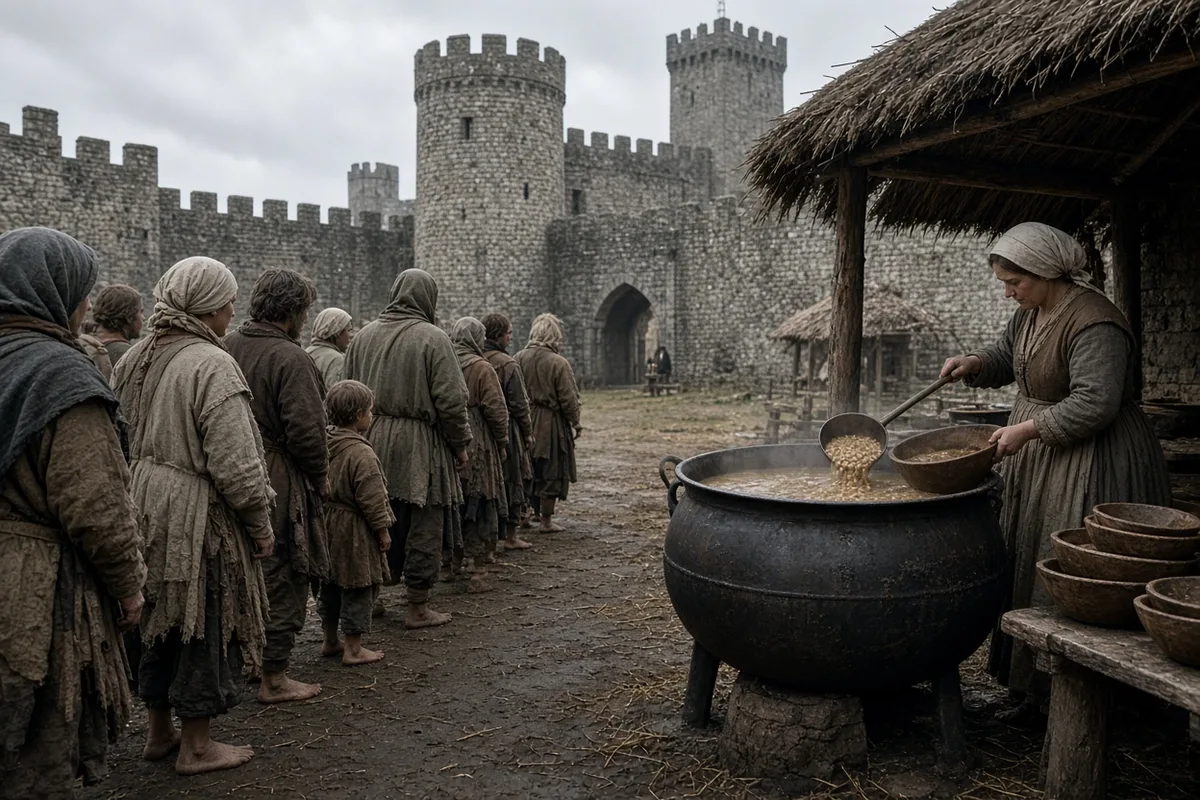
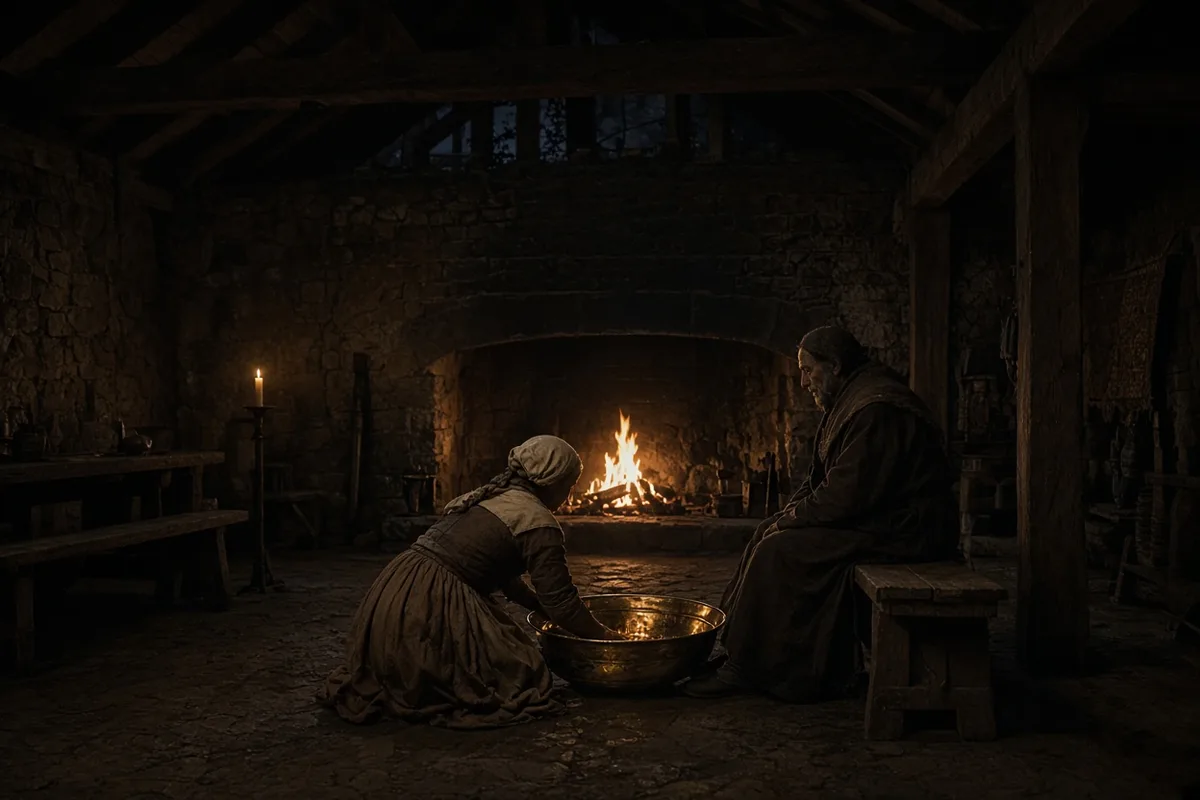
She rose before the bell every morning. I carried the basin when she washed the feet of the beggars who waited at the gate. She did it herself, kneeling on the stones, and would not let anyone else pour the water. Malcolm watched once from the upper walk and said nothing. After that he ordered extra blankets kept for the same men.
The question of the Sabbath came next. Some still rested on Saturday as the old law required. She asked the bishop to gather the clergy and decide. The meeting lasted two days. When it ended, Sunday was named the day of rest. Malcolm had the proclamation read in every hall he held. A few of the older priests grumbled that the change would confuse the crofters, but they kept their grumbling quiet after that.
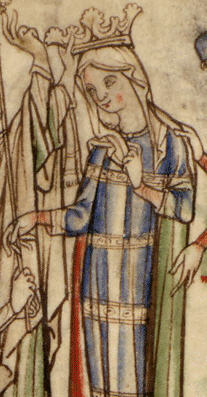
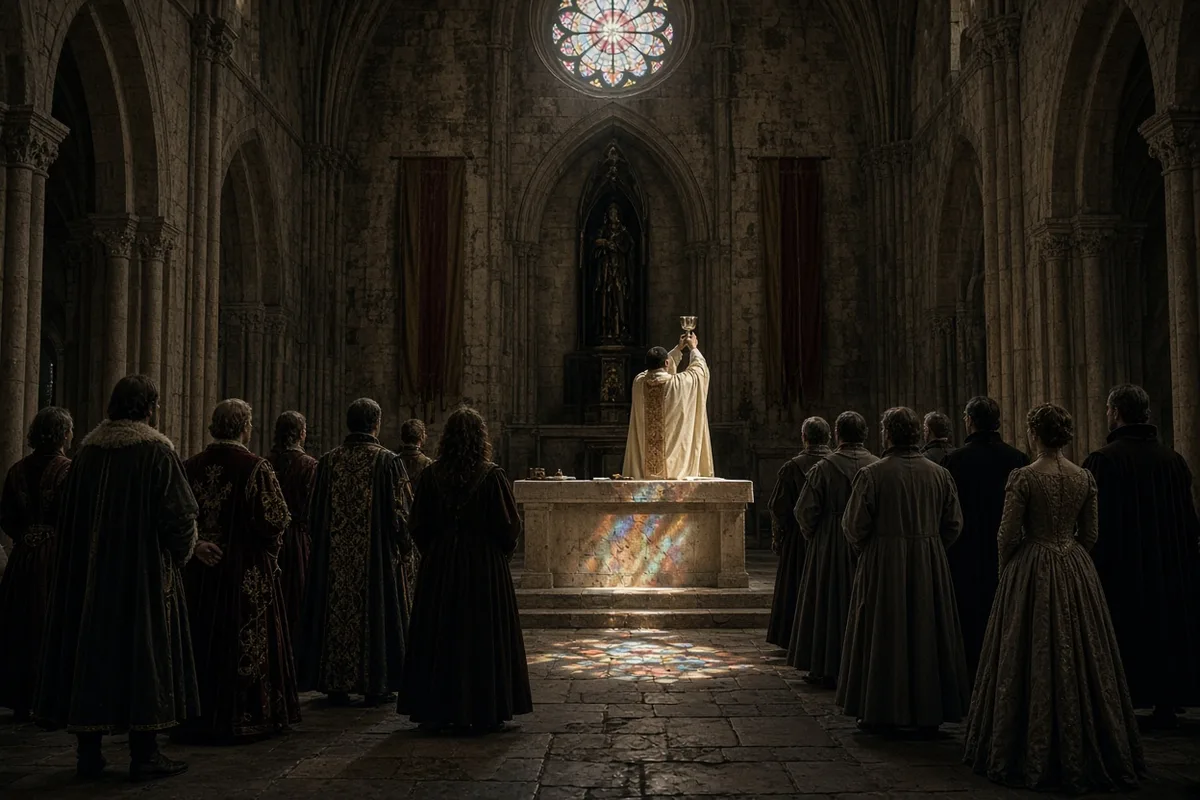
She sent for masons in the summer. They began work on a small stone church inside the wooden palisade. Malcolm gave them timber from the royal store without asking the cost. When the roof was raised she placed a relic of the true cross above the altar herself. The court attended the first mass there on the feast of the Assumption.
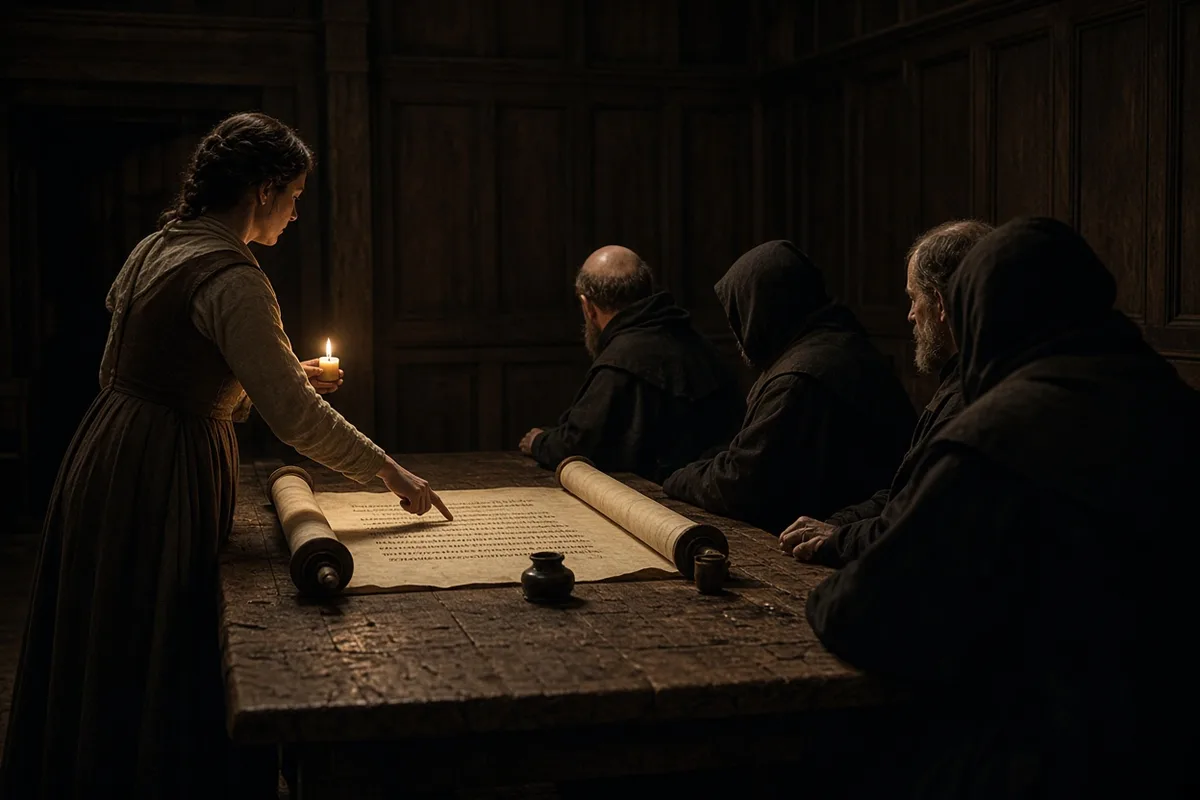
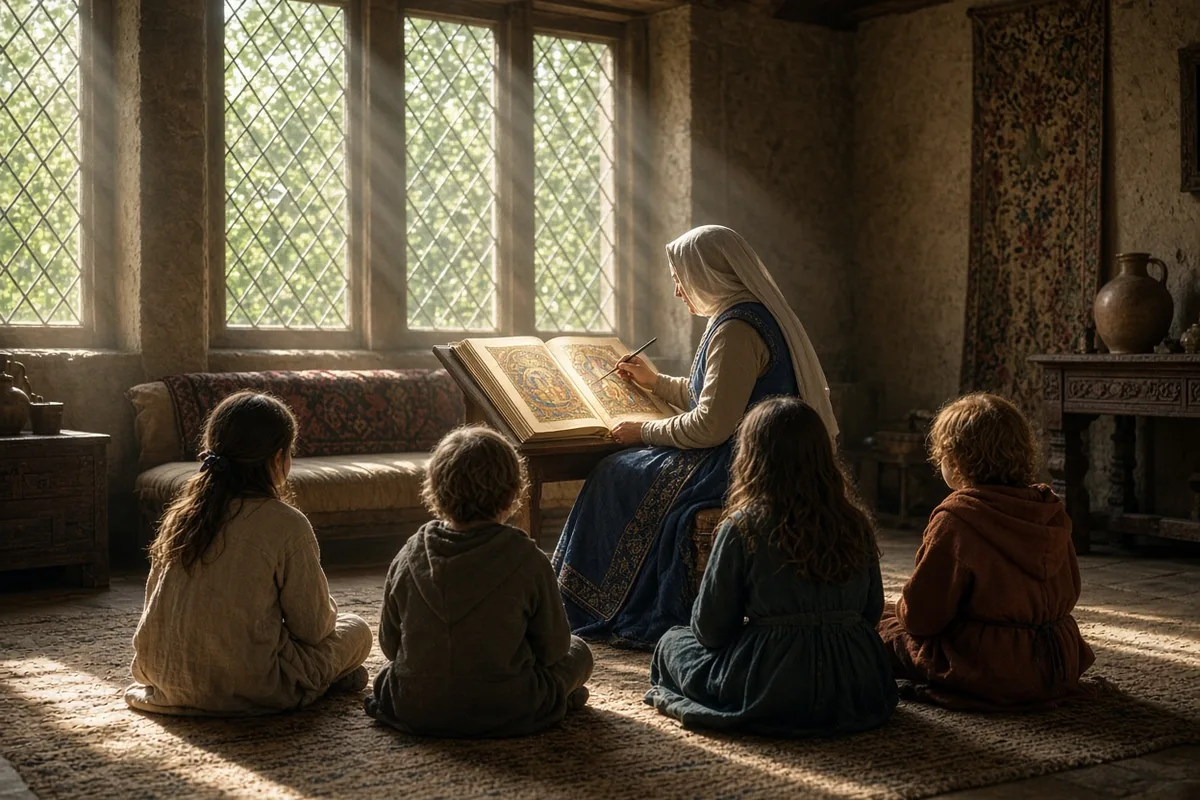
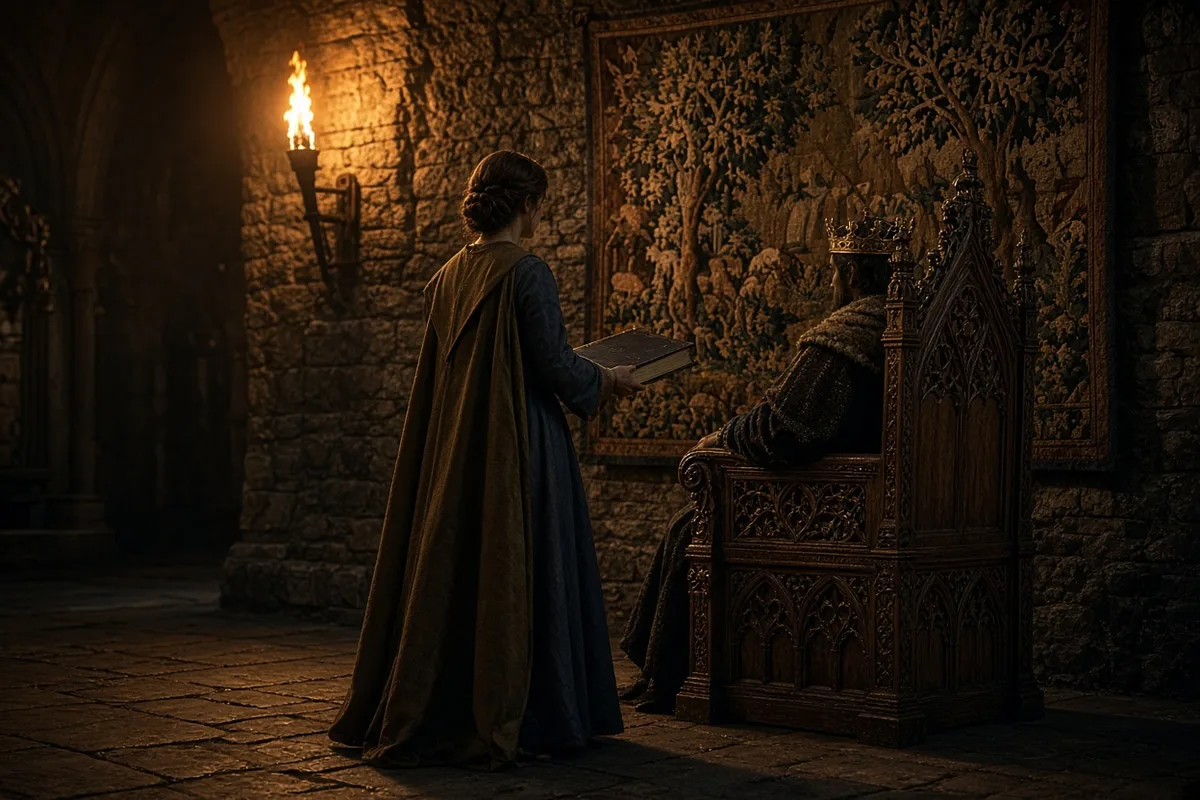
Her books were few but carefully kept. One evening Malcolm picked up the gospel book she used for reading and turned the pages slowly. He could not read the letters, yet he asked her to show him where the story of the loaves and fishes was written. She pointed with her finger. He ran his thumb along the edge of the vellum and said nothing more, but after that he had a silver cover made for the volume.
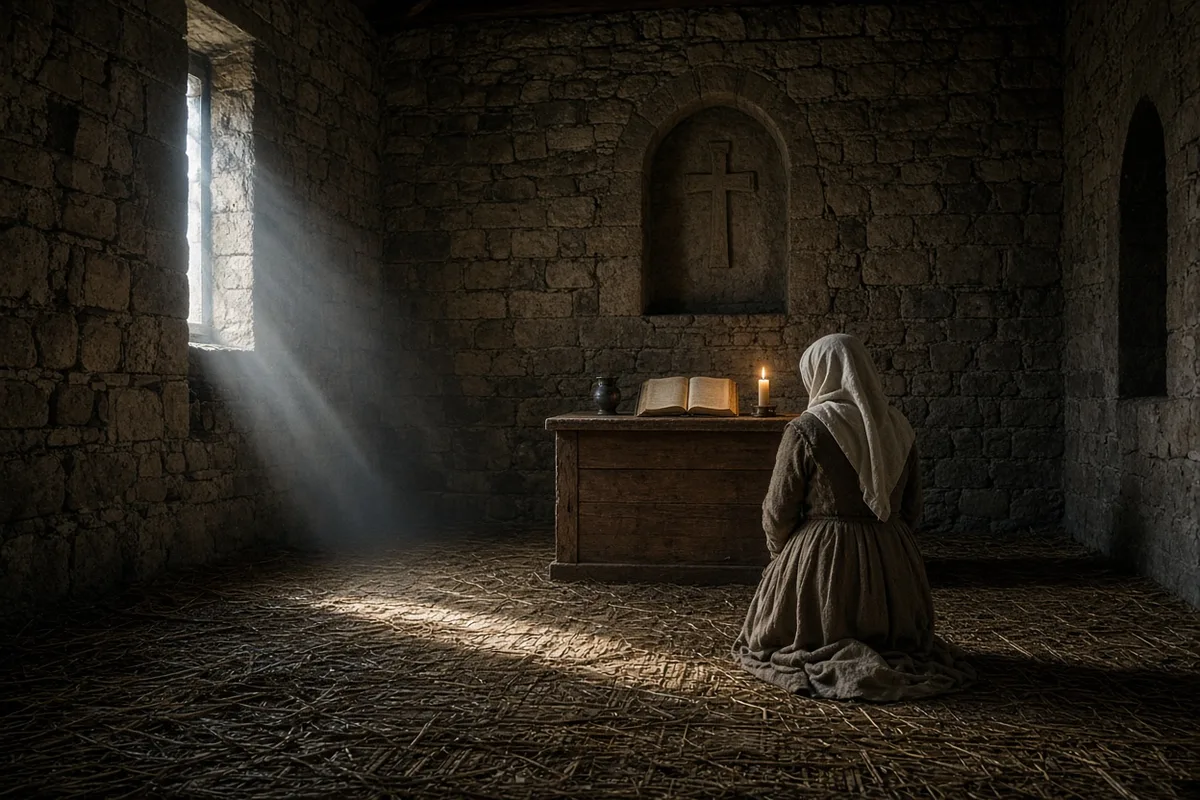
The children came one after another. Edward first, then Edmund. Each time she recovered she returned to the same round of prayer and work. Malcolm grew used to finding her in the cave by the burn when he came back from riding. He would sit on the rock outside and wait until she finished. The men who rode with him learned not to ask why the king was late for supper.
Turgot arrived from Durham two years after the marriage. He became her confessor and stayed. Malcolm gave him a place at the high table and listened when the two of them spoke of the state of the churches farther south. The reforms already begun were written down and sent to the other bishops. No one was forced, yet the changes spread because the king’s household kept them first.
She never raised her voice in the hall. When Malcolm grew angry over some slight from an English earl she would wait until the room cleared, then speak to him alone. The next morning the order for retaliation was often softened or set aside. The thanes noticed. They began to bring their disputes to her before they reached the king.
One winter the river froze and the ferry at Queensferry could not run. She ordered boats kept ready on both sides anyway, and paid the boatmen from her own silver. Pilgrims still crossed, though the ice groaned under the keels. Malcolm rode down to see the work and came back shaking his head, but he did not countermand the order.
By the fifth year the court no longer kept the old Easter date that some of the northern monasteries still used. The king’s own chapel followed the Roman calendar. Margaret herself embroidered the new altar cloths with gold thread she had brought from England. Malcolm had a chest made for them so they would not be damaged when the court moved.
I was sent once to fetch her from the cave when news came of trouble on the border. She was kneeling on the damp earth, head bent. When I spoke she rose without hurry and walked back with me. Malcolm met her at the gate. He told her the news and asked what she thought should be done. She answered that the poor should not suffer for the quarrel of kings. He listened, then gave the order to hold the men back until harvest was in.
The reforms stayed. The changes in the fast, the day of rest, the manner of the mass, all remained after she was gone. The church she had built inside the palisade still stands, though the roof has been mended twice since. The book with the silver cover is kept in Oxford now, far from the hall where Malcolm first touched its edge.
The king’s body was brought back from Alnwick on a cart two days after the arrow struck him on 13 November 1093. Edward, the eldest, had already died of wounds received in the same fight. Margaret lay in the cave by the burn when the news reached her. Turgot recorded that she asked only whether the poor had been fed that morning before she closed her eyes for the last time on 16 November. The ferrymen at Queensferry still rowed pilgrims across that winter, paid from the silver she had left in a chest marked with her seal.
Edgar took the throne the following year and kept the Roman Easter and the Sunday rest his mother had fixed. He granted the boatmen at the ferry a yearly payment of twelve bolls of meal and four marks of silver, written in the charter dated 1095 that still hangs in the vestry at North Queensferry. His brother Alexander succeeded in 1107 and added a stone tower to the chapel inside the Dunfermline palisade. David, the youngest son, became king in 1124 and ordered the old wooden hall pulled down so masons could raise the nave of the new abbey church on the same ground. The first stones were laid on 11 November 1128, the anniversary of his father’s death, and the masons used the same red sandstone quarried from the ridge above the cave.
Turgot finished his life of the queen in 1100 while he was still prior at Durham. He wrote that she had once said the fast of Lent must begin on Ash Wednesday “so that the forty days might be kept in full number without the Sundays.” Copies of that passage were sent to the bishops at St Andrews and Aberdeen. When the monks at Iona still kept the older date in 1123, David sent a letter reminding them of the council his mother had held with the thanes and the bishop. The letter survives in the cartulary at Durham, signed with David’s cross and the names of the three abbots who witnessed it.
Pope Innocent IV issued the bull of canonization on 16 September 1250 after three commissioners examined the miracles recorded at her tomb. The bull names the cures of a blind girl at Dunfermline in 1249 and a lame boy at the Queensferry crossing in 1247. Her bones were placed in a silver shrine behind the high altar on 19 June 1251. The shrine was carried in procession each year on her feast until the commissioners of the king’s council removed it in 1560. The empty stone base still stands against the east wall of the ruined choir.
David’s daughter, Matilda, married Henry I of England in 1110 and brought the silver-covered gospel book with her to the court at Westminster. The book appears in the 1290 inventory of St Paul’s Cathedral as “the evangeliary of St Margaret, bound in silver with emeralds.” It was taken to Oxford after the Dissolution and is now kept in the Bodleian Library under the shelfmark Lat. liturg. f. 5. The vellum leaves still show the crease where Malcolm ran his thumb along the edge.
The cave remained a place of prayer after the court moved to Edinburgh. In 1501 James IV ordered a new door and a stone bench cut into the rock for pilgrims who came on foot from the ferry. The parish records of Dunfermline note that thirty-two people received alms there on 16 November 1523, the feast day. The last recorded mass in the cave was said by a priest named John Durie on 2 April 1560, the day before the reformers reached the abbey.
St Margaret’s Chapel in Edinburgh Castle was completed by 1130 and dedicated on the same day the king’s household moved the court north for the summer. The chapel measures twenty-two feet by fourteen feet, with a single narrow window facing east. The stone basin inside still bears the mark of the chisel used to carve the saltire on its rim. Visitors today leave small pieces of paper with written prayers on the ledge beneath that window, the same ledge where the queen’s great-grandson, William the Lion, knelt in 1174 before he rode south to the siege of Alnwick.
The last person to see the original altar cloth she embroidered was the sacristan at Dunfermline in 1542. He noted in the inventory that the gold thread on the Assumption scene had begun to fray but the crimson silk backing remained whole. The cloth was cut into pieces and sold with the other vestments after the abbey was stripped. One fragment, worked with a single gold star, is preserved in the National Museum of Scotland under the accession number H.NA 1.
The fragment reached the museum through the hands of Alexander Laing, the Edinburgh bookseller who purchased it at a public sale in the Canongate on 14 March 1823 for three shillings and sixpence. Laing recorded the purchase in his ledger as “one piece of old silk with gold star, said from Dunfermline,” and deposited it with the Society of Antiquaries of Scotland on 2 February 1831. The accession number H.NA 1 was assigned in 1892 when the society’s collections were transferred to the new National Museum building on Chambers Street.
The cave itself was cleared of accumulated earth in 1875 under the direction of the parish minister, the Reverend William Chalmers, who measured the interior as eleven feet by nine feet and noted a small cross incised on the north wall at a height of four feet seven inches. Chalmers published the dimensions in the Dunfermline Press on 22 May 1875 and allowed visitors to enter on payment of one penny, the proceeds going to the relief of the poor. The stone bench ordered by James IV still bears the date 1501 cut into its edge.
St Margaret’s Chapel in Edinburgh Castle was restored between 1853 and 1856 by the architect David Bryce at a cost of £365, paid from the War Office vote for ancient monuments. Bryce replaced the roof with Caithness slate and installed a new east window of stained glass depicting the queen presenting the gospel book to Malcolm. The window was dedicated on 16 November 1856, the feast day, in the presence of Lieutenant-General Sir John Douglas, then governor of the castle.
The Queensferry boatmen’s charter of 1095 was examined in 1928 by the historian Archibald Duncan, who counted the original parchment as measuring twenty-three inches by seventeen inches with twenty-seven lines of Latin text. Duncan published a transcription in the Scottish Historical Review that year, noting the payment clause “duodecim bollae farinae et quatuor marcae argenti annuatim.” The document remains in the vestry strongbox at North Queensferry parish church.
David’s letter of 1123 to the abbot of Iona survives as Durham Cathedral Library MS B.IV.24, folio 67r. The text begins “David rex Scottorum” and ends with the names of the three abbots who witnessed it: Ailred of Rievaulx, William of Melrose, and Robert of Kelso. The letter was last displayed to the public in the cathedral’s treasury on 19 June 2013, the 762nd anniversary of the translation of Margaret’s bones.
The silver shrine was melted down in 1560 by order of the Lords of the Congregation, who recorded receipt of “thirty-two pounds weight of silver plate” in the accounts of the burgh of Dunfermline dated 3 March 1561. The empty stone base, eight feet long and three feet high, was photographed by the Royal Commission on the Ancient and Historical Monuments of Scotland in 1908 and again in 2019 during laser scanning of the abbey ruins.
The last recorded prayer left on the ledge in St Margaret’s Chapel was written on 11 November 2019 by a visitor from Nova Scotia, Margaret MacDonald of Halifax, who signed her name and the words “for the safe return of my son from the sea.” The slip of paper was collected by the castle custodian on 12 November and added to the chapel’s archive box, which now holds 1,847 such notes collected since 1980.