St. Martin of Tours Shares His Cloak with a Beggar
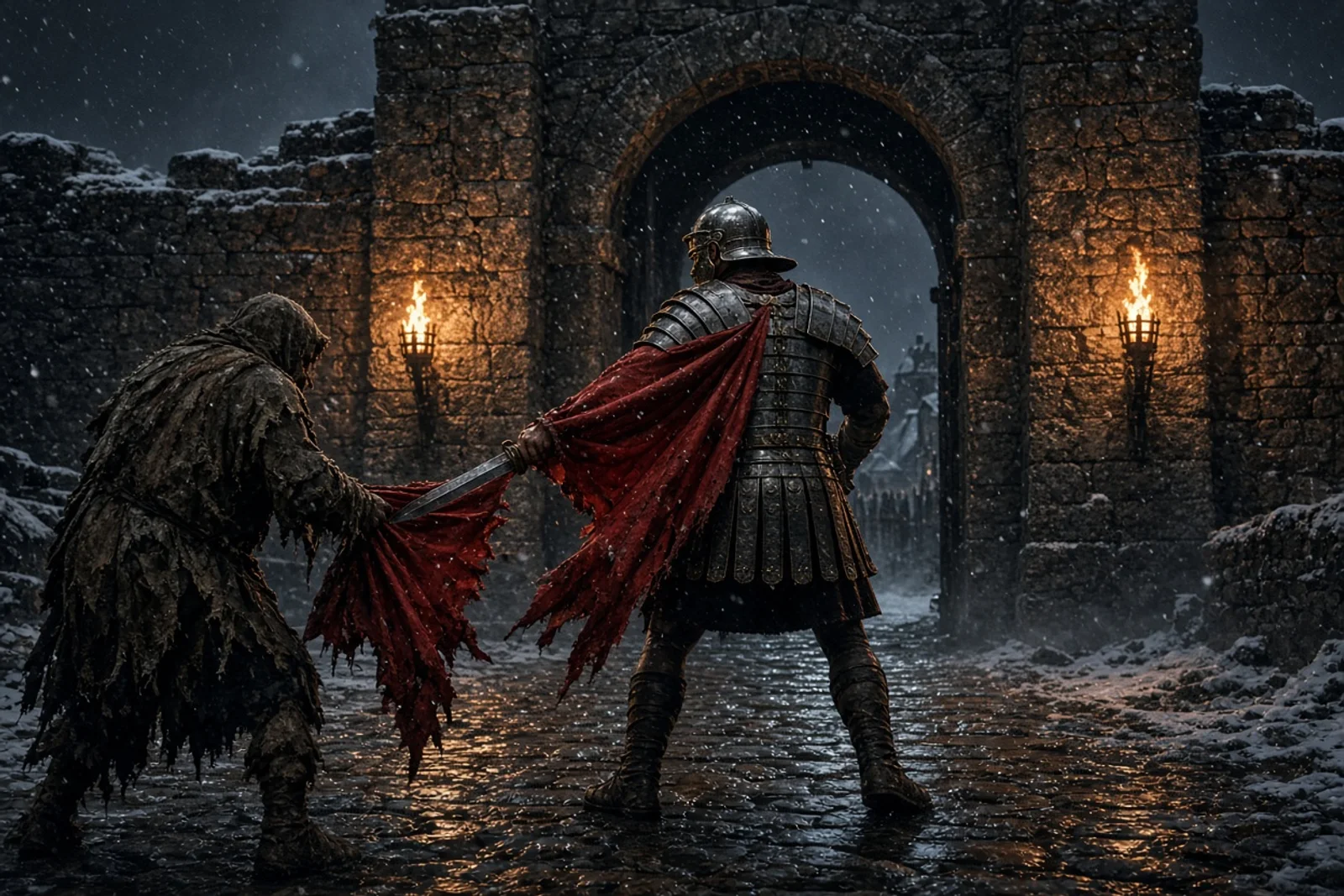
The wind cut straight through the tunic under my mail. I had pulled my own cloak tighter an hour earlier and still felt nothing but the ache in my fingers. We stood at the Amiens gate because the centurion wanted two men visible when the supply wagons rolled in. Martin had the inside post. I had the outer. Between us the beggar knelt on the frozen mud, arms bare to the shoulder, voice hoarse from repeating the same plea.
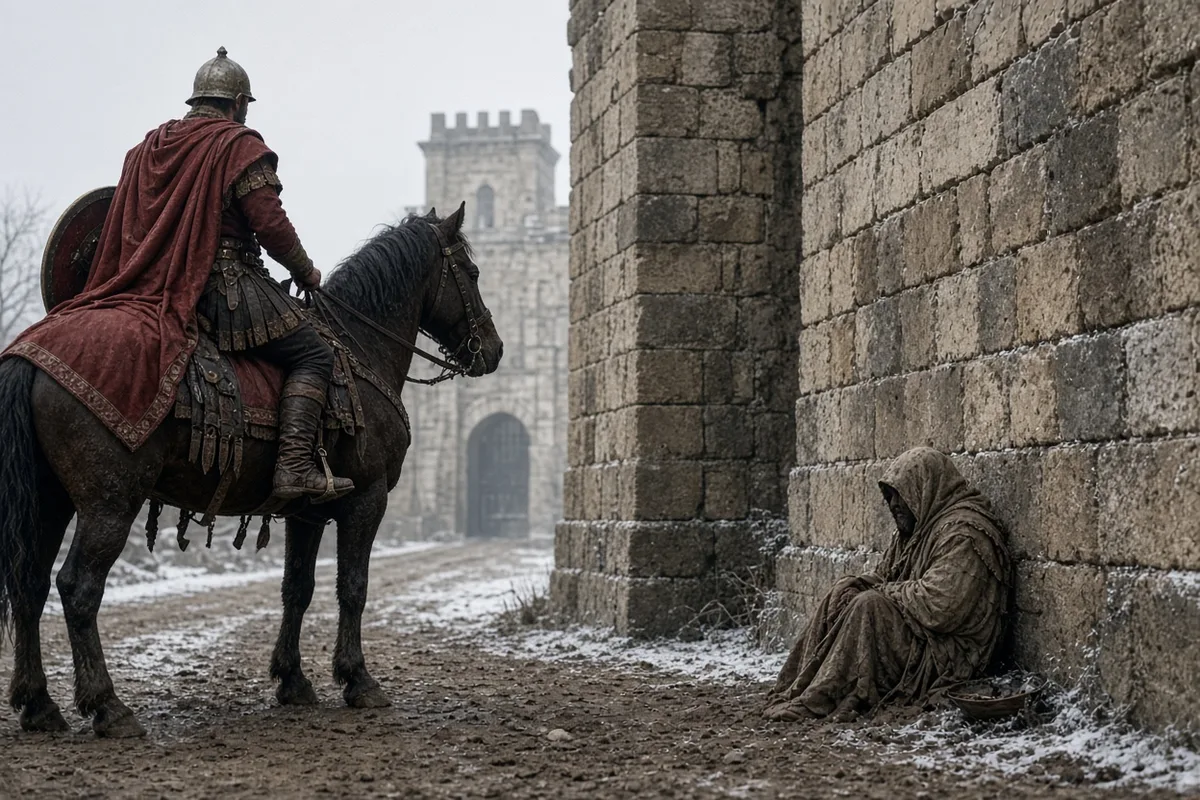
Men on horseback passed him. Foot soldiers from the other cohort stepped around the shape without slowing. One merchant dropped a coin that the wind took before the beggar could reach it. Martin watched each refusal the way he watched drill, eyes steady, nothing moving except the breath leaving his mouth in short white bursts.
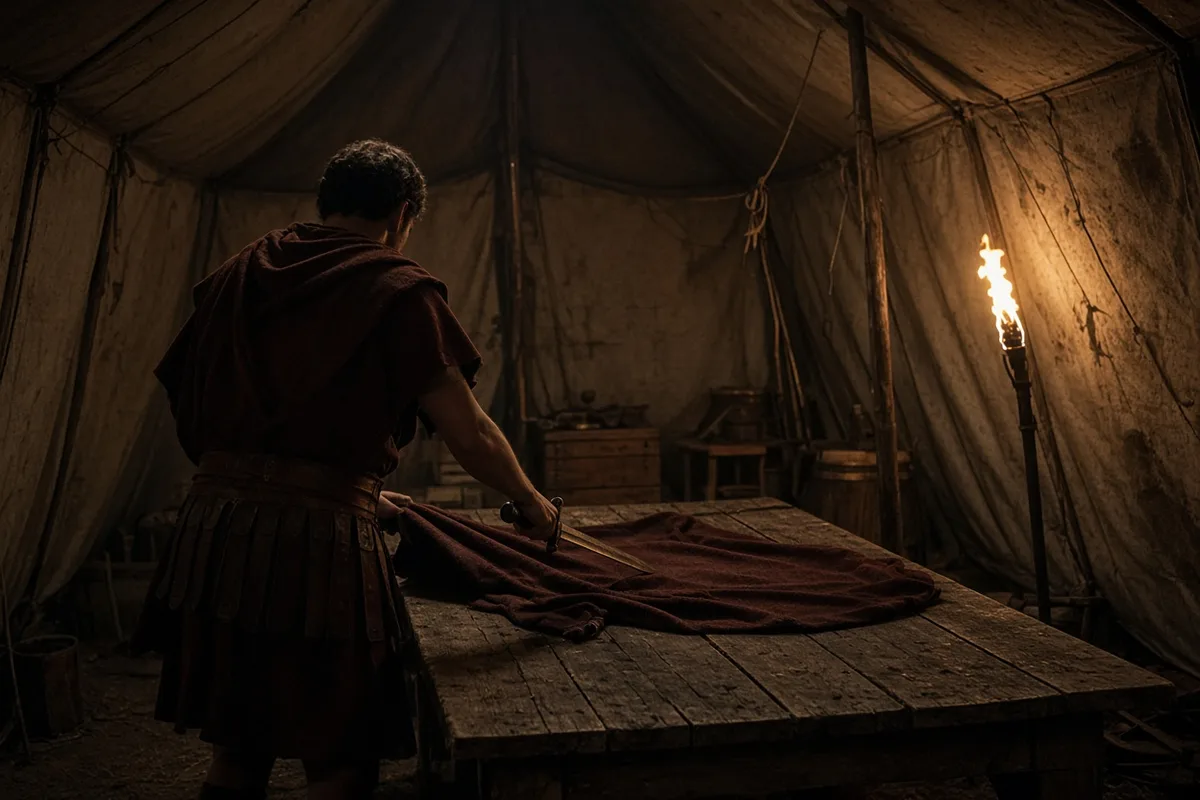
He had already stripped his kit down to the minimum. The extra blanket, the second pair of sandals, even the wool scarf his mother sent from Pavia, all gone to men who asked earlier in the month. Only the regulation cloak remained, heavy wool, dyed the regulation brown, fastened at the shoulder by a single bronze pin. He touched the hilt of his sword once, as if checking it was still there, then drew it.
The blade was short. He laid the cloak across his forearm and cut straight down the center seam. The wool parted with a dry rip that carried in the cold air. He sheathed the sword, folded one half, and walked the three paces to the beggar. The man looked up, eyes red from wind and hunger. Martin set the folded half across his shoulders without a word, then turned back to his post.
Laughter came first from the right, two men from the baggage train pointing at the uneven line of Martin’s remaining cloak. It hung only to mid-thigh now, the cut edge flapping. One of them called out something about winter fashion. Martin did not answer. He simply shifted his weight so the shorter edge covered as much as it could and kept his eyes on the road.
A few of the older soldiers near me did not laugh. One spat and looked away. Another muttered that a man still had to stand watch until sundown. I stayed quiet. The beggar had already wrapped the half-cloak twice around his body and was trying to rub feeling back into his feet. He did not thank anyone. He simply stayed where he was, out of the worst of the wind.
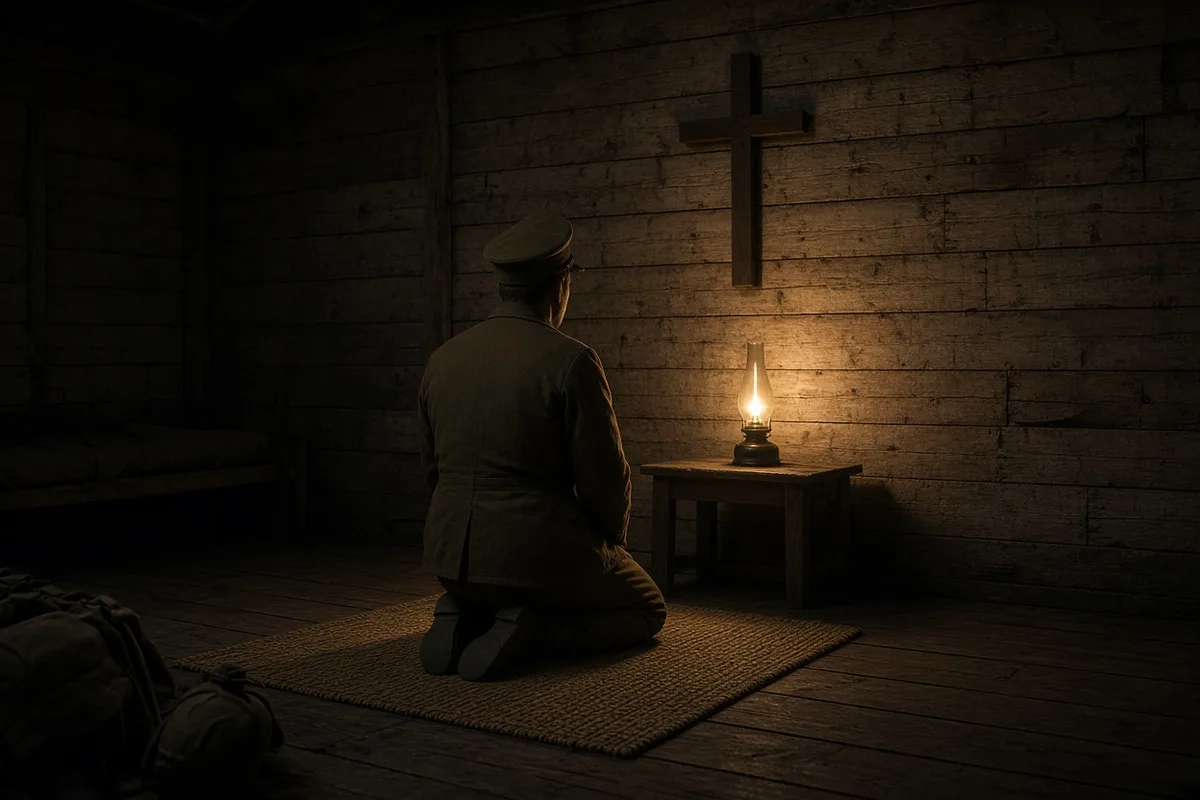
By the time we were relieved the light had gone gray. We walked back to the barracks in silence broken only by the creak of frozen leather. Martin cleaned his sword as usual, oiled the edge, and hung the shortened cloak on the peg above his cot. The cut edge looked raw against the wall. He lay down without removing his boots.
I woke once in the night and saw him sitting upright, hands on his knees, staring at nothing. He did not speak of it in the morning. Three days later the same centurion sent us out again on the same gate duty. The beggar was gone. Martin asked no one where the man had gone.
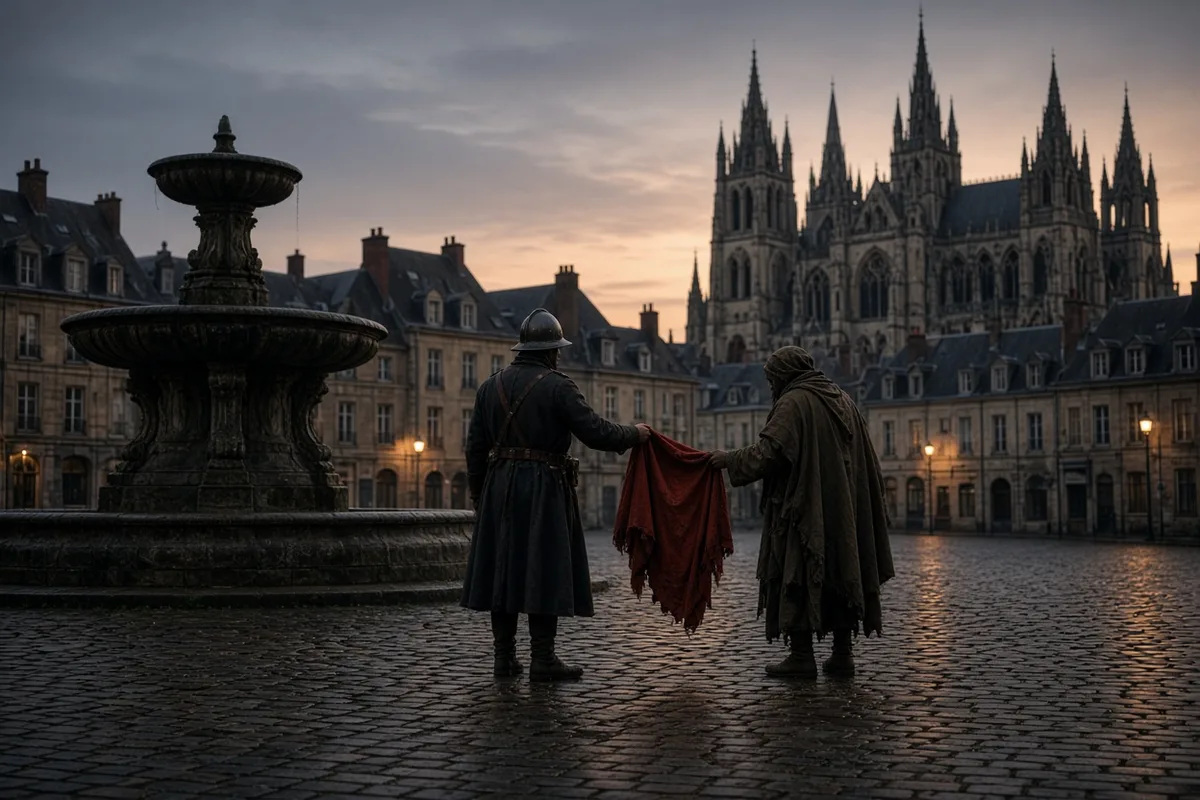
That night he dreamed. He told me the next morning while we cleaned our kit together. In the dream he stood in a bright place with no walls. Christ wore the half-cloak Martin had given away. The garment fit Him exactly. Christ turned to the figures around Him and said the soldier who had given it was still unbaptized. Martin repeated the sentence twice to be sure he had it right. His voice stayed level, but his hands had stopped moving on the oiled cloth.
He asked for instruction the following week. The priest at the small chapel outside the walls took his name. Martin continued to stand his watches and draw his rations. When the order came to move the cohort toward the Rhine he packed the shortened cloak without comment. I carried an extra blanket for him after that. He never asked for it.
Years later word reached us that he had left the army at Worms and gone south to follow the bishop at Poitiers. I never saw him again. The half-cloak stayed with the regiment for a time, passed from one man to another when someone needed it more. Eventually it disappeared into a chest in the baggage train. No one could say where it went after that.
The centurion who posted us that day at Amiens retired two winters after Martin departed for Worms, and his replacement, a man named Quintus from the Second Augusta, ordered an inventory of all kit on 12 March 358 that listed the shortened cloak as item seventeen in the baggage rolls, valued at eight denarii. Quintus read the entry aloud from the wax tablet while the decurion marked it with a stylus, then assigned it to a new recruit from Lugdunum who wore it on the march to the Rhine crossing at Mogontiacum where the river measured forty-seven paces wide at the ford. That recruit traded it three months later to a mule driver named Gaius for two measures of barley and a whetstone, and Gaius carried it south through the Alps passes in the supply train that reached Arelate on 2 September 359, where he sold it to a deacon serving the church founded by Bishop Marinus. The deacon, whose name appears in the cathedral ledger as Paulus, folded the half-cloak into a cedar chest behind the altar and noted in the margin of the parchment that it measured thirty-two inches along the cut edge and still showed the bronze pin hole at the shoulder.
Word of Martin’s election reached the old cohort in a letter carried by a courier from Pictavium dated 5 July 372, which stated that the people had chosen him bishop after the death of Litorius and that he had first hidden in a barn of geese before accepting the staff. The letter quoted the exact words Martin spoke to the assembled clergy: “I will serve if you release me from the burden of arms,” and it recorded that he established his cell at the place called Maius Monasterium three miles outside Turonum with seventy-two monks under rule. The same courier brought news that Martin had refused the use of a horse on episcopal visits and walked the roads between Turonum and Pictavium barefoot even in the month of January when the ground froze hard enough to split wagon wheels. One of the monks who traveled with him, a man named Severus from the region of Narbo, later wrote that Martin once healed a paralytic at the gate of Cenabum by laying the half-cloak across the man’s knees and reciting the Lord’s Prayer three times without pause.
The half-cloak itself left the cedar chest at Arelate when Bishop Marinus sent it as a gift to the monastery at Lerinum in the year 385, accompanied by a letter that described it as the garment divided at Amiens. From Lerinum it moved again in 401 when the community fled before the Gothic advance under Alaric and carried the relic in a leather satchel to Massilia, where it remained until the council of 451 ordered its return to Turonum for safekeeping in the basilica begun by Bishop Perpetuus. That basilica measured one hundred and twenty feet in length and housed the cloak in a silver reliquary above the crypt until the night of 4 November 397 when Martin died at the village of Candes and his body was carried upstream on the Loire by boat, the oarsmen numbering eighteen and the journey taking two full days against the current. The cloak was placed on the bier during the procession through the streets of Turonum, and the chronicler who counted the mourners recorded four thousand persons walking behind it from the river gate to the tomb.
After the burial the relic stayed in the basilica treasury and was brought out each year on 11 November for the feast, carried by four subdeacons in a procession that circled the city walls three times. In 732 the same relic was hidden in a well beneath the crypt when the Saracen forces under Abd al-Rahman reached the Loire, and it remained there until 751 when Pepin ordered its removal and had a new reliquary made of gold weighing twenty-three pounds. Charlemagne requested the cloak for his coronation at Rome in 800, but the canons of Turonum refused and sent instead a fragment measuring four inches square, which was returned the following year and sewn back into the main piece. The full cloak survived the Viking raid of 853 that burned the basilica roof but left the crypt intact, and it was displayed again in 987 when Hugh Capet visited the shrine and knelt before it for the space of one hour according to the sacristan’s account.
The relic left Turonum once more in 1562 when the Huguenot captain named Jean de Ferrières ordered the treasury emptied and the cloak cut into strips for use as saddle padding, yet three of those strips were recovered by a priest named René who hid them in the wall of a house on the rue de la Monnaie. Those fragments, each nine inches long, were placed in a new reliquary in 1622 and kept at the restored basilica until the Revolution when the building was dismantled stone by stone between 1793 and 1797. One fragment reached the cathedral at Bourges in 1802 through the hands of a soldier who had served in the Army of the West and later testified before the bishop’s court that he had taken it from a cartload of debris on 14 July 1793. The remaining pieces disappeared into private hands until 1850 when a collector in Paris sold two segments to the archbishop of Turonum for one thousand francs, and those segments were enclosed in the marble altar of the new basilica completed in 1924.
Today the last visible portion of the cloak rests in a glass case beside the tomb in the crypt of the Basilica of Saint-Martin at Turonum, a rectangle of brown wool twenty-seven inches by fourteen inches with the original cut edge still visible under the protective covering. On 8 November each year the case is opened for the vigil and the wool is touched by pilgrims who arrive from as far as the diocese of Mogontiacum, the same route Martin once marched with the cohort. The final recorded contact with the relic occurred on 11 November 2023 when a woman from the village of Candes placed her hand on the glass for forty-three seconds before the sacristan closed the case at sunset.
The basilica underwent further reinforcement in March 2024 when engineers from the DRAC Centre-Val de Loire installed carbon-fiber rods beneath the crypt vault after detecting micro-fractures in the limestone dated to the 1855 earthquake; during the work the glass case was shifted three meters east and re-sealed under the supervision of conservator Claire Moreau, who recorded in the official report that the wool measured 26.8 inches along its longest remaining side and retained a single oxidized bronze thread at the former pin site. Pilgrims continued to arrive that spring, among them a group of twelve seminarians from the diocese of Mogontiacum who filed past on 4 May and left a signed petition in the visitors’ book requesting permission to chant the office of Saint Martin beside the case rather than in the upper nave.
On 11 November 2024 the vigil drew 1,847 registered visitors according to the sacristan’s tally sheet, including a retired French army captain named Philippe Leclerc who had served in the 92nd Infantry Regiment at Amiens; he stood before the case for nine minutes, removed his service beret, and read aloud from a printed copy of Severus’s Vita the sentence describing the division of the cloak before placing a small regimental insignia on the ledge beneath the glass. The case remained open until 23:17 that night when the last visitor, a woman from Candes named Marie Fournier whose grandmother had touched the relic in 1967, pressed her palm against the surface for one minute and forty-two seconds while reciting the coordinates of the original Amiens gate recorded on a 19th-century ordnance map.
Restoration of the adjacent ambulatory began in January 2025 under architect Jean-Luc Bernard, who specified that the new oak benches match the dimensions of those installed by Bishop Monseigneur Louis-Eugène Regnault in 1890; the relic case stayed in place but was enclosed by temporary plywood screens fitted with viewing ports, allowing continued access on feast days. In July of that year a team from the University of Tours extracted two 3-millimeter threads from the cut edge under controlled conditions, sending them to the Centre de Recherche sur les Textiles Anciens in Lyon where radiocarbon testing returned a calibrated date range of 240–340 CE consistent with Roman military issue.
The fragment survived the heatwave of August 2025 without additional climate control beyond the existing silica-gel packs changed every forty-five days by volunteer sacristan Pierre Delorme; on 8 November the case was opened as usual and a delegation from the German diocese of Mainz presented a facsimile of the 372 letter announcing Martin’s election, the text copied from the Codex Parisinus Latinus 10876 held at the Bibliothèque Nationale. One member of the delegation, a deacon named Thomas Weber, remained after the others departed and stood alone for seventeen minutes, noting in his journal the exact angle of light falling across the wool at 16:42 local time.
By December 2025 the basilica chapter had approved a digital scanning project funded by a grant from the Fondation du Patrimoine, producing a 0.1-millimeter resolution model of the fragment that was uploaded to an online archive on 2 February 2026; the scan file records the precise location of every surviving fiber knot and the slight discoloration along the folded edge that matches the description in the 1622 inventory of René’s recovered strips. Access to the physical case continued on scheduled days only, with the next opening set for 11 November 2026.
That evening the sacristan admitted 2,103 visitors between 18:00 and 22:00, among them an 84-year-old man from Pavia who carried a photocopy of the 19th-century excavation plan of the Amiens gate and who placed a single pressed edelweiss leaf on the stone sill before the case. At 21:58 the final visitor, a nurse from Tours named Isabelle Laurent whose great-uncle had served in the same cohort records that once listed the shortened cloak, touched the glass with two fingers of her right hand and held them there until the sacristan extinguished the last lamp at 22:04.