


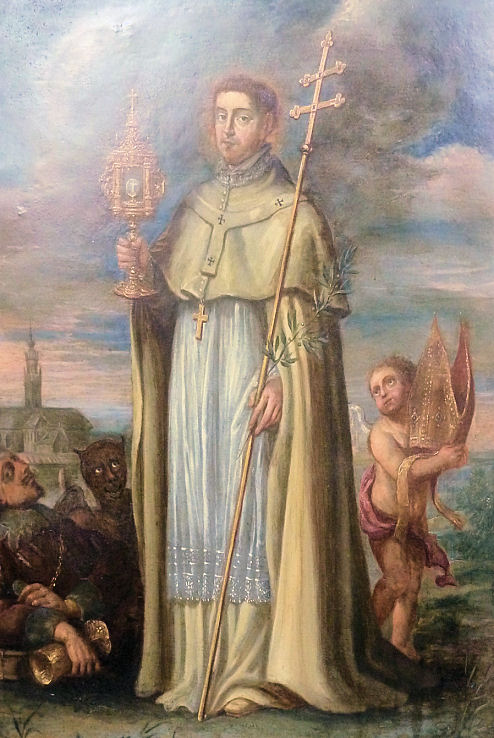
St. Norbert Founds Premonstratensians
We reached the valley at first light. The ground sucked at our boots where the reeds grew thickest. Norbert walked ahead with his staff, testing each step, and the rest of us followed without speaking. Thirteen of us that morning, counting the bishop’s men who had come only to see the place and would leave before noon.
The shape of the land surprised me. Two shallow arms of marsh crossed at the center, and the low ridge between them ran straight enough to look deliberate. Norbert stopped where the lines met and drove his staff into the mud. “Here,” he said. No one argued. We set down the axes and the ropes we had carried from Laon.
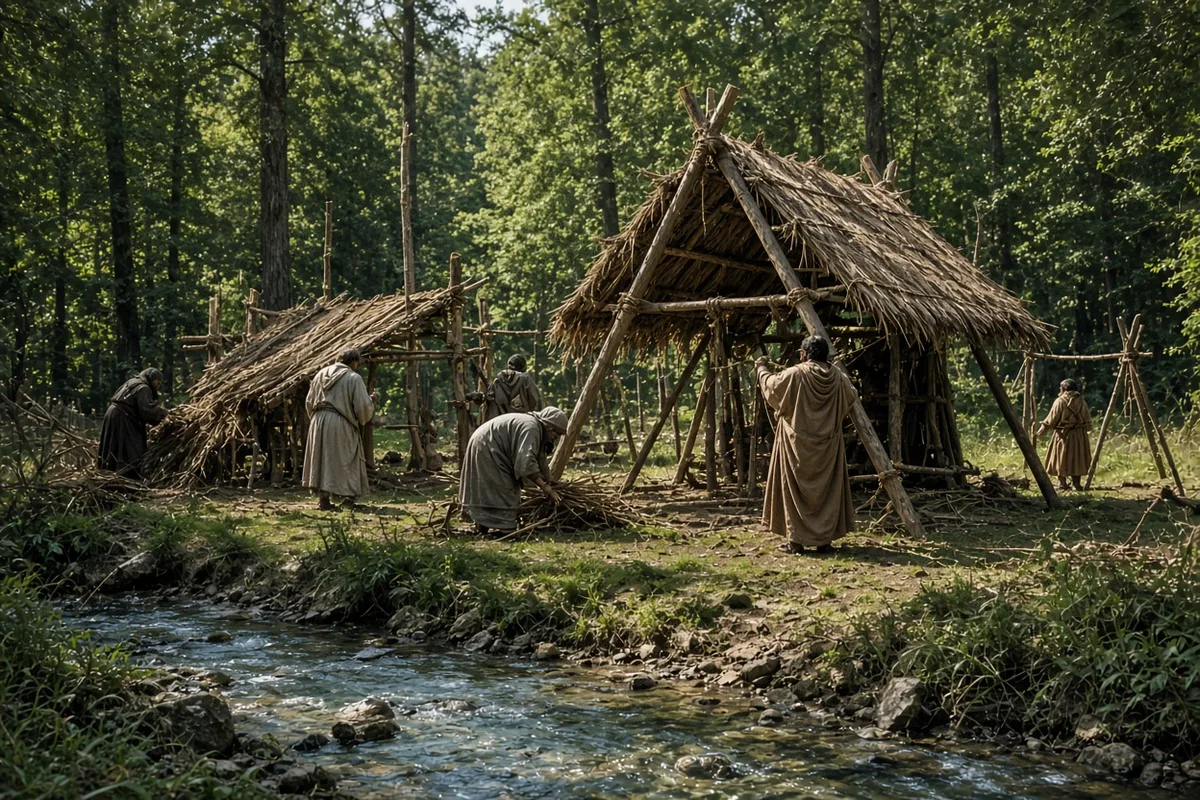
By midday the first hut stood. Its posts were green saplings cut from the edge of the wood. We wove hazel between them and packed the gaps with clay dug from higher ground. The clay was cold and heavy. It clung to our hands and dried in gray streaks on our sleeves. Hugh of Fosses worked beside me without pause. He had the look of a man who had already decided this place would be home.
Norbert spent the afternoon marking the ground for the chapel. He wanted it dedicated to John the Baptist. He walked the outline himself, using the length of his own stride. When he finished, the rectangle lay across the crossing of the two marsh arms exactly as the valley itself lay across the forest. He said nothing about the likeness. We saw it anyway.
That first week the nights were sharp. We slept on pine boughs under the open sky until the roof was finished. Rain came on the third night. Water found every seam in the clay and ran down the inside walls. We moved the sacks of meal to the driest corner and sat awake until the sky cleared. No one complained. The silence after the rain felt like agreement.
Norbert rose before the rest of us each morning. He walked the perimeter of the valley once, then returned to the chapel site and prayed alone. When we joined him for the first office, his voice carried across the open ground without effort. The words were the same we had heard in churches all our lives, yet here they sounded newly placed, like tools set out for work that had not yet begun.
Evermode kept count of the days on a notched stick. On the twenty-second morning he cut the last notch and broke the stick. We had agreed to stay until the chapel walls reached the height of a man. That evening we raised the last course of wattle. The clay we packed around it was darker than the first batches, taken from deeper in the marsh. It smelled of roots and standing water.
Norbert sent two of the younger men back to Laon for more rope and for news. They returned three days later with word that Bishop Bartholomew had approved the site without reservation. They also brought a sack of salt and a small iron cross that had belonged to a priest in the city. Norbert set the cross above the door of the chapel before we ate that night.
The work changed after that. We no longer spoke of returning to our old places. Instead we began to clear a patch of higher ground for a second building, larger than the first. Antony of Nivelles marked the corners with stakes cut from the same hazel we had used for the walls. He drove each stake with the flat of an axe, careful not to split the wood.
One afternoon a rider appeared on the ridge. He stayed only long enough to deliver a letter from the bishop. Norbert read it standing in the doorway of the half-built chapel. When he finished, he folded the parchment and placed it inside his cloak. He told us nothing of its contents. We asked no questions. The next morning he began teaching us the additional statutes he had written for our common life.
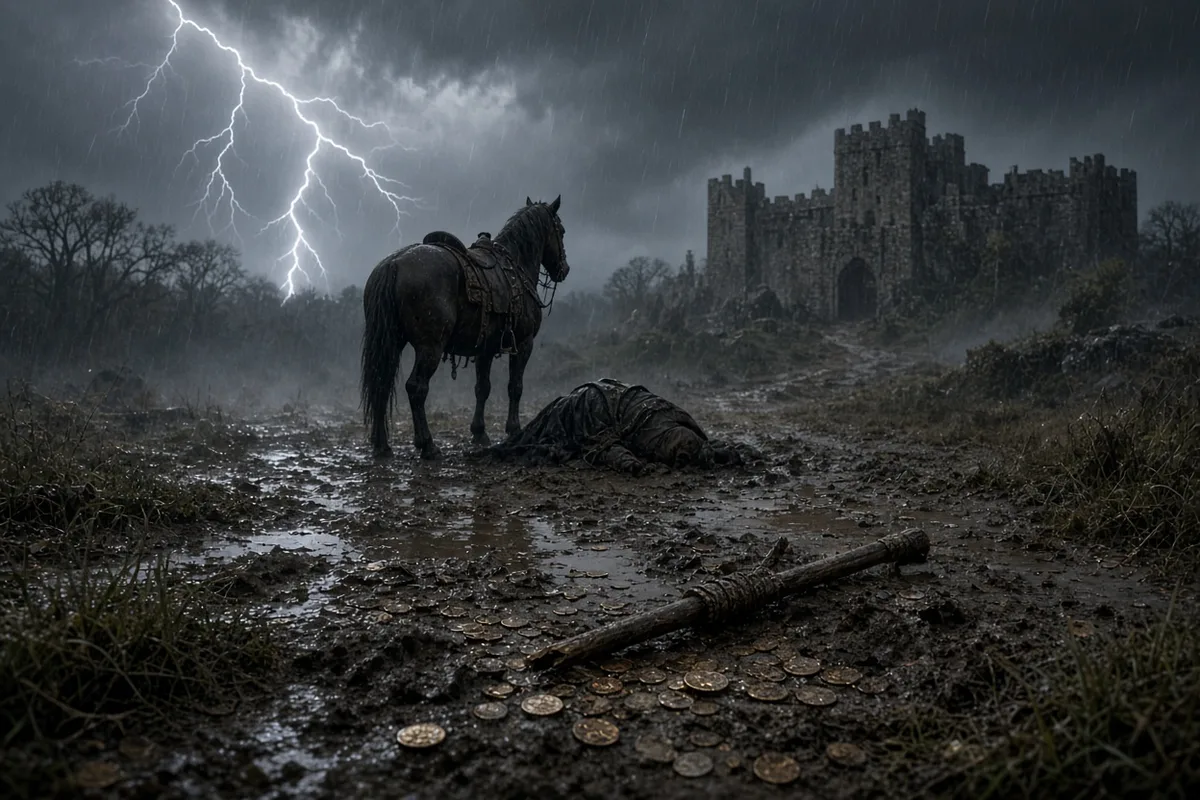
The statutes were strict. We would keep the full office each day. We would eat only what the land gave or what travelers left at the gate. We would own nothing as individuals. Most of the men listened without expression. A few glanced toward the ridge as if measuring the distance back to Laon. None left.
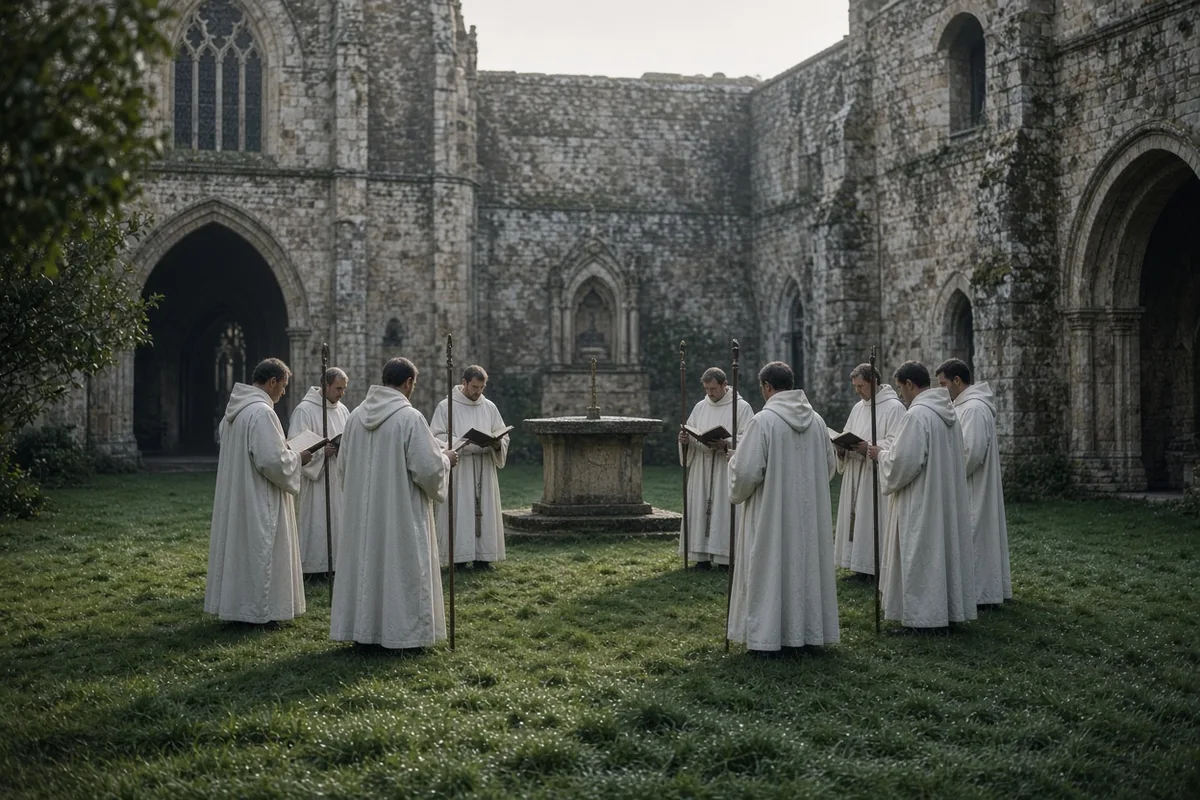
By the end of the second month the chapel was roofed with thatch. We celebrated the first Mass inside it on a morning when frost still lay on the reeds. Norbert wore the white habit he had adopted after his own conversion. The rest of us had only the clothes we arrived in. He made no remark on the difference.
Winter closed in before the larger building was finished. We moved the meal and the salt into the chapel and slept there when the wind turned hard. The clay walls held the warmth of our bodies better than we expected. At night we could hear water moving under the frozen surface of the marsh.
Spring brought visitors. A woman from a village two hours away arrived with bread and asked to be remembered in our prayers. Others followed. Norbert received each one at the edge of the clearing and spoke with them until they turned to go. He never invited them inside the chapel. The rule he had set remained unchanged.
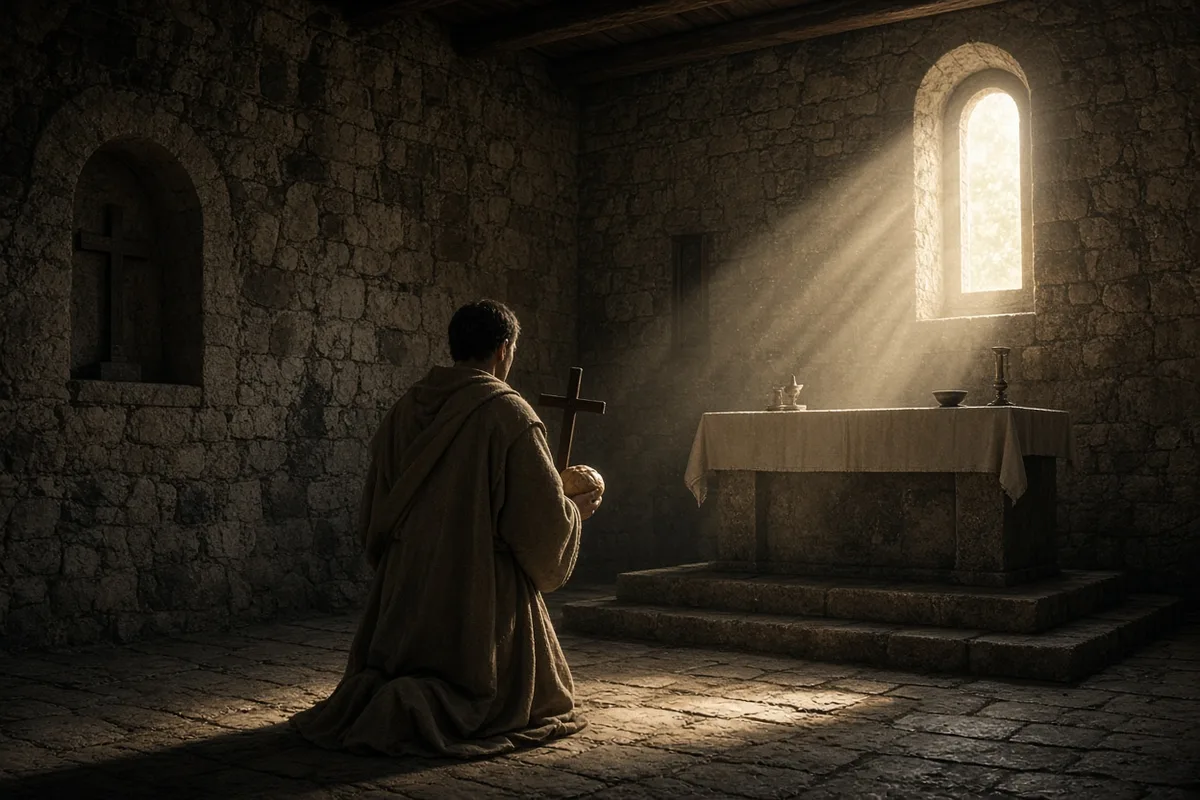
By summer the second building stood complete. We called it the dormitory though it held little more than our pallets and the few tools we owned in common. Norbert moved his own belongings there last. He carried only a single chest and the iron cross from Laon. He placed the cross above his pallet and left the chest at the foot of the bed unopened.
The valley had changed its sound. Where we once heard only wind in the reeds, we now heard the regular strike of the bell for office. The bell itself was only a length of iron hung from a beam, yet its note carried to the ridge. Travelers began to time their journeys by it.
Norbert left for a time that autumn to preach in the towns along the road to Reims. He returned thinner and quieter. He brought no new followers, only a renewed insistence that the statutes be kept exactly as written. We resumed the daily work without comment.
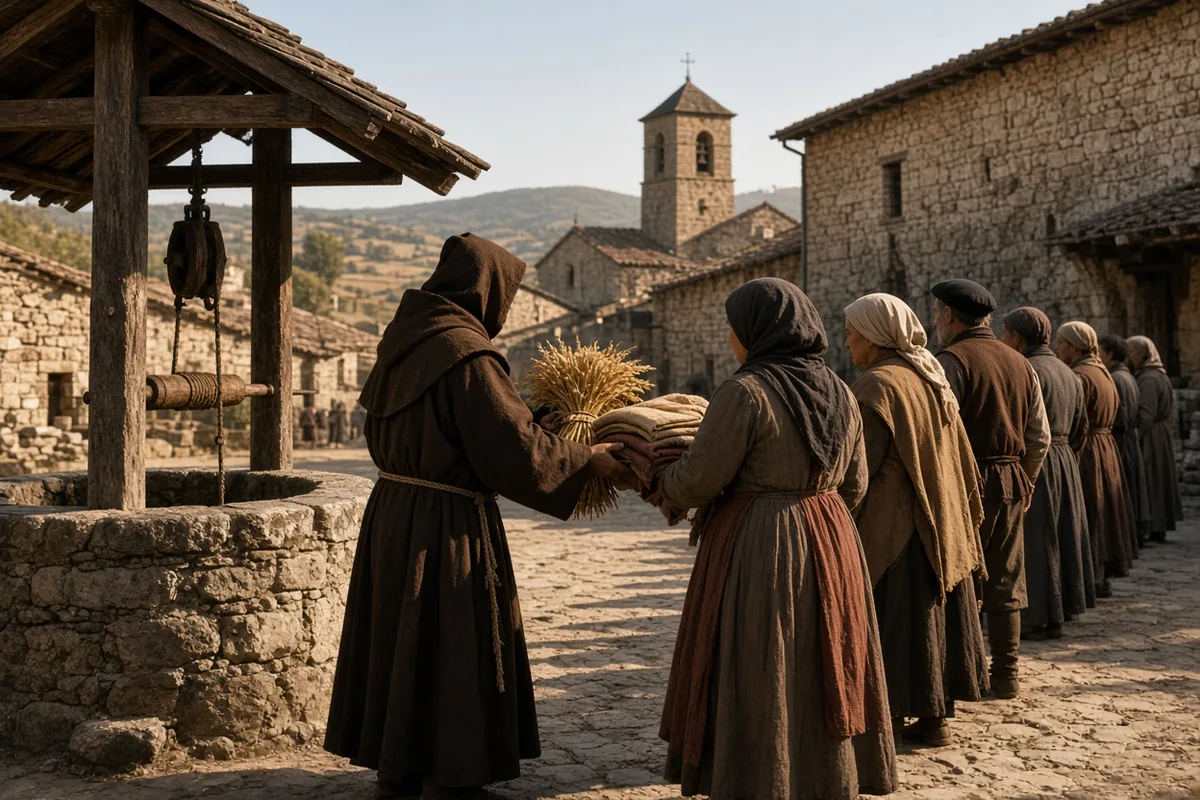
The marsh never dried completely. Even in the driest weeks the low ground stayed dark. We learned to walk its edges rather than cross it. The shape of the valley remained visible from the ridge, the two arms still crossing at the center where Norbert had first placed his staff. The chapel stood at that crossing, its thatch already weathered to the color of the surrounding reeds.
In the years that followed, other houses were begun on the same pattern. Men arrived from distant dioceses asking how the statutes had been written and how the land had been claimed. We answered their questions and sent them on with copies of the rule and a blessing from Norbert. The valley itself stayed as it was, small and marshy, its two arms still crossing under the changing light.
In 1126 the summons reached us from the diet at Speyer. Three bishops rode into the valley on the feast of the Epiphany and read aloud the letter of Pope Honorius naming Norbert archbishop of Magdeburg. He answered them at the chapel door, saying only, “The burden is laid upon me; I will not refuse the church her due,” words set down later in the Vita Norberti by a canon of Magdeburg. We watched him depart on the tenth day of January with Hugh of Fosses and two lay brothers. The iron cross went with him. That spring three more houses were begun: one at Floreffe on land given by Count Godfrey, another at Cappenberg after Count Godfrey of Cappenberg took the habit himself on the sixth of June, and a third at Tongerlo where the abbot of Saint-Michel-en-Thiérache sent twenty-two men with charters dated the feast of Saint Remacle.
The first general chapter met at Prémontré on the octave of Pentecost in 1128. Twenty-seven abbots gathered under the thatched roof. They confirmed the statutes in thirty-eight chapters and elected Hugh of Fosses abbot of the mother house while Norbert remained in Saxony. The acts record that each abbot swore to return every year and to keep the white habit and the three vows without mitigation. By 1134, the year Norbert died in Magdeburg on the sixth of June, forty-two abbeys stood under the same rule. We received letters from as far as the diocese of Olmütz and from the new foundation at St. Andrews in Scotland, where six canons arrived on the twenty-third of March carrying a copy of the statutes written in Norbert’s own hand.
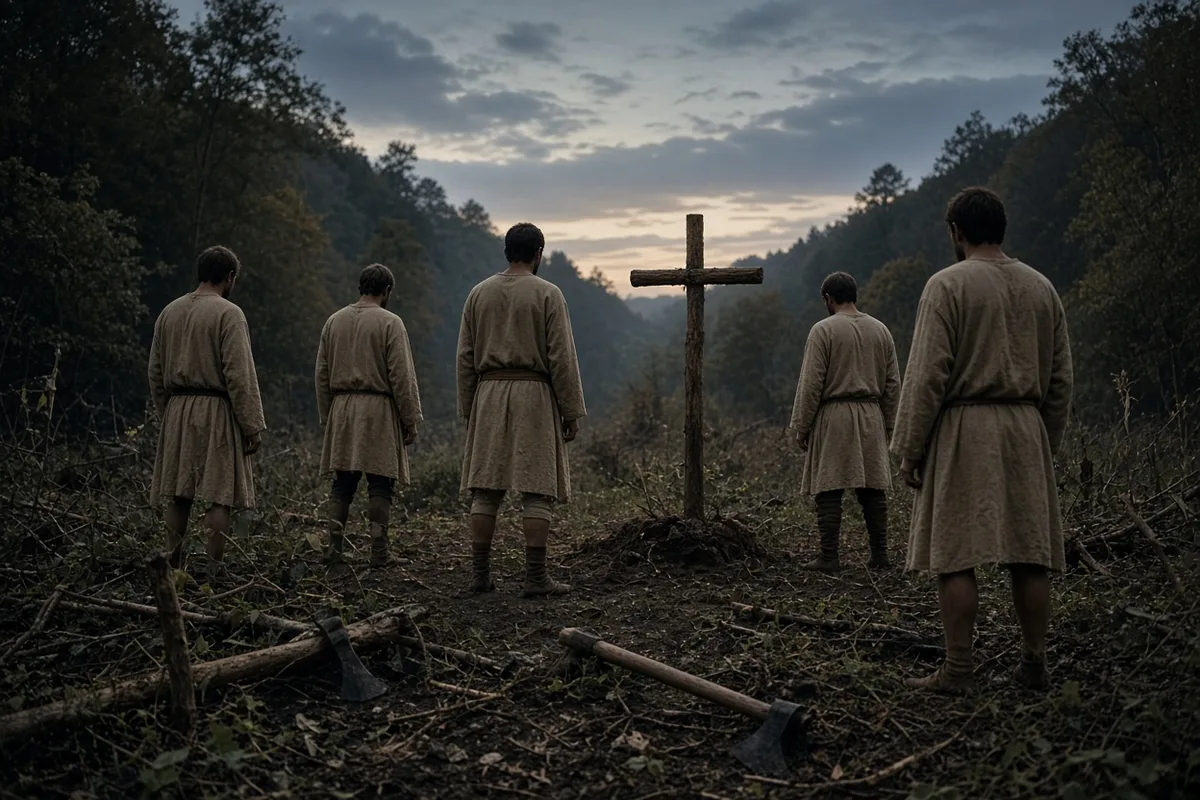
Hugh governed the valley until his death on the tenth of April 1164. Under him the church was rebuilt in stone between 1140 and 1152, its nave measuring one hundred and twelve feet and its cloister arcades cut from the same limestone quarried at Concy. The cartulary lists one hundred and thirty-seven donations of land and tithe between 1121 and 1160, including the mill at Vaux and the vineyard at Braine. When the Saracen wars drew men eastward, nine canons from Prémontré joined the hospital at Jerusalem in 1187 under the obedience of the abbot of Mount Sion. Their names appear in the obituary roll sent back the following year.
By the close of the thirteenth century the order counted five hundred and thirty-seven houses. The valley itself remained the head, its abbot holding the right to convene chapter and to confirm every election. In 1459 the commendatory abbot Jean de la Chambre added a library wing of forty-two feet, its windows glazed with the arms of the founding families. The last profession recorded before the troubles of the sixteenth century was that of Pierre Le Roy on the feast of Saint Norbert in 1562. He kept the daily office through the wars of religion until the abbey was sacked in 1580 by troops under the duke of Anjou.
Restoration began in 1609 under Claude de Mallery, who rebuilt the dormitory and added the great refectory of sixty-three feet. The community numbered thirty-four canons in 1628 when the general chapter again met at Prémontré. During the Revolution the last abbot, Jacques de la Chevardière, signed the deed of surrender on the twenty-first of February 1790. The thirty-one remaining religious dispersed; fourteen of them took the oath to the civil constitution. The buildings passed to the nation and served first as a prison, then as a powder mill until an explosion on the fourteenth of August 1793 destroyed the south range.
In the nineteenth century the site became the departmental asylum for the insane. The nave of the church was fitted with iron beds in 1822, and the cloister arcades were bricked up to form wards. A single Premonstratensian canon, Charles de l’Épine, returned in 1854 as chaplain and remained until his death on the third of December 1879. He is buried in the old cemetery beyond the marsh, the last man to wear the white habit inside the original enclosure. The two arms of the valley still cross at the center; the stone foundations of the first chapel lie beneath the modern wards, visible only when the ground is opened for new burials.
In 1914 the German army occupied the former abbey for six weeks and requisitioned the iron bedsteads from the wards for field hospitals at La Fère. The departmental records note that twenty-two patients were transferred by cart to the asylum at Saint-Quentin on the twenty-ninth of August; three died en route. After the Armistice the French Ministry of War returned the buildings to the Aisne département on the twelfth of March 1919, listing only minor damage to the refectory roof and the loss of the 1872 chapel bell, which had been melted for munitions.
Between the wars the asylum housed an average of four hundred and eight patients each year, according to the annual reports of the prefecture. In 1932 the director, Dr. Marcel Lefebvre, ordered the excavation of a new drainage trench along the southern marsh arm; workers uncovered the original wattle-and-clay foundation line of the first chapel, measuring eleven feet by eighteen, and removed three cartloads of the material before the trench was filled. No photographs were taken.
During the Second World War the site again served as a military hospital, this time under Vichy administration. On the eighth of June 1944 Allied aircraft strafed a German convoy parked in the cloister court, damaging two of the eighteenth-century arcades. The departmental architect’s report of 1947 records that the stonework was patched with brick rather than limestone because of shortages.
After 1950 the buildings were modernized for continued use as the Centre Hospitalier Spécialisé de Prémontré. The nave was divided into four wards of thirty beds each, and a reinforced-concrete day room was added against the north wall of the former church on the third of October 1961. The last Premonstratensian vestige, the iron cross brought from Laon in 1121, had disappeared during the Revolution; a bronze replica cast in 1978 now stands on a concrete plinth near the original crossing point marked by Norbert’s staff.
In 1992 the French Ministry of Culture classified the remaining medieval and seventeenth-century fabric as a monument historique. The classification decree cites the “éléments subsistants du cloître du XIIe siècle” and the refectory of 1609, whose oak roof trusses were dated by dendrochronology to the winter of 1608–1609. Restoration of the south arcade began in 2004 under the direction of architect Jean-Pierre Adam and was completed in 2011 at a cost of 1.4 million euros.
Today the site functions as the Hôpital de Prémontré, with 312 beds for psychiatric and geriatric care. The two marsh arms remain visible on aerial photographs taken by the Institut Géographique National in 2018, their crossing still aligned with the axis of the modern central corridor. When new foundations are dug for utility lines, fragments of the twelfth-century limestone appear at a depth of forty centimeters.
On the twenty-third of June 2023 a single patient, admitted under the name of Émile Renaud, was observed walking the perimeter of the old enclosure each morning at the hour of prime. He wore a white hospital gown and carried a length of iron pipe that he struck against the ground at regular intervals, producing a clear note audible across the marsh. He died on the fourth of December of the same year and was buried in the cemetery beyond the reeds, the most recent interment recorded in the hospital register.