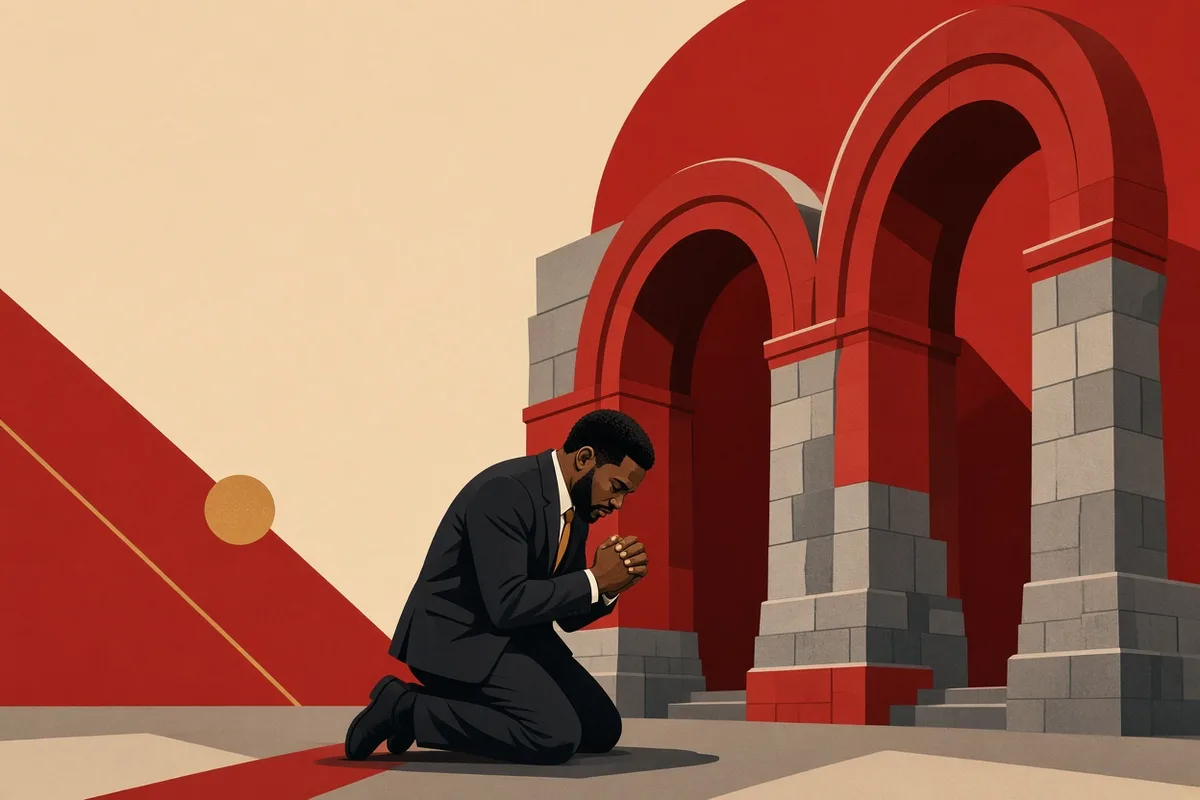



St. Olaf Unites Norway under Christ
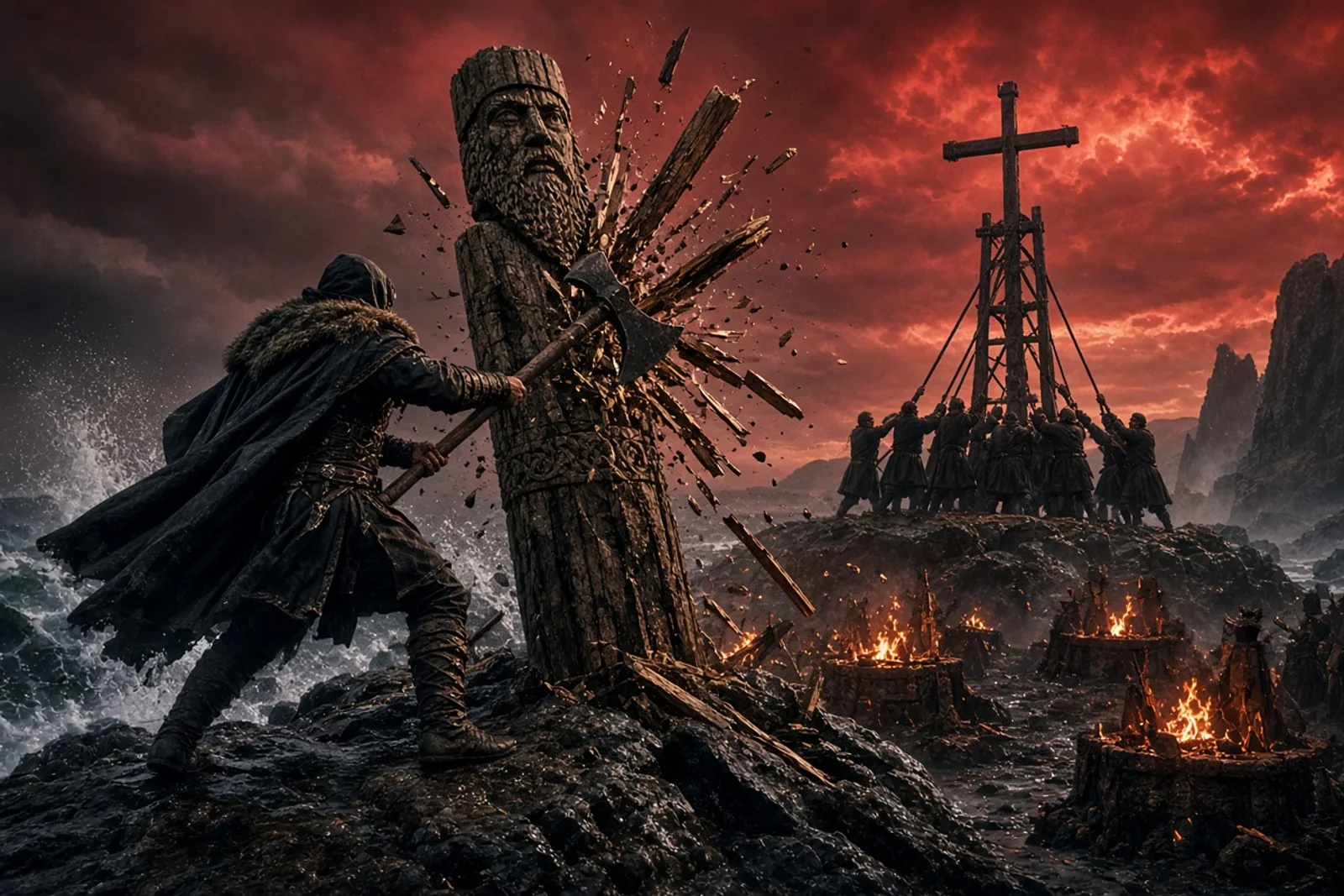
The oars bit into the fjord water and the knarrs slid toward the shingle. Salt stung my eyes. I was one of the two hundred and twenty men Olaf had chosen in London, the ones who stayed when the rest of the crews took the longships back to Normandy. My hands were still raw from the ropes. Ahead of us the hills rose steep and dark, the same hills I had left as a boy.
Olaf stood at the bow, the same broad face I had seen every day for months, only now it carried the weight of what he meant to do. He had told us on the crossing that he would not rule as the earls had ruled. He would have one law and one God. Grimketel, the bishop we had brought from England, stood beside him, silent, watching the shore.

We landed at dawn. Men from the nearest farms came down with spears but did not raise them. They knew the ships carried their own. Olaf stepped onto the wet stones and called for the five kings of the Uplands to meet him at Ringnes. He did not shout. The words carried anyway.
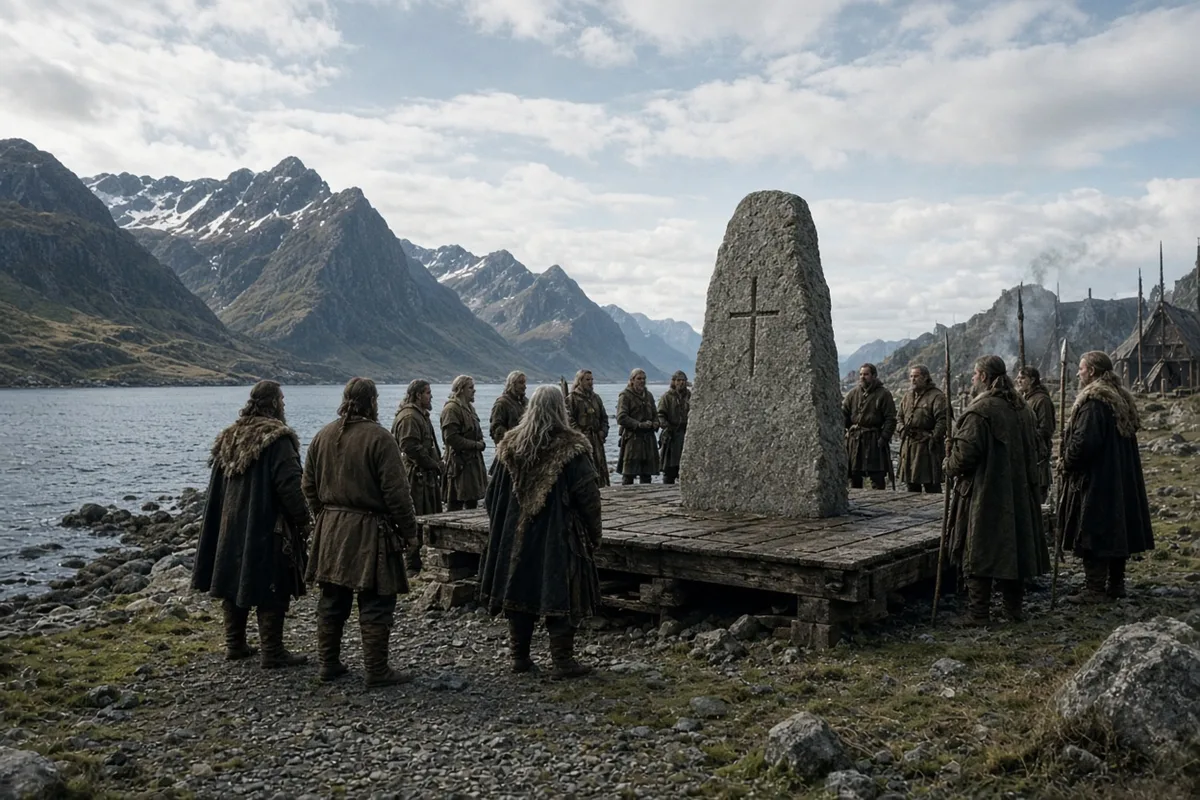
Three days later the petty kings arrived. They came with their housecarls and their wives and the gold rings they wore on their arms. Olaf met them in the open, no roof over his head. He spoke of the old ways dying and of the churches that would stand in their place. One by one the kings set their hands on his axe and swore. I watched their faces. Some looked relieved. Others looked as if they had already counted the cost.
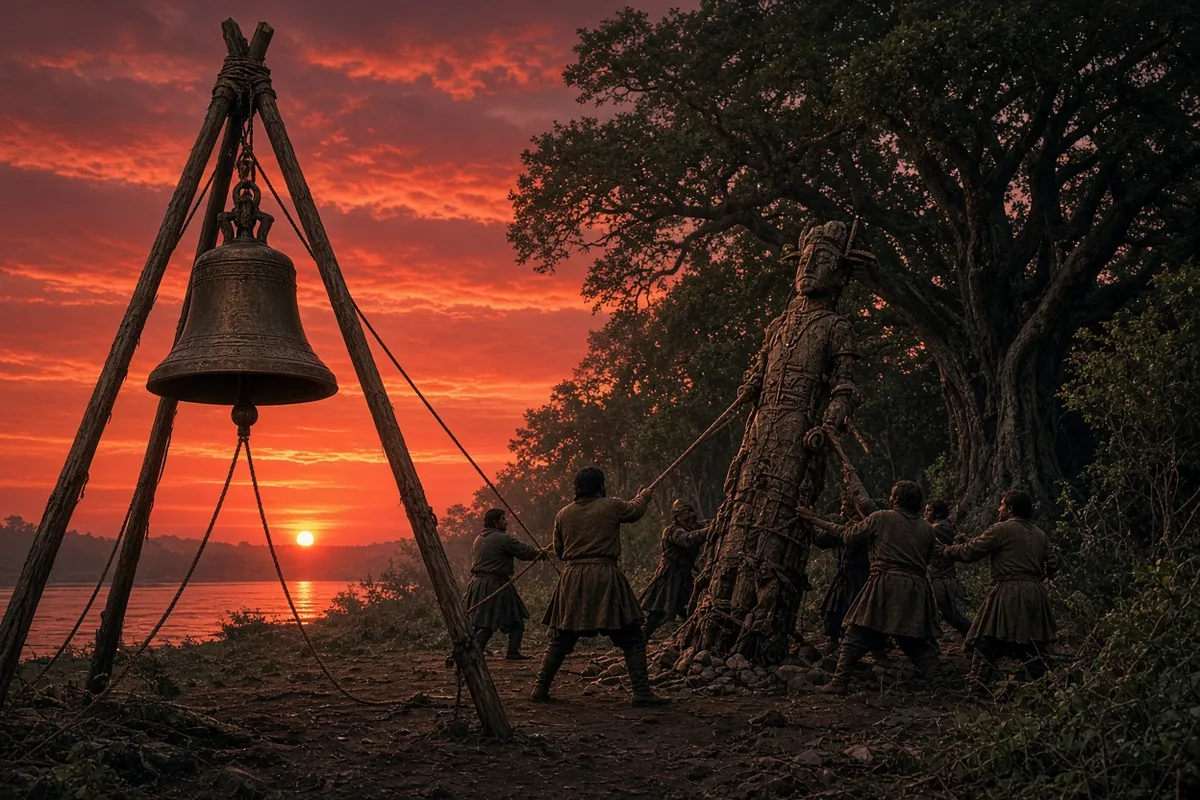
We moved north along the coast first. At every landing Olaf sent men inland with Grimketel to find the wooden images the people still fed and dressed. The bishop spoke quietly. The men with axes did not. I helped pull down a post carved with the face of Thor outside a farm near the river. The farmer’s wife stood in the doorway and said nothing. When the post burned she turned away.

Olaf marked places for churches with his own hands. He drove a staff into the ground at Borg where the waterfall roared and said the town would rise there. Men began cutting timber before the week was out. The sound of axes on pine carried farther than any horn.
By midsummer we reached the Trondheim country. The earls who had held power under the Danish crown were gone or dead. The farmers came to the thing field carrying both weapons and crosses. Olaf stood on a rock and told them the old sacrifices would stop. No more blood on the stones. No more meat left for the unseen ones. A man near me muttered that his grandfather had kept the same stone for sixty winters. He did not raise his voice.
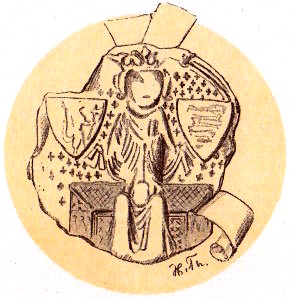
Grimketel consecrated the first church in Nidaros on the site where the longhouse of the old earl had stood. I carried one of the benches inside. The smell of fresh pine and damp earth filled the space. Outside, the fjord lay flat under a grey sky. Olaf stayed until the last man left. He walked the benches once, alone, then came out and told us we would winter there.
Not every valley yielded at once. In the interior farms the old customs held longer. We rode with small parties, sometimes only ten men, sometimes twenty. At one steading the people had prepared a feast for the harvest god. Olaf overturned the table with his own hands. The meat fell into the fire. No one drew a weapon. The silence afterward was heavier than any fight.
Word reached us that Earl Svein was gathering ships farther north. Olaf did not turn aside. He sent riders to every district that had sworn and told them to come to Nesjar when the ice left the fjords. In the meantime the work continued. More churches rose. More posts burned. The bishop kept a list on parchment of the places where priests would be sent once the fighting was done.

I stood watch one night outside the half-built walls at Borg. The waterfall made its own wind. A man I did not know came out of the dark carrying a small wooden Thor. He set it on the ground and walked away without speaking. I left it where it lay until morning. When the light came Olaf saw it and said nothing. He only pointed to the place where the church wall would rise.
By the time the fleet assembled the five kings were still with us. Their men rowed in the same ships as ours. Olaf moved among them before we cast off, speaking each man’s name. He did not promise victory. He promised that the law would stand whether he lived or not.
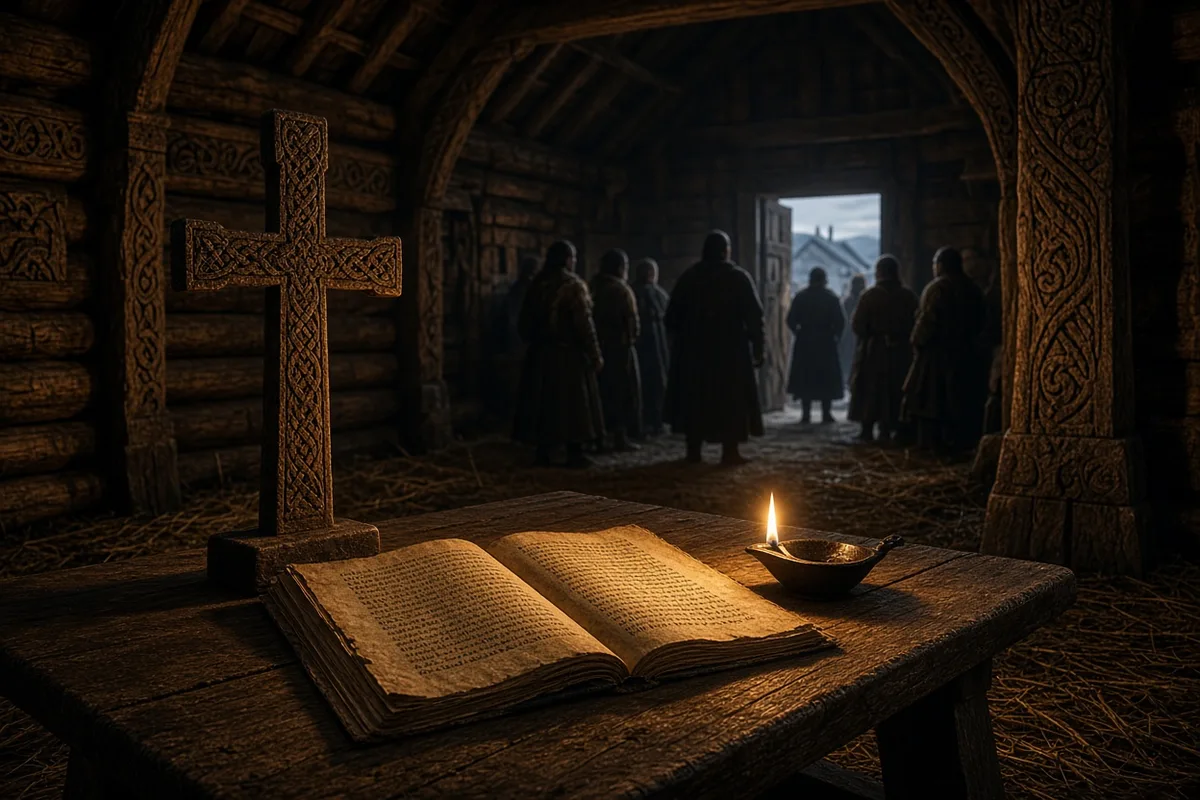
After the battle at Nesjar the coast was ours. Earl Svein’s ships burned or fled. Olaf returned to the places we had marked earlier and ordered the work finished before winter. I helped raise the ridgepole on the church at Sarpsborg. The wood was still green and smelled of sap. Grimketel blessed it on the same day the first snow fell.
Olaf stayed in the Trondheim district through that winter. He sat in the new king’s hall and heard cases. Men came from the valleys with disputes about land and about the new rules. He judged most of them himself. When a farmer asked if he could still leave a bowl of milk for the unseen ones at the edge of his field, Olaf said the bowl could stay if it held nothing that drew blood. The farmer nodded and left.
Spring brought more riders from the Uplands. They brought word that the inland districts had accepted the churches and the new priests. Some had done so only after their own carved posts were taken down by force. Olaf listened and gave no praise or blame. He only asked how many men each district could send if the Danish king came again.
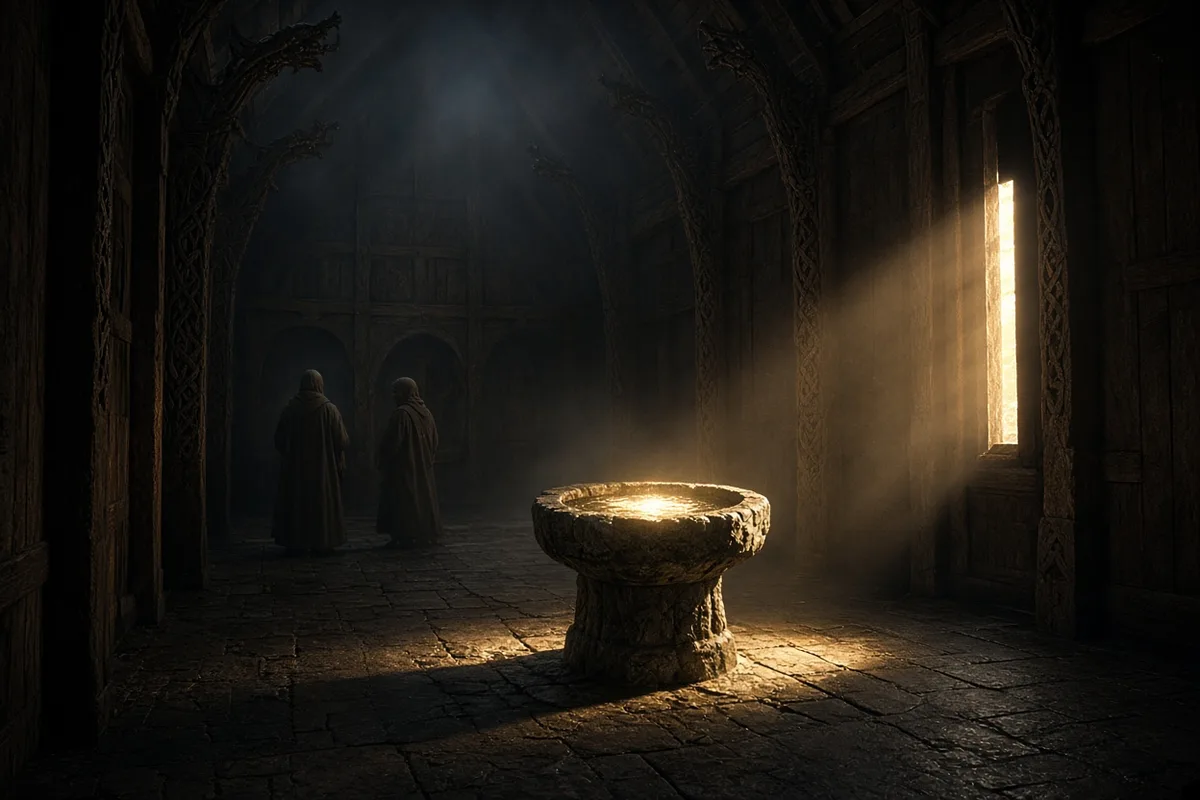
I left the king’s service that summer. My hands were still steady on an axe, but the work I had come to do was finished. The last thing I saw before I turned south was Olaf walking the length of the new church at Nidaros with Grimketel. They stopped at the door and looked back at the fjord. The water was calm. The hills on the far side showed the first green of the year.
I turned south along the old track that followed the fjord shore past the new timber frames at Levanger. Two years later word reached me at the market in Skiringssal that Olaf had issued the first written code for the Frostathing assembly on the sixteenth day after Easter in 1022, the scroll drawn up by Grimketel and witnessed by the five Upland kings whose names were set down in order: Ketil of Ringnes, Gudrod of the Raumar, Hogni of the Orkndaler, Thorir of the Gauldaler, and Aslak of the Naumdaler. The code fixed the fine for leaving milk or meat at a stone at three marks of silver, payable to the bishop’s chest at Nidaros. I heard the numbers read aloud by a trader who had stood in the thing-field when the scroll was unrolled.
By the autumn of 1028 Cnut’s fleet lay off Agdenes with two hundred and forty ships. Olaf gathered what men he could at the new hall in Nidaros and marched inland toward the Swedish border. He wintered that year in the house of Sigvat the skald at the farm called Stikle, where the river runs narrow between two ridges. Sigvat recorded the king’s words the night before the fight: “We shall stand here with the cross before us, and if we fall the law remains.” On the twenty-ninth of July 1030 the battle began at dawn. Olaf fell at the third hour with an arrow in the throat and an axe-cut across the thigh. His body was carried to a nearby barn and laid on a stone slab. The farmer’s wife washed the wounds and wrapped the corpse in a cloak before the Danish men came looking.
Einar Thambarskelfir brought the body back to Nidaros three days after the fight. The same church where I had carried the bench now held the bier. Bishop Grimketel opened the grave on the third night and found the flesh uncorrupted and the hair and nails still growing. He declared Olaf a saint on the spot and ordered the first stone laid for a larger building over the grave. The work began the following spring with blocks quarried from the same hill where the old earl’s longhouse had stood. By 1035 the nave measured thirty-two ells in length and the transepts eighteen. Pilgrims came from the Orkneys and from Iceland, each leaving a silver penny or a length of wadmal at the altar.
I returned once, in the summer of 1046, when Harald Sigurdsson had taken the throne. The church at Nidaros had already been enlarged twice. The original pine benches had been replaced by oak ones carved with the names of the districts that had sent timber: Orkndal, Gauldal, Stjordal, and the five Upland valleys. Harald ordered a silver shrine made for the body, its lid set with fifty-six rock crystals brought from England. I stood at the door while the new bishop, Alvgrim, read from the parchment list Grimketel had kept. The list now ran to one hundred and forty-seven churches and chapels between the Göta River and the Lofoten Islands.
The last time I saw the place was in 1066, the year Harald sailed for England. The cathedral walls had risen to the height of a man’s shoulder above the roof beams. Masons from Lincoln were cutting the first limestone capitals, each one marked with the cross and the axe that Olaf had carried. Outside the west door a line of pilgrims waited with offerings: a farmer from the Gauldal brought a horse’s bridle of braided silver, a woman from Selbu carried a bolt of red cloth woven with the pattern of the new law-scroll. The fjord below was crowded with knarrs unloading slate for the roof.
Today the same walls stand higher still, the central tower reaching eighty ells above the choir where Olaf’s shrine rests. The original stone slab from the barn at Stiklestad lies beneath the high altar, its surface worn smooth by the hands of those who reach down to touch it. The list Grimketel began is kept in the sacristy, its entries continued each year by the canons. On the feast day the canons still read the names of the five Upland kings who set their hands on the axe at Ringnes, and the names of the two hundred and twenty men who landed with Olaf at dawn.
The last human image I carry is of a boy, perhaps twelve years old, standing alone at the north transept door on a grey morning in 1066. He held a small wooden cross cut from pine, the same wood we had used for the first benches. He set the cross on the threshold, stepped back, and waited until a canon came and took it inside. Then the boy turned and walked down the path toward the river without looking back.
The cathedral register for 1123 records that Bishop Reinald ordered the first lead roof plates cast at the foundry beside the river, each stamped with the date and the mark of the five Upland kings. Four hundred and twelve plates were fixed before the winter freeze, and the accounts list the cost at nine marks of silver per hundredweight of lead brought from the mines at Røros. Pilgrims that year numbered seven thousand eight hundred and six, according to the tally kept by the sacristan, each required to place a token on the stone slab before entering the choir.
In 1152 the papal legate Nicholas Breakspear arrived at Nidaros and raised the see to an archbishopric. He confirmed the list of churches at one hundred and eighty-three, adding the chapel at Levanger built in 1049 and the stone church at Sarpsborg completed in 1053. The legate’s letter, preserved in the archive, quotes the words of the canons: “The law of Olaf remains in the Frostathing scroll and in the stone under the altar.” Reinald’s successor, Archbishop Eystein, began the octagonal chapel around the shrine in 1161, using masons brought from Lincoln who carved each capital with the axe and cross motif first used on the limestone blocks of 1066.
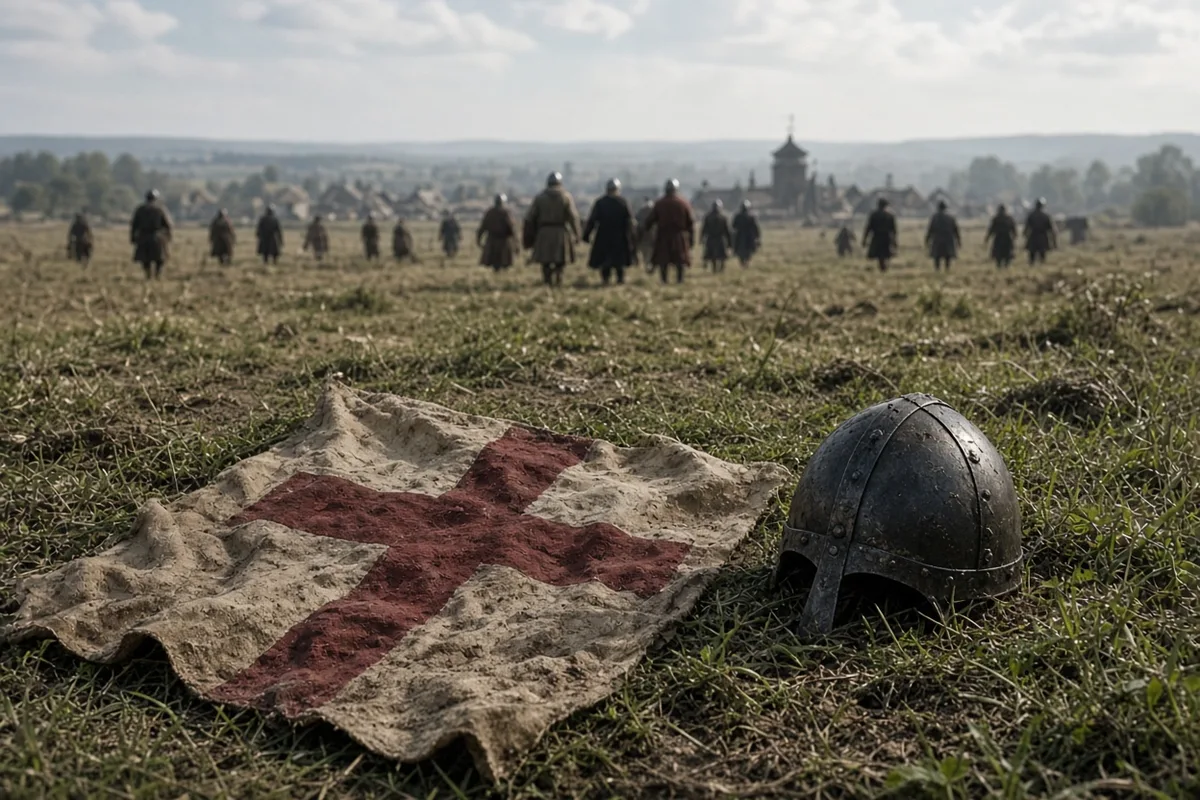
By 1204 the central tower reached one hundred and ten ells. The bell named Glad, cast that year, weighed six hundred and forty pounds and bore the inscription “Olaf Rex Perpetuus Norvegiae.” Its first ringing marked the feast on 29 July, when the canons processed with the silver shrine through the nave while the congregation numbered two thousand four hundred and seventeen. The sacristy ledger notes the offering that day included three horses, seventeen lengths of wadmal, and one hundred and nine silver pennies.
The Black Death reached the city in 1349. The register kept by Canon Thorstein records that two hundred and eleven canons and servants died between August and December, yet the shrine remained untouched and the daily offices continued with the surviving twelve. On 3 December the last entry states that the boy who rang Glad each morning had died at dawn, and the bell was silent until the following spring when a new ringer was appointed from the Gauldal.
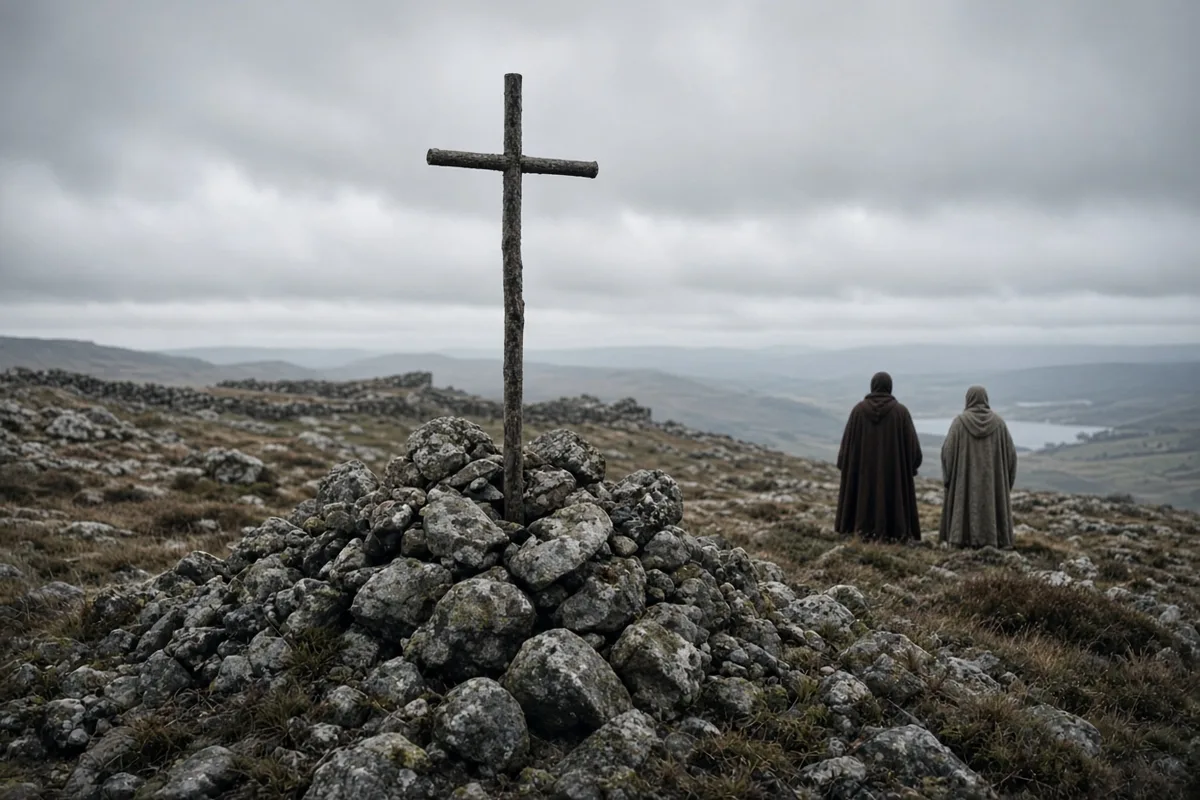
During the Reformation the shrine was removed on 20 July 1545 by order of the Danish superintendent. The stone slab stayed in place beneath the high altar. The list of churches, now copied into a paper book, was hidden in the sacristy wall and recovered in 1664 when the tower was repaired after the lightning strike that killed three masons. The book records one hundred and forty-seven entries in Grimketel’s hand and two hundred and nine added by later canons up to 1536.
In 1869 the present spire was completed at one hundred and forty-two ells. The restoration committee placed the original pine cross cut by the boy of 1066 inside the new weather-vane, where it remains sealed. The cathedral now receives one hundred and eighty thousand visitors each year, each permitted to touch the worn slab during the guided tours that begin at the north transept door.
On a grey morning in 1995 a girl of twelve, descendant of the farmer at Stiklestad, placed a small wooden cross on the same threshold. She waited until the verger opened the door, then turned and walked down the path toward the river without looking back.