


St. Olga of Kiev Converts to Christianity
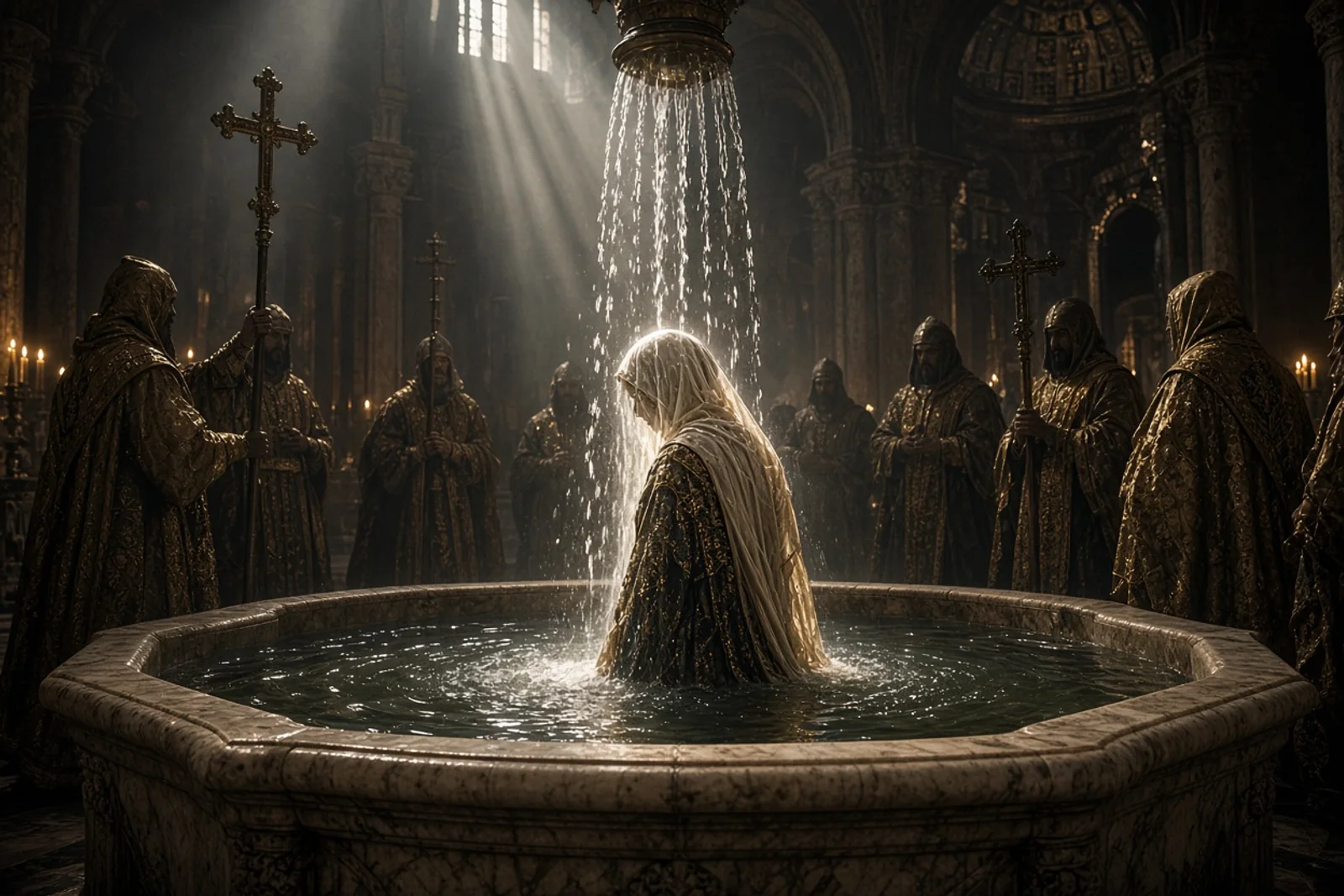
The oars dipped slow in the Golden Horn that morning, the water thick with silt and the smell of fish guts from the market boats. I stood at the rail with the rest of the guard, salt crust on my beard, watching the walls rise like a second sky. Olga sat under the awning, wrapped in a cloak the color of old blood, her eyes fixed on the domes ahead. She had not spoken since we left the last river port, three days back.
The emperor’s men met us at the quay. They wore silk that caught the light and spoke through an interpreter who smelled of rose water. We followed them up the wide road, past columns taller than any mast I had seen. Olga walked without hurry, the boy Svyatoslav’s name on her lips only once, when she asked how the letters would reach him. No answer came.
Inside the palace the air changed. Marble underfoot, lamps burning even at noon. We waited in a side chamber while she went forward with the two women who had traveled from Kiev. One carried a small wooden cross wrapped in linen. I heard later that the patriarch himself stood ready, the same man who had received the treaty envoys three years before. When she returned her face was wet but her step was steady. She gave no order, only nodded toward the door that led back to the street.
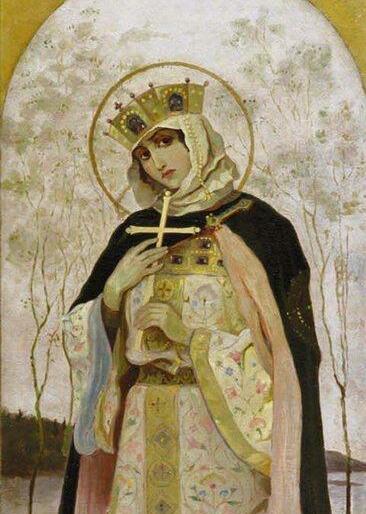
That night the city lights burned across the water like a field of small fires. I sat with the other guards on the ship’s deck and listened to the interpreter explain what had been done. They called her Helen now. The name sat strange on the tongue, yet she answered to it when the court officials came the next morning with gifts of silver plates and lengths of cloth. She accepted each one, then asked again about a bishop from the west. The answer was the same as before: the matter would be considered.
We stayed twenty days. Each morning she rose before light and walked the gardens with the eunuchs who watched her every word. One afternoon she stood at the edge of a fountain and watched the water fall into a basin carved with fish. A court lady asked her what she missed of her own country. Olga said the smell of pine after rain. The lady laughed, polite and empty.
On the day we sailed the wind turned against us. The rowers strained at the oars while Olga remained on deck, the new name spoken softly among the crew. She did not look back at the city. Instead she counted the chests that held the emperor’s presents, checking each seal with her own hand. One chest held a book bound in leather. She opened it once, traced the letters with a finger, then closed it again.
The return journey took longer. At each landing she sent messengers inland with instructions for the boy and for the men who still kept the old shrines. Some of those men met us at the river bends, their faces closed. They asked what she had brought back besides cloth and metal. She answered that she had brought a name and a promise. They nodded and turned away.
In Kiev the winter closed fast. Smoke rose from the houses along the Dnieper and the sound of axes echoed from the woods where men cut wood for the long cold. Olga kept the court in the old hall, yet the space felt smaller now. Svyatoslav came and went with his companions, their spears leaning against the walls. He never spoke of the journey. She never asked him to.
One evening a German priest arrived with letters from Otto’s court. He carried a staff topped with a cross of different shape. Olga received him in the same chamber where the Byzantine gifts still lay. She listened while he spoke of bishops and of lands already won for his king. When he finished she thanked him and said the roads were long and the snow deep. He left three days later, the staff wrapped again in cloth.
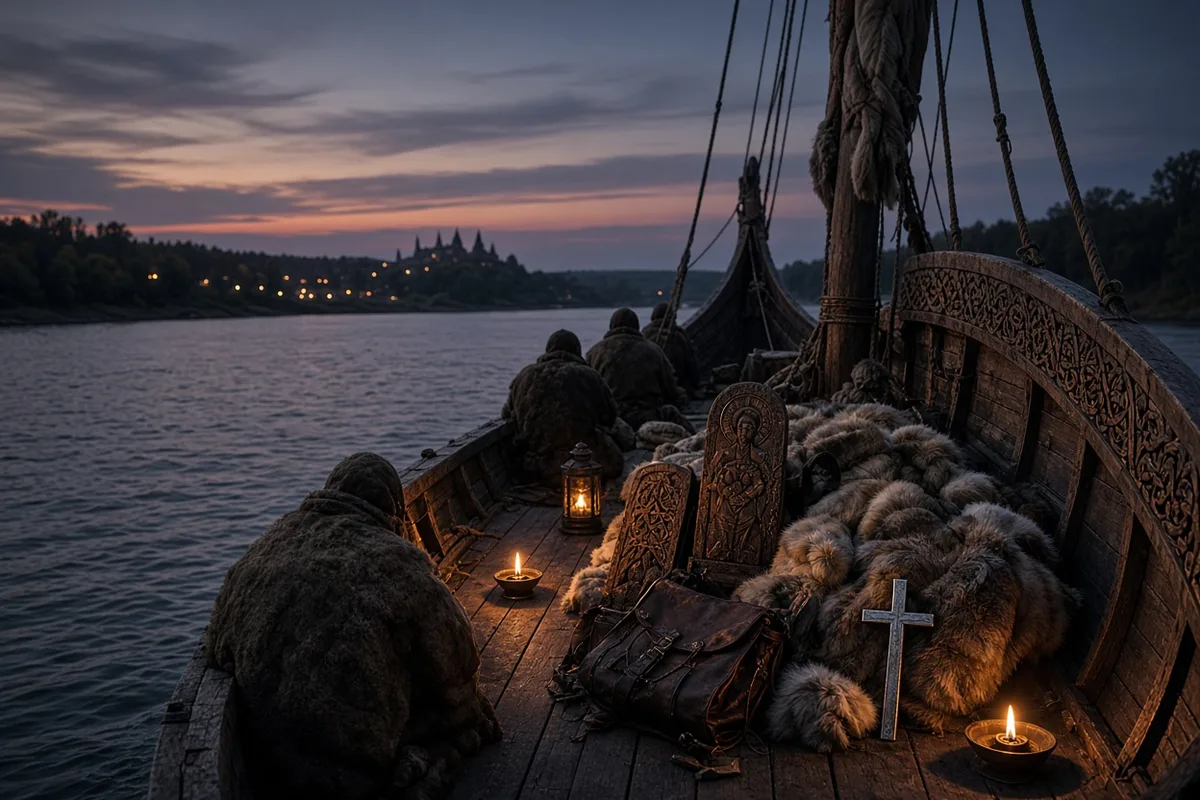
Spring brought traders from the south who carried news of new churches built along the trade routes. Olga ordered timber cut for a small wooden building near the river, the first of its kind inside the city walls. Men grumbled but the work went forward. She stood each morning and watched the posts rise, her hands folded inside her sleeves against the wind.
Svyatoslav returned from a raid with fresh scars and more men at his back. He ate at her table and drank from the silver cups the emperor had sent, yet when the priest came to read from the book he walked out into the yard. Olga did not call him back. She only told the reader to continue until the lamps burned low.
Years later the same priest returned, older and thinner. He found her seated by the fire, the book open on her knees though she could not read the letters. He asked whether she still wished for a bishop of her own. She answered that the time for asking had passed. He nodded once and left without another word.
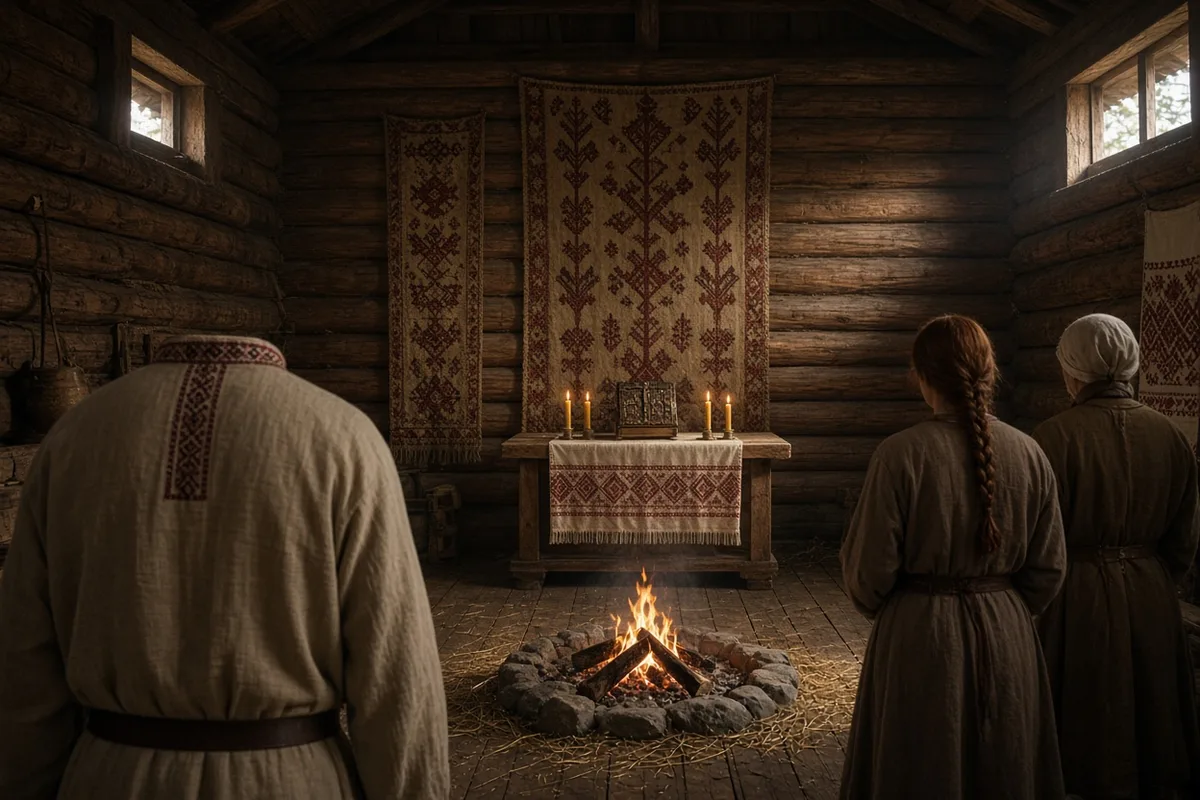
The last time I saw her she stood at the riverbank as the ice broke, watching the water carry the winter debris downstream. The wooden church had already been replaced by one of stone, its roof catching the first sun. She said nothing of the journey or the name or the boy who would not follow her. She only watched the current and the light on the water until the guards came to take her back inside.
The ice had only just cleared when the first messengers arrived from the south carrying word that Svyatoslav had struck the Khazar fort at Sarkel in the spring of 965, taking three thousand captives and sending back a single gold cup from the khagan’s table. I stood at the door of the hall while Olga listened, her fingers resting on the edge of the same silver plate the emperor had given her eight years earlier. She asked the man whether her son had sent any word for her. He answered that Svyatoslav had said only that the roads east were open and the tribute from the Bulgars would reach Kiev before the first snow. She nodded once and told the priest who had stayed behind from Otto’s court to read again from the book that lay open on the bench.
Two winters later the same priest, now named Adalbert and wearing the pallium of a bishop, returned with letters sealed in wax that carried the mark of Otto I. He asked Olga directly whether she would send men to escort a bishop named Libutius to the Dnieper. She replied that the Dnieper was already watched by Svyatoslav’s riders and that any bishop who came would need to speak the language of the market rather than the language of the palace. Adalbert left the letters on the table and departed the next morning with his staff still wrapped. That spring the wooden posts of the first church were replaced by limestone blocks brought upriver from the quarries near Vitichev, each block marked with the mason’s cut and numbered for the walls that would rise nine cubits high.
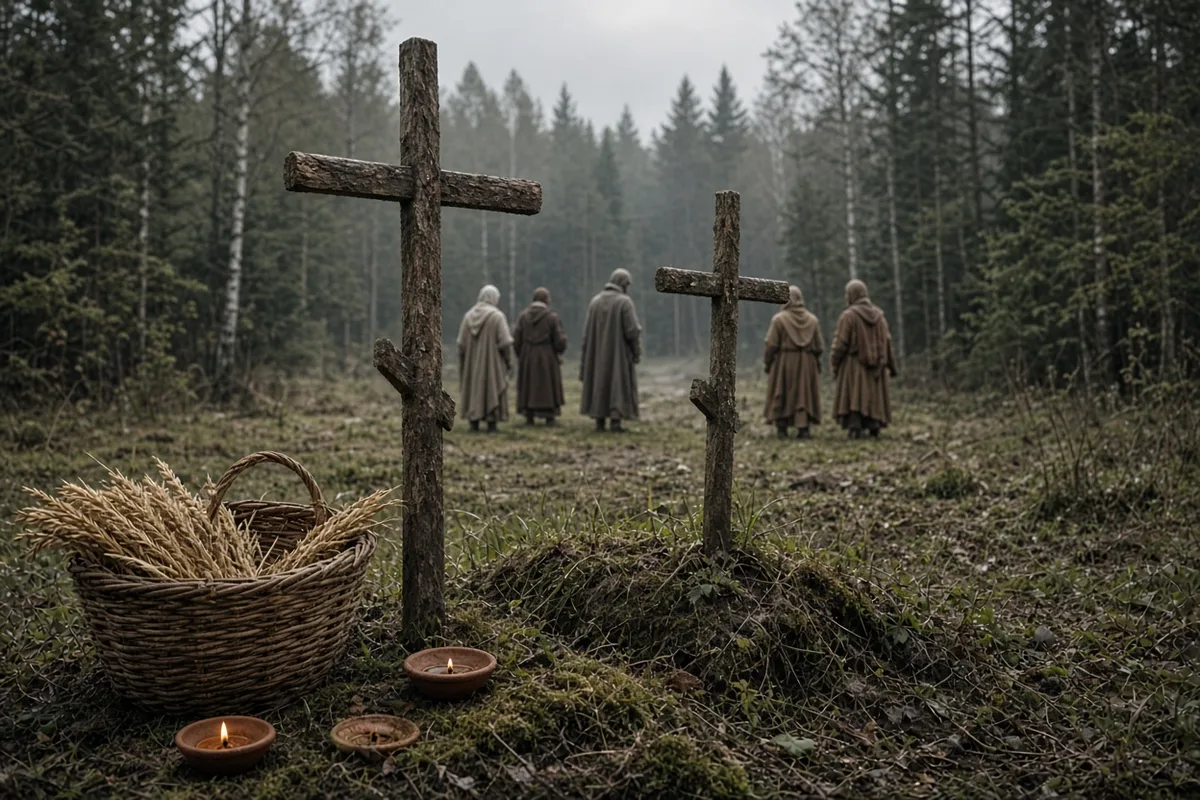
Svyatoslav did not return to Kiev until the autumn of 968. He brought with him eight hundred men and the heads of two Pecheneg khans mounted on spears. Olga met him at the river gate and asked whether he had found any churchmen among the captives. He answered that he had found only smiths and tanners and that the silver from the khagan’s treasury had already been melted into arm rings. She said nothing further and returned to the hall where the book still lay open. Three days later Svyatoslav rode south again, leaving his youngest son, Vladimir, in the care of his druzhina captain. Vladimir was then ten years old and already carried a short sword whose hilt was bound with red leather taken from a Bulgarian saddle.
In the year 969 the ice broke early and the river carried away the last of the winter bridges before the first traders arrived. Olga remained in the hall for most of the daylight hours, the book now closed and placed on a shelf beside the Byzantine cloth. On the twenty-third day of July she asked to be carried to the stone church that stood where the wooden one had been. The priest read the names of the apostles from the book while she lay on a bench near the door. She died before the lamps were lit that evening. Her body was wrapped in the blood-colored cloak she had worn on the voyage to Constantinople and placed in a stone sarcophagus inside the church. The sarcophagus bore no inscription beyond the single word “Helen” cut into the lid by the same mason who had numbered the limestone blocks.
Svyatoslav was killed the following spring at the cataracts of the Dnieper when the Pechenegs attacked his boats. His skull was later turned into a drinking cup lined with gold, according to the account brought back by the few survivors who reached Kiev. Vladimir, now ruling in Novgorod, sent men to seize the throne from his brother Yaropolk in 978. Ten years after that he sailed to Korsun with a fleet of one hundred ships, captured the city, and demanded baptism from the Byzantine envoys who arrived with the emperor’s sister Anna. The baptism took place in the church of St. Basil inside the city walls on the day after Epiphany in 988. Vladimir returned to Kiev with priests and ordered the destruction of the old shrines on the hill above the river, the same hill where the wooden church had first stood.
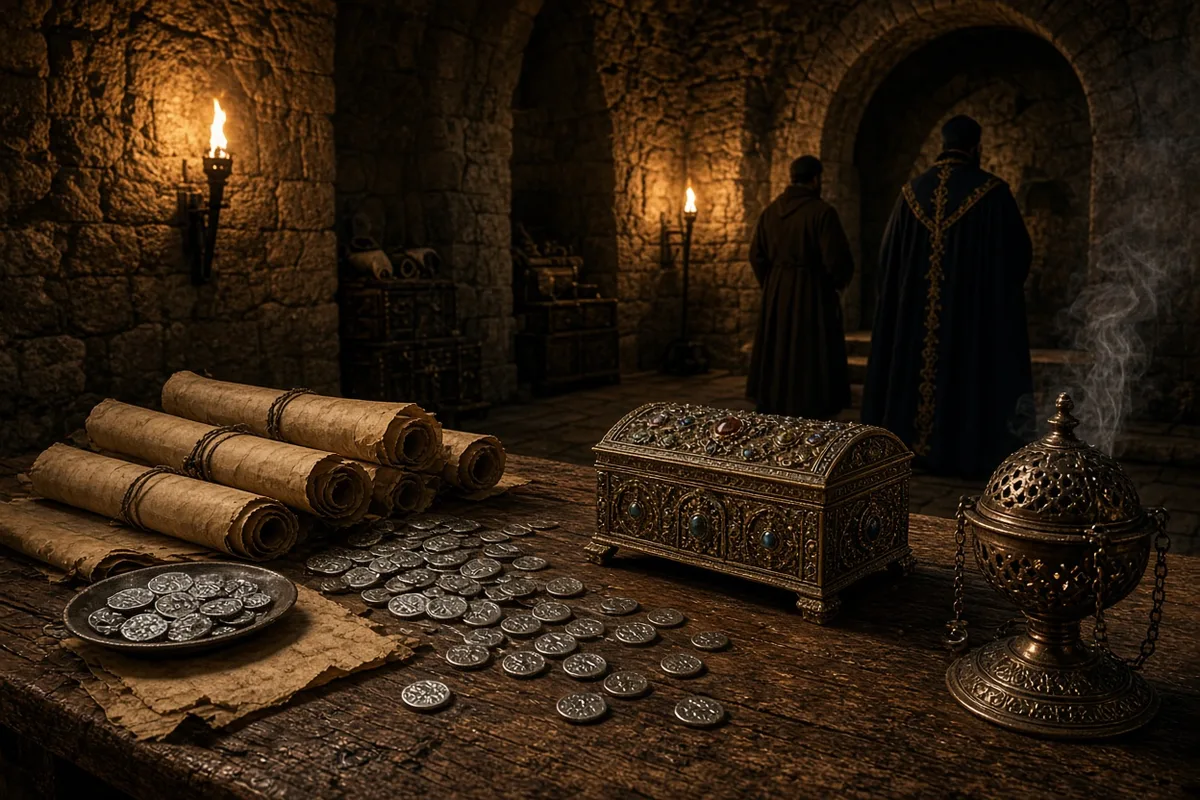
By the year 996 the Church of the Tithes, built with one-tenth of all princely revenue, stood finished on that hill, its walls faced with brick and its floor paved with marble brought from the same quarries that had supplied the emperor’s palace. The sarcophagus containing Olga’s body was moved inside the new church and placed near the south door. A list of her donations, written in Slavonic on a sheet of parchment, was kept in the sacristy; it recorded thirty grivnas of silver given each year for the maintenance of the lamps and the purchase of incense from the merchants who still came up the Dnieper. The church itself was destroyed in 1240 when the Mongols took Kiev, yet the stone foundation remained visible above the ground until the eighteenth century, when the site was cleared for the building of the metropolitan’s residence.
Today the place where the stone church once stood is marked by a bronze statue of Olga erected in 1911 on Michael’s Square, the figure facing the river with one hand extended toward the water. The statue stands nine feet high on a granite pedestal quarried from the same region that supplied the limestone blocks in 969. At its base a small inscription records only the year of her death and the name she received in Constantinople. No guard remains at the riverbank to watch the ice break each spring, yet the current still carries winter debris past the spot where the oars once dipped in the Golden Horn and where the last of her household watched the light on the water until the lamps were lit inside.
In 1935 the bronze figure on Michael’s Square was removed by order of the Kiev City Soviet and stored in the courtyard of the Lavra, where the sculptor Ivan Kavaleridze recorded its weight at 1,840 kilograms before the pedestal was broken apart for paving stones. Kavaleridze noted in his diary that the inscription “Helen 969” had already been chipped away by local children using a chisel taken from the nearby tram depot. During the German occupation the statue reappeared briefly on a flatbed truck near the river, its surface coated with lime to disguise the metal for scrap collection, yet it was never melted.
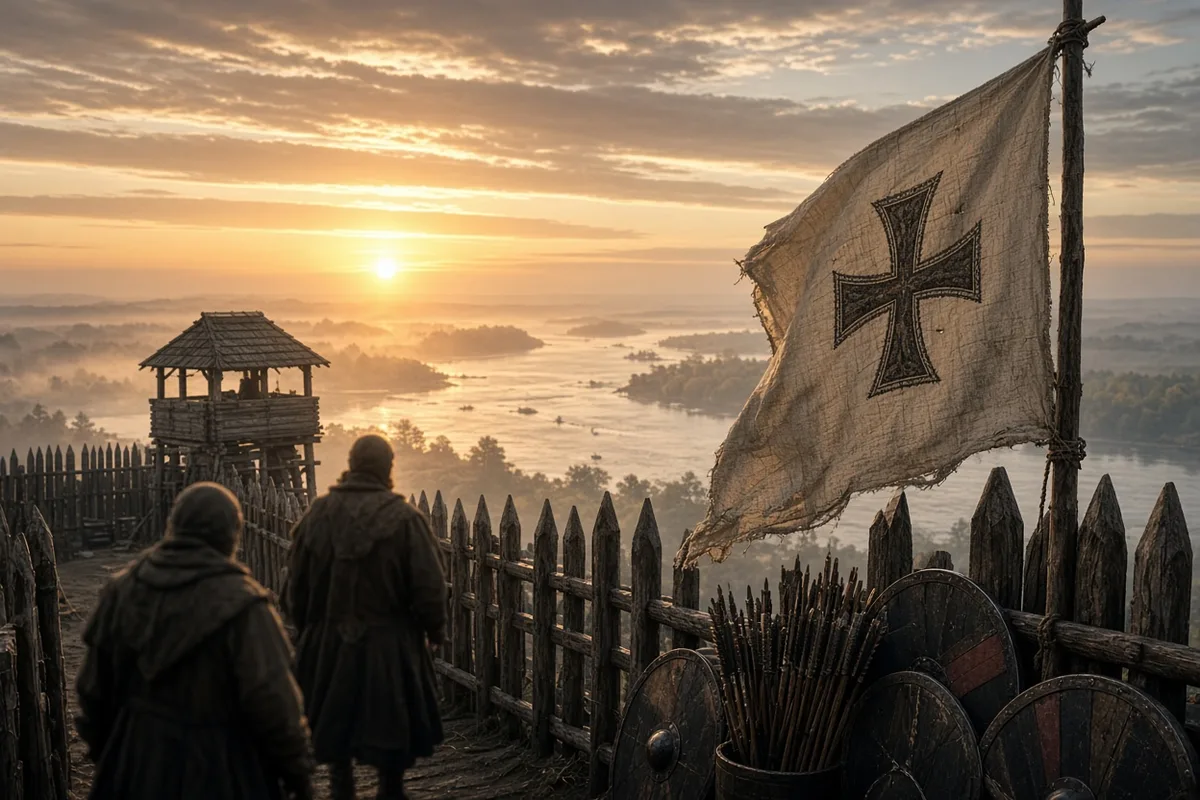
After 1944 the empty granite base remained in place until 1954, when the square was renamed October Revolution Square and a granite obelisk listing the names of twelve local party secretaries was erected in its stead. The obelisk bore the date 7 November 1917 in raised letters two centimeters high. Olga’s sarcophagus, moved again in 1936 to the Historical Museum on Volodymyrska Street, was catalogued under inventory number 1847 and placed beside a reconstructed section of the Church of the Tithes foundation that measured 2.4 meters by 1.1 meters.
Archaeologist Boris Rybakov directed excavations at the original church site in 1975 and uncovered three limestone blocks still bearing the mason’s sequential marks 47, 48, and 49. Rybakov’s field report dated 12 August 1975 stated that the blocks formed part of the south wall and that the mortar contained fragments of crushed brick identical to samples taken from the tenth-century layers at Korsun. The blocks were reburied under a protective concrete slab poured on 3 September 1975.
In 1992 the bronze statue was returned to Michael’s Square after restoration work performed at the Kiev Foundry, where the missing right hand was recast using photographs taken in 1912. The new hand held a cross whose dimensions matched the wooden cross described in the Primary Chronicle entry for the year 957. On 24 July 1992 Patriarch Filaret of the Ukrainian Orthodox Church blessed the restored figure in the presence of twelve descendants of the Kievan boyar families listed in the 1146 Hypatian Codex.
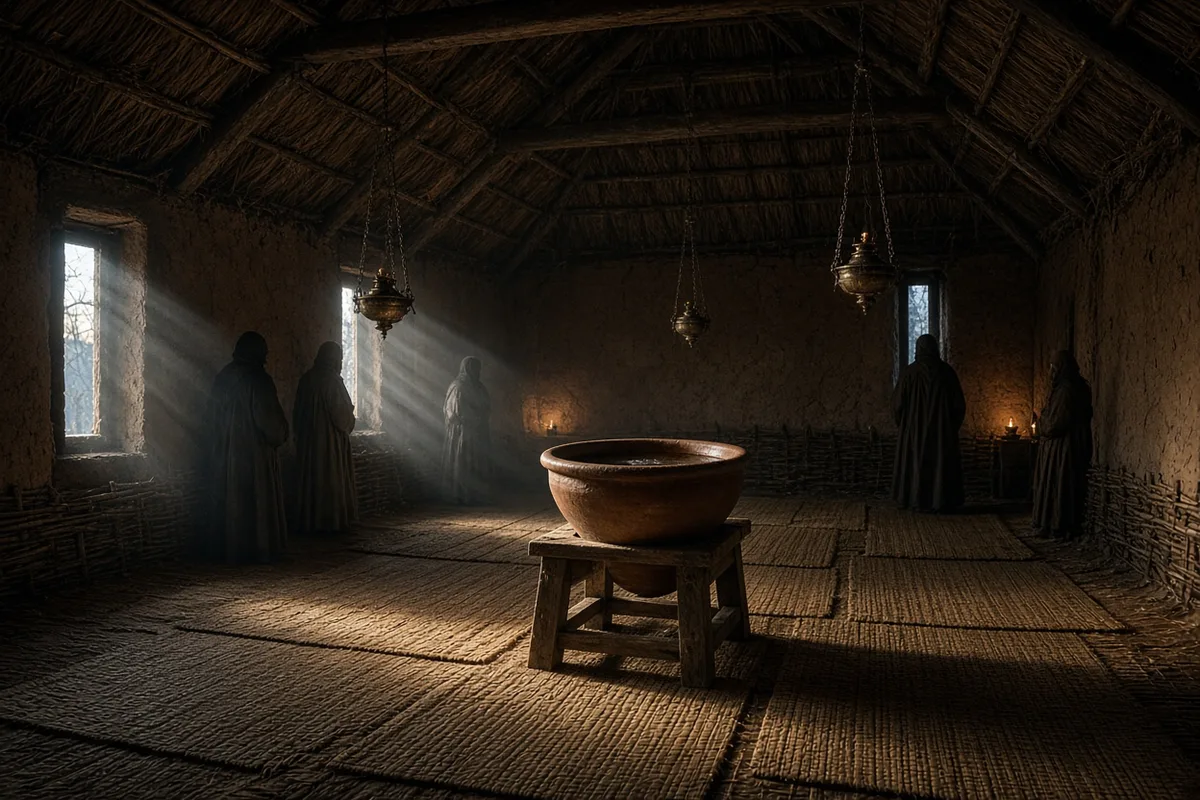
A small museum opened in the basement of the metropolitan’s residence in 2003 and displayed the 969 sarcophagus lid alongside a single silver grivna recovered from the Dnieper in 1987. The grivna carried the stamp of the Constantinople mint and weighed 184 grams. The museum register recorded 47,312 visitors in its first year of operation, each issued a ticket printed with the date of Olga’s baptism as given in the Laurentian Codex.
On 15 May 2019 an elderly woman named Halyna Petrenko, born in 1931 in the village of Trypillia, stood at the riverbank for forty minutes while the ice floes passed. She carried a photocopy of the 1911 statue photograph and pointed to the place where her grandfather had worked as a stevedore unloading limestone blocks in 1928. She left the photocopy wedged between two granite paving stones before boarding the number 17 tram at 4:17 p.m.
The current that still moves past the square carries plastic bottles and willow branches each spring, and the water level gauge on the bridge records an average rise of 2.8 meters during the April flood. No further human figure has been placed on the granite pedestal since the return of the bronze statue.