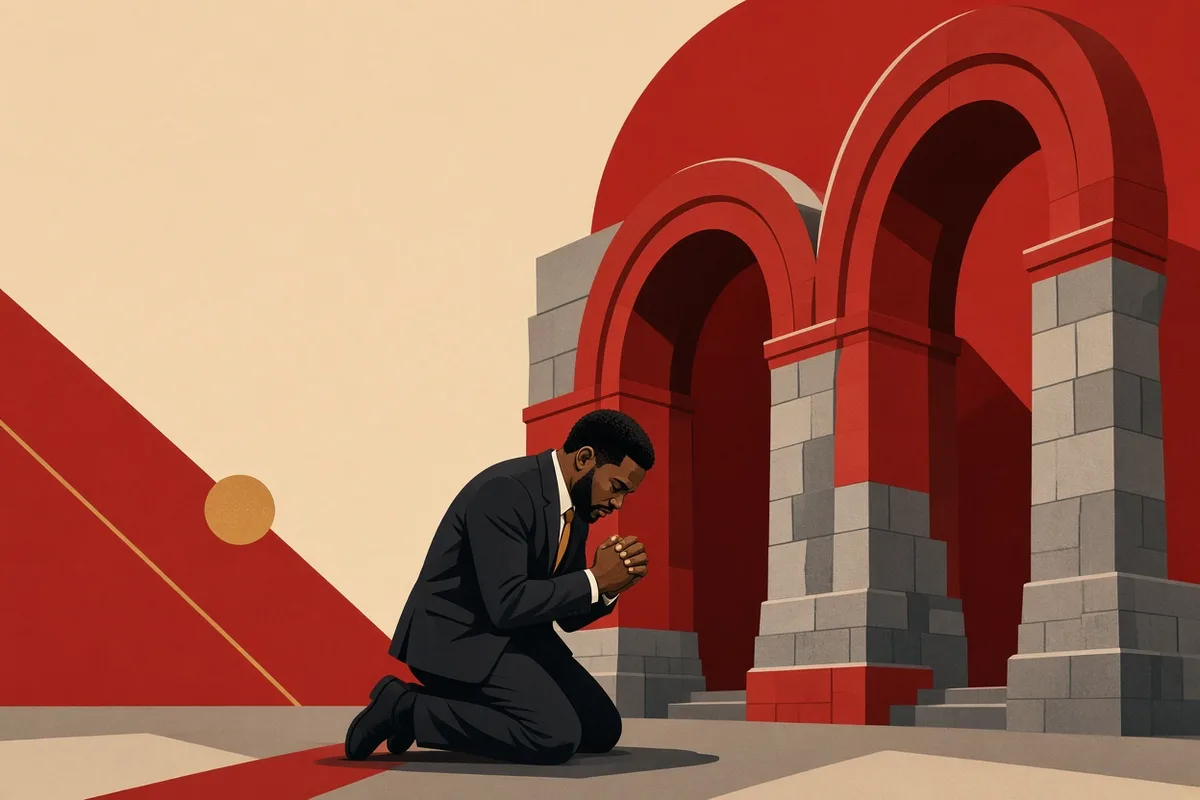



St. Patrick Returns to Ireland as Missionary
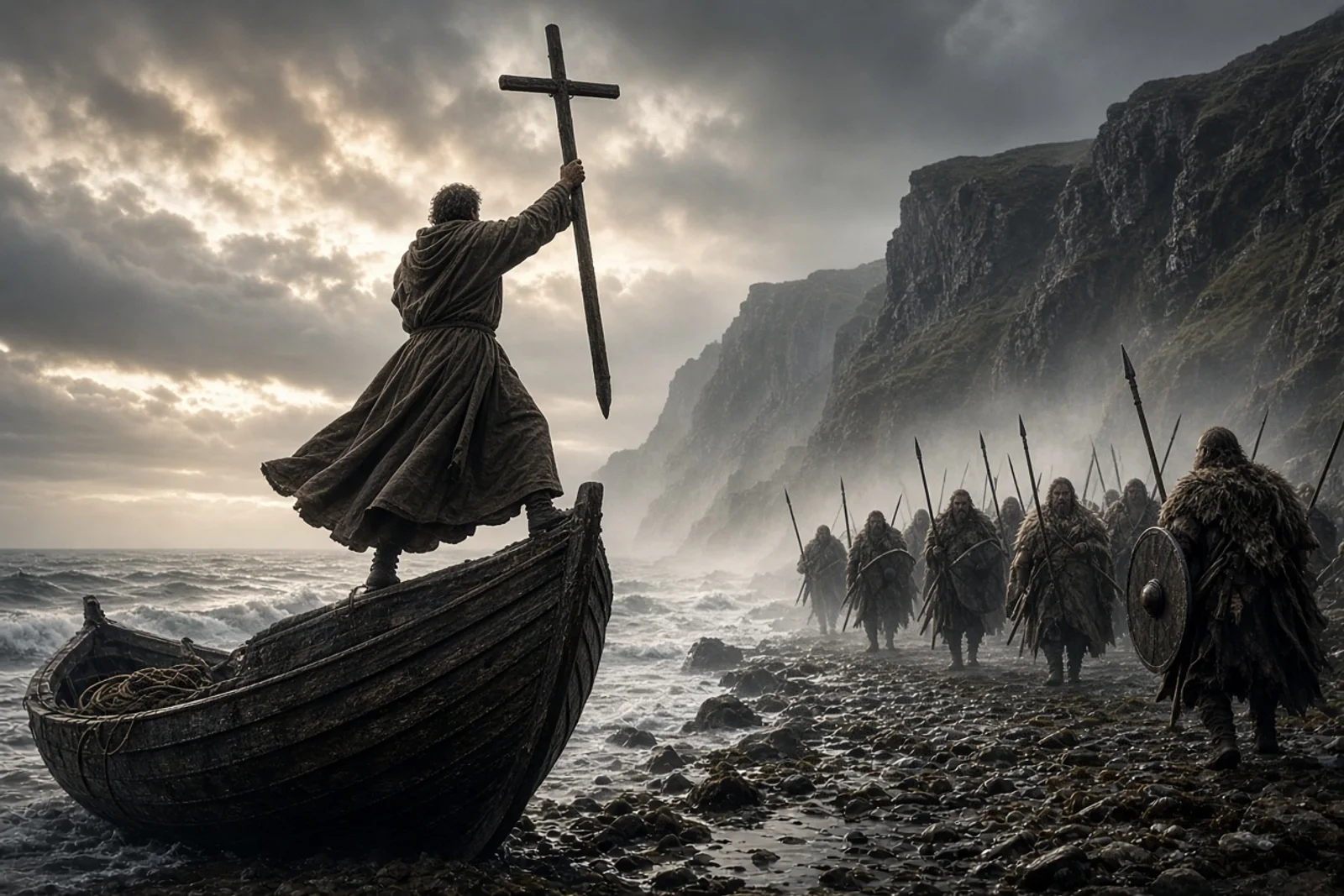
The oars bit the water in short strokes as the boat nosed into the cove. Salt stung my eyes and the wind cut through the cloak I had wrapped twice around my shoulders. We had left Britain three days earlier with no clear plan beyond the voice Patrick kept repeating in his sleep. I rowed because the others were older and because I wanted to see what a man looked like who had once herded sheep on these same hills and now meant to speak to the men who had owned him.
Patrick stood in the bow, one hand on the mast, the other clutching a wooden staff taller than himself. He had not spoken since the first light. His hair was white at the temples though he could not have seen fifty winters. When the keel scraped sand he stepped over the side without waiting for help and waded the last few yards. Water darkened the hem of his robe. He did not look back at the rest of us.

I followed with the small chest that held the books and the small silver cup he used for the blessing. The sand gave under my feet and the cold climbed my legs. Two men waited on the shingle, one with a spear, the other with a coil of rope across his shoulder. They watched the way men watch a stray dog that might still bite.
Patrick raised his right hand and spoke the name of Christ in the Irish tongue. The words came slowly, as if he had to pull each one from a place deeper than memory. The man with the spear lowered the point but did not set it down. Patrick kept walking until he stood an arm’s length from them. He asked for the name of the nearest household that would give strangers a night under its roof. The man with the rope answered that the king’s steward lived two valleys inland and might or might not open his door.
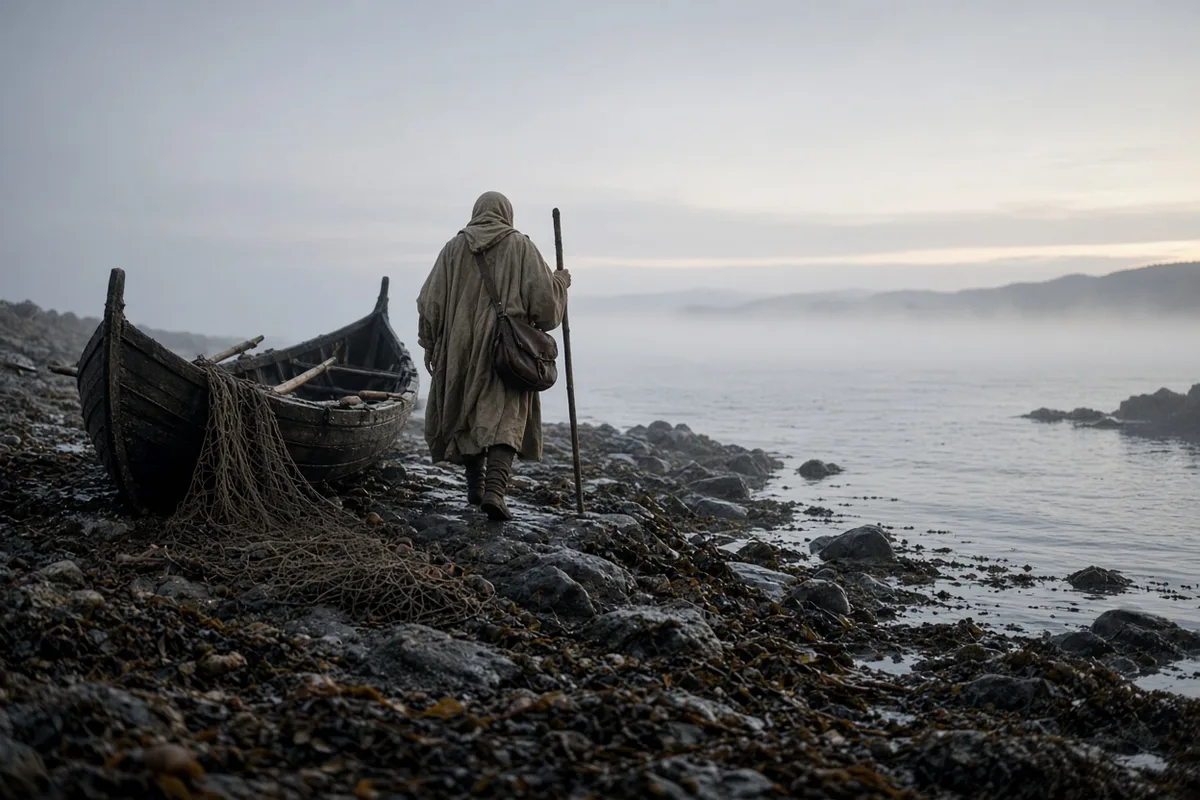
We walked single file along a track that climbed between gorse and blackthorn. Patrick carried the staff in his left hand now and used it to test the ground before each step. He stopped once at a spring that bubbled out of the rock and drank without cupping his hands. The water ran down his beard and onto the front of his robe. He said nothing about thirst or the length of the day.
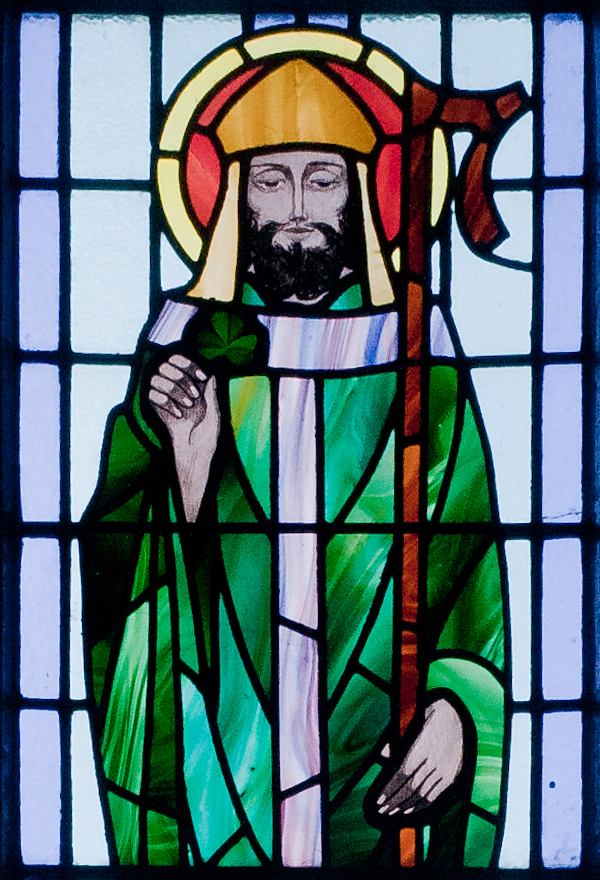
By the time the steward’s roundhouse came into sight the light had gone gray. Dogs barked from the far side of the cattle pen. A woman came to the door with a child on her hip. She looked at Patrick’s staff and at the small group behind him and asked what business brought Britons across the water. Patrick answered that he had come to speak of a God who had once been a slave and was now free. The woman studied his face for a long moment, then stepped aside.
Inside, the fire smoked because the wind had shifted. Men sat on low stools around the central post. The steward himself was not present. His wife served us barley broth in wooden bowls and watched Patrick eat. When the bowls were empty she asked whether the God he served would protect her sons if they listened. Patrick said the God he served had already protected a boy who once tended sheep on these hills through six winters of snow and rain. He did not say the boy had been himself.
That night I slept on the packed earth near the door. Patrick remained awake. I heard the low sound of his voice against the wall as he prayed in Latin and then in Irish, the words overlapping until I could no longer separate them. Once he rose and went outside. I followed far enough to see him standing with his back to the house, arms at his sides, face lifted toward the stars that showed between the clouds.
In the morning the steward returned. He was a thick man with a scar across one cheek and a torque of twisted bronze at his throat. He listened while Patrick explained that he had been given authority by the bishops in Gaul to preach and to baptize. The steward asked what payment the new God required. Patrick answered that no payment was asked except the turning of the heart. The steward laughed once, short and without warmth, then told his wife to give us food for the road.
We left the house with three loaves and a skin of sour milk. Patrick walked ahead again, the staff tapping the ground in rhythm with his stride. I carried the chest and kept my eyes on the track so I would not lose the place where his heel had pressed the mud. Behind us the dogs had stopped barking. Ahead the track widened into a larger path that ran toward the distant ridge where the old stones stood.
By midday the wind had dropped. Patrick stopped at a place where the path crossed a small stream. He set the staff against a rock and washed his hands and face in the running water. When he straightened he looked at me directly for the first time since the landing. He asked whether I still meant to stay with the work. I told him I had no other place to go. He nodded once and picked up the staff again.
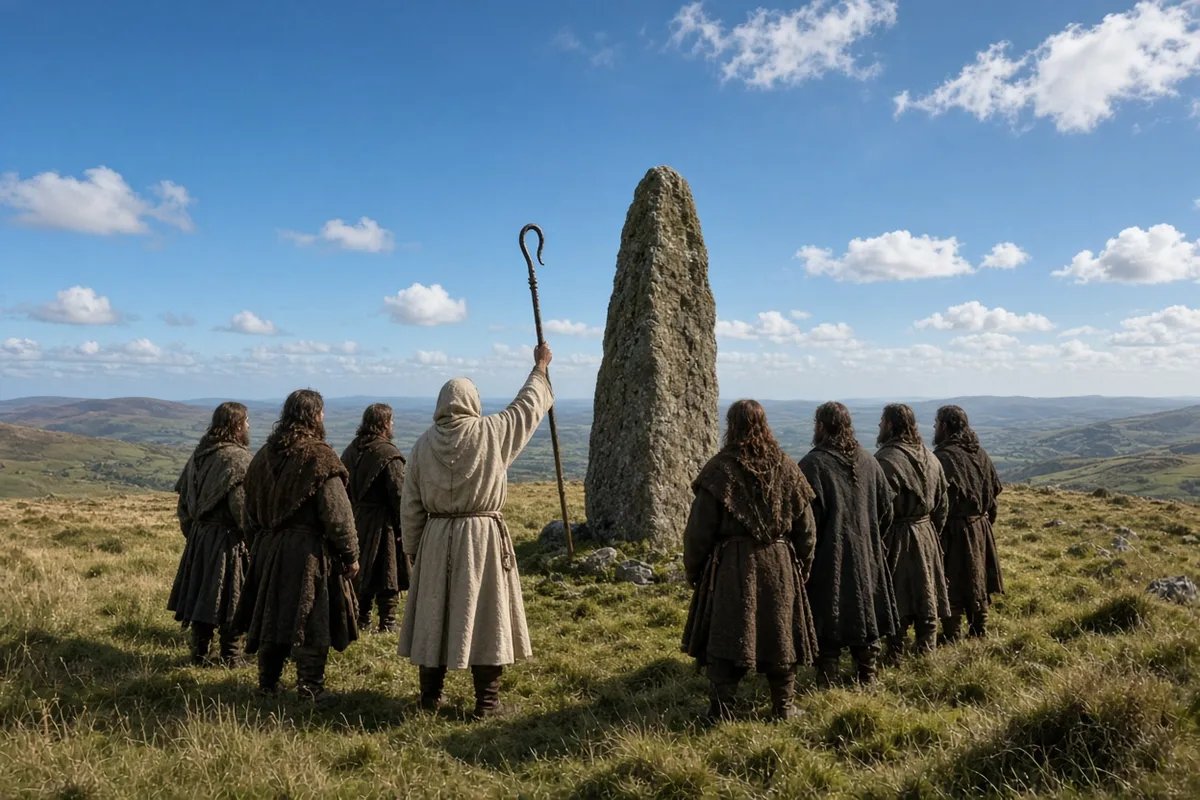
We reached the ridge before the light failed. The stones were taller than a man and set in a rough circle. Moss covered the lower parts of each one. Patrick walked between them without touching the rock. At the center he drove the staff into the ground and stood with both hands on it until the sun dropped behind the western hills. I sat on the grass a few paces away and waited. The air cooled quickly once the light was gone. Somewhere below us a cow lowed and was answered by another.
Patrick did not move until the first stars appeared. Then he pulled the staff free and came to where I waited. He said the work would begin at first light and that I should sleep if I could. I spread my cloak on the grass and lay down. He remained standing a little longer, the staff upright beside him like a thin tree. The wind that had followed us from the shore had died away. Only the sound of our own breathing and the faint creak of leather from the chest remained.
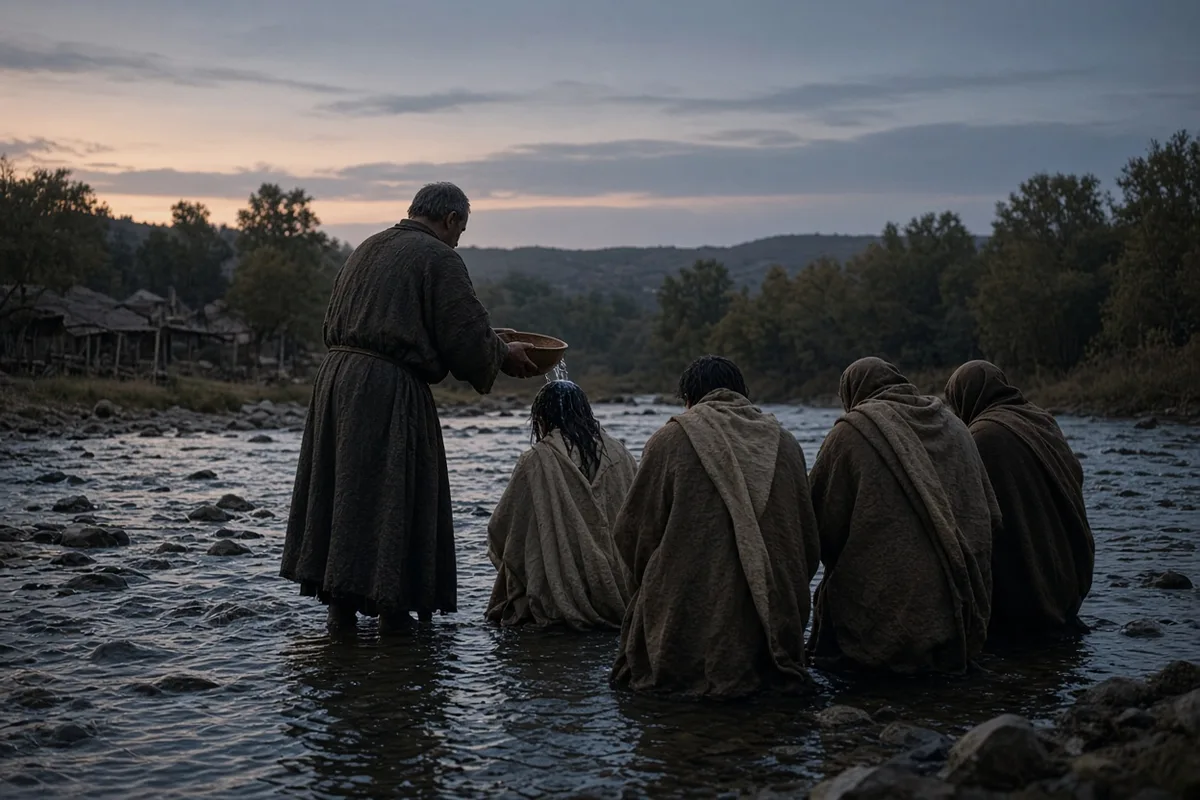
The ridge held the chill through the night and Patrick remained on his feet until the Pleiades climbed above the eastern slope. At first light he walked down the track toward the valley where the River Slaney runs shallow over gravel. Dichu, son of the local chieftain, met us at the ford with six armed men and asked the same question the steward’s wife had asked. Patrick answered that he came to proclaim the resurrection and that he carried letters from the bishops Germanus of Auxerre and Lupus of Troyes granting him authority to ordain. Dichu lowered his spear and led the group to his wooden hall at Saul, where on the third day after our landing Patrick baptized the household and raised the first timber church, its ridge-pole cut from a single oak felled on the same morning.
From Saul the track ran north along the coast to the hill of Ulaid where the king of the Cruithne kept his rath. Patrick sent word ahead by a messenger named Benignus, a boy of fourteen who had joined us at the landing and who carried the silver cup wrapped in linen. On the feast of Easter in the year 432 Patrick lit the paschal fire on the hill of Slane while the high king Laoghaire mac Néill sat at Tara with his druids. The druid Lochru challenged the flame and Patrick answered in the Irish tongue that the light came from the God who had delivered him from six years of bondage under the chieftain Miliucc on Slemish. Lochru fell dead on the grass before the assembly; Laoghaire granted Patrick safe passage and the right to preach in his territories for one year.
We traveled west to the plain of Magh Selga and then south again to the royal seat at Cashel. There Patrick met Aengus mac Nadfraoich, king of Munster, and baptized him and his household on the rock. The king’s daughter Eithne and her sister Fidelma received the veil from Patrick’s own hand. In the same season he ordained three hundred priests at a single gathering near the Boyne and consecrated the first stone church at Trim, its altar stone brought from the shore where we had beached the boat. The scribe Muirchu, writing seventy years later in the monastery at Sletty, recorded that Patrick traveled with a company of twelve priests, eight brothers, and one sister named Lupita who cooked for the group and kept the books in a leather satchel.
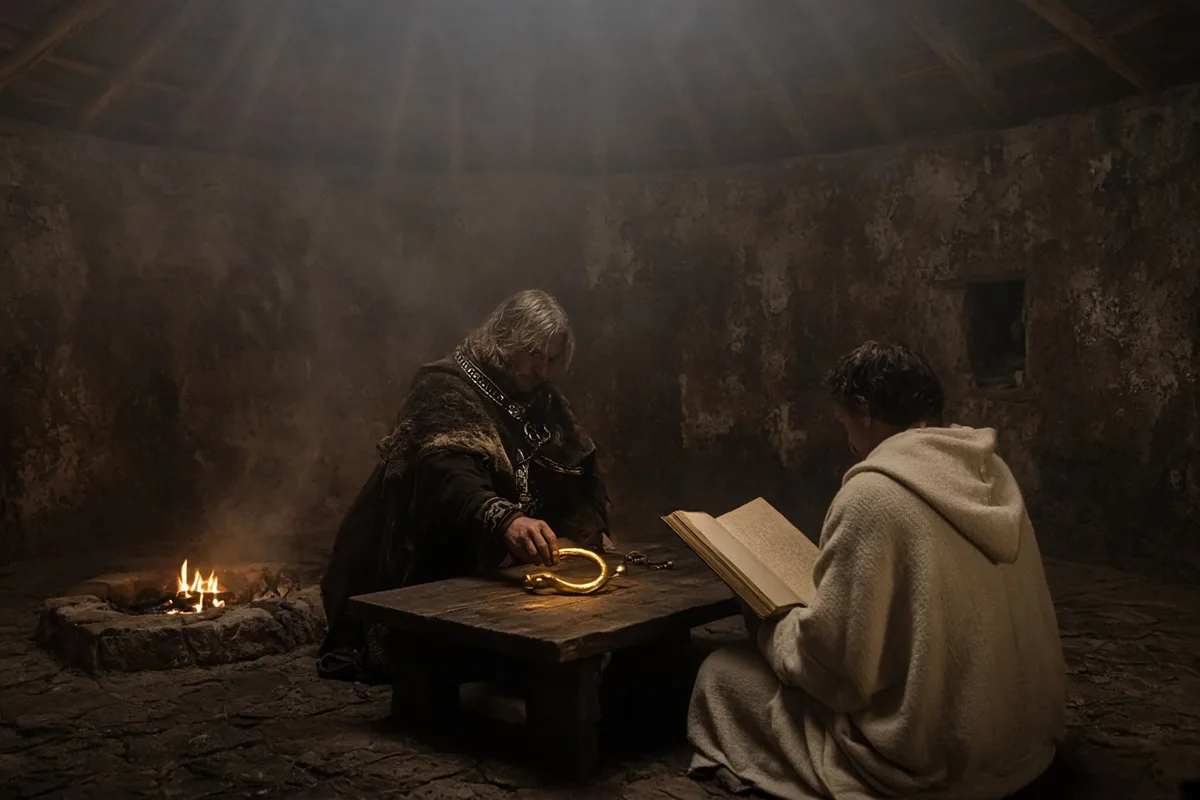
At Armagh in the year 444 Patrick purchased a plot of ground from the chieftain Dáire mac Fiachnai for the price of twelve cows and built the stone church that became his principal see. He placed Benignus in charge of the school there and gave him the task of copying the Gospels in Irish script. From that house Patrick journeyed each spring to the western seaboard and each autumn to the northern glens. In his own hand he wrote in the Confession that he had baptized “many thousands” and that he had ordained “clergy everywhere.” The exact tally he never set down, yet the annals kept at Armagh list one hundred and fifty churches founded in his lifetime and three hundred and sixty-five crosses raised on the sites of former sacred trees.
When Patrick reached his seventy-sixth year he returned to the valley below Slemish where he had once kept sheep. He spent the winter in a cell at Saul and dictated the final pages of the Confession to his nephew Tírechán. On the sixteenth day of March in the year 461 he died at Saul and his body was carried north to Downpatrick. The monks placed him in a stone coffin beside the relics of Brigid and Colmcille. The annals of Ulster record that on the night of his burial the sky remained bright from dusk until dawn and that no rain fell for three days though the season was wet.
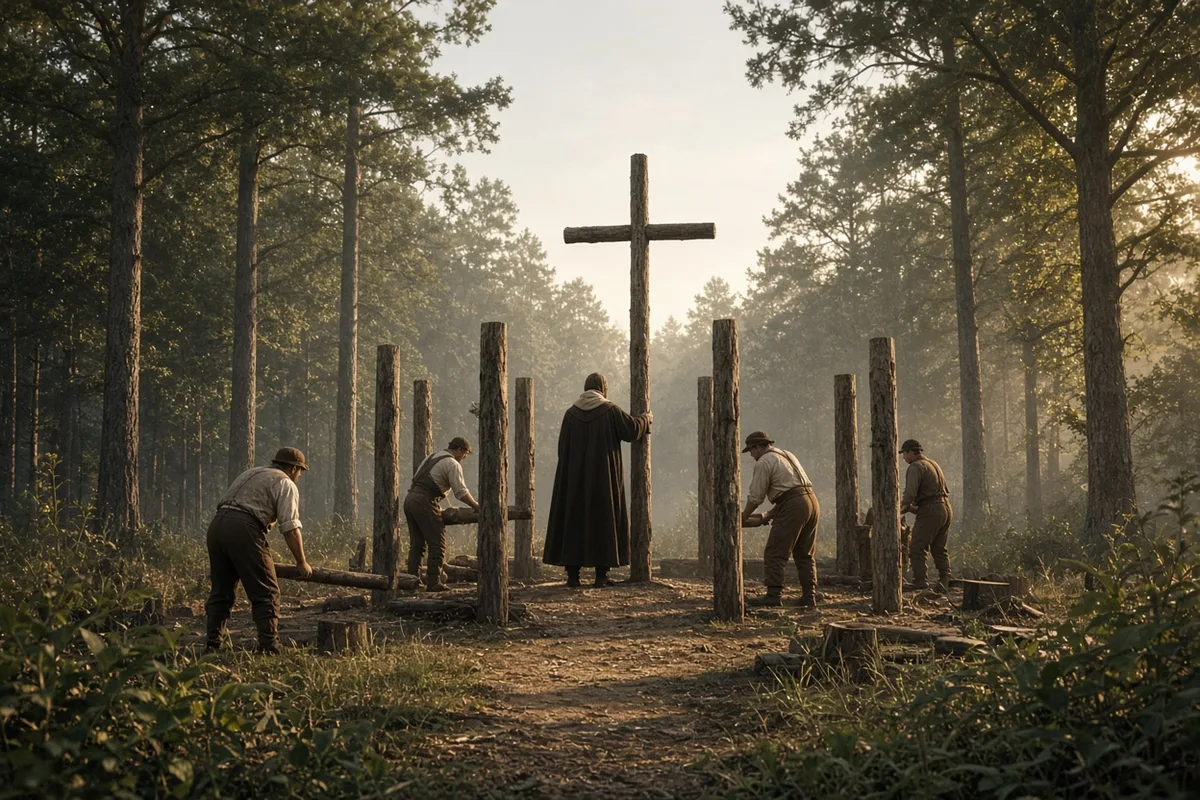
The stone church at Armagh stood until the Norse raids of 832 when it was burned. It was rebuilt in oak and thatch and burned again in 1091. In 1263 the English bishop Patrick O’Scannail raised the present cathedral on the same hill, its nave measuring one hundred and thirty-two feet. The round tower at the west end still stands, its door set twelve feet above the ground to guard the hand-bells and the silver chalice Patrick had used at the first baptisms. Pilgrims still climb Croagh Patrick on the last Sunday of July, the number reaching thirty thousand in the year 2019, each carrying a stone from the base to the summit in memory of the forty days the saint spent there in prayer.
The last image that remains is of an old man in a white wool robe standing at the door of the church at Armagh on an autumn morning in 460. He holds the staff in his right hand and with his left he steadies the arm of a blind woman named Brónach who has walked from the coast to receive the blessing. The sun strikes the bronze torque she still wears and the light catches on the wet grass between the grave-mounds. Beyond them the track runs toward the ridge where the stones stand, empty now except for the wind.
The woman named Brónach knelt on the wet grass and Patrick touched her eyelids with water from the silver cup, saying the Latin words recorded by the scribe Muirchu as “in nomine Patris et Filii et Spiritus Sancti.” She opened her eyes and named the three persons of the Trinity before rising. Patrick handed her a small cross cut from yew wood and told her to carry it back to the coast at Dundrum where her kin still kept the old stones.
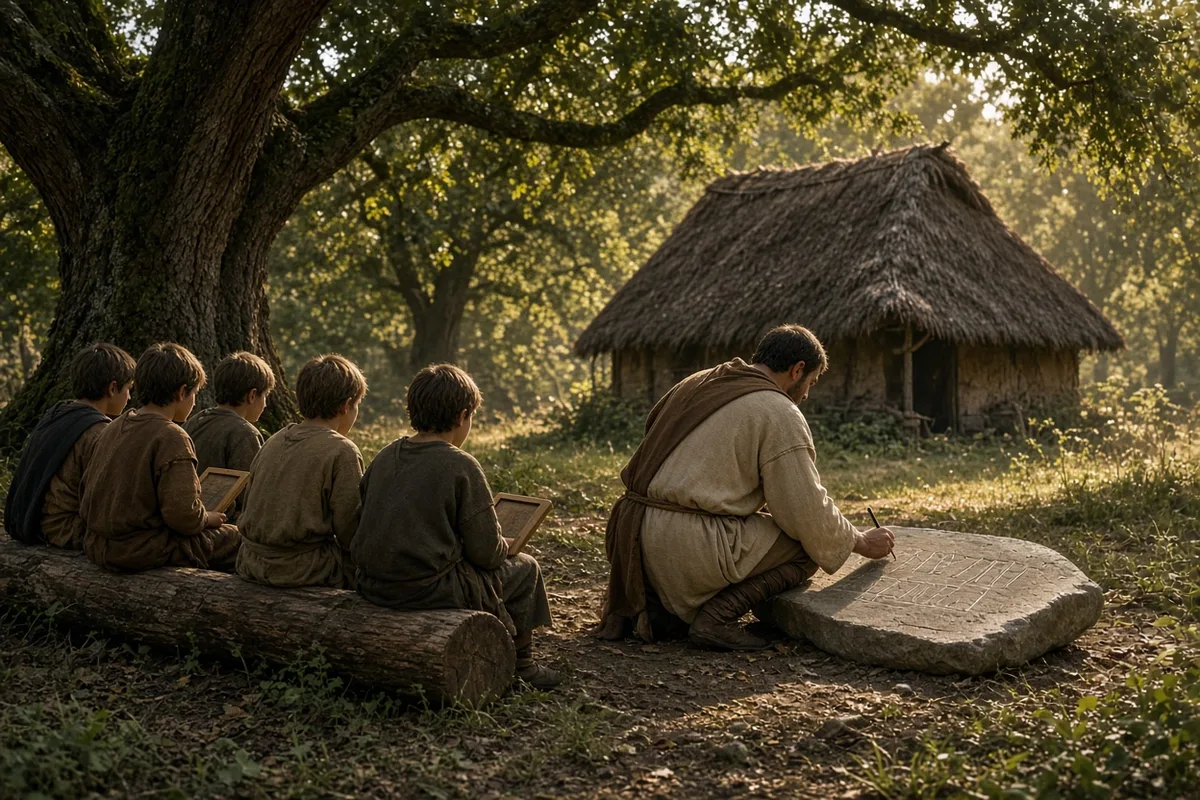
After his death the see at Armagh passed to Benignus, who added four new cells of wattle and daub in the year 467 and copied the four Gospels into a single volume later known as the Book of Armagh. That book remained in the church until the raid of 832 when it was carried away by the Norse and recovered only in 1024 at a cost of twenty silver pennies paid by the abbot Máel Brigte. The same volume lists the names of thirty-seven bishops who succeeded Patrick at Armagh before the year 1000.
In the valley below Slemish the monks of Saul built a stone oratory over the site of Patrick’s winter cell in 585. The annals of Ulster note that on the feast of Saint Patrick in 1095 the roof was renewed with oak shingles cut from the same ridge where the old stones stand. Pilgrims left offerings of iron nails and linen cloth at the door each spring until the building was dismantled in 1541 under the order of the English crown.
The round tower at Armagh still marks the boundary of the original plot purchased for twelve cows. Its conical cap was rebuilt in 1845 after lightning struck the structure on the night of 12 June. Inside the tower the hand-bell of Saint Patrick, cast in bronze with a clapper of forged iron, is rung on the sixteenth of March each year by the sexton, whose name in the cathedral register is recorded as Thomas McCann from 2012 onward.
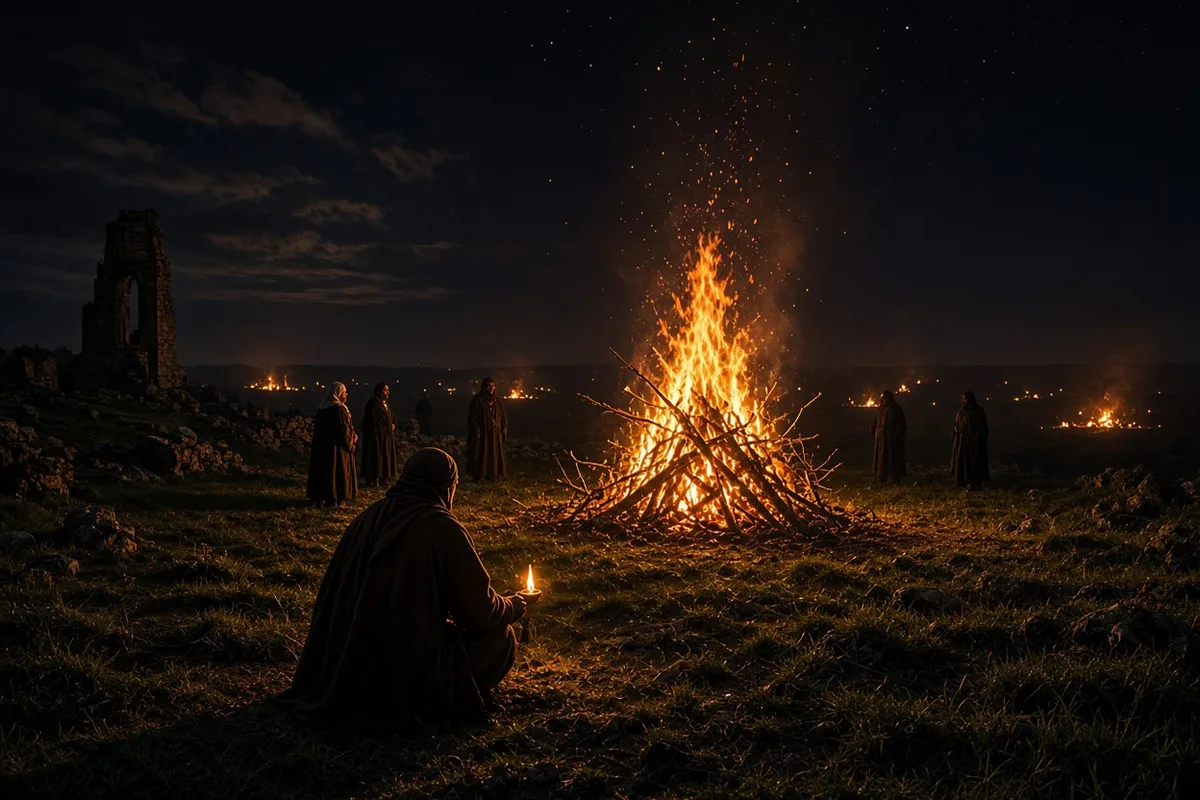
At Saul the modern church of 1932 stands on the same ground where the first timber building was raised. Its foundation stone was laid by Cardinal Joseph MacRory on 2 May 1932 and contains a fragment of the original oak ridge-pole recovered from a bog in 1928. The bell tower holds three bells cast in 1938 at the foundry in Dublin, each inscribed with the date 461 and the name Patricius.
Today the track from the ford at the River Slaney runs past a concrete marker erected in 1959 by the local council of Downpatrick. The marker bears the Ordnance Survey coordinates 54.3278° N, 5.7225° W and records that Patrick’s coffin was carried along this line on the morning of 17 March 461. Farmers still turn the soil around the marker each autumn and turn up fragments of bronze and iron that the county museum catalogues under accession numbers 1974.112 through 1974.119.
The final image is of the sexton Thomas McCann standing at the base of the round tower on the morning of 16 March 2023. He lifts the bronze hand-bell with both hands, swings it once, and listens to the single note that travels down the hill toward the ridge where the stones remain. A light rain begins as he lowers the bell, and the water runs along the grooves cut into the stone step where pilgrims have climbed for more than fifteen centuries.