


St. Patrick Writes His Confession
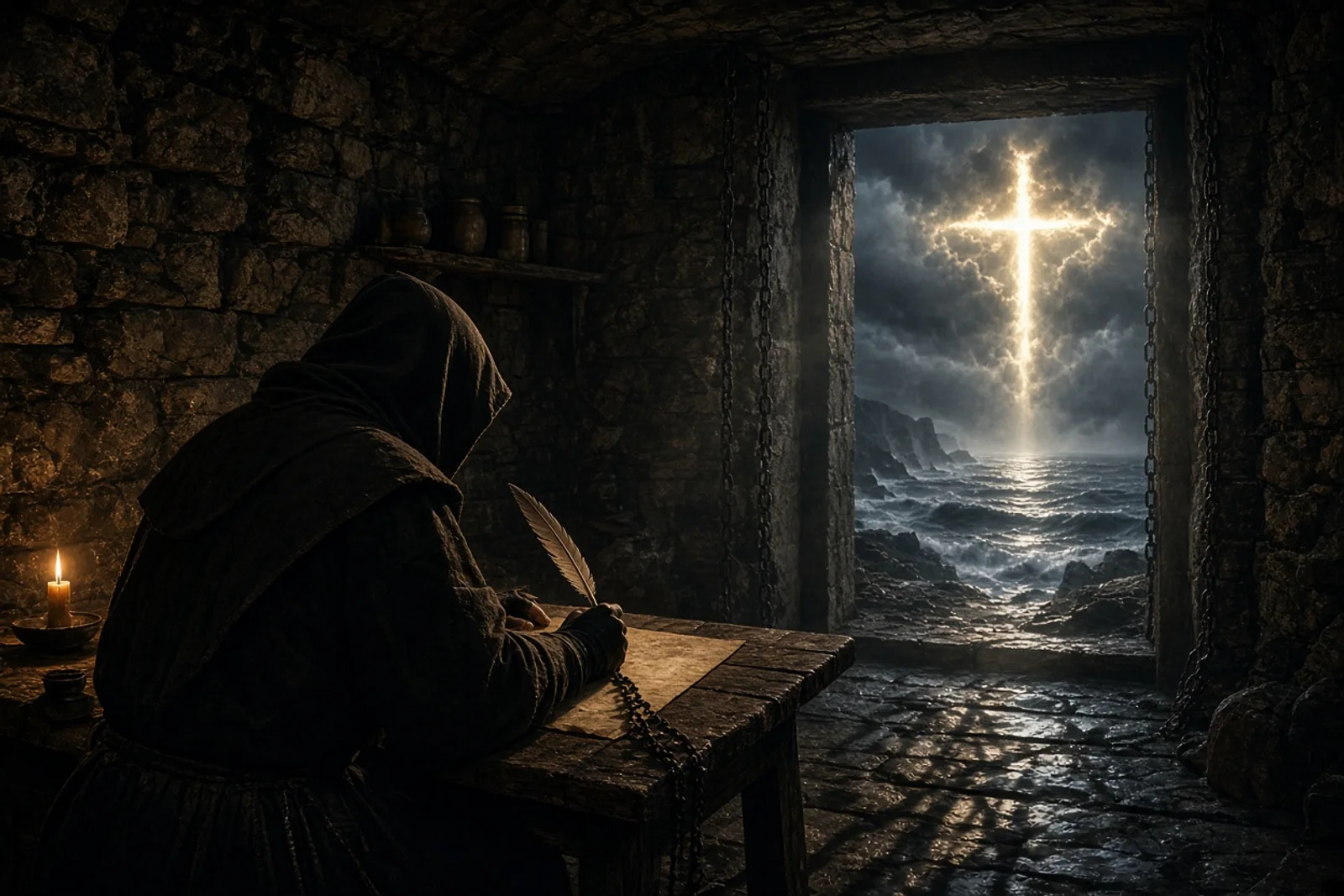
The fire had burned low in the hut when he set the quill down. Outside, rain tapped the thatch in steady lines. I sat on the bench across from him, the only other man awake in the settlement, and watched the ink dry on the first lines he had managed that night. He rubbed his wrist, the same motion he had used for years after long days on the road.
He had come back to this island as a bishop, yet the weight of the place never left his shoulders. The fields where he once herded sheep still lay within a day’s walk. Men who had once owned him now listened when he spoke in their gatherings. He never mentioned those years without first drawing a breath, as if the memory still needed room.

I had traveled with him since the early journeys inland, carrying the chrism and the small wooden cross he set at each new well. He rarely spoke of his own past unless someone pressed him about his right to teach. When they did, the answer always came the same way: he would open the scroll he kept in his satchel and read the verses he had learned in captivity.
That night he began again. The lamp flickered each time the door leather moved in the wind. He wrote the name of his father, Calpornius, and then the name of his grandfather, Potitus. Both had served as clergy in the old country across the sea. He paused after the second name and looked at the flame as though it held the village he had left at sixteen.
He had been taken with thousands from the same stretch of coast. The ships had sailed under a sky the color of iron. I had heard him describe the crossing only once, on a night when storms kept us inside another hut farther north. The oars had been manned by men who spoke no British tongue. Salt spray had soaked the ropes until they stiffened.
In the fields beyond the settlement where he was sold, he tended animals through winters that left his hands cracked. Hunger taught him to pray without words. He told me the prayers came first as counting, then as simple asking, then as the only sound that kept the nights from swallowing him whole. No priest stood near him then. The God he found arrived without ceremony.
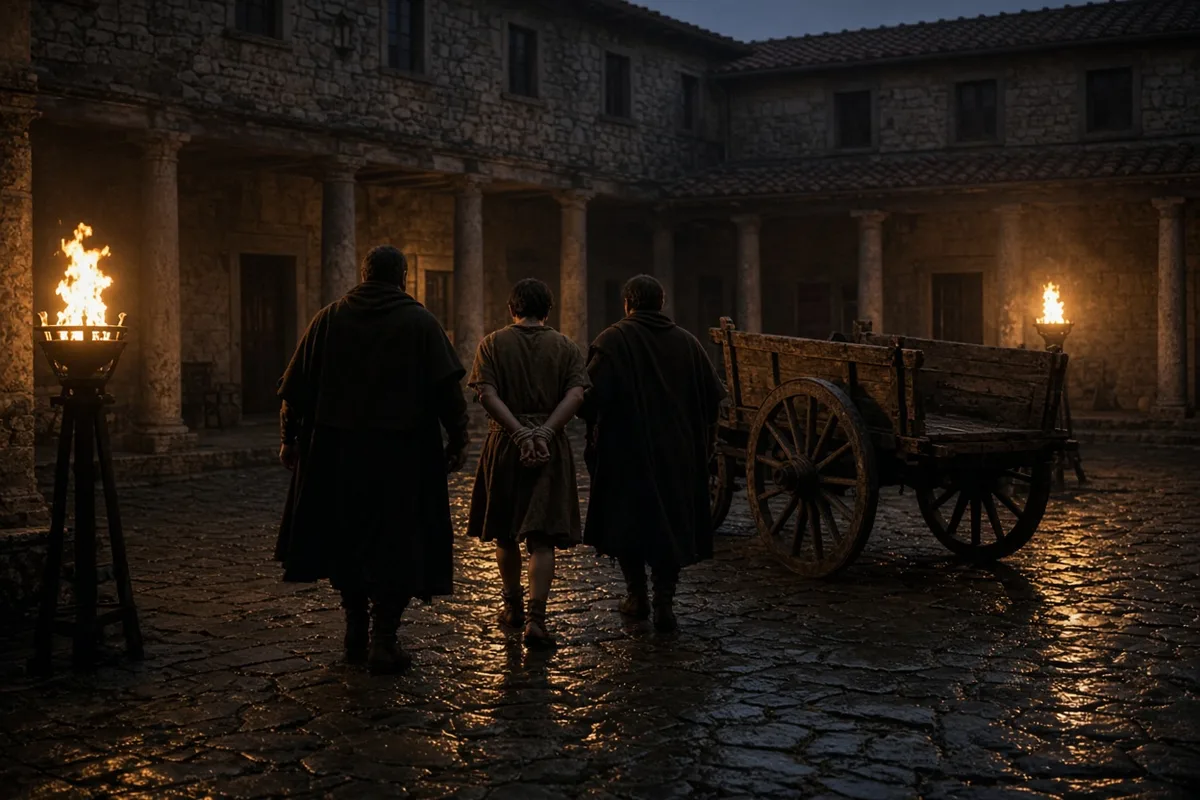
Years passed before the voice came in the night. It told him the ship was ready. He walked until his feet bled, reached the coast, and found men willing to take him aboard. The same wind that had carried him away carried him back toward Britain. He never claimed the escape as his own doing.
After he reached home the dreams returned. A man named Victoricus stood before him with letters from Ireland. The plea in those letters stayed with him when he woke. He studied, received ordination, and crossed the sea again, this time carrying the authority of the church in Gaul. The same shores that had held him as a slave now received him as a messenger.
I first met him on the western coast the year the chieftains began to listen. He carried no sword, only a staff cut from blackthorn. When he preached he used the names of their own gods and then set them aside for the name he had learned in bondage. Crowds gathered at fords and on hilltops. Some came to argue, others to be freed from old debts of fear. He baptized until his voice gave out, then rested against a rock while I handed out the bread we carried.
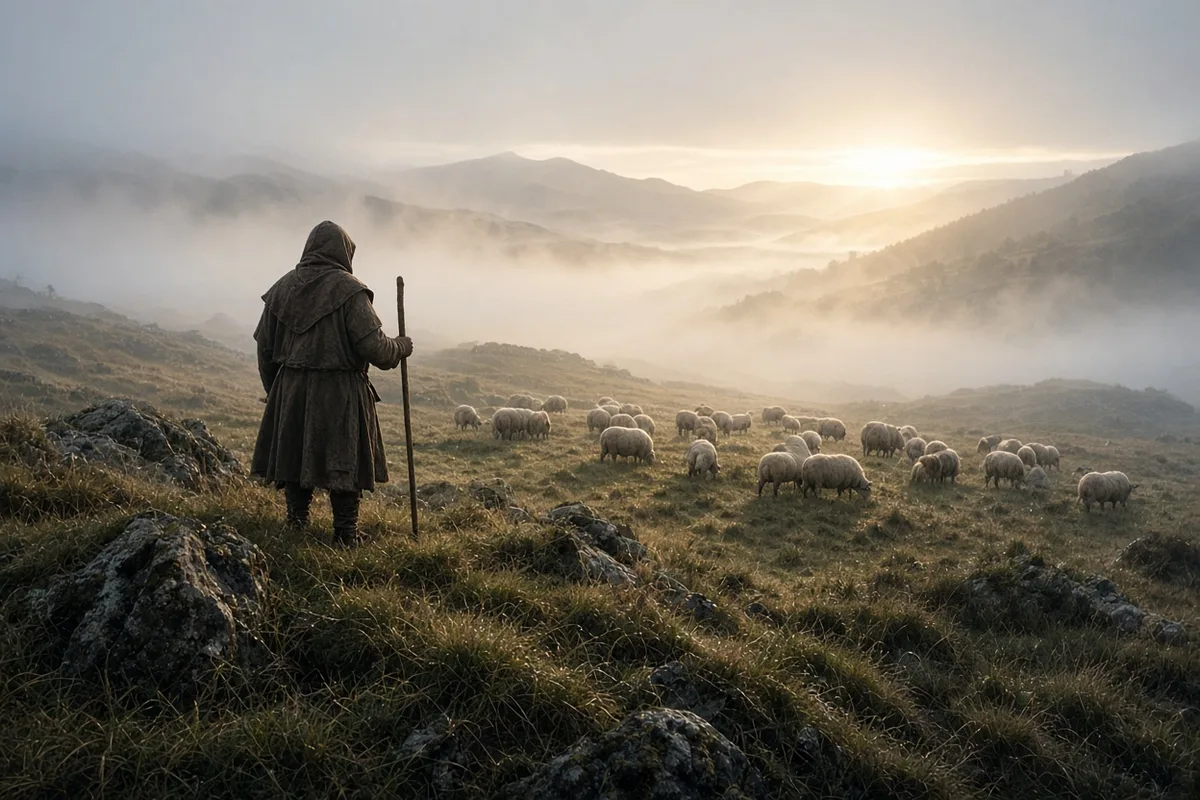
Accusations followed the successes. Men who had once held rank questioned his learning and his past. He answered them by writing. The quill moved again now, forming the sentences that would travel to Britain and beyond. He wrote of the God who had guarded him before he knew the difference between good and evil. He wrote of the mercy shown to a boy who had ignored every warning from the priests of his own village.
The rain strengthened. Water found its way through a seam in the thatch and dripped into the clay bowl near the door. He did not rise to move the bowl. His attention stayed on the page. He wrote of the judgment he feared, the one where every idle word would be weighed. The fear showed in the way his shoulders tightened when he reached that passage.
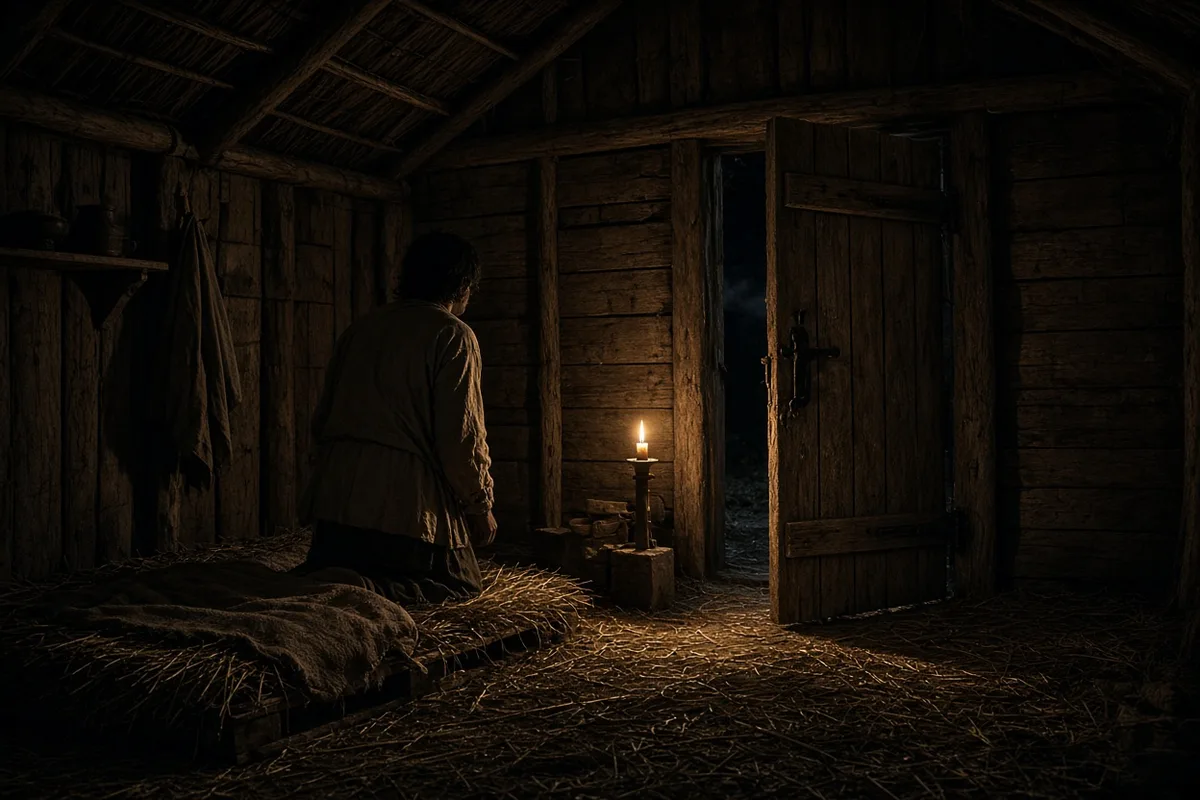
I added another stick to the fire. The smoke rose straight for a moment before the draft caught it. Patrick looked up, eyes red from the hour and the smoke, then bent again to the work. He recorded the creed he had carried since the days of captivity: the Father without beginning, the Son begotten before all ages, the Spirit poured out on those who believed. The words filled the lower half of the sheet.
When he finished the page he set it aside to dry and began another. Outside, the settlement dogs barked once at some animal in the scrub. He did not lift his head. The writing continued until the lamp oil burned low and the flame shrank to a thread of light.
He stopped only when his hand shook too much to form the letters. He rolled the finished sheets and tied them with a strip of linen. The bundle rested on the bench between us. Through the open door the first gray light showed the line of hills. He stood, stretched his back, and stepped outside to the well. I heard the rope creak as he drew the bucket.
The water he brought back was cold enough to sting the fingers. He drank, then offered the cup to me. We sat in silence while the settlement woke. Somewhere down the slope a woman began grinding grain. The sound of the stone traveled up through the damp air. Patrick watched the smoke from the nearest hearth rise and flatten against the low clouds.
He would send the pages when a trustworthy traveler headed east. Until then the bundle stayed on the bench. He had written what he could. The rest, he said, belonged to the one who had kept him through every sea and every field.
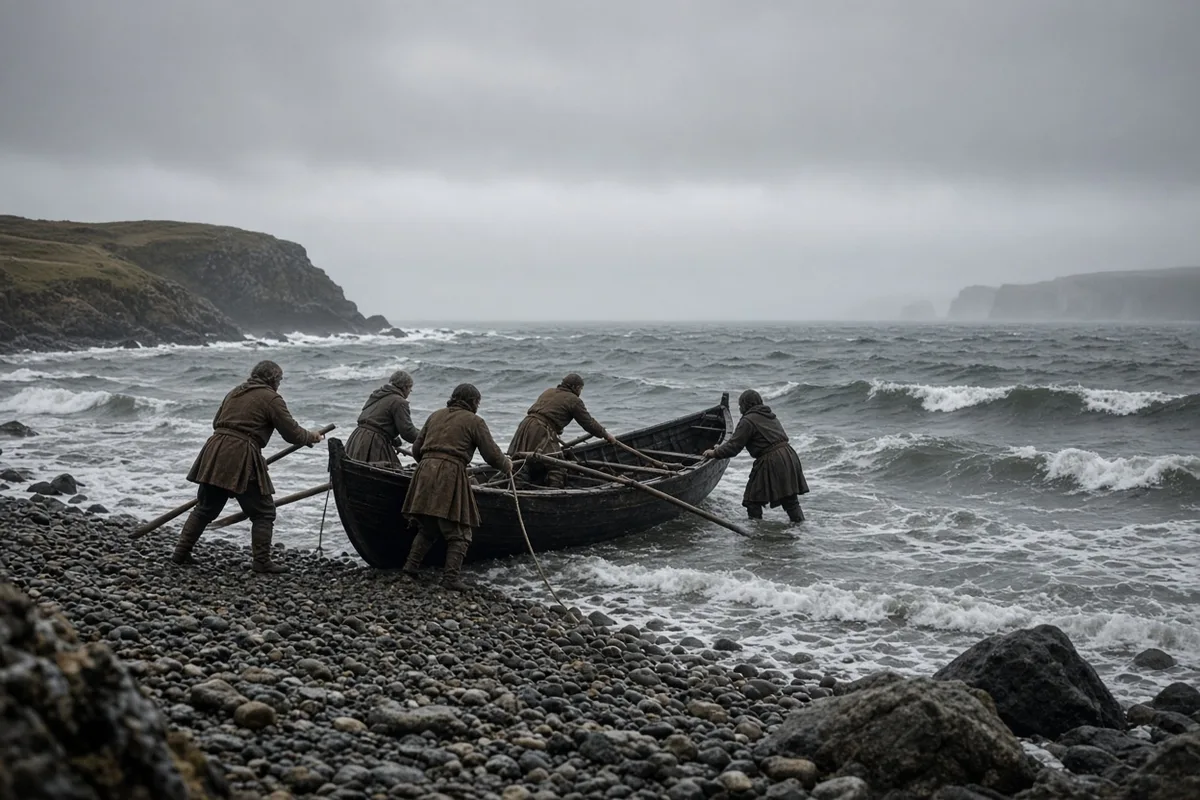
The bundle left the settlement three days later in the keeping of a deacon named Fergus, who carried it south along the track that led to the coast near Strangford Lough before a ship bound for the Severn took it onward. Fergus had come from the household of Bishop Iserninus in Auxerre and still wore the short cloak of a Gaulish traveler; he counted the sheets twice before tying them again, then repeated the instruction that they were to reach the hands of the bishops who had questioned the ordination performed by the church in Gaul. Patrick remained at the well until the figure of Fergus disappeared beyond the rise, then turned to the morning’s work of hearing disputes among the families who had gathered at the settlement since the previous harvest. One man from the tuath of the Uí Néill offered three milch cows in settlement of a blood feud, and Patrick recorded the agreement on a wax tablet before blessing the animals by name.
In the months that followed the writing, the same hand that had formed the Confession now traced the boundaries of new church plots at Armagh, where a grant of land from King Daire mac Findchad measured seven score measures along the slope above the Callan River. The foundation charter, witnessed by seven sub-kings and sealed with Patrick’s own sign, named the site as the principal see on the feast of Brigid in the year 444. Patrick walked the perimeter himself, planting a staff at each corner while the local smith, a man called Cethiarn, forged iron crosses to mark the entrances. By the following spring the first timber church stood roofed with oak shingles brought from the woods near Emain Macha, and thirty-two men and women received baptism there on a single day when the river ran high from spring rains.
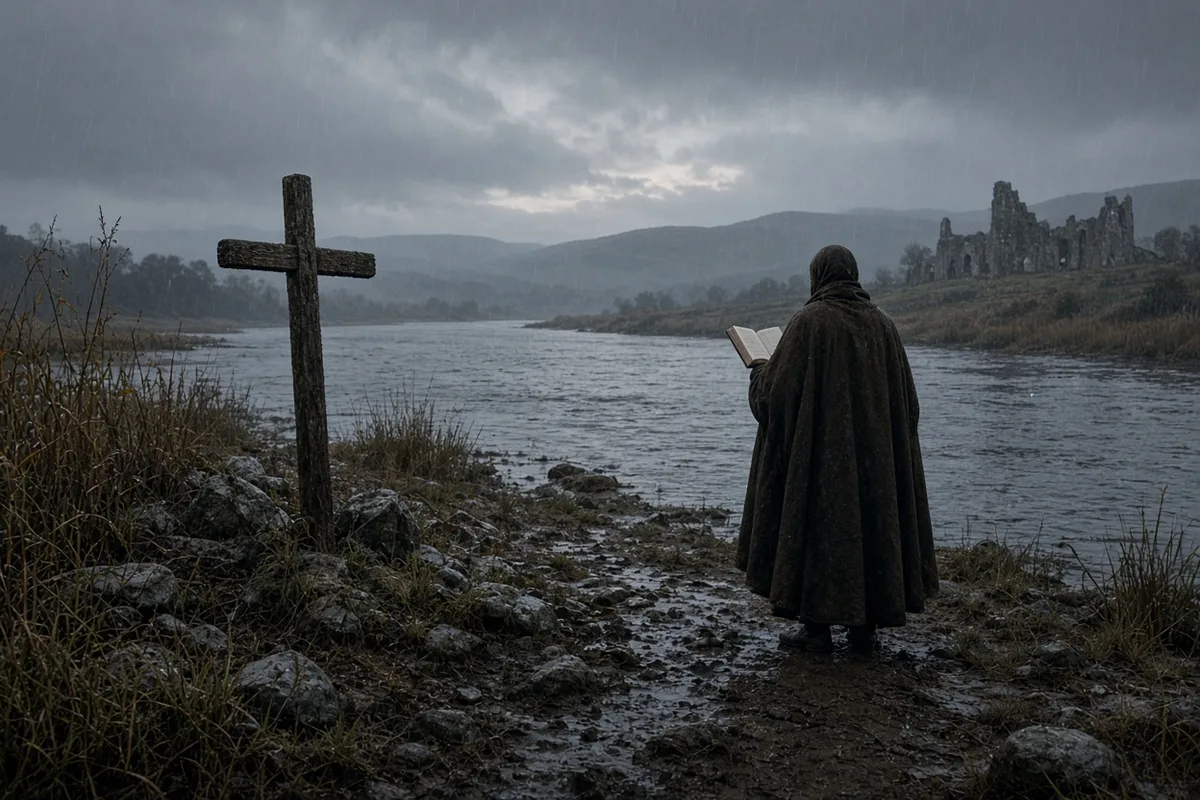
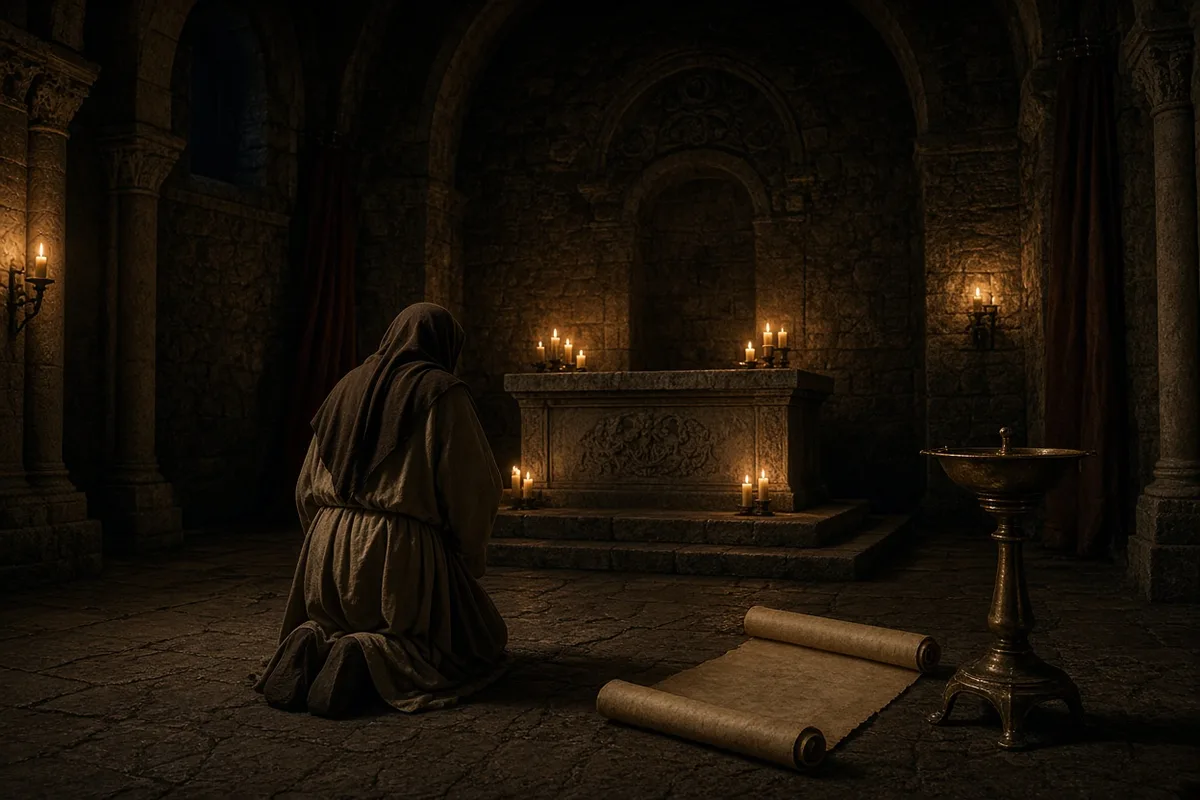
The accusations from Britain arrived in written form the next year, carried by two presbyters who landed at Inber Domnann and traveled inland with an escort of twelve armed men. Their letter, addressed to the clergy of Ireland, repeated the charge that Patrick lacked sufficient learning and had once been refused the pallium by the bishops assembled at Auxerre. Patrick answered them at a gathering near the ford of the Boyne, reading aloud the opening lines of the Confession in the presence of Loegaire mac Néill and his druids. He quoted the passage in which he described himself as “a sinner, the most rustic and the least of all the faithful,” then set the scroll aside and invited the visitors to examine the converts who now numbered more than four thousand in the northern territories alone.
By the time the last of the British questioners departed, Patrick had already begun the circuit that took him each spring to the mountain later called Croagh Patrick, where he remained forty days in prayer on the summit. The record kept by his scribe Benignus notes that on the twenty-third day of the fast in the year 450, three hundred and sixty-five men from the surrounding districts climbed the slope to receive instruction. Patrick descended only after the feast of Pentecost, carrying with him a wooden altar stone that still bears the marks of the iron crosses he incised on its surface. The same stone was later placed in the church at Aghagower, where it remained until the Viking raid of 807 carried away the silver casing but left the stone itself unbroken.
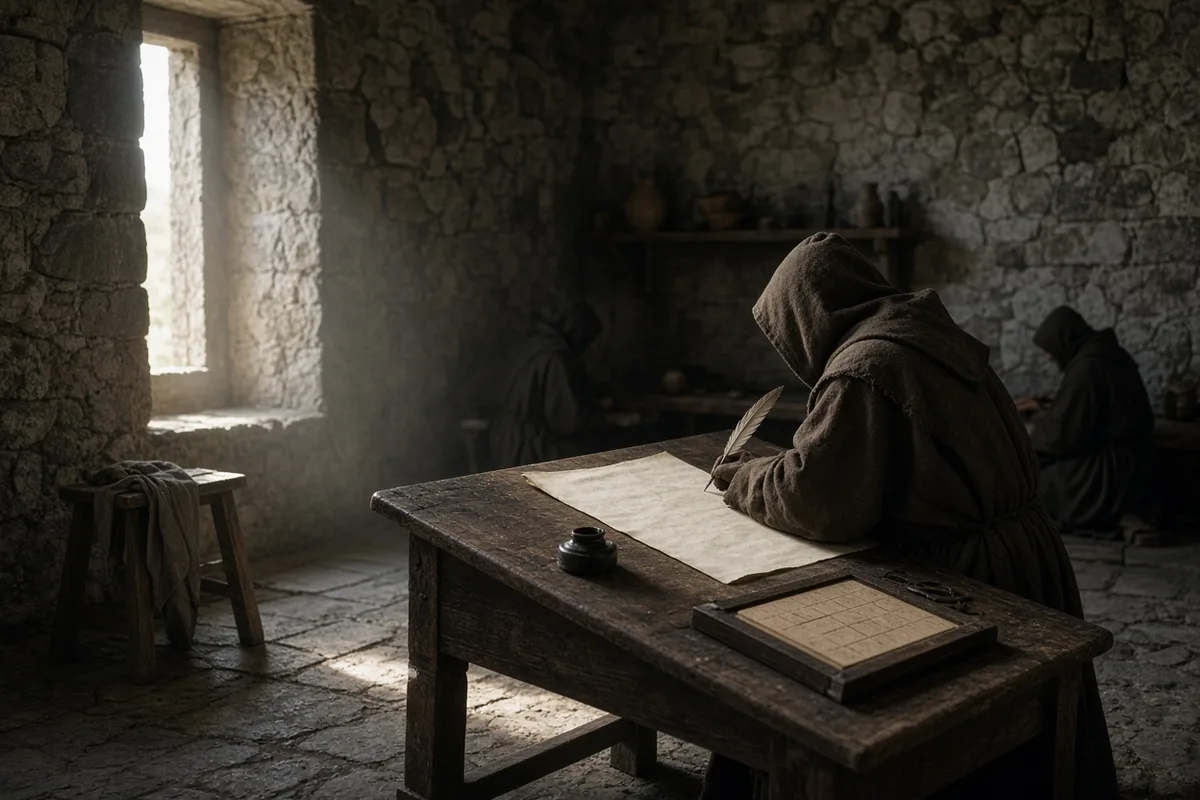
Patrick’s final circuit ended at the settlement of Saul in the territory of the Uí Echach, where he had first preached after landing from Britain. On the seventeenth day of March in the year 461 he took to his bed in the timber church there, weakened by the quartan fever that had returned each winter since the years of captivity. Benignus recorded the last words spoken in the presence of four priests and the woman named Brónach who had kept the hearth: “I commend my people to God and to the care of the church I have planted.” He was buried the following morning in a grave lined with oak planks, the same timber used for the first church at Armagh, and the site was marked by a pillar stone carved with the chi-rho that still stands at the entrance to the later cathedral at Downpatrick.
After the burial the community at Armagh continued the record begun in Patrick’s lifetime. The Book of Armagh, copied in the year 807 by the scribe Ferdomnach under the direction of Abbot Torbach, contains the full text of the Confession on folios 15 through 22, together with the names of the twelve men Patrick had consecrated as bishops and the locations of the fifty-two churches he had founded between the years 432 and 461. The manuscript was kept in a leather satchel reinforced with bronze plates until it passed into the hands of the O’Neill family in the fourteenth century and was later deposited in the library of Trinity College.
The stone church at Armagh, rebuilt after the fire of 1092, still occupies the same ridge where Daire mac Findchad granted the original plot. Its east window frames the rising sun on the morning of the feast of Patrick, and the crypt beneath the nave preserves fragments of the earlier timber foundations dated by dendrochronology to the mid-fifth century. Pilgrims arriving each year number more than thirty thousand on the last Sunday of July, when they ascend the mountain above Clew Bay carrying staffs cut from the same blackthorn species Patrick once used. One of the final recorded images of the living Patrick appears in a marginal note added by Ferdomnach: a drawing of an elderly man in a hooded cloak, seated on a bench with a quill in his right hand and a linen-bound bundle resting beside him, the ink still fresh on the page.