


St. Paul of the Cross Founds Passionists
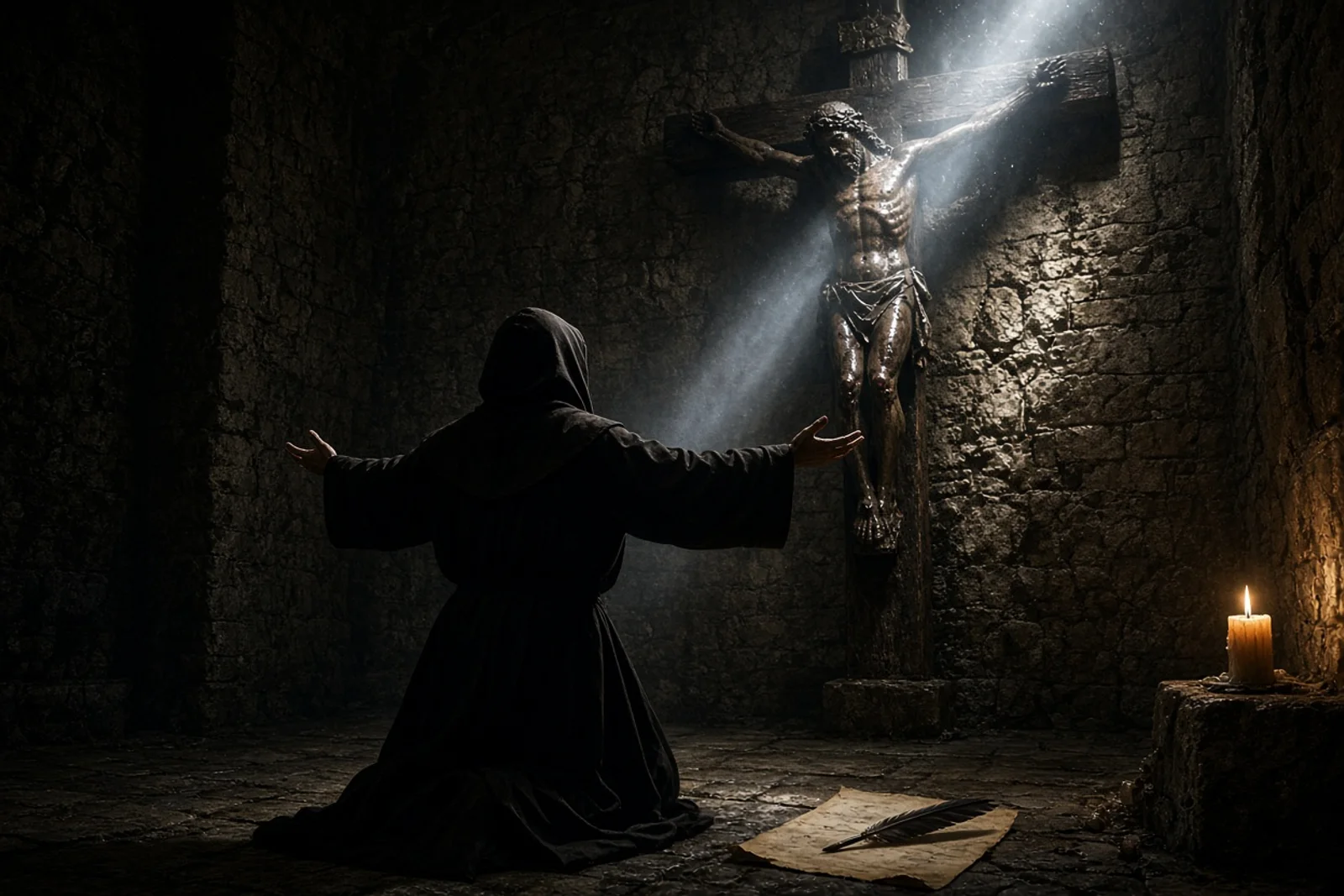
The bishop’s carriage rattled over the stones outside St. Charles just after dawn. I stood by the side door with the sacristan, holding the folded black tunic across my arms. The cloth smelled of new dye and the iron that had pressed the white emblem of the cross and nails into the breast. Inside the church the air was still cold from the night. Paul Danei walked in alone, bareheaded, his shoes already left on the threshold. He looked thinner than when he had left for the hills the month before. His eyes moved once across the nave, then settled on the crucifix above the altar.
Bishop Gattinara met him at the foot of the steps. The two men spoke quietly. I could not hear the words, only the low tone of the bishop and the shorter answers from Paul. Then the bishop took the tunic from my hands and held it up. Paul stripped off his old coat and shirt without hesitation. The November air raised gooseflesh on his arms. The bishop slipped the black garment over his head and tied the cord at the waist. Paul stood a moment in the new habit, feet still bare on the stone, then knelt. The bishop laid both hands on his head and spoke the blessing. No one else moved. The sacristan crossed himself and went back to the sacristy.
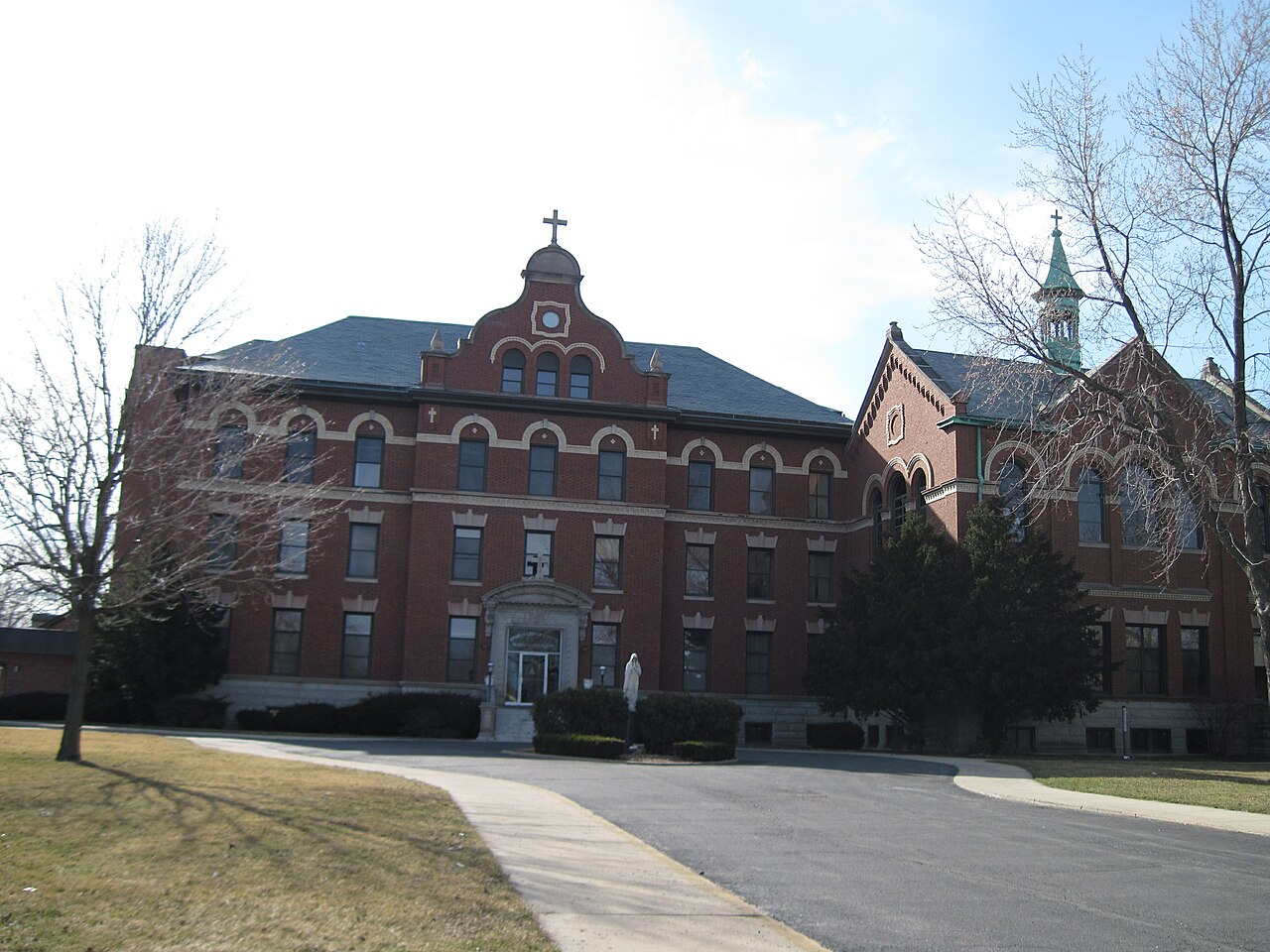
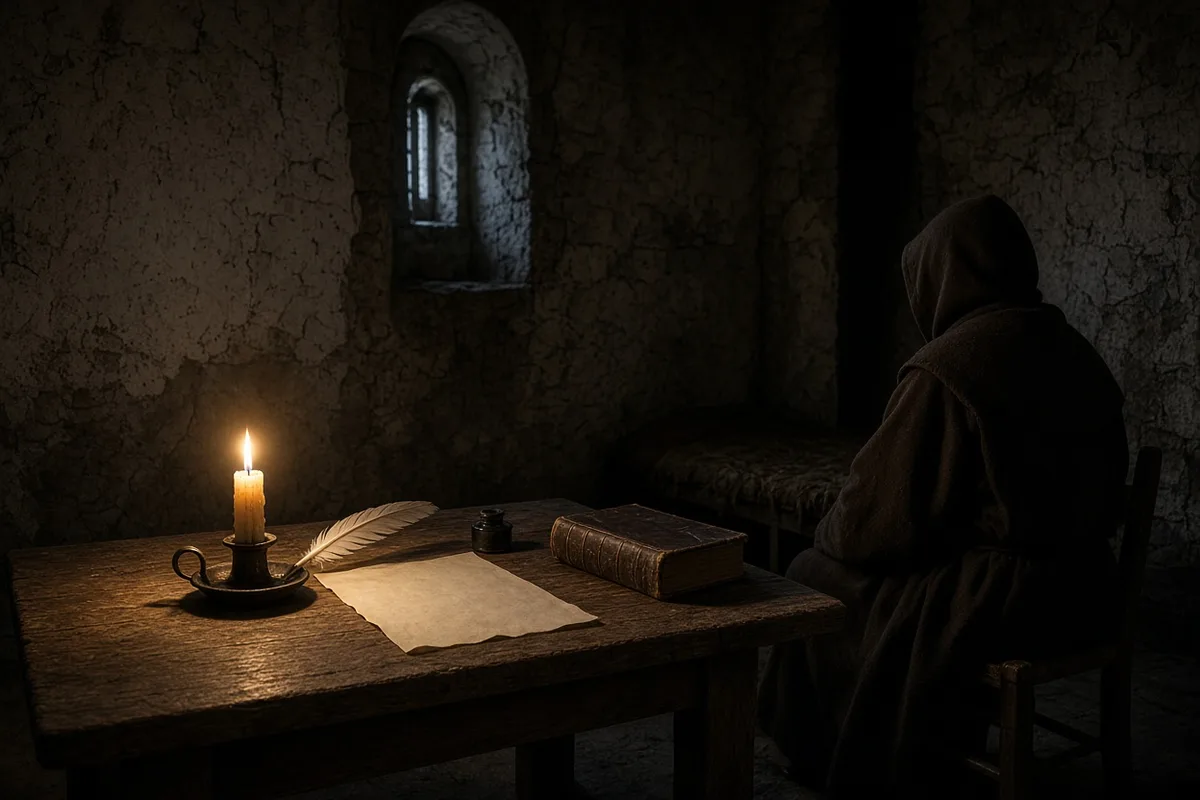
Afterward Paul asked for the key to the small room behind the choir. It had once been used for storing vestments. Now it held only a straw mattress, a wooden bench, and a single narrow window high on the wall. He carried nothing with him except the breviary he had kept from his uncle. I watched him step inside. The door closed. The key turned from within.
For the first days I brought water and a little bread at the hour the sacristan said was allowed. Paul took the bowl without looking up. His face was already marked by the nights without sleep. He wrote on loose sheets spread across the bench. Sometimes the pen stopped and he remained still for a long time, eyes fixed on the small crucifix he had fixed to the wall with a nail. The only sound was the scratch of the nib or the occasional cough from the street outside.

On the tenth day the fever came. I heard it in his voice when he asked for more water. The skin around his eyes had darkened. He kept writing. The sheets grew into a stack that he weighted with the breviary at night. Once, near midnight, I passed the door and heard him speaking softly to the crucifix, not prayers I recognized, but names and places and the word “memory” repeated until it blurred into the sound of breathing.
John Baptist came on the twenty-second day. He stood in the nave for a long time before he knocked. When the door opened he went in without speaking. I heard their voices through the wood, low and steady. John Baptist stayed until the lamps were lit again in the church. When he left he looked older than when he had arrived. He told the sacristan that Paul would not come out until the forty days were finished.
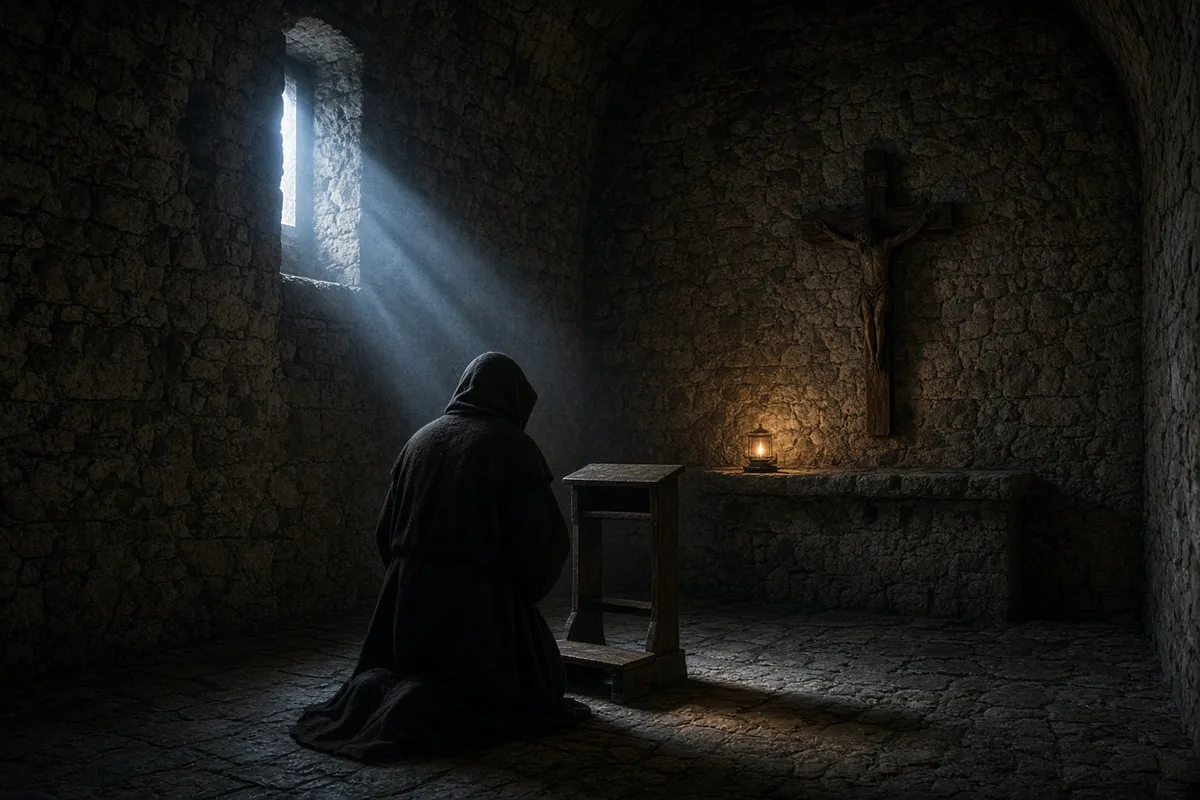
The rule took shape in those weeks. Paul wrote it in one long movement, stopping only when the ink ran dry or when the fever made his hand shake. He read each page back to himself before he set it aside. The words centered on the sufferings of Christ and on the men who would keep that memory alive by their manner of life. He left spaces for later additions but never crossed out a line once it was written.
On the morning the fortieth day ended, the bishop returned. The door opened. Paul stepped out carrying the bundle of pages. His habit was stained at the knees and cuffs. He walked to the altar, placed the manuscript on the stone, and knelt again. The bishop read the first pages where he stood. No one spoke until he finished. Then he signed the document and gave it back to Paul. The new congregation had its rule.
Paul did not leave Castellazzo at once. He stayed another week, sleeping in the same cell, eating what was brought to him, and copying the rule once more in a cleaner hand. On the day he finally walked out he wore the same black tunic and the same bare feet. He carried only the breviary and the folded sheets. John Baptist met him at the church gate. They turned together toward the road that led south.
I stayed behind and swept the cell. The straw mattress still held the shape of his body. On the bench lay a single sheet he had not taken, the last page of the diary he had kept during the retreat. It ended with the words “I have seen what must be done.” The ink had dried unevenly where his hand had trembled. Outside, the winter light moved across the empty nave. The crucifix above the altar remained the same.
The sacristan at St. Charles kept the key to the cell on a ring with the other vestry keys and checked the bolt each evening after compline. On the morning after Paul and John Baptist took the southern road, a messenger arrived from Alessandria with a letter addressed to Bishop Gattinara; the bishop read it aloud in the sacristy and noted the date, 5 December 1720, before folding the paper into his breviary. The letter recorded that the two men had already reached the village of Cremolino, where they lodged for one night in the house of a tanner named Giovanni Battista Rivarossa and spoke until the third hour about the need for twelve men willing to live under the new rule. Three weeks later another letter came from Genoa, dated 28 December, stating that Paul had preached for six successive evenings in the church of Santa Maria Maddalena and had repeated the phrase “the memory of the Passion must be kept by men who sleep on boards and rise at midnight” to an audience that included the rector of the Oratory and two Capuchin lay brothers.
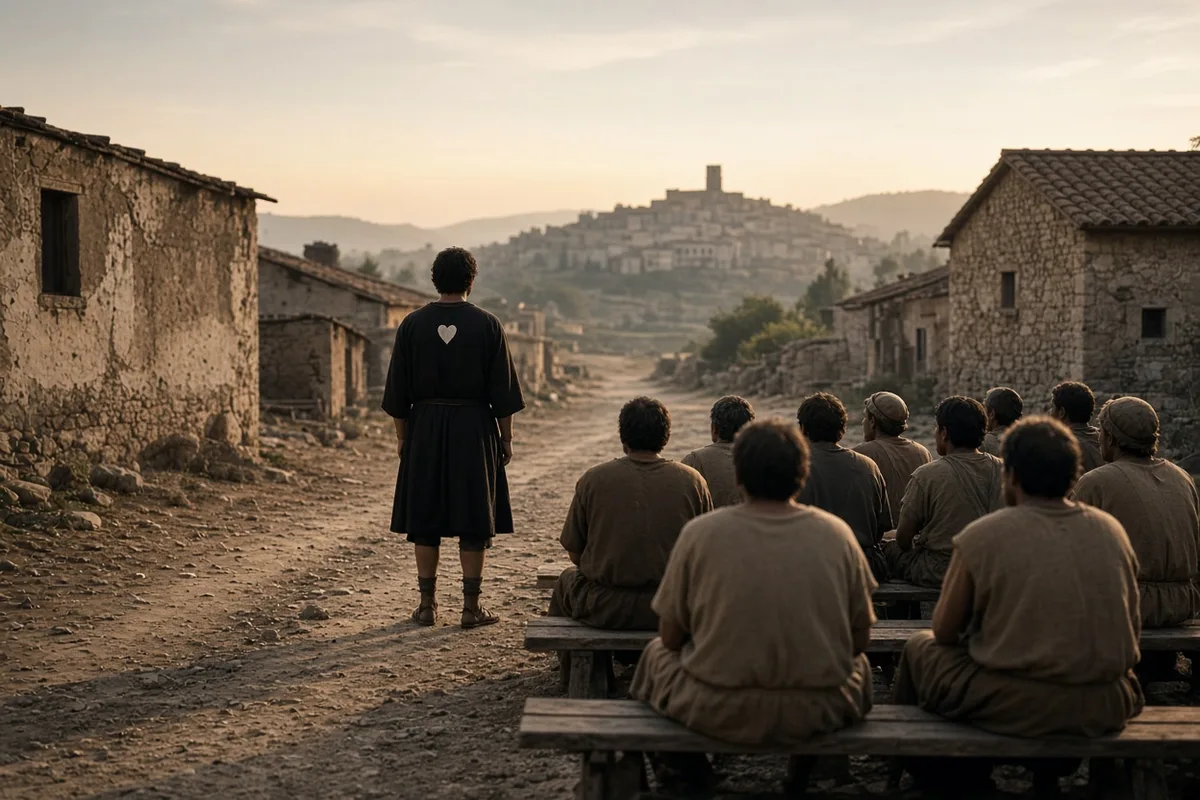
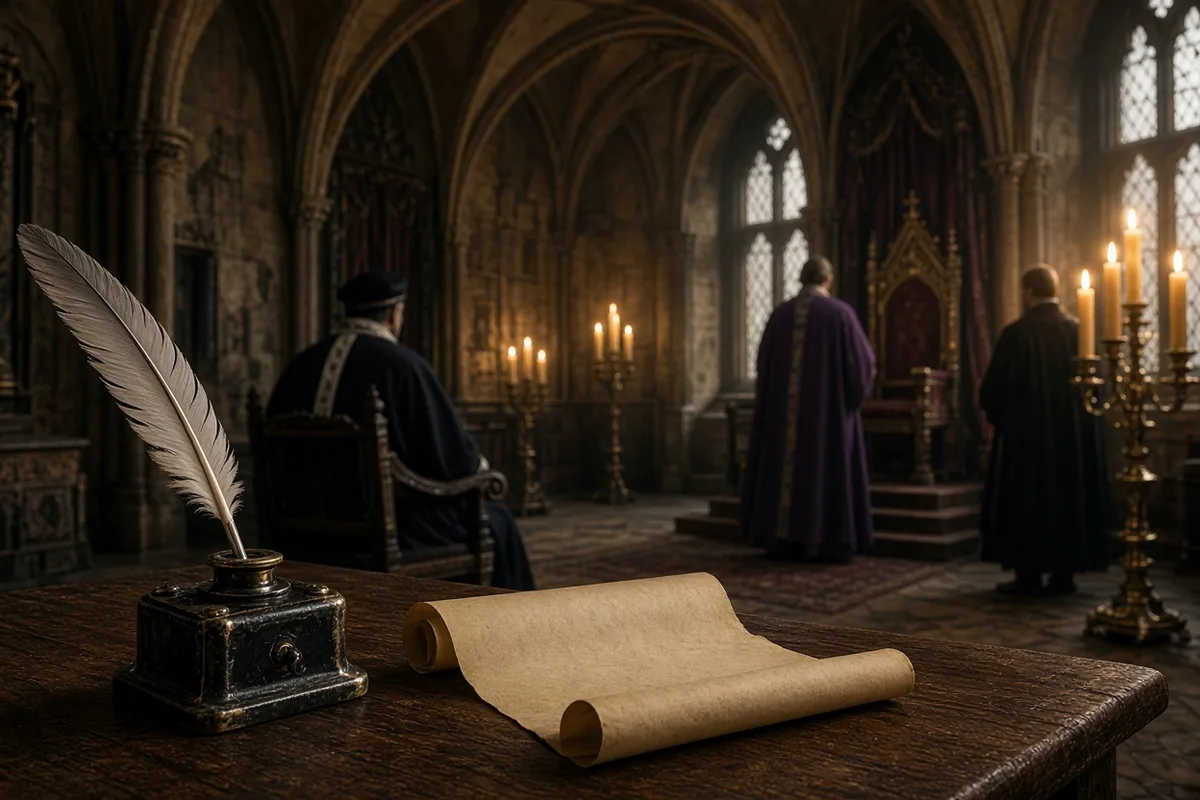
By the spring of 1721 the bishop had granted permission for a second copy of the rule to be sent to Rome. Paul carried it himself, arriving at the convent of San Giovanni in Laterano on 21 April and presenting the manuscript to Cardinal Corradini, who initialed each of the twenty-two chapters in the margin. The cardinal’s note on the final page read, “Approved for trial among the secular clergy for the space of three years.” Paul returned north by way of Loreto, stopping at the shrine on 8 May to record in his diary the number of pilgrims he had counted—four hundred and seventeen—who passed before the statue of the Virgin that day. He reached Castellazzo again on 19 June and asked the sacristan for the same cell, remaining there eleven days while he transcribed additional regulations concerning the wearing of the black tunic with the white cross and the daily recitation of the Office of the Passion.
The first permanent house was opened at Monte Argentario on 11 February 1737. Paul arrived with three companions—his brother John Baptist, Father Marco Fiammetta, and a lay brother named Bartolomeo—carrying a wooden chest that contained the original manuscript of the rule and a small reliquary holding a fragment of the True Cross. The local bishop, Giovanni Francesco Bernerio, granted the use of an abandoned Franciscan friary on the western slope and recorded in the diocesan register that the community numbered four men on the day of entry. Within two years the house sheltered twelve professed religious and five novices. Paul kept a ledger listing each man’s name, place of birth, and date of clothing: on 15 October 1739, for example, he entered “Domenico Bartolotti, native of Orbetello, clothed at age twenty-two.” The community observed the forty-day retreat each November, and the sacristan at Castellazzo received a letter each year confirming that the straw mattress and the narrow window remained in use.
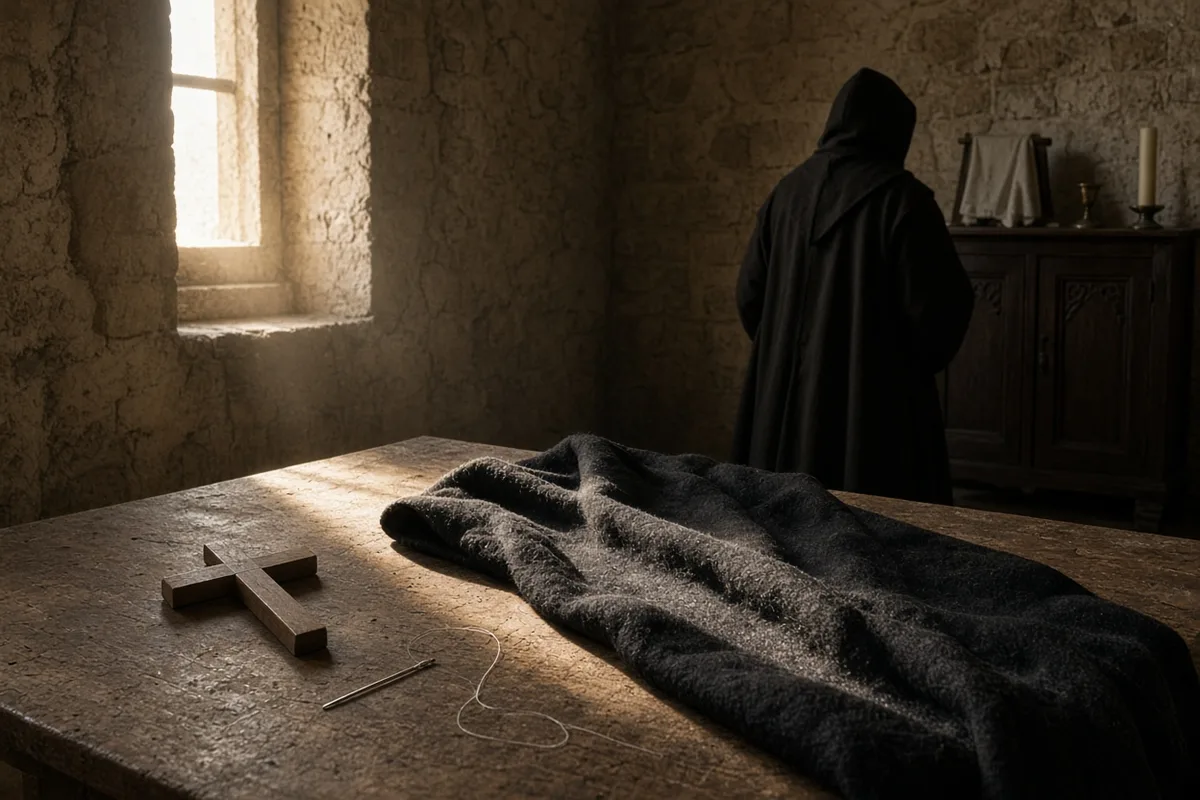
In 1741 Pope Benedict XIV issued the brief “In Suprema” on 11 June, granting the congregation the right to establish additional houses and to wear the distinctive sign of the Passion on the habit. Paul was in Rome at the time and noted in his journal the exact hour—half past ten in the morning—when the document was placed in his hands at the papal audience chamber. By 1760 the congregation counted seven houses and sixty-two members. Paul traveled between them on foot, keeping a record of distances: 184 miles from Monte Argentario to the new foundation at Terracina in 1758, 97 miles from Terracina to the house opened at Ceccano in 1759. On 11 October 1771 he dictated his last circular letter to the communities, quoting the opening sentence of the rule: “The principal end of this Congregation is to keep alive in the faithful the memory of the Passion and Death of Jesus Christ.”
Paul died at the house on the Coelian Hill in Rome on 18 October 1775 at the age of eighty-one. The attending physician, Dr. Giovanni Maria Lancisi, recorded that the final words spoken were “Jesus, my love, my all,” repeated three times before the breathing ceased. The body was placed in the church of SS. Giovanni e Paolo, where it remained until 1854, when it was transferred to a new shrine within the same building. The original manuscript of the rule, still bearing Bishop Gattinara’s signature from 1720, was preserved in the general archives and examined by the commission preparing the cause of beatification; it was cited in the apostolic decree of 1852 that declared Paul’s virtues heroic.
The congregation continued to expand after his death. By 1800 there were fourteen houses and one hundred and thirty-nine religious. A new foundation was made at Birmingham, England, in 1842 with five priests sent from Rome; the first public mission there opened on 3 May and lasted twenty-three days. In 1862 the Passionists established a province in the United States, beginning with a house at Pittsburgh that received its first novices on 21 November. The general chapter of 1920, held at Monte Argentario, counted 1,872 members worldwide and approved the printing of an edition of the rule in Latin, Italian, English, and Spanish. The text of the 1720 manuscript was reproduced in facsimile that same year, with the trembling final line—“I have seen what must be done”—clearly visible on the last page.
In the winter of 1959 the superior general, Father Malcolm LaVelle, visited the original cell at Castellazzo and ordered that the straw mattress be replaced with one of identical dimensions and material; the new mattress was delivered on 14 January and placed on the same wooden bench. A Passionist priest named Father Gabriel Cagan, born in 1924 in the town of Ovada, served as sacristan at St. Charles from 1968 until 1997; each evening he locked the cell at the same hour the original sacristan had done and kept the key on a ring with the vestry keys. On 12 September 2021 Father Gabriel, then ninety-seven years old, opened the cell door for a visitor from the generalate in Rome, showed the narrow window and the nail hole where the crucifix had once hung, and said, “He left the page here and never came back for it.”
The visitor from the generalate, Father Antonio Murgia, noted the date in the house chronicle kept at Monte Argentario and recorded the exact words spoken by Father Gabriel along with the measured dimensions of the window, 48 centimeters wide by 72 centimeters high. On 3 March 2022 the superior general, Father Joachim Rego, issued a circular directing every house to observe the 300th anniversary of the rule’s signing by sending one professed religious to Castellazzo between 5 December and 19 June; thirty-seven men arrived during those months and each signed a ledger kept on the wooden bench.
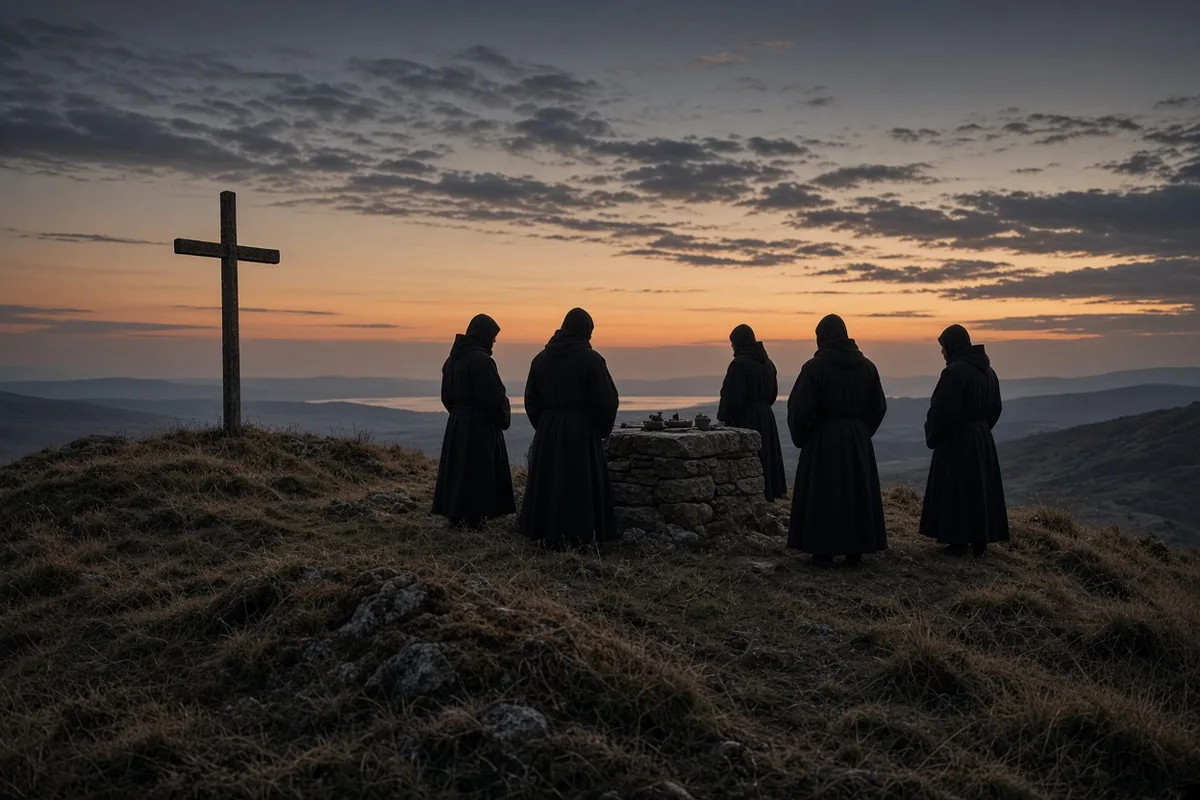
The general archives in Rome added a digital scan of the 1720 manuscript to the online catalogue on 11 October 2023, making the twenty-two chapters and Bishop Gattinara’s signature available for download; the scan file measured 184 megabytes and included an enlarged detail of the final line where the ink showed three distinct tremors. In the same month the community at Monte Argentario listed 2,179 members across thirty-eight provinces and recorded that 614 religious had made the forty-day retreat in the preceding twelve months.
Father Gabriel Cagan died on 4 February 2024 at the age of 99 in the infirmary attached to SS. Giovanni e Paolo; the death register entry stated the cause as pneumonia and noted that his last request was for the key ring to be placed in his hand. The new sacristan at St. Charles, Father Luca Bianchi, born in Genoa in 1961, assumed the duty of locking the cell each evening after compline and began entering the number of daily visitors in a notebook whose first page carries the date 7 February 2024 and the figure 14.
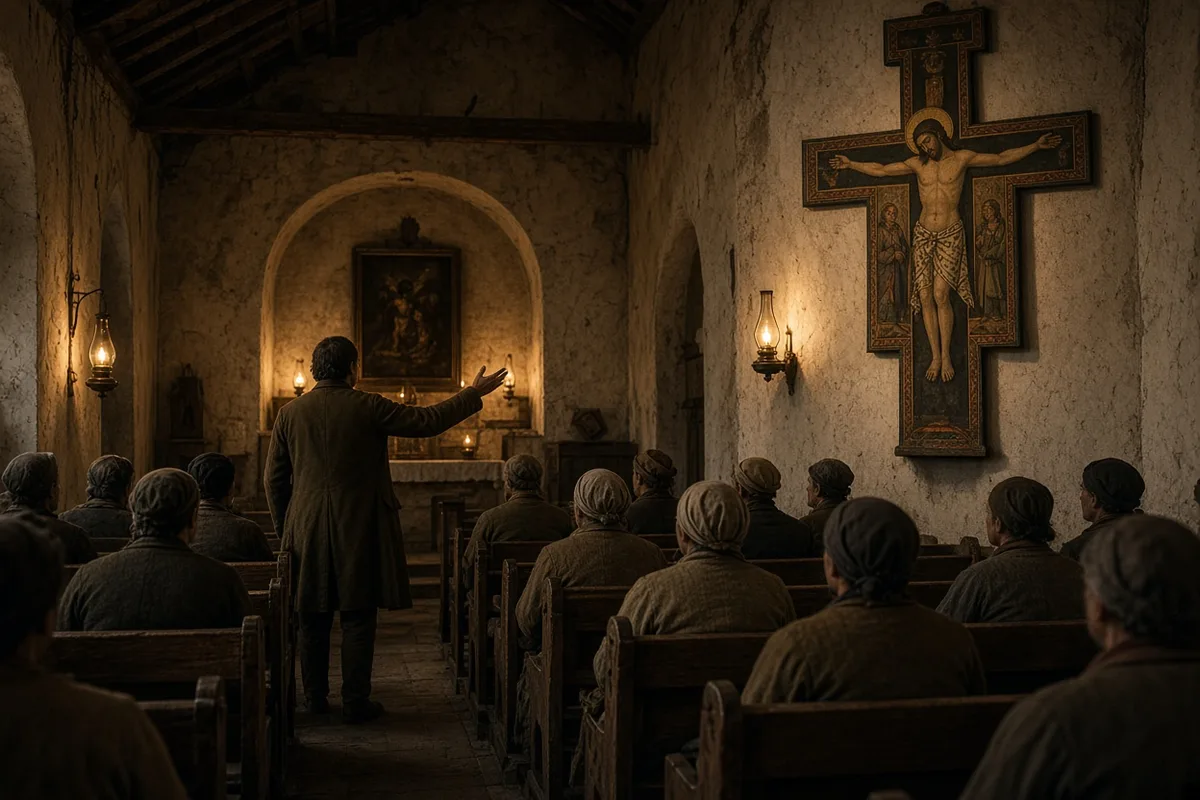
On 18 October 2024, the 249th anniversary of Paul’s death, twelve novices from the Italian province stood in the nave at Castellazzo at the hour of terce and read aloud the opening sentence of the rule in Latin, Italian, English, and Spanish; the reading lasted forty-three minutes and was recorded on the house audio system. The diocesan register in Alessandria still preserves the 1720 letter from Bishop Gattinara confirming the date 5 December and the destination Cremolino.
The original straw mattress ordered in 1959 remains in storage in the sacristy cupboard; Father Luca measures its length each January and records the figure, 178 centimeters, beside the previous year’s entry. In September 2025 a researcher from the University of Turin examined the nail hole in the cell wall under magnification and noted a residue of iron oxide consistent with an eighteenth-century hand-forged nail.
The last human image is Father Luca Bianchi standing at the cell door on the evening of 19 June 2025, turning the key in the lock while holding the ring that still carries the tag marked “Cremolino 1720,” then walking the length of the empty nave past the crucifix and extinguishing the single lamp left burning beneath it.