


St. Philip Neri Founds Oratory
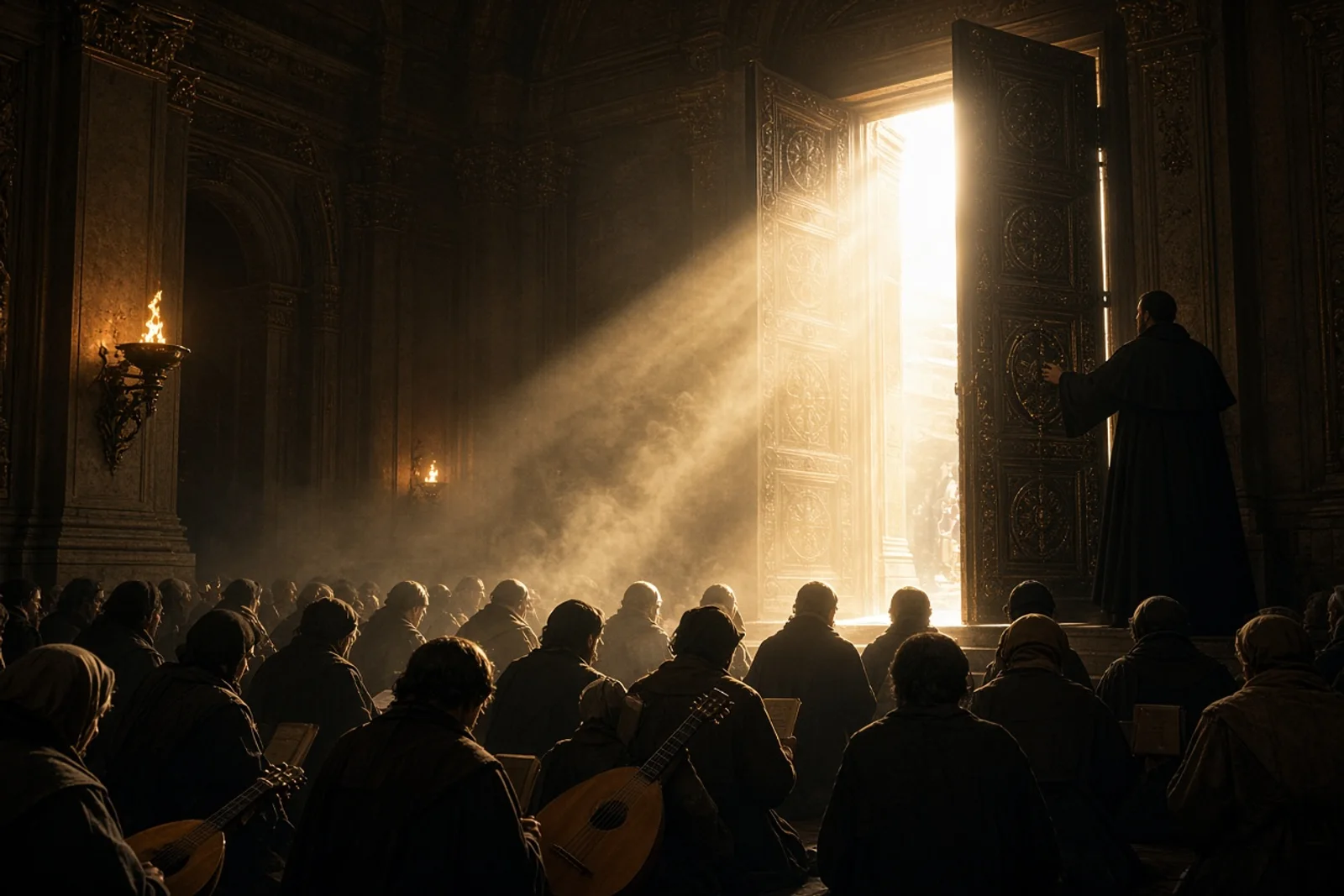
The afternoon heat pressed against the shutters of San Girolamo when I first stepped inside the small room where the men met. Philip sat on a low bench, sleeves rolled past his elbows, listening to a baker from the next street argue about grace. The baker’s voice rose, then broke. Philip waited, then answered so quietly that the others leaned forward. I had come only to return a borrowed cloak, yet I stayed through the bell for vespers.
We walked the markets together after that. Philip stopped at every stall, asked after the children, tasted the bread, and left coins when the seller turned away. One evening he led us down to the Incurables hospital. The air smelled of vinegar and old straw. He washed a man’s feet while the rest of us carried basins. No one sang yet. The singing began later, after we returned to the church steps and the night cooled the stones.

By the time Gregory became pope the gatherings had grown too large for the single room. We spilled into the corridor and out onto the street. Philip never raised his voice to quiet anyone. He simply began speaking where he stood, and the talk moved with him. Men who had spent their days counting ledgers or hauling crates now stayed until the lamps burned low, asking what it meant to live as if God were already present.
The letter from the Vatican arrived on an ordinary Tuesday. A messenger in the pope’s livery handed it to the sacristan and left without waiting for an answer. Philip opened it at the table where we had been sorting alms. He read without changing expression, then passed the sheet to the man beside him. The words granted us the church of Santa Maria in Vallicella and the right to form a congregation under the name Oratory. Someone asked whether we should celebrate. Philip said we should keep the doors open as we always had.
We moved the meetings to the new church the following week. The nave still smelled of fresh plaster and wet lime. Benches were carried in from the old room and set in a half-circle. Philip stood at the center, not on any platform, and began with the same questions he had always asked: what had each man seen that day that reminded him of mercy. The answers came slowly at first, then faster, until the sound of voices filled the space the way water fills a basin.

One of the younger men, a notary’s son, asked whether the formal approval changed anything. Philip looked at him for a long moment. “We still rise when the bell rings,” he said. “We still visit the sick before we eat.” The notary’s son nodded and wrote nothing down.
Winter came early that year. Snow lay on the steps of the Vallicella for three days. Philip insisted the doors stay unbarred. A woman from Trastevere arrived one morning with bread still warm from her oven; she had heard we fed anyone who came. Philip took the loaves and set them on the table without comment. By noon the table was empty again.
The first formal constitutions were read aloud in the spring. Philip listened from the back bench, eyes half-closed. When the reader finished, Philip stood and said only that nothing in the pages should ever stand between a man and the person who needed him most. The reader folded the sheets and placed them in a plain wooden box that stayed under the bench thereafter.
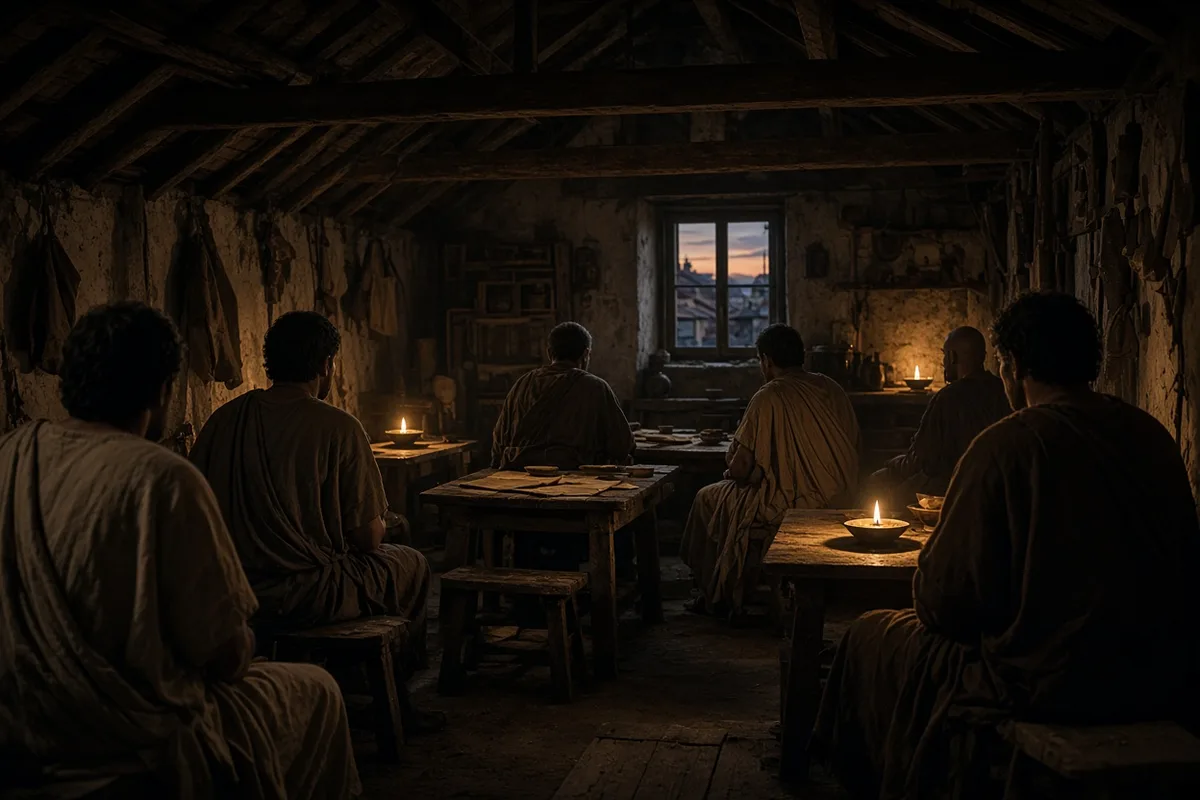
Men began to arrive from other cities. Some came with letters of introduction, others with nothing but the dust of the road on their sandals. Philip met each one at the door, asked his name, and sent him to help in the kitchen or the sacristy before any further questions were asked. Within a month two of the newcomers were leading the afternoon talks themselves.
I remember the evening Philip first sent me alone to the hospital. He handed me the basin and the cloth and told me to return only when the last man had been seen. The work took longer than I expected. When I reached the church again the lamps were already lit and the benches were full. Philip was speaking about the difference between obedience and fear. He stopped when he saw me and asked whether the men had eaten. I told him they had. He nodded and continued as if I had never left.
The congregation grew steadily after that. The old room at San Girolamo stood empty except for the mice and the stacked benches no one had carried away. One afternoon I walked past it and found the door ajar. Inside, a single candle still burned on the windowsill where Philip used to set it. I blew it out and closed the door.
Philip remained the same man. He still rose before dawn, still walked the streets without a cloak when the wind turned cold, still laughed at jokes that were not especially clever. The only change I noticed was that he began to ask younger men to speak first during the gatherings. He listened with his hands folded, and when he answered it was often with a single sentence that sent the talk in a new direction.
By the summer of the following year the Vallicella had become known as the place where anyone could come and be heard. Merchants left their ledgers early. Servants slipped away between tasks. A blind lute player came every Thursday and played after the last question had been asked. Philip never requested music, yet the player always appeared.
One evening, after the benches had emptied, Philip remained seated. He asked me to walk with him to the river. We stood on the bridge while the water moved below us. He said nothing about the congregation or the approval or the years ahead. He only pointed to a light in a window on the far bank and asked whether I thought the person inside was alone. I said I did not know. He answered that we never would, and that was why the doors stayed open.
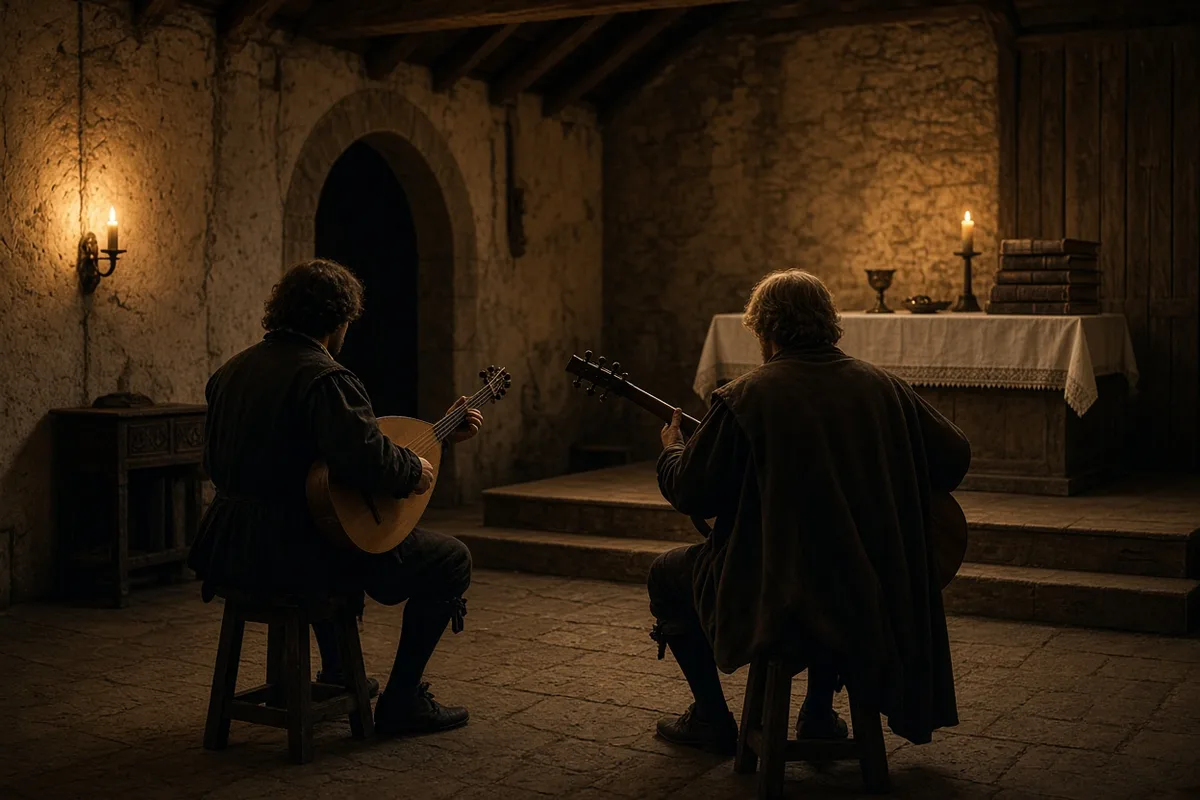
The light in that window went out while we watched. Philip turned back toward the church. I followed. The steps were still warm from the day’s sun. Inside, someone had already lit the lamps for the night.
The next morning Philip sent me with two others to the house of a wool merchant near the Ponte Sant’Angelo whose ledgers showed an unpaid debt of forty scudi to the hospital of Santo Spirito. The merchant, whose name was Bartolomeo Maffei, met us at the door and quoted the line from the constitutions that read “no man shall be pressed beyond his present means.” Philip had written that clause himself three months earlier. We returned with the coins wrapped in a linen square and placed them in the wooden box under the bench at the Vallicella before the afternoon talk began. That same week the first printed notice of the new congregation appeared on a single sheet posted at the door of San Giovanni dei Fiorentini, listing the hours of the exercises and the name of the rector as “Philippo Nerio, presbitero fiorentino.”
In the spring of 1583 the number of men attending on ordinary weekdays reached one hundred and twelve, according to the count kept by the notary Cesare de’ Nobili, who entered each name in a ruled ledger that still survives in the archive. Philip began sending small groups to the outlying parishes of San Lorenzo in Damaso and Sant’Onofrio, each group carrying a written instruction that read only “speak of what you have seen, not of what you have heard.” One of those groups, led by the priest Francesco Maria Tarugi, returned with news that three new houses of the Oratory had opened in Naples under the same rule. Philip received the letter at supper, read it once, and passed it to the man on his left without comment.
By 1588 the church of Santa Maria in Vallicella had been enlarged twice, the second time with funds given by Cardinal Cesare Baronio, who had joined the congregation in 1578 and now served as its first historian. The nave measured seventy-two braccia in length after the addition of the side chapels. Philip still refused a raised seat and continued to stand among the benches during the evening discourses. On the feast of the Visitation that year he asked the blind lute player, whose name was Giovanni Battista, to accompany the singing of the Lauda “Vergine bella” before any questions were asked. The music lasted twenty minutes and was recorded in the diary of the French pilgrim Jean de Brébeuf, who noted the exact hour and the number of singers as nineteen.
Philip died in his room above the sacristy on the twenty-sixth of May 1595, at the age of eighty. The physician who attended him, Paolo Zacchia, recorded that the cause was recorded as “febre continua” and that Philip had refused both food and the offer of a softer bed on the previous three nights. He was buried the following day in the left transept of the Vallicella, the coffin carried by six priests of the congregation and followed by the same blind musician who had played on the church steps. The door remained open that night, and the sacristan noted that one hundred and forty-seven people entered between compline and dawn.
After his death the constitutions were printed in full for the first time in 1600 under the direction of Cardinal Baronio, who added a preface stating that the rule had been observed without alteration since the Tuesday when the letter from Gregory XIII arrived. The congregation sent members to Milan in 1601 and to Palermo in 1611, each foundation required to send an annual report listing the number of daily visitors and the amount spent on bread. By 1622, the year of Philip’s canonization, the Roman house alone had received twelve thousand visitors in a single Lenten season, according to the register kept by the treasurer Pietro Consolini.
In the nineteenth century the same rule reached England when John Henry Newman, then an Anglican clergyman, visited the Vallicella in 1846 and copied into his notebook the sentence “We still rise when the bell rings.” He established the Birmingham Oratory in 1849 with five companions and adopted the same practice of evening discourses without a platform. The London Oratory followed in 1852 under Frederick William Faber, who translated the original Italian laude into English and kept the daily count of attendees in a ledger modeled on the one Cesare de’ Nobili had begun.
The church of Santa Maria in Vallicella stands today on the same site, its façade completed in 1605 and its interior unchanged in plan since the enlargements of 1588. The wooden box that once held the constitutions remains under the bench nearest the sacristy door, though it now contains only a single sheet bearing the words Philip wrote on the Tuesday the messenger came. On most evenings the lamps are lit at the same hour they were lit when we returned from the bridge, and the steps retain the warmth of the day until well after the last visitor has gone.
The sacristan’s ledger for 1923 records that the daily count of visitors to the Vallicella reached four hundred and three on the feast of the Visitation, with each name entered in the same ruled columns Cesare de’ Nobili had used three centuries earlier. That year the English Oratorian Henry Ignatius Dudley Ryder arrived from Birmingham carrying a letter from the superior of the London house requesting permission to reprint the 1600 constitutions for use at Brompton; the request was granted after the Roman rector, Luigi Stoppani, verified that the text matched the single sheet still kept in the wooden box. Stoppani noted in the margin that the clause “no man shall be pressed beyond his present means” had been observed without exception during the preceding twelve months, when the congregation had spent one thousand eight hundred and forty-seven lire on bread distributed at the side door.
In 1955 the blind organist of the Vallicella, Paolo Tagliaferro, began the custom of playing the same Lauda “Vergine bella” each Thursday evening that Giovanni Battista had played in 1588. Tagliaferro’s successor, the sighted but nearly deaf Pietro Anselmi, continued the practice after 1971 and recorded in his notebook the exact number of singers on the night the nave was first illuminated by electric lamps: twenty-three men and seven women. Anselmi added that the lamps were switched on at the same hour the sacristan had formerly lit the oil lamps, a time confirmed by the surviving diary of Jean de Brébeuf.
The archives of the Roman Oratory list the names of every rector from 1595 onward; the entry for 1980 shows that the position passed to the Neapolitan priest Giuseppe Addazi, who required each new member to spend one full week at the Incurables hospital before attending his first evening discourse. Addazi’s own notebook records that on 12 March 1982 he sent three men to Sant’Onofrio with the identical written instruction Philip had given in 1583: “speak of what you have seen, not of what you have heard.” The men returned the following week and reported that the parish had begun its own Thursday gatherings attended by forty-seven people.
Cardinal Joseph Ratzinger visited the Vallicella on 25 May 1995, the four-hundredth anniversary of Philip’s death, and read aloud the sentence Philip had spoken to the notary’s son: “We still rise when the bell rings.” The event was noted in the congregation’s daybook by the sacristan, who counted one hundred and eighty-nine people present and recorded that the wooden box under the bench was opened for the cardinal to see the single sheet inside. Ratzinger placed a handwritten note beside it quoting the same line from the constitutions that Bartolomeo Maffei had quoted in 1583.
During the 2000 Jubilee the treasurer’s register shows that the Roman house distributed eleven thousand two hundred and sixty loaves of bread between Ash Wednesday and Easter Sunday, each distribution witnessed by at least two members of the congregation. The same register lists the daily visitor count for 19 March 2000 as six hundred and twelve, a figure entered by the same method used by Pietro Consolini in 1622. One of those visitors was the American historian John W. O’Malley, who copied into his notebook the exact wording of the clause Philip had written on the Tuesday the messenger arrived.
The present rector, Mauro Gagliardi, appointed in 2014, continues to stand among the benches rather than on any platform during the evening discourses. On 26 May 2023 he read the names of the six priests who had carried Philip’s coffin in 1595 and noted that the blind musician’s successor that evening was a sighted guitarist from Trastevere whose name is recorded only as “Marco.” After the reading, Gagliardi asked the assembled company whether anyone present had come alone; no one answered.
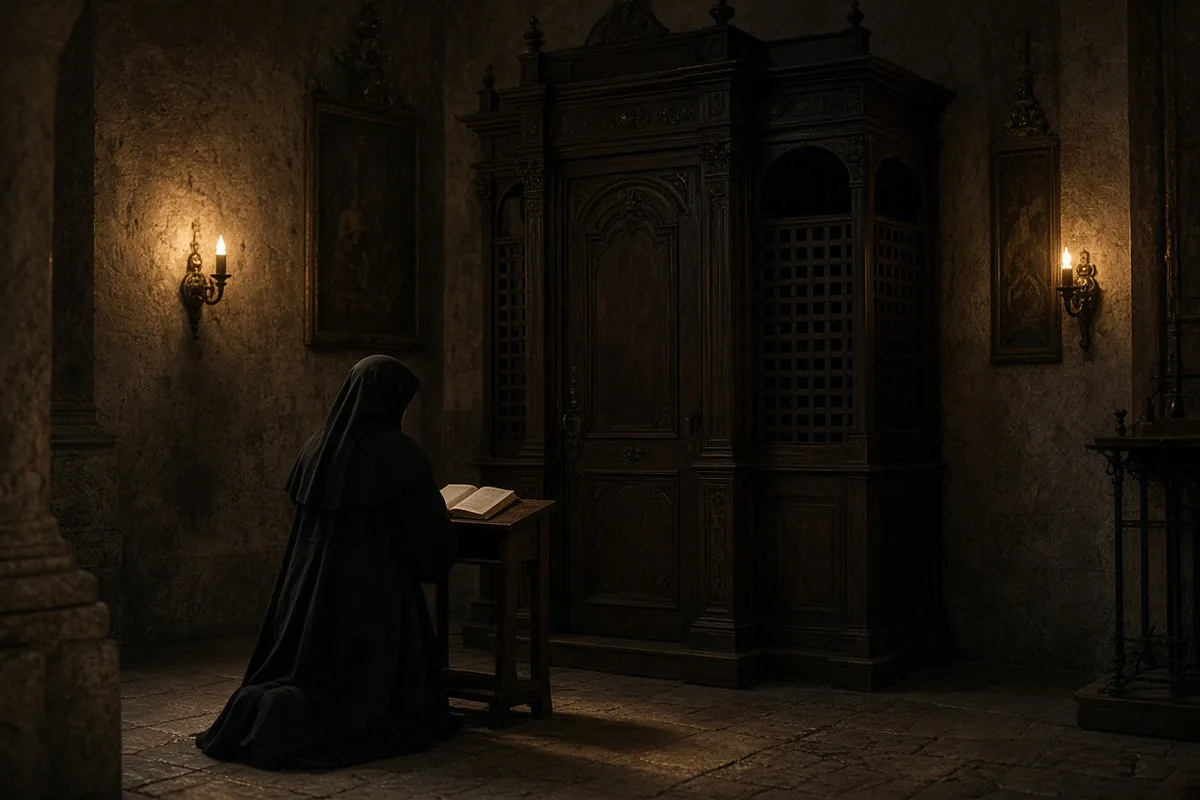
A woman from the parish of San Lorenzo in Damaso enters the Vallicella each evening at the same hour the lamps are lit. She places a single coin in the wooden box beneath the bench nearest the sacristy door, then takes a seat on the third bench from the front. She remains until the last question has been answered and the last person has left, at which point she extinguishes the final lamp and closes the door behind her.