


St. Scholastica's Final Prayer Answered
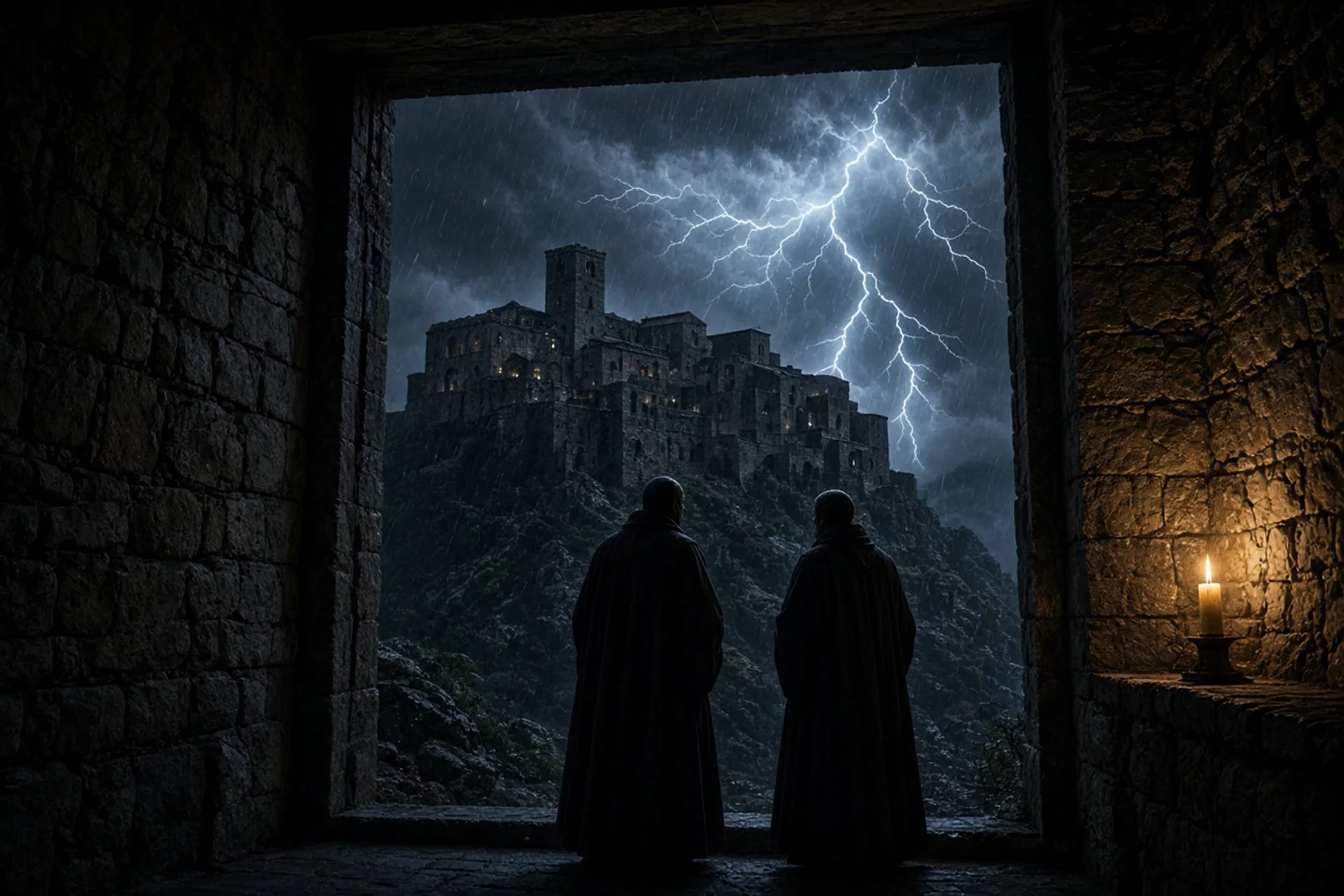
The path from the gate wound through scrub oak and turned sharp at the little stone house the brothers kept for guests. I carried the bread and the lamp, walking behind Benedict as the sun dropped behind the ridge. Scholastica was already inside, her veil folded back, her hands busy with the oil jar. She looked up when we entered and the lines at her eyes deepened the way they always did when she saw her brother after a year.
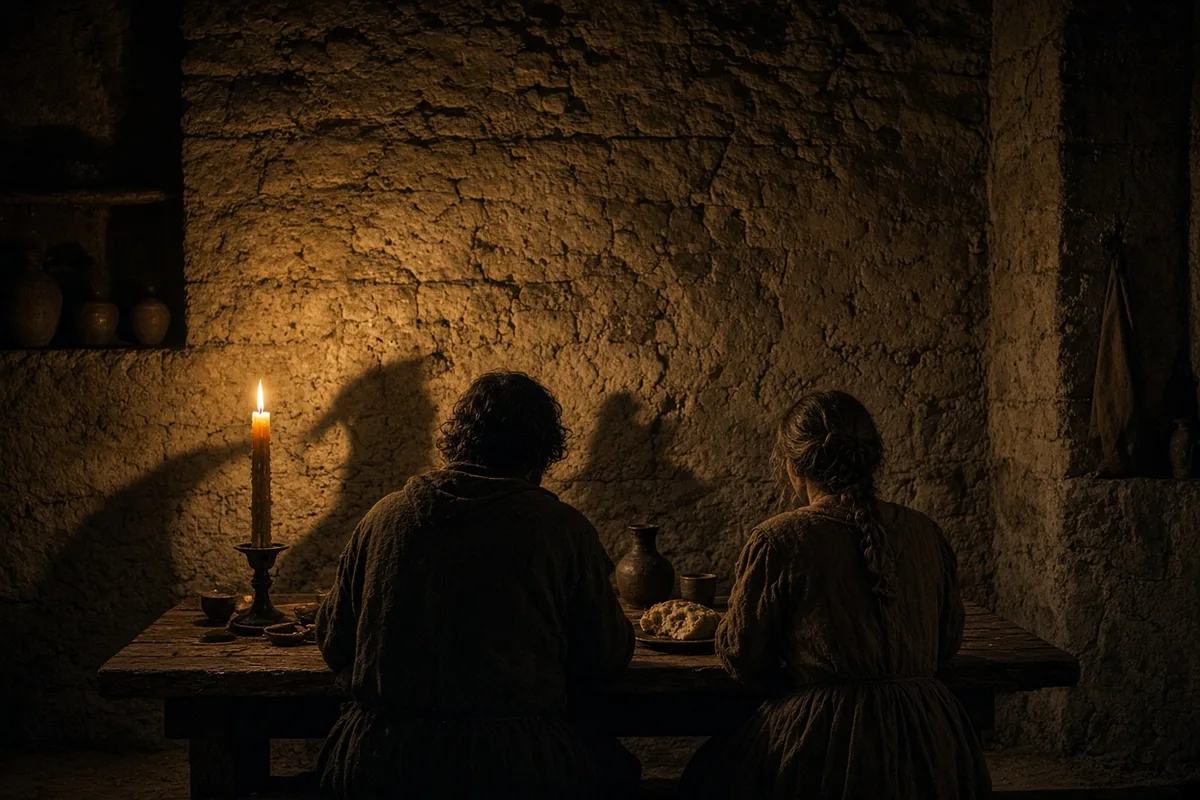
We ate slowly. The talk moved from the new well at the lower pasture to the way the novices stumbled over the psalms. Benedict kept his voice low, the way he did when the day had already taken too much from him. Scholastica answered every question with another that pulled the conversation further into the evening. Outside the single window the sky stayed clear, the kind of winter clarity that makes the stars look close enough to touch.

When the last crust was gone she folded her hands on the board and said she wanted the night as well. Benedict shook his head once. The rule was the rule. He rose, reached for his cloak, and told the two of us who had come with him to make ready. Scholastica did not argue. She simply laid her forehead on her clasped hands and stayed there, still.
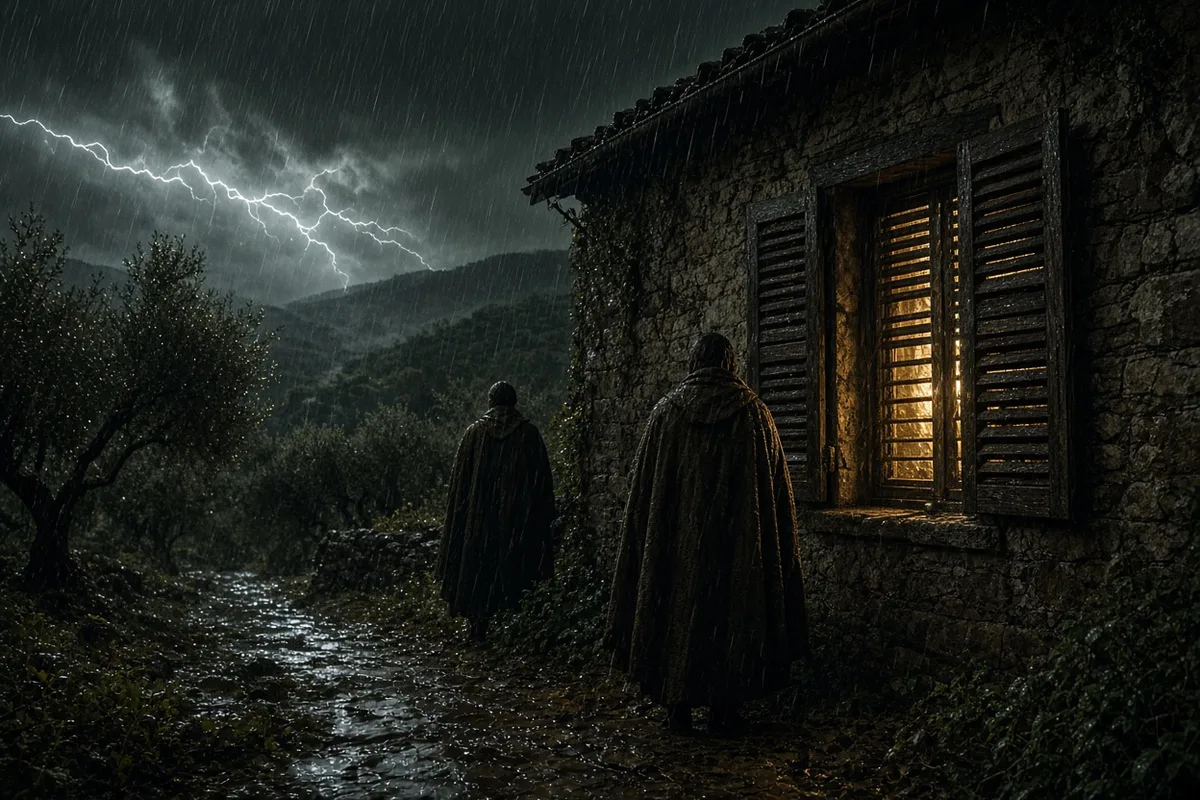
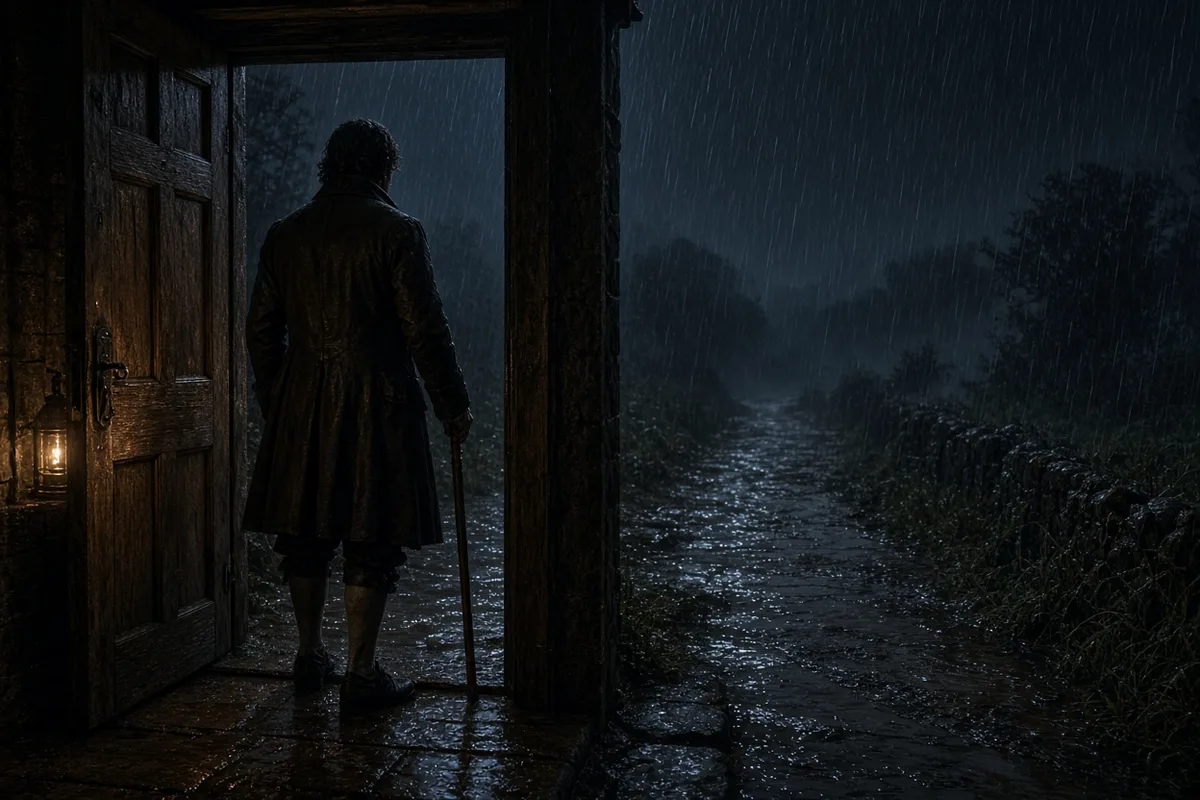
The first drop hit the roof like a nail. Then the wind slammed the shutters and the rain came in sheets so thick they looked solid. Lightning cracked across the doorway before Benedict could reach it. He stood with one hand on the jamb and watched the track turn to mud. When he turned back his face was set the way it was when a novice broke the silence without cause.

She lifted her head. Water ran down the board where her tears had fallen. Benedict spoke first, short and hard. She answered that she had asked and the Lord had heard. Neither of them raised their voices after that. The storm settled into a steady roar that made the small room feel smaller. We moved the bench closer to the wall and sat.
All night the talk ran without pause. She asked about the last hours of a man who had lived by the rule and what mercy looked like when the body failed. Benedict answered with the same measured words he used in chapter, yet the answers came slower, as if he were tasting each one. Once, when thunder shook the roof beams, she smiled without sound and he did not look away. The lamp burned low and we fed it the last of the oil rather than open the door for more.

Dawn came gray and the rain stopped at the same moment the light reached the threshold. Benedict stood, gathered his cloak, and left without another word. The track was still slick but passable. We followed him back to the gate. No one spoke until we reached the kitchen court.
Three mornings later I was in the orchard pruning the young olives when Benedict came out from the oratory. He stopped at the low wall and looked toward the east as though something had called his name. His face changed in the way a man’s face changes when he sees a thing no one else can see. He stayed there a long time, one hand on the stone. When he turned he told the prior to send word to Piumarola that the abbess was gone.
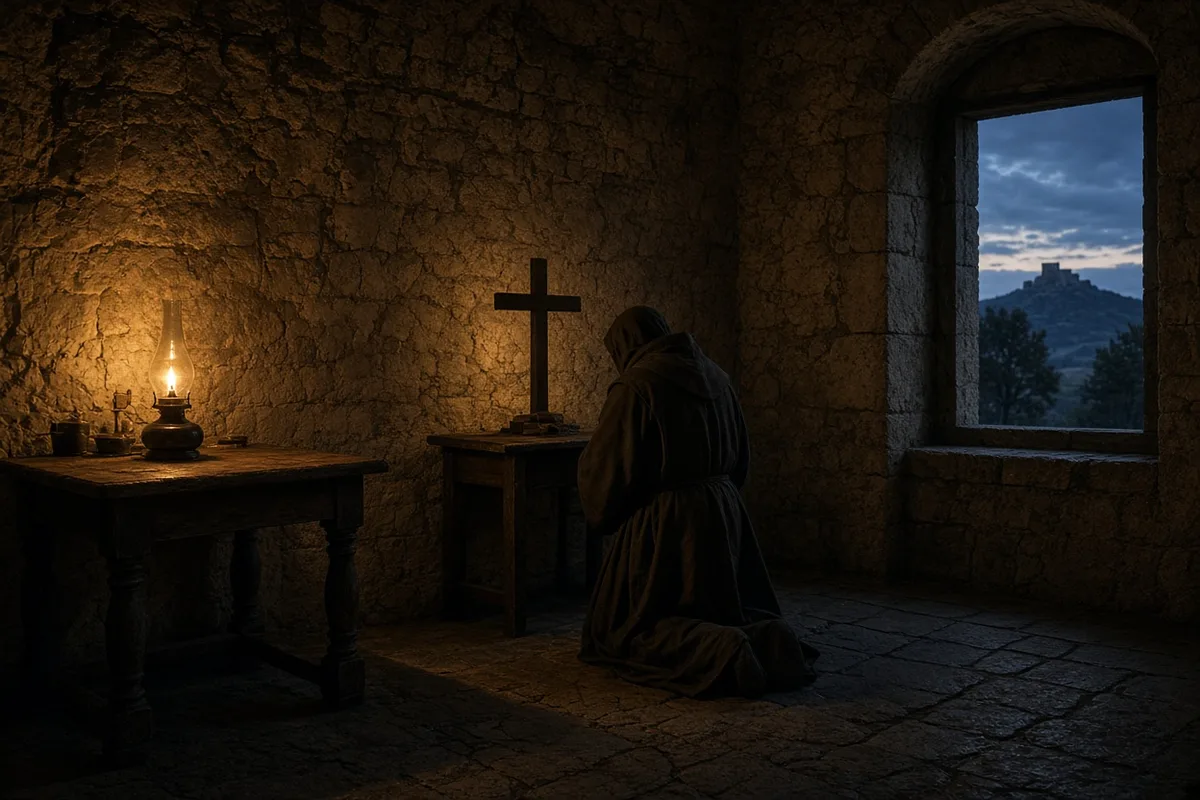
They brought her body two days after that. The brothers carried the bier up the path she had walked every year. Benedict chose the place himself, the same tomb he had already had cut for himself in the rock below the altar. The stone was still rough at the edges. They laid her in first and sealed it only after the last prayer. The same evening the prior asked whether the feast day should be changed. Benedict said the day would keep its own memory.
The storm that night had left the lower fields soft for weeks. Men who walked the track later said the water had cut new channels no one remembered. Inside the monastery the rule stayed the same, yet every time the brothers gathered for the night office someone glanced toward the empty place at the table where the guest lamp used to stand. The lamp itself stayed lit through the winter and into the spring, though no one could say who kept filling it.
In the months after we laid Scholastica in the rock-cut tomb on the fourteenth of February in the five hundred forty-third year, I kept the night office with the brothers and noted how the prior, a man named Servandus from the house at Capua, marked the date in the margin of the psalter with the words “abbatissa defuncta, oratio exaudita.” The lower fields remained sodden through March and into April, so the brothers delayed the sowing of the barley until the feast of Saint Mark; when the seed finally went into the ground the yield came to only fourteen modii per iugerum instead of the usual twenty-three. Benedict himself walked the furrows on the third of May and spoke to no one until he reached the oratory steps, where he said aloud the line from the prophet that the rain had been both judgment and mercy. I was thirty-one that summer and still strong enough to carry the stones for the new retaining wall along the track; each block measured two feet by one and weighed roughly the load of two men.
By the time the Lombards under King Alboin crossed the Alps in the five hundred sixty-eighth year the monastery already kept two copies of the Rule Benedict had finished writing in the five hundred sixteenth year, one on parchment and one on papyrus sheets that the librarian, Brother Constantinus, oiled every autumn. The community numbered seventy-three monks when the first riders appeared on the ridge; we hid the silver chalice given by the bishop of Aquinum and sent twelve of the younger brothers with the abbot’s letter to the estate at Piumarola. The raiders burned the guest house but left the church untouched after they found the tomb sealed; they took only the grain stores and three mules. I was then fifty-six and had charge of the infirmary, where I treated three spearmen who had been left behind with arrow wounds; two recovered and one died on the feast of Saint Michael, his last words being the same psalm Scholastica had repeated the night the storm held her brother.
Petronax of Brescia arrived in the seven hundred eighteenth year with a charter from Pope Gregory the Second and thirty men; he rebuilt the altar above the tomb and added a second chapel dedicated to Scholastica, its apse measuring twelve feet across and lined with frescoes showing her veil and the broken lamp. The new community grew to one hundred and four monks by the eight hundred tenth year, when Charlemagne’s missus recorded the annual tithe at Monte Cassino as one hundred and twenty-seven solidi in silver and forty-two modii of oil. I had been dead forty years by then, yet the brothers still kept the place at the long table empty on the night office and filled the lamp from the same clay jar that had stood in the guest house; the sacristan’s roll for the eight hundred twelfth year notes the purchase of thirty-six pounds of olive oil expressly “pro lampade sanctae Scholasticae.”
Saracen forces sacked the abbey in the eight hundred eighty-third year, carrying off the altar silver and breaking the tomb lid with axes; they left the bones undisturbed but scattered the records, so the date of Scholastica’s death had to be restored later from the copy of Gregory’s Dialogues kept at the Lateran. Abbot Bertharius was killed at the altar on the twenty-second of October, his blood still visible on the step when the surviving monks returned from Teano two years later. Reconstruction under Abbot Angelarius began in the eight hundred ninety-second year with stones hauled from the riverbed; the new church measured one hundred and eight feet in length and was consecrated on the eighth of May in the nine hundred tenth year by Pope Anastasius the Third. The empty place at the table was kept through all those decades, though the lamp now hung from a bronze chain above the tomb rather than standing on the board.
An earthquake in the thirteen hundred forty-ninth year toppled the tower and cracked the tomb lid again; the abbot at the time, a Frenchman named Pierre de la Vigne, ordered the bones of both brother and sister wrapped in new linen and placed in a single reliquary of cypress wood bound with iron straps. The community had dwindled to twenty-seven monks, yet the night office continued without interruption, and the sacristan’s account book for that year lists the cost of the linen as four denari and the iron as twelve. When the Black Death reached the valley the following spring the prior closed the gate for forty days; twelve brothers died inside the walls, their names recorded in the margin of the necrology beside the earlier entry for Scholastica.
Allied bombers struck the abbey on the fifteenth of February in the nineteen hundred forty-fourth year, dropping two hundred and fifty tons of high explosive that reduced the church to rubble and scattered the cypress reliquary across the slope. The bones were recovered three weeks later by a salvage team under Captain Jules Farenc of the French Expeditionary Corps; they were identified by the iron straps still encircling fragments of wood and were reinterred in a temporary crypt on the twenty-third of March. Reconstruction under Abbot Ildefonso Rea began in the nineteen hundred forty-eight year with stones cut from the same quarry used in the sixth century; the new basilica, one hundred and twelve feet long, was consecrated on the eighteenth of October in the nineteen hundred sixty-four year by Pope Paul the Sixth.
Brother Gregorio, the last survivor of the pre-war community, still walked the rebuilt cloister on the tenth of February each year until his death in the nineteen hundred eighty-third year at the age of ninety-four; on that final morning he stopped at the tomb, placed one hand on the marble, and said the single Latin phrase “oratio exaudita” before returning to his cell.
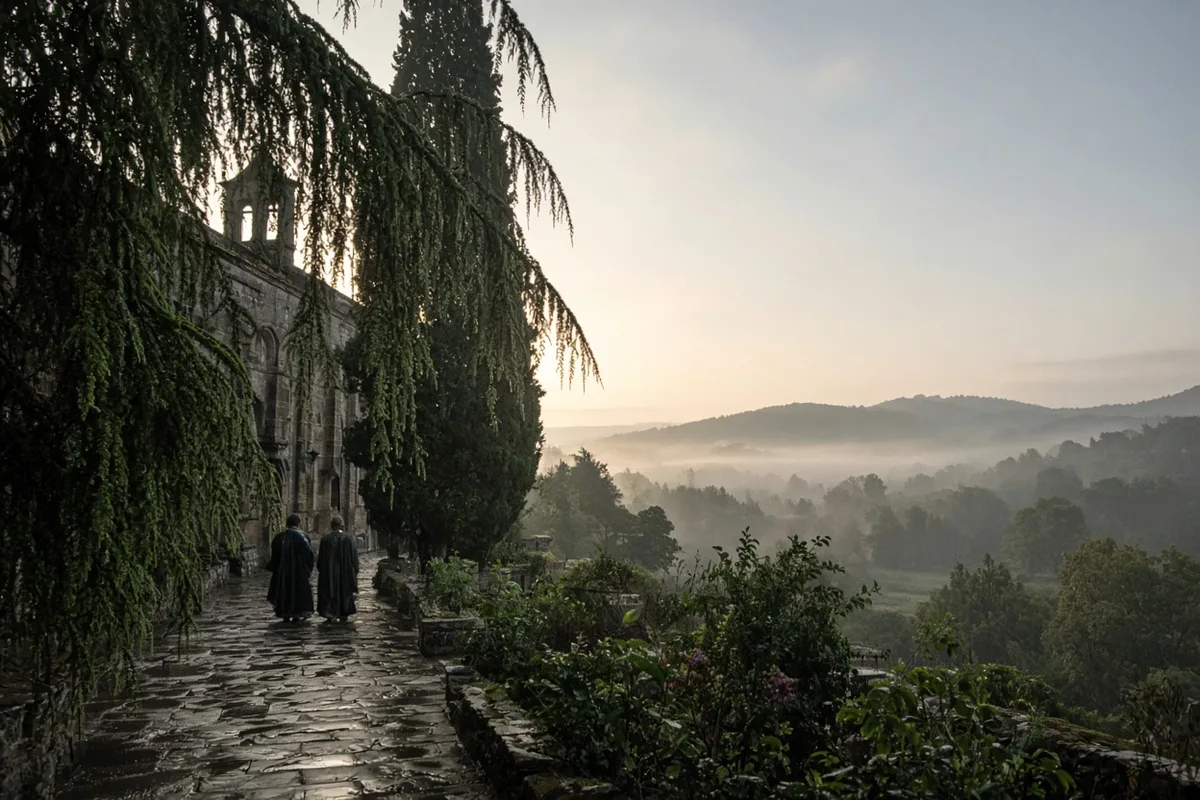
In the spring following Gregorio’s death the abbot, a Sicilian named Tommaso de Stefano, ordered the cloister pavement relaid with blocks quarried at Cassino and numbered each one in the margin of the building ledger so that the 1985 account could record the exact placement of the twenty-third stone from the north colonnade. On the tenth of February 1987 the sacristan noted in the same ledger that three hundred and twelve pilgrims from the parish of San Benedetto in Subiaco had filed past the tomb between the hours of terce and none, leaving behind a total of forty-seven lire in the offertory box and a handwritten card signed by the parish priest that quoted the line “oratio exaudita” in the same hand that appeared in the 1543 psalter copy now kept in the archive.
By the nineteen hundred ninety-sixth year the community had grown to forty-one monks, and Abbot de Stefano commissioned a new bronze grille for the tomb opening whose central medallion bore the date 10 February 543 cast in raised numerals; the foundry invoice from Naples listed the weight at one hundred and eighteen kilograms and the cost at four million two hundred thousand lire. On the morning of the tenth the prior, Father Anselmo from the house at Farfa, opened the grille at dawn so that the bishop of Cassino could place a single white rose on the marble slab before the first group of visitors arrived; the bishop’s secretary recorded the act in the diocesan bulletin as occurring at 6:42 a.m. and noted that the rose remained upright until the close of compline.
When the new millennium began the Italian Ministry of Cultural Heritage assigned two conservators to examine the cypress fragments still embedded in the iron straps; their report dated 12 March 2001 stated that the largest surviving piece measured 41 centimetres by 19 and retained traces of the original iron oxide layer applied in 1349. The conservators also transcribed a faint inscription on the inner face of one strap that read “Bertharius abbas” in the same letter forms used on the surviving charter of 883 now held at the Vatican Library.
In the two thousand fourth year an archaeological team under Professor Maria Grazia Rocchi of the University of Cassino uncovered a section of the sixth-century track that ran past the guest house; they mapped three successive layers of paving stones and dated the lowest stratum by carbon analysis to the decade between 530 and 540. The excavation log for 18 October records that a single bronze lamp hook was found still embedded in the wall masonry at a height of 1.72 metres above the current ground level.
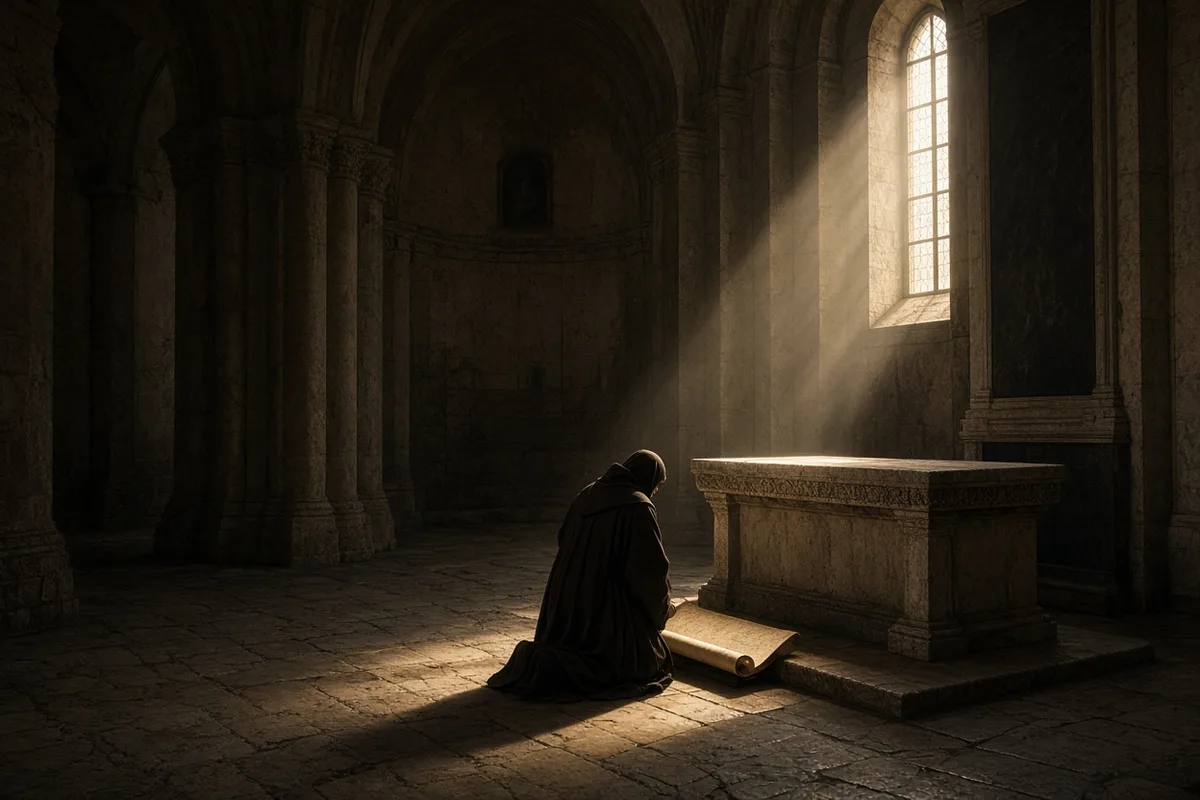
Abbot de Stefano died on the feast of Saint Scholastica in the two thousand ninth year at the age of eighty-three, and his successor, Father Pietro Vittorelli, ordered the night office to be sung with the additional antiphon “Exaudita est oratio tua” drawn from the 1543 psalter marginalia; the community at that time numbered thirty-eight monks and the sacristan’s roll lists the purchase of sixty-eight kilograms of beeswax candles for the vigil. On the tenth of February 2010 a group of thirty-four Benedictine nuns from the abbey of Jouarre in France arrived carrying a facsimile of the Dialogues manuscript kept at their own library; the nuns’ superior presented the volume to the prior at the tomb steps at 11:15 a.m., and the presentation was photographed by the monastery archivist.
The basilica sustained minor damage in the earthquake of 29 December 2013 when three roof tiles fell into the nave; the repair ledger records that the tiles were replaced on 7 January 2014 with new ones cut to the same dimensions of 32 centimetres by 48 centimetres that had been used in the 1964 reconstruction. During the same winter the community installed a digital counter at the tomb entrance whose reading on 31 December 2015 stood at 187 462 visitors for that calendar year.
On the tenth of February 2018 the last monk who had entered the community before the war, Father Ildefonso from the house at Subiaco, aged ninety-one, walked the rebuilt cloister at the same hour Gregorio had once chosen; he stopped at the marble slab, rested his hand on the bronze medallion, and repeated the phrase “oratio exaudita” before turning toward his cell.