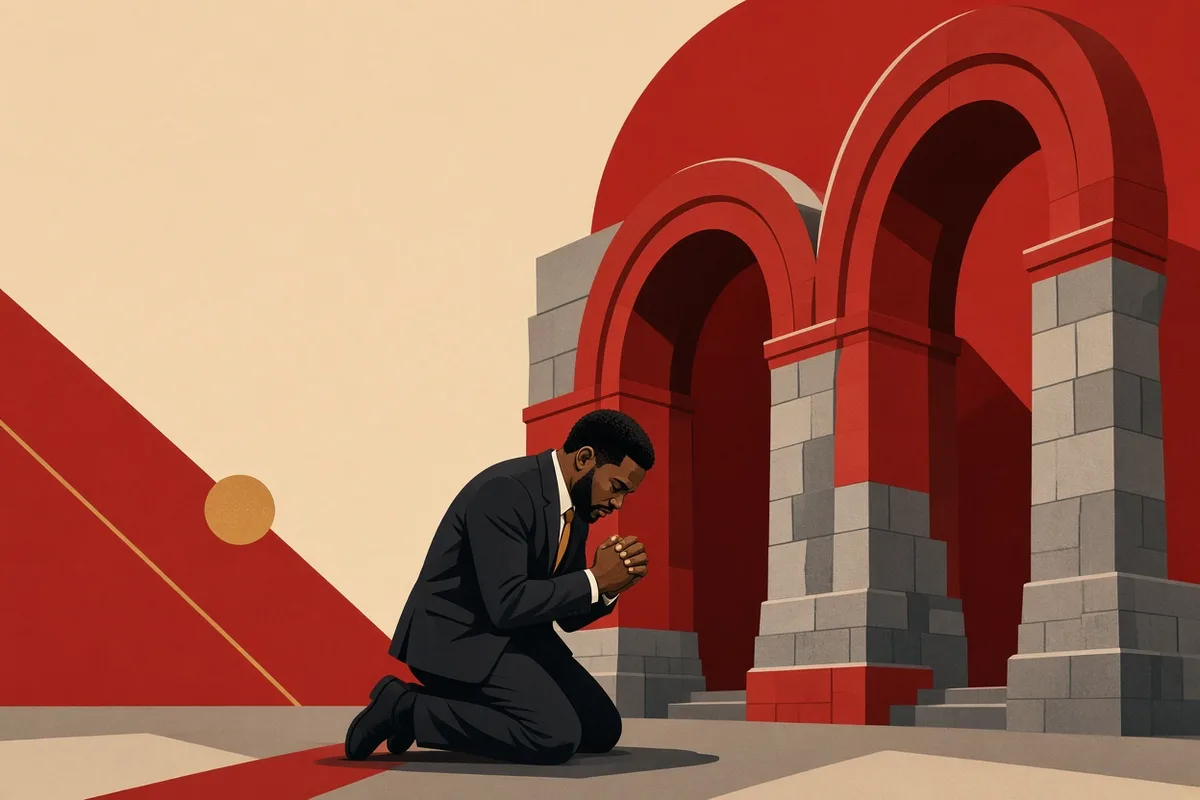



St. Stephen of Hungary Crowned and Converts Nation
The dust rose in thin ropes from the road that climbed to Gran, and I stood among the others with my hand on the hilt of a sword I had not drawn in three years. Word had come at dawn that Astricus was returning from Rome with the answer we had waited for since the last snow. Men shifted their weight from one foot to the other. Women held children higher so they could see the bend in the track. No one spoke the name of the thing we hoped for, as if naming it might turn it away again.

Astricus rode at the head of the small party, his mule lathered and blowing. Behind him walked two men in the Pope’s livery, and between them, carried on a pole between their shoulders, rode a chest wrapped in oiled cloth. The chest was not large. It looked no bigger than a man’s helmet box. Stephen waited on the steps of the wooden hall, Gisela at his right hand. He wore the same plain tunic he had worn the morning he rode out against Koppany three winters before.
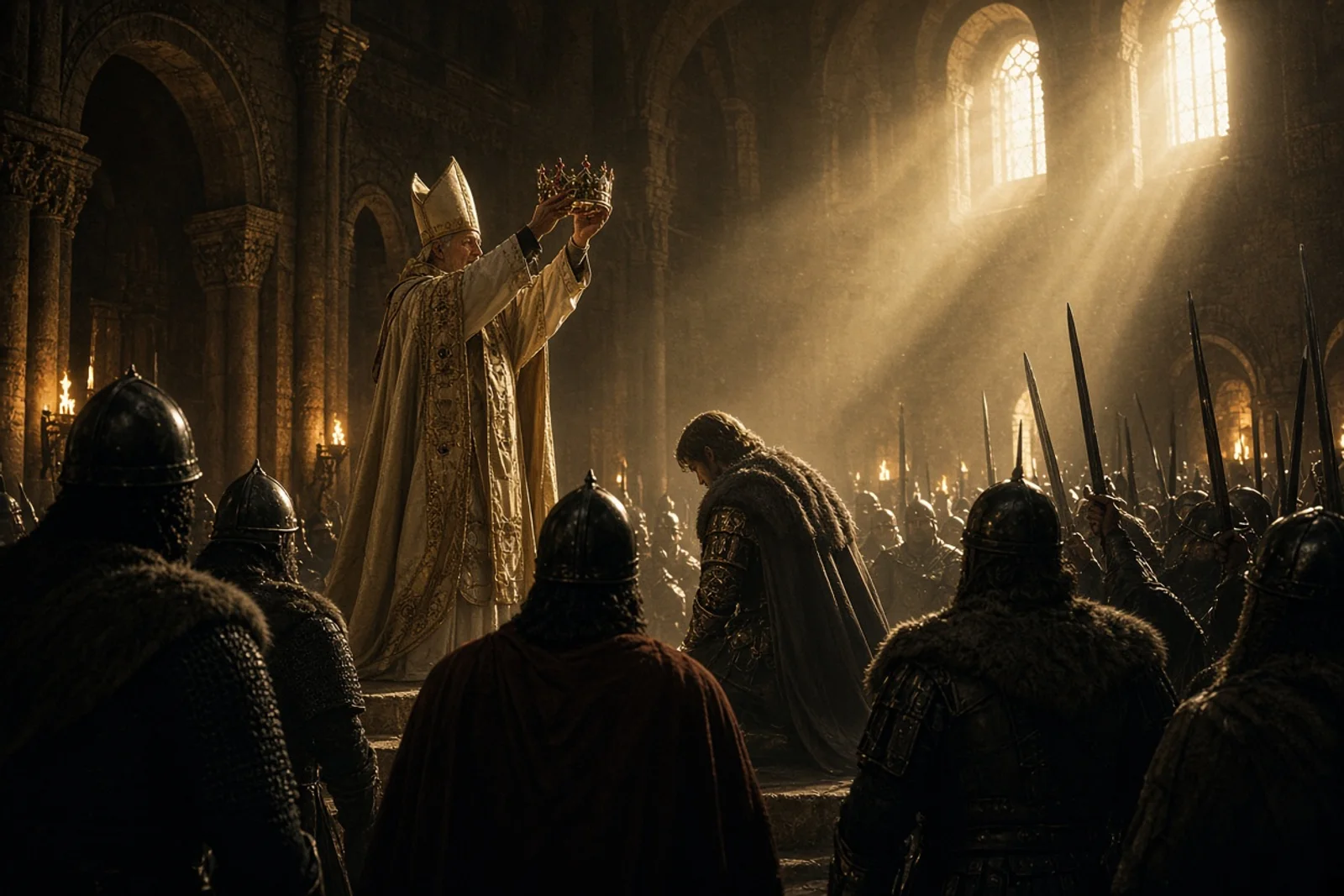
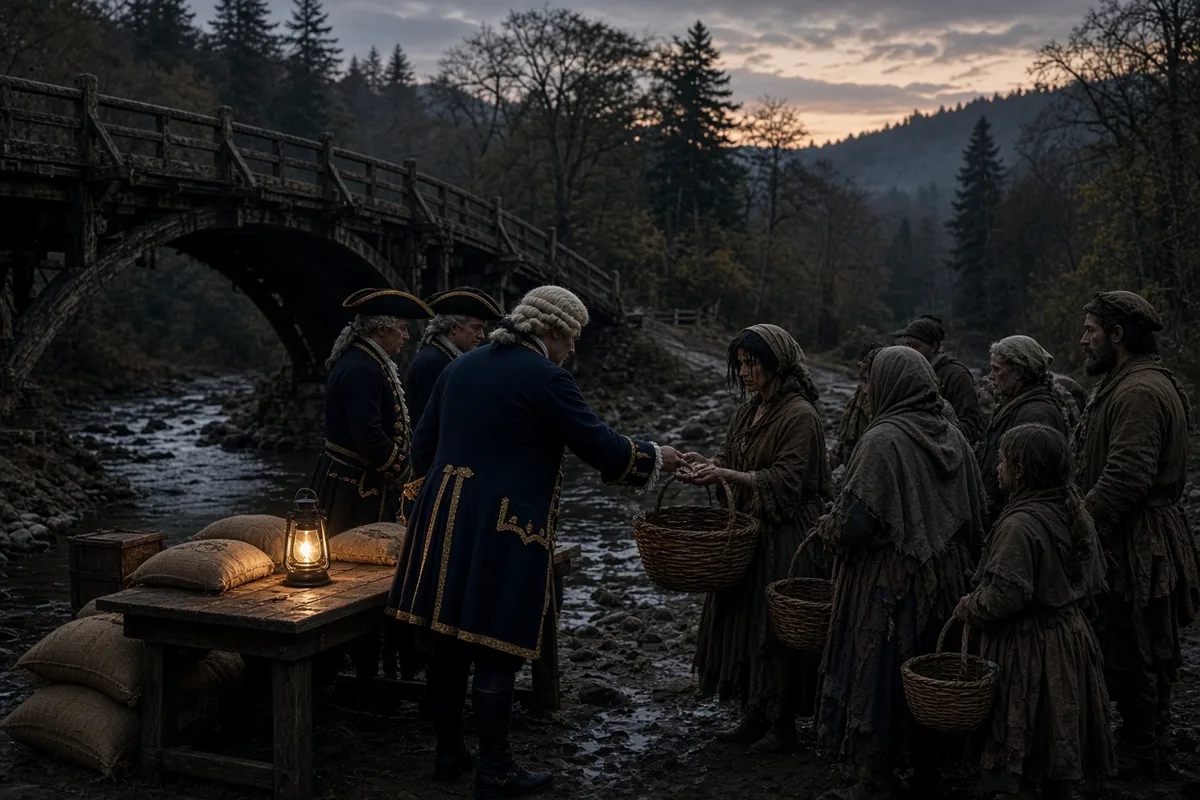
When the chest was set on the ground, Astricus lifted the lid himself. Inside lay the crown, gold and enamel, the stones catching the late light like water held in a shallow dish. Stephen stepped down, touched the rim with two fingers, and did not lift it. He only nodded once, then turned to the people gathered and said the work could begin.

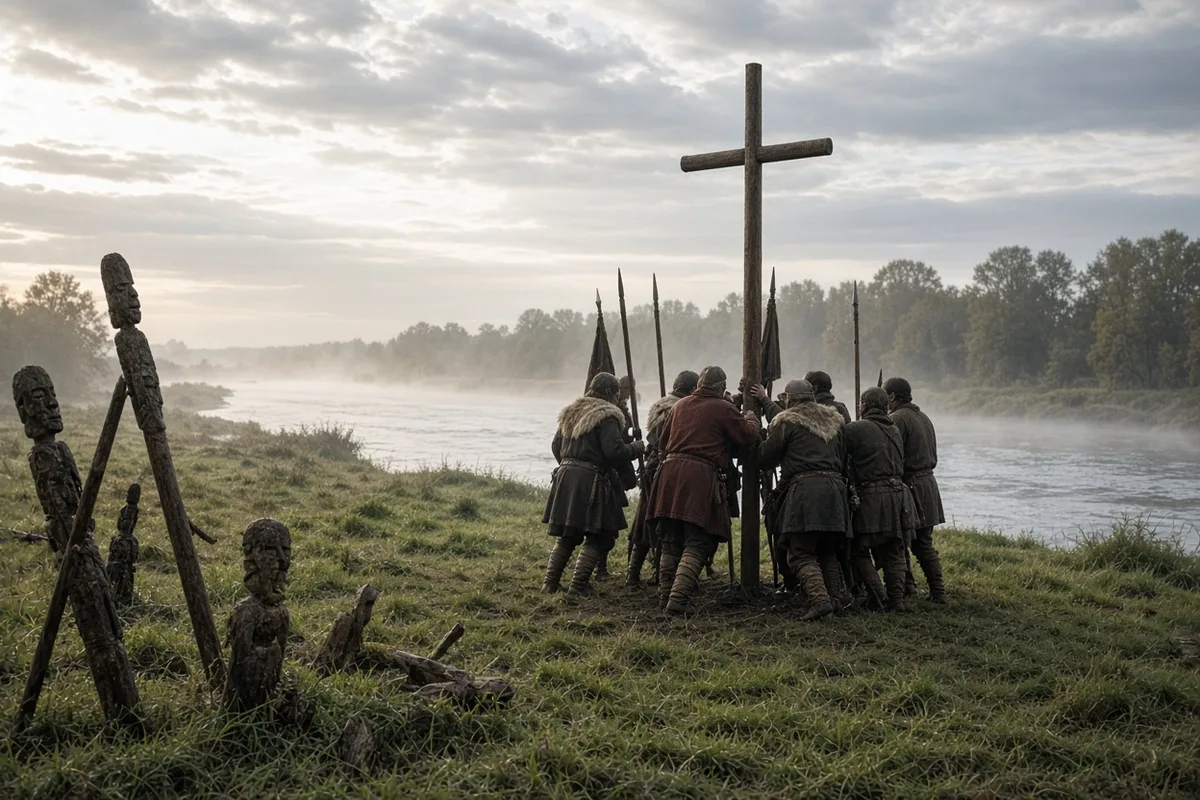
That night the fires burned later than usual. Men who had kept their old amulets under their shirts now brought them out and laid them on the stones to be broken. I watched one man, a smith from the river quarter, hold his iron hammer above a small carved figure for a long time before he brought it down. The sound was small and final.
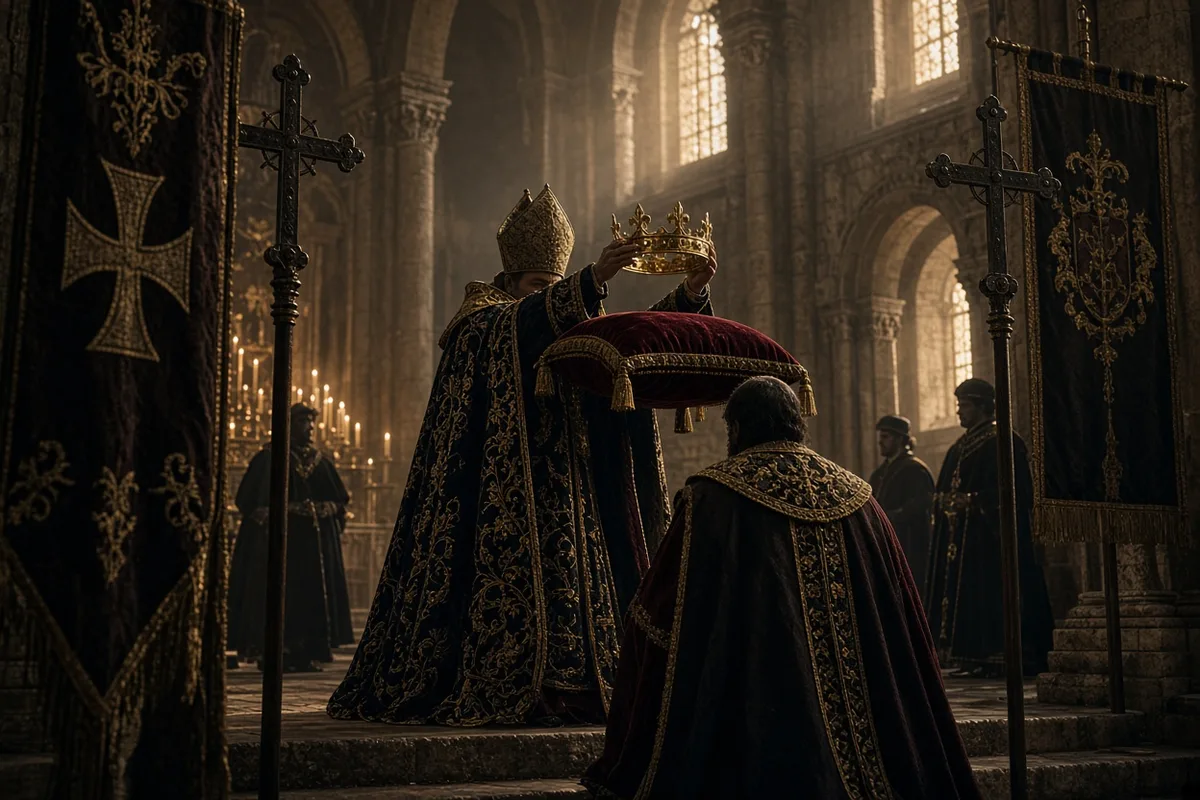
On the seventeenth day of August the assembly moved to the open ground east of the church. The bishops who had come with the crown stood in a half-circle. Stephen knelt on a cloak spread over the grass. Astricus set the crown on his head and spoke the words that made him king under the Pope’s grant. The metal settled low on Stephen’s brow. He rose slowly, as if testing the weight, then faced the river and the fields beyond it.

After the crowning, riders left for the borders. One carried letters to the chieftains who still kept the old fires. Another went south with instructions for the first stone church to be raised at the place where the battle against the rebels had ended. Stephen kept Gisela beside him when he received the messengers who returned. She read the replies aloud when his eyes grew tired from the script.

I was sent once with a small band to a village two days north where the old priests still offered meat to the river. We carried no weapons beyond our knives. When we arrived the headman met us with his hands empty. He asked only that his children be allowed to keep the name their grandfather had given them. We told him the name could stay if the children learned the new prayers. He agreed before the sun set.
Stephen began to measure land for the bishoprics the Pope had allowed him to found. He walked the boundaries himself when the snow was light, driving stakes with his own hands. The first see went to the place called Esztergom, the second farther east where the plains opened. Men who had never held a measuring cord before learned to stretch rope between the stakes and call the distances true.
One evening a messenger arrived from the German border with news that Henry, Gisela’s brother, had become emperor. Stephen read the letter standing in the doorway so the light would last. He said nothing about the news itself, only asked that the rider be fed and given a fresh horse. Later that same week he ordered more hospices built along the road that led toward Rome, so that pilgrims from the east would not sleep in the open.
The last of the open resistance came from two of his own nephews. They gathered men in the hills and sent word they would not kneel to a crowned king. Stephen met their force on a ridge above the Danube. He gave the order to charge only after the priests had finished the litany. The fighting lasted less than an hour. When it was done he had the survivors brought before him and offered them the same choice he had given the villages: keep the old ways in private if they wished, but teach the children the new prayers. Most accepted.
In the years that followed, the crown stayed in a chest beside his bed except on feast days. He would lift it out, set it on his head for the morning Mass, then return it to the chest before he rode out to inspect the new fields or the new walls. The metal had begun to show small scratches along the rim from the way he handled it.
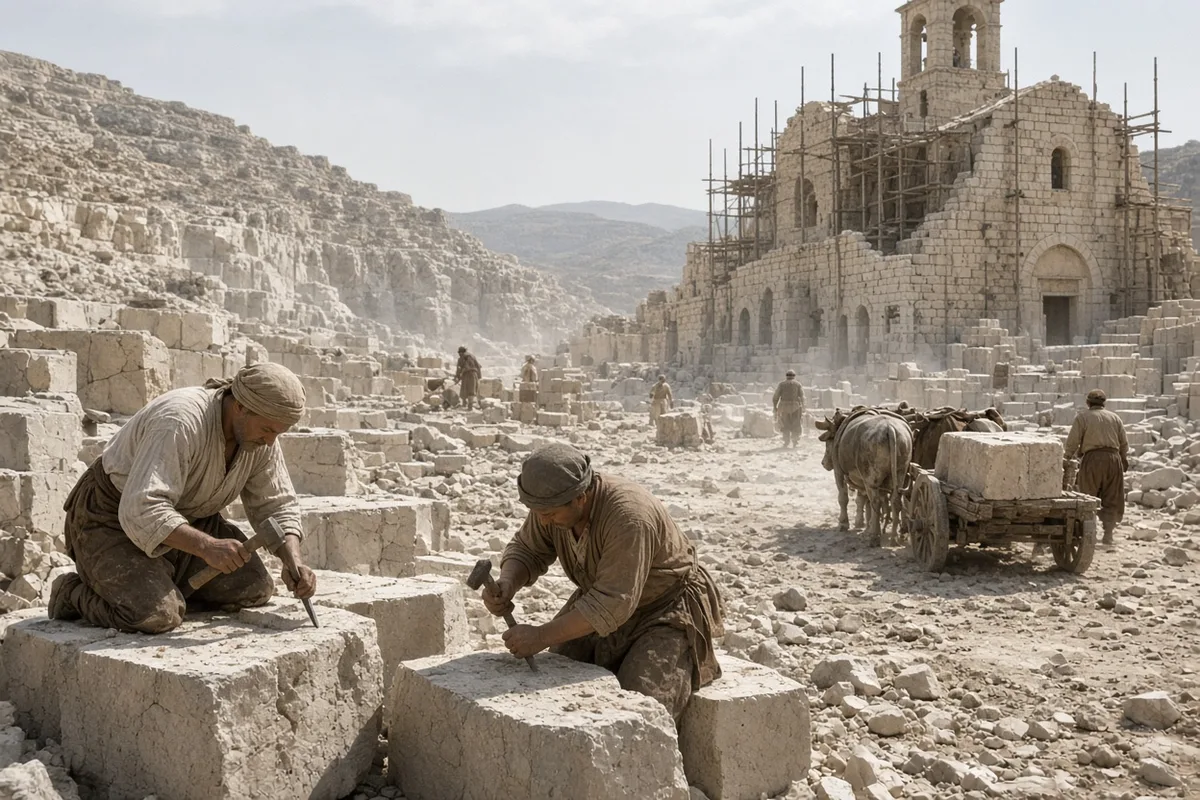
When his son Emeric was old enough to ride with him, Stephen took the boy along the same boundaries he had walked alone. He pointed out the stakes and told him which bishop would live at each place. Emeric listened without speaking, the way a boy listens when he knows the lesson will be asked of him again.
The right hand that had once broken the carved figures now signed the charters that gave land to the new monasteries. The charters were written on calfskin and sealed with wax that still carried the mark of the crown. Men carried them from village to village so the names could be read aloud to those who could not read.
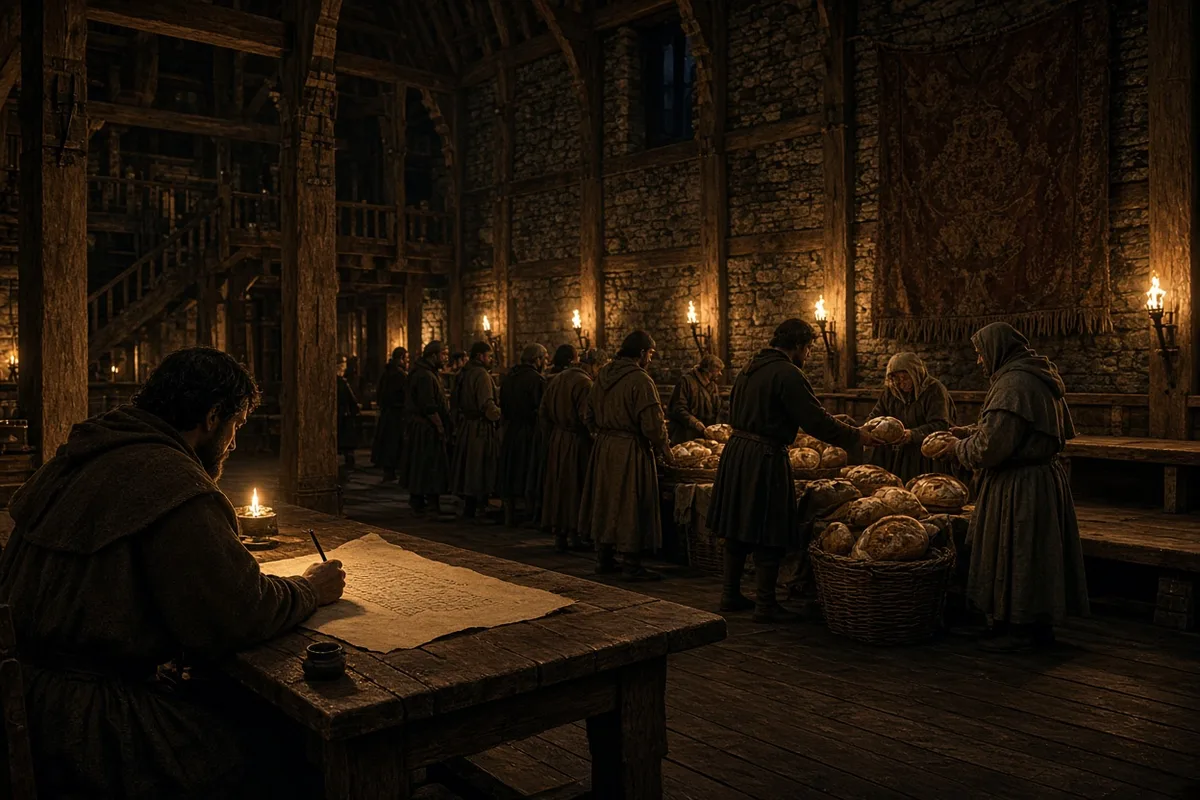
On the day the last of the old high places was pulled down, I stood again in the square at Gran. The timbers were stacked for firewood. The carved posts that had held the offerings lay in pieces. A child ran past carrying one of the smaller fragments as if it were a toy. No one stopped him. The smoke from the fires rose straight into a clear sky, and the bells that had been hung in the new wooden tower began to ring for the evening office.
The square emptied as the last timbers were hauled away, and I followed the sound of the bells to the wooden tower where the sacristan, a man named Peter from the Danube ferry, tolled the hour with a rope that had once secured a pagan offering post. He told me the new bishop at Esztergom, named Dominic, had ordered the bells cast from bronze taken from the old chieftain’s hall at Koppány’s former seat, and that the metal weighed forty-three marks according to the scale kept in the treasury chest. Stephen himself had ridden out that morning to inspect the boundary stakes at the second bishopric site near the Tisza, where he marked the ground for a church dedicated to the Virgin on the twenty-third day of September in the year 1001. Gisela remained at the hall and received a delegation from the Polish duke Bolesław, who sent twenty armed men and a letter written in Latin that asked for safe passage for pilgrims traveling to Rome; she read the request aloud and granted it with the seal of the crown pressed into red wax.
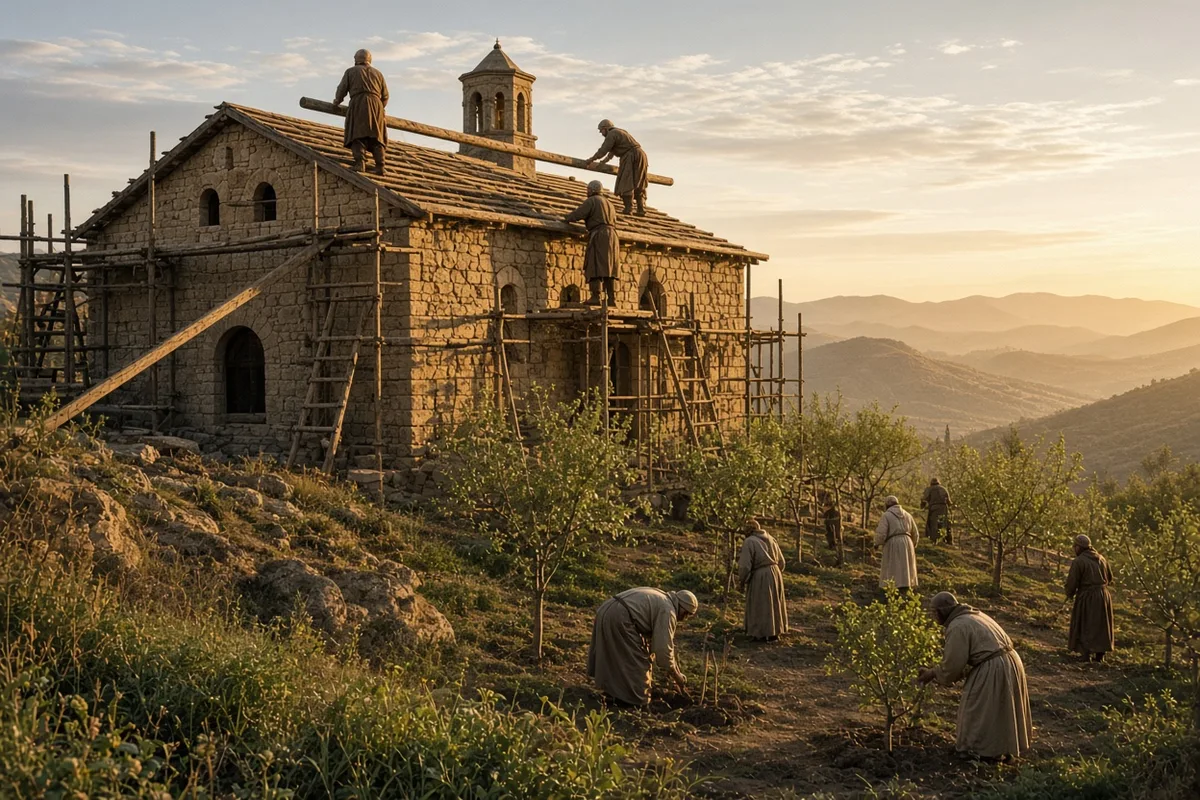
In the spring that followed, Stephen ordered the construction of ten new hospices along the road to the south, each one to shelter twelve pilgrims at a time, and he assigned the revenues from the salt mines at Szolnok to pay for the straw and bread. The charters that recorded these gifts were copied by a scribe named Maurus, who noted the exact boundaries in the margin with lines drawn from the river to the oak grove marked by three stones. Emeric rode with his father to the site of the third bishopric at Kalocsa, where the ground was measured on the feast of Saint Martin and the first stone was laid by a mason brought from Venice; the man’s name was John and he received twelve silver denars for each month of work. When the walls reached the height of a man’s shoulder, Stephen placed a relic of Saint George inside the foundation and spoke the words that the bishop Astricus had taught him from the Roman missal.
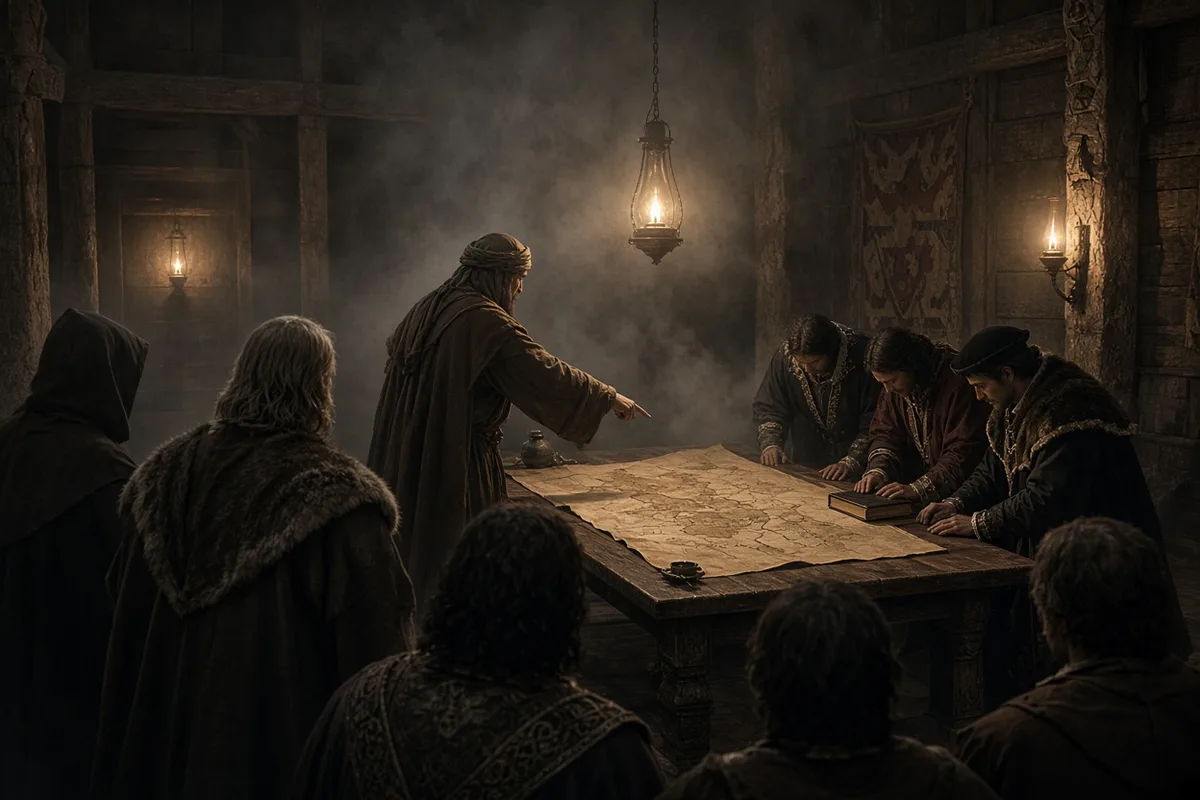
The years after the last high place fell brought the founding of the abbey at Pannonhalma, where the monks under Abbot Astrik copied the gospels in a scriptorium that held fourteen desks and received a grant of three villages whose names were listed in the charter dated the fifth of May 1002. Stephen’s sister, whose name was Sarolt, entered the convent there after the death of her husband and brought with her the gold cross that had once hung in the hall at Veszprém. Riders continued to carry letters to the chieftains who had accepted the new prayers; one such letter, preserved in the monastery at Zalavár, records Stephen’s instruction that the children of the village of Győr must learn the Pater Noster before they could inherit land. The right hand that signed these documents also ordered the digging of a canal at the town of Székesfehérvár, where the king’s court would later be established, and the work employed one hundred and twenty laborers paid in measures of wheat from the royal granary.
Emeric was killed while hunting in the forest near the Austrian border on the second day of September 1031, and the body was carried back on a litter of pine branches to the church at Esztergom where the bishop sang the requiem. Stephen placed the boy’s sword in the treasury beside the crown and ordered that the annual revenue from two villages be given to the monks who prayed for his soul. In the months that followed the king walked the boundaries alone more often, and on one such walk near the Danube he met a group of pilgrims from Bohemia who carried a letter from Duke Oldřich asking for an alliance against the Poles; Stephen replied with a gift of ten horses and a written promise of safe passage signed with his own hand. The crown remained in its chest except on the feasts of the apostles, when it was carried in procession to the new stone church whose walls were completed in 1010 and whose altar was consecrated by five bishops on the fifteenth of August.
Stephen died on the feast of the Assumption in the year 1038 at the palace in Székesfehérvár, and his body was placed in a stone sarcophagus carved with the image of the crown and the words “Rex Hungariae” cut into the lid. The right hand was removed and kept in a silver reliquary at the church of the Virgin, where it remained until the Mongol invasion when it was carried to the coast and later returned. The crown itself passed to his successor Peter Orseolo, who wore it at the assembly held on the plain of Rákos in 1040, and the same crown was used at the coronation of Andrew I in 1046 after the brief reign of the pagan Vata. The charters Stephen had signed continued to be read in the villages, and the bishoprics he had founded at Esztergom, Kalocsa, and Veszprém kept their boundaries as they had been measured with rope and stakes.
Today the stone basilica at Esztergom stands on the site where Stephen first received the crown, its towers rising above the Danube where the original wooden hall once stood, and the relic of the right hand is preserved in the Basilica of Saint Stephen in Budapest, where it is carried in procession each twentieth of August. The Holy Crown, altered in later centuries with the addition of the cross that leans to one side, rests in a glass case inside the Parliament building in Budapest, its enamel plaques and pearls examined each year by conservators who record the condition of the gold band Stephen once touched with two fingers. The last image that remains is of an elderly man walking the measured lines of a new field near the Tisza, driving a stake into the earth with a wooden mallet while a boy named Emeric watches from the saddle of a horse, the horizon marked by the stakes that still define the dioceses of the Hungarian church.