


St. Teresa of Ávila Reforms the Carmelite Order
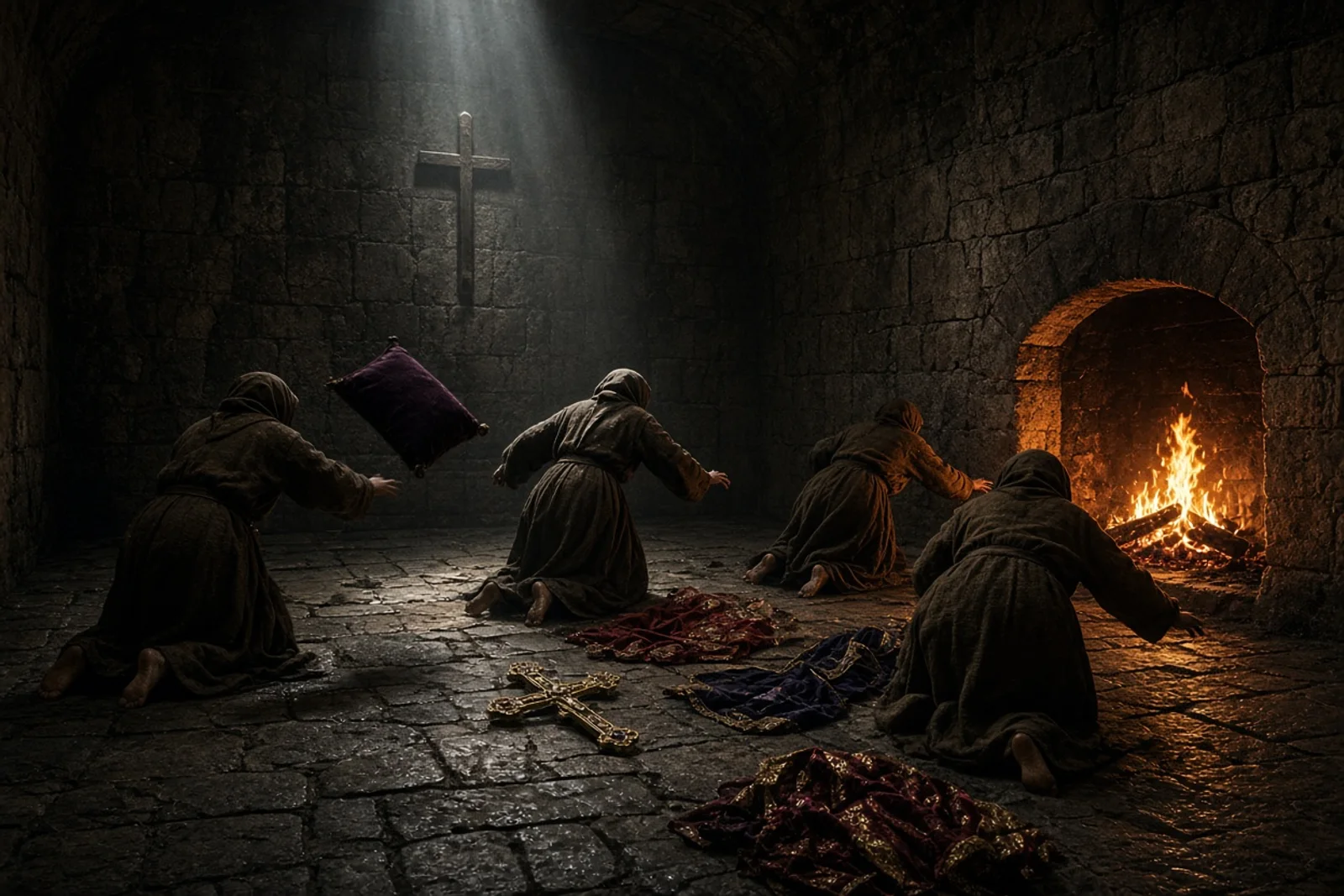
The cart rattled over the last stretch of road into Ávila just after compline. I sat on the back edge with my knees drawn up, holding the bundle of linen the prioress at the Incarnation had sent ahead. Dust coated my tongue. When the wheels stopped at the narrow lane off the plaza, a single lantern already burned inside the low doorway. Teresa stood there, sleeves rolled past her elbows, the hem of her habit dark with mortar. She looked smaller than the stories had made her.

She took the bundle without a word and set it on the bench. Three other women waited in the half-finished parlor. One was her niece, still pale from the journey from Alba. The second kept glancing at the street as if the stones themselves might rise. The third, older, simply sat with her hands open on her lap. No one spoke the name of the place yet. It was only a house with whitewashed walls and a roof that still leaked when the wind turned from the north.
We worked through the night. I helped hang the rough curtains that would serve as the grille until proper iron could be found. Teresa moved from room to room with a measuring cord, marking where the altar would stand and where the beds would be placed so that no sister would have to step over another in the dark. When the bell of the Incarnation rang for matins, she paused, head tilted, listening. Then she went back to the cord.

By dawn the first complaints had already reached the street. A merchant whose shop faced the lane stopped me when I carried water from the fountain. He asked what the women thought they were doing, shutting themselves away when the town needed hands for the harvest. I told him the truth I knew: the house had been bought with money sent from Peru and the bishop had given leave. He spat and walked on.
The brief from Rome arrived the evening Teresa returned from Toledo. She had been gone since January, finishing her writing at Doña Luisa’s house. When the messenger handed her the sealed packet she did not break it open at once. She carried it inside, set it on the table, and asked for water. Only after she had washed her face did she read it aloud to the three who would stay with her. The older woman began to weep quietly. Teresa folded the paper and placed it under a stone on the windowsill so the night air would not lift it.

On the twenty-fourth the four of them entered the chapel together. A borrowed priest said the first mass while the rest of us stood outside the door. The street was already filling. Someone had spread the word that the new rule forbade shoes and meat and that the sisters would beg rather than accept rents. A boy threw a clod of earth that struck the wall above the window. Teresa did not look up from her place on the floor.
By midday the crowd had grown. The prior from the Incarnation sent two friars to speak with her. They stood in the lane and called her name until she came to the grille. Their voices carried. They said the town council would not tolerate another house that drew alms away from the old monastery. Teresa answered that the house was small and the sisters few. One of the friars struck the grille with his staff. The sound echoed down the lane like a gate slamming.

That night the four women slept on straw because the beds had not yet been carried from the Incarnation. I stayed in the outer room with the door barred. Twice I heard footsteps stop outside and then move on. Toward morning the wind shifted and rain began. Water came through the roof in three places. Teresa rose without complaint and moved the straw farther from the leaks. She told the others to keep their habits on so the wool would hold some warmth.
The commotion lasted six days. On the third day the corregidor himself came. He demanded to see the brief. Teresa handed it through the grille without speaking. He read it twice, folded it, and returned it. Then he asked how many sisters she intended to receive. She said twelve at most, and only those who wished the stricter life. He nodded once and left. The crowd thinned after that, though the muttering in the market did not stop for weeks.
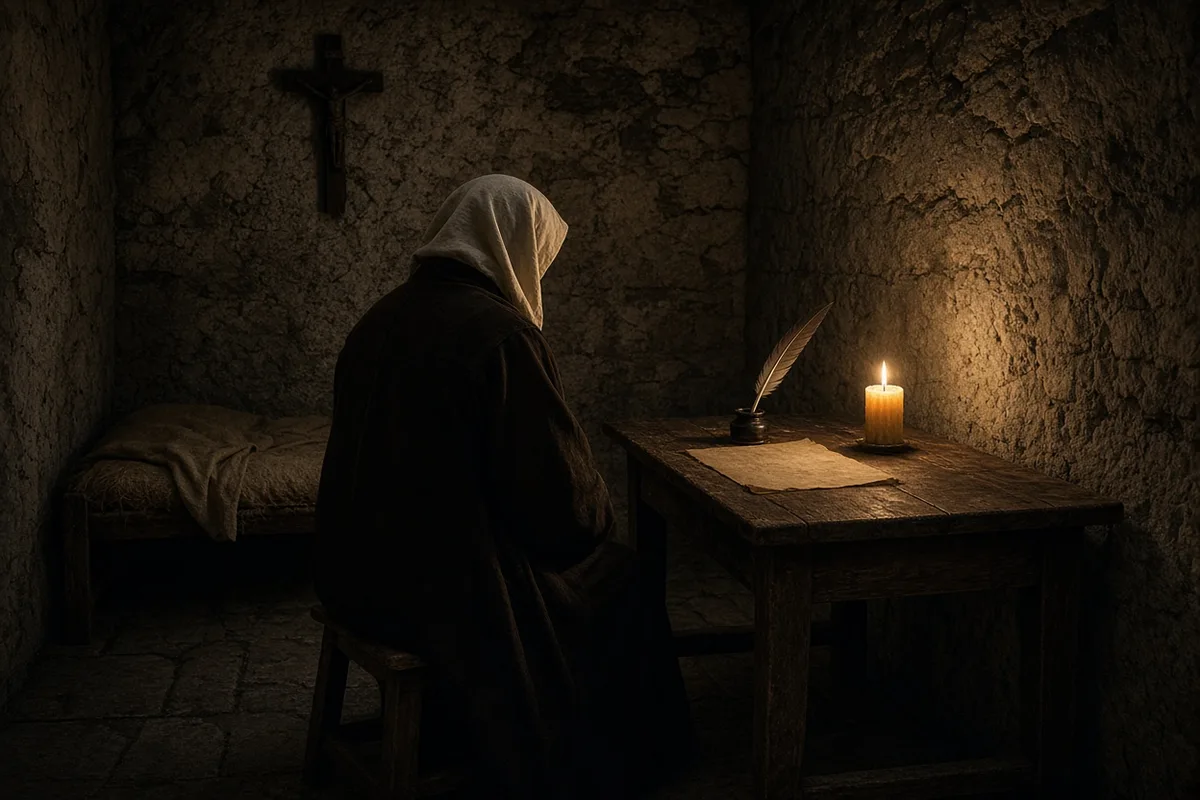
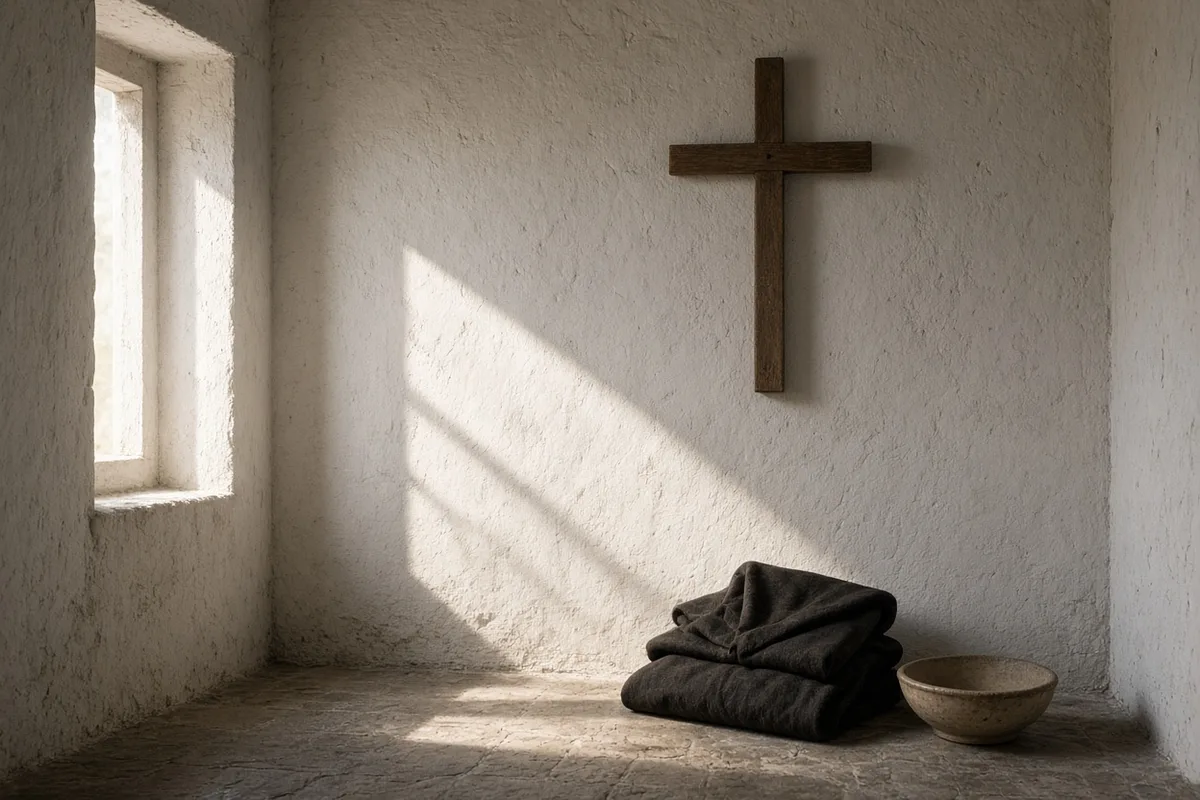
By September the first postulant arrived, a girl from a farm outside the walls. She brought her own blanket and a small wooden cross her father had carved. Teresa accepted the blanket and placed the cross on the wall above the place where the girl would sleep. That evening the sisters ate their first meal together under the new rule. The bread was coarse and there was no oil. No one remarked on it.
I continued to carry water and messages because the lane remained uneasy. One afternoon a stone came through the window and struck the older sister on the shoulder. She did not cry out. Teresa cleaned the cut with vinegar and told her to rest. The next morning the window was boarded from the inside. Work on the chapel continued. The altar stone was set in place by the end of the month, though the roof still needed another course of tiles.
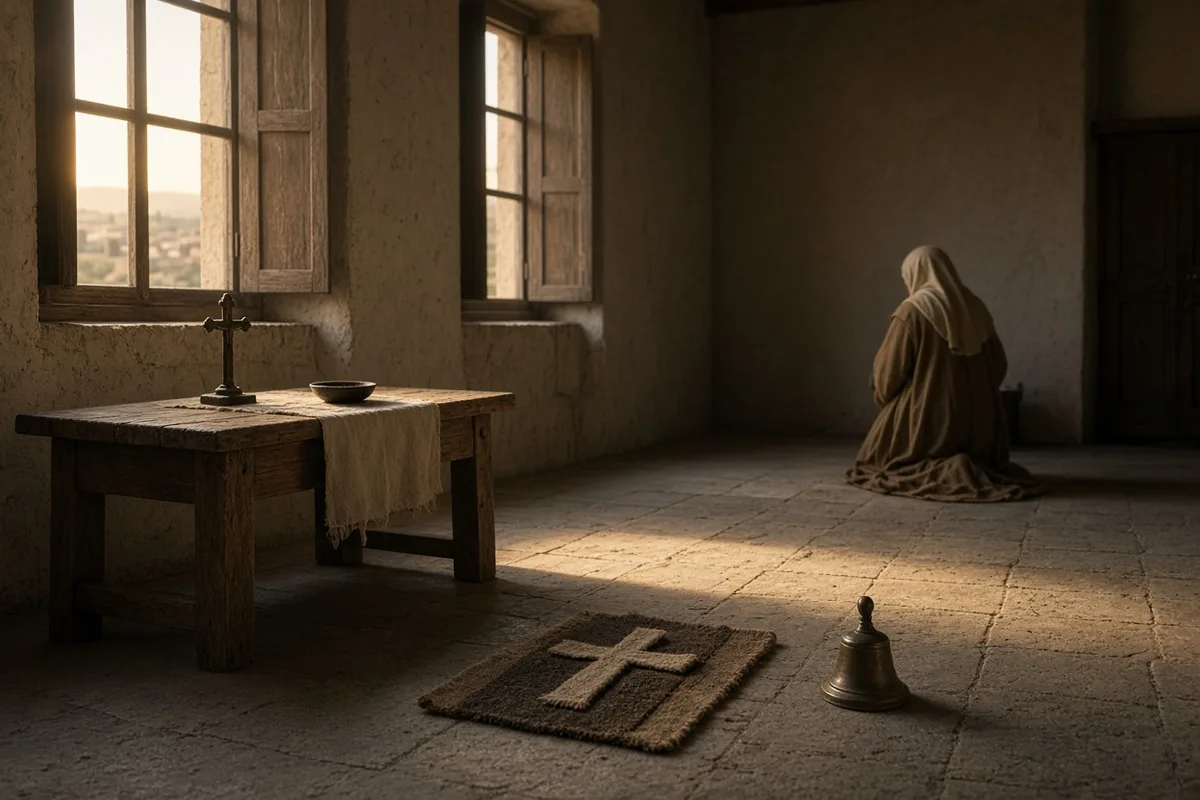
Teresa left the house only when obedience required it. She walked back to the Incarnation once to settle papers and returned the same day. On the road she met St. Peter of Alcántara, who had come to Ávila to see the new foundation. They spoke for a short time at the edge of the orchard. He gave her his blessing and continued on foot toward the city. She watched him go, then turned back to the lane.
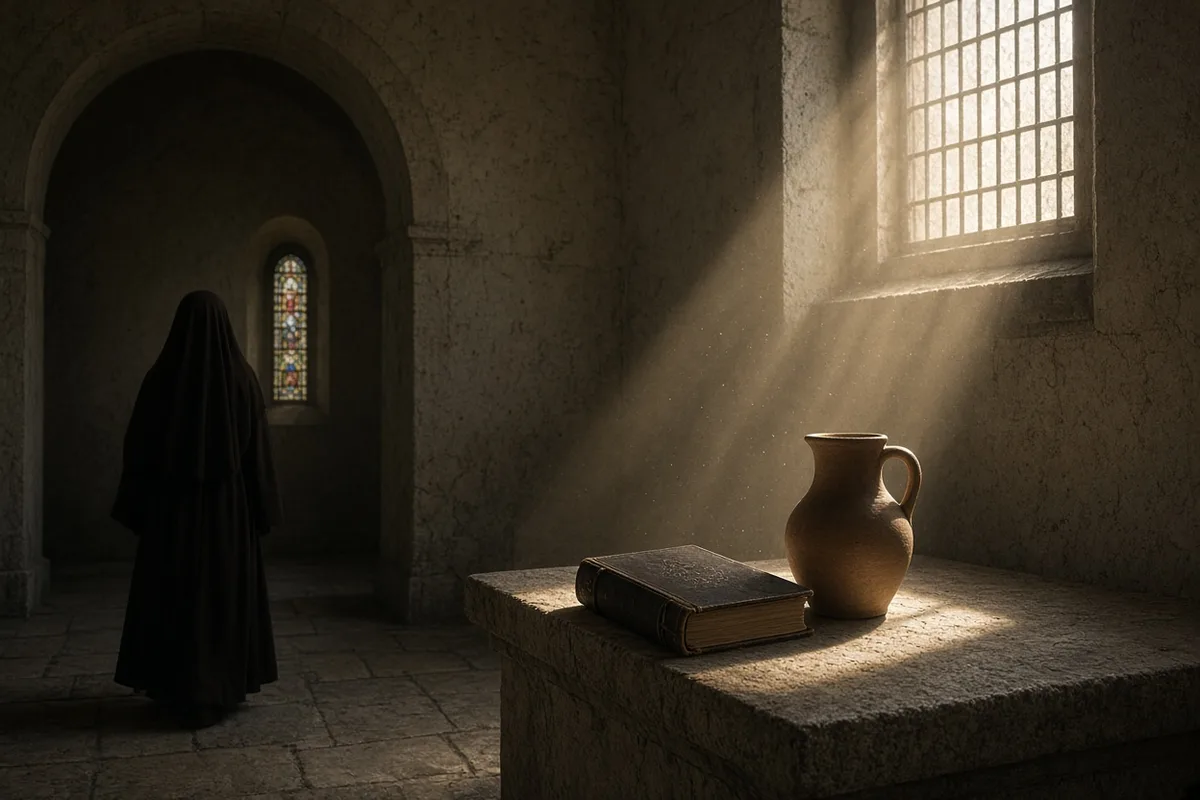
In the years that followed, other houses were begun, but the first one remained the measure. When sisters from Medina or Toledo wrote, Teresa answered in her own hand, reminding them that the rule was not a garment to be put on and taken off with the weather. The lane in Ávila grew quieter. The merchant who had spat eventually sent a sack of grain one winter when bread was scarce. No one mentioned the earlier words.
The roof was finally finished in the spring after the foundation. On the day the last tile was laid, Teresa climbed the ladder herself to check the work. She stood on the ridge for a moment, one hand shading her eyes against the sun, then climbed down and went inside to ring the bell for prayer. The sound carried farther than it had the year before, because the walls were no longer new.
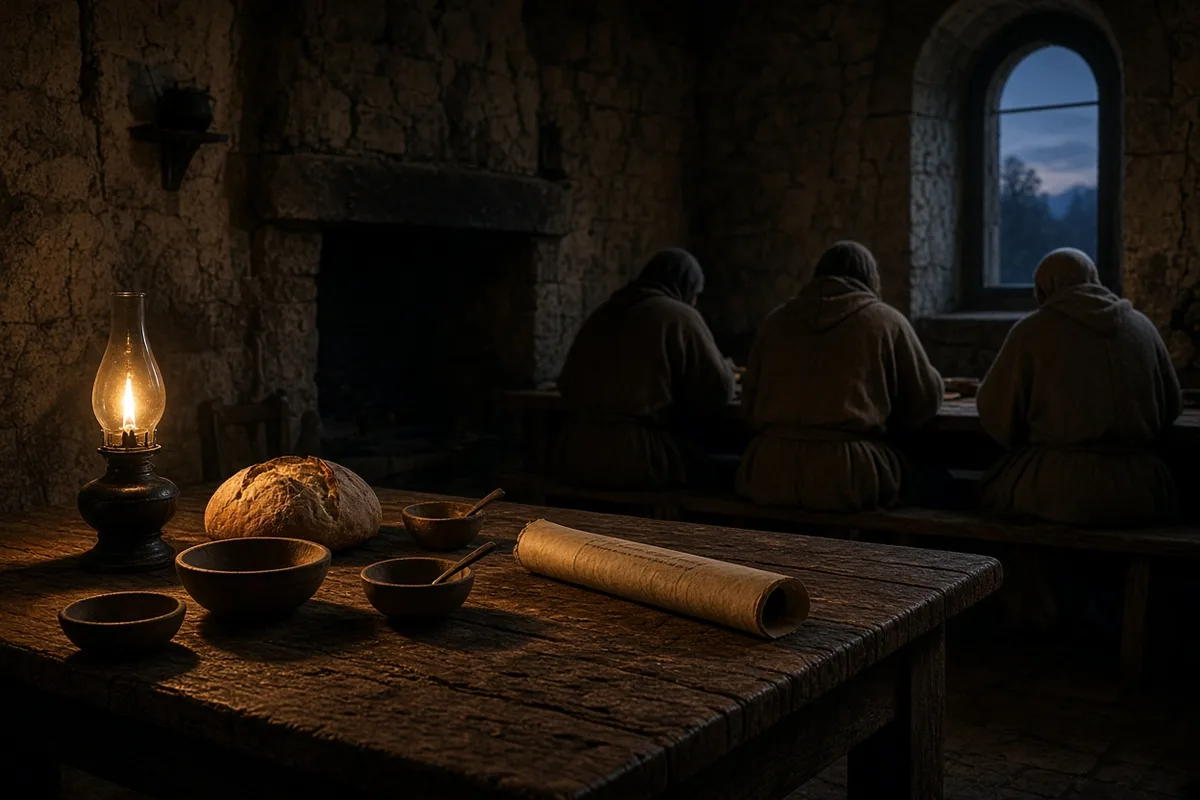
I returned to the fountain the next morning with two empty buckets and found the merchant already waiting with his cart loaded for the day's trade. He handed me a sealed letter addressed in the hand of Doña Guiomar de Ulloa and asked whether the sisters still observed the rule that forbade speaking through the grille after compline. I answered that they did and carried the water inside. Teresa opened the letter at the table where the brief still lay under its stone and read aloud the sentence that offered two hundred ducats toward the purchase of a second house if the community would accept a postulant from Toledo named María de San José. She folded the paper, placed it beside the stone, and told the older sister to mark the date, 3 October 1562, on the margin of the rule book so the gift would be recorded before any further work began on the roof tiles.
Three weeks later a messenger from the bishop arrived with instructions that the community must not exceed thirteen sisters until the chapel received its consecration. Teresa counted the names already entered in the book—Antonia del Espíritu Santo, Ursula de los Santos, her niece María Bautista, and the farm girl—and wrote back that the limit would be observed. She added the phrase “as the brief of Pius IV permits” and sent the reply the same afternoon. I walked with the messenger as far as the orchard gate and heard him repeat the number thirteen twice before he mounted. By Christmas the beds had been brought from the Incarnation and the straw replaced with wool mattresses stuffed at Doña Luisa’s expense in Toledo.
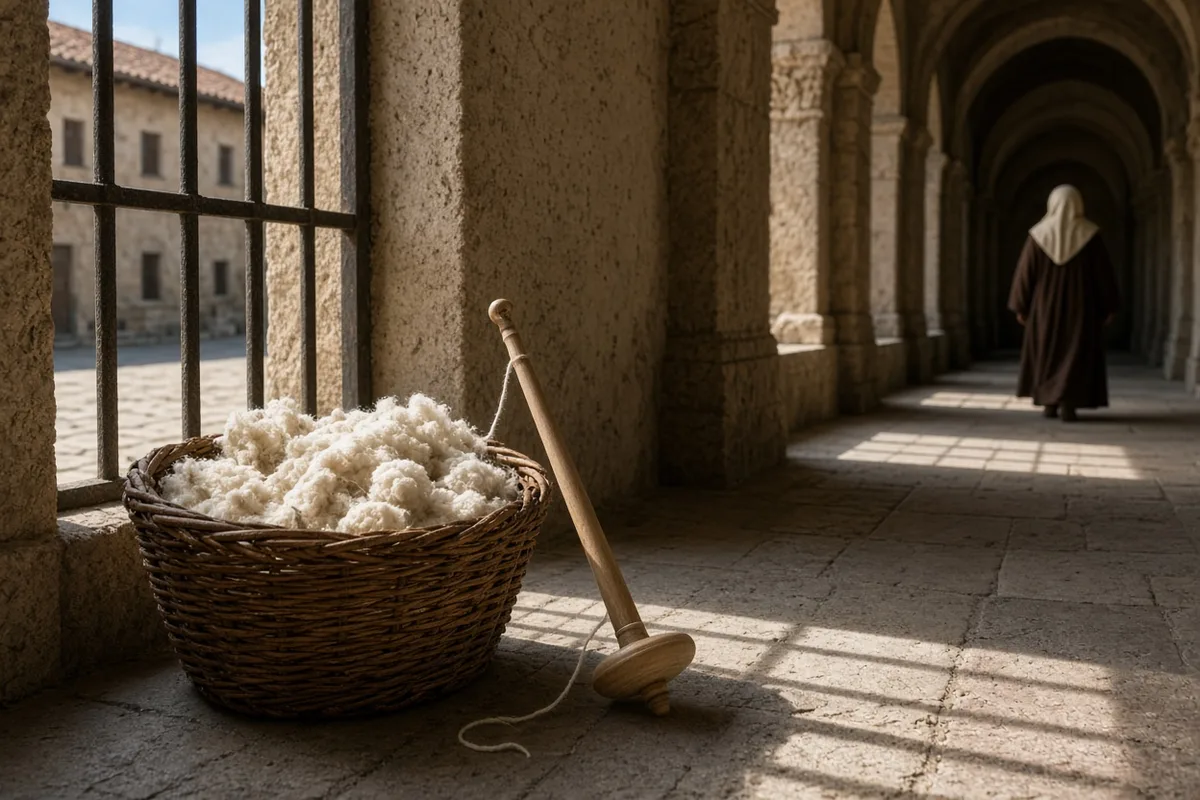
In the spring of 1567 I carried Teresa’s first letter to Medina del Campo, dated 14 February, in which she asked the town council for leave to open a house of twelve nuns who would live on alms alone. The reply came in May granting the site near the church of San Pedro but requiring that the sisters accept no more than eight reales a day in charity. Teresa copied the figure into her notebook before she left Ávila on 13 August with four companions. When she returned in October she brought news that the Medina foundation had opened on 15 August with exactly the eight reales stipulated and that the first Mass had been said by Father Antonio de Heredia. She placed the notebook on the windowsill beside the brief and asked me to fetch water for the new postulant who had arrived from Alba de Tormes that morning.
Father John of the Cross reached Ávila on 28 November 1568 and stayed two nights in the outer room while he discussed the reform of the friars. Teresa showed him the rule book with the marginal notes and quoted the line “the primitive rule is to be kept in its entirety” before she asked whether he would accept the Duruelo site she had secured from Don Rafael Mejía. He agreed and left before dawn on 30 November carrying the same measuring cord she had used in 1562. I walked with him to the edge of the orchard and heard him repeat the number of friars he intended—four at most—before he continued on foot toward the village.
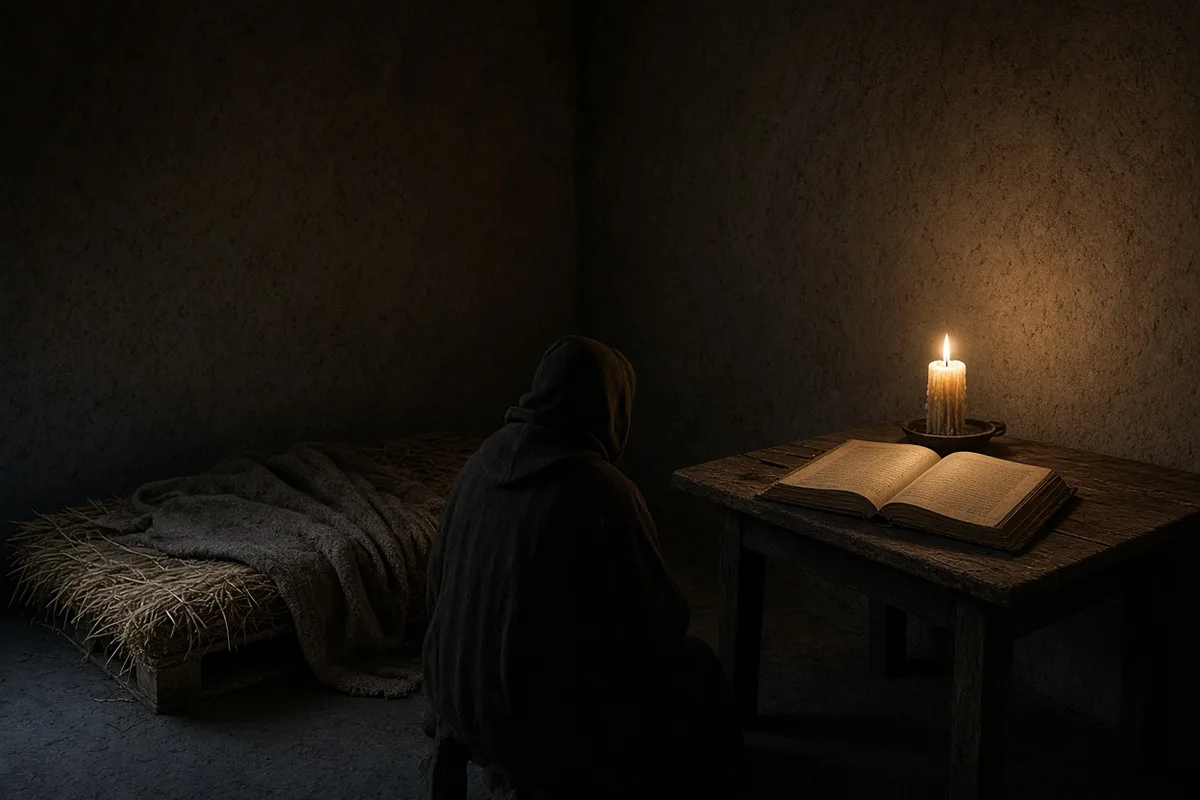
By 1575 the community at San José had received twenty-three postulants, though only fourteen remained after the bishop’s limit was again enforced. Teresa wrote to Father Gracián on 2 June of that year that the house could not accept further dowries because the roof still required repairs and the alms from the merchant had ceased. The letter was carried by the same boy who had once thrown the clod of earth; he returned with Gracián’s reply that the separation of the Discalced from the Mitigated Carmelites would be discussed at the chapter in Piacenza. Teresa placed the reply under the stone on the windowsill and told the sisters to continue the night office without change.
The separation was confirmed in 1580 when the papal brief of Gregory XIII reached Ávila on 22 June. Teresa read the document to the fourteen sisters then present and marked the date beside the earlier entry of thirteen. She left for Burgos the following spring to make the seventeenth and final foundation, returning only once more to San José in September 1582. On that visit she climbed the ladder again to inspect the ridge tiles and remained on the roof until the bell rang for vespers. The sound carried across the lane to the merchant’s shop, where he stood listening with a sack of grain already set aside for the winter.
She died at Alba de Tormes on 4 October 1582. The body was returned to Ávila in 1585 and reburied in the chapel of San José on 25 November of that year, the date recorded in the same rule book that still lay on the windowsill. When the stone was lifted the brief from Rome and the letter from Doña Guiomar were found beneath it, both dated and intact. The sisters numbered twelve at the time of the reburial; they kept the grille closed and the rule unchanged through the following decades.
The house at the end of the lane stands today with the same whitewashed walls and the roof completed in 1563. Sixteen sisters live there under the 1562 rule, their names entered in the book that remains on the windowsill. The altar stone set in place in September 1562 still supports the tabernacle, and the wooden cross brought by the farm girl hangs above the place where she once slept. The lane itself is quiet except at the hour of the bell, when the sound travels as far as the fountain where the merchant once waited with his cart.