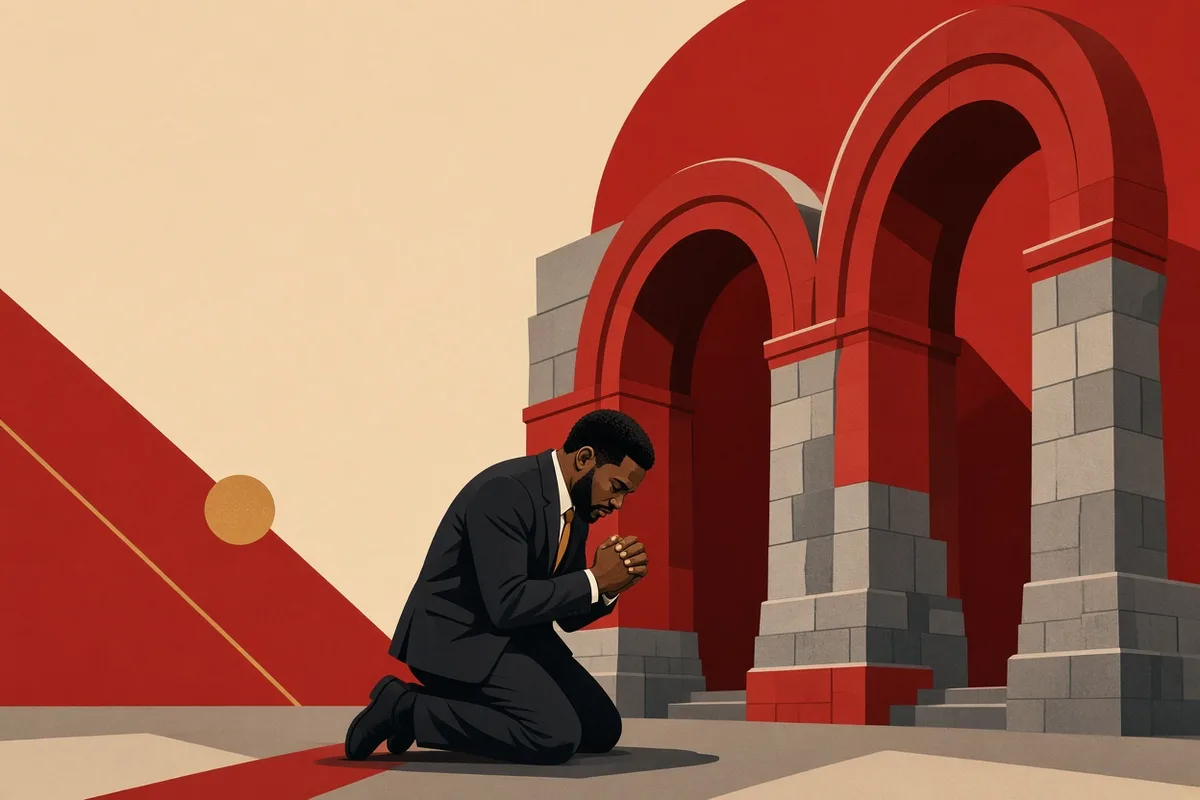



St. Thérèse of Lisieux Enters Carmel
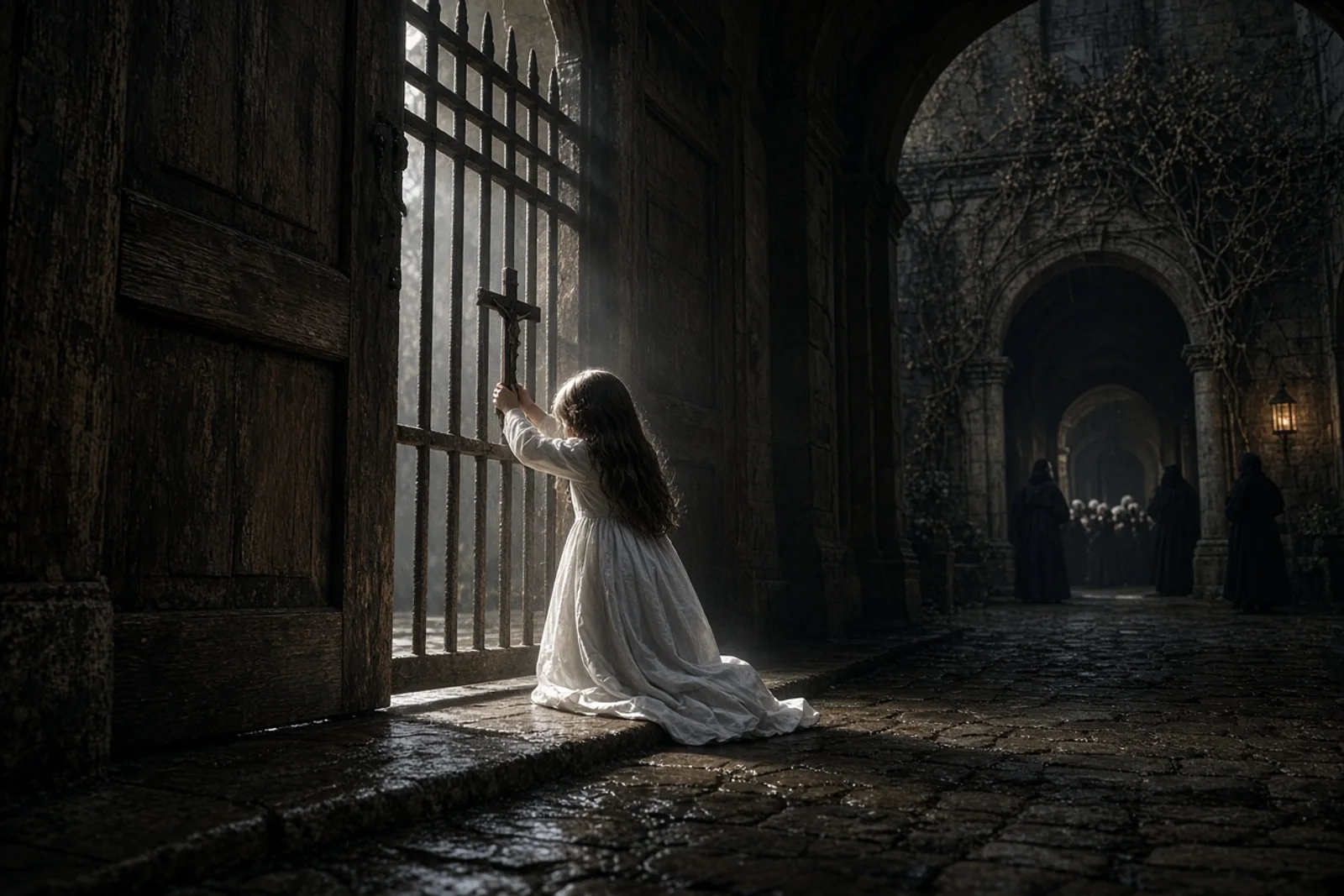
The carriage wheels struck the last loose stones before the convent lane and then fell quiet on the packed earth. I kept my hands folded on the edge of the seat so they would not shake. Louis Martin sat opposite me, his shoulders drawn forward as though the coat were suddenly too heavy. Céline and Léonie sat on either side of him, their faces turned toward the window though nothing moved outside. Thérèse had taken the forward seat alone. She watched the high wall approach without blinking.
We reached the side door of the chapel just as the bell finished. Inside, the nuns were already in choir. The family filled the front benches while I stood at the back with two parish women who had been allowed to come. The priest began the transferred Mass of the Annunciation. When the moment for Communion came, the rustle of habits stopped and the only sound was the soft tread of the sisters returning to their places. Then the sobs began, first from Marie, then from the others, until the bench in front of me trembled with it. Thérèse remained upright. Her hands stayed joined. Only the line of her shoulders showed how hard she worked to keep still.

After the last prayer the prioress led everyone through the sacristy passage to the grille door. The air there was colder, smelling of damp stone and the wax that had dripped from the candles the night before. Canon Delatroette stood waiting in his black cassock, his face set. He looked at the group once, then spoke without lowering his voice.
“Well, my Reverend Mothers, you can sing a Te Deum. As the delegate of Monseigneur the bishop, I present to you this child of fifteen whose entrance you so much desired. I trust that she will not disappoint your hopes, but I remind you that, if she does, the responsibility is yours, and yours alone.”
No one answered him. Thérèse stepped forward. She kissed each sister in turn, then knelt before her father. Louis lowered himself to the floor as well. His hands shook as he made the sign of the cross over her head. The tears on his cheeks caught the light from the single lamp above the door. He stayed on his knees after she rose. She turned once more toward the family, then walked through the opening. The heavy door swung shut behind her with a sound like a chest lid closing.
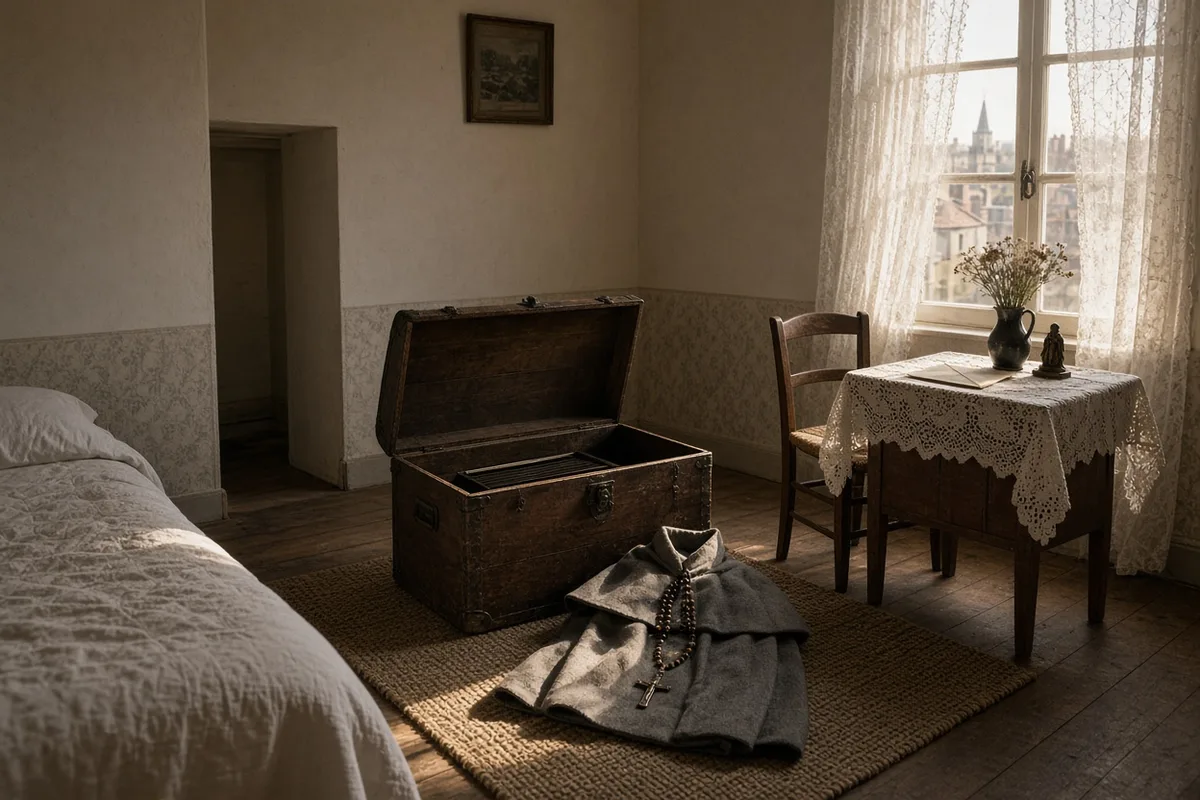
I stayed where I was. The family did not move for several minutes. When they finally turned to leave, Louis walked with one hand on Léonie’s arm. Outside, the April light had turned thin and white. The carriage stood where we had left it. No one spoke on the way back to Les Buissonnets.
In the weeks that followed I heard small things through the grille when I brought linen or messages. The postulant mistress sent Thérèse to weed the garden each afternoon at half-past four. The girl worked without gloves, the gravel cutting her palms. At recreation the older sisters sometimes asked her to recite the prayers she had written at home. She answered in a voice so low that only the nearest bench could hear. Once, when a cobweb was found in the cloister, the prioress pointed it out before the whole community and told her a fifteen-year-old should know better how to hold a broom.
I returned to the parlor only twice more that spring. The second time the prioress mentioned that Thérèse had asked to spend her free hour at needlework instead of prayer, thinking that would please her superior. She sat with her head bent over the stitches until the bell rang, never lifting her eyes. The prioress had not known about the change until months later.
Louis Martin’s health gave way before the year ended. He was taken to an asylum in Caen and then brought home again, quieter than before. Céline remained at Les Buissonnets until she too asked for the habit. Léonie tried the Poor Clares and returned, then tried again. The house grew emptier each season.
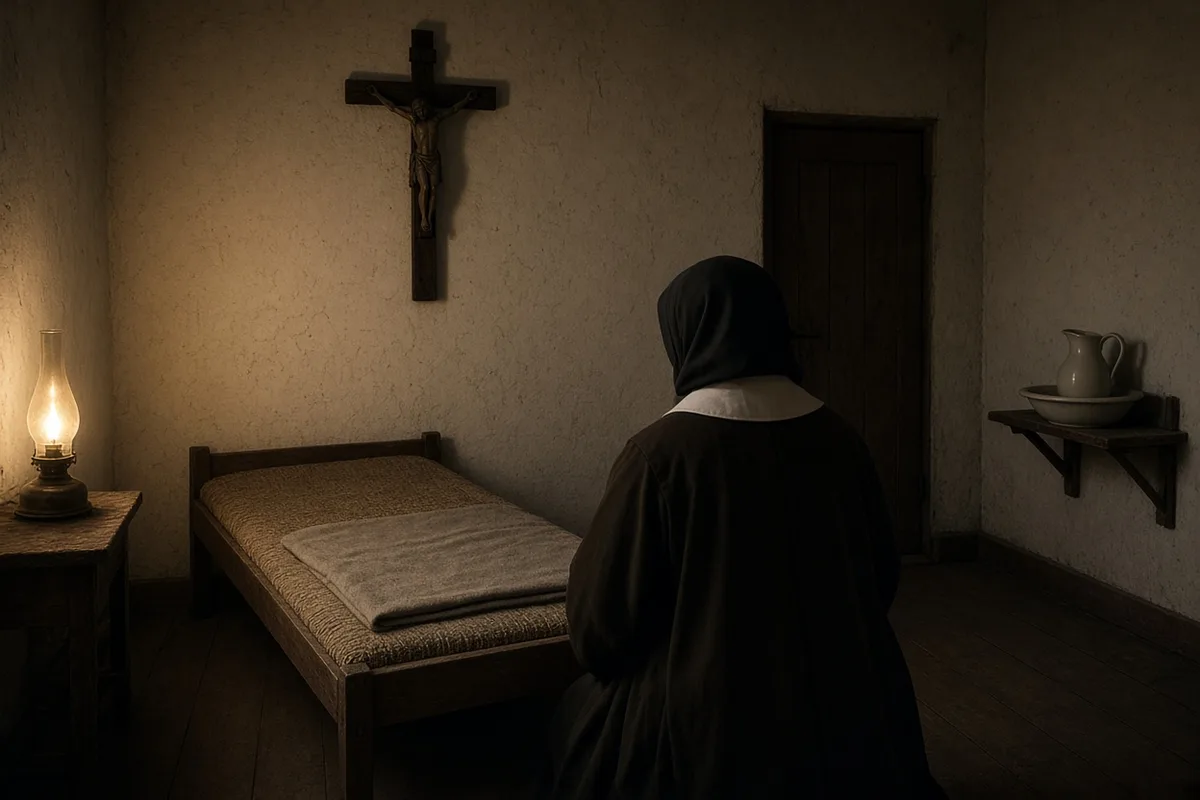
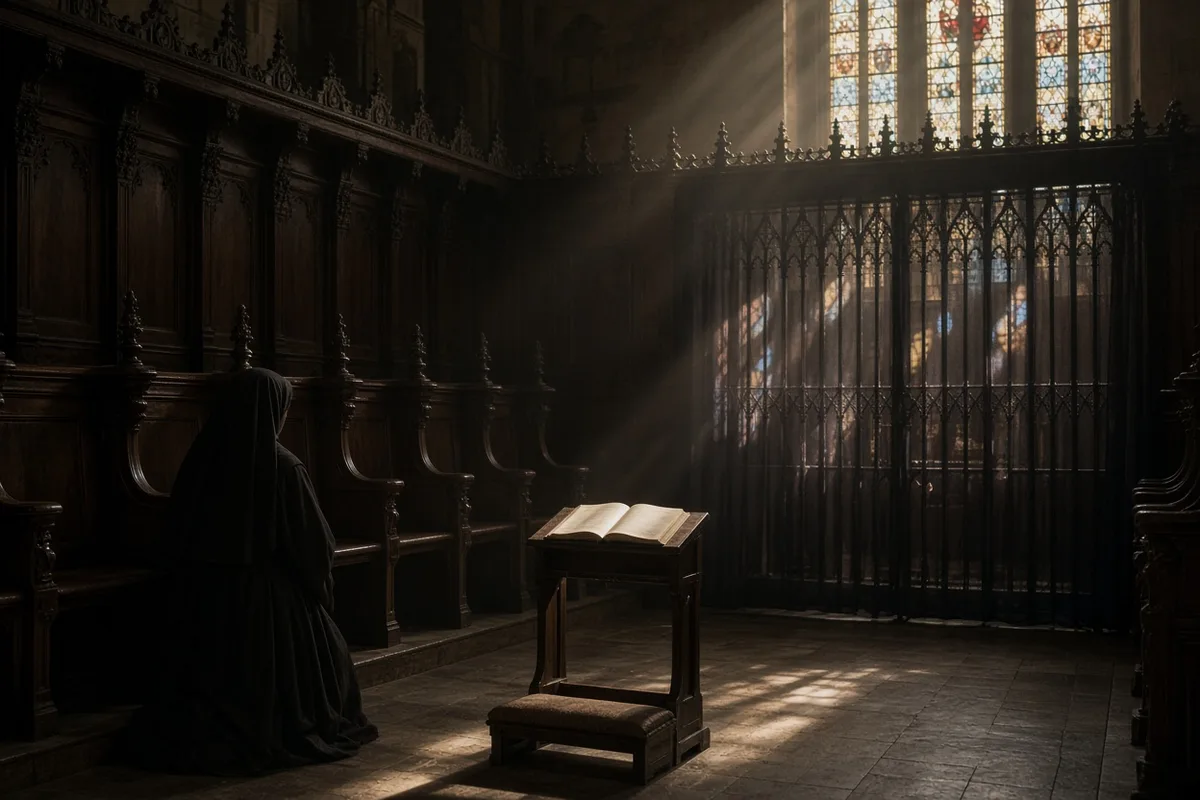
Inside the enclosure the days kept their order. Thérèse swept the same corridors, carried the same buckets, knelt at the same choir stall. The peace she had spoken of on the morning she entered stayed with her through every dryness and every correction. When visitors asked after her at the turn, the answer was always the same: she was content.
On the last visit I made before the century changed, the sister at the grille said the young nun had been given the name of the Child Jesus and of the Holy Face. She was still the youngest in the house, though no longer the newest. The sister added that Thérèse sometimes worked late copying out her childhood memories for the prioress. The pages were kept in a drawer in the novitiate. No one outside had read them.
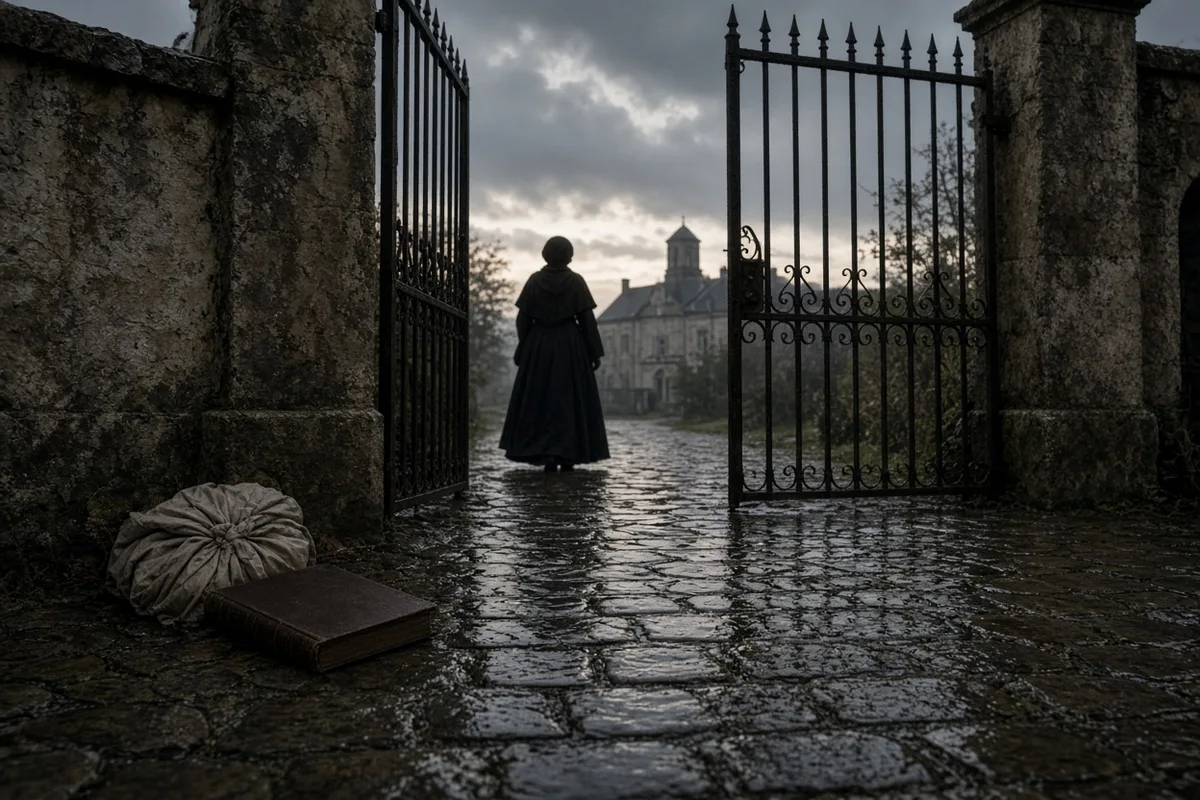
I left the parlor and walked down the lane. The wall rose on my left, the same height as on the morning the carriage stopped. Behind it the bell rang for Vespers. The sound carried evenly across the fields, the same measured tone it had always kept.
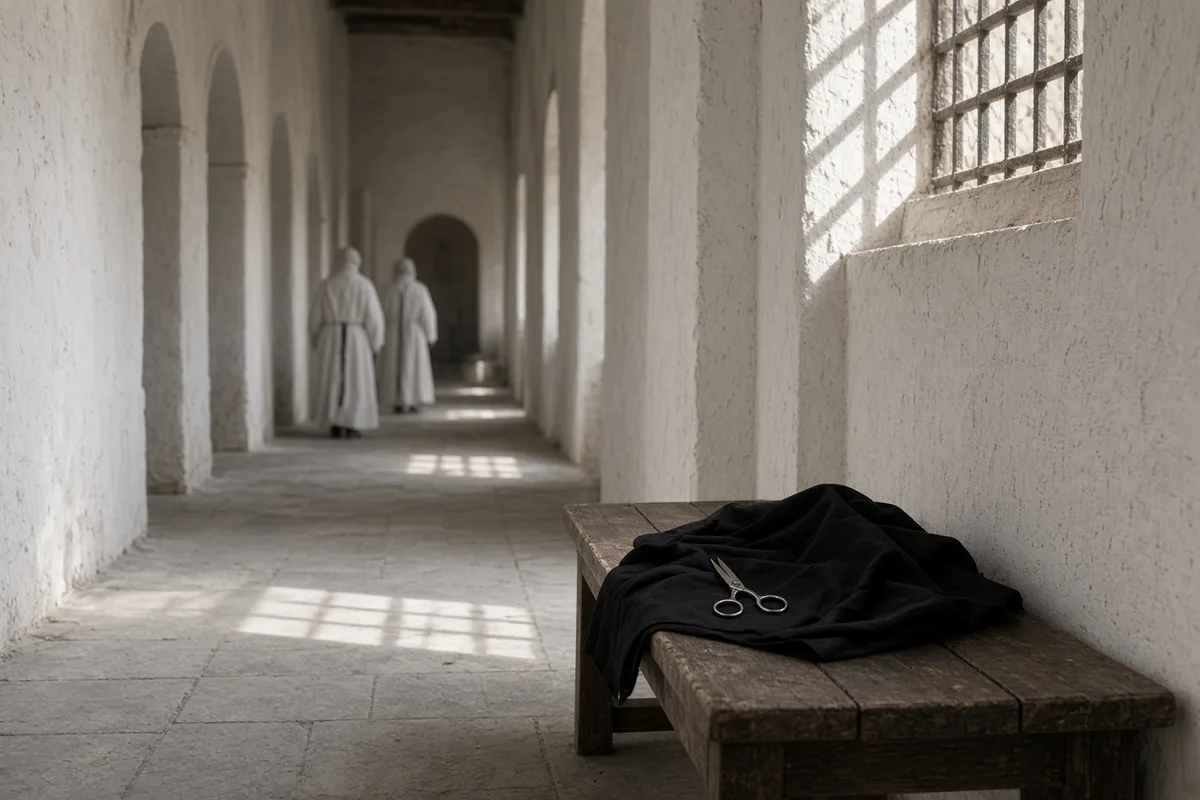
The sister at the turn mentioned that on the feast of the Presentation in 1890, Thérèse had pronounced her vows in the presence of Bishop Hugonin, who had come from Bayeux for the occasion. She repeated the formula in a steady voice after the prioress, promising poverty, chastity, and obedience until death, and the community sang the Te Deum as they had been instructed to do by Canon Delatroette three years earlier. Later that same month the new professed sister was assigned the task of painting the scenery for the annual Christmas recreation, using the small pots of tempera kept in the linen room; she mixed a particular shade of blue for the backdrop of the stable at Bethlehem and signed the lower corner with the date 25 December 1890. When the prioress asked her to copy additional pages of her early memories, Thérèse worked by the light of the single oil lamp in the novitiate corridor until the bell for Matins, adding the sentence that began “I feel that if I were to be sent to a foreign mission I would not lose courage.”
Two years later, on 8 September 1892, the community elected Mother Marie de Gonzague to a second term as prioress, and Thérèse was given the additional duty of assisting the elderly Sister Saint Vincent de Paul in the refectory. She carried the heavy tureens of soup from the kitchen each noon, counting the portions aloud so that no sister received more or less than her share, and she recorded in the margin of her notebook the exact number of times the bell rang for meals that month. In a letter addressed to her sister Pauline on 14 June 1894 she wrote, “The Lord has given me the grace of finding Him everywhere,” and she left the folded sheet on the turn for the next visitor to carry to Les Buissonnets. By the summer of 1895 the manuscript pages had grown to more than two hundred, each one numbered in the upper right corner and tied with the same brown string used for the laundry bundles.
In the spring of 1896 the first hemorrhage occurred during the night of Holy Thursday while Thérèse was descending the stairs to the chapel; she wiped the blood from her mouth with the sleeve of her habit and continued to her stall without waking the sister in the next cell. Mother Marie de Gonzague ordered her to the infirmary on 6 July, where the doctor from Lisieux, Dr. de Cornière, noted in his ledger the daily temperature readings that climbed above 39 degrees Celsius and prescribed the inhalation of creosote vapor three times each afternoon. Thérèse continued to write on the back of old envelopes when paper was scarce, recording on 29 July 1897 the words “I am not dying, I am entering life” and asking that the sentence be read aloud at her burial. She received the last sacraments from Father Lemonnier on 29 September and died at twenty-three minutes past seven on the evening of the thirtieth, her head turned toward the small window that faced the garden wall.
The manuscript was entrusted to Mother Agnes of Jesus, who had it printed at the Lisieux press of the Imprimerie Saint-Paul in 1898 under the title Histoire d’une âme; the first edition numbered two thousand copies and was distributed only within the French Carmels. By 1902 the number of pilgrims arriving at the parlor grille on the rue du Carmel had reached four hundred in a single month, each one asking to see the cell where the young nun had slept and to touch the wooden crucifix she had held at the hour of her death. The bishop of Bayeux granted permission in 1907 for the opening of the ordinary process of beatification, and the apostolic process began in 1910 with the testimony of thirty-seven witnesses, including the surviving members of the Martin family and the two surviving prioresses who had known Thérèse in the novitiate.
On 17 May 1925 Pope Pius XI read the bull of canonization in Saint Peter’s Square before an assembly of more than fifty thousand people; the decree stated that the miracles attributed to her intercession included the cure of a seminarian in 1906 and the healing of a religious sister in 1916. The following year the cornerstone of the basilica on the hill overlooking Lisieux was laid by Cardinal Vico, and the structure, designed by the architect Louis-Marie Cordonnier, was completed in 1954 with a nave seating two thousand five hundred and a crypt containing the saint’s relics transferred from the convent cemetery. During the German occupation the basilica sustained damage to its south transept on 7 June 1944 when Allied aircraft struck the rail yards two kilometers away; repairs were completed by 1951 using stone quarried from the same site that had supplied the original blocks.
In the years after the war the number of annual visitors recorded by the sacristan at the Carmel exceeded three hundred thousand, many of them leaving written petitions in the box beside the grille where Thérèse had first entered. The last person known to have spoken with the narrator about those early days was Sister Marie of the Eucharist, who died in the infirmary on 19 January 1959 at the age of eighty-seven; she recalled that on the afternoon of 9 April 1888 the young postulant had asked for a second helping of soup because the walk from Les Buissonnets had left her hungry, and the request had been granted by the then-prioress with the words “Eat, child, you will need your strength inside these walls.” The lane that once led to the side door now ends at a paved parking area bordered by the same high stone wall, and the bell that rang for Vespers continues to sound at the appointed hour each evening, its tone unchanged though the fields beyond have given way to rows of modern houses.
The wall received its first major repointing in 1963 when the contractor Émile Lenoir of Lisieux replaced forty-three eroded blocks on the northern stretch using limestone from the same quarry at Saint-Pierre-sur-Dives that had supplied the original masonry in 1835. Sister Geneviève of the Holy Face, the last surviving sister of Thérèse, noted in the community chronicle on 3 March 1964 that the sound of the chisels reached the infirmary window each morning at half-past eight and ceased only when the bell summoned the sisters to Terce. She added that the workmen had been given permission to eat their midday meal in the old stable, the same building where Thérèse had once stacked the garden tools.
In 1973 the Carmel opened a small museum in the former novitiate corridor after the Holy See granted an indult allowing public access to the cell and the manuscript pages; the first register records 1,872 visitors that year, among them the French historian Pierre Descouvemont who copied the entry for 14 June 1894 verbatim into his notebook. The same register shows that on 12 October 1981 the British Carmelite Sister Mary of the Trinity left a note stating she had measured the distance from the grille to the choir stall—exactly forty-seven paces—and found the floor tiles unchanged since her own profession in 1929.
Cardinal Jean-Marie Lustiger visited on 30 September 1997 to mark the centenary of the death and read aloud the sentence Thérèse had dictated on 29 July 1897; the recording, preserved in the diocesan archives at Bayeux, captures his pronunciation of the words “I am not dying, I am entering life” followed by the precise time stamp 19:23. Two years later the sacristan, Sister Marie-Immaculée, counted 417 written petitions left in the box beside the turn during the month of October alone, each petition dated and signed with the petitioner’s parish.
The community transferred the saint’s relics to a new reliquary of silver and crystal on 15 October 2008; the silversmith, Philippe Tournaire of Paris, engraved on the base the names of the thirty-seven witnesses who had testified in the 1910 apostolic process. During the installation the prioress at the time, Mother Anne of the Sacred Heart, recorded that the original wooden coffin boards from 1897 were placed in a sealed compartment beneath the new casket and that the transfer took four hours and eleven minutes.
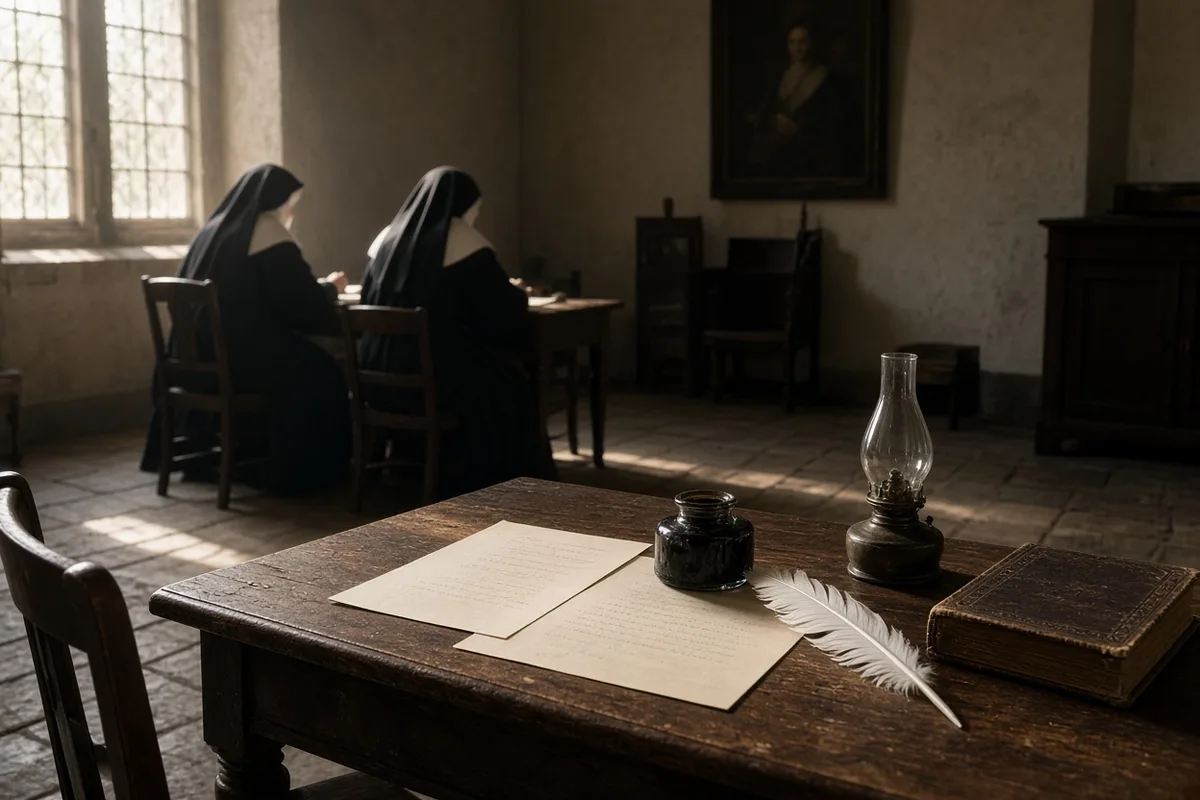
On 9 April 2013 the last nun who had entered the Carmel before the Second World War, Sister Thérèse of the Child Jesus, died in the infirmary at the age of ninety-four; her obituary notice, posted at the turn, stated that she had been received by Mother Marie de Gonzague on 6 January 1938 and that her first assigned task had been to polish the brass candlesticks Thérèse Martin had used in the sacristy. The community then numbered nineteen sisters.
The parking area was enlarged in 2019 to accommodate forty-three spaces after the city of Lisieux widened the approach road; the contractor installed LED lamps along the wall at intervals of six metres, yet the bell for Vespers continues to be rung by hand at 17:45 each evening by whichever sister is assigned the duty that week. In the guest book kept at the museum a visitor from Québec wrote on 4 June 2022 that she had stood at the exact spot where Louis Martin had knelt in 1888 and had counted the same number of paving stones visible in the 1890 photograph preserved in the archives.
The final living link to the Martin household ended on 19 January 1959 with the death of Sister Marie of the Eucharist, but the last recorded personal recollection came from a lay employee, Madame Yvonne Duval, who worked in the laundry from 1954 until 1971 and who told the archivist in 1987 that she had once seen the original manuscript pages spread on the table in the novitiate corridor under the same brown string mentioned in the 1895 notebook entry.